Skip to content
Carmelics
TopicsThinkersChangesContributorsLoading account…

    Carmelics

    A reasoning platform. Break down any belief into clear reasons, explore both sides, and weigh the evidence honestly.

    Navigate

    • Topics
    • Search
    • Recent Changes
    • Contribute
    • How It Works
    • Glossary
    • Thinkers
    • Contributors
    • About
    • Statistics
    • Terms
    • Privacy

    Database

    Statements
    —
    Perspectives
    —
    Topics
    —

    Press ? for keyboard shortcuts

    LoyalLoyalJusticeJustice
    Made withinDC&Austin
    Statements
    321,452
    Perspectives
    108,905
    Topics
    42
    Bradley — Carmelics
    Thinkers/Bradley
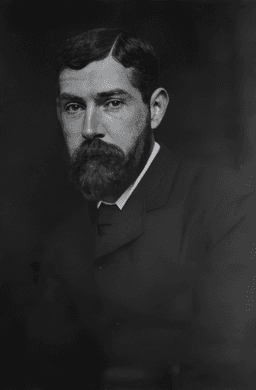
    Bradley

    Bradley

    modernBritish Absolute Idealism

    1846 – 1924

    Francis Herbert Bradley (1846–1924) was the preeminent British Absolute Idealist of the late nineteenth century, whose rigorous critiques of empiricism, utilitarianism, and correspondence theories of truth shaped Anglo-American philosophy before and during the analytic turn. His metaphysics held that ordinary experience presents a self-contradictory 'Appearance' that points toward a unified, supra-relational 'Absolute.' In ethics, his early work mounted a sustained attack on hedonistic and Kantian moral theories in favor of a social, self-realization account.

    WWikipediaSEPStanford EncyclopediaIEPInternet Encyclopedia

    Notable Achievements

    1

    Developed the most systematic version of British Absolute Idealism in Appearance and Reality (1893)

    2

    Critiqued utilitarian ethics and the 'pleasure for pleasure's sake' formula in Ethical Studies (1876)

    3

    Advanced the 'my station and its duties' account of moral obligation grounded in social roles

    4

    Pioneered the internal-relations doctrine, arguing that all relations are constitutive of their terms

    5

    Influenced T.S. Eliot, Brand Blanshard, and early analytic philosophers such as Russell and Moore, largely through opposition

    Positions & Arguments(1)

    Philosophy of Language

    claim

    Any theory that explains 'good' as an optative in unasserted contexts would render obviously valid arguments invalid by treating them as equivocal

    At a Glance

    Ideas

    1

    Topics

    1

    Era

    modern

    Tradition

    British Absolute Idealism

    Topic Influence

    Philosophy of Language1

    Related Thinkers

    Gotthold Ephraim Lessing1 sharedJohann Gottfried Herder1 sharedImmanuel Kant1 sharedAristotle1 sharedLudwig Wittgenstein1 sharedBertrand Russell1 sharedDavid Hume1 sharedF. Schlegel1 shared

    Dive Deeper

    Explore Philosophy of Language→