The Thinkers
2603 philosophers and theologians defending 3893 arguments across centuries of thought.

Immanuel Kant
modernGerman Idealism / Critical Philosophy
Immanuel Kant was a German philosopher whose critical philosophy revolutionized Western thought by examining the limits and conditions of human knowledge, morality, and aesthetic judgment. His three Critiques—of Pure Reason, Practical Reason, and the Power of Judgment—established the framework for nearly all subsequent philosophy. His aesthetic theory, developed in the Critique of the Power of Judgment, introduced influential concepts of genius, disinterested pleasure, and the free play of the faculties.
51 arguments
AestheticsConsciousness & MindPhilosophy of Language

Aristotle
ancientAristotelianism
Aristotle (384–322 BCE) was an Ancient Greek philosopher and polymath whose writings covered logic, metaphysics, ethics, politics, biology, and poetics. A student of Plato and tutor to Alexander the Great, he founded the Lyceum in Athens and established formal logic, empirical inquiry, and systematic classification as cornerstones of Western intellectual tradition.
26 arguments
AestheticsTruth & KnowledgeDivine Attributes

David Lewis
contemporaryAnalytic Philosophy
David Lewis was an American analytic philosopher widely regarded as one of the most important philosophers of the 20th century. He made groundbreaking contributions to metaphysics, philosophy of language, philosophy of mind, and philosophical logic, and is best known for his controversial defense of modal realism—the view that all possible worlds are as real as the actual world.
24 arguments
SkepticismTruth & KnowledgeMoral Responsibility

Plato
ancientPlatonism
Plato was an ancient Greek philosopher and founder of the Academy in Athens, the first institution of higher learning in the Western world. A student of Socrates and teacher of Aristotle, he is widely regarded as one of the most influential figures in Western philosophy, with contributions spanning epistemology, metaphysics, ethics, and political theory.
24 arguments
Modality & PossibilityAfterlife & DeathAesthetics

Herder
modernGerman Idealism / Romanticism
Johann Gottfried Herder (1744–1803) was a German philosopher, theologian, and literary critic who pioneered the philosophy of cultural history and linguistic relativism. A central figure in the Sturm und Drang movement and early Romanticism, he argued that each culture must be understood on its own terms and that language shapes thought. His comparative studies of literature across cultures—particularly his defense of Shakespeare as equal in genius to Sophocles—laid the groundwork for modern hermeneutics and cultural anthropology.
23 arguments
AestheticsTruth & KnowledgePhilosophy of Language

David Hume
modernEmpiricism
David Hume was a Scottish Enlightenment philosopher, historian, and essayist widely regarded as one of the most important figures in Western philosophy. He is best known for his radical empiricism, skepticism about causation and induction, and naturalistic approach to human nature, which profoundly influenced Kant, utilitarianism, and the analytic tradition.
22 arguments
AestheticsTruth & KnowledgeNatural Theology

Lessing
modernGerman Enlightenment / Aesthetic Theory
Gotthold Ephraim Lessing was a German writer, philosopher, and art critic of the Enlightenment, widely regarded as the father of modern German literature. He is best known for his critical work 'Laocoön: An Essay on the Limits of Painting and Poetry' (1766), which systematically analyzed the distinct expressive capacities of visual and literary arts, and for his philosophical drama 'Nathan the Wise,' a landmark plea for religious tolerance.
19 arguments
AestheticsPhilosophy of LanguagePerception

Bertrand Russell
modernAnalytic Philosophy
Bertrand Russell (1872–1970) was a British philosopher, logician, and mathematician who was one of the founders of analytic philosophy and made foundational contributions to mathematical logic and the philosophy of language. He co-authored Principia Mathematica with Alfred North Whitehead, developed the theory of definite descriptions, and exposed the contradiction now known as Russell's Paradox in naive set theory. Beyond formal philosophy, he wrote extensively on ethics, politics, and religion, winning the Nobel Prize in Literature in 1950.
17 arguments
Natural TheologyTruth & KnowledgeModality & Possibility
RD
René Descartes
modernRationalism
René Descartes was a 17th-century French philosopher, mathematician, and scientist widely regarded as the father of modern Western philosophy. His method of systematic doubt and his foundational claim 'Cogito, ergo sum' reshaped epistemology, while his work in analytic geometry bridged algebra and geometry.
17 arguments
Philosophy of LanguageTruth & KnowledgeModality & Possibility

Leibniz
modernRationalism
Gottfried Wilhelm Leibniz was a German polymath and one of the most important philosophers and mathematicians of the early modern period. He developed a comprehensive rationalist metaphysics centered on his monadology, the principle of sufficient reason, and the thesis that this is the best of all possible worlds. His contributions spanned logic, mathematics, theology, and natural philosophy, making him one of the last great universal thinkers.
16 arguments
AestheticsVirtue EthicsMoral Responsibility
N
Noë
contemporaryEnactivism / Philosophy of Mind
Alva Noë is an American philosopher known for his enactive approach to perception, arguing that perception is not something that happens in the brain but is something we do through skillful bodily activity. His work bridges philosophy of mind, cognitive science, and phenomenology, challenging traditional representationalist accounts of consciousness and vision.
16 arguments
PerceptionConsciousness & Mind

Shakespeare
modernRenaissance Humanism
William Shakespeare (1564–1616) was an English playwright, poet, and actor, widely regarded as the greatest writer in the English language. His dramatic works explore profound philosophical questions about human nature, morality, political authority, and the nature of reality, making him a lasting figure in the history of Western thought.
16 arguments
AestheticsTruth & Knowledge

Sophocles
ancientGreek Tragedy
Sophocles was an ancient Greek tragedian, one of the three great Athenian dramatists alongside Aeschylus and Euripides. He wrote over 120 plays, of which seven complete tragedies survive, and profoundly shaped the development of Western drama through innovations in theatrical form and his exploration of fate, moral responsibility, and human suffering.
16 arguments
AestheticsTruth & Knowledge

Sulzer
modernEnlightenment Aesthetics
Johann Georg Sulzer was a Swiss-German philosopher and aesthetician of the Enlightenment, best known for his encyclopedic 'Allgemeine Theorie der Schönen Künste' (General Theory of the Fine Arts), which systematically examined the moral and psychological dimensions of aesthetic experience. He argued that art's primary purpose was moral improvement and that aesthetic pleasure should serve ethical ends.
16 arguments
AestheticsVirtue EthicsMoral Responsibility

F. Schlegel
modernGerman Romanticism
Friedrich Schlegel was a German philosopher, literary critic, and central figure of early German Romanticism. He developed influential theories of irony, fragment-writing, and aesthetic individuality, arguing that art and beauty demand the same kind of attentive, particular recognition we owe to persons. His work bridged philosophy, literature, and theology, culminating in a turn toward Catholic philosophy later in life.
15 arguments
AestheticsPersonal IdentityMoral Responsibility

Moses Mendelssohn
modernGerman Enlightenment Rationalism
Moses Mendelssohn was a leading German-Jewish philosopher of the Enlightenment, renowned for his contributions to aesthetics, metaphysics, and the philosophy of religion. A central figure in the Haskalah (Jewish Enlightenment), he argued for religious tolerance and the compatibility of Judaism with modern rational thought, while also advancing sophisticated theories of beauty, sublimity, and sensory perception.
15 arguments
AestheticsTruth & KnowledgeNatural Theology

Wolff
modernGerman Rationalism
Christian Wolff was a German rationalist philosopher who systematized Leibnizian philosophy into a comprehensive and rigorous framework that dominated German intellectual life for decades. His work spanned metaphysics, ethics, aesthetics, logic, and natural law, and he is widely regarded as the most important German philosopher between Leibniz and Kant.
15 arguments
AestheticsVirtue EthicsMoral Responsibility
Brian Skyrms
contemporaryAnalytic Philosophy
Brian Skyrms is an American philosopher of science known for his work on the evolution of social norms, game theory, probability, and inductive logic. He has made significant contributions to understanding how cooperation, signaling, and conventions can emerge through evolutionary dynamics without rational deliberation.
14 arguments
CausationTruth & KnowledgeConsequentialism
Jackson
contemporaryAnalytic Philosophy
Frank Jackson is an Australian philosopher known for his influential contributions to philosophy of mind, ethics, and metaphysics. He is best known for the knowledge argument (Mary's Room) against physicalism and his work with Robert Pargetter on ethical decision-making under uncertainty.
14 arguments
Moral ResponsibilityConsequentialismJustice & Punishment
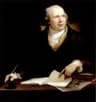
Marcus Herz
modernGerman Idealism / Kantian Philosophy
Marcus Herz was a German-Jewish physician and philosopher, best known as a student and important correspondent of Immanuel Kant. His 1771 dissertation on the sensible and intelligible world was defended under Kant's presidency, and Kant's landmark 1772 letter to Herz is considered a pivotal document in the genesis of the Critique of Pure Reason. Herz developed his own aesthetic theory that diverged from Kant's, particularly regarding judgments of taste and the role of material qualities in beauty.
14 arguments
AestheticsTruth & KnowledgeMoral Responsibility
P
Pargetter
contemporaryAnalytic Philosophy
Robert Pargetter was an Australian philosopher known for his influential collaborations with Frank Jackson on ethical theory and with David Armstrong on metaphysics. His work on objective consequentialism, particularly the Jackson-Pargetter account of moral obligation under uncertainty, remains a key reference point in normative ethics.
14 arguments
Moral ResponsibilityConsequentialismJustice & Punishment

Thomas Aquinas
medievalScholasticism
Thomas Aquinas (1225–1274) was an Italian Dominican friar, philosopher, and theologian whose synthesis of Aristotelian philosophy with Christian doctrine became the foundation of Scholasticism. His Summa Theologica remains one of the most influential works in Western philosophy and Catholic theology, addressing questions of God's existence, ethics, and the nature of the soul.
14 arguments
TrinityNatural TheologyAfterlife & Death
B
Boyd
contemporaryNaturalism / Scientific Realism
Richard Boyd is an American philosopher at Cornell University, best known for his influential defense of scientific realism and his contributions to naturalistic epistemology and moral realism. His work on the explanationist defense of realism and the epistemic reliability of scientific methods has been central to debates about circularity in justifying epistemic practices.
13 arguments
SkepticismTruth & Knowledge
Gotthold Ephraim Lessing
modernGerman Enlightenment
Gotthold Ephraim Lessing was a German writer, philosopher, and art critic of the Enlightenment, widely regarded as the founder of modern German literature and aesthetic theory. His treatise 'Laocoon: An Essay on the Limits of Painting and Poetry' (1766) established foundational distinctions between the temporal and spatial arts, profoundly influencing aesthetics, semiotics, and literary criticism.
13 arguments
AestheticsPhilosophy of LanguageTruth & Knowledge
Johann Gottfried Herder
modernGerman Idealism / Romanticism
Johann Gottfried Herder was a German philosopher, theologian, and literary critic who was a leading figure of the Sturm und Drang movement and a major influence on German Romanticism. He made pioneering contributions to the philosophy of language, aesthetics, and the philosophy of history, arguing that culture, language, and thought are deeply intertwined and historically situated.
13 arguments
AestheticsPhilosophy of LanguageTruth & Knowledge

Moritz
modernGerman Idealism / Enlightenment Aesthetics
Karl Philipp Moritz was a German author, editor, and aesthetician of the late Enlightenment, best known for developing an autonomous theory of art and aesthetic judgment that anticipated and paralleled Kant's critical aesthetics. His treatise 'On the Artistic Imitation of the Beautiful' (1788) articulated a formalist account of beauty as intrinsic perfection, influencing both Goethe and the German Romantic movement.
12 arguments
Aesthetics

Stathis Psillos
contemporaryAnalytic Philosophy of Science
Stathis Psillos is a Greek philosopher of science and one of the leading contemporary defenders of scientific realism. He is best known for his systematic defense of the no-miracles argument and his work on causation, explanation, and the history of the philosophy of science.
12 arguments
SkepticismTruth & KnowledgeModality & Possibility

Edward Zalta
contemporaryAnalytic Philosophy
Edward Zalta is an American philosopher and senior research scholar at Stanford University, best known for developing axiomatic object theory, which provides a formal framework for reasoning about abstract and possible objects. He is also the founding editor and principal editor of the Stanford Encyclopedia of Philosophy, one of the most important open-access reference works in philosophy.
11 arguments
Modality & PossibilityConsciousness & MindTruth & Knowledge
Mendelssohn
modernEnlightenment Rationalism
Moses Mendelssohn (1729–1786) was a German-Jewish philosopher of the Enlightenment, a central figure in the Haskalah (Jewish Enlightenment), and a leading aesthetician of the 18th century. He made significant contributions to metaphysics, aesthetics, and the philosophy of religion, and was widely regarded as one of the foremost philosophers in Germany during his lifetime.
11 arguments
Aesthetics
Bv
Bas van Fraassen
contemporaryAnalytic Philosophy, Philosophy of Science
Bas van Fraassen is a Dutch-American philosopher of science, best known for developing constructive empiricism as an alternative to scientific realism. His work has been central to debates about the aims of science, probability theory, and the limits of inference to the best explanation.
10 arguments
SkepticismTruth & KnowledgeMoral Responsibility

Richard Braithwaite
modernAnalytic Philosophy
Richard Bevan Braithwaite was a British philosopher of science at the University of Cambridge, known for his work on the foundations of scientific reasoning, probability, and the philosophy of religion. He held the Knightbridge Professorship of Moral Philosophy and made significant contributions to the understanding of scientific explanation and the role of models in science.
10 arguments
SkepticismTruth & Knowledge

Thomas Hobbes
modernEarly Modern Philosophy, Political Philosophy, Materialism
Thomas Hobbes (1588–1679) was an English philosopher whose materialist metaphysics and rigorous political theory made him one of the founding figures of modern Western philosophy. Best known for Leviathan (1651), he argued that without a sovereign authority, human life degenerates into a 'war of all against all.' His work laid foundational groundwork for social contract theory, mechanistic philosophy of mind, and the secular analysis of political legitimacy.
10 arguments
SkepticismTruth & KnowledgeNatural Theology
Zalta
contemporaryAnalytic Philosophy
Edward N. Zalta is an American philosopher and senior research scholar at Stanford University, best known for developing Axiomatic Metaphysics (object theory) and for founding and directing the Stanford Encyclopedia of Philosophy (SEP), one of the most important open-access reference works in philosophy.
10 arguments
Natural TheologyModality & Possibility
Gottfried Wilhelm Leibniz
modernRationalism
Gottfried Wilhelm Leibniz (1646–1716) was a German polymath and rationalist philosopher whose metaphysical system centered on the theory of monads, pre-established harmony, and the principle of sufficient reason. He made foundational contributions to logic, mathematics (co-inventing calculus independently of Newton), and natural theology. His theodicy—arguing that this world is the best of all possible worlds—remained a touchstone of philosophical theology for centuries.
9 arguments
Natural TheologyAestheticsTruth & Knowledge

Isaac Newton
modernNatural Philosophy / Mechanical Philosophy
Sir Isaac Newton was an English mathematician, physicist, and natural philosopher whose work laid the foundations of classical mechanics, optics, and calculus. His Philosophiæ Naturalis Principia Mathematica (1687) formulated the laws of motion and universal gravitation, profoundly shaping both science and natural philosophy for centuries.
9 arguments
Modality & PossibilityCausationDivine Attributes

Ludwig Wittgenstein
contemporaryAnalytic Philosophy
Ludwig Wittgenstein (1889–1951) was an Austrian-British philosopher widely regarded as one of the most influential thinkers of the twentieth century. His early work, the Tractatus Logico-Philosophicus, advanced a picture theory of language and meaning, while his later Philosophical Investigations fundamentally revised that view through the concepts of language games and family resemblance. His two distinct philosophical periods each generated major research programs in analytic philosophy.
9 arguments
Philosophy of LanguageTruth & KnowledgeDivine Attributes
PM
Patrick Maher
contemporaryBayesian Epistemology
Patrick Maher is an American philosopher of science who spent his career at the University of Illinois at Urbana-Champaign. He is best known for his work on Bayesian epistemology, inductive logic, and the foundations of probability, particularly his pragmatic defense of Bayesian reasoning in his book Betting on Theories (1993). He has also made notable contributions to debates on probabilistic abduction and its advantages over standard Bayesian updating.
9 arguments
CausationTruth & KnowledgeConsequentialism

Rudolf Carnap
contemporaryLogical Positivism
Rudolf Carnap was a German-born philosopher and a leading figure of logical positivism and the Vienna Circle. He made foundational contributions to philosophy of science, formal logic, semantics, and the philosophy of language, advocating for the logical analysis of scientific knowledge and the elimination of metaphysics.
9 arguments
Truth & KnowledgePhilosophy of LanguageNatural Theology
vF
van Fraassen
contemporaryAnalytic Philosophy, Philosophy of Science
Bas van Fraassen is a Dutch-American philosopher of science best known for developing constructive empiricism, the view that the aim of science is empirical adequacy rather than truth. His work has been central to debates about scientific realism, probability, and the interpretation of quantum mechanics.
9 arguments
Modality & PossibilityTruth & KnowledgePhilosophy of Language
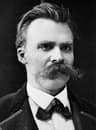
Friedrich Nietzsche
modernContinental Philosophy (Existentialism, Perspectivism)
Friedrich Nietzsche was a 19th-century German philosopher, cultural critic, and philologist whose radical critiques of morality, religion, and metaphysics reshaped modern thought. He proclaimed the 'death of God,' developed the concepts of the will to power and the Ubermensch, and challenged the foundations of Christian and Platonic value systems.
8 arguments
Natural TheologyTruth & KnowledgeFree Will & Foreknowledge
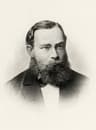
Gottlob Frege
modernAnalytic Philosophy
Gottlob Frege (1848-1925) was a German mathematician, logician, and philosopher widely regarded as the founder of modern logic and analytic philosophy. His development of predicate logic and his work on the philosophy of language and mathematics fundamentally transformed both fields, influencing Russell, Wittgenstein, and Carnap.
8 arguments
Philosophy of LanguageTruth & KnowledgeSkepticism

John Locke
modernEmpiricism
John Locke (1632–1704) was an English philosopher and physician whose empiricist epistemology and political theory made him one of the most consequential thinkers of the early modern period. His Essay Concerning Human Understanding argued that all knowledge derives from sensory experience, rejecting innate ideas and establishing the mind as a tabula rasa at birth. His political philosophy, grounding legitimate government in natural rights and the consent of the governed, profoundly shaped Enlightenment liberalism and the constitutional foundations of modern democracies.
8 arguments
Natural TheologyTruth & KnowledgePhilosophy of Language

John Stuart Mill
modernClassical Liberalism / Utilitarianism
John Stuart Mill was a British philosopher, political economist, and civil servant who was one of the most influential thinkers of the 19th century. He refined and defended utilitarianism, made foundational contributions to classical liberalism, and advocated for individual liberty, women's rights, and representative government.
8 arguments
Moral ResponsibilityJustice & PunishmentConsciousness & Mind
KG
Kurt Gödel
modernMathematical Logic, Analytic Philosophy, Mathematical Platonism
Kurt Gödel (1906–1978) was an Austrian-American logician, mathematician, and philosopher whose incompleteness theorems fundamentally transformed the foundations of mathematics and logic. Working at the Institute for Advanced Study in Princeton alongside Einstein, he demonstrated that any sufficiently powerful formal system contains true statements that cannot be proven within that system. He was also a committed mathematical Platonist who believed mathematical objects exist independently of human minds.
8 arguments
SkepticismTruth & KnowledgeModality & Possibility

Socrates
ancientClassical Greek Philosophy
Socrates was an ancient Greek philosopher from Athens, widely regarded as one of the founders of Western philosophy. Known primarily through the writings of his students Plato and Xenophon, he developed the Socratic method of inquiry and focused philosophy on ethics, the examined life, and the pursuit of virtue.
8 arguments
Afterlife & DeathPhilosophy of LanguageTruth & Knowledge

Albert Einstein
modernPhilosophy of Science / Scientific Realism
Albert Einstein was a German-born theoretical physicist whose work fundamentally transformed modern physics and philosophy of science. Best known for his theories of special and general relativity, he also made profound contributions to the philosophy of space, time, and measurement, challenging classical assumptions about the nature of physical reality.
7 arguments
Modality & PossibilityCausationSkepticism
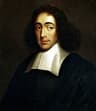
Baruch Spinoza
modernRationalism
Baruch Spinoza was a Dutch rationalist philosopher of Portuguese-Jewish origin whose monistic metaphysics identified God with Nature (Deus sive Natura). His geometric deduction of ethics and uncompromising naturalism made him a foundational figure of the Radical Enlightenment and modern biblical criticism.
7 arguments
AestheticsTruth & KnowledgeNatural Theology
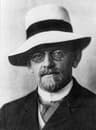
David Hilbert
modernFormalism, Mathematical Logic, Philosophy of Mathematics
David Hilbert (1862–1943) was a German mathematician widely regarded as one of the most influential mathematicians of the 19th and 20th centuries. He made foundational contributions to algebra, functional analysis, mathematical physics, and the philosophy of mathematics, most notably through his formalist program seeking to ground all of mathematics in a complete and consistent axiomatic system. His 1900 list of 23 unsolved problems shaped the trajectory of 20th-century mathematics.
7 arguments
Modality & PossibilityTruth & KnowledgeCausation

Diderot
modernFrench Enlightenment
Denis Diderot was a French Enlightenment philosopher, writer, and art critic, best known as co-founder and chief editor of the Encyclopédie, one of the most ambitious intellectual projects of the 18th century. His philosophical contributions span aesthetics, materialism, ethics, and the philosophy of mind, with his art criticism in the Salons establishing him as a pioneering figure in modern aesthetic theory.
7 arguments
AestheticsPersonal IdentityMoral Responsibility

G.W.F. Hegel
modernGerman Idealism
Georg Wilhelm Friedrich Hegel was a German idealist philosopher whose comprehensive system of absolute idealism profoundly shaped Western philosophy. His dialectical method and works on logic, phenomenology, and the philosophy of history established him as one of the most influential thinkers of the modern era, with lasting impact on political philosophy, theology, and social theory.
7 arguments
Natural TheologyTruth & KnowledgeSkepticism

Kenny
contemporaryAnalytic Philosophy
Sir Anthony Kenny is a British philosopher known for his extensive work in philosophy of mind, action theory, and the history of philosophy. He made major contributions to the analysis of human abilities and free will, and is one of the foremost interpreters of Aristotle, Aquinas, Descartes, and Wittgenstein.
7 arguments
Moral ResponsibilityModality & PossibilityFree Will & Foreknowledge
KF
Kit Fine
contemporaryAnalytic Philosophy
Kit Fine is a British-born philosopher widely regarded as one of the most important metaphysicians and logicians of the late twentieth and early twenty-first centuries. He has made groundbreaking contributions to modal logic, metaphysics, philosophy of language, and the philosophy of mathematics, with particular influence on theories of essence, grounding, and ontological dependence.
7 arguments
TrinityConsciousness & MindPhilosophy of Language
PT
Paul Teller
contemporaryAnalytic Philosophy of Science
Paul Teller is an American philosopher of science at the University of California, Davis, known for his work on the philosophy of quantum field theory, scientific realism, and Bayesian epistemology. He has made significant contributions to debates about probabilistic reasoning, the interpretation of quantum mechanics, and the nature of properties and relations in physics.
7 arguments
SkepticismTruth & KnowledgeMoral Responsibility
TW
Timothy Williamson
contemporaryAnalytic Philosophy
Timothy Williamson is a British philosopher best known for his work in epistemology, philosophical logic, and metaphysics. He is the Wykeham Professor of Logic at the University of Oxford and has defended knowledge-first epistemology, the view that knowledge is conceptually prior to belief and justification.
7 arguments
SkepticismTruth & KnowledgeConsciousness & Mind
H
Harris
contemporaryPhilosophy of Perception / Phenomenological Psychology
C.S. Harris is a perceptual psychologist and philosopher known for his influential work on adaptation to optically inverted and reversed vision. His research on how subjects regain fluent coping after perceptual disruption has been central to phenomenological and enactivist debates about the relationship between skillful bodily engagement and perceptual experience.
6 arguments
PerceptionConsciousness & MindTruth & Knowledge
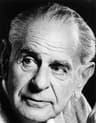
Karl Popper
contemporaryAnalytic Philosophy, Critical Rationalism
Karl Popper (1902–1994) was an Austrian-British philosopher of science and one of the most influential thinkers of the twentieth century. He is best known for his criterion of falsifiability as the demarcation between science and non-science, and for his broader epistemological framework of critical rationalism. His political philosophy, articulated in response to totalitarianism, defended liberal democracy and critiqued historicist social theories.
6 arguments
Consciousness & MindPhilosophy of LanguageTruth & Knowledge
Pv
Peter van Inwagen
contemporaryAnalytic Philosophy
Peter van Inwagen is an American analytic philosopher best known for his work in metaphysics, free will, and philosophy of religion. His 1983 book 'An Essay on Free Will' revitalized incompatibilism in contemporary debate, and his 'Material Beings' advanced a distinctive mereological nihilism about composite objects.
6 arguments
Consciousness & MindMoral ResponsibilityModality & Possibility

Saul Kripke
contemporaryAnalytic Philosophy
Saul Kripke was an American philosopher and logician, widely regarded as one of the most important philosophers of the twentieth century. His work on modal logic, the semantics of proper names, and the necessary a posteriori fundamentally reshaped analytic philosophy, particularly philosophy of language and metaphysics.
6 arguments
Modality & PossibilityPhilosophy of LanguageSkepticism
TS
Theodore Sider
contemporaryAnalytic Philosophy
Theodore Sider is an American analytic philosopher known for his influential work in metaphysics, particularly on topics such as four-dimensionalism, temporal parts, ontological realism, and the philosophy of modality. He has made major contributions to debates about persistence, composition, and the structure of reality, arguing that metaphysical questions have objective answers grounded in the fundamental 'joint-carving' structure of the world.
6 arguments
Philosophy of LanguageModality & PossibilityTruth & Knowledge
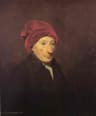
Thomas Reid
modernScottish Common Sense Realism
Thomas Reid (1710–1796) was a Scottish philosopher and founder of the Scottish School of Common Sense, who developed a robust critique of the skeptical implications of the ideas theory of perception advanced by Descartes, Locke, and Hume. He argued that ordinary human faculties are reliable and that common sense beliefs are foundational to rational inquiry.
6 arguments
Philosophy of LanguageTruth & KnowledgeNatural Theology

Alvin Plantinga
contemporaryAnalytic Philosophy, Reformed Epistemology
Alvin Plantinga (b. 1932) is an American analytic philosopher widely regarded as the most influential philosopher of religion of the twentieth century. He is best known for his free will defense against the logical problem of evil, his revival of the ontological argument in modal logical form, and his foundational work in Reformed epistemology. His career spanned Calvin College and the University of Notre Dame, where he shaped a generation of philosophers working at the intersection of analytic philosophy and Christian theology.
5 arguments
TrinityTruth & KnowledgeModality & Possibility
A
Anderson
contemporaryAnalytic Philosophy
Anderson is a contemporary philosopher whose work engages with philosophy of mind and philosophy of language. The name is common in contemporary analytic philosophy, and without further disambiguation a precise scholarly identification is uncertain.
5 arguments
Consciousness & MindPhilosophy of LanguageSkepticism

Edward Blyden
modernPan-Africanism
Edward Wilmot Blyden was a Caribbean-born Liberian intellectual, diplomat, and educator widely regarded as a founding figure of Pan-Africanism. His major work 'Christianity, Islam and the Negro Race' (1887) argued for the distinctive value of African civilization and advocated for the emigration of people of African descent to Africa to build independent nations free from racial oppression.
5 arguments
Rights & LibertyDemocracy & GovernanceMoral Responsibility
GE
G. E. Moore
modern
5 arguments
Natural TheologyTruth & KnowledgePhilosophy of Language
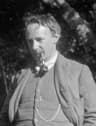
G.E. Moore
contemporaryAnalytic Philosophy
George Edward Moore (1873-1958) was a British philosopher and a founding figure of analytic philosophy alongside Bertrand Russell and Ludwig Wittgenstein. He is renowned for his defense of common sense realism, his refutation of idealism, and his foundational contributions to metaethics, particularly the identification of the naturalistic fallacy.
5 arguments
Natural TheologyTruth & KnowledgeDivine Attributes

Galileo Galilei
modernNatural Philosophy / Early Modern Science
Galileo Galilei was an Italian astronomer, physicist, and mathematician whose advocacy of heliocentrism and pioneering use of the telescope transformed natural philosophy. Often called the 'father of modern science,' he established the methodology of systematic observation and mathematical description that became foundational to the scientific revolution.
5 arguments
Modality & PossibilityCausationPhilosophy of Language
GH
Gilbert Harman
contemporaryAnalytic Philosophy
Gilbert Harman (1938-2021) was an American philosopher who spent his career at Princeton University, making influential contributions to epistemology, philosophy of mind, moral philosophy, and philosophy of language. He is best known for developing and naming the concept of 'inference to the best explanation' and for his skepticism about character traits in moral psychology.
5 arguments
SkepticismTruth & KnowledgePerception
G
Goldman
contemporaryAnalytic Ethics
Holly M. Smith (publishing earlier as Holly Smith Goldman) is an American moral philosopher known for her influential work on the theory of moral obligation, particularly the debate between actualism and possibilism. Her paper 'Doing the Best One Can' (1978) is a landmark contribution to the analysis of obligation under conditions of predicted moral failure.
5 arguments
Moral ResponsibilityConsequentialismJustice & Punishment
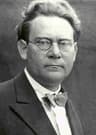
Hans Reichenbach
modernLogical Empiricism
Hans Reichenbach was a German-American philosopher of science and a leading figure in the Berlin Circle of logical empiricism. He made foundational contributions to the philosophy of space and time, probability theory, and the logical analysis of scientific knowledge, particularly regarding Einstein's theory of relativity.
5 arguments
Modality & PossibilityCausationFree Will & Foreknowledge
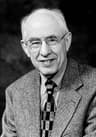
Hilary Putnam
contemporaryAnalytic Philosophy
Hilary Putnam (1926-2016) was an influential American philosopher who made major contributions to philosophy of mind, philosophy of language, philosophy of mathematics, and philosophy of science. Known for his intellectual honesty in repeatedly revising his own positions, he developed functionalism, the causal theory of reference, and internal realism, shaping analytic philosophy for over half a century.
5 arguments
Consciousness & MindNatural TheologyTruth & Knowledge

James T. Holly
modernBlack Nationalism / Emigrationism
James Theodore Holly (1829–1911) was an African American Episcopal bishop, emigrationist, and Black nationalist who argued that people of African descent should leave the United States and establish self-governing nations abroad. He led a colony of emigrants to Haiti in 1861 and became the first African American bishop consecrated in the Episcopal Church, serving as Bishop of Haiti for over four decades.
5 arguments
Rights & LibertyDemocracy & GovernanceMoral Responsibility
KL
Keith Lehrer
contemporaryAnalytic Philosophy
Keith Lehrer is an American philosopher best known for his work in epistemology, philosophy of mind, and action theory. He developed the coherence theory of knowledge and has made influential contributions to debates on free will, self-trust, and rational consensus.
5 arguments
Moral ResponsibilityModality & PossibilityFree Will & Foreknowledge
L
Lehrer
contemporaryAnalytic Philosophy
Keith Lehrer is an American philosopher known for his influential contributions to epistemology, particularly his defeasibility theory of knowledge and his work on consensus, autonomy, and rational acceptance. His Gettier-style counterexamples to various analyses of knowledge have been widely discussed in analytic epistemology.
5 arguments
Modality & PossibilityTruth & KnowledgeMoral Responsibility
MN
Martha Nussbaum
contemporaryLiberal Political Philosophy
Martha Nussbaum is an American philosopher and legal scholar known for her work on the capabilities approach, political liberalism, and the role of emotions in ethical life. A professor at the University of Chicago, she has made influential contributions across moral philosophy, political theory, feminism, and ancient Greek philosophy.
5 arguments
Moral ResponsibilityJustice & PunishmentConsciousness & Mind

Peacocke
contemporaryAnalytic Philosophy
Christopher Peacocke is a British philosopher known for his influential work on the theory of concepts, philosophy of mind, and epistemology. His account of concept possession in terms of determination theories and possession conditions has been central to debates in analytic philosophy of mind and cognitive science.
5 arguments
Modality & PossibilityTruth & KnowledgeMoral Responsibility
P
Portmore
contemporaryAnalytic Ethics
Douglas W. Portmore is an American moral philosopher at Arizona State University, known for his work on consequentialism, moral obligations, and the relationship between rationality and morality. He has made significant contributions to debates about commonsense consequentialism and the nature of moral reasons.
5 arguments
Moral ResponsibilityJustice & PunishmentSkepticism
RM
Robert Merrihew Adams
contemporaryAnalytic Philosophy of Religion
Robert Merrihew Adams is an American analytic philosopher known for his work in philosophy of religion, metaphysics, ethics, and the history of modern philosophy. He has made influential contributions to theistic ethics, Leibniz scholarship, and the metaphysics of virtue, arguing for a modified divine command theory and a Platonic account of the good.
5 arguments
PerceptionModality & PossibilityAesthetics
WV
W. V. O. Quine
contemporary
5 arguments
Philosophy of LanguageTruth & KnowledgeModality & Possibility
AG
Adolf Grünbaum
contemporaryAnalytic Philosophy, Philosophy of Science
Adolf Grünbaum (1923–2018) was a German-American philosopher of science, long associated with the University of Pittsburgh, where he held the Andrew Mellon Chair in Philosophy. He made foundational contributions to the philosophy of physics and space-time, and was one of the most rigorous analytic critics of both Freudian psychoanalysis and theistic arguments, including cosmological arguments for the existence of God.
4 arguments
Natural TheologyModality & PossibilityCausation

Alan Turing
contemporaryMathematical Logic and Philosophy of Mind
Alan Turing (1912–1954) was a British mathematician, logician, and cryptanalyst whose 1936 paper 'On Computable Numbers' established the theoretical foundations of computation via the abstract Turing machine. He made decisive contributions to mathematical logic, computability theory, and the philosophy of mind, and is widely regarded as the founding figure of computer science and artificial intelligence research.
4 arguments
Modality & PossibilityTruth & KnowledgeSkepticism

Alfred Tarski
contemporaryAnalytic Philosophy, Mathematical Logic
Alfred Tarski was a Polish-American logician and mathematician, widely regarded as one of the greatest logicians of the twentieth century. He made foundational contributions to model theory, formal semantics, and the theory of truth, most notably his semantic definition of truth for formalized languages. His work bridged mathematical logic, metamathematics, and the philosophy of language.
4 arguments
Modality & PossibilityFree Will & ForeknowledgeTruth & Knowledge
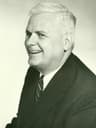
Alonzo Church
modernMathematical Logic, Analytic Philosophy
Alonzo Church (1903–1995) was an American mathematician and logician whose work at Princeton and UCLA made foundational contributions to mathematical logic and the theory of computation. He is best known for developing the lambda calculus, proving the undecidability of first-order logic (Church's theorem), and formulating the Church-Turing thesis, which characterizes the limits of effective computability. His rigorous approach to the foundations of logic shaped both analytic philosophy and theoretical computer science.
4 arguments
SkepticismTruth & KnowledgeModality & Possibility

Alvin Goldman
contemporaryAnalytic Philosophy
Alvin Goldman (1938-2024) was an American philosopher known for foundational work in epistemology and philosophy of mind. He developed reliabilism as a theory of justified belief and pioneered social epistemology as a distinct subfield.
4 arguments
SkepticismTruth & KnowledgeMoral Responsibility

Arthur Prior
contemporaryAnalytic Philosophy, Temporal Logic
Arthur Norman Prior (1914–1969) was a New Zealand logician and philosopher who founded tense logic, the formal study of temporal operators in modal systems. Working at Manchester and Oxford, he developed a rigorous framework for reasoning about past, present, and future that transformed both philosophical logic and the metaphysics of time. His propositional logic work, including quantification over propositions, remains foundational to debates on modality and ontology.
4 arguments
Modality & PossibilityTruth & KnowledgeFree Will & Foreknowledge

Augustine of Hippo
ancientPatristic Theology, Christian Platonism
Augustine of Hippo (354–430 CE) was a North African bishop, theologian, and philosopher whose writings profoundly shaped Western Christianity and Western philosophy. His works on grace, free will, original sin, and the Trinity became foundational for both Catholic and Protestant theology, and his Confessions remains one of the most influential autobiographies ever written.
4 arguments
TrinityAestheticsTruth & Knowledge

Bernhard Riemann
modernPhilosophy of Mathematics
Bernhard Riemann (1826–1866) was a German mathematician whose work fundamentally transformed geometry, analysis, and the philosophy of space. His 1854 habilitation lecture introduced a generalized conception of curved space that freed geometry from Euclidean assumptions, directly enabling Einstein's general relativity. He also made foundational contributions to complex analysis, number theory, and the theory of integration.
4 arguments
Modality & PossibilityCausationTruth & Knowledge

Charles Sanders Peirce
modernPragmatism
Charles Sanders Peirce (1839–1914) was an American philosopher, logician, mathematician, and scientist widely regarded as the founder of pragmatism and one of the most original thinkers in American intellectual history. His work ranged across formal logic, semiotics, metaphysics, and the philosophy of science, establishing foundational frameworks that influenced analytic philosophy, cognitive science, and communication theory. Despite publishing little in his lifetime, his manuscripts reveal a systematic philosophical vision centered on inquiry, sign relations, and a form of objective idealism.
4 arguments
Natural TheologyTruth & KnowledgeSkepticism
DM
David Miller
contemporaryCritical Rationalism
David Miller is a British philosopher best known for his work on critical rationalism and his defense and extension of Karl Popper's philosophy of science. He has made significant contributions to the philosophy of probability, decision theory, and the logic of scientific discovery.
4 arguments
SkepticismTruth & KnowledgeDemocracy & Governance

Donald Davidson
contemporaryAnalytic Philosophy
Donald Davidson (1917-2003) was a major American analytic philosopher known for his influential work in philosophy of mind, language, and action. His theories of meaning, mental events, and radical interpretation shaped late 20th-century analytic philosophy.
4 arguments
Philosophy of LanguageFree Will & ForeknowledgePerception

Edmund Husserl
modernPhenomenology
Edmund Husserl (1859–1938) was a German philosopher who founded phenomenology, a method of philosophical inquiry focused on the structures of first-person conscious experience. Trained as a mathematician under Weierstrass and philosophically influenced by Brentano, he sought to establish philosophy as a rigorous science by returning to the things themselves as they appear to consciousness. His work laid the groundwork for existentialism, hermeneutics, and much of continental philosophy in the twentieth century.
4 arguments
Consciousness & MindPhilosophy of LanguageTruth & Knowledge
ES
Ernest Sosa
contemporaryAnalytic Philosophy
Ernest Sosa is a Cuban-American philosopher known for his foundational work in epistemology, particularly virtue epistemology. He developed the influential distinction between 'animal knowledge' and 'reflective knowledge' and has shaped contemporary debates on the nature of justification, skepticism, and the Gettier problem.
4 arguments
Truth & KnowledgeSkepticismPerception
F
Fine
contemporaryPhilosophy of Science
Arthur Fine is an American philosopher of science best known for his Natural Ontological Attitude (NOA), a stance that seeks to dissolve the realism/anti-realism debate. He has made significant contributions to the foundations of quantum mechanics and the philosophy of scientific realism, engaging critically with arguments like the no-miracles argument.
4 arguments
SkepticismTruth & KnowledgeCausation

Francis Hutcheson
modernScottish Enlightenment / Moral Sense Theory
Francis Hutcheson (1694–1746) was an Irish-Scottish philosopher regarded as a founding figure of the Scottish Enlightenment. He developed an influential moral sense theory holding that humans possess an innate faculty for perceiving moral qualities, and his aesthetics grounded beauty in a sense of 'uniformity amidst variety,' influencing later thinkers including David Hume and Adam Smith.
4 arguments
AestheticsTruth & KnowledgeVirtue Ethics
FJ
Frank Jackson
contemporaryAnalytic Philosophy
Frank Jackson is an Australian analytic philosopher best known for his work in philosophy of mind, metaphysics, and metaethics. He formulated the famous 'Knowledge Argument' (the Mary's Room thought experiment) against physicalism, though he later revised his views to endorse a form of physicalism. He has also made significant contributions to conceptual analysis and two-dimensional semantics.
4 arguments
Consciousness & MindMoral ResponsibilityJustice & Punishment

Franz Kafka
modernExistentialism, Absurdism
Franz Kafka was a German-language novelist and short story writer from Prague, widely regarded as one of the most influential literary figures of the 20th century. His works explore themes of existential anxiety, alienation, absurdity, and the individual's powerlessness against incomprehensible bureaucratic and societal forces, making him a key figure in existentialist and absurdist thought.
4 arguments
Modality & Possibility

George Berkeley
modernEmpiricism / Subjective Idealism
George Berkeley was an Anglo-Irish philosopher and Anglican bishop best known for his theory of immaterialism (subjective idealism), summarized in the dictum 'esse est percipi' (to be is to be perceived). He argued that material objects exist only insofar as they are perceived by minds, with God serving as the continuous perceiver that sustains reality.
4 arguments
Natural TheologyTruth & KnowledgeJustice & Punishment

Henry Sidgwick
modernClassical Utilitarianism
Henry Sidgwick was a 19th-century English utilitarian philosopher and ethicist, best known for his magnum opus The Methods of Ethics (1874), which systematically analyzed and compared egoism, intuitionism, and utilitarianism. He was a founder of Newnham College, Cambridge, a pioneer of women's higher education, and a co-founder of the Society for Psychical Research.
4 arguments
Moral ResponsibilityJustice & PunishmentAesthetics

Hermann Weyl
modernMathematical Philosophy
Hermann Weyl was a German mathematician and theoretical physicist who made fundamental contributions to the foundations of mathematics, geometry, and physics. He pioneered gauge theory, advanced the mathematical foundations of general relativity and quantum mechanics, and wrote influentially on the philosophy of mathematics and science.
4 arguments
Modality & PossibilityCausationTruth & Knowledge
JE
John Earman
contemporaryAnalytic Philosophy of Science
John Earman is an American philosopher of physics who has made foundational contributions to the philosophy of space, time, and scientific reasoning. He is Distinguished University Professor Emeritus at the University of Pittsburgh and is renowned for his rigorous analytical work on determinism, Bayesian confirmation theory, and the philosophical implications of modern physics.
4 arguments
Natural TheologyCausationSkepticism

John Rawls
contemporaryAnalytic Political Philosophy / Liberal Egalitarianism
John Rawls was an American political philosopher widely regarded as the most influential political philosopher of the 20th century. His landmark work, A Theory of Justice (1971), revitalized normative political philosophy by offering a systematic liberal egalitarian alternative to utilitarianism grounded in a social contract framework.
4 arguments
Moral ResponsibilityJustice & PunishmentSocial Contract

John von Neumann
modernMathematical Philosophy, Philosophy of Science
John von Neumann (1903–1957) was a Hungarian-American mathematician and polymath whose work spanned pure mathematics, quantum mechanics, economics, and computer science. He co-founded game theory with Oskar Morgenstern and developed the minimax theorem, laying the formal groundwork for rational decision theory. His contributions to the foundations of quantum mechanics and the architecture of digital computers place him among the most consequential scientific minds of the twentieth century.
4 arguments
SkepticismTruth & KnowledgeModality & Possibility

Joseph Raz
contemporaryAnalytic Philosophy, Legal Positivism
Joseph Raz (1939–2022) was an Israeli legal and moral philosopher, widely regarded as one of the most influential legal positivists and political philosophers of the twentieth century. He taught at Oxford, Columbia, and King's College London, making foundational contributions to the theory of authority, practical reason, and the nature of law. His work bridges legal philosophy, ethics, and political theory with exceptional analytical rigor.
4 arguments
Rights & LibertyDemocracy & GovernancePhilosophy of Language
Kant
modernGerman Idealism / Critical Philosophy
Immanuel Kant was an 18th-century German philosopher whose critical philosophy revolutionized Western thought. His three Critiques systematically examined the limits of human reason, the foundations of morality, and the nature of aesthetic and teleological judgment, establishing him as one of the most influential philosophers in history.
4 arguments
Natural TheologyTruth & KnowledgeMoral Responsibility

Karl Marx
modernHistorical Materialism
Karl Marx was a German philosopher, economist, and political theorist whose work in historical materialism and critique of political economy fundamentally shaped modern social science and political thought. His analysis of capitalism, class struggle, and ideology remains among the most influential bodies of work in the history of philosophy and social theory.
4 arguments
SkepticismTruth & KnowledgeNatural Theology
K
Kuhn
contemporaryPhilosophy of Science
Thomas S. Kuhn (1922–1996) was an American philosopher and historian of science whose 1962 work 'The Structure of Scientific Revolutions' transformed the philosophy of science. He argued that science progresses through periodic paradigm shifts rather than linear accumulation, and drew on perceptual psychology—including Stratton's inverting-lens experiments—to illustrate how scientists literally see the world differently across paradigms.
4 arguments
PerceptionConsciousness & Mind
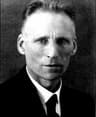
L.E.J. Brouwer
modernMathematical Intuitionism
Luitzen Egbertus Jan Brouwer (1881–1966) was a Dutch mathematician and philosopher who founded mathematical intuitionism, the view that mathematics is a mental construction rather than a discovery of mind-independent truths. He made foundational contributions to topology while simultaneously arguing that classical logic—particularly the law of excluded middle—is not universally valid in infinite mathematical domains. His work reshaped debates about the foundations of mathematics and anticipated later constructivist and anti-realist positions in the philosophy of logic.
4 arguments
Modality & PossibilityCausationPhilosophy of Language
L
Laudan
contemporaryPhilosophy of Science
Larry Laudan is an American philosopher of science known for his critiques of scientific realism and his development of a problem-solving model of scientific progress. His work on the pessimistic meta-induction and normative naturalism has been deeply influential in debates about the rationality and reliability of science.
4 arguments
SkepticismTruth & KnowledgeCausation
LZ
Linda Zagzebski
contemporaryVirtue Epistemology
Linda Zagzebski is an American philosopher known for her influential work in epistemology, philosophy of religion, and virtue theory. She is best known for developing virtue epistemology and for her work on religious epistemology, divine motivation theory, and the relationship between intellectual and moral virtues.
4 arguments
Free Will & ForeknowledgeTruth & KnowledgeSkepticism
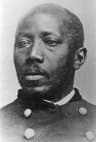
Martin Delany
modernBlack Nationalism / Pan-Africanism
Martin Delany (1812–1885) was an African American abolitionist, physician, journalist, and political philosopher widely regarded as the father of Black nationalism. He argued that people of African descent could not achieve full equality within the United States and advocated for emigration to establish independent Black nation-states, particularly in West Africa. His major work, The Condition, Elevation, Emigration, and Destiny of the Colored People of the United States (1852), laid critical intellectual groundwork for Pan-Africanist political thought.
4 arguments
Rights & LibertyDemocracy & GovernanceMoral Responsibility
MH
Martin Heidegger
contemporaryContinental Philosophy (Phenomenology and Existential Hermeneutics)
Martin Heidegger was a German philosopher widely regarded as one of the most influential and controversial thinkers of the 20th century. His magnum opus, Being and Time (1927), reoriented philosophy toward the question of Being (Sein) through an existential analysis of human existence (Dasein), profoundly shaping phenomenology, existentialism, hermeneutics, and Continental philosophy.
4 arguments
Philosophy of LanguageTruth & KnowledgeSkepticism

Nicolas Malebranche
modernCartesian Rationalism
Nicolas Malebranche was a French Oratorian priest and rationalist philosopher who sought to synthesize the thought of Augustine and Descartes. He is best known for his doctrines of occasionalism and the 'vision in God,' which holds that humans perceive external objects through ideas existing in the divine mind.
4 arguments
Natural TheologyTruth & KnowledgeJustice & Punishment

Peter Singer
contemporaryUtilitarianism, Applied Ethics
Peter Singer is an Australian moral philosopher and bioethicist, widely regarded as one of the most influential living philosophers. He is best known for his work on animal ethics, effective altruism, and utilitarian approaches to practical moral problems, particularly through his landmark book 'Animal Liberation' (1975).
4 arguments
Moral ResponsibilityJustice & PunishmentVirtue Ethics

Richard Swinburne
contemporaryAnalytic Philosophy of Religion
Richard Swinburne is a British philosopher of religion and Emeritus Professor at the University of Oxford, widely regarded as one of the most influential theistic philosophers of the 20th and 21st centuries. He is best known for his rigorous probabilistic arguments for the existence of God and his extensive work on the coherence of theism, the problem of evil, and the philosophy of mind.
4 arguments
TrinityNatural TheologyCausation

Robert Stalnaker
contemporaryAnalytic Philosophy
Robert Stalnaker is an American philosopher known for his influential work in philosophical logic, philosophy of language, and epistemology. He developed the influential possible worlds account of conditionals and made foundational contributions to the theory of presupposition, context, and common knowledge.
4 arguments
SkepticismTruth & KnowledgePhilosophy of Language
RC
Roderick Chisholm
contemporaryAnalytic Philosophy
Roderick Chisholm was an American analytic philosopher widely regarded as one of the most important epistemologists and metaphysicians of the twentieth century. He spent nearly his entire career at Brown University, where he made foundational contributions to the theory of knowledge, philosophy of mind, and metaphysics, particularly on topics of intentionality, epistemic justification, and human freedom.
4 arguments
PerceptionFree Will & ForeknowledgeModality & Possibility

Stephen Kleene
contemporaryMathematical Logic / Foundations of Mathematics
Stephen Cole Kleene (1909–1994) was an American mathematical logician and a principal founder of recursion theory. A student of Alonzo Church, he made foundational contributions to computability theory, formal language theory, and the metamathematics of intuitionistic logic. His work established core concepts underlying theoretical computer science and the study of the limits of mechanical computation.
4 arguments
Modality & PossibilityTruth & KnowledgeSkepticism
SS
Stewart Shapiro
contemporaryAnalytic Philosophy
Stewart Shapiro (b. 1951) is an American philosopher at Ohio State University, best known for developing ante rem structuralism — the view that mathematical structures exist independently of any systems that instantiate them. He has made major contributions to philosophy of mathematics, philosophy of logic, and the theory of vagueness.
4 arguments
SkepticismTruth & KnowledgePhilosophy of Language
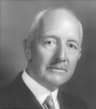
Stratton
modernExperimental Psychology
George Malcolm Stratton was an American psychologist who pioneered experimental research on visual perception, most notably his inverting-lens experiments in the 1890s which demonstrated the remarkable adaptability of the perceptual system and shaped debates about the relationship between vision and proprioception.
4 arguments
PerceptionConsciousness & Mind
AE
Adam Elga
contemporaryAnalytic Philosophy
Adam Elga is an American philosopher specializing in epistemology, decision theory, and philosophy of mind. He is known for his influential work on self-locating beliefs, the Sleeping Beauty problem, and the dynamics of rational credence. He currently teaches at Princeton University.
3 arguments
Truth & KnowledgeSkepticismModality & Possibility

Adam Smith
modernScottish Enlightenment
Adam Smith (1723-1790) was a Scottish moral philosopher and pioneer of political economy, best known for founding modern economics with The Wealth of Nations. A central figure of the Scottish Enlightenment, he also developed an influential theory of moral sentiments grounded in sympathy and the impartial spectator.
3 arguments
SkepticismTruth & KnowledgeDemocracy & Governance
A
Al-Ghazali
medievalAsh'ari Theology, Islamic Mysticism (Sufism)
Abu Hamid al-Ghazali (1058–1111) was a Persian Muslim theologian, jurist, and mystic whose work reshaped Islamic intellectual life. He mounted the most influential medieval critique of Aristotelian philosophy as adapted by Islamic thinkers, while simultaneously revitalizing Sufi spirituality within orthodox Sunni Islam. His synthesis of theology, law, and mysticism made him one of the most consequential figures in the history of Islamic thought.
3 arguments
Natural TheologyAgainst an attribute of GodFree Will & Foreknowledge
AB
Alexander Baumgarten
modernGerman Rationalism
Alexander Gottlieb Baumgarten was an 18th-century German philosopher who founded aesthetics as a distinct philosophical discipline. A follower of Leibniz and Wolff, he systematized rationalist metaphysics and coined the term 'aesthetica' to describe the science of sensory knowledge and beauty.
3 arguments
AestheticsTruth & KnowledgeNatural Theology
AG
Alexander Gottlieb Baumgarten
modernRationalism, Wolffian Philosophy
Alexander Gottlieb Baumgarten (1714–1762) was a German philosopher who coined the term 'aesthetics' and established it as a distinct philosophical discipline. A student of Christian Wolff, he argued that sensory cognition possesses its own form of perfection and logic, laying the groundwork for modern philosophy of art and beauty.
3 arguments
AestheticsTruth & KnowledgeNatural Theology
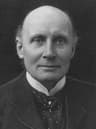
Alfred North Whitehead
modernProcess Philosophy
Alfred North Whitehead was a British mathematician, logician, and philosopher best known for co-authoring Principia Mathematica with Bertrand Russell and for founding process philosophy. His metaphysical system, developed in Process and Reality, reconceived reality as composed of interrelated events rather than static substances, profoundly influencing process theology.
3 arguments
Modality & PossibilityTruth & KnowledgePhilosophy of Language
AG
Allan Gibbard
contemporaryAnalytic Philosophy, Expressivism
Allan Gibbard is an American philosopher and Professor Emeritus at the University of Michigan, best known for his work in metaethics and moral philosophy. He developed expressivism about normative discourse, arguing that normative judgments express mental states rather than describe facts. His influential works include 'Wise Choices, Apt Feelings' and 'Thinking How to Live'.
3 arguments
Moral ResponsibilityTruth & KnowledgeConsequentialism

Amartya Sen
contemporaryAnalytic Philosophy, Welfare Economics, Political Philosophy
Amartya Sen (born 1933) is an Indian economist and philosopher whose work spans welfare economics, social choice theory, and political philosophy. He is best known for his capability approach to human development and his analyses of famine, inequality, and justice. Sen received the Nobel Memorial Prize in Economic Sciences in 1998 for his contributions to welfare economics.
3 arguments
Moral ResponsibilityJustice & PunishmentDemocracy & Governance
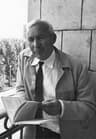
Andrey Kolmogorov
modernMathematical Logic, Foundations of Mathematics, Soviet Mathematics
Andrey Nikolaevich Kolmogorov (1903–1987) was a Soviet mathematician and one of the most influential figures in 20th-century mathematics, known for foundational contributions to probability theory, mathematical logic, topology, and information theory. His axiomatic formulation of probability (1933) established the field on rigorous measure-theoretic foundations. In logic and computability, he worked on intuitionistic logic and contributed foundational results concerning the limits of formal systems and recursive function theory.
3 arguments
Modality & PossibilityTruth & KnowledgePhilosophy of Language
AC
Ann Cudd
contemporaryAnalytic Feminist Philosophy
Ann Cudd is a contemporary American philosopher specializing in social philosophy, feminist philosophy, and political philosophy. She is best known for her systematic philosophical analysis of oppression, coercion, and the structural conditions that sustain social injustice. Her work bridges analytic philosophy and feminist theory, examining how social construction shapes individual identity and opportunity.
3 arguments
Moral ResponsibilityConsciousness & MindPersonal Identity
Augustine
ancientPatristic Christianity / Neoplatonism
Augustine of Hippo (354–430) was a North African bishop and theologian whose synthesis of Christian doctrine with Neoplatonic philosophy shaped Western Christianity and medieval thought for centuries. His introspective masterwork Confessions and the monumental City of God established frameworks for understanding sin, grace, free will, and political theology that remain foundational. He is regarded as one of the four great Latin Doctors of the Church.
3 arguments
TrinityDivine AttributesAgainst an attribute of God

Averroes
medievalIslamic Aristotelianism
Averroes (Ibn Rushd, 1126–1198) was an Andalusian philosopher, jurist, and physician who produced the most comprehensive and authoritative commentaries on Aristotle in the medieval world, earning him the title 'The Commentator' among Latin scholastics. His rigorous defense of Aristotelian rationalism against al-Ghazali's theological critique profoundly shaped both Islamic and European philosophy. Through Latin translations of his works, he became the central conduit for Aristotelian thought into medieval Christian Europe, giving rise to the school known as Latin Averroism.
3 arguments
Afterlife & DeathInsubordination to GodPhilosophy of Language

Avicenna
medievalIslamic Golden Age Philosophy (Falsafa), Aristotelian-Neoplatonic synthesis
Avicenna (Ibn Sina) was a Persian polymath and one of the most influential philosophers of the Islamic Golden Age, whose synthesis of Aristotelian philosophy with Neoplatonic and Islamic thought shaped both medieval Islamic and Christian Scholastic traditions. His works on metaphysics, logic, and medicine, particularly The Book of Healing and The Canon of Medicine, remained authoritative for centuries.
3 arguments
Philosophy of LanguageModality & PossibilityNatural Theology
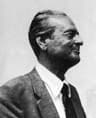
Bruno de Finetti
contemporarySubjective Probability / Bayesian Epistemology
Bruno de Finetti (1906–1985) was an Italian mathematician and probabilist who founded the subjectivist interpretation of probability, arguing that probability is a measure of personal degrees of belief rather than an objective feature of the world. His representation theorem for exchangeable sequences and his insistence on finite (rather than countable) additivity as the correct axiom for probability remain foundational contributions to Bayesian epistemology and the philosophy of probability.
3 arguments
Truth & KnowledgeSkepticismPhilosophy of Language

Carol Gilligan
contemporaryFeminist Philosophy, Ethics of Care
Carol Gilligan (b. 1936) is an American feminist moral philosopher and developmental psychologist best known for challenging androcentric models of moral reasoning. Her landmark 1982 work 'In a Different Voice' argued that dominant theories of moral development were built on male experience and overlooked a relational, care-based mode of ethical reasoning. She is the founding theorist of the ethics of care and a central figure in feminist philosophy and psychology.
3 arguments
Moral ResponsibilityConsciousness & MindVirtue Ethics

Cass Sunstein
contemporaryBehavioral Law and Economics
Cass R. Sunstein (born 1954) is an American legal scholar and professor at Harvard Law School, widely regarded as one of the most cited legal scholars in the United States. He is best known for his foundational contributions to behavioral law and economics, regulatory theory, and deliberative democracy, and for co-developing 'nudge theory' with economist Richard Thaler.
3 arguments
Philosophy of LanguageTruth & KnowledgeDemocracy & Governance

Catharine MacKinnon
contemporaryRadical Feminism, Feminist Legal Theory
Catharine MacKinnon (born 1946) is an American feminist legal theorist, activist, and law professor best known for developing the legal framework that recognized sexual harassment as a form of sex discrimination. Her work synthesizes feminist philosophy, legal theory, and social constructionism to argue that law and social institutions systematically reproduce male dominance, shaping her influential critique of liberalism and pornography.
3 arguments
Moral ResponsibilityPersonal IdentityJustice & Punishment

Charles Darwin
modernNatural Philosophy / Evolutionary Theory
Charles Darwin was a British naturalist and biologist whose theory of evolution by natural selection, articulated in On the Origin of Species (1859), fundamentally transformed biology and natural philosophy. His work challenged prevailing teleological accounts of nature and raised enduring philosophical questions about design, chance, and the relationship between science and theology.
3 arguments
Philosophy of LanguageTruth & KnowledgeSkepticism

Christian Garve
modernGerman Popular Philosophy (Popularphilosophie)
Christian Garve (1742–1798) was a German Enlightenment philosopher and one of the most widely read popular philosophers of the late 18th century. He translated and commented on classical works by Aristotle, Cicero, and Adam Smith, and engaged critically with Kant's moral philosophy, advocating for a practical, common-sense approach to ethics accessible to educated readers.
3 arguments
Natural TheologyTruth & KnowledgePerception
Christian Wolff
modernRationalism
Christian Wolff (1679–1754) was a German rationalist philosopher and mathematician who systematized and popularized the philosophy of Leibniz. He was one of the most influential German philosophers between Leibniz and Kant, known for his comprehensive philosophical system covering logic, metaphysics, ethics, and political philosophy.
3 arguments
AestheticsTruth & KnowledgeNatural Theology

Claudia Card
contemporaryFeminist Philosophy
Claudia Card (1940–2015) was an American feminist philosopher known for her work on evil, lesbian ethics, and social justice. She held a long career at the University of Wisconsin–Madison, where she made significant contributions to moral philosophy, particularly through her analysis of atrocity and systemic oppression.
3 arguments
Moral ResponsibilityConsciousness & MindDivine Attributes
DM
D. M. Armstrong
contemporary
3 arguments
Modality & PossibilityTruth & Knowledge

Daniel Dennett
contemporaryAnalytic Philosophy
Daniel Dennett was an American philosopher and cognitive scientist, widely regarded as one of the most influential philosophers of mind of the late 20th and early 21st centuries. He was a professor at Tufts University and co-director of its Center for Cognitive Studies, known for his rigorous naturalistic approach to consciousness, intentionality, and evolutionary theory.
3 arguments
SkepticismTruth & KnowledgeConsciousness & Mind

Daniel Kahneman
contemporaryBehavioral Economics / Cognitive Psychology
Daniel Kahneman (1934–2024) was an Israeli-American psychologist and Nobel laureate whose research fundamentally challenged the rational-agent model in economics and decision theory. Working extensively with Amos Tversky, he developed prospect theory and mapped systematic cognitive biases that distort human judgment. His dual-process theory, distinguishing fast intuitive thinking from slow deliberate reasoning, became foundational across psychology, economics, and philosophy of mind.
3 arguments
SkepticismTruth & Knowledge

David Armstrong
contemporaryAnalytic Philosophy (Australian Realism)
David Malet Armstrong (1926-2014) was an Australian philosopher known for his systematic defense of scientific realism and a naturalistic, physicalist metaphysics. He made influential contributions to the theory of universals, the philosophy of mind, and the metaphysics of laws of nature, arguing for a posteriori realism about universals grounded in empirical science.
3 arguments
Consciousness & MindModality & PossibilityTruth & Knowledge
DW
David Wiggins
contemporaryAnalytic Philosophy
David Wiggins is a British analytic philosopher known for his work on metaphysics, personal identity, and meta-ethics. His influential sortal theory of identity argues that identity statements presuppose a sortal concept specifying what kind of thing is being identified, and he has defended a form of ethical cognitivism rooted in neo-Aristotelian thought.
3 arguments
Consciousness & MindMoral ResponsibilityTruth & Knowledge
EJ
E. J. Lowe
contemporaryAnalytic Philosophy
E. J. Lowe (Edward Jonathan Lowe) was a British analytic philosopher and one of the leading metaphysicians of the late twentieth and early twenty-first centuries. A long-serving professor at Durham University, he made major contributions to ontology, philosophy of mind, personal identity, and the philosophy of properties, developing an influential neo-Aristotelian four-category ontology.
3 arguments
Modality & PossibilityTruth & Knowledge

Eleonore Stump
contemporaryAnalytic Thomism
Eleonore Stump is the Robert J. Henle Professor of Philosophy at Saint Louis University and one of the foremost scholars of Thomas Aquinas in contemporary analytic philosophy. She is renowned for her work on the problem of evil, free will, medieval logic, and the intersection of philosophy of religion with metaphysics, culminating in her landmark study 'Wandering in Darkness.'
3 arguments
Free Will & ForeknowledgeSkepticismTruth & Knowledge
ES
Elliott Sober
contemporaryAnalytic Philosophy of Science
Elliott Sober is an American philosopher of science, best known for his work in philosophy of biology, evolutionary theory, and probabilistic reasoning. He is Hans Reichenbach Professor and William F. Vilas Research Professor at the University of Wisconsin-Madison, and has made influential contributions to debates about parsimony, natural selection, and the structure of scientific inference.
3 arguments
SkepticismTruth & KnowledgeNatural Theology
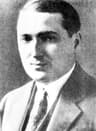
Emil Post
modernMathematical Logic / Computability Theory
Emil Leon Post (1897–1954) was an American mathematician and logician who made foundational contributions to computability theory and mathematical logic. He independently discovered results closely related to Gödel's incompleteness theorems and developed several influential models of computation. His work on formal systems, undecidability, and degree theory shaped the foundations of theoretical computer science and logic.
3 arguments
Modality & PossibilityTruth & KnowledgeSkepticism
EM
Ernan McMullin
contemporaryPhilosophy of Science, Catholic Philosophy
Ernan McMullin (1924–2011) was an Irish-American philosopher of science and Catholic priest who spent most of his career at the University of Notre Dame. He made foundational contributions to the philosophy of science, particularly on scientific realism, the history of science, and the relationship between scientific cosmology and Christian theology.
3 arguments
Philosophy of LanguageTruth & KnowledgeNatural Theology
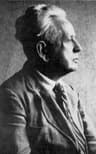
Ernst Cassirer
modernNeo-Kantianism
Ernst Cassirer (1874-1945) was a German philosopher best known for his philosophy of symbolic forms, which analyzed how myth, language, art, science, and religion function as distinct modes of symbolic meaning-making. A leading figure of the Marburg School of neo-Kantianism, he extended Kant's critique of reason into a broader critique of culture and famously debated Martin Heidegger at Davos in 1929.
3 arguments
Natural TheologyTruth & KnowledgeModality & Possibility
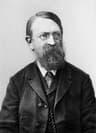
Ernst Mach
modernEmpirio-criticism
Ernst Mach was an Austrian-Czech physicist and philosopher of science whose critique of Newtonian absolute space and time profoundly influenced both logical positivism and Einstein's development of general relativity. He championed a radically empiricist epistemology, insisting that scientific concepts must be grounded in observable sensory experience rather than metaphysical abstractions.
3 arguments
Modality & PossibilityCausationTruth & Knowledge
FH
F. H. Bradley
modern
3 arguments
Natural TheologyTruth & KnowledgeModality & Possibility
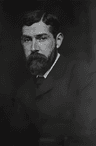
F.H. Bradley
modernBritish Idealism
Francis Herbert Bradley was a British idealist philosopher and the most influential figure of late 19th-century British Absolute Idealism. His metaphysics argued that reality is a single, unified Absolute, and that relations between things generate contradictions when treated as ultimately real.
3 arguments
Natural TheologyTruth & KnowledgeConsciousness & Mind

Franz Brentano
modernAustrian Realism / Descriptive Psychology
Franz Brentano was a 19th-century Austrian-German philosopher and former Catholic priest best known for reviving the concept of intentionality as the defining mark of the mental. His descriptive psychology laid the groundwork for phenomenology and influenced Husserl, Meinong, and the early analytic tradition.
3 arguments
SkepticismTruth & KnowledgeModality & Possibility

Fred Dretske
contemporaryAnalytic Philosophy
Fred Dretske (1932-2013) was an American philosopher known for his influential work in epistemology, philosophy of mind, and philosophy of information. He developed an information-theoretic account of knowledge and belief, and defended externalist theories of mental content and perception.
3 arguments
Philosophy of LanguageTruth & KnowledgeSkepticism

Friedrich Heinrich Jacobi
modernGerman Counter-Enlightenment / Faith Philosophy (Glaubensphilosophie)
Friedrich Heinrich Jacobi was a German philosopher best known for popularizing the term 'nihilism' and for his critique of Enlightenment rationalism. He argued that reason, taken to its logical conclusion, leads to atheism and fatalism, and that genuine knowledge of reality and God requires a leap of faith (Glaube). His Spinoza dispute with Mendelssohn reshaped late 18th-century German philosophy and influenced German Idealism and Romanticism.
3 arguments
AestheticsTruth & KnowledgeNatural Theology

Georg Cantor
modernPhilosophy of Mathematics
Georg Cantor was a German mathematician who founded set theory and revolutionized the mathematical and philosophical understanding of infinity. His proof that real numbers are uncountable and his hierarchy of transfinite cardinals reshaped foundations of mathematics and influenced philosophy of mathematics, theology, and metaphysics.
3 arguments
Truth & KnowledgeSkepticismModality & Possibility
Georg Wilhelm Friedrich Hegel
modernGerman Idealism
Georg Wilhelm Friedrich Hegel was a German idealist philosopher whose systematic work on dialectics, history, and Geist (Spirit) profoundly shaped modern philosophy. His account of reality as the self-unfolding of rational Spirit through thesis-antithesis-synthesis influenced Marxism, existentialism, and continental philosophy broadly.
3 arguments
Natural TheologyTruth & KnowledgeMoral Responsibility
GB
George Bealer
contemporaryAnalytic Philosophy
George Bealer is an American analytic philosopher specializing in metaphysics, philosophy of mind, and epistemology, particularly known for his defense of intuition as evidence and his work on modal epistemology. He has developed influential accounts of properties, propositions, and concepts, arguing for a form of property-theoretic realism against nominalist and physicalist alternatives.
3 arguments
Consciousness & MindPerceptionTruth & Knowledge
GR
Gideon Rosen
contemporaryAnalytic Philosophy
Gideon Rosen is a contemporary analytic philosopher at Princeton University, where he is the Stuart Professor of Philosophy. He works primarily in metaphysics, metaethics, and philosophy of mathematics, with influential contributions to the theory of moral responsibility, mathematical nominalism, and the metaphysics of grounding and essence.
3 arguments
ConsequentialismTruth & KnowledgeModality & Possibility

Halpern
contemporaryEpistemic Logic, Formal Methods, Analytic Philosophy
Joseph Y. Halpern is a computer scientist and logician at Cornell University whose work bridges formal epistemology, game theory, and the logic of knowledge in distributed systems. He is best known for foundational contributions to epistemic logic, plausibility-based reasoning, and the formal analysis of causality. His research engages directly with debates in game theory concerning common knowledge, rationality, and the semantics of belief revision.
3 arguments
SkepticismTruth & Knowledge

Hans Kamp
contemporaryFormal Semantics / Philosophy of Language
Hans Kamp is a Dutch philosopher and logician best known for developing Discourse Representation Theory (DRT), a highly influential framework for modeling meaning across multi-sentence discourse. His work spans formal semantics, tense logic, vagueness, and the philosophy of language, and has been foundational to both linguistic theory and computational semantics.
3 arguments
Philosophy of LanguageModality & PossibilityFree Will & Foreknowledge
HC
Hector-Neri Castañeda
contemporaryAnalytic Philosophy
Hector-Neri Castañeda (1924-1991) was a Guatemalan-American philosopher who made significant contributions to philosophy of language, metaphysics, ethics, and philosophy of mind. He is best known for his theory of guise theory (Guise Theory) in metaphysics and his pioneering work on indexical reference, particularly the analysis of quasi-indicators like 'he himself'.
3 arguments
Consciousness & MindMoral ResponsibilityJustice & Punishment
Hegel
modernGerman Idealism
Georg Wilhelm Friedrich Hegel was a German idealist philosopher whose comprehensive system of absolute idealism profoundly shaped Western philosophy. His dialectical method—resolving contradictions through synthesis—influenced fields from political theory to theology, and his works on phenomenology, logic, and the philosophy of history remain foundational texts in continental philosophy.
3 arguments
Natural TheologyTruth & KnowledgeMoral Responsibility
HP
Henri Poincaré
modernConventionalism / Philosophy of Science
Henri Poincaré (1854–1912) was a French mathematician, theoretical physicist, and philosopher of science, widely regarded as the last universalist in mathematics. He made foundational contributions to topology, dynamical systems, and the philosophy of mathematics, and anticipated key ideas of special relativity and chaos theory.
3 arguments
Truth & KnowledgeModality & PossibilitySkepticism
Hv
Hermann von Helmholtz
modernNeo-Kantian Empiricism / Philosophy of Science
Hermann von Helmholtz (1821-1894) was a German physician and physicist whose work spanned physiology, optics, acoustics, electrodynamics, and the philosophy of science. He formulated the principle of conservation of energy, advanced the empiricist theory of perception, and made foundational contributions to the epistemology of geometry and measurement.
3 arguments
Modality & PossibilityCausationNatural Theology
JM
J.M.E. McTaggart
modernBritish Idealism
John McTaggart Ellis McTaggart (1866–1925) was a British idealist philosopher at Trinity College, Cambridge, best known for his argument for the unreality of time and his systematic personal idealism. His metaphysics held that reality consists entirely of minds and their perceptions, developing a unique atheistic idealism influenced by but departing significantly from Hegel.
3 arguments
Natural TheologyTruth & KnowledgeModality & Possibility
JK
Jaegwon Kim
contemporaryAnalytic Philosophy
Jaegwon Kim (1934-2019) was a Korean-American philosopher known for his influential work in metaphysics and philosophy of mind. He is best known for his arguments against non-reductive physicalism and for developing the causal exclusion argument, which challenges the causal efficacy of mental properties.
3 arguments
Consciousness & MindPhilosophy of LanguageModality & Possibility

Jeremy Bentham
modernUtilitarianism
Jeremy Bentham was an English philosopher, jurist, and social reformer regarded as the founder of modern utilitarianism. He advocated that the rightness of actions is determined by their contribution to overall happiness, famously summarized as 'the greatest happiness of the greatest number,' and applied this principle to law, economics, and social institutions.
3 arguments
Moral ResponsibilityJustice & PunishmentAesthetics

Johann Gottlieb Fichte
modernGerman Idealism
Johann Gottlieb Fichte was a German philosopher and a founding figure of German Idealism, bridging Kant's critical philosophy and Hegel's absolute idealism. He is best known for his Wissenschaftslehre (Science of Knowledge), which grounded philosophy in the self-positing activity of the I, and for his influential ethical and political writings.
3 arguments
Natural TheologyTruth & KnowledgeModality & Possibility
JB
John Bigelow
contemporaryAnalytic Philosophy (Australian Realism)
John Bigelow is an Australian philosopher known for his work in metaphysics, philosophy of mathematics, and philosophy of science. He has defended a scientific realist and Platonist approach to mathematics, arguing that mathematical entities are real universals instantiated in the physical world.
3 arguments
SkepticismTruth & KnowledgeModality & Possibility
JD
John Duns Scotus
medievalScholasticism
John Duns Scotus (c. 1266–1308) was a Scottish Franciscan friar, philosopher, and theologian whose subtle and rigorous thought earned him the title 'Doctor Subtilis.' He made groundbreaking contributions to metaphysics, theology, and the theory of free will, developing influential accounts of univocity of being, haecceity (individual essence), and the primacy of the will.
3 arguments
Free Will & ForeknowledgeDivine AttributesCausation
JM
John McDowell
contemporaryAnalytic Philosophy, Pittsburgh School, Neo-Aristotelianism
John McDowell is a South African-born British philosopher whose work spans philosophy of mind, epistemology, ethics, and philosophy of language. He is best known for his influential book 'Mind and World' (1994), which argues against the dualism of conceptual scheme and empirical content, and for his contributions to moral realism and the philosophy of perception.
3 arguments
Truth & KnowledgeMoral ResponsibilityPerception

John Nash
contemporaryGame Theory / Mathematical Economics
John Forbes Nash Jr. was an American mathematician whose work on game theory, differential geometry, and partial differential equations transformed economics and the mathematical sciences. His formulation of the Nash equilibrium provided the foundational solution concept for non-cooperative games and earned him the 1994 Nobel Memorial Prize in Economic Sciences.
3 arguments
SkepticismTruth & KnowledgeSocial Contract

Judith Jarvis Thomson
contemporaryAnalytic Philosophy
Judith Jarvis Thomson was an American moral philosopher at MIT, renowned for her work in ethics and metaphysics. She is best known for her influential defense of abortion rights through the 'violinist' thought experiment and her extensive contributions to the theory of rights, action theory, and moral philosophy.
3 arguments
Justice & PunishmentRights & LibertyMoral Responsibility
JH
Jürgen Habermas
contemporaryCritical Theory / Frankfurt School
Jürgen Habermas is a German philosopher and sociologist, widely regarded as the most important intellectual in Germany in the second half of the twentieth century. A key figure in the Frankfurt School's second generation, he developed the theory of communicative action and discourse ethics, fundamentally reshaping debates in social theory, democratic theory, and the philosophy of language.
3 arguments
Social ContractSkepticismTruth & Knowledge
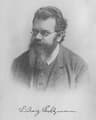
Ludwig Boltzmann
modernScientific Realism / Philosophy of Science
Ludwig Boltzmann was an Austrian physicist and philosopher best known for his foundational work in statistical mechanics and the kinetic theory of gases. He provided a probabilistic interpretation of the second law of thermodynamics, famously encapsulated in his entropy formula S = k log W, and defended atomism against its critics.
3 arguments
Philosophy of LanguageTruth & KnowledgeCausation
Marc Hauser
contemporaryEvolutionary Cognitive Science
Marc Hauser is an American evolutionary biologist and cognitive scientist known for his work on animal cognition, moral psychology, and the evolution of the language faculty. He is the author of Moral Minds, which argues for a universal moral grammar analogous to Chomsky's universal grammar, though his academic career was curtailed by a 2010 finding of scientific misconduct at Harvard.
3 arguments
SkepticismTruth & KnowledgeMoral Responsibility
MS
Michael Smith
contemporaryAnalytic Philosophy, Metaethics
Michael Smith is a prominent contemporary analytic philosopher known for his work in metaethics, moral psychology, and action theory. He is best known for his dispositional theory of normative reasons and his influential book *The Moral Problem*, which defends a cognitivist, realist account of moral judgment while explaining the motivational dimension of moral belief. He has held positions at Princeton University and the Australian National University.
3 arguments
Free Will & ForeknowledgeConsequentialismTruth & Knowledge

Michel Foucault
contemporaryPost-Structuralism
Michel Foucault was a French philosopher and social theorist whose work examined the relationships between power, knowledge, and social institutions. He is best known for his critical studies of psychiatry, medicine, prisons, and sexuality, developing influential concepts such as biopower, governmentality, and discourse analysis that reshaped the humanities and social sciences.
3 arguments
Democracy & GovernanceMoral ResponsibilityBioethics
MS
Moritz Schlick
contemporaryLogical Positivism
Moritz Schlick was an Austrian-German philosopher and the founding figure of the Vienna Circle, a group central to logical positivism. He made significant contributions to the philosophy of science, epistemology, and the interpretation of modern physics, particularly relativity theory. His verification principle of meaning became a cornerstone of logical empiricism.
3 arguments
Modality & PossibilityTruth & KnowledgeSkepticism
NG
Nelson Goodman
contemporaryAnalytic Philosophy
Nelson Goodman (1906-1998) was an influential American analytic philosopher known for his work in logic, philosophy of science, epistemology, and aesthetics. He is best known for formulating the 'new riddle of induction' (the grue paradox) and developing a nominalist, constructivist approach to worldmaking.
3 arguments
Natural TheologyTruth & KnowledgeModality & Possibility

Noam Chomsky
contemporaryRationalism, Generative Linguistics, Analytic Philosophy
Noam Chomsky is an American linguist, philosopher, and cognitive scientist whose work on generative grammar revolutionized the study of language. He is also widely known for his critiques of empiricism, behaviorism, and various philosophical positions on language and mind, as well as his extensive political commentary.
3 arguments
SkepticismTruth & KnowledgePhilosophy of Language
PS
P.F. Strawson
contemporary
3 arguments
Modality & PossibilityTruth & KnowledgePerception

Paul Benacerraf
contemporaryAnalytic Philosophy
Paul Benacerraf is an American philosopher best known for his influential work in the philosophy of mathematics. His two landmark papers, 'What Numbers Could Not Be' (1965) and 'Mathematical Truth' (1973), shaped subsequent debates about mathematical ontology and epistemology, posing what is now called 'Benacerraf's dilemma' about reconciling mathematical truth with mathematical knowledge.
3 arguments
Truth & KnowledgeModality & Possibility
PS
Peter Simons
contemporaryAnalytic Philosophy
Peter Simons is a British philosopher specializing in ontology, mereology, and the philosophy of logic. He is best known for his influential work on parts and wholes, trope theory, and truthmaker theory, making significant contributions to analytic metaphysics over several decades.
3 arguments
Modality & PossibilityTruth & Knowledge
RL
Rae Langton
contemporaryAnalytic Philosophy
Rae Langton is a British-Australian philosopher known for her influential work on Kant's metaphysics and epistemology, feminist philosophy, and the philosophy of language. She is Knightbridge Professor of Philosophy at the University of Cambridge and has contributed significantly to debates on objectification, pornography, and speech acts.
3 arguments
PerceptionModality & PossibilityPhilosophy of Language

Richard Dawkins
contemporaryNew Atheism, Philosophy of Biology, Scientific Naturalism
Richard Dawkins is a British evolutionary biologist and public intellectual best known for popularizing gene-centered evolution and for his rigorous critiques of theism and intelligent design. His work spans evolutionary theory, philosophy of biology, and the philosophy of religion, making him one of the most influential scientific voices in contemporary debates about God and naturalism.
3 arguments
BioethicsTruth & KnowledgeSkepticism

Richard Montague
modernAnalytic Philosophy, Formal Semantics
Richard Montague (1930–1971) was an American logician and philosopher of language at UCLA, best known for developing Montague Grammar—a formal semantic framework demonstrating that natural language could be analyzed with the same rigor as formal logical languages. A student of Alfred Tarski, he bridged mathematical logic, set theory, and linguistics, producing foundational work in intensional logic and model-theoretic semantics. His career was cut short by his murder in 1971, leaving behind a compact but enormously influential body of work.
3 arguments
SkepticismTruth & KnowledgePhilosophy of Language
RT
Richard Taylor
contemporaryAnalytic Philosophy
Richard Taylor (1919–2003) was an American philosopher known for his work in metaphysics, ethics, and philosophy of religion. He made significant contributions to debates on free will, fatalism, and the cosmological argument, and was recognized for his unusually clear and rigorous prose style.
3 arguments
Natural TheologyFree Will & ForeknowledgeTruth & Knowledge
RP
Robert Pargetter
contemporaryAnalytic Philosophy (Australian Realism)
Robert Pargetter is an Australian philosopher associated with the Australasian realist tradition, known for his work in metaphysics, philosophy of science, and philosophy of mind. He collaborated extensively with Frank Jackson on topics including properties, causation, and physicalism, and contributed to debates on scientific realism and the nature of belief.
3 arguments
SkepticismTruth & KnowledgeMoral Responsibility
R
Russell
contemporaryAnalytic Philosophy
Bertrand Russell was a British philosopher, logician, and mathematician whose work in mathematical logic and analytic philosophy profoundly shaped 20th-century thought. He co-authored Principia Mathematica, advanced the theory of descriptions, and contributed to epistemology, ethics, and philosophy of language across a prolific seven-decade career.
3 arguments
Philosophy of LanguageTruth & KnowledgeModality & Possibility

Sally Haslanger
contemporaryAnalytic Philosophy, Feminist Philosophy, Social Metaphysics
Sally Haslanger is an American analytic philosopher and Professor of Philosophy at MIT, known for her influential work on social construction, feminist metaphysics, and critical social theory. She has made major contributions to debates about race and gender by arguing these categories should be understood as social kinds defined by structural oppression, and has advanced methodological discussions about the role of ameliorative analysis in philosophy.
3 arguments
Moral ResponsibilityPersonal IdentityRights & Liberty
Samuel Clarke
modernBritish Rationalism / Natural Theology
Samuel Clarke (1675–1729) was an English rationalist philosopher and Anglican clergyman who made significant contributions to natural theology, moral philosophy, and the philosophy of space and time. He is best known for his a priori cosmological argument for God's existence, his rationalist metaethics grounded in eternal moral truths, and his celebrated correspondence with Gottfried Wilhelm Leibniz defending Newtonian absolute space and time.
3 arguments
Natural TheologyAestheticsVirtue Ethics
Stalnaker
contemporaryAnalytic Philosophy
Robert Stalnaker (born 1940) is an American analytic philosopher and professor at MIT, best known for his contributions to the semantics of conditionals and possible worlds theory. He has made foundational contributions to formal epistemology, philosophy of language, and epistemic game theory, developing influential accounts of belief, context, and rational deliberation.
3 arguments
SkepticismTruth & Knowledge
Stephen Cole Kleene
modernMathematical Logic
Stephen Cole Kleene was an American mathematician and logician who made foundational contributions to recursion theory, intuitionistic logic, and the theory of computation. A student of Alonzo Church at Princeton, he helped establish the mathematical foundations of computer science and is considered one of the founders of theoretical computer science.
3 arguments
Modality & PossibilityTruth & KnowledgeSkepticism

Stephen Macedo
contemporaryLiberal Political Philosophy
Stephen Macedo is an American political philosopher and professor at Princeton University, known for his work on liberal civic virtue, democratic education, immigration ethics, and the philosophical foundations of liberal constitutionalism. He has made significant contributions to debates about pluralism, civic engagement, and the moral dimensions of liberal democratic governance.
3 arguments
Democracy & GovernanceMoral ResponsibilityBioethics

The Romantics
modernGerman Romanticism
The Romantics were a diverse philosophical and literary movement of the late 18th and early 19th centuries who emphasized individual freedom, organic community, and the intrinsic value of human sociability. Reacting against Enlightenment rationalism and mechanistic political theory, thinkers such as Friedrich Schlegel, Novalis, and Friedrich Schleiermacher championed free conversation, aesthetic experience, and spontaneous social bonds as the foundations of a flourishing political life.
3 arguments
Rights & LibertyDemocracy & GovernanceAesthetics
T
Themistius
ancientLate Antique Aristotelianism
Themistius (c. 317–388 CE) was a Greek philosopher, rhetorician, and statesman who served as a senator and imperial advisor in Constantinople under several emperors. He is best known for his paraphrases of Aristotle's major works, which became influential transmitters of Aristotelian thought to later Byzantine, Islamic, and Latin scholastic traditions. His philosophical approach blended Aristotelian analysis with a tolerant, eclectic spirit, and he argued for religious pluralism at the imperial court.
3 arguments
Philosophy of LanguageTruth & KnowledgeDivine Attributes

W.V.O. Quine
contemporaryAnalytic Philosophy
Willard Van Orman Quine (1908–2000) was an American philosopher and logician widely regarded as one of the most influential analytic philosophers of the twentieth century. His work systematically challenged foundationalist epistemology and the analytic/synthetic distinction, redirecting philosophy toward naturalism and the continuity of science and philosophy. His contributions span logic, set theory, philosophy of language, and ontology.
3 arguments
Philosophy of LanguageTruth & KnowledgeModality & Possibility
WS
Wilfrid Sellars
contemporaryAnalytic Philosophy
Wilfrid Sellars was a 20th-century American philosopher whose work bridged analytic philosophy and the history of philosophy, particularly Kant. He is best known for his critique of the 'Myth of the Given' and his distinction between the 'manifest image' and 'scientific image' of the world.
3 arguments
Natural TheologyTruth & KnowledgePerception
William Alston
contemporaryAnalytic Philosophy, Reformed Epistemology
William P. Alston (1921–2009) was an American philosopher of language and religion, best known for his work on epistemic justification and religious epistemology. He developed the influential theory of 'doxastic practice' to argue that perception of God can be epistemically on par with ordinary sense perception. His contributions span philosophy of language, theory of knowledge, and the rationality of religious belief.
3 arguments
PerceptionTruth & KnowledgeReligious Experience

William James
modernPragmatism
William James was an American philosopher and psychologist, widely regarded as the father of American psychology and a leading figure in the pragmatist movement. He developed a distinctive philosophy that emphasized the practical consequences of beliefs and defended the rationality of religious faith on experiential and volitional grounds.
3 arguments
Natural TheologyTruth & KnowledgeModality & Possibility

William Lane Craig
contemporaryAnalytic Philosophy, Christian Apologetics
William Lane Craig (born 1949) is an American analytic philosopher, theologian, and Christian apologist known for his rigorous defense of Christian theism in academic and public forums. He holds doctorates in philosophy from the University of Birmingham and theology from the Ludwig Maximilian University of Munich, and has held research appointments at Talbot School of Theology and Houston Christian University. His work spans philosophy of religion, philosophy of time, and philosophical theology.
3 arguments
TrinityNatural TheologyCausation
Wo
William of Ockham
medievalScholasticism, Nominalism
William of Ockham (c. 1287–1347) was an English Franciscan friar and scholastic philosopher whose nominalist metaphysics fundamentally challenged realist assumptions inherited from Aristotle and the Church Fathers. He is best known for the methodological principle 'Ockham's Razor' (parsimony in explanation) and for his rigorous treatment of universals, future contingents, and the limits of papal authority. His work shaped the via moderna and influenced early modern philosophy, Protestant theology, and the development of empiricism.
3 arguments
Modality & PossibilityFree Will & ForeknowledgePhilosophy of Language
A.J. Ayer
contemporaryLogical Positivism / Analytic Philosophy
Alfred Jules Ayer (1910–1989) was a British analytic philosopher and the principal English-language proponent of logical positivism, most influentially through his 1936 work Language, Truth and Logic. He defended the verification principle as a criterion of meaningfulness and developed an emotivist account of ethical language. Ayer held the Wykeham Professorship of Logic at Oxford and was a central figure in twentieth-century British philosophy.
2 arguments
Philosophy of LanguageTruth & Knowledge
AS
Abner Shimony
contemporaryAnalytic Philosophy of Science
Abner Shimony (1928-2015) was an American philosopher and physicist known for his foundational work in the philosophy of quantum mechanics and probability theory. He is best known for the Clauser-Horne-Shimony-Holt (CHSH) inequality, a key result in tests of Bell's theorem and quantum entanglement.
2 arguments
Truth & KnowledgePhilosophy of Language

Adams
contemporaryAnalytic Philosophy of Religion
Robert Merrihew Adams is an American analytic philosopher known for major contributions to philosophy of religion, metaphysics, and moral philosophy. He held positions at UCLA, Yale, and Oxford, and is recognized for his rigorous engagement with theistic arguments, divine command theory, and the metaphysics of modality.
2 arguments
Natural Theology
AR
Adrienne Rich
contemporaryFeminist Philosophy, Lesbian Feminism
Adrienne Rich (1929–2012) was an American poet, essayist, and feminist theorist whose work fundamentally shaped second-wave feminism and lesbian feminist thought. She argued that heterosexuality is a political institution enforced on women rather than a natural orientation, most influentially in her 1980 essay 'Compulsory Heterosexuality and Lesbian Existence.' Her body of work integrates poetic practice with political philosophy, exploring gender, power, identity, and social transformation.
2 arguments
Moral ResponsibilityBioethicsJustice & Punishment

Alasdair MacIntyre
contemporaryThomistic Aristotelianism
Alasdair MacIntyre (born 1929) is a Scottish-American moral and political philosopher best known for his critique of Enlightenment moral philosophy and his revival of Aristotelian virtue ethics. His landmark work After Virtue (1981) argued that modern moral discourse is incoherent, having lost the teleological framework within which moral concepts originally made sense. A convert to Catholicism, he has increasingly aligned with Thomistic Aristotelianism as the tradition best equipped to resolve contemporary moral crisis.
2 arguments
Moral ResponsibilityVirtue EthicsRights & Liberty

Albert the Great
medievalScholasticism
Albert the Great (Albertus Magnus, c. 1200–1280) was a Dominican friar, bishop, and polymath whose encyclopedic synthesis of Aristotelian natural philosophy with Christian theology earned him the title Doctor Universalis. He was the foremost teacher of Thomas Aquinas and a pioneering commentator on the full Aristotelian corpus in the Latin West. His work laid essential groundwork for the Scholastic tradition and the integration of empirical observation into medieval thought.
2 arguments
Philosophy of LanguageTruth & KnowledgeSkepticism
AR
Alex Rosenberg
contemporaryAnalytic Philosophy, Naturalism
Alex Rosenberg is an American philosopher of science at Duke University, known for his defense of scientism and eliminative naturalism. He argues that physics is the only genuine guide to reality and that the special sciences, including biology and psychology, ultimately reduce to or are superseded by physical explanation. His work challenges the cognitive status of intentional explanations and the autonomy of biology as a science.
2 arguments
BioethicsTruth & KnowledgeSkepticism
AB
Alexandru Baltag
contemporaryDynamic Epistemic Logic, Formal Epistemology
Alexandru Baltag is a Romanian-Dutch logician and philosopher at the Institute for Logic, Language and Computation (ILLC) at the University of Amsterdam, specializing in dynamic epistemic logic, formal epistemology, and epistemic game theory. He is best known for developing rigorous logical frameworks for modeling how agents update beliefs in response to actions and information. His work bridges formal logic, philosophy of knowledge, and game theory.
2 arguments
SkepticismTruth & Knowledge
AW
Allen Wood
contemporaryAnalytic Philosophy, Kantian Ethics
Allen Wood (b. 1942) is an American philosopher best known for his scholarly work on Immanuel Kant's ethics, metaphysics, and philosophy of religion, as well as significant contributions to Hegel and Marx studies. He has taught at Yale, Cornell, Stanford, and Indiana University, and is regarded as one of the foremost Anglophone interpreters of the German idealist tradition. His work engages both the historical reconstruction of Kant's thought and its systematic application to contemporary moral problems.
2 arguments
Divine AttributesAgainst an attribute of GodMoral Responsibility

Amos Tversky
contemporaryCognitive Psychology / Behavioral Economics
Amos Tversky (1937–1996) was an Israeli-American cognitive and mathematical psychologist whose collaborative work with Daniel Kahneman fundamentally challenged the rational-agent model in economics and decision theory. His research demonstrated systematic, predictable departures from classical rationality through heuristics and cognitive biases, reshaping both psychology and philosophy of mind. Tversky's work laid the empirical foundation for behavioral economics and contributed to a broader naturalistic turn in epistemology.
2 arguments
SkepticismTruth & Knowledge
AP
Andrés Perea
contemporaryEpistemic Game Theory
Andrés Perea is a contemporary Dutch game theorist and economist affiliated with Maastricht University, specializing in the epistemic foundations of game theory. His research examines how rationality, belief revision, and plausibility orderings govern strategic reasoning in both static and dynamic games. He is best known for systematically comparing and unifying competing epistemic frameworks—particularly those of Aumann and Stalnaker—to clarify what assumptions drive differing solution concepts.
2 arguments
SkepticismTruth & Knowledge
AS
Anita Superson
contemporaryFeminist Philosophy, Analytic Philosophy
Anita Superson is a contemporary American feminist philosopher whose work centers on moral psychology, feminist ethics, and the epistemology of oppression. She has made significant contributions to understanding rationality, self-interest, and the moral status of sexist attitudes and practices. Her work examines how systemic bias shapes epistemic and moral reasoning.
2 arguments
Moral ResponsibilityConsciousness & MindRights & Liberty
Anna Julia Cooper
modernBlack Feminist Philosophy, Pragmatism
Anna Julia Cooper (1858–1964) was an African American scholar, educator, and social activist whose philosophical work centered on the intersections of race, gender, and education. Her 1892 collection A Voice from the South remains a landmark text in Black feminist thought, articulating a vision of liberation that insisted on the full intellectual and civic inclusion of Black women. She earned her doctorate from the Sorbonne at age 67, making her one of the first African American women to hold a PhD.
2 arguments
SkepticismTruth & KnowledgeMoral Responsibility

Anselm
medievalScholasticism
Anselm of Canterbury (1033–1109) was a Benedictine monk, Archbishop of Canterbury, and one of the most influential philosophers of the medieval period. He is best known for originating the ontological argument for God's existence and for his satisfaction theory of atonement. His method of 'faith seeking understanding' (fides quaerens intellectum) helped define the relationship between theology and philosophical reason in the Latin West.
2 arguments
SkepticismTruth & KnowledgeDivine Attributes
Anselm of Canterbury
medievalScholasticism
Anselm of Canterbury was an Italian-born Benedictine monk who became Archbishop of Canterbury and is often called the father of Scholasticism. He is best known for formulating the ontological argument for God's existence in the Proslogion, which attempts to prove God's existence from the concept of a being than which nothing greater can be conceived.
2 arguments
Natural TheologyPhilosophy of LanguageTruth & Knowledge

Ariel Rubinstein
contemporaryGame Theory / Mathematical Economics
Ariel Rubinstein is an Israeli economist and game theorist known for his influential work on bargaining theory, bounded rationality, and the foundations of game theory. He has made significant contributions to the analysis of strategic behavior under cognitive constraints and has been a persistent critic of the direct application of formal economic models to real-world policy.
2 arguments
SkepticismTruth & Knowledge
Armstrong
contemporaryAnalytic Philosophy (Australian Realism)
David Malet Armstrong (1926-2014) was an Australian philosopher renowned for his work in metaphysics and philosophy of mind. He defended a materialist theory of mind and developed an influential account of universals as immanent in the natural world, becoming a central figure in Australian realism.
2 arguments
Consciousness & MindModality & PossibilityTruth & Knowledge
Aumann
contemporaryGame Theory, Interactive Epistemology, Mathematical Economics
Robert J. Aumann (born 1930) is an Israeli-American mathematician and economist, Nobel Laureate in Economic Sciences (2005), whose foundational work spans game theory, interactive epistemology, and the formal analysis of rational belief. He is best known for the Aumann Agreement Theorem, the development of correlated equilibrium, and his rigorous treatment of common knowledge in strategic contexts. His 1995 paper on backward induction and common knowledge of rationality sparked a sustained debate with philosophers including Stalnaker over the correct epistemic foundations of sequential game theory.
2 arguments
SkepticismTruth & Knowledge
Avicenna (Ibn Sina)
medievalIslamic Golden Age / Peripatetic (Falsafa)
Avicenna (Ibn Sina, c. 980–1037) was a Persian polymath and one of the most influential philosophers of the Islamic Golden Age. His synthesis of Aristotelian philosophy with Neoplatonic and Islamic thought shaped both medieval Islamic philosophy and later Scholasticism, and his work in metaphysics, logic, and medicine remained authoritative for centuries.
2 arguments
Philosophy of LanguageModality & PossibilityDivine Attributes
BH
Barbara Houston
contemporaryFeminist Philosophy
Barbara Houston is a feminist philosopher working primarily in the philosophy of education and feminist ethics. She has made sustained contributions to debates about gender, moral education, and the epistemological standing of women's experience. Her work critically examines how educational institutions and moral frameworks reproduce gendered inequalities.
2 arguments
Moral ResponsibilityConsciousness & MindRights & Liberty

Barry Stroud
contemporaryAnalytic Philosophy
Barry Stroud (1935–2019) was an American analytic philosopher at UC Berkeley, widely regarded as one of the foremost epistemologists of the twentieth century. He is best known for his rigorous defense and analysis of philosophical skepticism, and for influential interpretations of Hume and Wittgenstein. His work probed the limits of naturalistic philosophy and the conditions under which human knowledge is possible.
2 arguments
Natural TheologyTruth & KnowledgeSkepticism
Boethius
medievalLate Antique / Early Scholasticism
Anicius Manlius Severinus Boethius (c. 477–524) was a Roman statesman, philosopher, and theologian whose works served as a primary conduit for transmitting Greek philosophical thought to the Latin medieval world. Imprisoned and executed under Theodoric the Great, he wrote the Consolation of Philosophy, one of the most influential texts of the Middle Ages. His translations of and commentaries on Aristotle and Porphyry shaped medieval logic, ontology, and the problem of universals for centuries.
2 arguments
Philosophy of LanguageTruth & Knowledge
BH
Brad Hooker
contemporaryAnalytic Philosophy, Rule Consequentialism
Brad Hooker is a contemporary British moral philosopher best known for his systematic defense of rule consequentialism. He holds a professorship at the University of Reading and has made significant contributions to normative ethics, metaethics, and the theory of moral rules. His work engages both consequentialist foundations and fitting-attitude analyses of moral concepts.
2 arguments
Moral ResponsibilityVirtue EthicsTruth & Knowledge
B
Brandenburger
contemporaryEpistemic Game Theory
Adam Brandenburger is a game theorist and philosopher of economics whose work centers on epistemic game theory — the formal analysis of how players' beliefs, knowledge, and reasoning underpin strategic behavior. He has made foundational contributions to understanding rationalizability, backward induction, and the role of common knowledge in equilibrium selection. His collaborative research, particularly with Eddie Dekel and Geir Asheim, clarified the epistemic conditions under which standard solution concepts (Nash equilibrium, iterated dominance) hold.
2 arguments
SkepticismTruth & Knowledge
BL
Brian Leftow
contemporaryAnalytic Philosophy of Religion
Brian Leftow is a contemporary analytic philosopher of religion, formerly Nolloth Professor of the Philosophy of the Christian Religion at Oxford University. He is best known for his defense of divine timelessness and his influential 'Latin Trinity' account, which grounds Trinitarian theology in a single divine life from which the three Persons emerge rather than in three distinct divine centers of consciousness.
2 arguments
TrinitySkepticismTruth & Knowledge
C
Camerer
contemporaryBehavioral Economics / Behavioral Game Theory
Colin F. Camerer is an American behavioral economist and neuroeconomist at the California Institute of Technology. He is a pioneering figure in applying psychological insights to game theory and economic decision-making, demonstrating through extensive experimental work that human strategic reasoning systematically departs from classical rationality assumptions.
2 arguments
SkepticismTruth & Knowledge
Carl Hempel
contemporaryLogical Empiricism
Carl Gustav Hempel (1905–1997) was a German-American philosopher of science and leading figure of logical empiricism. He is best known for developing the covering-law model of scientific explanation and for rigorous analyses of confirmation, cognitive significance, and the structure of empirical inquiry.
2 arguments
Philosophy of LanguageTruth & Knowledge
CH
Carol Hay
contemporaryFeminist Philosophy, Kantian Ethics
Carol Hay is a contemporary feminist philosopher at the University of Massachusetts Lowell whose work centers on oppression, self-respect, and feminist ethics. She is best known for applying Kantian moral theory to feminist concerns, arguing that self-respect is a moral duty incumbent upon oppressed persons. Her scholarship bridges analytic ethics, political philosophy, and feminist standpoint theory.
2 arguments
Moral ResponsibilityConsciousness & MindRights & Liberty

Charles Babbage
modernBritish Empiricism / Philosophy of Science
Charles Babbage was a 19th-century English polymath, mathematician, and mechanical engineer best known as the originator of the concept of a programmable digital computer. His designs for the Difference Engine and Analytical Engine laid the conceptual foundations for modern computing, and he also contributed to philosophy of science, political economy, and cryptography.
2 arguments
Philosophy of LanguageTruth & KnowledgeNatural Theology

Charles Mills
contemporaryCritical Race Theory, Analytic Political Philosophy
Charles W. Mills (1951–2021) was a Jamaican-American political philosopher best known for his critical race theory and social contract scholarship. He argued that Western political philosophy has systematically obscured the racial foundations of modern society, developing the concept of the 'Racial Contract' as a corrective to Rawlsian liberalism. His work bridged analytic philosophy and critical theory to examine structural racism, white ignorance, and the epistemology of oppression.
2 arguments
Moral ResponsibilityConsciousness & MindPersonal Identity

Charles Taylor
contemporaryCommunitarian Philosophy, Hermeneutics, Phenomenology
Charles Taylor (born 1931) is a Canadian philosopher and prominent figure in contemporary moral and political philosophy. He is best known for his sustained critique of atomistic liberalism, his account of the situated, engaged self, and his ambitious historical study of the conditions for belief in the modern West.
2 arguments
Modality & PossibilityTruth & KnowledgeRights & Liberty

Cicero
ancientAcademic Skepticism / Eclecticism
Marcus Tullius Cicero (106–43 BCE) was a Roman statesman, orator, and philosopher who served as the primary conduit for transmitting Greek philosophy to the Latin-speaking world. Drawing eclectically from Academic Skepticism, Stoicism, and Peripatetic thought, he developed influential treatments of natural law, duty, and the nature of the gods. His philosophical writings preserved much Hellenistic philosophy that would otherwise be lost, and shaped later Latin Christian thought through figures such as Augustine.
2 arguments
Moral ResponsibilityBioethicsPhilosophy of Language

Claude Shannon
contemporaryInformation Theory / Analytic Philosophy of Mathematics
Claude Shannon (1916-2001) was an American mathematician, electrical engineer, and cryptographer known as the 'father of information theory.' His 1948 paper 'A Mathematical Theory of Communication' founded the field of information theory and laid the groundwork for the digital age, while his earlier master's thesis applied Boolean algebra to electrical circuits, enabling modern digital computing.
2 arguments
Philosophy of LanguageTruth & KnowledgeCausation
C
Cohen
contemporaryAnalytic Philosophy
Stewart Cohen is a contemporary analytic philosopher best known for developing epistemic contextualism, the view that the truth conditions of knowledge attributions shift with the conversational context of the attributor. His work has been central to debates about skepticism, closure principles, and the structure of epistemic justification.
2 arguments
Moral ResponsibilityJustice & PunishmentSkepticism
D.M. Armstrong
contemporaryAnalytic Philosophy, Naturalism
David Malet Armstrong (1926–2014) was an Australian analytic philosopher and Emeritus Professor at the University of Sydney, widely regarded as one of the most significant metaphysicians of the twentieth century. He is best known for defending naturalism across multiple domains, developing an immanent realist theory of universals, and his influential contributions to philosophy of mind, laws of nature, and truthmaker theory.
2 arguments
Philosophy of LanguageTruth & Knowledge

Dana Scott
contemporaryMathematical Logic / Analytic Philosophy
Dana Scott (born 1932) is an American logician and computer scientist whose work spans mathematical logic, modal logic, and the foundations of programming languages. He is best known for co-developing Scott-Montague semantics for modal logic and for founding domain theory, which provided the first rigorous mathematical semantics for the lambda calculus. His contributions have been foundational to both formal philosophy and theoretical computer science.
2 arguments
Philosophy of LanguageModality & PossibilityFree Will & Foreknowledge
DA
Daniel A. Bell
contemporaryConfucian Political Philosophy, Communitarianism
Daniel A. Bell is a Canadian political philosopher known for his work at the intersection of Confucian political theory and Western liberalism/communitarianism. Long based in China at Tsinghua University, he has argued that Confucian values offer a coherent alternative to liberal individualism and has defended meritocratic elements of the Chinese political model. His scholarship bridges analytic political philosophy with East Asian intellectual traditions.
2 arguments
Moral ResponsibilityVirtue EthicsRights & Liberty

David Chalmers
contemporaryAnalytic Philosophy
David Chalmers is an Australian philosopher and cognitive scientist best known for formulating the 'hard problem of consciousness,' which distinguishes the question of subjective experience from functional problems of mind. He is a leading figure in philosophy of mind and has made influential contributions to the study of consciousness, two-dimensional semantics, and the extended mind thesis.
2 arguments
Consciousness & MindPerception
DC
David Copp
contemporaryAnalytic Philosophy, Moral Naturalism
David Copp is a contemporary American philosopher specializing in metaethics and moral philosophy. He is best known for defending a form of moral naturalism and social moral reductivism, arguing that moral properties can be identified with natural social properties. His work engages questions about moral realism, normativity, and the metaphysical status of moral facts.
2 arguments
ConsequentialismTruth & KnowledgeModality & Possibility

David Deutsch
contemporaryCritical Rationalism / Philosophy of Physics
David Deutsch is a British physicist at the University of Oxford and a pioneer of quantum computation, having formulated the first description of a universal quantum computer. He is also a prominent philosopher of science who champions a realist interpretation of the many-worlds view of quantum mechanics and a Popperian epistemology centered on the growth of explanatory knowledge.
2 arguments
SkepticismTruth & KnowledgeModality & Possibility
DE
David Estlund
contemporaryAnalytic Political Philosophy
David Estlund is an American political philosopher at Brown University, best known for developing epistemic proceduralism—the view that democratic authority is justified in part by democracy's tendency to reach epistemically sound outcomes. His 2008 book Democratic Authority: A Philosophical Framework is a landmark contribution to debates on political legitimacy, authority, and the relationship between democratic procedure and political knowledge.
2 arguments
Democracy & Governance
DG
David Gauthier
contemporaryAnalytic Philosophy, Contractarianism
David Gauthier (born 1932) is a Canadian moral philosopher best known for developing a contractarian foundation for morality grounded in rational choice theory. His landmark work, Morals by Agreement (1986), argues that moral constraints can be derived from the self-interested rationality of agents in a bargaining situation, reviving and formalizing the Hobbesian social contract tradition using game theory.
2 arguments
Social ContractMoral ResponsibilityVirtue Ethics
DK
David Kaplan
contemporaryAnalytic Philosophy
David Kaplan is an American philosopher best known for his foundational work in philosophical logic and the philosophy of language. His theory of demonstratives and direct reference has profoundly shaped contemporary discussions of indexicals, context, and meaning.
2 arguments
SkepticismTruth & KnowledgeModality & Possibility

Derek Bickerton
contemporaryLinguistics and Philosophy of Language
Derek Bickerton (1926-2018) was a British-American linguist best known for his work on creole languages and the origins of human language. He proposed the language bioprogram hypothesis, arguing that creoles reveal innate linguistic structures, and contributed to debates on language evolution and philosophy of mind.
2 arguments
SkepticismTruth & KnowledgePhilosophy of Language
DM
Diana Meyers
contemporaryFeminist Philosophy, Analytic Philosophy
Diana Tietjens Meyers is a contemporary feminist philosopher known for her work on personal autonomy, social identity, and moral psychology. She has made significant contributions to feminist ethics and political philosophy, particularly through her analysis of how social forces shape—and can undermine—individual selfhood and agency. Her work bridges analytic philosophy and continental feminist thought.
2 arguments
Moral ResponsibilityVirtue EthicsPersonal Identity
DR
Don Ross
contemporaryAnalytic Philosophy / Philosophy of Economics
Don Ross is a contemporary philosopher and economist known for his work on the philosophy of economics, game theory, and naturalized philosophy of mind. He has contributed significantly to debates on rational choice theory, neuroeconomics, and the foundations of economic methodology, arguing for a rigorous naturalistic approach that integrates economics with cognitive and behavioral sciences.
2 arguments
SkepticismTruth & KnowledgeModality & Possibility

Duncan Pritchard
contemporaryAnalytic Epistemology
Duncan Pritchard is a leading contemporary analytic epistemologist, currently Distinguished Professor of Philosophy at the University of California, Irvine. He is best known for developing anti-luck epistemology and hinge epistemology, with influential contributions to the analysis of knowledge, epistemic luck, and the epistemology of testimony. His work synthesizes insights from Wittgenstein, virtue epistemology, and safety-based accounts of knowledge.
2 arguments
Truth & KnowledgePerception
E
Earman
contemporaryAnalytic Philosophy of Science
John Earman (born 1942) is an American philosopher of physics and professor emeritus at the University of Pittsburgh, renowned for his rigorous treatments of spacetime, determinism, and the foundations of physical theory. He has made foundational contributions to the philosophy of general relativity, the analysis of time travel and closed timelike curves, and Bayesian confirmation theory as applied to science.
2 arguments
Modality & PossibilityCausationSkepticism

Edmund Burke
modernConservative political philosophy
Edmund Burke (1729-1797) was an Anglo-Irish statesman, political theorist, and philosopher best known as a founder of modern conservatism. His reflections on tradition, prudence, and organic social order, particularly in response to the French Revolution, shaped political thought across the 18th and 19th centuries.
2 arguments
AestheticsTruth & KnowledgeRights & Liberty
EA
Elizabeth Anderson
contemporaryAnalytic Philosophy, Pragmatism, Democratic Theory
Elizabeth Anderson is John Dewey Distinguished University Professor of Philosophy and Women's Studies at the University of Michigan, known for her work in moral and political philosophy, feminist philosophy, and social epistemology. She is best known for her influential critique of luck egalitarianism and her development of 'democratic equality' as an alternative framework grounding justice in relations among persons rather than distributions of goods. Her interdisciplinary work bridges analytic philosophy, feminist theory, and empirical social science.
2 arguments
Moral ResponsibilityPersonal IdentityRights & Liberty

Epictetus
ancientStoicism
Epictetus was a Greek Stoic philosopher born into slavery who, after gaining his freedom, founded a school at Nicopolis. His teachings, preserved by his student Arrian in the Discourses and the Enchiridion, emphasize that philosophy is a practical discipline centered on mastering what is within our control and accepting what is not.
2 arguments
Afterlife & Death
Ernest Nagel
contemporaryLogical Empiricism, Scientific Naturalism
Ernest Nagel (1901–1985) was an American philosopher of science and a central figure in logical empiricism and scientific naturalism. A longtime professor at Columbia University, he made foundational contributions to the philosophy of science, the logic of explanation, and the analysis of scientific reduction. His work rigorously examined the epistemological foundations of geometry, causation, and the unity of science.
2 arguments
Modality & PossibilityTruth & KnowledgePhilosophy of Language

Euclid
ancientAncient Greek Mathematics
Euclid of Alexandria was an ancient Greek mathematician active around 300 BCE, best known as the author of the Elements, the foundational treatise on geometry. His axiomatic method shaped mathematical reasoning and philosophical approaches to demonstration for over two millennia, influencing thinkers from Aristotle to Spinoza.
2 arguments
Truth & KnowledgeModality & Possibility

F.W.J. Schelling
modernGerman Idealism
Friedrich Wilhelm Joseph Schelling (1775–1854) was a central figure of German Idealism whose thought evolved dramatically across his career, from a Naturphilosophie positing nature as unconscious spirit, through an identity philosophy of the Absolute, to a late positive philosophy engaging myth, revelation, and the nature of God. He was a profound influence on Hegel, Kierkegaard, and subsequent European philosophy, and anticipates themes in existentialism and process theology.
2 arguments
Natural TheologyTruth & KnowledgeDivine Attributes

Fagin
contemporaryMathematical Logic, Epistemic Logic, Theoretical Computer Science
Ronald Fagin is an American logician and computer scientist at IBM Research known for foundational contributions to finite model theory, database theory, and epistemic logic. His work bridges mathematical logic and computation, most notably through the co-authorship of 'Reasoning About Knowledge,' which established formal frameworks for analyzing knowledge, belief, and plausibility in multi-agent systems. His results connecting descriptive complexity to computational complexity classes remain central to theoretical computer science.
2 arguments
SkepticismTruth & Knowledge

Felix Klein
modernMathematical Philosophy
Felix Klein was a German mathematician renowned for his work in group theory, complex analysis, and non-Euclidean geometry. He is best known for the Erlangen Program, which classified geometries by their underlying symmetry groups, profoundly influencing both mathematics and the philosophy of geometry.
2 arguments
Modality & PossibilityCausationSkepticism
FG
Francesco Guala
contemporaryAnalytic Philosophy of Social Science
Francesco Guala is an Italian philosopher of economics and social science, known for his work on experimental economics, social ontology, and the methodology of the social sciences. He is a professor at the University of Milan and has made significant contributions to understanding institutions, rationality, and the epistemology of economic experiments.
2 arguments
SkepticismTruth & KnowledgeDemocracy & Governance
FO
Francesco Orilia
contemporaryAnalytic Philosophy
Francesco Orilia is an Italian contemporary philosopher specializing in analytic metaphysics, philosophy of language, and ontology. He is known for his work on predication, relations, and Bradley's regress, particularly through his fact-infinitism approach. He has held a professorship at the University of Macerata.
2 arguments
Consciousness & MindModality & PossibilityTruth & Knowledge
FM
Fraser MacBride
contemporaryAnalytic Philosophy, Analytic Metaphysics
Fraser MacBride is a contemporary British analytic philosopher specializing in metaphysics, philosophy of logic, and philosophy of mathematics. He is best known for his work on the ontology of relations, truthmakers, and the philosophical foundations of predication. His research engages centrally with questions about universals, tropes, Bradley's regress, and the metaphysics of mathematical objects.
2 arguments
Modality & PossibilityTruth & Knowledge

Frederick Douglass
modernAfrican American Philosophy, Abolitionism, Social and Political Philosophy
Frederick Douglass (c. 1818–1895) was an American abolitionist, orator, and social philosopher who escaped chattel slavery to become one of the most influential political thinkers of the nineteenth century. His autobiographical writings and speeches constituted a sustained philosophical argument against slavery, racism, and the contradictions of American democratic ideals. Douglass engaged seriously with epistemology, moral philosophy, and political theory, arguing that lived experience under oppression generates irreplaceable knowledge unavailable to outside observers.
2 arguments
SkepticismTruth & KnowledgeMoral Responsibility
GU
Gabriel Uzquiano
contemporaryAnalytic Philosophy
Gabriel Uzquiano is a contemporary analytic philosopher specializing in metaphysics, philosophy of logic, and philosophy of language. He is known for his work on plural quantification, the metaphysics of propositions, and paradoxes arising at the intersection of logic and ontology, including the Russell-Myhill paradox. He has held positions at the University of Southern California and Oxford University.
2 arguments
Philosophy of LanguageModality & Possibility
GH
Geoffrey Hellman
contemporaryAnalytic Philosophy, Philosophy of Mathematics
Geoffrey Hellman is an American philosopher of mathematics at the University of Minnesota, best known for developing modal structuralism as an alternative to platonism. His 1989 book Mathematics Without Numbers argues that mathematical claims are best understood as modal assertions about possible structures rather than claims about abstract objects. He has also contributed to the philosophy of quantum mechanics and the foundations of mathematics more broadly.
2 arguments
SkepticismTruth & Knowledge
GK
Georg Kreisel
contemporaryMathematical Logic, Philosophy of Mathematics
Georg Kreisel (1923–2015) was an Austrian-British mathematical logician whose work bridged formal proof theory and the philosophy of mathematics. He made foundational contributions to constructive analysis, ordinal logics, and the philosophical interpretation of Gödel's results. Kreisel was renowned for his insistence on 'informal rigor'—the precise articulation of pre-formal mathematical concepts before formalization.
2 arguments
Philosophy of LanguageModality & PossibilityTruth & Knowledge
George Boolos
contemporaryAnalytic Philosophy, Mathematical Logic
George Boolos (1940–1996) was an American philosopher and mathematical logician at MIT, widely regarded as one of the most important logicians of the twentieth century. He made foundational contributions to provability logic and offered a groundbreaking reinterpretation of second-order logic via plural quantification. His work bridged formal logic, philosophy of mathematics, and philosophy of language.
2 arguments
Modality & Possibility

Gerd Gigerenzer
contemporaryCognitive Psychology / Ecological Rationality
Gerd Gigerenzer is a German psychologist known for his influential work on bounded rationality, heuristics, and decision-making under uncertainty. As director emeritus of the Max Planck Institute for Human Development, he has championed the view that simple heuristics can make us smart, challenging the heuristics-and-biases tradition associated with Kahneman and Tversky.
2 arguments
SkepticismTruth & Knowledge
GB
Giacomo Bonanno
contemporaryEpistemic Game Theory, Formal Philosophy
Giacomo Bonanno is a contemporary economist and formal philosopher specializing in the epistemic foundations of game theory. He has made significant contributions to understanding belief revision, rationality, and knowledge in strategic interaction, particularly through the lens of modal and dynamic logic. His work bridges economic theory and philosophical logic, examining how agents form and update beliefs in sequential and simultaneous games.
2 arguments
SkepticismTruth & Knowledge
GR
Gilbert Ryle
contemporaryAnalytic Philosophy, Ordinary Language Philosophy
Gilbert Ryle (1900–1976) was a British analytic philosopher and longtime editor of Mind who made foundational contributions to philosophy of mind and ordinary language philosophy. He is best known for his critique of Cartesian dualism, which he famously characterized as the 'ghost in the machine' fallacy. His work shaped the linguistic turn in analytic philosophy and influenced subsequent philosophy of psychology and action.
2 arguments
Truth & KnowledgeNatural TheologyModality & Possibility
GM
Gustav Mie
modernPhilosophy of Physics
Gustav Mie (1868–1957) was a German physicist known primarily for his contributions to electromagnetic theory and early attempts to develop a unified field theory of matter. His work engaged deeply with the foundations of relativity, including philosophical questions about measurement and the ontological status of rigid bodies and clocks in spacetime physics.
2 arguments
Modality & PossibilityCausationSkepticism
GK
Gyula Klima
contemporaryAnalytic Philosophy / Medieval Scholasticism
Gyula Klima is a contemporary Hungarian-American philosopher and medieval scholar at Fordham University, specializing in medieval logic, semantics, and metaphysics. He is among the foremost experts on John Buridan and has worked extensively on reconciling medieval Aristotelian-Scholastic philosophy with contemporary analytic philosophy. His research bridges the history of philosophy and systematic philosophy, particularly in the philosophy of language and ontology.
2 arguments
SkepticismTruth & KnowledgePhilosophy of Language
HP
H. Peyton Young
contemporaryAnalytic Philosophy / Game Theory
H. Peyton Young is an American game theorist and economist known for his work on evolutionary game theory, social dynamics, and the foundations of equilibrium concepts. He has made significant contributions to understanding how conventions, norms, and institutions emerge through learning and adaptation in strategic environments.
2 arguments
SkepticismTruth & KnowledgeDemocracy & Governance
HL
Hannes Leitgeb
contemporaryAnalytic Philosophy (Formal Epistemology)
Hannes Leitgeb is an Austrian philosopher and logician, Chair of Logic and Philosophy of Language at LMU Munich and founding director of the Munich Center for Mathematical Philosophy. His work bridges formal epistemology, philosophy of mathematics, and philosophical logic, with influential contributions on belief, probability, and the relationship between qualitative and quantitative doxastic states.
2 arguments
SkepticismTruth & Knowledge

Hans-Georg Gadamer
contemporaryPhilosophical Hermeneutics, Continental Philosophy
Hans-Georg Gadamer (1900–2002) was a German philosopher and the preeminent figure of twentieth-century philosophical hermeneutics. His magnum opus Truth and Method (1960) argued that understanding is always historically situated and mediated by tradition, language, and the 'fusion of horizons' between interpreter and text. A student of Heidegger, he transformed existential hermeneutics into a general philosophical account of human understanding with wide influence in literary theory, theology, and the social sciences.
2 arguments
SkepticismTruth & KnowledgeNatural Theology
HF
Hartry Field
contemporaryAnalytic Philosophy
Hartry Field is an American philosopher best known for his work in philosophy of mathematics, metaphysics, and epistemology. He is a leading proponent of mathematical fictionalism, arguing that mathematics can be useful without its entities being real, and has made major contributions to debates about truth, apriority, and indeterminacy.
2 arguments
SkepticismTruth & Knowledge

Henri Bergson
contemporaryFrench Spiritualism, Vitalism, Process Philosophy
Henri Bergson (1859–1941) was a French philosopher whose work centered on time, consciousness, and life, challenging the mechanistic and deterministic assumptions of 19th-century science. He argued that lived experience of time—what he called durée (duration)—cannot be captured by scientific measurement or spatial representation, and that intuition, not analysis, is the proper method for grasping reality. His influence extended across philosophy, literature, and psychology, earning him the Nobel Prize in Literature in 1927.
2 arguments
Truth & KnowledgeSkepticism
HA
Henry Allison
contemporaryAnalytic Kantianism
Henry E. Allison is an American philosopher widely regarded as one of the leading contemporary interpreters of Immanuel Kant. His defense of a 'two-aspect' reading of transcendental idealism reshaped Anglophone Kant scholarship, and he has also written influential work on Spinoza and Kant's ethics.
2 arguments
PerceptionModality & PossibilityMoral Responsibility
HK
Henry Kyburg
contemporaryAnalytic Philosophy
Henry E. Kyburg Jr. (1928–2007) was an American philosopher known for his work on probability, induction, and rational belief. He developed the theory of epistemological probability and is famous for formulating the lottery paradox, which challenges standard accounts of rational acceptance.
2 arguments
SkepticismTruth & Knowledge
HH
Herbert Hochberg
contemporaryAnalytic Philosophy, Iowa School Ontology
Herbert Hochberg was an American analytic philosopher associated with the Iowa School of ontology, working primarily in metaphysics, philosophy of logic, and the foundations of language. A student of Gustav Bergmann, he developed rigorous analyses of facts, universals, and the structure of states of affairs. His work critically engaged with trope theory, truthmakers for negative truths, and the logical atomism of Russell and early Wittgenstein.
2 arguments
Modality & PossibilityTruth & Knowledge

Herbert Simon
contemporaryCognitive Science / Philosophy of Mind
Herbert Simon (1916-2001) was an American polymath whose work spanned economics, cognitive psychology, computer science, and philosophy of mind. He is best known for developing the concepts of bounded rationality and satisficing, and for pioneering artificial intelligence research alongside Allen Newell. He received the Nobel Prize in Economics in 1978 and the Turing Award in 1975.
2 arguments
SkepticismTruth & Knowledge
HC
Hermann Cohen
modernNeo-Kantianism (Marburg School)
Hermann Cohen was a German-Jewish philosopher and founder of the Marburg School of neo-Kantianism. He developed a systematic philosophy grounded in Kant's transcendental method and later articulated an influential rationalist philosophy of Judaism centered on ethical monotheism.
2 arguments
Natural TheologyTruth & KnowledgeSkepticism
IH
Ian Hacking
contemporaryAnalytic Philosophy of Science
Ian Hacking (1936–2023) was a Canadian philosopher of science and mathematics, widely regarded as one of the most original analytic philosophers of the twentieth century. He is best known for his concept of 'looping effects of human kinds,' his historical epistemology of probability and statistical reasoning, and his nuanced account of social construction that distinguishes what is and is not usefully described as constructed. His book The Social Construction of What? (1999) remains a landmark intervention in debates over relativism and scientific realism.
2 arguments
Moral ResponsibilityPersonal IdentityNatural Theology
ID
Igor Douven
contemporaryAnalytic Philosophy
Igor Douven is a Dutch philosopher specializing in epistemology, philosophy of science, and formal approaches to reasoning. He is known for his work on abduction (inference to the best explanation), Bayesian epistemology, and the rationality of belief, and has written extensively on scientific realism and conceptual spaces.
2 arguments
SkepticismTruth & Knowledge
IL
Isaac Levi
contemporaryAmerican Pragmatism / Analytic Epistemology
Isaac Levi (1930–2018) was an American philosopher and professor at Columbia University known for his pragmatist-influenced work in epistemology, decision theory, and the philosophy of probability. He developed an original framework of belief revision and rational choice that challenged Bayesian orthodoxy, emphasizing suspension of judgment and indeterminate probabilities.
2 arguments
Truth & KnowledgeSkepticism
JM
J. M. E. McTaggart
modern
2 arguments
Divine AttributesNatural TheologyTruth & Knowledge
J.J.C. Smart
contemporaryAnalytic Philosophy
J.J.C. Smart (1920–2012) was an Australian analytic philosopher whose work spanned philosophy of mind, ethics, and metaphysics. He is best known for defending the mind-brain identity theory (type physicalism) and act utilitarianism, and for engaging seriously with philosophy of religion from a naturalist perspective.
2 arguments
Natural TheologyPhilosophy of LanguageTruth & Knowledge
J.L. Mackie
contemporaryAnalytic Philosophy
J.L. Mackie (1917–1981) was an Australian analytic philosopher best known for his defense of moral error theory and atheism. He argued that objective moral values do not exist, and that all moral claims are false because they presuppose such values. His work spans metaethics, philosophy of religion, and causation.
2 arguments
Philosophy of LanguageConsequentialismTruth & Knowledge
JF
J.N. Findlay
contemporaryAnalytic Philosophy / British Idealism
John Niemeyer Findlay (1903–1987) was a South African-born British philosopher known for his synthetic engagement with analytic philosophy, Kantian criticism, and German Idealism. He made significant contributions to value theory, philosophy of mind, and the interpretation of Hegel and Meinong, and is perhaps best remembered for his 1948 paper arguing for an ontological disproof of God's existence, a position he later revised.
2 arguments
Modality & PossibilityTruth & KnowledgePerception
JH
Jaakko Hintikka
contemporaryAnalytic Philosophy
Jaakko Hintikka (1929-2015) was a Finnish philosopher and logician who made foundational contributions to epistemic logic, game-theoretical semantics, and the philosophy of mathematics. He developed independence-friendly logic and advanced the 'interrogative model' of inquiry, reshaping how philosophers understand questioning, knowledge, and belief.
2 arguments
SkepticismTruth & KnowledgeModality & Possibility

James Clerk Maxwell
modernPhilosophy of Science, Classical Physics
James Clerk Maxwell (1831–1879) was a Scottish physicist and mathematician whose formulation of classical electromagnetic theory unified electricity, magnetism, and light into a single theoretical framework. His work laid the foundation for modern physics and directly influenced Einstein's development of special relativity. Maxwell also made foundational contributions to the kinetic theory of gases and statistical mechanics.
2 arguments
Modality & PossibilityCausationPhilosophy of Language
JP
James Pryor
contemporaryAnalytic Philosophy, Epistemology
James Pryor is a contemporary analytic philosopher specializing in epistemology and philosophy of mind, currently a professor at New York University. He is best known for defending 'dogmatism' about perceptual justification — the view that perceptual experiences immediately and directly justify beliefs without requiring antecedent justification. His work engages centrally with skepticism, the structure of epistemic justification, and the evidential role of experience.
2 arguments
PerceptionSkepticism
JF
Janet Folina
contemporaryAnalytic Philosophy
Janet Folina is a contemporary American philosopher specializing in the philosophy of mathematics and epistemology. She is known for her work on Henri Poincaré's philosophy of mathematics and defenses of scientific realism, including analyses of abductive arguments for the reliability of scientific methodology.
2 arguments
SkepticismTruth & KnowledgeModality & Possibility
JH
Jean Hampton
contemporaryAnalytic Philosophy
Jean Hampton (1954–1996) was an American analytic philosopher specializing in political philosophy, moral philosophy, and feminist theory. She made influential contributions to social contract theory, the philosophy of punishment, and Kantian ethics before her death at age 42. Her work bridged formal political theory and feminist moral psychology, challenging prevailing assumptions in both domains.
2 arguments
Moral ResponsibilityConsciousness & MindRights & Liberty

Jean-Jacques Rousseau
modernEnlightenment / Social Contract Theory
Jean-Jacques Rousseau was an 18th-century Genevan philosopher, writer, and composer whose work profoundly shaped modern political philosophy, education theory, and Romanticism. His ideas on the social contract, general will, and natural human goodness influenced the French Revolution and later democratic thought.
2 arguments
AestheticsTruth & KnowledgeMoral Responsibility
JB
Jeffrey Brower
contemporaryAnalytic Philosophy, Analytic Theology
Jeffrey Brower is a contemporary analytic philosopher at Purdue University specializing in medieval philosophy and philosophy of religion. He is best known for his work on the metaphysics of the Trinity, divine simplicity, and the medieval philosophical tradition, particularly the thought of Peter Abelard and Thomas Aquinas. His research bridges analytic metaphysics and medieval theology to address questions about the nature of God and the coherence of Trinitarian doctrine.
2 arguments
TrinitySkepticismTruth & Knowledge
Jerry Fodor
contemporaryAnalytic Philosophy, Philosophy of Mind
Jerry Fodor (1935–2017) was an American philosopher and cognitive scientist, widely regarded as one of the most influential figures in the philosophy of mind and cognitive science of the twentieth century. He developed the Language of Thought hypothesis—the view that mental processes operate over a system of syntactically structured mental representations—and the modularity thesis, which holds that much of cognition is carried out by specialized, informationally encapsulated input systems. His work shaped debates across philosophy of psychology, linguistics, and the foundations of cognitive science.
2 arguments
Consciousness & MindSkepticismTruth & Knowledge
JA
Jody Azzouni
contemporaryAnalytic Philosophy
Jody Azzouni is an American philosopher known for his work in philosophy of mathematics, philosophy of language, and metaphysics. He is best known for defending a nominalist position he calls 'deflationary nominalism,' arguing that mathematical objects do not exist despite the indispensability of mathematics to science. He is a professor of philosophy at Tufts University.
2 arguments
SkepticismTruth & KnowledgeModality & Possibility

Johan van Benthem
contemporaryMathematical Logic / Dynamic Epistemic Logic
Johan van Benthem (born 1949) is a Dutch logician and philosopher at the University of Amsterdam and Stanford University, widely regarded as one of the leading figures in modal logic and its applications. He has been instrumental in developing dynamic epistemic logic and the formal logical analysis of games, information, and rational agency.
2 arguments
SkepticismTruth & Knowledge
Johann Georg Sulzer
modernEnlightenment Aesthetics
Johann Georg Sulzer was a Swiss-German aesthetician and philosopher of the Enlightenment, best known for his encyclopedic work 'Allgemeine Theorie der schönen Künste' (General Theory of the Fine Arts), which systematized aesthetic theory and became a major reference work in German-speaking lands. He sought to ground aesthetics in psychological principles and argued for universal standards underlying artistic expression across cultures and periods.
2 arguments
AestheticsTruth & KnowledgeNatural Theology
JD
John Dupré
contemporaryPhilosophy of Biology, Scientific Pluralism
John Dupré is a British philosopher of science and biology, currently Professor of Philosophy of Science at the University of Exeter and director of Egenis, the Centre for the Study of Life Sciences. He is best known for his pluralist and anti-reductionist philosophy of biology, his account of 'promiscuous realism' about natural kinds, and sustained critiques of genetic determinism and the unity of science.
2 arguments
BioethicsTruth & KnowledgeSkepticism
JF
John Foster
contemporaryIdealism, Philosophy of Mind
John Foster (1941–2009) was a British philosopher at the University of Oxford, known for his robust defense of idealism and immaterialism in an era dominated by physicalism. He made significant contributions to philosophy of mind, metaphysics, and philosophy of religion, arguing for the coherence of a theistic idealist worldview.
2 arguments
Natural TheologyTruth & KnowledgeConsciousness & Mind
JG
John Greco
contemporaryVirtue Epistemology, Analytic Philosophy
John Greco is a contemporary American philosopher specializing in epistemology, particularly virtue epistemology and the nature of knowledge. He is best known for developing an agent reliabilist account of knowledge, arguing that knowledge requires true belief produced by the exercise of intellectual virtue. His work has significantly shaped debates around epistemic responsibility, testimony, and the value of knowledge.
2 arguments
PerceptionSkepticismTruth & Knowledge
John Harsanyi
contemporaryAnalytic Philosophy
John Harsanyi (1920-2000) was a Hungarian-American economist and philosopher who made foundational contributions to game theory, decision theory, and utilitarian ethics. He is best known for developing the theory of games with incomplete information (Bayesian games) and for his equilibrium selection theory, work that earned him the Nobel Memorial Prize in Economic Sciences in 1994.
2 arguments
SkepticismTruth & KnowledgeSocial Contract
JH
John Heil
contemporaryAnalytic Philosophy
John Heil is a contemporary analytic philosopher known for his work in metaphysics and philosophy of mind. He has developed a distinctive ontological framework centered on the identity theory of properties, arguing that properties are simultaneously dispositional and qualitative. His work addresses truthmakers, tropes, mental causation, and the structure of reality at a foundational level.
2 arguments
Modality & PossibilityTruth & Knowledge
JM
John Maynard Smith
contemporaryEvolutionary Biology / Game Theory
John Maynard Smith (1920-2004) was a British evolutionary biologist and geneticist who pioneered the application of game theory to biology. He introduced the concept of the evolutionarily stable strategy (ESS), transforming how biologists model animal behavior, conflict, and cooperation.
2 arguments
SkepticismTruth & KnowledgeModality & Possibility
JM
John Myhill
contemporaryMathematical Logic, Philosophy of Mathematics
John Myhill (1923–1987) was an American mathematician, logician, and philosopher who made foundational contributions to recursion theory, formal language theory, and constructive mathematics. He is best known for the Myhill-Nerode theorem in automata theory and for developing constructive set theory (CST), and he also engaged with philosophical questions concerning language, meaning, and the learnability of grammar. He spent much of his career at the State University of New York at Buffalo.
2 arguments
Philosophy of LanguageSkepticism
JP
John Pollock
contemporaryAnalytic Philosophy
John L. Pollock (1940–2009) was an American analytic philosopher at the University of Arizona, best known for his foundational work in epistemology and defeasible reasoning. He developed a comprehensive theory of direct realism and epistemic justification, and later pioneered the OSCAR project—an AI system modeling human rational cognition through defeasible logic. His work bridged classical epistemology and cognitive science in distinctive ways.
2 arguments
PerceptionSkepticismTruth & Knowledge
J
Johnston
contemporaryAnalytic Philosophy
Mark Johnston is a contemporary analytic philosopher at Princeton University whose work spans metaphysics, philosophy of religion, and personal identity. In 'Saving God: Religion after Idolatry' (2009), he develops a panentheistic account of divinity that reconceives God as the 'Highest One' immanent in creaturely existence, including its suffering. His broader project integrates concerns about personal survival, value theory, and the nature of ordinary objects.
2 arguments
Divine AttributesAgainst an attribute of GodModality & Possibility
JB
Jon Barwise
contemporaryAnalytic Philosophy, Mathematical Logic
Jon Barwise (1942–2000) was an American logician and philosopher of mathematics known for his foundational work in model theory, situation semantics, and the logic of information. He made major contributions to the formal study of natural language meaning and pioneered the use of non-well-founded set theory in semantics and computer science.
2 arguments
Philosophy of LanguageModality & Possibility
JS
Jonathan Schaffer
contemporaryAnalytic Philosophy
Jonathan Schaffer is a contemporary analytic philosopher and Professor of Philosophy at Rutgers University, specializing in metaphysics and epistemology. He is best known for defending priority monism—the view that the cosmos is the one fundamental entity and all else is grounded in it. His work on grounding, fundamentality, and contrastivism has been highly influential in shaping contemporary debates in analytic metaphysics.
2 arguments
Truth & KnowledgeModality & Possibility
JV
Jonathan Vogel
contemporaryAnalytic Philosophy
Jonathan Vogel is an American contemporary epistemologist known for his work on skepticism, perceptual knowledge, and the reliability of inductive and abductive reasoning. He has developed influential critiques of reliabilism and defended inference to the best explanation as a response to skeptical challenges. His work engages extensively with the problem of underdetermination and the epistemology of perception.
2 arguments
SkepticismTruth & KnowledgePerception
JH
Josef Hofbauer
contemporaryMathematical Game Theory / Evolutionary Dynamics
Josef Hofbauer is an Austrian mathematician known primarily for foundational work in evolutionary game theory and dynamical systems. His contributions bridge mathematics, biology, and economics, and his critical engagement with solution concepts in game theory has influenced philosophical discussions of rationality.
2 arguments
SkepticismTruth & KnowledgeModality & Possibility
Joseph Halpern
contemporaryFormal Epistemology, Logic in Computer Science
Joseph Halpern is a computer scientist and logician at Cornell University whose work bridges formal epistemology, artificial intelligence, and game theory. He is best known for foundational contributions to the logic of knowledge and belief, probabilistic reasoning, and the formal analysis of causality. His research has shaped how both philosophers and computer scientists model what agents know, how they update beliefs, and how causal responsibility is assigned.
2 arguments
SkepticismTruth & Knowledge
JC
Juan Comesaña
contemporaryAnalytic Philosophy, Epistemology
Juan Comesaña is a contemporary analytic philosopher specializing in epistemology, with particular focus on the nature of justification, evidence, and the epistemic role of experience. He has developed influential positions on evidential internalism and the relationship between perceptual experience and epistemic warrant. His work engages centrally with debates over dogmatism, reliabilism, and the conditions under which beliefs count as justified.
2 arguments
PerceptionModality & Possibility

Judith Butler
contemporaryPoststructuralism, Feminist Philosophy, Queer Theory
Judith Butler (born 1956) is an American philosopher and gender theorist whose work has been foundational to feminist philosophy, queer theory, and political thought. Best known for developing the theory of gender performativity, Butler argues that gender is not an innate property but a repeated stylized performance constituted through social norms. Her interdisciplinary work draws on Hegel, Foucault, Derrida, and speech act theory to interrogate the social construction of identity, embodiment, and precarity.
2 arguments
Moral ResponsibilityPersonal IdentityRights & Liberty
K
Kaplan
contemporaryAnalytic Philosophy of Science, Philosophy of Biology
Jonathan M. Kaplan is a contemporary philosopher of biology at Oregon State University whose work critically examines the foundations of evolutionary theory, behavioral genetics, and the philosophy of medicine. He is known for challenging naive adaptationist reasoning and for scrutinizing what genetic association studies can and cannot establish about complex traits and conditions. His research bridges philosophy of science, philosophy of biology, and bioethics.
2 arguments
BioethicsTruth & KnowledgeSkepticism

Ken Binmore
contemporaryAnalytic Philosophy / Game Theory
Ken Binmore is a British mathematician, economist, and philosopher known for foundational contributions to game theory and its application to moral and political philosophy. He has developed influential analyses of bargaining, social contract theory, and the epistemic foundations of rational choice, and served as a key architect of the UK 3G spectrum auction.
2 arguments
SkepticismTruth & KnowledgeSocial Contract
KE
Kenny Easwaran
contemporaryAnalytic Philosophy
Kenny Easwaran is a contemporary American philosopher specializing in formal epistemology, decision theory, and the philosophy of mathematics. He is known for his work on infinitesimal probabilities, Bayesian epistemology, and refinements to classical decision-theoretic arguments such as Pascal's Wager.
2 arguments
Natural TheologySkepticismTruth & Knowledge
KM
Kevin Mulligan
contemporaryAnalytic Philosophy, Austrian Philosophy
Kevin Mulligan is a contemporary analytic philosopher known for his work in metaphysics, philosophy of mind, and the history of Austrian philosophy. He has made significant contributions to truthmaker theory, the ontology of tropes, emotions, and values, drawing on the Brentanian tradition. He held a chair in analytic philosophy at the University of Geneva for many years.
2 arguments
Modality & PossibilityTruth & Knowledge
KS
Kim Sterelny
contemporaryAnalytic Philosophy of Biology
Kim Sterelny is an Australian philosopher of biology and cognitive science known for his work on evolution, cultural learning, and the origins of human cognition. He has made significant contributions to debates on evolutionary theory, scientific realism, and the philosophy of mind, particularly regarding how humans became a distinctively cooperative and cognitively sophisticated species.
2 arguments
SkepticismTruth & KnowledgePhilosophy of Language
K
Kripke
contemporaryAnalytic Philosophy
Saul Aaron Kripke (1940–2022) was an American philosopher and logician widely regarded as one of the most important figures in twentieth-century analytic philosophy. He revolutionized modal logic by developing possible-worlds semantics and made foundational contributions to philosophy of language through his theory of rigid designation and direct reference.
2 arguments
Modality & PossibilityFree Will & ForeknowledgePhilosophy of Language
KS
Krister Segerberg
contemporaryAnalytic Philosophy / Modal Logic
Krister Segerberg is a Swedish logician and philosopher best known for his foundational work in modal logic and the logic of action. He has made significant contributions to dynamic logic, deontic logic, and the formal analysis of belief revision and agency.
2 arguments
SkepticismTruth & KnowledgeModality & Possibility
LB
Laurence BonJour
contemporaryAnalytic Philosophy
Laurence BonJour is an American analytic philosopher best known for his work in epistemology, particularly his defense of coherentism and later his turn toward foundationalism and a robust defense of a priori knowledge. He has made significant contributions to debates about epistemic justification, the structure of knowledge, and the nature of rational insight.
2 arguments
PerceptionTruth & Knowledge
LM
Lawrence Moss
contemporaryAnalytic Philosophy / Mathematical Logic
Lawrence Moss is an American mathematical logician and philosopher at Indiana University Bloomington, known for his work on coalgebra, non-wellfounded sets, dynamic epistemic logic, and natural logic. His research bridges theoretical computer science, linguistics, and philosophical logic, particularly in modeling belief revision and reasoning in games.
2 arguments
SkepticismTruth & KnowledgeModality & Possibility

Leonid Levin
contemporaryPhilosophy of Mathematics, Computational Complexity Theory
Leonid Levin (born 1948) is a Soviet-American computer scientist and mathematician at Boston University, best known for independently co-discovering NP-completeness alongside Stephen Cook. His work bridges computational complexity, algorithmic information theory, and the philosophical foundations of mathematics, with particular attention to the limits of formal systems and the epistemological status of mathematical knowledge.
2 arguments
SkepticismTruth & KnowledgePhilosophy of Language
LT
Lisa Tessman
contemporaryFeminist Ethics, Virtue Ethics
Lisa Tessman is a contemporary feminist moral philosopher best known for her work on burdened virtues and the ethics of oppression. She argues that character traits developed under conditions of injustice may be simultaneously virtuous and harmful to their bearers, challenging traditional virtue ethics frameworks. Her later work examines moral remainder, moral failure, and the impossible demands that morality sometimes places on agents.
2 arguments
Moral ResponsibilityConsciousness & MindRights & Liberty
L
Liu
contemporaryAnalytic Philosophy
Liu is a contemporary philosopher working on game theory and formal epistemology, with particular focus on the interpretation of plausibility updates in sequential games. Their work examines how rational agents revise beliefs during actual play versus in theoretical analysis.
2 arguments
SkepticismTruth & KnowledgePhilosophy of Language
LH
Lloyd Humberstone
contemporaryAnalytic Philosophy, Philosophical Logic
Lloyd Humberstone is an Australian analytic philosopher and logician at Monash University, best known for his encyclopedic work on logical connectives and contributions to modal, deontic, and philosophical logic. His research spans the philosophy of language, the semantics of conditionals, and the metaphysics of properties, with particular attention to the formal structure of philosophical concepts. He is regarded as one of the most meticulous logicians of his generation.
2 arguments
Moral ResponsibilityJustice & PunishmentPhilosophy of Language
MU
Margaret Urban Walker
contemporaryFeminist Ethics
Margaret Urban Walker is a contemporary American philosopher whose work centers on feminist ethics and moral epistemology. She is best known for her expressive-collaborative model of morality, which challenges the dominant theoretical-juridical approach by grounding ethics in social practices, relationships, and mutual accountability. Her later work extends into moral repair and the conditions for restoring trust after serious moral harm.
2 arguments
Moral ResponsibilityConsciousness & MindRights & Liberty
MM
Mari Mikkola
contemporaryAnalytic Feminist Philosophy
Mari Mikkola is a contemporary analytic feminist philosopher known for her work on gender ontology, social construction, and feminist metaphysics. She has held positions at the University of Amsterdam and the University of Oxford, and is a leading voice in analytically rigorous feminist philosophy. Her research examines the metaphysical status of gender, the wrongs of dehumanization, and the philosophical foundations of feminist politics.
2 arguments
Moral ResponsibilityPersonal IdentityRights & Liberty
MF
Marilyn Friedman
contemporaryFeminist Philosophy, Analytic Philosophy
Marilyn Friedman is a contemporary feminist philosopher whose work spans moral philosophy, political theory, and feminist ethics. She is best known for her analyses of autonomy, friendship, and community from feminist perspectives, challenging mainstream philosophical accounts that ignore or distort women's experiences. Her scholarship argues that gender structures political and moral life in ways philosophy must take seriously.
2 arguments
Moral ResponsibilityConsciousness & MindRights & Liberty
MB
Mark Balaguer
contemporaryAnalytic Philosophy
Mark Balaguer is an American analytic philosopher at California State University, Los Angeles, known for his work in philosophy of mathematics, metaphysics, and philosophy of mind. He developed Full-Blooded Platonism (FBP), a distinctive view holding that all logically possible mathematical objects exist, and has written extensively on free will and its relationship to neuroscience and ethics. His work bridges technical analytic philosophy and accessible public engagement.
2 arguments
Modality & PossibilityFree Will & Foreknowledge
MH
Mark Heller
contemporaryAnalytic Philosophy
Mark Heller is a contemporary analytic philosopher specializing in metaphysics, particularly the metaphysics of material objects, persistence, and modality. He is best known for defending four-dimensionalism, the view that material objects persist through time by having temporal as well as spatial parts. His work engages questions about vagueness, possible worlds, and ontology.
2 arguments
Modality & PossibilityTruth & Knowledge

Marsilio Ficino
medievalRenaissance Neoplatonism
Marsilio Ficino (1433–1499) was an Italian Renaissance humanist, Catholic priest, and philosopher who served as the head of the Platonic Academy in Florence under Medici patronage. He produced the first complete Latin translation of Plato's dialogues and translated the Corpus Hermeticum, making these texts foundational for Renaissance thought. His synthesis of Platonic and Christian philosophy, developed most fully in his Theologia Platonica, profoundly shaped European intellectual culture for generations.
2 arguments
Afterlife & DeathInsubordination to GodPhilosophy of Language
M
Martin
contemporary
2 arguments
Divine AttributesAgainst an attribute of GodPhilosophy of Language
MD
Martin Davis
contemporaryAnalytic Philosophy of Mathematics
Martin Davis (1928-2023) was an American mathematician and computer scientist known for his foundational contributions to computability theory and mathematical logic. He is best known for his work on Hilbert's tenth problem, which he helped prove unsolvable, and for his writings on the philosophy of mathematics and the history of computation.
2 arguments
Philosophy of LanguageTruth & KnowledgeSkepticism
Marx
contemporaryContinental Philosophy / Historical Materialism
Karl Marx (1818-1883) was a German philosopher, economist, and revolutionary socialist whose critique of capitalism and theory of historical materialism reshaped modern political and economic thought. His collaboration with Friedrich Engels produced foundational works including The Communist Manifesto and Das Kapital, which analyzed class struggle and the dynamics of capitalist production.
2 arguments
SkepticismTruth & Knowledge
Mary Ann Glendon
contemporaryCommunitarianism, Catholic Social Thought
Mary Ann Glendon is an American legal scholar and Harvard Law professor known for her comparative legal analysis and communitarian critique of rights discourse. She served as U.S. Ambassador to the Holy See under President George W. Bush and chaired the Pontifical Academy of Social Sciences. Her work bridges law, philosophy, and political theory, emphasizing the social embeddedness of the individual over atomistic liberalism.
2 arguments
Justice & PunishmentRights & LibertySocial Contract
MC
Mary Church Terrell
modernAfrican American Philosophy, Feminist Philosophy
Mary Church Terrell (1863–1954) was an African American activist, educator, and public intellectual whose writings and speeches articulated an early intersectional analysis of race and gender. She argued that understanding the condition of Black women required attending to the compounded effects of racial discrimination and patriarchal exclusion, challenging both white feminists and male-dominated civil rights discourse. Her work constitutes a foundational contribution to African American feminist philosophy and the epistemology of situated knowledge.
2 arguments
SkepticismTruth & KnowledgeMoral Responsibility
ML
María Lugones
contemporaryDecolonial Feminism
María Lugones (1944–2020) was an Argentine-American philosopher at Binghamton University whose work centered on decolonial feminism, the philosophy of race, and Latina/o identity. She is best known for theorizing the 'coloniality of gender' and for developing 'world-travelling' as a philosophical and ethical practice of cross-cultural understanding. Her work challenged mainstream feminist theory for its failure to account for the intersecting oppressions faced by women of color.
2 arguments
Moral ResponsibilityPersonal IdentityRights & Liberty
M
Matthews
contemporaryAnalytic Philosophy
Jerrold J. Matthews is not a widely recognized philosopher; the reference likely points to Gareth B. Matthews (1929-2011), an American philosopher known for work in philosophy of childhood, medieval philosophy, and philosophy of religion. He taught at the University of Massachusetts Amherst and contributed significantly to Augustinian studies and the philosophical examination of children's thinking.
2 arguments
SkepticismTruth & KnowledgePhilosophy of Language
MO
Maureen O'Malley
contemporaryPhilosophy of Biology
Maureen O'Malley is a contemporary philosopher of biology known for her work on microbiology, evolution, and the philosophy of science. She has made significant contributions to understanding the role of microorganisms in evolutionary theory and the epistemology of biological research. Her work challenges conventional framings of natural selection and genomic research methodologies.
2 arguments
BioethicsTruth & KnowledgeSkepticism
MP
Max Planck
modernPhilosophy of Science
Max Planck (1858-1947) was a German theoretical physicist whose discovery of energy quanta in 1900 founded quantum theory and revolutionized modern physics. While primarily a scientist, his philosophical reflections on causality, free will, and the relationship between science and religion influenced 20th-century philosophy of science.
2 arguments
Philosophy of LanguageTruth & KnowledgeSkepticism

Michael Dummett
contemporaryAnalytic Philosophy
Sir Michael Dummett (1925-2011) was a British philosopher and one of the most influential figures in analytic philosophy of the 20th century. He is best known for his work on the philosophy of language, logic, and mathematics, particularly his defense of anti-realism and his extensive scholarship on Gottlob Frege.
2 arguments
SkepticismTruth & Knowledge
MH
Michael Huemer
contemporaryAnalytic Philosophy
Michael Huemer is an American philosopher and Professor of Philosophy at the University of Colorado Boulder, known for his work in epistemology, ethical intuitionism, and political philosophy. He is a leading defender of phenomenal conservatism in epistemology and philosophical anarchism in political theory, arguing that political authority is an illusion.
2 arguments
Truth & KnowledgePerception
MS
Michael Slote
contemporaryMoral Sentimentalism / Care Ethics / Virtue Ethics
Michael Slote (born 1941) is an American moral philosopher and UST Professor of Ethics at the University of Miami, known for his work in virtue ethics, care ethics, and moral sentimentalism. He has developed an empathy-based account of morality that draws on Humean sentimentalism and feminist care ethics to ground normative theory in emotional responsiveness rather than reason. His work spans free will, agent-relative ethics, and the moral significance of gender.
2 arguments
Free Will & ForeknowledgeMoral ResponsibilityRights & Liberty
MT
Michael Tomasello
contemporaryDevelopmental Psychology / Philosophy of Mind
Michael Tomasello is an American developmental and comparative psychologist known for his groundbreaking research on social cognition, language acquisition, and cooperation in humans and great apes. His work on shared intentionality has profoundly influenced philosophy of mind, moral philosophy, and theories of human uniqueness.
2 arguments
SkepticismTruth & KnowledgePhilosophy of Language
MT
Michael Tooley
contemporaryAnalytic Philosophy
Michael Tooley (born 1941) is an Australian-American analytic philosopher at the University of Colorado Boulder, known for foundational contributions to metaphysics, philosophy of religion, and ethics. He is best recognized for his influential work on causation, the metaphysics of time, and his sustained philosophical case against theism. His 1972 paper on abortion and infanticide remains one of the most cited and contested works in applied ethics.
2 arguments
Modality & PossibilityTruth & KnowledgeJustice & Punishment

Michael Walzer
contemporaryCommunitarianism, Political Philosophy
Michael Walzer (born 1935) is an American political philosopher and prominent public intellectual associated with communitarianism and just war theory. He is professor emeritus at the Institute for Advanced Study in Princeton and has written extensively on justice, war, nationalism, and the nature of political community. His work challenges liberal individualism by emphasizing the social and communal contexts in which moral meanings are constituted.
2 arguments
Moral ResponsibilityVirtue EthicsRights & Liberty
MM
Michele Moody-Adams
contemporaryAnalytic Philosophy
Michele Moody-Adams is an American moral and political philosopher best known for her work on moral relativism, moral progress, and the relationship between culture and ethical judgment. She is a professor at Columbia University and has served as Dean of Columbia College, the first African American and first woman to hold that position. Her philosophical work critically examines how cultural context shapes moral reasoning while defending the possibility of cross-cultural moral evaluation.
2 arguments
Moral ResponsibilityConsciousness & MindRights & Liberty

Montesquieu
modernEnlightenment Political Philosophy
Charles-Louis de Secondat, Baron de Montesquieu, was an 18th-century French political philosopher and jurist best known for his theory of the separation of powers. His comparative analysis of political systems profoundly influenced Enlightenment thought and the drafting of modern constitutions, including that of the United States.
2 arguments
AestheticsTruth & KnowledgeRights & Liberty
MS
Moses Schönfinkel
modernMathematical Logic
Moses Schönfinkel was a Russian logician and mathematician who pioneered combinatory logic, a formal system that eliminates the need for bound variables in mathematical logic. His 1924 paper 'Über die Bausteine der mathematischen Logik' laid the groundwork for both lambda calculus and functional programming, making him one of the most influential yet underrecognized figures in the foundations of computation.
2 arguments
SkepticismTruth & Knowledge
M
Moss
contemporaryAnalytic Philosophy
Moss is a contemporary philosopher working in the area of formal epistemology and game theory, with particular focus on the interpretation of plausibility updates in dynamic and sequential decision-making contexts. Their work bridges technical game-theoretic modeling and philosophical questions about rational belief revision during actual play.
2 arguments
SkepticismTruth & KnowledgeBioethics
ND
Nachum Dershowitz
contemporaryAnalytic Philosophy of Computation
Nachum Dershowitz is an Israeli computer scientist and logician known for his foundational work in term rewriting systems, automated theorem proving, and the axiomatization of computation. He is a professor at Tel Aviv University and has contributed significantly to the philosophy of computation, including work on the Church-Turing thesis and formalizations of algorithms.
2 arguments
Philosophy of LanguageTruth & KnowledgeSkepticism
NZ
Naomi Zack
contemporaryAnalytic Philosophy, Philosophy of Race, Feminist Philosophy
Naomi Zack (born 1944) is an American analytic philosopher whose work centers on philosophy of race, mixed race identity, and feminist philosophy. She has been a leading voice in arguing that the biological concept of race lacks scientific foundation while its social construction remains powerfully real. Her scholarship spans epistemology of race, emergency ethics, and the philosophy of gender.
2 arguments
Moral ResponsibilityConsciousness & MindPersonal Identity

Norton
contemporaryAnalytic Philosophy of Science
John D. Norton is a contemporary philosopher of science at the University of Pittsburgh, specializing in the philosophy of physics, thermodynamics, and scientific reasoning. He is known for foundational work on induction, analogical reasoning, and the thermodynamics of information. His scholarship bridges formal epistemology with the history and philosophy of physics, including detailed analyses of Einstein's development of general relativity.
2 arguments
Philosophy of LanguageTruth & KnowledgeCausation
P. F. Strawson
contemporaryAnalytic Philosophy
Sir Peter Frederick Strawson was a British analytic philosopher best known for his work on metaphysics, philosophy of language, and the philosophy of mind. His influential book 'Individuals' (1959) revived descriptive metaphysics, and his essay 'Freedom and Resentment' (1962) reshaped debates on moral responsibility through the concept of reactive attitudes.
2 arguments
Consciousness & MindModality & PossibilityTruth & Knowledge
P
Pacuit
contemporaryFormal Epistemology, Dynamic Logic, Epistemic Game Theory
Eric Pacuit is a contemporary philosopher and logician whose work spans formal epistemology, epistemic game theory, and dynamic logic. He is known for rigorous modal and logical analyses of rationality, belief revision, and strategic reasoning in multi-agent settings. His research has helped clarify foundational disagreements in game theory, including the Aumann–Stalnaker debate over backward induction and common knowledge of rationality.
2 arguments
SkepticismTruth & Knowledge

Parikh
contemporaryAnalytic Philosophy, Mathematical Logic
Rohit Parikh is an Indian-American logician and philosopher known for his contributions to mathematical logic, game theory, and social software. He has made significant advances in the study of reasoning, knowledge, and belief revision, particularly in multi-agent settings and sequential games.
2 arguments
SkepticismTruth & Knowledge
P
Paul
contemporaryAnalytic Philosophy
Paul is a contemporary philosopher whose work engages with game theory and epistemology, particularly concerning plausibility updates and rational belief revision in sequential decision-making contexts. His contributions focus on the interpretive differences between theoretical and in-play plausibility assessments.
2 arguments
SkepticismTruth & Knowledge

Paul Bloom
contemporaryCognitive Science / Moral Psychology
Paul Bloom is a Canadian-American psychologist and professor at the University of Toronto, previously at Yale University, known for his research on moral psychology, the psychology of pleasure, and empathy. His work bridges cognitive science and philosophy, examining how humans develop moral reasoning and aesthetic judgment.
2 arguments
SkepticismTruth & KnowledgePhilosophy of Language

Paul Davies
contemporaryPhilosophy of Science / Natural Theology
Paul Davies (born 1946) is a British-born physicist, cosmologist, and science communicator whose work bridges fundamental physics and the philosophy of science. He has held positions at the University of Adelaide, Macquarie University, and Arizona State University, where he directs the Beyond Center for Fundamental Concepts in Science. His books, including The Mind of God and The Goldilocks Enigma, engage rigorously with questions of cosmic fine-tuning, the origins of the universe, and whether science can address questions traditionally reserved for theology.
2 arguments
Natural TheologyCausation

Paul Dirac
modernMathematical Physics / Philosophy of Physics
Paul Dirac was a British theoretical physicist and one of the principal founders of quantum mechanics and quantum electrodynamics. He formulated the Dirac equation describing relativistic electrons, predicted the existence of antimatter, and shared the 1933 Nobel Prize in Physics with Erwin Schrödinger.
2 arguments
Modality & PossibilityCausationNatural Theology
PH
Paul Horwich
contemporaryAnalytic Philosophy
Paul Horwich is a British-American analytic philosopher known principally for his deflationary theory of truth, which he calls 'minimalism.' He holds that truth is not a substantive property and that all facts about truth derive from trivial instances of the schema 'the proposition that p is true if and only if p.' Beyond truth, he has made influential contributions to philosophy of language, the theory of meaning, and metaphysics.
2 arguments
Truth & Knowledge
PN
Paul Natorp
modernNeo-Kantianism (Marburg School)
Paul Natorp (1854–1924) was a German Neo-Kantian philosopher and a leading figure of the Marburg School, alongside Hermann Cohen. He developed a systematic idealist epistemology grounded in the logical foundations of scientific knowledge, and made significant contributions to philosophy of religion, psychology, and pedagogy within a transcendental framework.
2 arguments
Natural TheologyTruth & KnowledgeSkepticism

Paul Ricoeur
contemporaryPhenomenological Hermeneutics
Paul Ricoeur (1913–2005) was a French philosopher who synthesized phenomenology, hermeneutics, and narrative theory into a comprehensive account of human existence and self-understanding. He made foundational contributions to the philosophy of language, the theory of interpretation, and the relationship between text and lived experience. His work bridges Continental and Analytic traditions, engaging deeply with Freud, Marx, structuralism, and Anglo-American philosophy of action.
2 arguments
SkepticismTruth & Knowledge
PV
Paul Vitányi
contemporaryAlgorithmic Information Theory / Philosophy of Mathematics
Paul Vitányi is a Dutch computer scientist at CWI Amsterdam best known for co-authoring, with Ming Li, the definitive textbook on Kolmogorov complexity and algorithmic information theory. His research explores the mathematical foundations of information, randomness, and computation, with significant implications for philosophy of mathematics and the limits of formal systems. He has contributed to debates on the nature of a priori knowledge by situating classical logical results within a computational framework.
2 arguments
SkepticismTruth & KnowledgePhilosophy of Language
PA
Peter Abelard
medievalScholasticism
Peter Abelard (1079–1142) was a French philosopher, theologian, and logician whose dialectical method and razor-sharp engagement with the problem of universals made him one of the most influential and controversial thinkers of the twelfth century. He developed a position on universals often called conceptualism, rejecting both extreme realism and pure nominalism in favor of the view that universals are mental concepts derived from common features of individuals. His personal life, particularly his relationship with Héloïse, and his conflicts with Bernard of Clairvaux shaped his legacy as much as his philosophical writings.
2 arguments
Philosophy of LanguageModality & Possibility
PG
Peter Geach
contemporaryAnalytic Philosophy / Thomism
Peter Geach (1916–2013) was a British analytic philosopher renowned for his work in philosophical logic, philosophy of language, and metaphysics, with a strong commitment to Thomistic and Aristotelian thought. He made foundational contributions to theories of predication, reference, and identity, while simultaneously engaging with medieval logic and scholastic metaphysics. His marriage to G.E.M. Anscombe placed him at the center of mid-twentieth-century analytic Catholic philosophy.
2 arguments
Modality & PossibilityTruth & KnowledgeDivine Attributes
PK
Peter King
contemporaryAnalytic History of Medieval Philosophy
Peter King is a contemporary philosopher and historian of medieval philosophy at the University of Toronto, specializing in medieval logic, metaphysics, and epistemology. He is known for his work on Abelard, Boethius, and the transmission of ancient logical and metaphysical concepts into the medieval tradition. His scholarship traces how medieval thinkers developed theories of universals, inference, and epistemic probability from late antique sources.
2 arguments
SkepticismTruth & KnowledgePhilosophy of Language
Peter Lipton
contemporaryAnalytic Philosophy of Science
Peter Lipton was a British philosopher of science who served as the Hans Rausing Professor of History and Philosophy of Science at the University of Cambridge. He is best known for his influential work on inference to the best explanation, which became a standard reference point in epistemology and philosophy of science.
2 arguments
Truth & KnowledgeSkepticism
PR
Peter Railton
contemporaryAnalytic Philosophy, Naturalistic Moral Realism
Peter Railton (born 1950) is an American philosopher at the University of Michigan best known for his work in metaethics and moral epistemology. He is a leading proponent of naturalistic moral realism, arguing that moral facts are reducible to natural facts about what would promote well-being under idealized conditions. His 1986 paper 'Moral Realism' is a landmark contribution to contemporary metaethics.
2 arguments
SkepticismTruth & KnowledgeConsequentialism
PV
Peter Vallentyne
contemporaryAnalytic Philosophy, Left-Libertarianism
Peter Vallentyne is a contemporary analytic philosopher and Curators' Professor at the University of Missouri, best known for his foundational work on left-libertarianism and distributive justice. He has developed rigorous frameworks reconciling self-ownership with egalitarian resource distribution, and has contributed broadly to moral and political philosophy. His edited volumes on left-libertarianism have shaped the field's structure and terminology.
2 arguments
Philosophy of LanguageModality & PossibilityMoral Responsibility
Po
Peter of Spain
medievalScholasticism
Peter of Spain (Petrus Hispanus, c. 1205–1277) was a Portuguese scholastic philosopher, logician, and physician who later became Pope John XXI. He is best known for his Summulae Logicales, one of the most widely used logic textbooks in medieval European universities, which systematized Aristotelian logic and introduced influential terminology in the study of supposition theory and the properties of terms.
2 arguments
Philosophy of LanguageTruth & KnowledgeModality & Possibility
PP
Philip Pettit
contemporaryAnalytic Philosophy, Neo-Republicanism
Philip Pettit (born 1945) is an Irish political philosopher and philosopher of mind, best known for reviving the republican tradition in political philosophy through his theory of freedom as non-domination. He has held positions at the Australian National University and Princeton University, and has written extensively on republicanism, rule consequentialism, group agency, and deliberative democracy.
2 arguments
ConsequentialismDemocracy & Governance
PQ
Philip Quinn
contemporaryAnalytic Philosophy of Religion
Philip L. Quinn (1940-2004) was an American philosopher of religion who taught at the University of Notre Dame, where he held the John A. O'Brien Chair. He is known for his rigorous analytic work on divine command theory, religious epistemology, and the intersection of religion and ethics.
2 arguments
Natural TheologyReligious Experience
PB
Pierpaolo Battigalli
contemporaryEpistemic Game Theory
Pierpaolo Battigalli is an Italian economist and game theorist known for his foundational work on epistemic game theory, particularly the analysis of beliefs, rationality, and strategic reasoning in dynamic games. He is a professor at Bocconi University and has made significant contributions to understanding how players form and revise beliefs during sequential interactions.
2 arguments
SkepticismTruth & Knowledge
Plotinus
ancientNeoplatonism
Plotinus (c. 204–270 CE) was a Hellenistic philosopher and the principal founder of Neoplatonism, whose teachings synthesized and extended Platonic thought into a comprehensive metaphysical system. Working and teaching in Rome, he articulated a hierarchical ontology of The One, Intellect (Nous), and World Soul, positing that all reality emanates from a transcendent, ineffable first principle. His collected works, the Enneads, edited posthumously by his student Porphyry, became foundational texts for late antique philosophy and profoundly shaped Christian, Islamic, and Jewish mystical traditions.
2 arguments
Divine AttributesAgainst an attribute of GodCausation

Porphyry
ancientNeoplatonism
Porphyry of Tyre (c. 234–305 CE) was a Neoplatonist philosopher and student of Plotinus who edited and published the Enneads, preserving the central texts of Neoplatonic thought for posterity. He is best known for the Isagoge, an introduction to Aristotle's Categories that became a foundational text in medieval logic and scholastic philosophy. He also wrote extensively on religion, vegetarianism, and biography, including a Life of Plotinus and a Life of Pythagoras.
2 arguments
Philosophy of LanguageTruth & KnowledgeDivine Attributes
P
Proclus
ancientNeoplatonism
Proclus (412–485 CE) was a Greek Neoplatonist philosopher and the last major head of the Platonic Academy in Athens. A systematic thinker of extraordinary range, he synthesized centuries of Platonic, Aristotelian, and Pythagorean thought into a unified metaphysical architecture centered on hierarchical emanation and reversion. His works profoundly shaped medieval philosophy in both the Islamic and Christian traditions.
2 arguments
Divine AttributesCausation

Pythagoras
ancientPythagoreanism
Pythagoras of Samos (c. 570–495 BCE) was an ancient Greek philosopher and mathematician who founded the religious and philosophical movement known as Pythagoreanism. He taught that number is the fundamental principle underlying all reality, and his school synthesized mathematics, cosmology, and ethics into a comprehensive way of life. Though none of his writings survive, his influence on Plato and subsequent Western philosophy was profound.
2 arguments
Afterlife & DeathInsubordination to GodPhilosophy of Language
RF
Rainer Forst
contemporaryCritical Theory / Frankfurt School
Rainer Forst (b. 1964) is a German political philosopher and leading figure in the Frankfurt School tradition of Critical Theory. He is Professor of Political Theory and Philosophy at Goethe University Frankfurt, best known for developing a justification-centered approach to political philosophy grounded in the 'right to justification' as a fundamental moral and political claim. His work spans theories of toleration, transnational justice, and the normative foundations of democratic legitimacy.
2 arguments
Democracy & Governance
RC
Ralph Cudworth
modernCambridge Platonism
Ralph Cudworth (1617–1688) was an English philosopher and theologian, the foremost systematic thinker among the Cambridge Platonists. He opposed Hobbesian materialism, Calvinist determinism, and moral voluntarism, arguing that reason and eternal moral truths are grounded in the divine intellect rather than arbitrary divine will. His major work, The True Intellectual System of the Universe, remains one of the most ambitious defenses of theistic rationalism in early modern philosophy.
2 arguments
Divine AttributesCausationPhilosophy of Language
RB
Richard Bernstein
contemporaryNeopragmatism, Hermeneutics, Critical Theory
Richard J. Bernstein (born 1932) is an American philosopher best known for his sustained effort to build dialogue across pragmatism, hermeneutics, and critical theory. His landmark work 'Beyond Objectivism and Relativism' (1983) argues for a 'engaged fallibilistic pluralism' that avoids both relativism and rigid foundationalism. He has taught for decades at the New School for Social Research, producing influential readings of Dewey, Arendt, Habermas, Gadamer, and Rorty.
2 arguments
SkepticismTruth & KnowledgeDivine Attributes
RB
Richard Boyd
contemporaryAnalytic Philosophy
Richard Boyd is an American philosopher at Cornell University known for his influential work in philosophy of science and moral realism. He is a leading proponent of scientific realism and developed the homeostatic property cluster theory of natural kinds, and is equally recognized for his contributions to Cornell realism in metaethics.
2 arguments
Consciousness & MindSkepticismTruth & Knowledge

Richard Dedekind
modernPhilosophy of Mathematics
Richard Dedekind was a 19th-century German mathematician known for his foundational contributions to abstract algebra, algebraic number theory, and the rigorous definition of real numbers. His construction of real numbers via 'Dedekind cuts' provided a rigorous foundation for analysis, and his work on ideals transformed modern algebra.
2 arguments
Truth & KnowledgeModality & Possibility
RF
Richard Feynman
contemporaryAnalytic Philosophy of Science, Scientific Naturalism
Richard Feynman (1918–1988) was an American theoretical physicist and Nobel laureate known for his contributions to quantum electrodynamics, path integral formulation of quantum mechanics, and his celebrated popularizations of science. Though primarily a physicist, his views on the nature of time, physical law, and the limits of knowledge carry philosophical weight.
2 arguments
Modality & PossibilityCausationSkepticism
RF
Richard Foley
contemporaryAnalytic Epistemology
Richard Foley is an American epistemologist, formerly Dean of Arts and Science at New York University, known for his work on rationality, epistemic justification, and the role of trust in knowledge. He has developed influential accounts of subjective rationality and argued for a pluralistic conception of epistemic evaluation.
2 arguments
Natural TheologyTruth & Knowledge
RW
Richard Whately
modernBritish Empiricism / Anglican Theology
Richard Whately (1787–1863) was an English logician, rhetorician, and Anglican Archbishop of Dublin who played a central role in reviving formal logic in nineteenth-century Britain. His Elements of Logic (1826) reintroduced Aristotelian syllogistic to English-speaking audiences and shaped the teaching of logic for decades. He also made notable contributions to rhetoric, political economy, and the epistemology of testimony and probabilistic reasoning.
2 arguments
Natural TheologyModality & PossibilityFree Will & Foreknowledge
RB
Robert Brandon
contemporaryPhilosophy of Biology, Naturalism
Robert Brandon is a contemporary American philosopher of biology at Duke University, best known for his work on the conceptual foundations of evolutionary theory, particularly the nature of natural selection and biological fitness. His 1990 book Adaptation and Environment is a landmark in philosophy of biology. He has also contributed to debates on evolutionary epistemology and the biological bases of cognition and language.
2 arguments
SkepticismTruth & KnowledgePhilosophy of Language
RF
Robert Fogelin
contemporaryAnalytic Philosophy, Neo-Pyrrhonian Skepticism
Robert Fogelin (1932–2016) was an American analytic philosopher at Dartmouth College known for reviving neo-Pyrrhonian skepticism and for sustained engagement with Hume and Wittgenstein. His work spans epistemology, philosophy of religion, and the limits of rational argument, consistently probing the grounds on which philosophical and theological claims can be established.
2 arguments
Natural TheologyTruth & Knowledge

Robert Goodin
contemporaryAnalytic Political Philosophy
Robert E. Goodin is an Australian political philosopher and social scientist known for his work in normative political theory, welfare policy, and democratic theory. He has made significant contributions to debates on global governance, political responsibility, and the ethics of public policy. His work spans democratic legitimacy, environmental ethics, and the moral foundations of the welfare state.
2 arguments
Democracy & Governance
RN
Robert Nozick
contemporaryAnalytic Philosophy, Libertarianism
Robert Nozick (1938–2002) was an American political philosopher and professor at Harvard University, best known for his libertarian political theory developed as a response to John Rawls. His work spans epistemology, metaphysics, decision theory, and ethics, making him one of the most wide-ranging analytic philosophers of the twentieth century.
2 arguments
SkepticismRights & LibertySocial Contract

Robert Sugden
contemporaryBehavioral Economics, Social Choice Theory
Robert Sugden is a British economist and philosopher at the University of East Anglia, known for his work on welfare economics, social choice, and the foundations of game theory. He has made significant contributions to behavioral economics and the critique of rational choice theory, advocating for a contractarian approach to welfare that respects individual opportunity.
2 arguments
SkepticismTruth & KnowledgeDemocracy & Governance
RD
Robin Dillon
contemporaryFeminist Philosophy, Analytic Ethics
Robin Dillon is a contemporary feminist philosopher best known for her work on self-respect, dignity, and contempt within feminist ethics and moral psychology. She has argued that traditional philosophical accounts of self-respect are insufficiently attentive to the ways gender, race, and social position shape one's capacity for self-regard. Her scholarship bridges analytic moral philosophy and feminist theory, with sustained attention to the phenomenology of moral emotions.
2 arguments
Moral ResponsibilityConsciousness & MindRights & Liberty
RD
Robin Dunbar
contemporaryEvolutionary Psychology
Robin Dunbar is a British anthropologist and evolutionary psychologist best known for formulating 'Dunbar's number,' the cognitive limit on stable social relationships humans can maintain. His work bridges primatology, evolutionary psychology, and the social brain hypothesis, exploring how group size shaped human cognition, language, and religion.
2 arguments
SkepticismTruth & KnowledgePhilosophy of Language
RG
Robin Gandy
contemporaryAnalytic Philosophy / Mathematical Logic
Robin Gandy (1919-1995) was a British mathematician and logician, best known as Alan Turing's only doctoral student and a close intellectual collaborator. His work focused on mathematical logic, computability theory, and the philosophical foundations of computation, including the formulation of 'Gandy machines' that generalized Turing's analysis of mechanical computation.
2 arguments
SkepticismTruth & Knowledge

Roger Penrose
contemporaryMathematical Physics / Philosophy of Mind
Sir Roger Penrose (born 1931) is a British mathematical physicist and mathematician whose work spans general relativity, cosmology, and the philosophy of mind. He is renowned for his singularity theorems (developed with Stephen Hawking), his theory of twistors, and his controversial Orchestrated Objective Reduction (Orch OR) hypothesis linking quantum processes in microtubules to consciousness. He was awarded the Nobel Prize in Physics in 2020 for his contributions to the understanding of black holes.
2 arguments
CausationNatural Theology

Ronald Dworkin
contemporaryAnalytic Philosophy, Liberal Political Philosophy
Ronald Dworkin (1931–2013) was an American legal and political philosopher whose work bridged jurisprudence and moral philosophy. He is best known for his rights-based critique of legal positivism and his interpretive theory of law as integrity. His broader political philosophy defended a liberal egalitarianism grounded in equal concern and respect for persons.
2 arguments
Social ContractRights & Liberty
Ronald Fagin
contemporaryMathematical Logic / Formal Epistemology
Ronald Fagin is an American mathematician and computer scientist at IBM Research, renowned for foundational contributions to finite model theory, database theory, and the logic of knowledge. His work bridges mathematical logic and computer science, most notably through Fagin's theorem characterizing NP in terms of existential second-order logic and his influential research on epistemic reasoning.
2 arguments
SkepticismTruth & Knowledge
R
Roy
contemporaryFormal Epistemology / Dynamic Epistemic Logic
Olivier Roy is a contemporary philosopher working at the intersection of formal epistemology, dynamic epistemic logic, and game theory. His research investigates belief revision, rationality in sequential games, and the logical foundations of strategic reasoning. He has contributed to clarifying the technical and conceptual differences between competing formal models of rationality, particularly those of Robert Aumann and Robert Stalnaker.
2 arguments
SkepticismTruth & Knowledge

Ruth Barcan Marcus
contemporaryAnalytic Philosophy
Ruth Barcan Marcus (1921–2012) was an American analytic philosopher whose pioneering work in quantified modal logic established the formal foundations for reasoning about necessity, possibility, and identity across possible worlds. She introduced the Barcan formula and argued for a direct reference theory of names, anticipating Kripke's later work on rigid designation. Her contributions to metaphysics, philosophy of language, and logic made her one of the most influential logicians of the twentieth century.
2 arguments
Modality & PossibilityFree Will & Foreknowledge
SB
Samantha Brennan
contemporaryFeminist Philosophy
Samantha Brennan is a Canadian philosopher specializing in feminist ethics, moral philosophy, and philosophy of childhood. She has made significant contributions to debates about gender justice, the epistemic and moral standing of women, and structural barriers facing women in academic philosophy. Her work bridges normative ethical theory with feminist and political philosophy.
2 arguments
Moral ResponsibilityConsciousness & MindRights & Liberty
S
Samuelson
contemporaryAnalytic Philosophy, Game Theory, Epistemic Game Theory
Larry Samuelson is a contemporary game theorist and economist at Yale University whose work focuses on the epistemic and evolutionary foundations of strategic rationality. He has made significant contributions to understanding how beliefs, learning, and plausibility structures shape outcomes in dynamic and sequential games. His research bridges formal decision theory, epistemic game theory, and evolutionary models of behavior.
2 arguments
SkepticismTruth & Knowledge
SB
Sandra Bartky
contemporaryFeminist Philosophy, Continental Phenomenology
Sandra Lee Bartky (1935–2016) was an American feminist philosopher and professor at the University of Illinois at Chicago, renowned for her phenomenological analyses of gender, power, and embodiment. Drawing on Foucault and Beauvoir, she examined how patriarchal norms are internalized through disciplinary bodily practices, making her a foundational figure in feminist philosophy of the body. Her work on shame, emotional labor, and the psychology of oppression remains highly influential in continental and feminist thought.
2 arguments
Moral ResponsibilityConsciousness & MindRights & Liberty
S
Schmidt
contemporaryEpistemic Game Theory
Schmidt is a contemporary scholar working in epistemic game theory and formal epistemology, contributing to the analysis of how plausibility measures and belief revision operate within sequential game structures. Their work examines the divergence between ex-ante plausibility assessments and belief updates that occur during actual game play.
2 arguments
SkepticismTruth & Knowledge
S
Schmitt
contemporaryAnalytic Philosophy, Social Epistemology
Frederick F. Schmitt is a contemporary analytic philosopher specializing in social epistemology, with particular focus on testimony, knowledge, and the social dimensions of justification. He has made significant contributions to debates about whether testimonially acquired beliefs constitute genuine knowledge and how epistemic justification transmits through social networks. His work bridges traditional epistemology with philosophy of language and social philosophy.
2 arguments
Truth & KnowledgeModality & Possibility
SS
Scott Soames
contemporaryAnalytic Philosophy
Scott Soames is an American analytic philosopher specializing in philosophy of language, philosophical logic, and the history of analytic philosophy. He is Distinguished Professor of Philosophy at the University of Southern California and is widely regarded as one of the leading philosophers of language of his generation, known for his rigorous analyses of meaning, reference, and truth.
2 arguments
SkepticismTruth & KnowledgePhilosophy of Language

Seneca
ancientStoicism
Lucius Annaeus Seneca was a Roman Stoic philosopher, statesman, and dramatist who served as tutor and advisor to Emperor Nero. His ethical writings, particularly his letters and essays on virtue, emotion, and mortality, became foundational texts of Roman Stoicism and profoundly influenced later Christian and Renaissance thought.
2 arguments
Afterlife & DeathPhilosophy of Language
SB
Seyla Benhabib
contemporaryCritical Theory, Deliberative Democracy
Seyla Benhabib is a Turkish-American political philosopher and critical theorist, Eugene Meyer Professor Emerita of Political Science and Philosophy at Yale University. She is known for her reformulation of Habermasian discourse ethics through an 'interactive universalism' that centers feminist and multicultural perspectives. Her work spans democratic theory, cosmopolitanism, and the political status of migrants and refugees.
2 arguments
Democracy & GovernanceRights & LibertySocial Contract

Simone de Beauvoir
modernExistentialism, Feminist Philosophy
Simone de Beauvoir (1908–1986) was a French existentialist philosopher, feminist theorist, and writer whose landmark work The Second Sex (1949) laid the philosophical foundations for second-wave feminism. She argued that womanhood is not a biological given but a social construction, famously captured in the phrase 'One is not born, but rather becomes, a woman.' Her work synthesized existentialist ontology with a rigorous analysis of how patriarchal structures constrain women's freedom and subjectivity.
2 arguments
Moral ResponsibilityPersonal IdentityRights & Liberty
S
Smith
contemporary
2 arguments
Modality & PossibilityTruth & Knowledge

Solomon Feferman
contemporaryAnalytic Philosophy of Mathematics / Mathematical Logic
Solomon Feferman (1928-2016) was an American philosopher and mathematical logician at Stanford University, renowned for his work on proof theory, predicative foundations of mathematics, and the philosophy of mathematics. He developed systems of predicative analysis and contributed significantly to our understanding of Gödel's incompleteness theorems and the foundations of mathematics.
2 arguments
Truth & KnowledgeModality & Possibility
SS
Sonja Smets
contemporaryDynamic Epistemic Logic / Formal Epistemology
Sonja Smets is a contemporary logician and formal epistemologist at the Institute for Logic, Language and Computation (ILLC) at the University of Amsterdam. She is known for her work in dynamic epistemic logic, belief revision, and logical foundations of quantum computation. Her research bridges formal logic, epistemic game theory, and the semantics of rational belief update.
2 arguments
SkepticismTruth & Knowledge

Sophus Lie
modernMathematics / Differential Geometry
Sophus Lie was a Norwegian mathematician who founded the theory of continuous transformation groups (now called Lie groups), which became fundamental to modern geometry, differential equations, and theoretical physics. His work on symmetry and transformation provided essential mathematical structures later used in relativity theory and quantum mechanics.
2 arguments
Modality & PossibilityCausationTruth & Knowledge
Stephen Hawking
contemporaryNaturalism, Philosophy of Physics
Stephen Hawking (1942–2018) was a British theoretical physicist and cosmologist at the University of Cambridge whose work on black hole thermodynamics and quantum cosmology reshaped modern physics. He is best known for discovering that black holes emit thermal radiation (Hawking radiation) and for co-developing the Penrose-Hawking singularity theorems. His later work on the no-boundary proposal for the universe's origin carried significant implications for philosophy of cosmology and arguments for a creator.
2 arguments
Natural TheologyCausation
SM
Stephen Mumford
contemporaryAnalytic Philosophy
Stephen Mumford is a British analytic metaphysician known for his work on dispositions, powers, and causation. He has argued for a dispositional ontology in which causal powers are fundamental features of reality, and has written extensively on laws of nature, truthmaking, and the metaphysics of absence.
2 arguments
Consciousness & MindModality & PossibilityTruth & Knowledge

Steven Pinker
contemporaryCognitive Science, Evolutionary Psychology
Steven Pinker is a Canadian-American cognitive psychologist and linguist, widely known for his work on language acquisition, visual cognition, and the decline of violence in human history. He has made significant contributions to the public understanding of evolutionary psychology and cognitive science, and has engaged with philosophical debates on the nature of language, mind, and morality.
2 arguments
SkepticismTruth & KnowledgePhilosophy of Language
SC
Stewart Cohen
contemporaryAnalytic Philosophy
Stewart Cohen is a contemporary analytic philosopher specializing in epistemology, best known for developing epistemic contextualism—the view that the truth conditions of knowledge attributions shift depending on the context of the attributor. His work has been central to debates about skepticism, epistemic closure, and the nature of justification. He has taught at Arizona State University and contributed significantly to the literature on internalism, externalism, and the structure of evidential relations.
2 arguments
SkepticismPerception
SM
Susan Moller Okin
contemporaryLiberal Feminism
Susan Moller Okin (1946–2004) was an American political philosopher and leading figure in liberal feminist theory. Best known for applying Rawlsian justice frameworks to expose gender inequality within the family and liberal political thought, she argued that private domestic arrangements are a central site of injustice that political theory cannot ignore. Her work bridged analytic political philosophy and feminist scholarship, reshaping debates about equality, multiculturalism, and the gendered division of labor.
2 arguments
Justice & PunishmentRights & LibertyMoral Responsibility
TH
T. H. Green
modern
2 arguments
Moral ResponsibilityJustice & PunishmentNatural Theology

T.M. Scanlon
contemporaryContractualism, Analytic Philosophy
Thomas Michael Scanlon is an American moral philosopher known for his contractualist ethical theory, which holds that an action is wrong if it would be disallowed by principles that no one could reasonably reject. A longtime professor at Harvard University, he has made major contributions to moral and political philosophy, particularly on the nature of reasons, responsibility, and the foundations of morality.
2 arguments
Moral ResponsibilityJustice & PunishmentTruth & Knowledge
TM
Talia Mae Bettcher
contemporaryAnalytic Philosophy, Feminist Philosophy
Talia Mae Bettcher is a contemporary philosopher at California State University, Los Angeles, specializing in transgender philosophy and feminist philosophy. She is best known for developing first-person authority accounts of gender identity and for her critical analysis of the 'wrong body' narrative in transgender discourse. Her work bridges analytic philosophy of identity with lived trans experience and feminist social theory.
2 arguments
Moral ResponsibilityPersonal IdentityRights & Liberty
T
Thomas
contemporaryAnalytic Philosophy
Thomas is a contemporary philosopher whose work in our database engages with game-theoretic epistemology, particularly the interpretation of plausibility updates during sequential games. Their contributions focus on distinguishing the epistemic status of in-play belief revision from off-play theoretical analysis.
2 arguments
SkepticismTruth & KnowledgeModality & Possibility
TK
Thomas Kuhn
contemporaryPhilosophy of Science
Thomas Kuhn (1922-1996) was an American philosopher and historian of science whose landmark 1962 work 'The Structure of Scientific Revolutions' fundamentally transformed how scholars understand scientific progress. He argued that science advances not through linear accumulation but through periodic paradigm shifts, introducing concepts like 'normal science,' 'paradigm,' and 'incommensurability' that reshaped philosophy of science.
2 arguments
Natural TheologyTruth & KnowledgePhilosophy of Language
T
Thrasymachus
ancientSophism
Thrasymachus of Chalcedon was a 5th-century BCE Greek sophist and rhetorician best known from Plato's Republic, where he argues that justice is merely the advantage of the stronger party—a position that frames morality as a mask for power. Beyond his role as Socrates' adversary in the Republic, he was a significant theorist of rhetoric whose innovations in prose rhythm and emotional appeal influenced Greek oratory.
2 arguments
Philosophy of LanguageConsequentialismDemocracy & Governance
TO
Timothy O'Connor
contemporaryAnalytic Philosophy, Analytic Theism
Timothy O'Connor is a contemporary American philosopher specializing in metaphysics, philosophy of mind, and philosophy of religion. He is best known for his work on agent causation and free will, as well as cosmological arguments for theism. O'Connor has made significant contributions to debates on emergence, consciousness, and the relationship between science and religion.
2 arguments
Natural TheologyFree Will & Foreknowledge
Tullio Levi-Civita
modernMathematical Physics
Tullio Levi-Civita (1873–1941) was an Italian mathematician whose work on absolute differential calculus and tensor analysis provided the mathematical foundation for Einstein's general theory of relativity. Collaborating with Gregorio Ricci-Curbastro, he developed the systematic framework for covariant and contravariant tensors that made curved-spacetime geometry tractable. He also contributed foundational work on the concept of parallel transport and the geometric structure underlying relativistic physics.
2 arguments
Modality & PossibilityCausationSkepticism
VH
Virginia Held
contemporaryFeminist Ethics, Ethics of Care
Virginia Held (born 1929) is a Distinguished Professor of Philosophy at the City University of New York Graduate Center, widely recognized as one of the foremost theorists of feminist ethics and the ethics of care. Her work challenges traditional moral frameworks by centering relationships, dependency, and care as fundamental moral categories, and she has contributed substantially to political philosophy and social theory.
2 arguments
Moral ResponsibilityConsciousness & MindRights & Liberty
W. D. Ross
modernAnalytic Philosophy, Deontological Ethics
Sir William David Ross (1877–1971) was a Scottish philosopher and Kantian ethicist best known for his theory of prima facie duties, which he developed as a pluralistic alternative to both utilitarianism and strict Kantian deontology. His work in moral philosophy, particularly in 'The Right and the Good' (1930), emphasized that multiple moral obligations can conflict and that practical wisdom is required to adjudicate between them. He also produced influential translations and commentaries on Aristotle.
2 arguments
Moral ResponsibilityTruth & KnowledgeSkepticism
WF
W. Ford Doolittle
contemporaryPhilosophy of Biology, Evolutionary Theory
W. Ford Doolittle is a Canadian evolutionary biologist and philosopher of biology known for his work on horizontal gene transfer and its implications for the tree of life. He has been a prominent critic of gene-centric views of evolution and has argued that natural selection may not hold the explanatory status traditionally assigned to it. His work bridges molecular biology and philosophy of science, particularly regarding the conceptual foundations of evolutionary theory.
2 arguments
BioethicsTruth & KnowledgeSkepticism
W.V. Quine
contemporaryAnalytic Philosophy
Willard Van Orman Quine was one of the most influential analytic philosophers of the 20th century, known for his work in logic, philosophy of language, and epistemology. He challenged the analytic-synthetic distinction and defended a form of naturalized epistemology and ontological relativity.
2 arguments
Natural TheologyTruth & KnowledgeModality & Possibility
WS
Wesley Salmon
contemporaryAnalytic Philosophy, Philosophy of Science
Wesley C. Salmon was an American philosopher of science known for his influential work on scientific explanation, causation, and the foundations of probability. He made major contributions to understanding statistical explanation and developed the causal-mechanical model of scientific explanation as an alternative to the covering-law model.
2 arguments
Modality & PossibilityCausationPhilosophy of Language
WS
Wilfried Sieg
contemporaryPhilosophy of Mathematics, Proof Theory
Wilfried Sieg is a philosopher and logician at Carnegie Mellon University whose work bridges proof theory, computability, and the philosophy of mathematics. He is best known for his contributions to Hilbert's program, natural deduction systems, and the conceptual foundations of computation. His research examines how formal proof and mechanical computation relate to the epistemology of logic and mathematics.
2 arguments
SkepticismTruth & Knowledge
Wilhelm Ackermann
modernMathematical Logic
Wilhelm Ackermann was a German mathematician and logician, best known for his work in mathematical logic and computability theory. A student of David Hilbert, he made significant contributions to proof theory and is remembered for the Ackermann function, a key example in the theory of computation that demonstrated the existence of computable functions not captured by primitive recursion.
2 arguments
SkepticismTruth & KnowledgeModality & Possibility
WD
Wilhelm Dilthey
modernGerman Historicism, Hermeneutics, Lebensphilosophie
Wilhelm Dilthey (1833–1911) was a German philosopher and historian who founded the philosophy of the human sciences (Geisteswissenschaften), arguing that understanding human life and history requires interpretive methods irreducible to natural-scientific explanation. He developed a systematic hermeneutics grounded in lived experience (Erlebnis), expression, and understanding (Verstehen), profoundly influencing twentieth-century philosophy, sociology, and literary theory. His historicist approach held that all human thought and culture must be understood within the historical context of life itself.
2 arguments
SkepticismTruth & Knowledge
Will Kymlicka
contemporaryLiberal Political Philosophy
Will Kymlicka (born 1962) is a Canadian political philosopher and Professor at Queen's University, widely regarded as the leading theorist of multiculturalism within the liberal tradition. His work reconciles liberal individualism with the political recognition of collective cultural identities, minority rights, and group-differentiated citizenship. He has also contributed to political theory at the intersection of animal ethics and citizenship.
2 arguments
Moral ResponsibilityJustice & PunishmentRights & Liberty
WH
William Hasker
contemporaryAnalytic Philosophy of Religion
William Hasker is an American analytic philosopher of religion and philosopher of mind, emeritus professor at Huntington University. He is best known for his defense of open theism, his emergent dualism theory of mind, and his contributions to Social Trinitarianism. His work spans divine foreknowledge, the metaphysics of the Trinity, and the relationship between consciousness and the physical.
2 arguments
TrinityReligious Experience

William Paley
modernNatural Theology, Anglican Apologetics, British Empiricism
William Paley (1743–1805) was an English Anglican clergyman, philosopher, and natural theologian whose work Natural Theology (1802) became the defining statement of the design argument in the modern era. He argued that the complexity and purposiveness of biological organisms, like the intricate workings of a watch, imply an intelligent designer. His writings shaped British natural theology and were required reading at Cambridge for decades, directly influencing Charles Darwin.
2 arguments
Natural TheologyDivine AttributesCausation
WW
William Wollaston
modernRationalist Ethics, British Moralism
William Wollaston (1659–1724) was an English rationalist moral philosopher best known for his work 'The Religion of Nature Delineated' (1722), in which he grounded ethics in truth and reason rather than divine command or sentiment. He argued that moral wrongdoing consists fundamentally in acting as if false propositions were true, making morality a species of rational truth-telling. Though largely eclipsed by contemporaries like Hume and Hutcheson, he was a significant figure in early Enlightenment moral rationalism.
2 arguments
AestheticsVirtue EthicsSkepticism

Yuri Gurevich
contemporaryMathematical Logic, Philosophy of Computing
Yuri Gurevich is a mathematician and theoretical computer scientist best known for developing Abstract State Machines (ASMs), a rigorous formal model for specifying and verifying computational systems. He has made foundational contributions to mathematical logic, complexity theory, and the philosophy of computation, including a behavioral characterization of sequential algorithms known as the Sequential ASM Thesis. He is a Principal Researcher Emeritus at Microsoft Research and was previously a professor at the University of Michigan.
2 arguments
Philosophy of LanguageTruth & KnowledgeSkepticism
ØL
Øystein Linnebo
contemporaryAnalytic Philosophy, Philosophy of Mathematics, Neo-Fregeanism
Øystein Linnebo is a Norwegian philosopher specializing in the philosophy of mathematics and logic. He is known for his work on mathematical platonism, abstraction principles, and the metaphysics of mathematical objects, particularly his defense of 'thin' platonism — the view that abstract objects exist but impose minimal ontological commitments. He has also developed influential accounts of potential infinity and the logic of abstraction.
2 arguments
Modality & PossibilityTruth & Knowledge

A. C. Ewing
modernBritish Intuitionism / Analytic Philosophy
Alfred Cyril Ewing (1899–1973) was a British philosopher at Cambridge University who worked primarily in ethics and metaphysics. He defended a non-naturalist intuitionism in ethics, arguing that moral properties are irreducible and known through a distinctive form of rational insight. He is particularly noted for his fitting-attitude analysis of value, holding that goodness and wrongness are best understood in terms of appropriate emotional and conative responses.
1 argument
Moral ResponsibilityTruth & Knowledge
AC
A. C. Graham
contemporarySinology / Comparative Philosophy
Angus Charles Graham (1919–1991) was a British sinologist and philosopher at the School of Oriental and African Studies, University of London, widely regarded as one of the foremost Western interpreters of classical Chinese philosophy. He brought rigorous philological and philosophical analysis to texts spanning Daoism, Mohism, and Confucianism, significantly reshaping how these traditions are understood in the West.
1 argument
Moral ResponsibilityVirtue Ethics
AC
A. Charles Catania
contemporaryBehaviorism / Behavior Analysis
A. Charles Catania is an American behavioral scientist and psychologist known for his foundational work in behavior analysis and operant conditioning. A prominent defender of Skinnerian behaviorism, he has contributed extensively to debates on learning theory, language acquisition, and the adequacy of behavioral explanations against nativist alternatives. His textbook 'Learning' remains a standard reference in behavior analysis.
1 argument
SkepticismPhilosophy of Language
AJ
A. J. Ayer
contemporary
1 argument
Philosophy of Language
AJ
A. John Simmons
contemporaryAnalytic Political Philosophy
A. John Simmons is an American political philosopher at the University of Virginia, best known for defending philosophical anarchism—the position that no actual state possesses legitimate authority and that citizens have no general moral obligation to obey the law. His work draws heavily on Lockean natural rights theory and consent-based accounts of political obligation.
1 argument
Democracy & Governance

A. Philip Randolph
contemporaryAfrican American Social Thought, Democratic Socialism
Asa Philip Randolph (1889–1979) was an African American labor organizer, civil rights leader, and social theorist whose work centered on the intersection of racial justice and economic democracy. He founded the Brotherhood of Sleeping Car Porters in 1925, the first predominantly Black labor union chartered by the AFL, and organized the 1963 March on Washington. His thought drew on democratic socialism and Black liberation, arguing that political freedom was inseparable from economic power.
1 argument
SkepticismTruth & Knowledge
AR
A. Ross
contemporaryAnalytic Philosophy
A. Ross is a contemporary analytic philosopher working in social epistemology, with a focus on the epistemology of testimony. Their work examines the conditions under which testimonial justification can be preserved or generated through chains of testimony, contributing to ongoing debates about the transmission of knowledge between epistemic agents.
1 argument
Truth & Knowledge

A. V. Dicey
modernAnalytical Jurisprudence
Albert Venn Dicey (1835–1922) was a British jurist and Vinerian Professor of English Law at Oxford, whose work systematized the foundations of British constitutional theory. He is best known for articulating the twin pillars of the British constitution—parliamentary sovereignty and the rule of law—in his landmark 1885 treatise. His constitutional thought has remained a reference point in Anglo-American legal philosophy for over a century.
1 argument
Rights & LibertyDemocracy & Governance
A.N. Prior
contemporaryAnalytic Philosophy
Arthur Norman Prior (1914–1969) was a New Zealand-born philosopher and logician who founded tense logic, providing the first rigorous formal framework for reasoning about time. He made major contributions to modal logic, ethics, and the philosophy of language, and is widely regarded as one of the most original logicians of the twentieth century.
1 argument
Philosophy of Language
AS
A.P. Sistla
contemporaryAnalytic Philosophy / Computational Logic
A.P. Sistla is a contemporary computer scientist and logician known for foundational contributions to temporal logic, model checking, and the complexity of automated verification. His work bridges theoretical computer science and philosophical logic, particularly concerning the computational tractability of logical reasoning.
1 argument
SkepticismTruth & Knowledge
AC
Aaron Cotnoir
contemporaryAnalytic Philosophy
Aaron Cotnoir is a contemporary analytic philosopher specializing in metaphysics, logic, and philosophy of language. He is best known for his work on non-wellfounded mereology, identity, and the formal foundations of parthood relations. He holds a position at the University of St Andrews and has contributed significantly to debates on ontological monism, counting, and the logic of identity.
1 argument
Modality & Possibility
AC
Aaron Cotnoir and Zach Weber
contemporaryAnalytic Philosophy, Paraconsistent Logic
Aaron Cotnoir and Zach Weber are contemporary analytic philosophers who collaborate on paraconsistent logic, dialethism, and the philosophy of logic. Cotnoir is known for work in mereology and non-classical logic, while Weber specializes in paraconsistent set theory and inconsistent mathematics. Together they have explored how contradictions can be tolerated within formal systems without trivializing inference.
1 argument
Modality & Possibility
AS
Aaron Segal
contemporaryAnalytic Philosophy
Aaron Segal is a contemporary analytic philosopher associated with Hebrew University of Jerusalem, working at the intersection of metaphysics, philosophy of language, and Jewish philosophy. His research engages with ontological questions concerning abstract objects, linguistic entities, and the application of analytic methodology to traditional philosophical and religious problems.
1 argument
Modality & Possibility
AU
Abbot Ubertino of Otranto
medievalMedieval Latin Theology
Abbot Ubertino of Otranto was a medieval ecclesiastical figure associated with the monastic tradition of southern Italy, a region shaped by Byzantine, Norman, and Latin Christian influences. His recorded thought touches on prophetic theology and the theology of martyrdom, reflecting the broader medieval concern with prophetic vocation and its dangers. Little is known of his life beyond his abbatial role in Otranto, a historically significant port city in Puglia.
1 argument
Afterlife & DeathInsubordination to God
Ad
Abbé de Saint-Pierre
modernEarly Modern Political Philosophy
Charles-Irénée Castel, Abbé de Saint-Pierre (1658–1743), was a French political thinker and prolific reformer of the early Enlightenment. He is best known for his 'Project for Perpetual Peace' (1713), which proposed a federation of European sovereigns as a mechanism for eliminating war. His rationalist program for institutional reform influenced Rousseau, who edited his peace writings, and prefigured Kant's essay on perpetual peace.
1 argument
Democracy & Governance

Abraham Lincoln
modernAmerican Political Philosophy
Abraham Lincoln (1809–1865) was the 16th President of the United States, whose speeches and writings—particularly the Gettysburg Address and Second Inaugural Address—constitute significant contributions to American political philosophy. His moral reasoning on liberty, equality, and the nature of democratic government drew on natural law traditions and Protestant theology. Though not a systematic philosopher, Lincoln articulated a compelling vision of self-governance and human dignity that has had lasting influence on political thought.
1 argument
SkepticismTruth & Knowledge

Abraham Robinson
contemporaryMathematical Logic / Analytic Philosophy
Abraham Robinson (1918-1974) was a mathematician and logician best known for developing non-standard analysis, a rigorous framework for using infinitesimals in calculus. His work resolved centuries-old philosophical debates about the foundations of the infinitesimal calculus pioneered by Leibniz and Newton.
1 argument
Truth & Knowledge
A
Abramson
contemporaryAnalytic Philosophy of Mathematics
Abramson is a contemporary philosopher working in the philosophy of mathematics and computation, known for contributions to debates surrounding the Church-Turing thesis and its epistemological status. Their work challenges the assumption that Turing's thesis admits of formal mathematical demonstration, situating it instead as an informal conceptual claim.
1 argument
SkepticismTruth & Knowledge
AV
Achille Varzi
contemporaryAnalytic Philosophy
Achille C. Varzi is an Italian-American philosopher and Professor of Philosophy at Columbia University, specializing in logic, metaphysics, and formal ontology. He is best known for his contributions to mereology, mereotopology, and the ontology of space, boundaries, and abstract objects. His work bridges formal logical methods with substantive metaphysical questions about parthood, location, and the structure of reality.
1 argument
Modality & Possibility
A
Achinstein
contemporaryAnalytic Philosophy of Science
Peter Achinstein (born 1935) is an American philosopher of science at Johns Hopkins University, known for his rigorous analytic work on scientific evidence, explanation, and the epistemology of science. He developed an objective Bayesian account of evidence and has written extensively on the nature of scientific reasoning, laws, and theoretical inference. His scholarship bridges history of science and analytic philosophy, engaging figures from Newton to Maxwell.
1 argument
Philosophy of LanguageTruth & Knowledge
Ackermann
modernMathematical Logic
Wilhelm Ackermann (1896-1962) was a German mathematician and logician known for his foundational contributions to proof theory and computability. A student of David Hilbert, he co-authored the influential 'Principles of Mathematical Logic' and developed the Ackermann function, a key example in recursion theory.
1 argument
SkepticismTruth & Knowledge

Ada Lovelace
modernEarly Computer Science and Mathematics
Ada Lovelace (1815-1852) was an English mathematician and writer, chiefly known for her work on Charles Babbage's proposed mechanical general-purpose computer, the Analytical Engine. She is often regarded as the first computer programmer for her notes on the engine, which included what is recognized as the first algorithm intended to be carried out by a machine.
1 argument
Philosophy of LanguageTruth & Knowledge

Adam
ancientAbrahamic Theology
Adam is the primordial human figure of Abrahamic tradition, depicted in Genesis as the first created human and progenitor of humanity. In Islamic theology, Adam is additionally venerated as the first prophet, a status that situates him within a lineage of messengers subject to divine mission and mortal suffering. His theological significance spans Jewish, Christian, and Islamic thought as the archetype of human fallibility and divine covenant.
1 argument
Afterlife & DeathInsubordination to God
AB
Adam Brandenburger
contemporaryAnalytic Philosophy / Epistemic Game Theory
Adam Brandenburger is a contemporary American game theorist and philosopher known for his foundational work on the epistemic foundations of game theory. He is the J.P. Valles Professor at NYU Stern School of Business and holds appointments across NYU's Tandon School of Engineering and Courant Institute. His research bridges decision theory, logic, and quantum information.
1 argument
SkepticismTruth & Knowledge
AM
Adam Morton
contemporaryAnalytic Philosophy
Adam Morton (1945-2020) was a British-Canadian philosopher known for his work in epistemology, philosophy of mind, and moral philosophy. He made significant contributions to understanding bounded rationality, emotional cognition, and the epistemology of evil, bridging analytic philosophy with practical concerns about human reasoning under cognitive limits.
1 argument
SkepticismTruth & Knowledge
AG
Addison Gayle, Jr.
contemporaryBlack Arts Movement, African American Literary Criticism
Addison Gayle, Jr. (1932–1991) was an African American literary critic and cultural theorist who became one of the foremost architects of Black Aesthetic theory. A central figure in the Black Arts Movement, he argued that African American literature must be evaluated on its own cultural terms rather than through European critical standards. His edited anthology The Black Aesthetic (1971) remains a landmark text in African American literary criticism.
1 argument
SkepticismTruth & Knowledge

Adolf Lindenbaum
modernMathematical Logic, Warsaw School of Logic
Adolf Lindenbaum (1904–1941) was a Polish mathematician and logician associated with the Warsaw School of Logic, working alongside Alfred Tarski and Jan Łukasiewicz. He made foundational contributions to metamathematics and formal logic, particularly concerning the structural properties of formal systems. He was murdered by the Nazis in 1941, leaving much of his work published posthumously or attributed to collaborators.
1 argument
Philosophy of Language
AL
Adrian Little
contemporaryContemporary Democratic Theory
Adrian Little is a contemporary political theorist whose work focuses on democracy, pluralism, and the challenges of governance in complex societies. He has written extensively on post-foundationalist approaches to politics and the theoretical underpinnings of democratic institutions at both national and international levels. His scholarship engages critically with liberal democratic theory, agonistic politics, and the normative dimensions of global governance.
1 argument
Democracy & Governance
AJ
Agnieszka Jaworska
contemporaryAnalytic Philosophy
Agnieszka Jaworska is a contemporary analytic philosopher working primarily in ethics, philosophy of action, and moral psychology. She is best known for her influential work on caring as a foundation for autonomy and moral status, particularly her arguments concerning the evaluative capacities of Alzheimer's patients. Her research bridges philosophy of mind, free will, and normative ethics, examining how metaphysical commitments shape our moral and practical reasoning.
1 argument
Free Will & Foreknowledge
A
Agren
contemporaryPhilosophy of Biology, Analytic Philosophy of Science
J. Arvid Agren is a contemporary philosopher of biology and evolutionary geneticist whose work examines the conceptual and epistemological foundations of evolutionary theory. He is particularly known for interrogating the gene-centered view of evolution and the philosophical status of natural selection as an explanatory framework. His research bridges empirical evolutionary biology and the philosophy of science.
1 argument
SkepticismTruth & Knowledge
A
Agrippa
ancientPyrrhonism
Agrippa was an ancient Pyrrhonian skeptic philosopher, likely active in the 1st century CE, known almost exclusively through the reports of Sextus Empiricus. He is credited with systematizing Greek skepticism into five powerful modes (tropoi) designed to induce suspension of judgment (epoché) on any philosophical claim.
1 argument
Skepticism
AR
Agustín Rayo
contemporaryAnalytic Philosophy
Agustín Rayo is a Mexican-born analytic philosopher at the Massachusetts Institute of Technology, specializing in philosophy of language, philosophy of mathematics, and philosophical logic. He is best known for developing 'trivialist platonism,' the view that mathematical truths are metaphysically trivial and require no special ontological grounding. His work systematically investigates the limits of quantification, the structure of logical space, and the semantics of 'just is' statements.
1 argument
Modality & Possibility

Al-Farabi
medievalIslamic Neoplatonism
Abu Nasr al-Farabi was a medieval Islamic philosopher who synthesized Aristotelian and Neoplatonic thought within an Islamic framework. Known as the 'Second Teacher' (after Aristotle), he laid foundations for political philosophy, metaphysics, and logic that profoundly influenced later thinkers such as Avicenna and Averroes.
1 argument
Divine AttributesCausation
A
Al-Fârâbî
medieval
1 argument
Divine AttributesCausation
A(
Al-Fârâbî (Abū Naṣr al-Fārābī)
medieval
1 argument
Divine AttributesCausation
A(
Al-Fârâbî (Alpharabius)
medieval
1 argument
Divine AttributesCausation
A
Al-Fārābī
medieval
1 argument
Divine AttributesCausation
A(
Al-Fārābī (Abū Naṣr al-Fārābī)
medieval
1 argument
Divine AttributesCausation
A
Al-Kindî
medieval
1 argument
Divine AttributesCausation

Alain Leroy Locke
modernAmerican Pragmatism, Cultural Pluralism
Alain Leroy Locke (1885–1954) was an American philosopher, cultural critic, and the first African American Rhodes Scholar, widely regarded as the philosophical architect of the Harlem Renaissance. A professor at Howard University for over four decades, he developed a distinctive philosophy of cultural pluralism and value theory grounded in the American pragmatist tradition. His landmark anthology The New Negro (1925) defined a generation of African American intellectual and artistic self-determination.
1 argument
SkepticismTruth & Knowledge
Alain Locke
modernAmerican Pragmatism, Cultural Pluralism, African American Philosophy
Alain LeRoy Locke (1885–1954) was an American philosopher, cultural critic, and educator widely regarded as the intellectual architect of the Harlem Renaissance. A Harvard-trained philosopher and the first African American Rhodes Scholar, Locke developed a systematic philosophy of cultural pluralism and value theory that placed African and African-descended cultural production at the center of a broader philosophical anthropology. His edited anthology *The New Negro* (1925) became the defining document of Black modernist thought in America.
1 argument
SkepticismTruth & Knowledge
AB
Alan Brudner
contemporaryHegelian Legal Philosophy
Alan Brudner is a Canadian legal philosopher and professor emeritus at the University of Toronto Faculty of Law, known for applying Hegelian philosophy of right to legal theory. His work constructs a systematic, internally coherent account of common law institutions—criminal, private, and constitutional—grounded in the dialectical self-development of the concept of right. He is among the foremost Hegelian legal theorists in the Anglo-American tradition.
1 argument
Moral ResponsibilityJustice & Punishment
AC
Alan Chan
contemporaryComparative Philosophy, Confucian Studies
Alan K. L. Chan is a contemporary philosopher specializing in early Chinese thought, with particular expertise in Confucian and Daoist philosophy. He has made significant contributions to the interpretation of Mencius, Xunzi, and the Laozi, focusing on questions of human nature, moral psychology, and intellectual history. His work engages both classical Chinese texts and comparative philosophical methodology.
1 argument
Moral ResponsibilityVirtue Ethics
AC
Alan Cobham
contemporaryAnalytic Philosophy / Philosophy of Mathematics
Alan Cobham is a contemporary figure associated with foundational work in computational complexity theory, particularly known for formalizing the notion of tractable computation. His contributions bridge mathematical logic and theoretical computer science, raising questions about the epistemological status of logical and mathematical knowledge in light of computational constraints.
1 argument
SkepticismTruth & Knowledge
AE
Alan Ehrenhalt
contemporaryAmerican Communitarianism
Alan Ehrenhalt is an American journalist and social critic best known for his communitarian analyses of community, authority, and political life in the United States. His landmark work challenges liberal individualism's assumption that maximum personal autonomy produces the good life, arguing instead that stable communities require shared norms, constraint, and deference to authority. He served for decades as executive editor of Governing magazine, focusing on state and local governance.
1 argument
Rights & LibertySocial Contract
AH
Alan Hájek
contemporaryAnalytic Philosophy
Alan Hájek is a contemporary Australian philosopher specializing in probability, decision theory, and the philosophy of religion. He is best known for his incisive critiques of Pascal's Wager and his work on the foundations of probability, including arguments against interpreting probabilities as frequencies.
1 argument
Natural Theology

Alan Musgrave
contemporaryCritical Rationalism
Alan Musgrave is a New Zealand philosopher of science known for his defense of critical rationalism and scientific realism. A longtime collaborator with Imre Lakatos and student of Karl Popper, he has contributed significantly to debates about theory choice, induction, and the epistemology of science.
1 argument
SkepticismTruth & Knowledge

Alasdair Urquhart
contemporaryAnalytic Philosophy
Alasdair Urquhart is a Canadian logician and philosopher, Professor Emeritus at the University of Toronto, known for his contributions to relevance logic, the history of logic, and the philosophy of mathematics. He provided the first undecidability proof for the implicational fragment of relevance logic R and has written extensively on Bertrand Russell's logical work.
1 argument
SkepticismTruth & Knowledge
AN
Alastair Norcross
contemporaryAnalytic Philosophy, Consequentialism
Alastair Norcross is a contemporary analytic philosopher specializing in moral theory, consequentialism, and applied ethics, based at the University of Colorado Boulder. He is best known for defending scalar consequentialism and for influential work in animal ethics. His philosophical output spans foundational questions in normative theory and practical ethical debates.
1 argument
AestheticsVirtue Ethics

Albert Camus
modernAbsurdism
Albert Camus (1913–1960) was a French-Algerian philosopher, novelist, and essayist whose work centers on the philosophical problem of the Absurd—the irresolvable tension between humanity's desire for meaning and a universe that offers none. Rejecting both suicide and the 'leap of faith' as evasions, he argued that authentic existence requires embracing the Absurd through revolt, freedom, and passion. He was awarded the Nobel Prize in Literature in 1957.
1 argument
Virtue EthicsConsequentialism
AC
Albert Casullo
contemporaryAnalytic Philosophy, Epistemology
Albert Casullo is a contemporary American epistemologist and professor at the University of Nebraska-Lincoln, best known for his sustained philosophical analysis of a priori knowledge and justification. His work systematically examines the nature, scope, and epistemic significance of the a priori/a posteriori distinction, challenging both traditional rationalist accounts and skeptical dismissals of the a priori. His monograph *A Priori Justification* (2003) is a central reference in the field.
1 argument
PerceptionTruth & Knowledge
AC
Alberto Coffa
contemporaryPhilosophy of Science, History of Analytic Philosophy
J. Alberto Coffa (1935–1984) was an Argentine-American philosopher of science best known for his historical and philosophical study of the semantic tradition from Kant through the Vienna Circle. He argued that the central problem driving the development of logical empiricism was the need to account for a priori knowledge without appealing to Kantian intuition, locating the solution in semantics rather than psychology or convention. His posthumously published major work reconstructed this tradition with particular attention to Frege, Bolzano, and Carnap.
1 argument
Modality & PossibilityTruth & Knowledge
Albertus Magnus
medievalScholasticism
Albertus Magnus (c. 1200–1280) was a German Dominican friar, bishop, and philosopher widely regarded as one of the greatest medieval scholastics. He was the first to apply Aristotelian philosophy systematically to Christian thought, pioneering the synthesis that his student Thomas Aquinas would later perfect. Canonized in 1931 and declared a Doctor of the Church, he is the patron saint of natural scientists.
1 argument
Divine Attributes
AF
Alec Fisher
contemporaryInformal Logic / Critical Thinking
Alec Fisher is a British philosopher and educator associated with the University of East Anglia, specializing in critical thinking and informal logic. He is best known for developing accessible frameworks for analyzing real-world arguments and for his influential contributions to critical thinking pedagogy. His work engages central debates in the field, including whether critical thinking involves transferable general skills or only domain-specific reasoning.
1 argument
SkepticismTruth & Knowledge

Alexander Crummell
modernPan-Africanism, African American Philosophy, Episcopal Theology
Alexander Crummell (1819–1898) was an African American Episcopal priest, Pan-Africanist, and philosopher who became one of the most influential Black intellectuals of the nineteenth century. Educated at Queens' College, Cambridge, he spent nearly two decades in Liberia promoting African civilization and cultural development before returning to the United States. He founded the American Negro Academy in 1897, establishing an institutional home for Black scholarly life, and was a formative influence on W.E.B. Du Bois.
1 argument
SkepticismTruth & Knowledge

Alexander Pruss
contemporaryAnalytic Philosophy, Analytic Theism
Alexander Pruss is an American philosopher and mathematician at Baylor University working primarily in metaphysics, philosophy of religion, and ethics. He is best known for his rigorous defenses of the Principle of Sufficient Reason and the Leibnizian cosmological argument, combining formal logical precision with traditional theistic metaphysics. His work bridges analytic philosophy and Catholic philosophical theology.
1 argument
Natural Theology
AR
Alexander Razborov
contemporary
1 argument
SkepticismTruth & Knowledge

Alexander Rosenberg
contemporaryAnalytic Philosophy, Naturalism
Alexander Rosenberg is an American philosopher of science at Duke University, specializing in philosophy of biology, philosophy of social science, and naturalistic metaphysics. He is known for arguing that Darwinian natural selection, while true, lacks the predictive and explanatory precision of other scientific theories, and for defending a thoroughgoing scientific naturalism that eliminates intentionality and folk psychology. His work bridges technical philosophy of science with broader questions about the limits of human knowledge.
1 argument
SkepticismTruth & Knowledge

Alexander Wendt
contemporarySocial Constructivism
Alexander Wendt (born 1958) is an American political scientist and international relations theorist best known for founding social constructivism in IR theory. His work challenges rationalist and materialist assumptions by arguing that the identities and interests of states are socially constructed through interaction. He has more recently extended his theoretical reach into quantum approaches to social science and arguments for a world state.
1 argument
Democracy & Governance
Alexander Yessenin-Volpin
contemporaryUltrafinitism
Alexander Yessenin-Volpin (1924–2016) was a Russian-American mathematician, poet, and dissident philosopher known for his work in ultrafinitism and his challenges to classical foundations of mathematics. He questioned the intelligibility of arbitrarily large natural numbers and developed a radically constructivist philosophy of mathematics, while also serving as a prominent Soviet human rights activist.
1 argument
SkepticismTruth & Knowledge

Alexander of Aphrodisias
ancientPeripatetic
Alexander of Aphrodisias (fl. c. 200 CE) was a Greek philosopher and head of the Peripatetic school in Athens, revered in antiquity as 'The Commentator' for his authoritative expositions of Aristotle. He defended a thoroughgoing naturalism, arguing that the soul is a functional property of the body rather than a separable substance, and produced influential treatments of fate, providence, and the problem of universals that shaped both late ancient and medieval philosophy.
1 argument
Philosophy of Language

Alexis de Tocqueville
modernLiberal Political Philosophy
Alexis de Tocqueville (1805–1859) was a French political philosopher, historian, and statesman best known for his comparative analysis of democracy in America and its implications for modern political life. His two-volume work 'Democracy in America' (1835, 1840) remains a foundational text in democratic theory, examining the tension between liberty and equality, the risks of majority tyranny, and the role of civil society. He also produced a landmark historical study of the French Revolution in 'The Old Regime and the Revolution' (1856).
1 argument
Rights & LibertyDemocracy & Governance

Alexius Meinong
modernAustrian Philosophy, Object Theory
Alexius Meinong (1853–1920) was an Austrian philosopher and psychologist who founded the Graz school of experimental psychology and developed Gegenstandstheorie (Theory of Objects). He is best known for his systematic account of non-existent objects — such as the golden mountain or the round square — arguing that objects can have properties (Sosein) independently of whether they exist (Sein). His work provoked Bertrand Russell's theory of descriptions and remains central to debates in ontology, reference, and the philosophy of language.
1 argument
Truth & Knowledge

Alfred Mele
contemporaryAnalytic Philosophy
Alfred R. Mele is an American philosopher at Florida State University specializing in philosophy of action, free will, and self-deception. He is one of the most prolific contemporary contributors to the debate on free will, known for his careful, empirically-informed approach that bridges analytic philosophy and neuroscience. He directed the landmark Big Questions in Free Will project, a four-year Templeton Foundation initiative bringing together philosophers, scientists, and theologians.
1 argument
Free Will & Foreknowledge

Alfred Russel Wallace
modernEvolutionary Naturalism / Spiritualist Teleology
Alfred Russel Wallace (1823–1913) was a British naturalist and co-discoverer of the theory of evolution by natural selection, having independently formulated the mechanism concurrently with Charles Darwin. Beyond biology, he made foundational contributions to biogeography and later developed a distinctive position holding that natural selection was insufficient to account for the higher mental and moral faculties of humans, pointing instead toward guided or teleological processes in nature.
1 argument
Natural TheologyCausation
AS
Alfred Schild
contemporaryMathematical Physics / Philosophy of Physics
Alfred Schild (1921-1977) was an Austrian-American mathematical physicist known for his work on general relativity and differential geometry. He co-authored influential texts on tensor calculus and relativity, and contributed foundational ideas to the geometric foundations of spacetime theories.
1 argument
Modality & PossibilityCausation
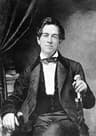
Alfred Vail
modernN/A (inventor, not philosopher)
Alfred Vail (1807-1859) was an American machinist and inventor best known for his collaboration with Samuel Morse in developing the electromagnetic telegraph and refining Morse code. He is not primarily known as a philosopher or theologian, and any philosophical arguments attributed to him likely reflect a misattribution or namesake confusion.
1 argument
Philosophy of LanguageTruth & Knowledge
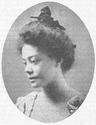
Alice Dunbar-Nelson
modernAfrican American Intellectual Tradition
Alice Dunbar-Nelson (1875–1935) was an American poet, journalist, essayist, and activist associated with the Harlem Renaissance and the broader African American intellectual tradition. She contributed significantly to Black feminist thought and African American letters through her writing on race, gender, and politics. Her work positioned African American women as both producers and mediators of knowledge within diasporic intellectual life.
1 argument
SkepticismTruth & Knowledge
AB
Alison Bailey
contemporaryFeminist Philosophy, Critical Race Theory
Alison Bailey is a contemporary feminist philosopher at Illinois State University whose work spans feminist epistemology, critical race theory, and privilege studies. She is known for analyzing how social position shapes epistemic access and for developing accounts of 'strategic ignorance' as a tool of oppression. Her scholarship emphasizes that philosophical inquiry about gender and race must be grounded in the lived conditions and structural obstacles facing marginalized groups.
1 argument
Moral ResponsibilityRights & Liberty
AJ
Alison Jaggar
contemporaryFeminist Philosophy, Socialist Feminism
Alison M. Jaggar is a leading contemporary feminist philosopher whose work spans feminist ethics, epistemology, and political philosophy. She is best known for her systematic critique of how dominant philosophical traditions have excluded or distorted women's perspectives, and for her influential taxonomy of feminist political theories. Her scholarship connects abstract philosophical questions to concrete concerns about gender justice, global poverty, and the conditions for women's flourishing.
1 argument
Moral ResponsibilityRights & Liberty
AW
Alison Wylie
contemporaryAnalytic Philosophy of Science, Feminist Epistemology
Alison Wylie is a contemporary philosopher of science specializing in the philosophy of archaeology and the social sciences. She is known for her rigorous analyses of analogical reasoning in archaeological inference and her contributions to feminist epistemology and standpoint theory. Her work bridges philosophy of science with the methodological foundations of empirical inquiry in the humanities.
1 argument
Philosophy of LanguageTruth & Knowledge
AM
Alister McGrath
contemporaryReformed Anglican Theology / Natural Theology
Alister McGrath (born 1953) is a British theologian, molecular biophysicist, and Christian apologist whose work bridges the natural sciences and Christian theology. He is Professor of Science and Religion at the University of Oxford and has written extensively on natural theology, the fine-tuning argument, and the intellectual case for Christian faith. His interdisciplinary background distinguishes him as a leading voice in contemporary science-religion dialogue.
1 argument
Natural Theology

Allan Gotthelf
contemporaryAristotelian Philosophy, History of Ancient Philosophy
Allan Gotthelf (1942–2013) was an American philosopher specializing in Aristotle's philosophy of biology and the metaphysics of teleology. He was a leading figure in the revival of serious scholarly attention to Aristotle's biological works, arguing that they are philosophically foundational rather than merely empirical. He also contributed to the philosophy of Ayn Rand's Objectivism, co-founding the Ayn Rand Society.
1 argument
PerceptionCausation

Allen Newell
contemporaryCognitive Science / Computational Philosophy of Mind
Allen Newell (1927–1992) was an American cognitive scientist and computer scientist at Carnegie Mellon University and RAND Corporation, widely regarded as a founding figure of artificial intelligence and cognitive science. Alongside Herbert A. Simon, he pioneered the information processing approach to human cognition, arguing that the mind is best understood as a symbol-manipulating system. His theoretical and empirical work bridged computer science, psychology, and philosophy of mind.
1 argument
SkepticismTruth & Knowledge
A
Allison
contemporaryAnalytic Kantianism
Henry E. Allison (born 1937) is a leading American Kant scholar whose interpretive work has shaped contemporary understanding of Kantian transcendental idealism. He is best known for defending a 'two-aspect' reading of Kant's phenomena/noumena distinction against traditional 'two-worlds' interpretations, and for detailed reconstructions of Kant's theoretical and practical arguments.
1 argument
PerceptionModality & Possibility
A
Almeida
contemporaryAnalytic Philosophy, Philosophy of Religion
Michael Almeida is a contemporary analytic philosopher at the University of Texas San Antonio specializing in philosophy of religion, metaphysics, and modal logic. He is known for rigorous formal treatments of divine attributes, possible worlds semantics, and the logic of obligation. His work examines the coherence of theism through the lens of modal metaphysics and deontic logic.
1 argument
Moral ResponsibilityJustice & Punishment
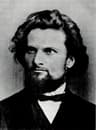
Alois Riehl
modernNeo-Kantianism, Critical Realism
Alois Riehl (1844–1924) was an Austrian-German philosopher and leading figure in the realist wing of neo-Kantianism. He developed a form of critical realism that sought to reconcile Kantian epistemology with scientific empiricism, arguing that things-in-themselves are causally real even if unknowable in their intrinsic nature. His multi-volume work *Der philosophische Kritizismus* established him as a systematic defender of critical philosophy against both idealism and naive realism.
1 argument
Philosophy of LanguageTruth & Knowledge
AJ
Alphonse J. Smet
contemporaryAfrican Philosophy, Missionary Philosophy
Alphonse J. Smet was a Belgian Jesuit priest and philosopher who spent much of his academic career at the University of Kinshasa (formerly Lovanium University) in the Democratic Republic of Congo. He made significant contributions to the historiography of African philosophy, documenting and systematizing the intellectual traditions of African and African-descended thinkers. His work helped establish African philosophy as a legitimate academic discipline by tracing its development and arguing for the authenticity of indigenous African thought.
1 argument
SkepticismTruth & Knowledge
A&
Altman & Wellman
contemporaryAnalytic Political Philosophy
Andrew Altman and Christopher Heath Wellman are contemporary analytic political philosophers who have collaborated extensively on liberal theories of rights, political legitimacy, and international justice. Altman, based at Georgia State University, specializes in legal and political philosophy, while Wellman, at Washington University in St. Louis, focuses on political obligation, secession, and immigration ethics. Together they co-authored foundational work on the liberal theory of international justice and the moral grounding of human rights.
1 argument
Democracy & Governance
AH
Alur, Henzinger & Kupferman
contemporaryFormal Methods / Theoretical Computer Science
Rajeev Alur, Thomas A. Henzinger, and Orna Kupferman are contemporary computer scientists known for foundational work in formal verification, temporal logics, and game-theoretic approaches to reactive systems. Their joint contributions include developing Alternating-time Temporal Logic (ATL) and advancing the theory of multi-agent verification, which bridges logic, automata theory, and game semantics.
1 argument
SkepticismTruth & Knowledge
AN
Alva Noë
contemporaryEnactivism, Philosophy of Mind, Phenomenology
Alva Noë is an American philosopher at the University of California, Berkeley, specializing in philosophy of mind, perception, and consciousness. He is a leading proponent of enactivism, arguing that perception is not a process that happens inside the brain but is instead a form of skillful engagement with the world. His work challenges the orthodox computational and representationalist views of mind and consciousness.
1 argument
Perception

Alvin Roth
contemporaryGame Theory / Market Design
Alvin E. Roth is an American economist and Nobel laureate known for his foundational contributions to game theory, experimental economics, and market design. He shared the 2012 Nobel Memorial Prize in Economic Sciences with Lloyd Shapley for their work on the theory of stable allocations and the practice of market design, and has applied matching theory to real-world systems including kidney exchange and medical residency placement.
1 argument
SkepticismTruth & Knowledge
AF
Amanda Friedenberg
contemporaryAnalytic Philosophy / Epistemic Game Theory
Amanda Friedenberg is a contemporary game theorist and philosopher whose work centers on epistemic game theory, interactive epistemology, and the foundations of strategic reasoning. She has contributed influential analyses of common knowledge, rationalizability, and backward induction, clarifying how differing formal models yield divergent conclusions about rational play.
1 argument
SkepticismTruth & Knowledge
AT
Amie Thomasson
contemporaryAnalytic Philosophy
Amie Thomasson is a contemporary American analytic philosopher and professor at Dartmouth College, specializing in metaphysics, ontology, and philosophy of art. She is best known for developing 'easy ontology,' a deflationary approach arguing that existence questions about ordinary objects and other entities can be resolved through conceptual analysis combined with trivial empirical inquiry. Her work defends the reality of artifacts, fictional entities, and social objects against eliminativist and skeptical positions.
1 argument
Modality & Possibility
AE
Amitai Etzioni
contemporaryCommunitarianism
Amitai Etzioni (1929–2023) was an American-Israeli sociologist and philosopher best known as the founder of the communitarian movement. He argued that liberal individualism, unchecked by communal bonds, erodes the social fabric necessary for a functioning democracy. His work sought to articulate a third way between radical individualism and authoritarianism, emphasizing shared values, civic responsibility, and the moral voice of community.
1 argument
Rights & LibertySocial Contract
AR
Amnon Rapoport
contemporaryBehavioral Economics / Experimental Game Theory
Amnon Rapoport is a behavioral economist and experimental decision theorist whose research centers on strategic interaction, social dilemmas, and coordination under uncertainty. He has made substantial contributions to experimental game theory, studying how individuals behave in competitive and cooperative settings. His work integrates psychology and economics to examine deviations from classical rational-choice predictions.
1 argument
Democracy & GovernanceSocial Contract
AB
Amy Baehr
contemporaryFeminist Political Philosophy
Amy Baehr is a contemporary feminist political philosopher whose work examines the intersections of liberalism, feminism, and social justice. She has contributed notably to debates about whether liberal political theory can adequately account for women's oppression and the structural barriers women face. Her scholarship interrogates the assumptions embedded in mainstream political philosophy and advocates for feminist correctives to liberal theory.
1 argument
Moral ResponsibilityRights & Liberty
AK
Amy Kleinschmidt
contemporaryAnalytic Philosophy
Amy Kleinschmidt is a contemporary philosopher working in the philosophy of language and metaphysics of linguistic objects. Her work examines how linguistic items such as word-types and word-tokens are individuated, particularly the puzzles that arise when a single inscription admits of multiple readings or interpretations. She contributes to debates at the intersection of the ontology of language and the philosophy of linguistics.
1 argument
Modality & Possibility
AO
Amy Olberding
contemporaryConfucian Philosophy, Comparative Philosophy
Amy Olberding is a contemporary American philosopher specializing in Confucian ethics and comparative philosophy, with a particular focus on everyday moral life, grief, and the ethics of demeanor. She is a professor at the University of Oklahoma and is known for bringing classical Chinese philosophy into dialogue with Western analytic ethics. Her work examines figures such as Confucius, Mencius, and Xunzi on topics ranging from moral exemplarism to the philosophy of rudeness.
1 argument
Moral ResponsibilityVirtue Ethics
AV
Ana Valenzuela
contemporaryPhilosophy of Education
Ana Valenzuela is a contemporary philosopher working in the theory of critical thinking and education. Her work engages with debates about the generalizability of thinking skills, particularly challenging subject-specificity arguments advanced by John McPeck. She defends the view that domain-general cognitive skills play a meaningful role in reasoning across disciplines.
1 argument
SkepticismTruth & Knowledge

Anaximander
ancientPre-Socratic Philosophy (Milesian School)
Anaximander of Miletus was a Pre-Socratic Greek philosopher and a student of Thales, regarded as one of the earliest natural philosophers in the Western tradition. He proposed the apeiron (the boundless or infinite) as the fundamental principle underlying all existence, and made pioneering contributions to cosmology, geography, and natural science.
1 argument
Truth & Knowledge
Aa
Ancient atomists (e.g., Democritus, Leucippus)
ancientPre-Socratic Atomism / Ancient Materialism
Ancient atomists, principally Leucippus (5th c. BCE) and his pupil Democritus (c. 460–c. 370 BCE), developed the earliest systematic materialist metaphysics, holding that reality consists of indivisible atoms moving through void. Their mechanistic worldview anticipated later scientific materialism and influenced Epicurus, Lucretius, and early modern natural philosophy.
1 argument
Consciousness & Mind
Ae
Andersen et al.
contemporaryAnalytic Philosophy
Andersen et al. refers to a collaborative contemporary work in decision theory and game theory examining the foundations of solution concepts in extensive-form games. The collaboration is notable for critical analysis of backward induction and its stability as a rational solution method.
1 argument
SkepticismTruth & Knowledge
AA
Andre Ariew
contemporaryAnalytic Philosophy of Biology
Andre Ariew is a contemporary philosopher of biology at the University of Missouri, specializing in the conceptual and epistemological foundations of evolutionary theory. His work examines teleology, natural selection, and the philosophical status of core biological concepts. He has contributed to debates over how fitness, drift, and selection should be understood as scientific explananda.
1 argument
SkepticismTruth & Knowledge
AW
Andrea Westlund
contemporaryAnalytic Philosophy, Feminist Philosophy
Andrea Westlund is a contemporary analytic philosopher working primarily in ethics, philosophy of action, and feminist philosophy. She is best known for her account of autonomy as 'answerability'—the disposition to hold oneself answerable to external critical perspectives on one's own practical reasoning. Her work bridges mainstream autonomy theory with feminist concerns about deference, subordination, and epistemic standpoint.
1 argument
Moral ResponsibilityConsciousness & Mind
AW
Andreas Witzel
contemporaryAnalytic Philosophy / Epistemic Game Theory
Andreas Witzel is a contemporary researcher working in the area of epistemic game theory and the logic of sequential games. His work examines how plausibility orderings and belief revision operate during the actual play of extensive-form games, contributing to the formal analysis of rational behavior under dynamic information.
1 argument
SkepticismTruth & Knowledge
A
Andreasen
contemporaryPhilosophy of Psychiatry, Neuroscience
Nancy C. Andreasen is an American psychiatrist and neuroscientist whose empirical research on schizophrenia has significantly shaped both clinical practice and philosophical debates about mental illness. Her work integrating neuroimaging and genetic association studies with psychiatric nosology contributed to ongoing discussions about whether empirical findings can ground the conceptual analysis of mental conditions. She served as editor-in-chief of the American Journal of Psychiatry for nearly two decades.
1 argument
BioethicsTruth & Knowledge

Andrei Zhdanov
contemporarySoviet Marxism / Dialectical Materialism
Andrei Zhdanov (1896–1948) was a Soviet Communist Party official and cultural ideologist who served as one of Stalin's closest lieutenants. Though primarily a political figure, he wielded significant influence over Soviet philosophy and aesthetics, enforcing orthodox Dialectical Materialism and Socialist Realism against Western and heterodox Marxist influences. His interventions in philosophy shaped Soviet intellectual life in the late Stalinist period.
1 argument
SkepticismTruth & Knowledge
Andreu Mas-Colell
contemporaryMathematical Economics
Andreu Mas-Colell is a Catalan economist and mathematical economic theorist, best known for his foundational contributions to general equilibrium theory and game theory. He co-authored the widely used graduate textbook 'Microeconomic Theory' (1995) and has held academic posts at Berkeley, Harvard, and Pompeu Fabra University, while also serving in Catalan government roles.
1 argument
SkepticismTruth & Knowledge
AB
Andrew Bacon
contemporaryAnalytic Philosophy
Andrew Bacon is a contemporary analytic philosopher at the University of Southern California, specializing in philosophy of language, logic, and metaphysics. He is best known for his systematic treatment of vagueness and his work on higher-order logic and its applications to metaphysics and the theory of propositions. His monograph 'Vagueness and Thought' (2018) offers a comprehensive framework for understanding how vague predicates interact with belief and rational agency.
1 argument
Modality & Possibility
AK
Andrew Kuper
contemporaryCosmopolitan Political Philosophy
Andrew Kuper is a contemporary political philosopher whose work focuses on global justice, democratic theory, and the reform of international institutions. He is best known for arguing that democratic principles and legitimate representation can and should be extended beyond the nation-state to global governance bodies. His scholarship engages with cosmopolitan political theory and offers practical frameworks for making international organizations more accountable.
1 argument
Democracy & Governance
AM
Andrew Moravcsik
contemporaryLiberal Internationalism
Andrew Moravcsik is a prominent American political scientist and international relations theorist, best known for developing liberal intergovernmentalism as a framework for explaining European integration. His work reframes international institutions as expressions of state preferences rather than supranational autonomy, and he has written extensively on the democratic legitimacy of the European Union and multilateral governance.
1 argument
Democracy & Governance
AN
Andrew Newman
contemporaryAnalytic Philosophy, Analytic Metaphysics
Andrew Newman is a contemporary analytic philosopher specializing in metaphysics, particularly the theory of universals, tropes, and predication. He is best known for his work on the physical basis of predication and critical engagement with trope theory as a response to the problem of relations and properties. His writing engages closely with debates between realism about universals and nominalist alternatives.
1 argument
Modality & PossibilityTruth & Knowledge
AS
Andrew Strauss
contemporaryGlobal Democratic Theory
Andrew Strauss is a contemporary legal scholar and political philosopher known for his advocacy of global democratic governance. He has developed influential arguments for the creation of a Global Parliament as a means of legitimizing international institutions and reducing geopolitical conflict. His work bridges international law, democratic theory, and global governance.
1 argument
Democracy & Governance
AT
Andrew Ter Ern Loke
contemporaryAnalytic Philosophy of Religion
Andrew Ter Ern Loke is a contemporary analytic philosopher of religion based in Hong Kong, known for his work on theistic arguments, the resurrection, and the metaphysics of God. He has written extensively on the cosmological argument, defending versions that are independent of ontological commitments, and on the logical coherence of the Incarnation.
1 argument
Natural Theology
AM
Andrey Markov
contemporaryConstructive Mathematics
Andrei Andreyevich Markov Jr. (1903–1979) was a Soviet mathematician and logician who made foundational contributions to constructive mathematics and the theory of algorithms. He developed the Markov algorithm formalism—a string-rewriting system equivalent in power to Turing machines—and led the Russian school of constructive mathematics. He maintained that the Church-Turing thesis is a philosophical conjecture about computability rather than a mathematical proposition and therefore cannot be formally proved.
1 argument
SkepticismTruth & Knowledge

Andrzej Grzegorczyk
contemporaryMathematical Logic, Analytic Philosophy (Warsaw School)
Andrzej Grzegorczyk (1922–2014) was a Polish logician, mathematician, and philosopher associated with the Warsaw school of logic. He made foundational contributions to recursive function theory and the philosophy of language, and was also known for his work in ethics and pacifist philosophy. His career was centered at the Polish Academy of Sciences, where he worked for decades.
1 argument
Modality & Possibility
AG
André Gallois
contemporaryAnalytic Philosophy
André Gallois is a contemporary analytic philosopher known for his work on metaphysics, particularly the theory of occasional identity — the view that numerical identity can hold between objects at some times but not others. He has also contributed to philosophy of language and epistemology, including debates about self-knowledge and first-person authority.
1 argument
Modality & Possibility
AC
Andy Clark
contemporaryAnalytic Philosophy of Mind, Embodied and Extended Cognition
Andy Clark is a British philosopher and cognitive scientist best known for developing the Extended Mind thesis alongside David Chalmers, arguing that cognition is not confined to the brain but extends into the body and environment. His work spans philosophy of mind, embodied cognition, and predictive processing, situating him as a leading figure in 4E (embodied, embedded, enacted, extended) cognitive science. He is currently Professor of Cognitive Philosophy at the University of Sussex.
1 argument
SkepticismPhilosophy of Language
AE
Andy Egan
contemporaryAnalytic Philosophy
Andy Egan is a contemporary analytic philosopher known for his work in epistemology, philosophy of language, and philosophy of mind. He has made significant contributions to debates on relativism about epistemic modals and predicates of personal taste, self-locating belief, and the logic of epistemic akrasia. He is a professor at Rutgers University.
1 argument
Skepticism
AK
Angelika Kratzer
contemporaryAnalytic Philosophy / Formal Semantics
Angelika Kratzer is a German-American linguist and philosopher of language known for her foundational contributions to formal semantics. Her work on modality, conditionals, and situation semantics has shaped contemporary analysis of meaning in natural language.
1 argument
Moral ResponsibilityModality & Possibility

Angelo Poliziano
modernRenaissance Humanism
Angelo Poliziano (1454–1494), born Angelo Ambrogini in Montepulciano, was an Italian Renaissance humanist, poet, and classical philologist closely associated with the Medici court in Florence. He served as tutor to Lorenzo de' Medici's children and held the chair of Latin and Greek at the University of Florence, where he pioneered a rigorous historical-philological approach to classical texts. His work bridged literary humanism and philosophical scholarship, engaging with Aristotelian and Platonic traditions through the lens of Renaissance textual criticism.
1 argument
Philosophy of LanguageTruth & Knowledge
A
Anglberger
contemporaryAnalytic Philosophy / Formal Logic
Albert J. J. Anglberger is a contemporary logician and philosopher working primarily in deontic logic, formal epistemology, and the logic of norms. His research addresses plausibility reasoning, normative systems, and the semantics of obligation, often drawing on formal and game-theoretic tools.
1 argument
SkepticismTruth & Knowledge
AR
Angus Ross
contemporaryAnalytic Epistemology
Angus Ross is a contemporary analytic philosopher working in the epistemology of testimony. He is best known for his influential paper 'Why Do We Believe What We Are Told?' (1986), which examines the normative foundations of testimonial belief and defends a reductionist-adjacent account of testimonial justification. His work contributed to debates about whether testimony is a basic or derivative source of epistemic justification.
1 argument
Truth & Knowledge

Anil Gupta
contemporaryAnalytic Philosophy
Anil Gupta is an American analytic philosopher at the University of Pittsburgh, specializing in logic, philosophy of language, and epistemology. He is best known for co-developing the revision theory of truth with Nuel Belnap and for his influential account of the epistemological role of experience in his book Empiricism and Experience. His work connects formal logic with foundational questions about meaning, definition, and rational belief.
1 argument
Perception
AG
Ann Garry
contemporaryFeminist Philosophy, Analytic Philosophy
Ann Garry is a contemporary feminist philosopher best known for her contributions to feminist epistemology, philosophy of sex, and the analysis of gender in analytic philosophy. She spent much of her career at California State University, Los Angeles, and co-edited the influential anthology 'Women, Knowledge, and Reality: Explorations in Feminist Philosophy' with Marilyn Pearsall. Her work examines how philosophical inquiry has historically neglected or distorted women's experience and what a genuinely inclusive philosophy would require.
1 argument
Moral ResponsibilityRights & Liberty
AS
Ann Senghas
contemporaryCognitive Science / Psycholinguistics
Ann Senghas is a psycholinguist and cognitive scientist at Barnard College, Columbia University, best known for her longitudinal study of Nicaraguan Sign Language (NSL). Her research on how successive cohorts of deaf children systematized and elaborated NSL into a fully grammatical language has made her a central figure in debates about language emergence, acquisition, and the poverty of the stimulus. Her empirical work bears directly on philosophical questions about linguistic nativism and the learnability of grammar.
1 argument
SkepticismPhilosophy of Language
AC
Anna Carastathis
contemporaryFeminist Philosophy, Critical Race Theory
Anna Carastathis is a contemporary feminist philosopher and social theorist best known for her systematic theoretical treatment of intersectionality as a conceptual and political framework. Her work engages feminist philosophy, critical race theory, and social ontology to examine how overlapping systems of oppression shape both identity and political possibility. She has advanced debates on coalition politics, epistemic injustice, and the conditions under which marginalized groups can build solidarity.
1 argument
Moral ResponsibilityRights & Liberty
AM
Anna Marmodoro
contemporaryAnalytic Metaphysics / Neo-Aristotelianism
Anna Marmodoro is a contemporary philosopher specializing in metaphysics, ancient philosophy, and philosophy of religion. She is known for her work on powers-based ontology, Aristotelian and Neoplatonic metaphysics, and divine attributes. She holds the Chair in Metaphysics at Durham University and has previously been affiliated with the University of Oxford.
1 argument
Consciousness & Mind
AM
Anna-Sara Malmgren
contemporaryAnalytic Philosophy, Epistemology
Anna-Sara Malmgren is a contemporary analytic philosopher specializing in epistemology, with a particular focus on the nature and structure of a priori justification. She is a professor at Stanford University, where her work examines the relationship between rational intuition, inference, and epistemic justification. Her research challenges both rationalist and empiricist assumptions about how a priori and a posteriori justification differ in kind versus degree.
1 argument
PerceptionTruth & Knowledge
AM
Anna-Sofia Maurin
contemporaryAnalytic Philosophy
Anna-Sofia Maurin is a Swedish analytic metaphysician and Professor of Theoretical Philosophy at the University of Gothenburg. She is known for her work on tropes, properties, and ontological dependence, and is a leading contemporary defender of trope theory.
1 argument
Consciousness & Mind
AC
Annalisa Coliva
contemporaryAnalytic Philosophy, Wittgensteinian Epistemology
Annalisa Coliva is an Italian analytic philosopher specializing in epistemology, philosophy of mind, and Wittgenstein studies. She is best known for developing a systematic hinge epistemology drawing on Wittgenstein's 'On Certainty', arguing that certain framework propositions function as epistemic hinges rather than beliefs subject to justification. She has also made significant contributions to debates on Moore's paradox and the nature of epistemic norms.
1 argument
Skepticism
AJ
Annamarie Jagose
contemporary
1 argument
Moral ResponsibilityBioethics
AS
Anne Sjerp Troelstra
contemporary
1 argument
SkepticismTruth & Knowledge

Annette Baier
contemporaryAnalytic Philosophy, Feminist Philosophy, Humean Ethics
Annette Baier (1929–2012) was a New Zealand moral philosopher and professor at the University of Pittsburgh, widely regarded as one of the most important feminist philosophers of the twentieth century. She made foundational contributions to the philosophy of trust, moral psychology, and Hume scholarship, arguing that mainstream ethics had systematically neglected relationships of dependency, care, and the moral experience of women. Her work challenged Kantian autonomy-centered ethics in favor of a more naturalistic, sentiment-based moral theory rooted in the Humean tradition.
1 argument
Moral ResponsibilityRights & Liberty

Anthony Appiah
contemporaryAnalytic Philosophy, Cosmopolitanism
Kwame Anthony Appiah is a British-Ghanaian philosopher best known for his contributions to ethics, political philosophy, and the philosophy of identity. A professor at New York University, he has shaped contemporary debates on cosmopolitanism, race, and culture, arguing against essentialist conceptions of identity while defending a liberal, globally-minded ethics. His work draws on analytic philosophy, African philosophy, and literary theory.
1 argument
Divine AttributesAgainst an attribute of God

Anton Wilhelm Amo
modernGerman Enlightenment / Leibniz-Wolffian Rationalism
Anton Wilhelm Amo (c. 1703–c. 1759) was a Ghanaian-born philosopher who became one of the first Africans to study and teach at European universities, holding positions at Halle, Wittenberg, and Jena. Working within the German Enlightenment and the Leibniz-Wolffian tradition, he produced rigorous Latin treatises on epistemology, philosophy of mind, and the legal status of Africans in Europe. He returned to the Gold Coast around 1747, where he spent his remaining years.
1 argument
SkepticismTruth & Knowledge

Antonin Scalia
contemporaryLegal Originalism / Textualism
Antonin Scalia (1936–2016) was an Associate Justice of the United States Supreme Court, appointed by President Reagan in 1986 and serving until his death. He is best known as the foremost champion of originalism and textualism in American constitutional and statutory interpretation, arguing that legal texts must be understood according to their original public meaning rather than evolving judicial construction or legislative intent. His prolific opinions and academic writings made him one of the most intellectually influential jurists of the twentieth century.
1 argument
Rights & LibertyDemocracy & Governance
AA
Antonius Arquatus
medievalScholasticism
Antonius Arquatus was a medieval scholastic theologian whose extant work engages questions of prophetic vocation and martyrdom within the Christian theological tradition. He argued that authentic prophecy is inherently linked to persecution, reflecting a broader medieval interest in distinguishing true from false prophets through the criterion of suffering. His writings survive only fragmentarily and he remains a minor figure in the scholastic canon.
1 argument
Afterlife & DeathInsubordination to God
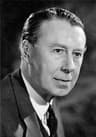
Antony Duff
contemporaryAnalytic Philosophy of Law
R. Antony Duff is a British legal philosopher best known for his work in the philosophy of criminal law, particularly theories of punishment, criminal responsibility, and the communicative function of criminal justice. He is Professor Emeritus at the University of Stirling and has also held positions at the University of Minnesota Law School.
1 argument
Natural Theology

Aravinda Chakravarti
contemporaryPhilosophy of Biology / Biomedical Science
Aravinda Chakravarti is a leading human geneticist known for his foundational contributions to the study of complex disease genetics and statistical genomics. His work on genome-wide association studies (GWAS) and the genetic basis of conditions such as Hirschsprung disease has shaped modern understandings of polygenic inheritance. He has held prominent positions at Johns Hopkins and NYU, contributing to both the Human Genome Project and the philosophical interpretation of genetic data.
1 argument
BioethicsTruth & Knowledge

Archytas
ancientPythagoreanism
Archytas of Tarentum was a Pythagorean philosopher, mathematician, statesman, and general active in the 4th century BCE. A friend of Plato, he made foundational contributions to mathematics, mechanics, and music theory, and is often credited as the founder of mathematical mechanics.
1 argument
Truth & Knowledge
Archytas of Tarentum
ancientPythagoreanism
Archytas of Tarentum was a Greek Pythagorean philosopher, mathematician, statesman, and general active in the 4th century BCE. He made significant contributions to mathematics, particularly in geometry and number theory, and is credited with solving the problem of doubling the cube. A close friend of Plato, he governed Tarentum for seven consecutive terms and is considered one of the founders of mathematical mechanics.
1 argument
Truth & Knowledge
AC
Ariel Cohen
contemporaryAnalytic Philosophy of Language
Ariel Cohen is a contemporary linguist and philosopher of language specializing in formal semantics, pragmatics, and the semantics of generics. His work bridges logic, linguistics, and philosophy of language, with particular focus on discourse structure and quantification.
1 argument
Philosophy of Language
AA
Arif Ahmed
contemporaryAnalytic Philosophy
Arif Ahmed is a British analytic philosopher at the University of Cambridge best known for his systematic defense of evidential decision theory (EDT) against causal decision theory. His work engages with foundational issues in decision theory, epistemology, and the philosophy of probability, with particular attention to how agents should reason under uncertainty. He has also contributed to debates in philosophy of religion concerning the epistemic force of probabilistic and evidential arguments.
1 argument
Natural Theology
A
Armendt
contemporaryAnalytic Philosophy
Brad Armendt is a contemporary American philosopher specializing in decision theory, probability, and the foundations of Bayesian epistemology. He is known for his work on Dutch book arguments, the role of probability in rational belief, and defenses of key probabilistic principles against proposed counterexamples.
1 argument
Truth & Knowledge
AH
Armin Haken
contemporaryAnalytic Philosophy / Mathematical Logic
Armin Haken is a contemporary logician and computer scientist best known for his foundational work in proof complexity. His 1985 proof establishing an exponential lower bound on resolution proofs of the pigeonhole principle is a landmark result connecting logic, combinatorics, and computational complexity.
1 argument
SkepticismTruth & Knowledge
AK
Arnon Keren
contemporaryAnalytic Epistemology
Arnon Keren is a contemporary Israeli epistemologist whose work centers on the epistemology of testimony, trust, and the conditions under which we are justified in believing what others tell us. He has contributed to debates about the social dimensions of knowledge, examining how testimonial justification propagates through chains of informants and the role trust plays in epistemic practice. His research engages with both foundationalist and coherentist approaches to testimonial warrant.
1 argument
Truth & Knowledge

Artemov
contemporaryMathematical Logic / Analytic Philosophy
Sergei Artemov is a contemporary logician known for his work on justification logic, a framework that makes explicit the evidence or proofs underlying knowledge claims. His Logic of Proofs provides a formal bridge between modal epistemic logic and the explicit proof-theoretic semantics of intuitionistic and classical systems.
1 argument
SkepticismTruth & Knowledge

Arthur Cecil Pigou
modernWelfare Economics
Arthur Cecil Pigou (1877–1959) was a British economist and professor at Cambridge who founded the field of welfare economics. A student and successor of Alfred Marshall, he systematically analyzed the divergence between private and social costs, laying the groundwork for modern theories of externalities, public goods, and government intervention in markets.
1 argument
Democracy & GovernanceSocial Contract
AC
Arthur Collier
modernBritish Idealism
Arthur Collier was an English clergyman and philosopher best known for his idealist metaphysics, which denied the existence of an external material world. His 1713 work Clavis Universalis argued, independently of Berkeley, that matter is a contradictory notion and that reality is fundamentally mental.
1 argument
Natural TheologyTruth & Knowledge

Arthur Danto
contemporaryAnalytic Philosophy, Philosophy of Art
Arthur Coleman Danto (1924–2013) was an American philosopher and art critic, best known for his institutional theory of art and the concept of the 'Artworld.' A longtime professor at Columbia University, he argued that what distinguishes art from mere objects is its embeddedness in a theoretical and historical context. He also served as art critic for The Nation for decades, bringing analytic rigor to contemporary art writing.
1 argument
AestheticsTruth & Knowledge

Arthur Eddington
modernPhilosophy of Science, Structural Realism, Epistemological Idealism
Arthur Stanley Eddington (1882–1944) was a British astrophysicist and philosopher of science whose 1919 solar eclipse expedition provided the first empirical confirmation of Einstein's general theory of relativity. Beyond observational work, he developed a distinctive epistemological idealism — 'selective subjectivism' — arguing that the structure of physical knowledge is partly mind-imposed. His philosophical writings engaged seriously with the foundations of spacetime geometry, quantum theory, and the nature of scientific explanation.
1 argument
SkepticismTruth & Knowledge
AH
Arthur Haas
modernPhilosophy of Science
Arthur Erich Haas (1884–1941) was an Austrian physicist and philosopher of science who made early contributions to quantum theory and the foundations of physics. He proposed a quantum model of the hydrogen atom in 1910, anticipating aspects of Bohr's later model, and engaged substantively with debates in the philosophy of physics surrounding relativity, scientific methodology, and the epistemological status of physical theories. His work bridged empirical physics and philosophical analysis of scientific explanation.
1 argument
SkepticismTruth & Knowledge

Arthur Schopenhauer
modernPost-Kantian Idealism
Arthur Schopenhauer was a 19th-century German philosopher best known for his metaphysical system centered on the concept of the Will as the fundamental reality underlying all phenomena. His pessimistic philosophy, developed in The World as Will and Representation, had profound influence on later thinkers including Nietzsche, Freud, and Wittgenstein, and helped introduce Eastern philosophical ideas into Western thought.
1 argument
Natural TheologyTruth & Knowledge
Arthur Stanley Eddington
modernPhilosophy of Science, Structural Idealism
Arthur Stanley Eddington (1882–1944) was a British astrophysicist and philosopher of science whose 1919 solar eclipse expedition provided the first empirical confirmation of Einstein's general theory of relativity. Beyond his scientific achievements, he made substantial contributions to the philosophy of physics, arguing for a form of structural idealism in which the physical world is constituted by mind-imposed mathematical relations. His philosophical writings explored the epistemological foundations of modern physics, engaging critically with contemporaries such as Reichenbach and Weyl on questions of geometry, measurement, and physical reality.
1 argument
SkepticismTruth & Knowledge

Arthur Waley
contemporarySinology / Orientalism
Arthur Waley (1889–1966) was a British orientalist and sinologist renowned for his elegant translations of Chinese and Japanese literature and philosophy. Self-taught in classical Chinese and Japanese, he made East Asian thought accessible to Western readers through acclaimed translations of the Analects, the Tao Te Ching, and works on ancient Chinese philosophy. His interpretive choices in rendering classical texts have shaped Western scholarly understanding of Confucian and Daoist traditions.
1 argument
Moral ResponsibilityVirtue Ethics
A
Asher
contemporaryFormal Semantics, Analytic Philosophy of Language
Nicholas Asher is a contemporary philosopher and formal semanticist working at the intersection of philosophy of language, linguistics, and logic. He is best known for developing Segmented Discourse Representation Theory (SDRT), a significant extension of Kamp's Discourse Representation Theory (DRT) that formally models discourse structure, coherence relations, and the semantics of multi-sentence texts. His research spans lexical semantics, implicature, anaphora, and the logical foundations of natural language interpretation.
1 argument
Philosophy of LanguageModality & Possibility
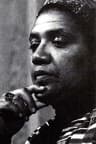
Audre Lorde
contemporaryBlack Feminist Philosophy, Intersectionality Theory
Audre Lorde (1934–1992) was an American poet, essayist, and activist whose work forged a distinctive feminist philosophy grounded in the lived experience of Black, lesbian, and working-class women. Her essays theorized difference, intersectionality, and the erotic as philosophical and political resources, challenging mainstream feminism to reckon with race, sexuality, and class as inseparable axes of oppression. She is among the foundational figures of Black feminist thought and intersectional theory.
1 argument
Moral ResponsibilityRights & Liberty
AR
Augustin Renaudet
contemporaryIntellectual History, Renaissance Humanism
Augustin Renaudet (1880–1958) was a French historian of ideas specializing in Renaissance humanism and the pre-Reformation intellectual milieu of France. He is best known for his landmark study of Parisian humanism in the late fifteenth and early sixteenth centuries, tracing the intersections of scholasticism, evangelical reform, and Renaissance learning. His work brought sustained scholarly attention to figures such as Jacques Lefèvre d'Étaples and Guillaume Budé as transitional thinkers between medieval and modern thought.
1 argument
Philosophy of LanguageTruth & Knowledge
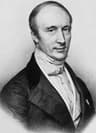
Augustin-Louis Cauchy
modernPhilosophy of Mathematics
Augustin-Louis Cauchy (1789–1857) was a French mathematician whose rigorous reformulation of calculus and analysis laid the groundwork for modern mathematics. Though primarily a mathematician, his work intersected with philosophy of mathematics, particularly questions about the foundations and epistemological status of geometric and analytic systems. A devout Catholic, he also engaged with questions about the nature of mathematical truth.
1 argument
Modality & PossibilityTruth & Knowledge

Augustus de Morgan
modernMathematical Logic
Augustus de Morgan (1806–1871) was a British mathematician and logician who made foundational contributions to formal logic and algebra. A professor at University College London, he systematized propositional logic and extended Aristotelian syllogistics into a more rigorous formal framework. He is best known for the laws bearing his name, which establish the duality between conjunction and disjunction under negation.
1 argument
Modality & PossibilityFree Will & Foreknowledge
A(
Averroes (Ibn Rushd)
medieval
1 argument
Divine AttributesCausation
AH
Aviad Heifetz
contemporaryAnalytic Philosophy / Epistemic Game Theory
Aviad Heifetz is an Israeli game theorist and mathematical economist whose work focuses on epistemic game theory, interactive belief systems, and the foundations of strategic reasoning. He is known for contributions to the formal modeling of knowledge, belief hierarchies, and unawareness in games, and has published extensively on the philosophical foundations of decision theory.
1 argument
SkepticismTruth & Knowledge
A(
Avicenna (Ibn Sīnā)
medieval
1 argument
Divine AttributesCausation
Ad
Avner de-Shalit
contemporaryCommunitarianism, Analytic Political Philosophy
Avner de-Shalit is an Israeli political philosopher and Professor of Political Theory at the Hebrew University of Jerusalem. He is known for his contributions to communitarian political thought, environmental ethics, and political obligations to future generations. His work critically engages liberal individualism by emphasizing the role of community, shared values, and social context in constituting the self.
1 argument
Rights & LibertySocial Contract
A
Axelrod
contemporaryAnalytic Political Philosophy / Game Theory
Robert Axelrod is an American political scientist best known for his pioneering work on the evolution of cooperation using game theory and computer simulations. His research on the iterated Prisoner's Dilemma demonstrated how cooperative strategies like tit-for-tat can emerge and persist among self-interested agents, influencing fields from evolutionary biology to international relations.
1 argument
SkepticismTruth & Knowledge
BD
B. Douglas Bernheim
contemporaryAnalytic Philosophy / Game Theory
B. Douglas Bernheim is an American economist known for his foundational work in behavioral economics, game theory, and public finance. He is credited with independently developing the concept of rationalizability in game theory and has made significant contributions to the analysis of savings behavior and fiscal policy.
1 argument
SkepticismTruth & Knowledge

B.F. Skinner
contemporaryRadical Behaviorism
Burrhus Frederic Skinner (1904–1990) was an American psychologist and the foremost proponent of radical behaviorism, the view that behavior is entirely explicable through environmental contingencies without appeal to mental states. He developed operant conditioning theory and authored 'Verbal Behavior' (1957), a behaviorist account of language acquisition that was critically dismantled by Noam Chomsky and became a landmark debate in cognitive science.
1 argument
SkepticismPhilosophy of Language
B
Bach
contemporaryAnalytic Philosophy
Kent Bach is a contemporary analytic philosopher known for his work in philosophy of language, epistemology, and the theory of speech acts. He has made significant contributions to the semantics/pragmatics distinction, defending a view he calls 'semantic minimalism' combined with a rich account of pragmatic enrichment. His work on propositional attitudes and singular terms has also been influential in debates about mental content and reference.
1 argument
Modality & PossibilityTruth & Knowledge
B
Bailin
contemporaryPhilosophy of Education, Informal Logic
Bailin is a contemporary philosopher of education known for her work on critical thinking, creativity, and argumentation theory. She has contributed to debates on the nature of general thinking skills and their role in education, challenging skeptical positions about domain-general reasoning capacities.
1 argument
SkepticismTruth & Knowledge
Ba
Baker and Clark
contemporaryAnalytic Epistemology
Baker and Clark is a collaborative philosophical authorship in contemporary epistemology, known for work on the transmission of testimonial justification. Their contributions engage questions about how beliefs transmitted through chains of testimony can retain epistemic warrant, intersecting with reformed epistemology and social epistemology.
1 argument
Truth & Knowledge
B
Balguy
modernBritish Rationalism
John Balguy (1686–1748) was an English Anglican clergyman and moral philosopher in the rationalist tradition. He argued that moral goodness is an objective, mind-independent property of actions and objects, discoverable through reason rather than sentiment. His work was a direct response to the moral sense theories of Shaftesbury and Hutcheson, defending a Clarkean rationalism in ethics.
1 argument
AestheticsVirtue Ethics
B
Baltag
contemporaryAnalytic Philosophy / Formal Epistemology
Alexandru Baltag is a contemporary logician and philosopher known for his foundational work in dynamic epistemic logic and the logic of information flow. His research integrates formal logic, game theory, and epistemology to model belief revision, knowledge updates, and multi-agent reasoning.
1 argument
SkepticismTruth & Knowledge
BB
Barbara Bergmann
contemporaryFeminist Economics
Barbara R. Bergmann (1927–2015) was an American feminist economist and professor at American University and the University of Maryland, widely recognized for her pioneering work on occupational segregation and gender discrimination in labor markets. She developed the 'overcrowding hypothesis' to explain how exclusion of women from male-dominated occupations suppresses female wages, and was a leading advocate for childcare policy reform and affirmative action as tools for economic equity.
1 argument
Justice & PunishmentRights & Liberty

Barbara Grosz
contemporaryComputational Linguistics / Artificial Intelligence
Barbara Grosz is a pioneering computer scientist and computational linguist at Harvard University, renowned for foundational work on discourse structure, dialogue systems, and multi-agent collaboration. Her theories on centering and discourse focus shaped natural language processing and computational models of conversation.
1 argument
Philosophy of Language
BS
Barbara Scholz
contemporaryAnalytic Philosophy of Linguistics
Barbara C. Scholz (1947–2007) was an American philosopher of linguistics who worked on the foundations of generative grammar, nativism, and the philosophy of linguistic science. With Geoffrey K. Pullum, she produced influential critiques of poverty-of-the-stimulus arguments and of platonist conceptions of language.
1 argument
SkepticismTruth & Knowledge
B
Bard
contemporaryAnalytic Philosophy
Jonathan Bard is a contemporary philosopher who has contributed to debates in metaphysics and the philosophy of mathematics, particularly concerning platonism and nominalism. His work engages critically with arguments for the existence of abstract objects, examining the logical structure of eliminative arguments in the philosophy of mathematics.
1 argument
SkepticismTruth & Knowledge
Be
Bard et al.
contemporaryAnalytic Philosophy
Bard et al. refers to a collaborative work by contemporary philosophers, likely including A.W. Bard, who have contributed to debates in metaphysics and philosophy of mathematics. Their work critically engages with platonist positions, particularly responses to Jerrold Katz's arguments for mathematical platonism.
1 argument
SkepticismTruth & Knowledge
B
Barnes
contemporaryAnalytic Philosophy
Jonathan Barnes is a British analytic philosopher and classicist renowned for his scholarship on Aristotle and ancient philosophy. He critically examined classical arguments for God's existence, notably in his edited volume 'The Ontological Argument' (1972), where he assessed and found wanting the major formulations of ontological reasoning.
1 argument
Natural Theology
B
Barnett
contemporaryAnalytic Epistemology
Barnett is a contemporary analytic philosopher working in epistemology, particularly on the nature and transmission of testimonial justification. Their work examines how beliefs justified through testimony can be passed along chains of informants, contributing to debates about the reductive versus non-reductive status of testimonial knowledge.
1 argument
Truth & Knowledge
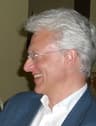
Barry Smith
contemporaryAnalytic Philosophy, Formal Ontology
Barry Smith (born 1952) is a British-American analytic philosopher and ontologist, Distinguished Professor at the University at Buffalo (SUNY), best known for his work in formal ontology, applied ontology, and philosophy of language. He is the principal architect of Basic Formal Ontology (BFO), a top-level ontology now foundational to biomedical informatics, and has contributed to truthmaker theory, mereology, and the metaphysics of negative truths.
1 argument
Truth & Knowledge

Bart Ehrman
contemporaryHistorical-Critical Scholarship
Bart D. Ehrman (born 1955) is a New Testament scholar and professor at the University of North Carolina at Chapel Hill, specializing in textual criticism, the historical Jesus, and the origins of Christianity. A former evangelical Christian turned agnostic, he is known for bringing rigorous historical-critical methods to popular audiences. His work challenges traditional Christian claims through historical and manuscript evidence.
1 argument
Natural Theology
BG
Bart Geurts
contemporaryFormal Semantics / Philosophy of Language
Bart Geurts is a Dutch philosopher of language and formal semanticist at Radboud University Nijmegen, specializing in the semantics and pragmatics of natural language. He is known for foundational work on presupposition, scalar implicatures, and Discourse Representation Theory (DRT). His research bridges formal semantic theory with cognitive and communicative dimensions of meaning.
1 argument
Philosophy of LanguageModality & Possibility
BS
Bart Streumer
contemporaryAnalytic Philosophy, Metaethics
Bart Streumer is a contemporary Dutch analytic philosopher specializing in metaethics and practical reason, currently based at the University of Groningen. He is best known for defending a radical error theory, arguing in his monograph 'Unbelievable Errors' (2017) that all normative judgments are false because irreducibly normative properties do not exist. His work addresses the nature of normativity, reasons for action, and the possibility of reductive naturalist accounts of moral properties.
1 argument
ConsequentialismTruth & Knowledge
B
Battigalli
contemporaryEpistemic Game Theory / Analytic Decision Theory
Pierpaolo Battigalli is an Italian economist and game theorist known for his foundational work on epistemic game theory and the analysis of strategic reasoning under uncertainty. He has developed influential frameworks for understanding belief revision, forward induction, and psychological games, bridging decision theory and game-theoretic analysis.
1 argument
SkepticismTruth & Knowledge

Bayard Rustin
contemporaryAfrican American Political Thought, Democratic Socialism
Bayard Rustin (1912–1987) was an American civil rights leader, organizer, and political theorist whose work bridged nonviolent resistance, democratic socialism, and Black liberation. He was the chief architect of the 1963 March on Washington and a key strategist in the broader civil rights movement. Though marginalized within the movement due to his openly gay identity, his contributions to political organizing and coalition-building remain foundational.
1 argument
SkepticismTruth & Knowledge

Bayle
modernEarly Modern Skepticism
Pierre Bayle (1647–1706) was a French skeptic and advocate of religious toleration, best known for his monumental Dictionnaire historique et critique (1697). Writing from exile in Rotterdam, he subjected theological and philosophical claims to rigorous critical scrutiny, arguing that reason and faith are irreconcilable and that moral virtue is independent of religious belief. His defense of toleration and his fideistic skepticism made him a formative influence on the Enlightenment.
1 argument
Justice & PunishmentRights & Liberty
B
Başkent
contemporaryAnalytic Philosophy / Non-classical Logic
Can Başkent is a contemporary logician and philosopher working in non-classical logics, game theory, and formal epistemology. His research explores paraconsistent logic, dynamic epistemic logic, and the interpretation of belief revision in game-theoretic contexts.
1 argument
SkepticismTruth & Knowledge
B
Beatty
contemporaryPhilosophy of Biology
John Beatty is a philosopher of biology at the University of British Columbia known for his work on the nature and structure of evolutionary theory. He developed the influential evolutionary contingency thesis, which argues that most biological generalizations reflect historical contingencies rather than universal laws. His scholarship has shaped foundational debates about whether natural selection constitutes genuine scientific law and what explanatory work evolutionary theory can do.
1 argument
SkepticismTruth & Knowledge

Beatus Rhenanus
modernRenaissance Humanism
Beatus Rhenanus (1485–1547) was a German humanist scholar, philologist, and historian from Sélestat in Alsace, and one of the most accomplished classical editors of the Renaissance. A close associate of Erasmus, he produced critical editions of Tacitus, Velleius Paterculus, and numerous patristic authors, while also writing an early systematic history of the Germanic peoples. His meticulous philological methods made him a foundational figure in the development of Renaissance textual criticism.
1 argument
Philosophy of LanguageTruth & Knowledge
BR
Bede Rundle
contemporaryAnalytic Philosophy
Bede Rundle (1937–2018) was a British analytic philosopher and fellow of Trinity College, Oxford, who worked primarily in philosophy of language, philosophy of mind, and metaphysics. He is best known for his 2004 work 'Why there is Something rather than Nothing,' in which he argues that absolute nothingness is not a coherent possibility, offering a distinctive response to the classical cosmological question that bypasses the ontological argument's modal framework.
1 argument
Natural Theology
Ba
Bellantoni and Cook
contemporary
1 argument
SkepticismTruth & Knowledge
B&
Belnap & Perloff
contemporaryAnalytic Philosophy
Nuel Belnap and Michael Perloff are contemporary analytic philosophers known for their collaborative work in philosophical logic, particularly the development of stit (seeing-to-it-that) theory. Their research formalizes agency, action, and deliberation within branching-time frameworks, bridging modal logic and the philosophy of action.
1 argument
SkepticismTruth & Knowledge

Benedetto Croce
modernItalian Idealism (Neo-Hegelianism)
Benedetto Croce was an Italian idealist philosopher, historian, and literary critic who developed a distinctive philosophy of spirit emphasizing aesthetics, logic, economics, and ethics as interrelated forms of mental activity. A leading figure of 20th-century Italian thought, he served as a cultural and political counterweight to fascism and profoundly shaped modern aesthetics and historiography.
1 argument
Natural TheologyTruth & Knowledge
BL
Benedikt Löwe
contemporaryAnalytic Philosophy / Mathematical Logic
Benedikt Löwe is a contemporary logician and philosopher whose work bridges mathematical logic, set theory, and the philosophy of mathematics. He is known for contributions to the theory of infinite games, formal epistemology, and the social aspects of mathematical practice, and has held professorships at the University of Amsterdam and the University of Hamburg.
1 argument
SkepticismTruth & Knowledge
B
Benhabib
contemporaryCritical Theory
Seyla Benhabib is a Turkish-American political philosopher and professor emerita at Yale University, widely recognized for bridging Frankfurt School critical theory with discourse ethics, feminist philosophy, and democratic theory. Her work engages the tension between universal normative principles and the particular claims of culture, identity, and difference. She has made foundational contributions to cosmopolitan political theory and the philosophy of the other.
1 argument
SkepticismTruth & Knowledge
BH
Benjamin Hamby
contemporaryAnalytic Philosophy, Philosophy of Education
Benjamin Hamby is a contemporary analytic philosopher working in philosophy of education and critical thinking theory. He is known for his critical engagement with domain-specificity arguments in critical thinking, particularly challenging John McPeck's influential thesis that there are no transferable general thinking skills. His work contributes to debates about the nature, teachability, and scope of critical thinking across disciplines.
1 argument
SkepticismTruth & Knowledge

Benjamin Hoadly
modernLatitudinarianism
Benjamin Hoadly (1676–1761) was an English Anglican bishop and Latitudinarian theologian best known for igniting the Bangorian Controversy with his 1717 sermon arguing that Christ's kingdom is not of this world and that no earthly church or clergy holds authority to judge conscience. His writings on ecclesiastical and civil authority were highly influential in early eighteenth-century debates over the relationship between church, state, and individual conscience. He rose through the episcopal ranks to become Bishop of Winchester, and his political theology influenced later liberal Protestant and constitutional thought.
1 argument
Rights & LibertyDemocracy & Governance
Benjamin Libet
contemporaryNeuroscience of Consciousness
Benjamin Libet (1916-2007) was an American neuroscientist whose pioneering experiments on the timing of conscious will and brain activity became foundational to contemporary debates on free will and consciousness. His discovery that readiness potentials precede conscious awareness of decision-making challenged traditional notions of voluntary action and agency.
1 argument
Consciousness & Mind
BM
Benjamin McMyler
contemporaryAnalytic Epistemology
Benjamin McMyler is a contemporary analytic philosopher specializing in the epistemology of testimony and the nature of trust. He is best known for his book-length treatment of how testimony functions as a distinctive epistemic source, arguing that accepting testimony involves deferring to another's authority rather than merely accumulating evidence. His work engages with questions of rational trust, testimonial chains, and the social dimensions of knowledge.
1 argument
Truth & Knowledge
BM
Benjamin Mitchell-Yellin
contemporaryAnalytic Philosophy
Benjamin Mitchell-Yellin is a contemporary American philosopher working primarily in philosophy of action, free will, and moral responsibility. He is known for defending positions that integrate metaphysical and ethical considerations in debates about agency and free will. He has also co-authored work with John Martin Fischer on near-death experiences and their philosophical significance.
1 argument
Free Will & Foreknowledge
BS
Benjamin Schnieder
contemporaryAnalytic Philosophy
Benjamin Schnieder is a contemporary German analytic philosopher specializing in metaphysics and philosophy of language, particularly in the areas of grounding, truthmaker theory, and the ontology of facts and properties. He is a professor at the University of Hamburg and has contributed significantly to debates about the nature of negative truths, absence, and the logical structure of grounding relations.
1 argument
Truth & Knowledge

Benno Erdmann
modernNeo-Kantianism
Benno Erdmann (1851–1921) was a German philosopher and psychologist associated with the Neo-Kantian movement. He produced a critical edition of Kant's Critique of Pure Reason and made significant contributions to the interpretation of Kantian epistemology and the philosophy of space. He also wrote influential works in formal logic and empirical psychology.
1 argument
PerceptionModality & Possibility

Berit Brogaard
contemporaryAnalytic Philosophy
Berit Brogaard is a Danish-American philosopher and neuroscientist known for her work at the intersection of philosophy of mind, epistemology, and cognitive science. She holds a professorship at the University of Miami and has made significant contributions to debates on perception, consciousness, synesthesia, and the nature of nonconceptual content. Her interdisciplinary approach bridges analytic philosophy with empirical research in neuroscience and psychology.
1 argument
Perception
BB
Bernard Baars
contemporaryCognitive Science / Philosophy of Mind
Bernard Baars is a Dutch-American cognitive scientist best known for developing Global Workspace Theory, one of the most influential neuroscientific frameworks for understanding consciousness. His work bridges cognitive psychology, neuroscience, and philosophy of mind by proposing that conscious experience arises from a 'global workspace' in which information is broadcast widely across distributed brain networks.
1 argument
Consciousness & Mind

Bernard Bolzano
modernEarly Analytic Philosophy / Philosophy of Mathematics
Bernard Bolzano (1781-1848) was a Bohemian mathematician, logician, philosopher, and Catholic priest whose rigorous work on the foundations of analysis anticipated developments in mathematics by decades. He is best known for providing purely analytic proofs of theorems previously justified by geometric intuition, and for his posthumously influential work on logic and the theory of science.
1 argument
Truth & Knowledge

Bernard Chazelle
contemporaryAnalytic Philosophy of Computer Science
Bernard Chazelle is a French-American computer scientist and Eugene Higgins Professor of Computer Science at Princeton University, known for his pioneering work in computational geometry, algorithms, and the theory of computation. He has also written extensively on the broader intellectual and philosophical implications of the algorithmic perspective, exploring how computation reshapes our understanding of science and knowledge.
1 argument
SkepticismTruth & Knowledge
BL
Bernard Linsky
contemporaryAnalytic Philosophy
Bernard Linsky is a contemporary analytic philosopher at the University of Alberta, known for his work in philosophy of logic, modal metaphysics, and the philosophy of Bertrand Russell. He has contributed significantly to debates about the ontology of abstract objects—particularly propositions and properties—in the context of modal logic and possible worlds semantics.
1 argument
Modality & PossibilityTruth & Knowledge
Bernard Williams
contemporaryAnalytic Philosophy
Bernard Williams (1929-2003) was a British moral philosopher widely regarded as one of the most influential ethicists of the late twentieth century. He challenged the dominant utilitarian and Kantian frameworks, emphasizing the role of personal integrity, moral luck, and the limits of impartial systematic ethics. His work helped revive interest in virtue ethics and ancient Greek moral thought.
1 argument
Moral ResponsibilityJustice & Punishment

Bernardino Telesio
modernRenaissance Naturalism
Bernardino Telesio (1509–1588) was an Italian Renaissance natural philosopher who rejected Aristotelian metaphysics in favor of a naturalistic account of the world grounded in sensory experience. His major work, De Rerum Natura iuxta Propria Principia, proposed that nature is governed by two opposing material forces—heat and cold—acting upon passive matter, anticipating later empiricist methodology. He is regarded as a forerunner of early modern scientific thought and influenced figures such as Francis Bacon and Giordano Bruno.
1 argument
Afterlife & DeathInsubordination to God

Bernays
modernMathematical Logic / Formalism
Paul Bernays (1888-1977) was a Swiss mathematician and logician who made foundational contributions to mathematical logic, axiomatic set theory, and the philosophy of mathematics. He collaborated closely with David Hilbert on the formalist program and co-authored the monumental 'Grundlagen der Mathematik,' and he later developed the von Neumann-Bernays-Gödel (NBG) axiomatization of set theory.
1 argument
SkepticismTruth & Knowledge
B
Bernheim
contemporaryAnalytic Philosophy / Epistemic Game Theory
Bernheim is a contemporary game theorist and economist known for foundational contributions to epistemic game theory, particularly the concept of rationalizability. His work examines how rational players reason about each other's strategies in strategic settings.
1 argument
SkepticismTruth & Knowledge
B
Bertolet
contemporaryAnalytic Philosophy
Rod Bertolet is a contemporary analytic philosopher whose work focuses on philosophy of language, reference, and the metaphysics of propositions. He has contributed to debates concerning propositional existence across possible worlds and the semantics of names and descriptions.
1 argument
Modality & PossibilityTruth & Knowledge
B
Bhattacharjee
contemporaryPhilosophy of Religion
Bhattacharjee is a contemporary philosopher working in the philosophy of religion, engaging with questions of divine nature and suffering. Their work intersects themes from South Asian philosophical traditions and Western analytic theology, particularly concerning the relationship between God and creaturely pain. The argument that God must exemplify pain positions them within debates over divine impassibility and panentheism.
1 argument
Divine AttributesAgainst an attribute of God
B
Bialystok
contemporaryCognitive Science, Psycholinguistics
Ellen Bialystok is a Canadian cognitive scientist and psycholinguist, Distinguished Research Professor at York University, best known for her research on bilingualism and its effects on cognitive development and aging. She has made foundational contributions to understanding how managing two languages shapes executive function, attention, and language acquisition. Her work has influenced both theoretical linguistics and cognitive neuroscience.
1 argument
SkepticismPhilosophy of Language
Bicchieri
contemporaryAnalytic Philosophy / Behavioral Game Theory
Cristina Bicchieri is an Italian-American philosopher and behavioral scientist known for her work on social norms, game theory, and rational choice. She has developed influential accounts of how norms emerge, persist, and change, bridging philosophy, economics, and psychology.
1 argument
SkepticismTruth & Knowledge
Ba
Big-bang atheologians
contemporaryNaturalistic Philosophy of Cosmology
Big-bang atheologians is a collective designation for contemporary philosophers and cosmologists who argue that Big Bang cosmology undermines rather than supports theistic creation narratives. Drawing on physical cosmology, quantum mechanics, and philosophy of causation, they contend that the universe's origin requires no divine efficient cause. Prominent figures include Quentin Smith and Adolf Grünbaum, whose work directly engages cosmological arguments for God's existence.
1 argument
Natural TheologyCausation
Binmore
contemporaryAnalytic Philosophy / Game Theory
Ken Binmore is a British mathematician, economist, and philosopher best known for his foundational work in game theory and its application to moral and political philosophy. He has developed a naturalistic account of justice grounded in evolutionary game theory, arguing that fairness norms emerge from repeated bargaining interactions.
1 argument
SkepticismTruth & Knowledge
B
Birdsong
contemporaryPhilosophy of Language, Philosophy of Cognitive Science
Birdsong is a contemporary philosopher or linguist working in the philosophy of language and cognitive science, with contributions to debates about language learnability and the nature of grammatical knowledge. Their work engages with formal arguments concerning the relationship between primary linguistic data and the acquisition of grammatical competence, situating them within broader discussions of nativism and empiricism in the language sciences.
1 argument
SkepticismPhilosophy of Language
Bishop Hoadly
modernLatitudinarianism
Benjamin Hoadly (1676–1761) was an English Latitudinarian bishop and controversialist who argued against the coercive authority of any visible church, insisting that Christ's kingdom is purely spiritual and that religious authority resides in individual conscience guided by Scripture. His 1717 sermon 'The Nature of the Kingdom or Church of Christ' ignited the Bangorian Controversy, one of the most significant ecclesiastical disputes of 18th-century England. He applied similar interpretive principles to religious and civil authority alike, anticipating later intentionalist theories of textual and constitutional interpretation.
1 argument
Rights & LibertyDemocracy & Governance

Bishop Ussher
modernAnglican Theology, Biblical Chronology, Reformed Scholasticism
James Ussher (1581–1656) was Archbishop of Armagh and Primate of All Ireland, a prolific Anglican scholar whose meticulous biblical and patristic scholarship made him one of the most erudite churchmen of his age. He is best known for his comprehensive biblical chronology, which dated the creation of the world to 4004 BC through exhaustive cross-referencing of scriptural genealogies and ancient calendars. Beyond chronology, he produced significant works on church history, the early Irish church, and the relationship between Scripture and natural history.
1 argument
Natural TheologyCausation
B
Bjorndahl
contemporaryAnalytic Philosophy
Adam Bjorndahl is a contemporary philosopher and logician working at the intersection of epistemic logic, game theory, and formal semantics. His research focuses on dynamic epistemic logic, topological semantics for knowledge and belief, and the role of plausibility in sequential decision-making.
1 argument
SkepticismTruth & Knowledge

Blaise Pascal
modernChristian Existentialism / Jansenist Catholic Philosophy
Blaise Pascal was a 17th-century French mathematician, physicist, and Catholic philosopher who made foundational contributions to probability theory, projective geometry, and fluid mechanics. His posthumously published Pensées defended Christian faith through existential and pragmatic arguments, most famously the wager that bears his name.
1 argument
Natural Theology
B
Blutner
contemporaryFormal Semantics and Pragmatics
Reinhard Blutner is a contemporary German linguist and cognitive scientist known for his work in formal semantics, pragmatics, and optimality theory. He has contributed significantly to bidirectional optimality theory and the semantics-pragmatics interface, applying game-theoretic and neural network models to natural language interpretation.
1 argument
Philosophy of Language
BH
Bob Hale
contemporaryAnalytic Philosophy
Bob Hale (1945–2017) was a British analytic philosopher known for his work in philosophy of mathematics, metaphysics, and philosophical logic. Together with Crispin Wright, he developed neo-Fregean (or neo-logicist) philosophy of mathematics, arguing that arithmetic can be derived from Hume's Principle and second-order logic. His later work extended to modality, abstract objects, and the necessary existence of numbers.
1 argument
Consciousness & Mind
BS
Bonnie Steinbock
contemporaryAnalytic Philosophy, Bioethics
Bonnie Steinbock is an American philosopher and Professor Emerita at the University at Albany, SUNY, specializing in bioethics and applied ethics. She is best known for her work on moral status, reproductive ethics, and end-of-life issues. Her scholarship engages feminist perspectives in bioethics and challenges abstract philosophical theorizing that ignores the lived circumstances of women.
1 argument
Moral ResponsibilityRights & Liberty

Booker T. Washington
modernAfrican American Pragmatism
Booker T. Washington (1856–1915) was an American educator, author, and political leader who rose from slavery to become the most prominent African American public figure of the late nineteenth and early twentieth centuries. He founded the Tuskegee Normal and Industrial Institute in 1881 and advanced a philosophy of vocational education, economic self-reliance, and gradualist racial uplift. His pragmatic approach to Black advancement, though contested by contemporaries such as W.E.B. Du Bois, shaped African American social and political thought for generations.
1 argument
SkepticismTruth & Knowledge
BB
Boser, B.
contemporaryComputational Linguistics / Machine Learning
B. Boser is a contemporary researcher whose work has touched on computational linguistics and machine learning, with contributions relevant to text generation and discourse coherence. Boser is perhaps best known in the broader AI community for co-authoring foundational work on support vector machines in the early 1990s.
1 argument
Philosophy of Language
B
Boutilier
contemporaryAnalytic Philosophy / Decision Theory
Craig Boutilier is a Canadian computer scientist and AI researcher specializing in decision theory, reinforcement learning, and computational models of rational agency. His work bridges philosophy of action, game theory, and artificial intelligence, particularly in formalizing belief revision and sequential decision-making under uncertainty.
1 argument
SkepticismTruth & Knowledge
BC
Bowman Clarke
contemporaryAnalytic Philosophy
Bowman Clarke was a contemporary analytic philosopher whose work focused on the philosophy of language, ontology, and the metaphysics of linguistic entities. He engaged with questions surrounding inscription, token identity, and the relationship between physical marks and their semantic interpretations. His contributions addressed foundational problems in the ontology of language, particularly concerning how a single physical object can sustain multiple linguistic readings.
1 argument
Modality & Possibility
Bradley
modernBritish Absolute Idealism
Francis Herbert Bradley (1846–1924) was the preeminent British Absolute Idealist of the late nineteenth century, whose rigorous critiques of empiricism, utilitarianism, and correspondence theories of truth shaped Anglo-American philosophy before and during the analytic turn. His metaphysics held that ordinary experience presents a self-contradictory 'Appearance' that points toward a unified, supra-relational 'Absolute.' In ethics, his early work mounted a sustained attack on hedonistic and Kantian moral theories in favor of a social, self-realization account.
1 argument
Philosophy of Language
BA
Bradley Armour-Garb
contemporaryAnalytic Philosophy
Bradley Armour-Garb is a contemporary analytic philosopher at the University at Albany (SUNY), specializing in philosophy of language, logic, and the theory of truth. He is known for his sustained work on deflationism about truth, semantic paradoxes—particularly the liar paradox—and the foundations of logic. His research critically examines the explanatory limits and commitments of deflationary truth theories.
1 argument
Truth & Knowledge
BM
Bradley Monton
contemporaryAnalytic Philosophy
Bradley Monton is a contemporary American philosopher of science and analytic philosopher of religion, known for his work on philosophy of physics, probability, and atheistic defenses of intelligent design as a legitimate scientific hypothesis. A professor at the University of Colorado Boulder, he has contributed to debates on Pascal's Wager, the fine-tuning argument, and the demarcation problem between science and non-science.
1 argument
Natural Theology
BB
Brand Blanshard
modernRationalism / Absolute Idealism
Brand Blanshard (1892-1987) was an American philosopher known for his vigorous defense of rationalism in the 20th century, a period dominated by analytic and positivist approaches. He argued for the coherence theory of truth and the internal relations of thought, maintaining that reason pervades both mind and reality.
1 argument
Natural TheologyTruth & Knowledge
BF
Branden Fitelson
contemporaryAnalytic Philosophy, Formal Epistemology
Branden Fitelson is a contemporary analytic philosopher specializing in formal epistemology, Bayesian confirmation theory, and the philosophy of probability. He has made significant contributions to the formal analysis of evidential support, inductive logic, and the application of probabilistic methods to classical epistemological puzzles. He has held positions at Rutgers University and Northeastern University.
1 argument
SkepticismTruth & Knowledge
B
Brandon
contemporaryPhilosophy of Biology
Brandon is a contemporary philosopher engaged with the philosophy of biology, particularly the epistemological and cognitive standing of evolutionary theory. Their work raises questions about how the theory of natural selection should be understood as a scientific explanation and what kind of knowledge it provides.
1 argument
SkepticismTruth & Knowledge
BC
Brandon Carter
contemporaryPhilosophy of Cosmology, Analytic Philosophy of Religion
Brandon Carter (born 1942) is a theoretical physicist and cosmologist best known for formulating the anthropic principle in 1974. He has made significant contributions to black hole thermodynamics, cosmic string theory, and the philosophy of cosmological fine-tuning. His work on observer selection effects has had lasting influence on both physics and philosophy of religion.
1 argument
Natural Theology
BK
Brian Kogelmann
contemporaryAnalytic Political Philosophy
Brian Kogelmann is a contemporary political philosopher working primarily in the tradition of social contract theory and contractualism. He is known for his rigorous formal analysis of how agreement-based models of political justification function under conditions of deep moral and preference diversity. His work critically examines the foundations of Rawlsian and contractualist frameworks, exposing structural tensions in how such models generate binding principles.
1 argument
Social Contract
BM
Brian McLaughlin
contemporaryAnalytic Philosophy of Mind
Brian P. McLaughlin is an American philosopher of mind and professor at Rutgers University, known for his work on consciousness, mental causation, and the philosophy of psychology. He has contributed significantly to debates about physicalism, emergentism, and the explanatory gap, and co-edited influential volumes including the Oxford Handbook of Philosophy of Mind.
1 argument
Consciousness & Mind
B
Brindley
contemporarySinology / Comparative Philosophy
Erica Brindley is a contemporary scholar of early Chinese philosophy and religion, specializing in the intellectual history of the Warring States and Han periods. She has made significant contributions to the interpretation of Confucian and proto-Daoist texts, with particular attention to debates between Mencius and Xunzi on human nature and moral cultivation. Her work examines how ancient Chinese thinkers conceptualized the self, agency, and the relationship between individual nature and social order.
1 argument
Moral ResponsibilityVirtue Ethics
B
Bronfman
contemporaryFormal Epistemology / Philosophy of Probability
Bronfman is a contemporary philosopher working in the area of formal epistemology and philosophy of probability. Their work engages with principles governing rational belief under uncertainty, particularly the relationship between maximum entropy approaches and classical indifference-based reasoning.
1 argument
SkepticismTruth & Knowledge
BZ
Brook Ziporyn
contemporaryComparative Philosophy, Tiantai Buddhism, Classical Chinese Philosophy
Brook Ziporyn is an American philosopher and scholar of Chinese and comparative philosophy, currently Professor of Chinese Religion, Philosophy, and Culture at the University of Chicago Divinity School. He is known for his translations of classical Chinese texts and his philosophical work synthesizing Tiantai Buddhist thought with broader questions in metaphysics, ethics, and the philosophy of religion.
1 argument
Moral ResponsibilityVirtue Ethics
B
Brooks
contemporaryAnalytic Ethics
Brooks is a contemporary philosopher working in moral philosophy, with attention to the ethics of deception and the conditions under which wrongs are morally evaluated. Their work engages questions about culpability, intention, and the moral significance of deliberate versus inadvertent harmful acts.
1 argument
Moral ResponsibilityJustice & Punishment
Be
Brookshear et al.
contemporaryPhilosophy of Computer Science
Brookshear et al. refers to the collaborative authorship associated with J. Glenn Brookshear, best known for the widely-used textbook 'Computer Science: An Overview.' The group's contributions lie primarily in computer science pedagogy, including discussions of the philosophical foundations of computation, logic, and the limits of algorithmic knowledge.
1 argument
SkepticismTruth & Knowledge
BG
Bruce Glymour
contemporaryAnalytic Philosophy, Philosophy of Biology
Bruce Glymour is an American philosopher of biology working in the analytic tradition, known for his critical analysis of the epistemic and explanatory structure of evolutionary theory. He has examined the logical foundations of natural selection, fitness, and adaptation, questioning whether standard formulations of these concepts meet the standards expected of scientific theories. His work engages the intersection of philosophy of science and philosophy of biology.
1 argument
SkepticismTruth & Knowledge
BW
Bruce Waller
contemporaryAnalytic Philosophy, Naturalistic Ethics
Bruce Waller is a contemporary American philosopher working primarily in ethics, the philosophy of action, and informal logic. He is best known for his sustained critique of moral responsibility, arguing that retributive practices lack adequate naturalistic grounding. His work also engages the history of argumentation theory, including analyses of analogical reasoning in Aristotle.
1 argument
Philosophy of LanguageTruth & Knowledge

Bruckner
contemporaryContinental Philosophy, French Liberal Thought
Pascal Bruckner (born 1948) is a French philosopher and essayist associated with the post-1968 generation of French intellectuals. He is best known for his critiques of Western guilt culture, political victimhood, and what he terms the 'tyranny of penitence' in liberal societies. His work engages feminist debates, identity politics, and the ethics of empathy and responsibility.
1 argument
Moral ResponsibilityConsciousness & Mind
B
Bruin
contemporaryAnalytic Philosophy / Formal Epistemology
Bruin is a contemporary scholar working in formal epistemology and game theory, focusing on the technical foundations of common knowledge and rational agency. Their work engages with the formal models underlying backward induction and epistemic game theory, particularly reconciling divergent results in the literature.
1 argument
SkepticismTruth & Knowledge

Bruno Bauer
modernYoung Hegelianism
Bruno Bauer (1809–1882) was a German philosopher, theologian, and biblical critic associated with the Young Hegelian movement. He developed radical historical-critical analyses of the New Testament, arguing that early Christianity was a literary and philosophical construction rather than rooted in historical events. His application of Hegelian self-consciousness to religious critique made him a formative influence on Karl Marx and other Left Hegelian thinkers.
1 argument
Natural TheologyTruth & Knowledge

Bryan Caplan
contemporaryLibertarianism / Public Choice Theory
Bryan Caplan (born 1971) is an American economist and libertarian public intellectual at George Mason University known for applying public choice theory and behavioral economics to political philosophy. He argues that voter irrationality—not ignorance—explains poor democratic outcomes, and has made influential contributions to debates on immigration, education, and the limits of government intervention. His work bridges economics and philosophy, often challenging mainstream assumptions about the rationality of collective institutions.
1 argument
Democracy & GovernanceSocial Contract
BR
Bryan Renne
contemporaryAnalytic Philosophy / Formal Epistemology
Bryan Renne is a contemporary logician and philosopher whose work focuses on dynamic epistemic logic, belief revision, and the formal modeling of reasoning in games and multi-agent systems. He has contributed to the technical foundations of how plausibility orderings and conditional beliefs evolve under sequential information updates.
1 argument
SkepticismTruth & Knowledge
BE
Brössel, Eder & Huber
contemporaryFormal Epistemology
Brössel, Eder & Huber is a collaborative grouping of three contemporary formal epistemologists — Peter Brössel, Anna-Maria Eder, and Franz Huber — who have co-authored work on principles of epistemic rationality and belief revision. Their joint contributions focus on the foundations of Bayesian and ranking-theoretic approaches to rational credence, particularly the comparative justification of principles like Maximum Entropy. Each brings independent expertise in formal epistemology to their collaborative analyses.
1 argument
SkepticismTruth & Knowledge
B
Buchak
contemporaryAnalytic Philosophy
Lara Buchak is a contemporary philosopher specializing in decision theory, epistemology, and the philosophy of religion. She is best known for developing risk-weighted expected utility theory, a formal account of rational choice that accommodates risk-aversion without irrationality. Her work bridges formal epistemology and practical reason, with notable contributions to the philosophy of faith.
1 argument
SkepticismTruth & Knowledge
B
Bunt
contemporaryComputational Linguistics
Bunt is a contemporary researcher in computational linguistics and discourse analysis, known for work on dialogue acts, discourse markers, and the semantics of conversational interaction. His contributions have informed natural language processing approaches to coherence and pragmatic structure in generated text.
1 argument
Philosophy of Language
B
Buonomano
contemporaryPhilosophy of Language, Formal Learnability Theory
Buonomano is a contemporary researcher working in the philosophy of language and formal learnability theory, engaging with arguments about whether natural language grammars can be acquired from primary linguistic data alone. Their work intersects formal linguistics and epistemology of language, contributing to debates around nativism and the poverty of the stimulus.
1 argument
SkepticismPhilosophy of Language
BM
Burkhard Mojsisch
contemporaryMedieval Philosophy / German Speculative Mysticism
Burkhard Mojsisch (1944–2015) was a German historian of philosophy specializing in medieval and Renaissance thought, particularly the speculative mysticism of the German Dominican tradition. A professor at Ruhr-Universität Bochum, he produced foundational scholarly editions and interpretations of Meister Eckhart and Dietrich of Freiberg, with sustained attention to the metaphysics of intellect, predication, and self-knowledge.
1 argument
Divine Attributes
B
Buss
contemporaryAnalytic Philosophy
Sarah Buss is a contemporary American philosopher specializing in moral philosophy, agency, and practical reason. She is known for her work on autonomy, personal identity, and the nature of moral obligation, particularly exploring how constraints and dependencies shape authentic agency.
1 argument
SkepticismTruth & Knowledge
Butler
modernAnglican Philosophy, Natural Theology, British Moralism
Joseph Butler (1692–1752) was an English Anglican bishop and philosopher whose work bridged moral psychology and the philosophy of religion. His major work, 'The Analogy of Religion' (1736), employed probabilistic and analogical reasoning to argue for the rationality of Christian belief, while his 'Fifteen Sermons' developed an influential account of conscience as the supreme moral faculty. He remains a central figure in early modern British philosophy and natural theology.
1 argument
Natural Theology

C. A. Campbell
contemporaryBritish Idealism, Libertarianism (Free Will)
Charles Arthur Campbell (1897–1974) was a Scottish philosopher and professor at the University of Glasgow, best known for his vigorous defense of libertarian free will against compatibilist accounts. He argued that genuine moral responsibility requires that an agent could have genuinely done otherwise, grounding this claim in the phenomenology of moral effort and the structure of deliberation. His work bridges British Idealism and mid-century analytic philosophy.
1 argument
Free Will & Foreknowledge
CD
C. D. Broad
contemporary
1 argument
Free Will & Foreknowledge
CM
C. Martin
contemporary
1 argument
Philosophy of Language
CS
C. S. Peirce
modernPragmatism
Charles Sanders Peirce (1839–1914) was an American philosopher, logician, and scientist widely regarded as the founder of pragmatism and one of the most original thinkers in the history of American philosophy. He made foundational contributions to formal logic, semiotics, and the philosophy of science, though much of his work remained unpublished during his lifetime.
1 argument
Rights & LibertyFree Will & Foreknowledge
CC
C.A.J. Coady
contemporaryAnalytic Philosophy
C.A.J. Coady (Cecil Anthony John Coady) is an Australian analytic philosopher and Emeritus Professor at the University of Melbourne, best known for his landmark study of testimony as a foundational epistemic source. His work spans social epistemology, political philosophy, and the ethics of violence and war.
1 argument
Truth & Knowledge
CM
C.B. Martin
contemporaryAnalytic Philosophy, Powers Ontology
C.B. Martin (Charles Burton Martin, 1924–2008) was an Australian analytic metaphysician best known for his work on dispositions, properties, and powers. He developed a decisive critique of the conditional analysis of dispositions and proposed a 'two-sided' view of properties as simultaneously dispositional and qualitative. His later collaboration with John Heil extended this framework into a comprehensive ontology of mind and nature.
1 argument
Truth & Knowledge
C.D. Broad
contemporaryAnalytic Philosophy
Charlie Dunbar Broad (1887–1971) was a British analytic philosopher at Cambridge whose meticulous, systematic style made him one of the most careful philosophical expositors of his era. He made significant contributions to the philosophy of time, philosophy of mind, perception, and ethics, and produced a definitive two-volume examination of McTaggart's metaphysics. His willingness to take seriously unorthodox positions—including psychical research—distinguished him from most contemporaries.
1 argument
Divine Attributes
CL
C.H. Langford
contemporaryAnalytic Philosophy
C.H. Langford (Clarence Huntington Langford, 1895–1964) was an American logician and analytic philosopher best known for his collaboration with C.I. Lewis on modal logic and for formulating the paradox of analysis. He made foundational contributions to symbolic logic and the theory of strict implication, and his work on temporal and modal reasoning shaped mid-twentieth-century analytic philosophy.
1 argument
Modality & PossibilityFree Will & Foreknowledge
C.H. Waddington
contemporaryPhilosophy of Biology, Process Philosophy
Conrad Hal Waddington (1905–1975) was a British developmental biologist and philosopher of science whose work bridged embryology, genetics, and evolutionary theory. He is best known for coining the concept of the 'epigenetic landscape' and for his philosophical scrutiny of the logical and epistemological foundations of modern biology. His later work engaged seriously with process philosophy and the philosophy of science as applied to living systems.
1 argument
SkepticismTruth & Knowledge
CL
C.I. Lewis
contemporaryConceptual Pragmatism
Clarence Irving Lewis (1883–1964) was an American philosopher at Harvard University and a founding figure of conceptual pragmatism. He made foundational contributions to modal logic and epistemology, developing the logic of strict implication as an alternative to material implication and arguing that knowledge is shaped by a priori conceptual frameworks applied to sensory experience.
1 argument
Modality & PossibilityFree Will & Foreknowledge
C.L. Stevenson
contemporaryAnalytic Philosophy, Emotivism
Charles Leslie Stevenson (1908–1979) was an American philosopher and a leading figure in metaethics, best known for developing emotivism—the view that moral judgments primarily express the speaker's attitudes rather than state facts. His landmark work Ethics and Language (1944) provided the most systematic defense of the emotivist position and introduced influential concepts such as 'persuasive definition.' He taught principally at Yale University and the University of Michigan.
1 argument
Philosophy of Language
CT
C.L. Ten
contemporaryAnalytic Philosophy
C.L. Ten is a contemporary moral and political philosopher best known for his work on John Stuart Mill and the harm principle. His careful analyses of liberty, paternalism, and the limits of state coercion have shaped debates in contemporary liberal political philosophy.
1 argument
Moral ResponsibilityJustice & Punishment
CN
Calvin Normore
contemporaryAnalytic Philosophy / History of Medieval Philosophy
Calvin Normore is a contemporary analytic philosopher specializing in medieval philosophy, logic, and metaphysics, based at UCLA. He is known for meticulous historical scholarship on figures such as William of Ockham, Boethius, and John Buridan, with a focus on medieval theories of universals, modality, and semantics. His work bridges the history of medieval thought and contemporary analytic concerns in ontology and philosophy of language.
1 argument
Philosophy of Language

Cambridge Platonists
modernCambridge Platonism
The Cambridge Platonists were a group of seventeenth-century English philosophers and theologians based at Cambridge University, active roughly from the 1630s to the 1680s. Led by figures such as Ralph Cudworth, Henry More, Benjamin Whichcote, and John Smith, they sought to reconcile Christian theology with Neoplatonist metaphysics and rationalist epistemology. They opposed both Calvinist dogmatism and Hobbesian materialism, arguing that reason is 'the candle of the Lord' and that genuine religion must be grounded in rational reflection.
1 argument
Natural TheologyTruth & Knowledge
C
Cameron
contemporaryAnalytic Philosophy
Ross P. Cameron is a contemporary analytic metaphysician whose work focuses on truthmaker theory, grounding, and the metaphysics of modality and time. He has made significant contributions to debates about what entities must exist to account for the truth of various propositions, including problematic cases like negative and general truths. Cameron is a Professor of Philosophy at the University of Virginia.
1 argument
Truth & Knowledge
CS
Cameron Shelley
contemporaryInformal Logic / Argumentation Theory
Cameron Shelley is a contemporary philosopher and cognitive scientist at the University of Waterloo whose work focuses on analogical reasoning, visual argumentation, and rhetoric. He examines the cognitive and logical structure of analogical inference, tracing connections between classical rhetorical theory—particularly Aristotelian paradeigma—and modern formal analyses. His research contributes to informal logic, argumentation theory, and the philosophy of reasoning.
1 argument
Philosophy of LanguageTruth & Knowledge
CP
Camilla Power
contemporaryEvolutionary Anthropology
Camilla Power is a British social anthropologist known for her work on the evolutionary origins of symbolic culture, gender, and religion. She is a leading proponent of the 'female cosmetic coalitions' theory of human symbolic origins and has contributed to debates on the emergence of language and ritual in early human societies.
1 argument
SkepticismTruth & Knowledge
CS
Candace Sidner
contemporaryComputational Linguistics / Artificial Intelligence
Candace Sidner is an American computer scientist specializing in artificial intelligence, natural language processing, and human-robot interaction. She is known for her foundational work on discourse structure, collaborative dialogue systems, and the attentional state model of discourse developed with Barbara Grosz.
1 argument
Philosophy of Language
Ce
Cargill et al.
contemporaryPhilosophy of Medicine / Philosophy of Psychiatry
Cargill et al. refers to a collaborative research group cited in philosophical and scientific literature on psychiatric or medical conditions. Their work engages with methodological questions in the philosophy of medicine, particularly the relationship between empirical association studies and conceptual analysis of conditions or disorders.
1 argument
BioethicsTruth & Knowledge
C
Cariani
contemporaryAnalytic Philosophy, Formal Semantics
Fabrizio Cariani is a contemporary analytic philosopher specializing in the semantics of normative language and deontic logic. He works on the formal and semantic properties of obligation, permission, and 'ought'-statements, with attention to how context, time, and information states affect deontic modality. His research bridges formal linguistics, logic, and moral philosophy.
1 argument
Moral ResponsibilityJustice & Punishment

Carl Friedrich Gauss
modernMathematical Realism / German Enlightenment Science
Carl Friedrich Gauss was a German mathematician and physicist widely regarded as one of the greatest mathematicians in history. His contributions span number theory, differential geometry, statistics, astronomy, and the foundations of non-Euclidean geometry, profoundly shaping modern mathematical and scientific thought.
1 argument
Modality & PossibilityCausation
CG
Carl Ginet
contemporaryAnalytic Philosophy
Carl Ginet is an American analytic philosopher at Cornell University, best known for his contributions to epistemology and the philosophy of action. His non-causal theory of action, developed in 'On Action' (1990), argues that the mental character of a basic action is intrinsic and not constituted by its causal history. He has also made influential contributions to the incompatibilist debate over free will, arguing that determinism precludes the kind of control required for moral responsibility.
1 argument
Free Will & Foreknowledge
Carl Gustav Hempel
contemporaryLogical Empiricism
Carl Gustav Hempel (1905–1997) was a German-American philosopher of science and a central figure in logical empiricism. Trained in Berlin and associated with the Vienna Circle, he made foundational contributions to the theory of scientific explanation, confirmation, and the logic of empirical significance. His work shaped analytic philosophy of science throughout the twentieth century.
1 argument
Philosophy of LanguageTruth & Knowledge
CS
Carl Stychin
contemporary
1 argument
Moral ResponsibilityBioethics
Carl von Prantl
modernGerman Historicism, History of Philosophy
Carl von Prantl (1820–1888) was a German philosopher and historian of philosophy, best known for his monumental multi-volume Geschichte der Logik im Abendlande (History of Logic in the West), which remains a foundational reference for the study of ancient and medieval logic. A professor at the University of Munich, he combined rigorous philological method with broad historical sweep to document the development of logical thought from Aristotle through the scholastic period. His work, though later criticized for certain interpretive biases, shaped nineteenth-century understanding of the history of Western logic.
1 argument
Philosophy of LanguageTruth & Knowledge

Carlo Rovelli
contemporaryPhilosophy of Physics, Relational Quantum Mechanics
Carlo Rovelli (born 1956) is an Italian theoretical physicist and philosopher of science best known for his foundational contributions to loop quantum gravity. He has written influential works on the nature of time, relational quantum mechanics, and the philosophy of physics, arguing that space and time are not fundamental but emergent from quantum interactions. His popular books have made him one of the most widely read voices in contemporary physics and natural philosophy.
1 argument
Natural TheologyCausation
CN
Carlos Nieto
contemporaryAnalytic Philosophy of Education
Carlos Nieto is a contemporary philosopher working in the philosophy of education and critical thinking. His work engages with debates over the nature and transferability of thinking skills, particularly in response to subject-specificity arguments advanced by John McPeck. His contributions situate him within analytic philosophy of education.
1 argument
SkepticismTruth & Knowledge
C
Carnot
modernClassical Thermodynamics / Natural Philosophy
Nicolas Léonard Sadi Carnot (1796–1832) was a French physicist and engineer who founded the science of thermodynamics. His 1824 treatise *Réflexions sur la puissance motrice du feu* established the theoretical upper limit of heat engine efficiency, introducing concepts foundational to the second law of thermodynamics. Though he died young and largely unrecognized, his work was later formalized by Clausius and Kelvin into the canonical thermodynamic framework.
1 argument
Causation

Carol J. Adams
contemporaryFeminist Philosophy, Ecofeminism
Carol J. Adams is an American feminist theorist, activist, and author whose work bridges feminist philosophy and animal ethics. She is best known for developing feminist-vegetarian critical theory, arguing that the oppression of women and the exploitation of animals are structurally interconnected. Her scholarship has been foundational to ecofeminism and critical animal studies.
1 argument
Moral ResponsibilityRights & Liberty
CE
Carola Eschenbach
contemporaryFormal Ontology, Analytic Philosophy
Carola Eschenbach is a German philosopher and logician working at the intersection of formal ontology, mereology, and the philosophy of language. She has made contributions to the formal analysis of part-whole relations, the ontology of linguistic objects, and spatial reasoning. Her work applies formal methods to questions about how abstract and physical entities—including signs and inscriptions—are individuated and counted.
1 argument
Modality & Possibility

Carole Pateman
contemporaryFeminist Political Philosophy
Carole Pateman (born 1940) is a British political theorist best known for her feminist critique of classical social contract theory, most fully developed in 'The Sexual Contract' (1988). She argues that the liberal social contract conceals a prior sexual contract that systematically subordinates women, and has also made foundational contributions to participatory democratic theory. Long associated with UCLA, she is one of the most influential feminist political philosophers of the twentieth and twenty-first centuries.
1 argument
Justice & PunishmentRights & Liberty
CS
Carolina Sartorio
contemporaryAnalytic Philosophy
Carolina Sartorio is a contemporary analytic philosopher specializing in causation, free will, and moral responsibility. She is best known for her causal theory of free will, which argues that what matters for freedom is the causal history of an action, not whether that history is deterministic. Her work demonstrates that debates about free will are deeply entangled with both metaphysical questions about causation and ethical questions about responsibility.
1 argument
Free Will & Foreknowledge
CM
Carolyn Mylander
contemporaryPhilosophy of Language, Cognitive Science, Linguistic Nativism
Carolyn Mylander is a developmental psychologist and researcher best known for her collaborative work with Susan Goldin-Meadow on homesign — the spontaneous gestural communication systems developed by deaf children without access to conventional sign language. Her empirical studies have provided significant evidence bearing on debates about language innateness and the role of primary linguistic data in grammar acquisition. Her work sits at the intersection of developmental psychology, linguistics, and philosophy of language.
1 argument
SkepticismPhilosophy of Language
C
Cassese
contemporaryLiberal Political Philosophy
Cassese is a contemporary legal and political philosopher who engages with the foundations of constitutional governance and political legitimacy. Drawing on Lockean liberal theory, their work examines the justification for representative institutions and their authority over property regulation and taxation. Their scholarship bridges classical liberal philosophy and contemporary constitutional theory.
1 argument
Democracy & Governance

Catarina Dutilh Novaes
contemporaryAnalytic Philosophy, History and Philosophy of Logic
Catarina Dutilh Novaes is a Dutch philosopher specializing in the philosophy of logic, history of medieval logic, and social epistemology. She is Professor of Philosophy at Vrije Universiteit Amsterdam and is best known for her dialogical account of deduction, which situates logical reasoning within collaborative, adversarial social practices. Her work bridges formal logic, cognitive science, and the history of philosophy.
1 argument
Philosophy of Language
Catherine Beecher
modernAmerican Protestant Reformism
Catharine Beecher (1800–1878) was an American educator, author, and moral philosopher who championed the professionalization of women's domestic and educational roles. She founded the Hartford Female Seminary and wrote extensively on domestic economy, arguing that women's domestic sphere carried genuine intellectual and civic dignity. Though she opposed women's suffrage, she was a pioneering voice in demanding that women's practical constraints be taken seriously in any serious discussion of their capacities.
1 argument
Moral ResponsibilityRights & Liberty

Catherine Havasi
contemporaryComputational Linguistics / Cognitive Science
Catherine Havasi is an American computer scientist and entrepreneur specializing in natural language processing and common-sense reasoning. She co-founded the Open Mind Common Sense project's ConceptNet and Luminoso, contributing to computational approaches to semantic understanding and text analytics.
1 argument
Philosophy of Language
Catherine MacKinnon
contemporaryFeminist Legal Theory, Critical Legal Studies
Catharine A. MacKinnon (b. 1946) is an American feminist legal scholar and activist whose work has fundamentally shaped legal theory on sexual harassment, pornography, and sex discrimination. She developed the dominance theory of feminism, arguing that law structurally reflects and reinforces male power over women. Her scholarship bridged legal doctrine and feminist political theory in ways that produced lasting doctrinal change.
1 argument
Justice & PunishmentRights & Liberty
Cesare Burali-Forti
modernMathematical Logic / Peano School
Cesare Burali-Forti (1861-1931) was an Italian mathematician and logician, a member of Giuseppe Peano's school in Turin. He is best known for discovering the Burali-Forti paradox in 1897, one of the earliest antinomies in set theory, which showed that the set of all ordinal numbers leads to a contradiction.
1 argument
Truth & Knowledge
CV
Cesare Vasoli
contemporaryHistory of Philosophy, Renaissance Humanism
Cesare Vasoli (1924–2013) was an Italian historian of philosophy specializing in Renaissance humanism, dialectic, and early modern thought. A professor at the University of Florence, he produced landmark studies on figures such as Jacques Lefèvre d'Étaples, Pico della Mirandola, and Lorenzo Valla, illuminating the intellectual transitions between medieval Scholasticism and Renaissance culture. His work examined how humanist scholars reappropriated Aristotelian logic and natural philosophy through new philological and mathematical methods.
1 argument
Philosophy of LanguageTruth & Knowledge

Chad Hansen
contemporaryAnalytic Philosophy of Language, Comparative Philosophy
Chad Hansen is a contemporary analytic philosopher specializing in classical Chinese philosophy, best known for applying philosophy of language to the interpretation of ancient Chinese thought. He developed the influential 'mass noun hypothesis,' arguing that the count/mass noun distinction in classical Chinese shaped its metaphysical and ethical frameworks in ways fundamentally different from Western traditions. His work has reframed debates about figures such as Laozi, Zhuangzi, Mencius, and Xunzi.
1 argument
Moral ResponsibilityVirtue Ethics
CS
Chandra Sripada
contemporaryAnalytic Philosophy
Chandra Sripada is a philosopher and psychiatrist at the University of Michigan whose work spans philosophy of mind, philosophy of action, and empirical psychiatry. He is known for his research on free will, self-control, and mental disorder, arguing that these phenomena require integrated treatment of both metaphysical and normative considerations. His approach is distinctive in drawing on cognitive neuroscience and clinical psychiatry to ground philosophical claims about agency and responsibility.
1 argument
Free Will & Foreknowledge
C
Chappell
contemporaryAnalytic Philosophy
Sophie-Grace Chappell (formerly Timothy Chappell) is a British analytic philosopher known for work in ethics, ancient philosophy, and epistemology. Chappell has written extensively on Plato's epistemology, particularly the Theaetetus, engaging with classical problems of knowledge, perception, and false belief. Their work bridges ancient philosophy and contemporary analytic debates about the nature of knowledge and moral realism.
1 argument
Philosophy of LanguageTruth & Knowledge

Charles Batteux
modernFrench Enlightenment Aesthetics
Charles Batteux (1713–1780) was a French philosopher and aesthetician best known for articulating a unified theory of the arts grounded in the imitation of nature. His treatise Les Beaux-Arts réduits à un même principe (1746) was highly influential in 18th-century aesthetics and helped establish the modern category of the 'fine arts.'
1 argument
AestheticsTruth & Knowledge

Charles Bennett
contemporaryPhilosophy of Physics, Information Theory
Charles H. Bennett (born 1943) is an IBM physicist and information theorist whose work bridges thermodynamics, computation, and quantum mechanics. He is best known for establishing the thermodynamic foundations of reversible computation and for his analysis of Maxwell's Demon, demonstrating that memory erasure—not measurement—is the irreversible step that saves the second law. He co-developed the BB84 quantum key distribution protocol and the theory of quantum teleportation.
1 argument
Causation
CC
Charles Cross
contemporaryAnalytic Philosophy
Charles Cross is a contemporary analytic philosopher working primarily in metaphysics and the philosophy of properties. His work engages with debates over the ontological status of relations and tropes, particularly examining whether relational tropes can adequately account for the structure of facts. He has contributed to discussions of analogical reasoning in philosophical argumentation.
1 argument
Modality & PossibilityTruth & Knowledge
CH
Charles H. Pence
contemporaryAnalytic Philosophy of Science
Charles H. Pence is a contemporary philosopher of science specializing in the philosophy of biology, particularly the conceptual and epistemological foundations of evolutionary theory. He is a professor at UCLouvain (Université catholique de Louvain) in Belgium, where his research examines the logical structure of natural selection, fitness, and the relationship between historical and contemporary philosophy of biology. His work bridges analytic philosophy of science with digital humanities approaches to the history of science.
1 argument
SkepticismTruth & Knowledge
CL
Charles Leiserson
contemporary
1 argument
SkepticismTruth & Knowledge
CL
Charles Leslie
modernAnglican Apologetics / Nonjuror Controversialism
Charles Leslie (1650–1722) was an Irish Anglican clergyman, Nonjuror, and religious controversialist best known for his apologetic and polemical writings. His most influential work, 'A Short and Easy Method with the Deists' (1698), argued for the historical credibility of Christianity using evidential criteria for reliable testimony. He also produced extensive Jacobite political writings defending the divine right of kings.
1 argument
Natural Theology

Charles Misner
contemporaryPhilosophy of Physics / Cosmology
Charles W. Misner (born 1932) is an American physicist and cosmologist best known for foundational contributions to general relativity and the physics of the early universe. A student of John Wheeler, he co-authored the landmark graduate textbook Gravitation and has engaged seriously with the theological and philosophical implications of modern cosmology, particularly questions of creation and the structure of spacetime.
1 argument
Natural TheologyCausation
CM
Charles Morris
modernAnalytic Philosophy
Charles R. Morris is a contemporary philosopher known for his work in philosophy of mathematics and metaphysics, particularly engaging with debates over platonism and nominalism. His critical analyses target arguments by elimination used to defend abstract mathematical objects.
1 argument
SkepticismTruth & Knowledge
CP
Charles Pigden
contemporaryAnalytic Philosophy
Charles Pigden is a New Zealand analytic philosopher based at the University of Otago, known for his work in metaethics and the philosophy of moral language. He has contributed significantly to debates surrounding Hume's is-ought gap, expressivism, and the logic of moral discourse. He is also noted for his epistemological defense of conspiracy theories as a legitimate form of rational belief.
1 argument
Philosophy of Language
CP
Charlie Pelling
contemporaryAnalytic Epistemology
Charlie Pelling is a contemporary analytic epistemologist whose work focuses on the epistemology of testimony, particularly the conditions under which testimonial justification is transmitted through chains of informants. His research examines how beliefs can be justified via testimony even in complex transmission scenarios where intermediate links in the chain may lack full understanding of the content.
1 argument
Truth & Knowledge

Charlotte Perkins Gilman
modernFeminist Philosophy, Social Reform, American Pragmatism
Charlotte Perkins Gilman (1860–1935) was an American feminist sociologist, writer, and social reformer whose work argued that women's subordination was economically structured rather than natural or divinely ordained. Her landmark text Women and Economics (1898) contended that women's financial dependence on men distorted both sexes and stunted social progress. She was a leading public intellectual of the Progressive Era, combining sociological analysis with utopian fiction to critique patriarchal institutions.
1 argument
Moral ResponsibilityRights & Liberty
CW
Charlotte Witt
contemporaryAnalytic Philosophy, Feminist Metaphysics
Charlotte Witt is a contemporary analytic philosopher at the University of New Hampshire whose work bridges Aristotelian metaphysics and feminist philosophy. She is best known for developing 'uniessentialism,' the view that gender is a mega-social role that unifies an individual's other social positions, making it the most fundamental social category for personal identity. Her scholarship integrates classical substance theory with contemporary social ontology.
1 argument
Moral ResponsibilityPersonal Identity
Chazelle
contemporaryPhilosophy of Computer Science
Bernard Chazelle is a contemporary computer scientist and Eugene Higgins Professor of Computer Science at Princeton University, known for his foundational work in computational geometry and algorithmic complexity. His broader writings engage with the philosophical implications of computation, including tensions between a priori logical knowledge and the computational limits of finite reasoners.
1 argument
SkepticismTruth & Knowledge
Cheikh Anta Diop
contemporaryAfrocentrism, Pan-African Philosophy
Cheikh Anta Diop (1923–1986) was a Senegalese historian, anthropologist, and physicist whose foundational scholarship challenged Eurocentric accounts of African civilization. He argued that ancient Egypt was a Black African civilization and a primary source of Greek philosophy and Western science, establishing a revisionist historiography that became central to Afrocentric thought. His interdisciplinary work bridged hard science, linguistics, and philosophy to reconstruct pre-colonial African intellectual heritage.
1 argument
SkepticismTruth & Knowledge
CL
Chenyang Li
contemporaryComparative Philosophy, Confucian Ethics
Chenyang Li is a contemporary philosopher specializing in Chinese philosophy, comparative ethics, and Confucian thought. He is best known for his systematic treatment of harmony (he) as a central concept in Chinese philosophy and his comparative work bridging classical Confucian thinkers with Western philosophical frameworks. He holds a professorial appointment at Nanyang Technological University in Singapore.
1 argument
Moral ResponsibilityVirtue Ethics
C
Cherniak
contemporaryAnalytic Philosophy
Christopher Cherniak is a contemporary American philosopher known for his work on the cognitive and computational limits of rationality. His book 'Minimal Rationality' argues that idealized models of reasoning are psychologically and computationally unrealistic, and he has also contributed to neuroanatomical optimization theory.
1 argument
SkepticismTruth & Knowledge
CC
Cheshire Calhoun
contemporaryFeminist Philosophy
Cheshire Calhoun is an American philosopher whose work spans feminist ethics, moral psychology, and the philosophy of emotion. She is known for her analyses of integrity, shame, and the structural limits of moral imagination across social positions. Her scholarship examines how gender, sexuality, and social location shape both moral experience and the capacity for empathetic understanding.
1 argument
Moral ResponsibilityConsciousness & Mind
C
Chiu
contemporaryComparative Philosophy, Classical Chinese Philosophy
Chiu is a contemporary philosopher working in the field of classical Chinese philosophy, with a focus on the Confucian tradition. Their scholarship engages with the debate between Mencius and Xunzi over human nature, particularly examining how interpretive frameworks such as the water-metaphor view affect the force of Xunzi's critique of Mencian moral psychology.
1 argument
Moral ResponsibilityVirtue Ethics
CC
Chris Cuomo
contemporaryFeminist Philosophy
Christine 'Chris' Cuomo is a contemporary feminist philosopher whose work spans environmental ethics, ecofeminism, and feminist epistemology. She has argued that philosophical theorizing about gender must be grounded in the material and structural conditions that shape women's opportunities and experiences.
1 argument
Moral ResponsibilityRights & Liberty
CF
Chris Fraser
contemporaryAnalytic Philosophy of Classical Chinese Thought
Chris Fraser is a contemporary philosopher specializing in classical Chinese philosophy, with a focus on epistemology, philosophy of mind, and ethics in early Chinese thought. He is best known for his rigorous analytical treatments of Mohism and Confucian debates, particularly concerning moral psychology and the nature of moral cultivation. His work bridges analytic methodology with Sinological scholarship.
1 argument
Moral ResponsibilityVirtue Ethics
CI
Chris Isham
contemporaryPhilosophy of Physics / Natural Theology
Christopher John Isham is a British theoretical physicist and philosopher of physics, emeritus professor at Imperial College London, known for foundational work on quantum gravity and the philosophy of quantum mechanics. He developed topos-theoretic approaches to quantum theory and contributed to the decoherent histories interpretation of quantum mechanics. He has also engaged substantively with the theology of creation, exploring how quantum cosmology bears on questions of divine action and creation ex nihilo.
1 argument
Natural TheologyCausation
CT
Chris Tillman
contemporaryAnalytic Philosophy
Chris Tillman is a contemporary analytic philosopher working primarily in philosophy of language and metaphysics. He has contributed to debates on the nature of propositions, context-sensitivity, and the metaphysics of linguistic types and tokens. His work addresses foundational questions about how language relates to meaning, inscription, and abstract structure.
1 argument
Modality & Possibility
CT
Chris Tucker
contemporaryAnalytic Epistemology
Chris Tucker is a contemporary analytic philosopher specializing in epistemology, particularly the epistemology of perception and doxastic justification. He is known for defending dogmatist and phenomenal conservatism-adjacent views, arguing that perceptual experiences—including those with nonconceptual content—can directly confer prima facie justification on beliefs. His work examines how seemings and experiences function as evidence independent of inferential or conceptual mediation.
1 argument
Perception

Christiaan Huygens
modernEarly Modern Natural Philosophy
Christiaan Huygens was a Dutch mathematician, physicist, and astronomer whose work bridged the scientific revolutions of Galileo and Newton. He made foundational contributions to mechanics, optics, and horology, including the wave theory of light and the invention of the pendulum clock. His rigorous mathematical approach to natural philosophy helped establish the methodology of classical physics.
1 argument
Modality & PossibilityCausation

Christian Goldbach
modernEarly Modern Mathematics
Christian Goldbach (1690–1764) was a Prussian mathematician known primarily for his contributions to number theory and his extensive correspondence with Leonhard Euler. He is best remembered for Goldbach's Conjecture, one of the oldest and most famous unsolved problems in mathematics.
1 argument
Philosophy of LanguageTruth & Knowledge
CH
Christian Hermann Weisse
modernSpeculative Theism, German Idealism
Christian Hermann Weisse (1801–1866) was a German philosopher and theologian at the University of Leipzig who developed a post-Hegelian Speculative Theism, arguing for a personal, self-conscious God against Hegel's impersonal Absolute. He sought to reconcile speculative philosophy with Protestant Christianity, maintaining that God and the human soul are genuinely distinct, free, and personal spiritual beings. He is also notable in biblical scholarship for early advocacy of Markan priority in the Synoptic Gospels.
1 argument
Natural TheologyTruth & Knowledge
CK
Christian Kellerwessel
contemporaryAnalytic Philosophy
Christian Kellerwessel is a contemporary German philosopher working in the analytic tradition, with scholarly focus on epistemology and the philosophy of language. His work engages critically with radical empiricism, particularly examining how meaning and verification are construed within empiricist frameworks. He represents a strand of German analytic philosophy concerned with the conceptual foundations of meaning and knowledge.
1 argument
Philosophy of LanguageTruth & Knowledge
CK
Christian Klotz
modernContinental Philosophy
Christian Klotz is a contemporary German philosopher known for his work in classical German philosophy, particularly on Kant, Fichte, and theories of self-consciousness. His scholarship bridges historical interpretation and systematic questions about subjectivity, self-knowledge, and the continuity of philosophical problems across traditions.
1 argument
AestheticsTruth & Knowledge
CL
Christian List
contemporaryAnalytic Philosophy
Christian List is a philosopher and political scientist at the London School of Economics, known for his work in social choice theory, philosophy of mind, and probabilistic epistemology. He has made influential contributions to the theory of group agency and collective rationality, as well as to debates on free will and determinism. His interdisciplinary approach bridges formal social science and analytic philosophy.
1 argument
SkepticismTruth & Knowledge
C
Christiansen
contemporaryAnalytic Philosophy
David Christiansen is a contemporary philosopher working primarily in epistemology and philosophy of mathematics. He is known for critical engagement with platonist arguments, particularly challenging eliminativist defenses of mathematical platonism.
1 argument
SkepticismTruth & Knowledge
CH
Christie Hartley
contemporaryAnalytic Political Philosophy, Feminist Political Philosophy
Christie Hartley is a contemporary political philosopher whose work centers on the intersection of Rawlsian political liberalism and feminist theory. She examines how liberal frameworks must account for structural inequalities that undermine women's equal standing as citizens. Her scholarship presses political liberals to take seriously the social and institutional obstacles that constrain women's opportunities and autonomy.
1 argument
Moral ResponsibilityRights & Liberty

Christine Delphy
contemporaryMaterialist Feminism, Socialist Feminism
Christine Delphy (born 1941) is a French feminist sociologist and materialist feminist theorist. She is a founding figure of the French Women's Liberation Movement and a key architect of materialist feminism, which analyzes women's oppression through the lens of class relations and material conditions rather than biology or culture alone.
1 argument
Moral ResponsibilityPersonal Identity

Christine Korsgaard
contemporaryKantian Ethics, Constructivism
Christine Korsgaard (1952–) is an American moral philosopher and Arthur Kingsley Porter Professor of Philosophy at Harvard University. She is one of the foremost contemporary Kantian ethicists, known for her constructivist account of practical reason and the sources of moral normativity. Her work bridges Kant scholarship with systematic moral theory, arguing that normative obligations are grounded in the self-constituting activity of rational agents.
1 argument
ConsequentialismTruth & Knowledge
Christof Koch
contemporaryPhilosophy of Mind / Neuroscience
Christof Koch is a German-American neuroscientist known for his pioneering work on the neural correlates of consciousness. A longtime collaborator of Francis Crick, he has been a leading proponent of Integrated Information Theory (IIT) and served as Chief Scientist at the Allen Institute for Brain Science.
1 argument
Consciousness & Mind
C
Christoff
contemporaryAnalytic Philosophy
Christoff is a contemporary philosopher whose work engages with game theory and the epistemology of sequential decision-making. Their contributions focus on interpretive distinctions in plausibility reasoning during active gameplay versus retrospective analysis.
1 argument
SkepticismTruth & Knowledge
CC
Christopher Celenza
contemporaryRenaissance Humanism, History of Philosophy
Christopher Celenza is a contemporary American historian of philosophy and Renaissance humanism, specializing in Neo-Latin intellectual culture, Italian Renaissance thought, and the transmission of classical ideas into early modern Europe. He has held positions at Johns Hopkins University and Georgetown University, focusing on figures such as Marsilio Ficino, Pico della Mirandola, and Jacques Lefèvre d'Étaples. His scholarship examines how humanists navigated the relationship between mathematics, natural philosophy, and Aristotelian traditions.
1 argument
Philosophy of LanguageTruth & Knowledge
CC
Christopher Cherniak
contemporaryAnalytic Philosophy
Christopher Cherniak is an American philosopher known for his work on the computational limits of rationality and the implications of resource-bounded reasoning for epistemology and philosophy of mind. His book Minimal Rationality challenged idealized models of rational agency by arguing that real cognitive agents face tractability constraints that make classical logical omniscience impossible.
1 argument
SkepticismTruth & Knowledge
CE
Christopher Evan Franklin
contemporaryAnalytic Philosophy
Christopher Evan Franklin is a contemporary analytic philosopher specializing in free will, moral responsibility, and metaphysics. He is best known for defending a minimalist form of libertarian free will, arguing that agent causation can be grounded in event-causal terms without positing irreducible metaphysical primitives. His work bridges the traditional divide between compatibilist and libertarian positions by focusing on the conditions necessary for genuine alternative possibilities.
1 argument
Free Will & Foreknowledge
CI
Christopher Insole
contemporaryAnalytic Philosophy of Religion
Christopher Insole is a contemporary British philosopher and theologian working at the intersection of Kantian metaphysics, analytic philosophy of religion, and political philosophy. He is best known for his examinations of Kant's theology and the relationship between metaphysical commitments and political thought. His work engages both historical and systematic dimensions of philosophical theology.
1 argument
Truth & Knowledge
CJ
Christopher J. Martin
contemporaryAnalytic Philosophy / History of Medieval Logic
Christopher J. Martin is a contemporary analytic philosopher specializing in the history of medieval logic and philosophy of language. He is best known for his detailed reconstructions of Boethian and Abelardian logical theory, particularly propositional logic and the theory of inference. His work situates medieval logical developments within the broader history of logic, challenging received narratives about the originality and rigor of scholastic reasoning.
1 argument
Philosophy of Language
CM
Christopher Menzel
contemporaryAnalytic Philosophy
Christopher Menzel is a contemporary analytic philosopher and logician at Texas A&M University, specializing in metaphysics, modal logic, and the philosophy of mathematics. He is known for his rigorous work on possible worlds semantics, actualism, and the ontological foundations of modal logic. His research addresses foundational questions about the nature of properties, relations, and abstract objects.
1 argument
Modality & PossibilityTruth & Knowledge
CS
Christopher S. Hill
contemporaryAnalytic Philosophy
Christopher S. Hill is an American philosopher of mind and language, Professor Emeritus at Brown University. He is known for his work on consciousness, perception, and the mind-body problem, particularly his defense of a representationalist account of phenomenal consciousness.
1 argument
Consciousness & Mind

Christopher Strachey
contemporaryPhilosophy of Language / Mathematical Logic / Theoretical Computer Science
Christopher Strachey (1916–1975) was a British computer scientist and logician who made foundational contributions to programming language theory. He is best known for co-developing denotational semantics with Dana Scott, a mathematical framework for specifying the meaning of programming languages that draws heavily on domain theory and lambda calculus. His work bridged mathematical logic, philosophy of language, and the emerging discipline of computer science.
1 argument
Philosophy of Language

Christos Papadimitriou
contemporaryAnalytic Philosophy of Computation
Christos Papadimitriou is a Greek-American theoretical computer scientist known for foundational contributions to computational complexity theory, algorithmic game theory, and the intersection of computation with economics and biology. He has explored philosophical implications of complexity, including how computational limits bear on questions in epistemology and the philosophy of mind.
1 argument
SkepticismTruth & Knowledge

Chrysippus
ancientStoicism
Chrysippus of Soli (c. 279–206 BCE) was a Greek Stoic philosopher and the third head of the Stoic school, succeeding Cleanthes. Extraordinarily prolific—reportedly authoring over 700 works—he systematized Stoic doctrine across logic, physics, and ethics, earning the ancient verdict that 'without Chrysippus there would have been no Stoa.'
1 argument
Philosophy of LanguageTruth & Knowledge
Church
modernAnalytic Philosophy
Alonzo Church (1903-1995) was an American mathematician and logician who made foundational contributions to mathematical logic, theoretical computer science, and the philosophy of mathematics. He is best known for founding the lambda calculus, formulating Church's thesis on computability, and proving the undecidability of first-order logic.
1 argument
SkepticismTruth & Knowledge
CG
Clark Glymour
contemporaryAnalytic Philosophy, Philosophy of Science
Clark Glymour (born 1942) is an American philosopher of science at Carnegie Mellon University, best known for his bootstrap theory of confirmation and his foundational contributions to causal inference. He co-developed the PC algorithm and the framework of Bayesian networks for causal discovery, work that has had substantial influence in both philosophy and machine learning. His research spans philosophy of physics, computational epistemology, and the formal study of scientific methodology.
1 argument
Natural Theology
CP
Claude Panaccio
contemporaryHistory of Medieval Philosophy, Analytic Philosophy
Claude Panaccio is a Canadian philosopher and historian of medieval philosophy, best known for his work on William of Ockham, nominalism, and medieval theories of mental language and concepts. He taught for many years at the Université du Québec à Montréal (UQAM) and has been a leading figure in bringing medieval epistemology and philosophy of mind into dialogue with contemporary analytic philosophy. His scholarship traces how medieval thinkers handled cognition, signification, and the nature of universals.
1 argument
SkepticismTruth & Knowledge

Clausius
modernNatural Philosophy / Philosophy of Physics
Rudolf Julius Emanuel Clausius (1822–1888) was a German physicist and mathematician regarded as one of the principal founders of thermodynamics. He formulated the second law of thermodynamics and introduced the concept of entropy as a state function, providing a rigorous mathematical framework for irreversible processes. His work established the theoretical basis for understanding energy dissipation and the arrow of time in physical systems.
1 argument
Causation

Cleanthes
modernEmpirical Theism / Natural Religion
Cleanthes is a fictional interlocutor in David Hume's posthumously published Dialogues Concerning Natural Religion (1779), representing the position of empirical theism. He defends the design argument for God's existence through experiential analogy, contending that the universe's order and complexity resemble the products of human intelligence and design. As the dialogue's advocate for natural religion, he consistently privileges probable empirical reasoning over purely a priori or demonstrative proofs.
1 argument
SkepticismTruth & Knowledge
CL
Clemens Lautemann
contemporaryAnalytic Philosophy of Mathematics / Theoretical Computer Science
Clemens Lautemann (1955–2005) was a German mathematician and theoretical computer scientist known for his contributions to computational complexity theory and finite model theory. His work bridged mathematical logic and computer science, most notably through Lautemann's theorem characterizing the complexity class BPP.
1 argument
SkepticismTruth & Knowledge
C
Coady
contemporaryAnalytic Philosophy
C.A.J. Coady (Cecil Anthony John Coady) is an Australian analytic philosopher and Emeritus Professor at the University of Melbourne. He is best known for his landmark work on the epistemology of testimony, arguing that testimony constitutes a basic, irreducible source of justification rather than being reducible to perception, memory, or induction. He has also contributed substantially to political philosophy, particularly on the ethics of violence and political corruption.
1 argument
Truth & Knowledge

Cobham
contemporaryAnalytic Philosophy / Computational Logic
Cobham is a name most commonly associated with Alan Cobham, a 20th-century logician and computer scientist known for foundational work in computational complexity theory. His thesis on feasible computation helped establish polynomial-time computability as the standard notion of tractability, bridging mathematical logic and theoretical computer science.
1 argument
SkepticismTruth & Knowledge
C
Cogan
contemporaryAnalytic Philosophy / Game Theory
Cogan is a contemporary scholar working in the intersection of game theory and philosophy, with particular focus on the epistemic foundations of sequential decision-making. Their work examines how plausibility assessments and belief revisions function differently during actual gameplay versus theoretical analysis.
1 argument
SkepticismTruth & Knowledge
Ca
Cohen and Sabel
contemporaryAnalytic Political Philosophy, Deliberative Democracy
Joshua Cohen and Charles Sabel are political philosophers known for their collaborative work on democratic theory and governance. They have developed influential accounts of directly-deliberative polyarchy and experimentalist governance, arguing for new institutional forms that extend democratic accountability to transnational and international bodies.
1 argument
Democracy & Governance
Ce
Cohen et al.
contemporaryComputational Linguistics
Cohen et al. refers to a collaborative authorship in contemporary computational linguistics and discourse analysis, associated with research on text coherence and natural language generation. Their work examines how discourse markers and cohesive devices function in generated and human-authored texts.
1 argument
Philosophy of Language
C
Coleman-Fountain
contemporaryNatural Law Ethics
Coleman-Fountain is a contemporary scholar working in the area of sexual ethics and moral theology, engaging with debates around the permissibility of homosexual acts from a natural law or traditionalist ethical framework. Their work contributes to ongoing philosophical and theological discussions about the moral status of sexuality.
1 argument
Moral ResponsibilityBioethics
CC
Colin Camerer
contemporaryBehavioral Economics / Behavioral Game Theory
Colin Camerer is an American behavioral economist and neuroeconomist whose work integrates experimental psychology with game theory and economic decision-making. He is best known for pioneering behavioral game theory, which incorporates bounded rationality and learning into strategic interaction models.
1 argument
SkepticismTruth & Knowledge
CC
Colin Caret
contemporaryAnalytic Philosophy, Philosophy of Logic
Colin Caret is a contemporary philosopher specializing in logic, philosophy of language, and the history of logic. He has contributed to research on substructural logics, logical consequence, and the historical development of formal reasoning, including connections between medieval and modern logical traditions. He has held academic positions in Europe and is known for work bridging formal logic with its philosophical and historical foundations.
1 argument
Philosophy of Language
CM
Colin McGinn
contemporaryAnalytic Philosophy
Colin McGinn is a British philosopher known for his work in the philosophy of mind, where he developed the position known as 'new mysterianism'—the view that the hard problem of consciousness is cognitively closed to human understanding. He has also made contributions to metaphysics, philosophy of language, and ethics.
1 argument
Consciousness & Mind
C
Collier
modernBritish Idealism / Immaterialism
Arthur Collier (1680–1732) was an English clergyman and idealist philosopher who independently arrived at conclusions strikingly similar to those of George Berkeley. In his major work Clavis Universalis (1713), he argued that the external world has no existence apart from mind, making him a significant figure in the development of British immaterialism. His philosophy blended metaphysical idealism with theological commitments, grounding the existence of all apparent external reality in God as the universal mind.
1 argument
Natural TheologyTruth & Knowledge
C
Comesaña
contemporaryAnalytic Philosophy
Juan Comesaña is a contemporary analytic philosopher specializing in epistemology, with a focus on theories of justification, reliabilism, and the structure of epistemic reasons. He is a professor at the University of Arizona and has contributed influential work on how perceptual experience grounds belief and on the nature of evidence. His writing engages critically with both skeptical challenges and internalist/externalist debates in epistemology.
1 argument
Skepticism
Ce
Conesa et al.
contemporaryComputational Linguistics
Conesa et al. refers to a contemporary research collaboration in computational linguistics and natural language processing, focused on discourse analysis and text generation. Their work examines how discourse markers and cohesive devices contribute to coherence in generated and analyzed texts.
1 argument
Philosophy of Language

Confucians
ancientConfucianism
Confucians refers to the tradition of thinkers following Confucius (551–479 BCE), encompassing classical figures such as Mencius and Xunzi who systematized and debated the ethical and political philosophy rooted in ren (benevolence), li (ritual propriety), and moral self-cultivation. The school became the dominant intellectual tradition in China and remains influential across East Asian philosophy. Internal debates—such as whether human nature is originally good (Mencius) or requires external shaping (Xunzi)—define much of the tradition's philosophical depth.
1 argument
Moral ResponsibilityVirtue Ethics

Confucius
ancientConfucianism
Confucius (551–479 BCE) was a Chinese philosopher, teacher, and political thinker whose ethical and social teachings became the foundation of Confucianism, one of the most influential intellectual traditions in East Asian history. He emphasized moral self-cultivation, ritual propriety (li), humaneness (ren), and filial piety as the basis of a harmonious social order. His ideas were transmitted through disciples and collected in the Analects, shaping Chinese governance, education, and culture for over two millennia.
1 argument
Moral ResponsibilityVirtue Ethics
C
Constantin
contemporaryAnalytic Epistemology
Constantin is a contemporary philosopher working in epistemology, with a focus on the nature and transmission of testimonial knowledge. Their work engages with questions about how justification is preserved or generated across chains of testimony, contributing to debates between reductionist and anti-reductionist accounts of testimonial warrant.
1 argument
Truth & Knowledge

Conyers Middleton
modernBritish Enlightenment, Historical Criticism
Conyers Middleton (1683–1750) was an English clergyman, classical scholar, and religious controversialist best known for applying historical-critical methods to early Christian history. His 'A Free Inquiry into the Miraculous Powers' (1748) argued that post-apostolic miracles were pious fabrications unsupported by credible evidence, anticipating and influencing the skeptical historiography of Hume and Gibbon. He served as the first librarian of the Cambridge University Library and was a prolific controversialist throughout his career.
1 argument
Natural Theology
C
Cook
contemporaryAnalytic Philosophy
Roy T. Cook is a contemporary analytic philosopher specializing in philosophical logic, philosophy of mathematics, and the foundations of neo-logicism. He has written extensively on Frege's theorem, abstraction principles, and paradoxes, and is known for his work on the relationship between logic, computation, and a priori knowledge.
1 argument
SkepticismTruth & Knowledge

Cook Wilson
contemporaryOxford Realism
John Cook Wilson (1849–1915) was a British philosopher and Wykeham Professor of Logic at Oxford, widely regarded as the founder of Oxford Realism. He argued forcefully against the dominant idealism of his era, insisting that knowledge is a unique, irreducible mental state distinct from belief or opinion. His influence shaped a generation of Oxford philosophers, including H.A. Prichard and W.D. Ross, though his major work appeared only posthumously.
1 argument
Natural TheologyModality & Possibility

Coontz
contemporarySocial History, Feminist Scholarship
Stephanie Coontz (born 1944) is an American historian and family scholar at Evergreen State College, best known for her historical analysis of marriage, family structure, and gender roles in the United States. She challenges romanticized narratives about the traditional family and documents persistent structural barriers to women's full economic and political participation. Her work bridges social history and contemporary policy, drawing on demographic and sociological evidence to analyze gender inequality.
1 argument
Justice & PunishmentRights & Liberty

Cornel West
contemporaryProphetic Pragmatism
Cornel West (b. 1953) is an American philosopher, public intellectual, and activist whose work synthesizes pragmatism, prophetic Christianity, and African American cultural criticism. He is best known for applying philosophical rigor to questions of race, democracy, and justice in the American context. West has taught at Harvard, Princeton, and Union Theological Seminary, and is one of the most prominent voices in Black intellectual tradition.
1 argument
SkepticismTruth & Knowledge
Cornford
contemporaryClassical Scholarship, History of Ancient Philosophy
Francis Macdonald Cornford (1874–1943) was a British classical scholar and philosopher at Cambridge, renowned for his translations and philosophical commentaries on Plato's dialogues. His work on the Theaetetus and Sophist made major contributions to understanding Plato's epistemology, particularly the problem of knowledge, error, and false belief. He also wrote influentially on the origins of Greek philosophical thought and its relationship to earlier religious and cosmological traditions.
1 argument
Philosophy of LanguageTruth & Knowledge
CC
Cortes, C.
contemporaryComputational Linguistics
C. Cortes is a contemporary researcher working in computational linguistics and natural language processing, with contributions to text generation and discourse analysis. Their work addresses how linguistic features like discourse markers can improve coherence in machine-generated text.
1 argument
Philosophy of Language
CJ
Cory Juhl
contemporaryAnalytic Philosophy
Cory Juhl is a contemporary analytic philosopher at the University of Texas at Austin, working primarily in epistemology, philosophy of science, and the philosophy of logic. He is known for his contributions to Bayesian confirmation theory, inductive logic, and the analysis of analyticity. His work engages critically with probabilistic reasoning, the fine-tuning argument, and the foundations of a priori knowledge.
1 argument
Natural Theology
C
Couzin
contemporaryPhilosophy of Science / Philosophy of Medicine
Couzin is a contemporary philosopher or theorist working in philosophy of science or medicine, with contributions to debates about the epistemic value of association studies. Their work addresses the relationship between empirical research methodologies and conceptual understanding of conditions or diseases.
1 argument
BioethicsTruth & Knowledge
C
Cowen
contemporaryPhilosophy of Linguistics / Cognitive Science
Cowen is a contemporary philosopher working in the philosophy of linguistics and cognitive science, engaging with questions about the learnability of natural language grammars from primary linguistic data. Their work intersects formal learning theory with debates about linguistic nativism and the poverty of the stimulus.
1 argument
SkepticismPhilosophy of Language
C
Cowie
contemporaryAnalytic Philosophy
Christopher Cowie is a contemporary British philosopher specializing in metaethics, epistemology, and the philosophy of mathematics. He is known for his critical work on companions-in-guilt arguments and debates over moral and mathematical platonism.
1 argument
SkepticismTruth & Knowledge
C
Crimi
contemporaryHistory of Logic, Medieval Philosophy
Crimi is a contemporary philosopher specializing in the history of logic and medieval philosophy, with a focus on Boethian metaphysics and its relationship to modern logical theory. Their work examines how ancient and medieval classifications of genus and species anticipate formal structures in contemporary logic, particularly the containment principle. Crimi contributes to bridging the gap between Scholastic ontological categories and analytic philosophy of logic.
1 argument
Philosophy of Language
CW
Crispin Wright
contemporaryAnalytic Philosophy
Crispin Wright (b. 1942) is a British analytic philosopher best known for his work in philosophy of mathematics, epistemology, and philosophy of language. He developed neo-logicism alongside Bob Hale as a rehabilitation of Fregean logicism, and his entitlement theory offers a non-evidential basis for epistemic warrant against skeptical challenges. He has also made significant contributions to the interpretation of Wittgenstein's rule-following considerations and to pluralist theories of truth.
1 argument
Skepticism
C
Cross
contemporaryAnalytic Philosophy
Charles Cross is a contemporary philosopher working primarily in philosophical logic, modal logic, and the philosophy of language. He is known for his work on conditionals, counterfactuals, and the analysis of ability and possibility.
1 argument
Moral ResponsibilityModality & Possibility
C
Cruse
contemporaryPhilosophy of Language, Lexical Semantics
D.A. Cruse is a contemporary British linguist and philosopher of language best known for his foundational work in lexical semantics. His research focuses on the nature of word meaning, sense relations, and the interpretation of linguistic expressions in context. He has contributed significantly to understanding how meaning is constructed and how lexical units relate to one another within a language system.
1 argument
Modality & Possibility
C
Cubitt
contemporaryAnalytic Philosophy / Game Theory
Robin Cubitt is a contemporary British economist and game theorist known for his work on the foundations of game theory, rationality, and epistemic analysis of strategic interaction. Based at the University of Nottingham, he has contributed to clarifying conceptual distinctions in common knowledge and backward induction debates.
1 argument
SkepticismTruth & Knowledge
CW
Cynthia Willett
contemporaryFeminist Continental Philosophy
Cynthia Willett is a contemporary American philosopher and professor at Emory University working at the intersection of feminist philosophy, critical theory, and social ethics. She is known for her relational accounts of selfhood, exploring how identity is shaped through embodied social bonds, race, and interspecies relations. Her work spans from maternal ethics and racial justice to animal philosophy and the political dimensions of comedy.
1 argument
Moral ResponsibilityPersonal Identity
CD
Cédric Dégremont
contemporaryAnalytic Philosophy / Logic
Cédric Dégremont is a contemporary logician and game theorist whose work bridges dynamic epistemic logic, belief revision, and the logical foundations of game theory. He has contributed to the formal analysis of how rational agents update beliefs and plausibility orderings during extensive-form games, particularly in interactive and sequential decision-making contexts.
1 argument
SkepticismTruth & Knowledge
DH
D. H. Mellor
contemporaryAnalytic Philosophy
D. H. Mellor (David Hugh Mellor, born 1938) is a British analytic philosopher and emeritus professor at the University of Cambridge, widely regarded for his contributions to metaphysics, philosophy of mind, and philosophy of probability. His work spans causation, time, properties, and the nature of belief, with major books including Real Time (1981) and The Facts of Causation (1995). He is a leading figure in the analytic tradition's treatment of fundamental ontological questions.
1 argument
Modality & PossibilityTruth & Knowledge
DL
D.C. Lau
contemporarySinology / Chinese Philosophy
D.C. Lau (劉殿爵, 1921–2010) was a Hong Kong-born sinologist and philosopher who spent much of his career at the School of Oriental and African Studies, University of London, and later at the Chinese University of Hong Kong. He is best known for his authoritative English translations of classical Chinese philosophical texts and for his careful analytical scholarship on the interpretation of early Confucian and Daoist thought.
1 argument
Moral ResponsibilityVirtue Ethics

D.S. Wilson
contemporaryEvolutionary Naturalism
David Sloan Wilson (born 1944) is an American evolutionary biologist and theorist at Binghamton University, best known for rehabilitating group selection theory through his multilevel selection framework. He has systematically extended evolutionary thinking into the social sciences, humanities, and the study of religion, arguing that natural selection operates simultaneously at multiple levels of biological organization. His work challenges both gene-centric Darwinism and standard cognitive assumptions about how evolutionary theory is understood and applied.
1 argument
SkepticismTruth & Knowledge
D
Dagan
contemporaryComputational Linguistics
Dagan is a contemporary researcher whose work appears in computational linguistics and natural language processing contexts, particularly regarding text coherence and discourse structure. The name most likely refers to Ido Dagan, an Israeli computer scientist known for contributions to textual entailment, discourse analysis, and semantic processing in NLP.
1 argument
Philosophy of Language
Dai Zhen
modernQing Confucianism / Kaozheng (Evidential Scholarship)
Dai Zhen (戴震, 1724–1777) was a Qing dynasty Chinese philosopher, philologist, and mathematician, widely regarded as the most rigorous critic of Song-Ming Neo-Confucianism. Working within the kaozheng (evidential scholarship) tradition, he argued that Neo-Confucian li (principle) had been weaponized to suppress natural human desires and emotions, which he held to be morally legitimate expressions of human nature. His Mengzi ziyi shuzheng subjected the Mencian text to systematic philological analysis to recover what he saw as authentic Confucian ethics against later metaphysical distortions.
1 argument
Moral ResponsibilityVirtue Ethics
DA
Dalila Ayoun
contemporaryPhilosophy of Language, Generative Linguistics
Dalila Ayoun is a contemporary linguist and philosopher of language whose work focuses on learnability theory and second language acquisition, particularly regarding tense, aspect, and mood. She has contributed to debates about the logical problem of language acquisition, examining whether certain grammatical properties can be induced from primary linguistic data alone. Her research draws on generative grammar frameworks to investigate nativist and empiricist accounts of linguistic knowledge.
1 argument
SkepticismPhilosophy of Language
D
Daly
contemporaryAnalytic Philosophy
Chris Daly is a contemporary analytic philosopher at the University of Manchester, working primarily in metaphysics and the philosophy of language. He has contributed to debates on truthmakers, negative truths, and the methodology of philosophy. His work critically examines foundational assumptions in analytic metaphysics, including accounts of how negative propositions are made true.
1 argument
Truth & Knowledge
De
Daly et al.
contemporaryEmpirical Research / Philosophy of Medicine
"Daly et al." is a citation-style reference denoting a research group or multi-author study rather than an individual philosopher or theologian. The associated argument concerns the methodological value of association studies in clarifying the nature of the condition under investigation, suggesting an empirical or scientific context. Without additional identifying information, the specific authors cannot be determined.
1 argument
BioethicsTruth & Knowledge
DH
Dan Hausman
contemporaryAnalytic Philosophy, Philosophy of Economics
Daniel M. Hausman is a philosopher of economics and philosophy of science at the University of Wisconsin-Madison. He is best known for his work on the methodology and foundations of economics, the nature of causation in social science, and the intersection of economic theory with ethics and public policy. His scholarship has substantially shaped the sub-discipline of philosophy of economics.
1 argument
Democracy & GovernanceSocial Contract
DM
Dan Marshall
contemporaryAnalytic Philosophy
Dan Marshall is a contemporary analytic philosopher working primarily in metaphysics, with a focus on the nature of properties, intrinsicality, and modality. He has contributed to debates about how to properly characterize intrinsic versus extrinsic properties, including critical analysis of vector properties as a proposed category. His work engages closely with the technical foundations of property theory in the analytic tradition.
1 argument
Philosophy of LanguageModality & Possibility

Dan Sperber
contemporaryCognitive Science, Philosophy of Language, Naturalistic Epistemology
Dan Sperber (born 1942) is a French cognitive and social scientist whose work bridges philosophy of language, cognitive science, and social anthropology. He is best known for co-developing Relevance Theory with Deirdre Wilson and for the Epidemiology of Representations, a naturalistic framework for explaining cultural transmission. More recently, with Hugo Mercier, he advanced the Argumentative Theory of Reasoning, proposing that human reasoning evolved primarily for social argumentation rather than individual belief formation.
1 argument
Truth & Knowledge
DA
Dana Angluin
contemporaryAnalytic Philosophy / Computational Learning Theory
Dana Angluin is an American computer scientist and professor emerita at Yale University, known for foundational contributions to computational learning theory. Her work on query-based learning models, particularly the L* algorithm for learning regular languages, has been influential in both theoretical computer science and philosophy of mathematics discussions about learnability and inductive inference.
1 argument
SkepticismTruth & Knowledge
DN
Dana Nelkin
contemporaryAnalytic Philosophy
Dana Nelkin is a contemporary analytic philosopher at the University of California, San Diego, whose work spans free will, moral responsibility, and practical reason. She is best known for examining how metaphysical questions about freedom are inseparable from normative questions about desert and moral responsibility. Her research has shaped contemporary compatibilist debates by showing that disputes about free will cannot be resolved without engaging both ethics and metaphysics.
1 argument
Free Will & Foreknowledge
DB
Daniel Batson
contemporaryEmpirical Moral Psychology
C. Daniel Batson is an American social psychologist best known for the empathy-altruism hypothesis, which proposes that empathic concern produces genuinely altruistic motivation rather than disguised self-interest. His experimental research on prosocial behavior and moral motivation has significantly shaped debates in moral psychology, and his empirical findings are frequently cited in philosophical discussions of human nature, including comparative work on Mencian moral psychology.
1 argument
Moral ResponsibilityVirtue Ethics
DB
Daniel Bell
contemporaryCommunitarian Political Philosophy, Confucian Political Theory
Daniel A. Bell (born 1964) is a Canadian political philosopher specializing in Confucian political theory and comparative political philosophy. He has been a leading voice in applying classical Chinese philosophy—particularly Confucianism—to contemporary debates about democracy, human rights, and political meritocracy. He has held appointments at Tsinghua University and Shandong University.
1 argument
Moral ResponsibilityVirtue Ethics

Daniel Bernoulli
modernEnlightenment Mathematics and Natural Philosophy
Daniel Bernoulli (1700-1782) was a Swiss mathematician and physicist, a member of the renowned Bernoulli family of scholars. He made foundational contributions to fluid dynamics, probability theory, and the kinetic theory of gases, and his work on expected utility laid groundwork for modern decision theory.
1 argument
Philosophy of LanguageTruth & Knowledge
DC
Daniel Carey
contemporaryAnalytic Philosophy, Value Theory
Daniel Carey is a contemporary philosopher whose work engages with questions of value theory, particularly the objectivity of moral and aesthetic properties. He argues against projectivist and subjectivist accounts of value, maintaining that excellence in the moral and aesthetic domains is a feature of objects rather than a construction of perceiving subjects.
1 argument
AestheticsVirtue Ethics
DE
Daniel Epstein
contemporary
1 argument
Natural Theology
DH
Daniel Hausman
contemporaryAnalytic Philosophy, Philosophy of Economics
Daniel Hausman is an American philosopher of economics and science at the University of Wisconsin-Madison. He is best known for his work on the methodology and foundations of economics, the nature of causation, and the theory of preference and welfare. His scholarship bridges analytic philosophy, economics, and ethics.
1 argument
Democracy & GovernanceSocial Contract
DJ
Daniel Jacobson
contemporaryAnalytic Philosophy, Moral Sentimentalism
Daniel Jacobson is a contemporary analytic philosopher at the University of Michigan known for his work in metaethics, moral psychology, and aesthetics. He has contributed significantly to fitting-attitude theories of value and sentimentalist accounts of moral wrongness. His work explores how reactive attitudes like resentment and indignation ground moral concepts, and he has written influentially on the intersection of ethics and aesthetics.
1 argument
Moral ResponsibilityTruth & Knowledge
DL
Daniel Leivant
contemporaryAnalytic Philosophy / Mathematical Logic
Daniel Leivant is a contemporary logician and computer scientist known for his work in proof theory, computational complexity, and the foundations of mathematics. His research explores the intersection of logic and computation, particularly how formal systems relate to computational resources and feasibility.
1 argument
SkepticismTruth & Knowledge
DS
Daniel Silvermint
contemporaryFeminist Philosophy, Analytic Ethics
Daniel Silvermint is a contemporary American philosopher working in feminist ethics, political philosophy, and the philosophy of oppression. He is known for his work on resilience, passing, and the moral and epistemic dimensions of marginalized experience. His scholarship examines how oppressive social structures shape the possibilities and obligations of those who live under them.
1 argument
Moral ResponsibilityConsciousness & Mind
DS
Daniel Speak
contemporaryAnalytic Philosophy
Daniel Speak is a contemporary American philosopher at Loyola Marymount University working primarily in philosophy of religion, free will, and moral responsibility. He is known for arguing that debates over free will are inextricably entangled with broader questions in metaphysics and normative ethics. His work examines the problem of evil and the conditions under which agents can be held morally responsible.
1 argument
Free Will & Foreknowledge

Daniele Archibugi
contemporaryCosmopolitanism, Democratic Theory
Daniele Archibugi (born 1958) is an Italian political theorist and economist affiliated with the Italian National Research Council (CNR) and Birkbeck, University of London. He is best known for developing the theory of cosmopolitan democracy, which argues for reforming global governance institutions to embed democratic principles at the international level. His work bridges political philosophy, international relations, and innovation studies.
1 argument
Democracy & Governance
DC
Daoud Clarke
contemporaryComputational Linguistics / Philosophy of Language
Daoud Clarke is a contemporary researcher in computational linguistics and natural language processing, known for work on distributional semantics and compositional meaning in vector space models. His research bridges formal semantics and machine learning approaches to language understanding.
1 argument
Philosophy of Language
DB
Darren Bradley
contemporaryAnalytic Philosophy, Bayesian Epistemology
Darren Bradley is a contemporary analytic philosopher specializing in Bayesian epistemology, self-locating belief, and the philosophy of probability. He is best known for his work on the Sleeping Beauty problem and anthropic reasoning, and has contributed to debates on fine-tuning arguments in philosophy of religion and cosmology.
1 argument
Natural Theology
DF
Daryll Forde
contemporarySocial Anthropology
Cyril Daryll Forde (1902–1973) was a British social anthropologist and a foundational figure in African studies. He served as Professor of Anthropology at University College London and as Director of the International African Institute, where he advanced the systematic study of African societies, cultures, and knowledge systems. His edited volumes brought African and Africa-focused scholarship into wider academic circulation.
1 argument
SkepticismTruth & Knowledge
David Albert
contemporaryAnalytic Philosophy, Philosophy of Physics
David Z. Albert (born 1954) is an American philosopher of physics and Professor at Columbia University, where he directs the MA Program in the Philosophical Foundations of Physics. He is widely recognized for his foundational work on quantum mechanics, the nature of time, and the metaphysics of physical theory, combining rigorous scientific knowledge with deep philosophical analysis.
1 argument
Modality & Possibility
DB
David B. Wong
contemporaryAnalytic Philosophy / Comparative Ethics
David B. Wong is an American philosopher at Duke University whose work spans metaethics, moral psychology, and comparative Chinese philosophy. He is best known for defending a pluralistic moral relativism that holds multiple moral frameworks can be equally valid, and for bringing analytic rigor to the study of Confucian and Daoist ethics. His scholarship bridges Western and Chinese philosophical traditions, particularly examining figures such as Mencius and Xunzi.
1 argument
Moral ResponsibilityVirtue Ethics
DB
David Balme
contemporaryAristotelian Scholarship, Philosophy of Biology
David Balme (1903–1989) was a British classical scholar and philosopher whose work transformed the study of Aristotle's biological writings. He argued that Aristotle's natural philosophy centers on form, teleology, and conditional necessity as indispensable explanatory categories for living things. His translations and commentaries on the Historia Animalium and De Partibus Animalium remain foundational references in Aristotelian scholarship.
1 argument
PerceptionCausation
David Bohm
contemporaryPhilosophy of Physics / Holistic Metaphysics
David Bohm (1917-1992) was an American-born theoretical physicist and philosopher of science who made foundational contributions to quantum mechanics, philosophy of mind, and the nature of reality. He is best known for developing the causal (pilot-wave) interpretation of quantum theory and for his concept of the implicate and explicate order, which sought to unify physics with a holistic metaphysics.
1 argument
Modality & PossibilityCausation
DB
David Bostock
contemporaryAnalytic Philosophy
David Bostock (1936–2021) was a British philosopher and longtime fellow of Merton College, Oxford, whose work spanned ancient philosophy, logic, and philosophy of language. He produced influential commentaries on Plato and Aristotle alongside technical contributions to formal logic and the philosophy of mathematics.
1 argument
Modality & Possibility

David Botstein
contemporaryEmpirical Genetics / Philosophy of Biology
David Botstein (born 1942) is an American geneticist and molecular biologist known primarily for his foundational contributions to genomics and human genetic mapping. He pioneered the use of restriction fragment length polymorphisms (RFLPs) as genetic markers, enabling systematic mapping of the human genome. His work has shaped the methodology of modern genetic association studies and their application to complex disease analysis.
1 argument
BioethicsTruth & Knowledge
DB
David Brink
contemporaryAnalytic Philosophy, Moral Realism
David Brink is an American moral philosopher and professor at the University of California, San Diego, best known for his defense of moral realism and objective utilitarianism. His landmark work argues that moral facts are objective and that ethical inquiry is continuous with empirical inquiry, resisting both moral skepticism and non-cognitivism. He has also written extensively on Mill's utilitarianism, personal identity, and the nature of practical reason.
1 argument
ConsequentialismTruth & Knowledge
DC
David Christensen
contemporaryAnalytic Epistemology
David Christensen is a contemporary American epistemologist best known for his work on peer disagreement, self-locating belief, and epistemic rationality. He is a professor at Brown University and has been a central figure in debates over conciliationism — the view that epistemic peers who disagree should move toward each other's positions. His work engages both formal and informal approaches to rational belief revision.
1 argument
Philosophy of LanguageTruth & Knowledge
DE
David Enoch
contemporaryAnalytic Philosophy, Moral Realism
David Enoch is a moral philosopher and legal theorist at Hebrew University of Jerusalem, best known for defending robust moral realism — the view that objective, mind-independent moral facts exist and matter. His 2011 book Taking Morality Seriously offers one of the most systematic contemporary defenses of non-naturalist realism, engaging seriously with the epistemological and metaphysical challenges the view faces. He also works in legal philosophy, examining the normative foundations of law and authority.
1 argument
ConsequentialismTruth & Knowledge
DF
David F. Greenberg
contemporarySociology of Knowledge, Social Constructionism
David F. Greenberg is an American sociologist and criminologist at New York University, best known for his sweeping historical and cross-cultural study of homosexuality. His scholarship examines how social structures, law, and religion have shaped attitudes toward sexuality across civilizations. His work bridges sociology, history, and the philosophy of social construction.
1 argument
Moral ResponsibilityBioethics
DF
David Fernández-Duque
contemporaryAnalytic Philosophy / Mathematical Logic
David Fernández-Duque is a contemporary logician and mathematician known for his work in modal logic, provability logic, and the logical foundations of game theory. His research bridges formal epistemology and dynamic reasoning, particularly concerning belief revision and plausibility in sequential interaction.
1 argument
SkepticismTruth & Knowledge

David Friedrich Strauss
modernYoung Hegelianism, Historical-Critical Theology
David Friedrich Strauss (1808–1874) was a German Protestant theologian and philosopher whose 1835 work Das Leben Jesu (The Life of Jesus, Critically Examined) applied Hegelian philosophy and mythological analysis to the Gospel narratives, treating miraculous accounts as mythological expressions rather than historical fact. A key figure among the Left Hegelians, his work catalyzed modern historical-critical biblical scholarship and cost him his academic career. Later in life he moved toward scientific materialism, rejecting traditional theism in The Old Faith and the New (1872).
1 argument
Natural TheologyTruth & Knowledge
DH
David Halperin
contemporary
1 argument
Moral ResponsibilityBioethics

David Hartley
modernBritish Empiricism / Associationism
David Hartley was an 18th-century English philosopher and physician best known for founding the school of Associationism in psychology. His major work, Observations on Man (1749), proposed that mental phenomena arise from associations of simple sensations, linking physiological vibrations in the nervous system to the formation of ideas, emotions, and moral character.
1 argument
AestheticsTruth & Knowledge
DH
David Held
contemporaryCosmopolitanism, Social Democracy
David Held (1951–2019) was a British political theorist and professor at the London School of Economics and Durham University, best known for developing the theory of cosmopolitan democracy. He argued that democratic principles must be extended beyond the nation-state to govern transnational institutions and global governance structures. His work synthesized democratic theory with globalization studies to address the accountability deficits of international organizations.
1 argument
Democracy & Governance
DJ
David Johnson
contemporaryAnalytic Philosophy of Religion
David Johnson is a contemporary philosopher working in the philosophy of religion and epistemology. He has contributed to debates surrounding probabilistic arguments in natural theology, particularly examining the evidential conditions under which such arguments carry philosophical weight.
1 argument
Natural Theology
DL
David Levine
contemporaryAnalytic Philosophy / Game Theory
David K. Levine is an American economist and game theorist known for his work on learning in games, repeated games, and the foundations of game-theoretic solution concepts. He has contributed influential critiques of equilibrium refinements and co-authored foundational work on self-confirming equilibrium and evolutionary learning dynamics.
1 argument
SkepticismTruth & Knowledge
DL
David Liebesman
contemporaryAnalytic Philosophy
David Liebesman is a contemporary analytic philosopher specializing in philosophy of language and metaphysics. He has made contributions to the theory of predication, the semantics of plurals, and the metaphysics of properties and tropes. His work examines how linguistic structure reflects and illuminates underlying ontological categories.
1 argument
Modality & PossibilityTruth & Knowledge
DL
David Liggins
contemporaryAnalytic Philosophy
David Liggins is a contemporary British analytic philosopher specializing in metaphysics and the philosophy of mathematics. His work focuses on ontological commitment, abstract objects, and the theory of truthmakers, engaging critically with debates about how language and logic bear on questions of what exists. He has contributed to discussions of nominalism, fictionalism, and the metaphysics of truth.
1 argument
Truth & Knowledge
DL
David Lyons
contemporaryAnalytic Philosophy
David Lyons is an American legal and moral philosopher, Professor Emeritus at Boston University, known for his work on utilitarianism, legal theory, and moral rights. His scholarship bridges analytic ethics and jurisprudence, with significant contributions to understanding the relationship between law, morality, and rights.
1 argument
Moral ResponsibilityJustice & Punishment
David Malet Armstrong
contemporaryAnalytic Philosophy, Australian Realism
David Malet Armstrong (1926–2014) was an Australian philosopher and one of the most influential analytic metaphysicians of the twentieth century. He held a chair at the University of Sydney for most of his career and was a leading defender of naturalism, physicalism, and a realist theory of universals. His systematic work on properties, laws of nature, and truthmakers shaped the landscape of contemporary metaphysics.
1 argument
Truth & Knowledge
DO
David Oderberg
contemporaryNeo-Aristotelian Analytic Philosophy
David Oderberg is a British analytic philosopher and Professor of Philosophy at the University of Reading, known for defending Aristotelian essentialism and natural law ethics within contemporary analytic philosophy. His work spans metaphysics, ethics, and philosophy of nature, mounting rigorous arguments for realist positions often dismissed in mainstream analytic thought. He is a leading figure in the neo-Aristotelian revival that integrates classical and scholastic insights with contemporary philosophical methodology.
1 argument
Modality & Possibility
DO
David Owens
contemporaryAnalytic Philosophy
David Owens is a British analytic philosopher whose work spans epistemology, philosophy of action, and normative theory. He is best known for his accounts of epistemic normativity and the nature of obligation, arguing that reasons for belief are not straightforwardly reducible to practical reasons. His book 'Reason Without Freedom' (2000) offers a sustained treatment of epistemic normativity, and 'Shaping the Normative Landscape' (2012) develops an influential account of how permissions and obligations are created through speech acts.
1 argument
Truth & Knowledge
DP
David Papineau
contemporaryAnalytic Philosophy
David Papineau is a British philosopher known for his work in the philosophy of mind, metaphysics, and philosophy of science. He is a leading defender of physicalism about the mind, particularly through his phenomenal concept strategy, which seeks to explain the apparent explanatory gap between physical and phenomenal properties without abandoning materialism.
1 argument
Consciousness & Mind

David Pearce
contemporaryTranshumanism / Negative Utilitarianism
David Pearce is a British transhumanist philosopher best known for co-founding the World Transhumanist Association (now Humanity+) and authoring The Hedonistic Imperative. He advocates for the use of biotechnology to abolish suffering in all sentient life, a position known as the abolitionist project.
1 argument
SkepticismTruth & Knowledge

David Ricardo
modernClassical Political Economy
David Ricardo (1772–1823) was a British political economist and one of the most influential figures in classical economics. He developed systematic theories of value, distribution, and international trade that shaped both liberal economics and, critically, provided the foundation that Karl Marx would later engage and transform. His work on the labor theory of value and economic rent made him a central interlocutor in debates about political economy and Marxist philosophy.
1 argument
SkepticismTruth & Knowledge
David S. Nivison
contemporaryAnalytic Chinese Philosophy / Sinology
David S. Nivison (1923–2014) was an American sinologist and philosopher at Stanford University, renowned for applying rigorous analytical methods to classical Chinese moral philosophy. He produced influential studies of Confucian thinkers—particularly Mencius, Xunzi, and Wang Yangming—examining questions of moral motivation, self-cultivation, and the nature of virtue. His scholarship also extended to early Chinese historical chronology, where he proposed significant revisions to the dating of the Shang-Zhou transition.
1 argument
Moral ResponsibilityVirtue Ethics
DS
David Sanford
contemporaryAnalytic Philosophy
David H. Sanford is a contemporary American analytic philosopher, long associated with Duke University, known for his work in the philosophy of language, metaphysics, and logic. He is best known for his rigorous treatment of conditionals and for contributions to debates on causation, type/token distinctions, and the semantics of natural language. His scholarship exemplifies careful, argument-driven analytic methodology.
1 argument
Modality & Possibility
DS
David Shoemaker
contemporaryAnalytic Philosophy
David Shoemaker is a contemporary American philosopher whose work centers on moral responsibility, free will, and their intersection with ethics and metaphysics. He is best known for developing a tripartite account of responsibility that distinguishes attributability, answerability, and accountability as distinct but related normative relations. His research examines how responsibility practices function at the margins of agency, including cases of diminished capacity, psychopathy, and moral luck.
1 argument
Free Will & Foreknowledge
DS
David Silver
contemporaryAnalytic Philosophy of Religion
David Silver is a contemporary philosopher of religion working in the analytic tradition, with interests in soteriology, epistemology, and the metaphysics of salvation. His work engages questions about what kinds of knowledge or belief are required for salvation, drawing on modal distinctions to clarify debates between exclusivists and inclusivists. He contributes to ongoing discussions in analytic theology about the relationship between historical religious events and the conditions for human redemption.
1 argument
Religious Experience
DS
David Skuse
contemporaryPhilosophy of Language, Linguistic Nativism
David Skuse is a contemporary researcher associated with debates in the philosophy of language and linguistic theory, particularly concerning the learnability of natural language grammars from primary linguistic data. His work engages with foundational questions about how grammatical knowledge can or cannot be acquired from finite input, contributing to discussions at the intersection of linguistics and philosophy of mind. He has one recorded contribution in the philosophical literature on learnability arguments.
1 argument
SkepticismPhilosophy of Language
David Sloan Wilson
contemporaryEvolutionary Biology and Philosophy of Biology
David Sloan Wilson is an American evolutionary biologist and philosopher best known for championing multilevel selection theory and applying evolutionary thinking to human social behavior, religion, and cultural change. He is SUNY Distinguished Professor Emeritus at Binghamton University and co-founder of the Evolution Institute, promoting the use of evolutionary science to address real-world problems.
1 argument
SkepticismTruth & Knowledge
DS
David Stamos
contemporaryAnalytic Philosophy of Science
David Stamos is a contemporary Canadian philosopher of biology whose work focuses on the metaphysics and epistemology of evolutionary theory. He has examined foundational questions in biology, particularly the species problem and the cognitive standing of natural selection as a scientific theory. His work bridges analytic philosophy of science with questions in ontology and the philosophy of life sciences.
1 argument
SkepticismTruth & Knowledge
DV
David Velleman
contemporaryAnalytic Philosophy
J. David Velleman is a contemporary American analytic philosopher known for his work in the philosophy of action, practical reason, and moral philosophy. Working within a broadly Kantian framework, he has developed influential accounts of human agency, intention, and the motivational structure of practical reason. He is also recognized for his contributions to bioethics, particularly his arguments concerning assisted suicide and the ethics of death.
1 argument
ConsequentialismTruth & Knowledge
DW
David Walker
modernAfrican American Political Philosophy, Abolitionism, Pan-Africanism
David Walker (1796/97–1830) was an African American abolitionist, writer, and political thinker whose incendiary pamphlet 'Appeal to the Coloured Citizens of the World' (1829) stands as one of the most radical antislavery texts of the nineteenth century. Drawing on natural rights theory, Christian ethics, and early pan-African thought, Walker argued that Black people had not only the right but the duty to resist enslavement by any means necessary. His work anticipates later traditions of Black nationalism, Afrocentrism, and liberation philosophy.
1 argument
SkepticismTruth & Knowledge
DW
David Widerker
contemporaryAnalytic Philosophy
David Widerker is a contemporary analytic philosopher working primarily on free will, moral responsibility, and the metaphysics of agency. He is best known for his incompatibilist responses to Frankfurt-style counterexamples and his sustained defense of the Principle of Alternative Possibilities. His work argues that debates over free will cannot be disentangled from deeper commitments in metaphysics and normative ethics.
1 argument
Free Will & Foreknowledge
DW
David Wong
contemporaryAnalytic Philosophy, Comparative Ethics, Moral Relativism
David Wong is a contemporary American philosopher at Duke University whose work centers on moral relativism, metaethics, and comparative Sino-Western philosophy. He is best known for defending a pluralistic moral relativism that acknowledges genuine cross-cultural moral disagreement while resisting the conclusion that morality is merely subjective. His scholarship on Confucian ethics—particularly the competing views of Mencius and Xunzi on human nature—has made him a leading voice in comparative philosophical ethics.
1 argument
Moral ResponsibilityVirtue Ethics
Dv
David van Dantzig
modern
1 argument
SkepticismTruth & Knowledge
D
Davies
contemporary
1 argument
Philosophy of LanguageTruth & Knowledge

DeRose
contemporaryAnalytic Philosophy, Epistemology
Keith DeRose is a contemporary American philosopher and Sterling Professor of Philosophy at Yale University, best known for developing epistemic contextualism as a response to the problem of skepticism. He argues that the truth conditions of knowledge attributions shift with the conversational context, which explains why skeptical arguments seem compelling without vindicating global skepticism. His work has been foundational in debates over epistemic closure, the semantics of 'knows,' and the relationship between ordinary knowledge claims and skeptical scenarios.
1 argument
Skepticism
DZ
Dean Zimmerman
contemporaryAnalytic Philosophy, Analytic Metaphysics
Dean Zimmerman is a prominent analytic philosopher and professor at Rutgers University, specializing in metaphysics, philosophy of religion, and philosophy of mind. He is best known for his work on personal identity, material constitution, the nature of time, and the metaphysics of theism. He co-edits the Oxford Studies in Metaphysics series and is a leading figure at the intersection of analytic metaphysics and Christian philosophy.
1 argument
Modality & PossibilityTruth & Knowledge
DS
Declan Smithies
contemporaryAnalytic Philosophy, Epistemology
Declan Smithies is a contemporary analytic philosopher at The Ohio State University specializing in epistemology and philosophy of mind. He is best known for defending the thesis that phenomenal consciousness plays a constitutive role in epistemic justification, arguing that the rational force of experience depends essentially on its phenomenal character. His work systematically bridges philosophy of mind and epistemology, with a focus on perceptual justification, access consciousness, and the epistemic significance of nonconceptual content.
1 argument
Perception
DG
Dedre Gentner
contemporaryCognitive Science
Dedre Gentner is a cognitive scientist and professor at Northwestern University best known for developing Structure-Mapping Theory (SMT), a computational account of how analogical reasoning works by aligning relational structures rather than surface features. Her work bridges cognitive psychology, linguistics, and philosophy of mind, with particular focus on how analogy and metaphor drive learning, scientific discovery, and conceptual change.
1 argument
Philosophy of LanguageTruth & Knowledge
DL
Dekang Lin
contemporaryComputational Linguistics
Dekang Lin is a computational linguist known for his contributions to natural language processing, particularly in the areas of dependency parsing, word similarity, and information extraction. His work on distributional similarity and minimum description length principles has influenced modern approaches to lexical semantics and unsupervised learning in NLP.
1 argument
Philosophy of Language
D
Dekel
contemporaryAnalytic Philosophy / Epistemic Game Theory
Dekel is a contemporary game theorist and economist known for contributions to epistemic game theory and decision theory. His work examines the foundations of rationality, common knowledge, and backward induction in extensive-form games.
1 argument
SkepticismTruth & Knowledge
D
Demea
modernRationalist Theology (fictional character in Humean dialogue)
Demea is a fictional interlocutor in David Hume's posthumously published Dialogues Concerning Natural Religion (1779), representing orthodox theological rationalism. He defends a priori arguments for God's existence—particularly a version of the cosmological argument—while insisting on the absolute incomprehensibility of the divine nature. As a dramatic character, he serves as a foil to the empirical theist Cleanthes and the skeptic Philo, articulating a position close to Calvinist or Cartesian rationalist theology.
1 argument
SkepticismTruth & Knowledge
DS
Denis Sedley
contemporary
1 argument
Modality & Possibility
DD
Dennis Dieks
contemporaryAnalytic Philosophy of Physics
Dennis Dieks is a Dutch philosopher of physics at Utrecht University, specializing in the foundations of quantum mechanics and the philosophy of space and time. He is best known for independently developing the modal interpretation of quantum mechanics and for his contributions to debates on conventionalism, the nature of time, and identity in quantum theory.
1 argument
SkepticismTruth & Knowledge

Dennis Gabor
modernPhilosophy of Physics, Information Theory
Dennis Gabor (1900–1979) was a Hungarian-British physicist and electrical engineer who invented holography, earning the Nobel Prize in Physics in 1971. Beyond optics, he contributed substantively to information theory and the physical foundations of measurement, analyzing thermodynamic constraints on the act of observation. His work on the limits of dissipative measurement connects physics to broader questions in philosophy of science about what can be known without irreversible physical cost.
1 argument
Causation
DL
Dennis Lehmkuhl
contemporaryAnalytic Philosophy, Philosophy of Physics
Dennis Lehmkuhl is a contemporary philosopher of physics whose research focuses on the history and foundations of general relativity, spacetime ontology, and Einstein's geometrization program. He has contributed substantially to understanding the conceptual and metaphysical structure of relativistic field theories. He has held positions at Caltech, Oxford, and the University of Bonn, where he leads work on the Einstein Papers Project.
1 argument
Modality & PossibilityTruth & Knowledge
DS
Dennis Schmidt
contemporaryContinental Philosophy, Hermeneutics, Phenomenology
Dennis Schmidt is a contemporary American philosopher working in the continental tradition, with particular expertise in hermeneutics, phenomenology, and the philosophy of art. He is a prominent interpreter of Hans-Georg Gadamer and Martin Heidegger, and has made significant contributions to understanding the relationships between language, truth, tragedy, and ethical life. He has held faculty positions at prominent research universities and is recognized as a leading voice in North American continental philosophy.
1 argument
SkepticismTruth & Knowledge
DB
Derek Baker
contemporaryAnalytic Philosophy
Derek Baker is a contemporary philosopher working primarily in normative ethics and metaethics, with a focus on the structure and temporal dimensions of moral obligations. His work examines how and when obligations arise, including questions about the time-indexing of duties and what agents are required to do relative to particular moments.
1 argument
Moral ResponsibilityJustice & Punishment

Derek Parfit
contemporaryAnalytic Philosophy
Derek Parfit (1942–2017) was a British moral philosopher at All Souls College, Oxford, widely regarded as one of the most significant moral philosophers of the twentieth century. His work in personal identity, population ethics, and normative theory fundamentally reshaped analytic philosophy, arguing that persons are not separately existing entities and that the separateness of persons has been overemphasized in ethical theory. In his final work, he sought to demonstrate that Kantian, contractualist, and consequentialist ethics converge on a single set of moral truths.
1 argument
ConsequentialismTruth & Knowledge
DP
Derk Pereboom
contemporaryAnalytic Philosophy
Derk Pereboom is an analytic philosopher at Cornell University best known for defending 'hard incompatibilism,' the view that free will is incompatible with both causal determinism and indeterminism. His work argues that free will skepticism, rather than undermining ethics or meaning, is compatible with a robust moral life and reactive attitudes. He also contributes to Kantian metaphysics and philosophy of mind.
1 argument
Free Will & Foreknowledge

Descartes
modernRationalism
René Descartes (1596–1650) was a French philosopher, mathematician, and scientist widely regarded as the founder of modern Western philosophy. His method of systematic doubt and the foundational certainty of the thinking self reshaped epistemology and metaphysics. He also made foundational contributions to mathematics and natural science, unifying algebra and geometry.
1 argument
Problem of EvilAgainst a future action of God

Desiderius Erasmus
modernChristian Humanism
Desiderius Erasmus of Rotterdam (c. 1466–1536) was a Dutch humanist scholar, Catholic priest, and theologian who stands as the foremost figure of Northern Renaissance humanism. He advocated for reform of the Church through scholarship and moral persuasion rather than doctrinal rupture, famously debating Luther on the question of free will. His critical editions of the Greek New Testament and patristic texts laid groundwork for both Protestant Reformation and Catholic counter-reform.
1 argument
Forgiveness & MercyProblem of Evil

Devitt
contemporaryAnalytic Philosophy
Michael Devitt is an Australian-American philosopher known for his work in the philosophy of language, metaphysics, and epistemology. He is a leading defender of scientific realism and naturalism, and has argued extensively against linguistic and mathematical platonism.
1 argument
SkepticismTruth & Knowledge
DK
Dexter Kozen
contemporaryAnalytic Philosophy / Theoretical Computer Science
Dexter Kozen is an American computer scientist and logician, Joseph Newton Pew, Jr. Professor in Engineering at Cornell University. He is known for foundational contributions to the theory of computation, modal and dynamic logics, and the development of Kleene algebra with tests (KAT) as a framework for reasoning about program equivalence and verification.
1 argument
SkepticismTruth & Knowledge
DT
Diana Tietjens Meyers
contemporaryFeminist Philosophy, Analytic Philosophy
Diana Tietjens Meyers is a contemporary feminist philosopher whose work centers on personal autonomy, selfhood, and the social conditions that shape moral agency. She is best known for reconceiving autonomy not as a unitary property but as a set of acquired competencies, and for examining how gender, culture, and social structures constrain women's self-determination. Her scholarship bridges analytic philosophy, feminist theory, and psychoanalytic thought.
1 argument
Moral ResponsibilityRights & Liberty
DH
Diane Halpern
contemporaryCognitive Psychology, Critical Thinking Education
Diane Halpern is an American cognitive psychologist and former president of the American Psychological Association, best known for her research on critical thinking, sex differences in cognitive abilities, and the teachability of thinking skills. Her work challenges views that critical thinking is entirely domain-specific, arguing instead that transferable reasoning skills can be explicitly taught and assessed.
1 argument
SkepticismTruth & Knowledge

Diane Nash
contemporaryLiberation Philosophy, Nonviolent Direct Action Theory
Diane Nash (born 1938) is an American civil rights activist and strategist who played a central role in the nonviolent direct action campaigns of the 1960s. A co-founder of the Student Nonviolent Coordinating Committee (SNCC), she organized landmark desegregation campaigns in Nashville and was a key architect of the Freedom Rides. Her work embodies a praxis-oriented philosophy grounded in nonviolent resistance, human dignity, and the moral imperative of direct action.
1 argument
SkepticismTruth & Knowledge

Dietrich
medievalDominican Scholasticism
Dietrich of Freiberg (c. 1240–c. 1318) was a German Dominican friar, theologian, and natural philosopher who produced a remarkably original synthesis of Neoplatonism and Aristotelian metaphysics. He is notable both for his sophisticated treatment of intellect and being and for his scientific work on optics, including a geometrical explanation of the rainbow that anticipated later discoveries. His metaphysical writings engage deeply with questions of predication, quiddity, and the structure of composite substances.
1 argument
Divine Attributes
D(
Dietrich (of Freiberg)
medieval
1 argument
Divine Attributes
Dietrich of Freiberg
medievalDominican Scholasticism, Neoplatonism
Dietrich of Freiberg (c. 1250–c. 1318) was a German Dominican friar, theologian, and natural philosopher whose work synthesized Aristotelian metaphysics with Neoplatonist thought, particularly drawing on Proclus and Pseudo-Dionysius. He is remarkable both for his rigorous metaphysical analysis of intellect and being and for his pioneering geometric explanation of the rainbow, anticipating Descartes by over three centuries.
1 argument
Divine Attributes
Dietrich von Freiberg
medievalDominican Scholasticism / Rhineland Neoplatonism
Dietrich von Freiberg (Theodoric of Freiberg, c. 1250–1318) was a German Dominican friar, scholastic theologian, and natural philosopher who synthesized Aristotelian science with Neoplatonic metaphysics. He is notable both for pioneering work in medieval optics—producing the first geometrically correct explanation of the rainbow—and for a sophisticated metaphysics of intellect indebted to Proclus and Pseudo-Dionysius. His thought stands at the intersection of Dominican scholasticism and the speculative mystical theology that would culminate in Meister Eckhart.
1 argument
Divine Attributes
D
Ding
contemporaryAnalytic Philosophy / Formal Epistemology
Ding is a contemporary game theorist and logician known for work on the epistemic foundations of dynamic games. Their research focuses on how players update plausibility orderings during actual play in sequential games, distinguishing this from hypothetical reasoning at the outset.
1 argument
SkepticismTruth & Knowledge
DC
Diodorus Chronos
ancientMegarian-Dialectical School
Diodorus Cronus (died c. 284 BCE) was an ancient Greek philosopher of the Megarian-Dialectical school, renowned for his foundational contributions to propositional logic and modal theory. He is best known for the Master Argument (Kyrieuon Logos), which aimed to demonstrate that only what is or will be the case is genuinely possible, collapsing the distinction between possibility and future actuality. His rigorous treatment of conditionals, negation, and temporal modality exercised significant influence on Stoic logic.
1 argument
Modality & PossibilityFree Will & Foreknowledge
DC
Diodorus Cronus
ancientMegarian-Dialectical School
Diodorus Cronus (fl. c. 300 BCE) was a Greek philosopher of the Megarian-Dialectical school, renowned for his contributions to propositional logic and modal theory. He is best known for the 'Master Argument' (Kyrieuon logos), which attempted to demonstrate that only what is or will be the case is genuinely possible. His strict definition of possibility and his analyses of conditional statements were highly influential on Hellenistic logic.
1 argument
Modality & PossibilityFree Will & Foreknowledge
Dionysius the Areopagite
ancientChristian Neoplatonism
Dionysius the Areopagite is the name associated with a corpus of late-antique mystical theological writings (c. 500 CE) that synthesize Christian theology with Neoplatonic philosophy; the author, likely writing under the pseudonym of Paul's Athenian convert (Acts 17:34), remains unknown. His texts — including The Divine Names and The Mystical Theology — established the foundational frameworks for both apophatic (negative) theology and hierarchical cosmology in Christian thought. He argued that God's radical simplicity and transcendence place the divine beyond all composite predication, making the via negativa the most rigorous path to theological truth.
1 argument
Divine Attributes
D
Djugunovich
contemporary
1 argument
SkepticismPhilosophy of Language
D
Dodd
contemporaryAnalytic Philosophy
Julian Dodd is a contemporary British analytic philosopher working primarily in metaphysics and the philosophy of music. He is known for his identity theory of truth, his critiques of truthmaker theory, and his Platonist account of musical works as pure sound structures.
1 argument
Truth & Knowledge
DZ
Domenico Zambella
contemporaryMathematical Logic / Analytic Philosophy
Domenico Zambella is a contemporary Italian mathematical logician based at the University of Turin, specializing in model theory and the foundations of logic. His work explores stability theory, definability, and the philosophical implications of computational limits on logical knowledge.
1 argument
SkepticismTruth & Knowledge
DW
Dominic Widdows
contemporaryComputational Linguistics / Analytic Philosophy of Language
Dominic Widdows is a contemporary computational linguist and mathematician known for applying vector space models and quantum-inspired logic to problems in natural language processing and information retrieval. His work bridges formal semantics, geometry of meaning, and machine learning, influencing how computers represent and reason about language.
1 argument
Philosophy of Language
DK
Dominik Klein
contemporaryAnalytic Philosophy
Dominik Klein is a contemporary logician and philosopher working at the intersection of formal epistemology, game theory, and social philosophy. His research focuses on belief revision, dynamic epistemic logic, and the modeling of rational agency in multi-agent settings.
1 argument
SkepticismTruth & Knowledge
DP
Dominik Perler
contemporaryHistory of Philosophy, Scholasticism
Dominik Perler is a German philosopher specializing in medieval and early modern philosophy of mind and epistemology, holding a chair at Humboldt-Universität zu Berlin. He is best known for his comparative and historically rigorous studies of scholastic theories of intentionality, skepticism, and the emotions. His work bridges the history of philosophy and contemporary analytic philosophy of mind.
1 argument
SkepticismTruth & Knowledge
DG
Don Garrett
contemporaryAnalytic Philosophy
Don Garrett is a prominent American philosopher specializing in early modern philosophy, with particular expertise in the works of Baruch Spinoza and David Hume. He is Silver Professor of Philosophy at New York University and is widely regarded as one of the leading scholars of 17th- and 18th-century rationalism and empiricism. His scholarship bridges careful historical interpretation with contemporary analytic concerns in metaphysics and epistemology.
1 argument
Natural TheologyTruth & Knowledge

Don Page
contemporaryAnalytic Philosophy of Religion / Quantum Cosmology
Don N. Page is a Canadian theoretical physicist and cosmologist at the University of Alberta, best known for his contributions to quantum gravity and black hole thermodynamics. A former student and collaborator of Stephen Hawking, Page has also written extensively on the intersection of cosmology and philosophy of religion, engaging questions of fine-tuning, the no-boundary proposal, and theistic implications of modern physics.
1 argument
Natural TheologyCausation
DB
Donald Baxter
contemporaryAnalytic Philosophy
Donald L. M. Baxter is a contemporary American analytic metaphysician best known for his work on identity, composition, and Hume's philosophy. He developed the controversial theory of 'composition as identity' and has made significant contributions to debates about aspects, instantiation, and relational regresses.
1 argument
Consciousness & Mind
DC
Donald C. Williams
contemporaryAnalytic Philosophy
Donald C. Williams (1899–1983) was an American analytic philosopher at Harvard University, best known for reviving and systematizing trope theory — the view that the fundamental constituents of reality are abstract particulars (tropes) rather than universals or bare particulars. His 1953 paper 'On the Elements of Being' remains a landmark in analytic metaphysics. He also contributed to philosophy of time, modal ontology, and the metaphysics of propositions.
1 argument
Modality & PossibilityTruth & Knowledge
DJ
Donald John Roberts
contemporaryApplied Philosophy / Political Economy
Donald John Roberts is a contemporary philosopher or theorist whose work engages with questions of public goods and resource allocation. Based on available information, his contributions appear to focus on applied philosophy or political economy, particularly the classification and justification of shared civic resources.
1 argument
Democracy & GovernanceSocial Contract
DK
Donald Knuth
modern
1 argument
SkepticismTruth & Knowledge
DS
Donald Smith
contemporaryAnalytic Philosophy
Donald Smith is a contemporary philosopher working in the philosophy of language and semiotics. His work engages questions about the ontology of linguistic expressions, particularly the relationship between physical inscriptions and the abstract entities they instantiate. He has contributed to debates surrounding type-token distinctions and the interpretation of written marks.
1 argument
Modality & Possibility

Donatella di Cesare
contemporaryHermeneutics, Continental Philosophy
Donatella di Cesare (born 1956) is an Italian philosopher and professor of theoretical philosophy at Sapienza University of Rome, working primarily in hermeneutics, political philosophy, and the philosophy of language. She is internationally recognized for her critical scholarship on Heidegger—particularly his antisemitism as revealed in the Black Notebooks—and for her philosophical engagement with questions of migration, statelessness, and political violence. A leading voice in the Gadamerian hermeneutic tradition, she brings continental philosophy into dialogue with urgent ethical and political concerns.
1 argument
SkepticismTruth & Knowledge

Donna Haraway
contemporaryFeminist Philosophy, Science and Technology Studies, Posthumanism
Donna Haraway (b. 1944) is an American feminist philosopher and scholar of science and technology studies, best known for her influential 'A Cyborg Manifesto' (1985). A professor emerita in the History of Consciousness Department at UC Santa Cruz, she challenges traditional boundaries between human, animal, and machine while arguing that all knowledge is situated, partial, and politically embedded. Her work has shaped posthumanist theory, feminist epistemology, and critical animal studies.
1 argument
Moral ResponsibilityPersonal Identity
D
Doppelt
contemporaryAnalytic Political Philosophy
Gerald Doppelt is a contemporary American philosopher at the University of California, San Diego, known for his work at the intersection of political philosophy and philosophy of science. He has engaged critically with liberal theory, examining how communitarian and Kuhnian challenges expose tensions within liberal individualism. His work explores whether standard liberal frameworks can adequately ground political legitimacy and social solidarity.
1 argument
Rights & LibertySocial Contract
DG
Dorothy Grover
contemporaryAnalytic Philosophy
Dorothy Grover is a contemporary analytic philosopher best known for developing the prosentential theory of truth, a form of deflationism that treats 'true' as a prosentence-forming operator rather than a genuine predicate. Working with Joseph Camp and Nuel Belnap, she argued that 'it is true' functions anaphorically, inheriting content from prior discourse rather than describing a substantive property. Her work has been central to debates about the nature of truth, deflationism, and the limits of correspondence theories.
1 argument
Truth & Knowledge
DG
Douglas Glen Whitman
contemporaryLibertarian Political Philosophy, Public Choice Theory
Douglas Glen Whitman is a contemporary American economist and political philosopher associated with libertarian and public choice traditions. He is best known for his critical analysis of behavioral economics and soft paternalism, arguing that nudge-style interventions rest on contested empirical and normative assumptions. His work bridges economics and philosophy of policy, examining the limits of government intervention justified by behavioral research.
1 argument
Democracy & GovernanceSocial Contract

Douglas Hofstadter
contemporaryCognitive Science, Philosophy of Mind
Douglas Hofstadter (born 1945) is an American cognitive scientist and author whose work explores consciousness, self-reference, analogy, and creativity at the intersection of cognitive science and philosophy of mind. He is best known for 'Gödel, Escher, Bach: An Eternal Golden Braid' (1979), a Pulitzer Prize-winning exploration of how self-referential loops give rise to meaning and consciousness. His central thesis—that the self is an emergent strange loop arising from recursive symbol systems—has been influential in both philosophy of mind and artificial intelligence.
1 argument
Philosophy of LanguageTruth & Knowledge
DK
Douglas Kelly
contemporaryReformed Theology
Douglas F. Kelly is a Reformed theologian and Professor of Systematic Theology at Reformed Theological Seminary in Charlotte, North Carolina. He is known for his defense of young-earth creationism and his multi-volume systematic theology rooted in the Westminster Confession. His work engages classical Reformed doctrine with contemporary scientific and philosophical debates surrounding creation and divine action.
1 argument
Natural TheologyCausation

Douglas Lenat
contemporarySymbolic Artificial Intelligence / Knowledge Representation
Douglas Lenat (1950-2023) was an American computer scientist and AI researcher best known for founding the Cyc project, an ambitious long-term effort to build a comprehensive knowledge base of common-sense reasoning. His work bridged symbolic AI, knowledge representation, and machine learning, and he was a prominent advocate for encoding human-level world knowledge into formal systems.
1 argument
Philosophy of Language
DP
Douglas Portmore
contemporaryAnalytic Philosophy, Consequentialism
Douglas Portmore is a contemporary analytic philosopher at Arizona State University specializing in normative ethics and metaethics. He is best known for developing commonsense consequentialism, a hybrid view that reconciles agent-relative permissions and constraints with broadly consequentialist foundations. His work examines the structure of moral reasons, the nature of obligations, and how rational self-interest relates to morality.
1 argument
Moral ResponsibilityJustice & Punishment
DW
Douglas Walton
contemporaryInformal Logic / Argumentation Theory
Douglas Walton (1942–2019) was a Canadian philosopher and leading theorist in informal logic, argumentation theory, and dialogue theory. He developed systematic frameworks for analyzing argument schemes, fallacies, and the role of dialogue in rational discourse. His work bridged philosophy, rhetoric, artificial intelligence, and legal reasoning.
1 argument
Philosophy of LanguageTruth & Knowledge
DG
Dov Gabbay
contemporaryAnalytic Philosophy / Formal Logic
Dov Gabbay (born 1945) is an Israeli logician and philosopher, Professor of Logic at King's College London, renowned for foundational contributions to non-classical logics, temporal logic, and argumentation theory. He developed the theory of labelled deductive systems and has been one of the most prolific authors and editors in formal logic, shaping the discipline through numerous handbooks and monographs. His work spans non-monotonic reasoning, modal logic, and the formal study of defeasible argumentation.
1 argument
Modality & PossibilityFree Will & Foreknowledge
DP
Drazen Prelec
contemporaryBehavioral Economics / Decision Theory
Dražen Prelec is a Croatian-American behavioral economist and cognitive scientist at MIT, known for foundational work on decision theory, self-signaling, and the psychology of choice. His research spans intertemporal choice, the Bayesian Truth Serum for eliciting honest information from crowds, and rationality in game theory.
1 argument
SkepticismTruth & Knowledge
DF
Drew Fudenberg
contemporaryGame Theory / Analytic Philosophy of Economics
Drew Fudenberg is an American economist and game theorist, currently the Paul A. Samuelson Professor of Economics at MIT. He is known for foundational contributions to game theory, particularly on repeated games, learning in games, and the epistemic foundations of equilibrium concepts.
1 argument
SkepticismTruth & Knowledge
Dummett
contemporaryAnalytic Philosophy
Michael Dummett was a British philosopher best known for his foundational work in philosophy of language, logic, and metaphysics. He developed an influential anti-realist position grounded in intuitionistic logic and meaning-as-use, and was a leading interpreter of Frege.
1 argument
SkepticismTruth & Knowledge
DS
Duns Scotus
medievalScholasticism
John Duns Scotus (c. 1266–1308) was a Scottish Franciscan friar and one of the most influential scholastic philosophers and theologians of the High Middle Ages, known as the 'Subtle Doctor' for the precision of his argumentation. He made foundational contributions to metaphysics, epistemology, and natural theology, most notably his doctrines of the univocity of being and haecceity. His work shaped both medieval Scholasticism and early modern philosophy through the Scotist school.
1 argument
Divine AttributesCausation
D
Dupré
contemporaryPhilosophy of Science, Philosophy of Biology
John Dupré is a British philosopher of science best known for his work in philosophy of biology and his critique of scientific reductionism. He has argued against genetic determinism and developed the position of 'promiscuous realism' regarding biological classification. His work examines the metaphysical implications of contemporary biology, including genetics, genomics, and the nature of complex biological systems.
1 argument
BioethicsTruth & Knowledge

E. Allen Emerson
contemporaryAnalytic Philosophy / Theoretical Computer Science
E. Allen Emerson is an American computer scientist renowned for his foundational contributions to model checking, a formal verification technique used to automatically verify the correctness of hardware and software systems. His work on temporal logic and automated reasoning bridges theoretical computer science with philosophical questions about logical knowledge and computation.
1 argument
SkepticismTruth & Knowledge
EE
E. Elisabet Rutstrom
contemporaryExperimental Economics / Behavioral Decision Theory
E. Elisabet Rutstrom is a contemporary experimental and behavioral economist whose work examines decision-making under risk, uncertainty, and strategic interaction. She has contributed to the empirical testing of game-theoretic solution concepts, particularly through laboratory experiments on bargaining, auctions, and backward induction.
1 argument
SkepticismTruth & Knowledge
EF
E. Fricker
contemporaryAnalytic Epistemology
Elizabeth Fricker is a contemporary British analytic philosopher at the University of Oxford specializing in the epistemology of testimony. She is best known for defending a local reductionist position, arguing that hearers must monitor and assess speaker reliability rather than accepting testimony by default. Her work has been central to shaping the contemporary debate between reductionism and anti-reductionism about testimonial knowledge.
1 argument
Truth & Knowledge
EJ
E. Jennifer Ashworth
contemporaryHistory of Philosophy, Medieval Logic
E. Jennifer Ashworth is a Canadian historian of philosophy specializing in medieval and Renaissance logic and philosophy of language. She has made foundational contributions to the study of supposition theory, mental language, and the transmission of logical ideas from late antiquity through the early modern period. Her work traces conceptual continuities between Boethius, the scholastics, and early modern thinkers.
1 argument
Philosophy of Language
EM
E. Mark Gold
contemporaryAnalytic Philosophy / Computational Learning Theory
E. Mark Gold is an American mathematician and computer scientist best known for his foundational work in computational learning theory. His 1967 paper on language identification in the limit established key formal results that continue to influence philosophy of language, linguistics, and machine learning.
1 argument
SkepticismTruth & Knowledge
ES
E. Sellien
modernPhilosophy of Science
E. Sellien was a modern philosopher of science who engaged critically with the foundations of empirical epistemology and the methodology of physics. Working in the tradition of early twentieth-century philosophy of science, Sellien examined debates between competing accounts of space-time and measurement, particularly challenging Hans Reichenbach's interpretive framework in relation to Hermann Weyl's geometric methods. Details of their life and broader corpus remain obscure.
1 argument
SkepticismTruth & Knowledge

E.A. Milne
modernNatural Theology, Philosophy of Cosmology
Edward Arthur Milne (1896–1950) was a British astrophysicist and mathematician best known for developing kinematic relativity, an alternative cosmological framework to Einstein's general relativity grounded in purely kinematic and logical principles. He also engaged seriously with natural theology, arguing that scientific cosmology and Christian theism were compatible, and that the rational structure of the universe pointed toward a divine mind without requiring miraculous intervention in physical processes.
1 argument
Natural TheologyCausation
E.T. Jaynes
contemporaryBayesian Probability Theory
E.T. Jaynes (1922-1998) was an American physicist and a leading advocate of the Bayesian interpretation of probability theory. He developed the maximum entropy principle and argued forcefully for probability as a logic of plausible inference, influencing statistics, physics, and philosophy of science.
1 argument
Truth & Knowledge
EC
Earl Conee
contemporaryAnalytic Philosophy
Earl Conee is a contemporary American analytic philosopher and professor at the University of Rochester, best known for his systematic defense of evidentialism in epistemology, developed collaboratively with Richard Feldman. His work addresses the nature of epistemic justification, the evidential role of experience, and the knowledge argument in philosophy of mind.
1 argument
Perception
E
Echeverria
contemporaryAnalytic Philosophy of Physics
Echeverria is a contemporary philosopher who has contributed to debates in the philosophy of time and metaphysics, with particular focus on the conceptual and physical plausibility of time travel. Working within analytic philosophy of physics, Echeverria engages arguments concerning closed timelike curves, causal loops, and the theoretical constraints that make backward time travel implausible in the actual world.
1 argument
Modality & PossibilityCausation
EK
Eckhard Kessler
contemporaryRenaissance Philosophy, History of Philosophy
Eckhard Kessler is a German historian of philosophy specializing in Renaissance humanism and Aristotelianism, based at Ludwig Maximilian University of Munich. He has contributed significantly to scholarship on the transmission and transformation of Aristotelian natural philosophy during the Renaissance, with particular attention to the interplay between humanist philology and scholastic tradition. His work illuminates how Renaissance thinkers like Lefèvre d'Étaples reinterpreted Aristotle through mathematical and pedagogical frameworks.
1 argument
Philosophy of LanguageTruth & Knowledge
ED
Eddie Dekel
contemporaryAnalytic Philosophy / Epistemic Game Theory
Eddie Dekel is a contemporary economist and game theorist known for his contributions to decision theory, epistemic game theory, and the foundations of rationality in strategic interaction. He has published extensively on preferences under uncertainty and common knowledge of rationality, and holds appointments at Northwestern University and Tel Aviv University.
1 argument
SkepticismTruth & Knowledge

Edelman
contemporaryPhilosophy of Mind / Naturalism
Gerald Edelman (1929-2014) was an American biologist and Nobel laureate who later developed influential theories of consciousness and neuroscience. His work on neural Darwinism and the Theory of Neuronal Group Selection bridged biology and philosophy of mind, though the 'Edelman' referenced in platonism debates may refer to a different contemporary philosopher working on philosophy of mathematics.
1 argument
SkepticismTruth & Knowledge
Edgar Zilsel
contemporaryLogical Empiricism
Edgar Zilsel (1891–1944) was an Austrian philosopher and sociologist of science associated with the Vienna Circle. He is best known for the 'Zilsel thesis,' which argues that modern empirical science emerged in the late Renaissance through the convergence of scholarly and craftsman traditions. A committed logical empiricist, he also contributed to the analysis of scientific concepts, genius, and the social conditions of knowledge production.
1 argument
Philosophy of LanguageTruth & Knowledge
E
Edmonds
contemporaryAnalytic Philosophy
David Edmonds is a contemporary British philosopher and broadcaster, best known for his work in popular philosophy and ethics. He co-hosts the Philosophy Bites podcast and has authored widely-read books on thought experiments and the history of analytic philosophy.
1 argument
SkepticismTruth & Knowledge

Edmund Clarke
contemporaryAnalytic Philosophy / Formal Methods in Computer Science
Edmund M. Clarke was an American computer scientist best known for co-developing model checking, a formal verification technique for hardware and software systems. His work bridged theoretical computer science and practical engineering, earning him the 2007 Turing Award alongside E. Allen Emerson and Joseph Sifakis.
1 argument
SkepticismTruth & Knowledge
EG
Edmund Gettier
contemporaryAnalytic Philosophy
Edmund Gettier (1927–2021) was an American analytic philosopher best known for his landmark 1963 paper 'Is Justified True Belief Knowledge?', a three-page article that fundamentally disrupted epistemology. By presenting counterexamples showing that justified true belief is insufficient for knowledge, he invalidated the classical tripartite analysis that had stood since Plato's Meno.
1 argument
SkepticismTruth & Knowledge
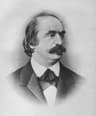
Eduard Hanslick
modernMusical Formalism / Aesthetic Formalism
Eduard Hanslick was a 19th-century Austrian music critic and aesthetician, widely regarded as the most influential music critic of his era. His formalist theory of music, articulated in 'On the Musically Beautiful' (1854), argued that music's meaning lies in its formal structures rather than in expressed emotions, shaping modern philosophy of music.
1 argument
AestheticsTruth & Knowledge
ER
Eduardo Rivera-López
contemporaryAnalytic Philosophy
Eduardo Rivera-López is a contemporary Argentine philosopher specializing in ethics, political philosophy, and bioethics. He is a professor at Universidad Torcuato Di Tella in Buenos Aires, where his work engages distributive justice, moral responsibility, and the limits of individual entitlement claims. His research critically examines liberal and libertarian frameworks, particularly the moral weight of desert and earnings in contexts of social inequality.
1 argument
Moral Responsibility
EG
Edward Glaser
modernPhilosophy of Education, Critical Thinking
Edward M. Glaser was an American educational psychologist and philosopher of education, best known for co-developing the Watson-Glaser Critical Thinking Appraisal with Goodwin Watson. His 1941 dissertation at Columbia University's Teachers College, "An Experiment in the Development of Critical Thinking," established foundational empirical and philosophical groundwork for critical thinking as a teachable, domain-general skill. He was a prominent defender of general critical thinking competencies against domain-specificity critics such as John McPeck.
1 argument
SkepticismTruth & Knowledge
EH
Edward H. Clarke
contemporaryPublic Choice Theory, Welfare Economics
Edward H. Clarke is an American economist and public choice theorist best known for developing the Clarke tax (Clarke mechanism), a demand-revealing process for eliciting truthful preference revelation in public goods provision. His 1971 paper 'Multipart Pricing of Public Goods' laid foundational groundwork for what became the Vickrey-Clarke-Groves (VCG) mechanism, a cornerstone of modern mechanism design and social choice theory.
1 argument
Democracy & GovernanceSocial Contract
EH
Edward Hinchman
contemporaryAnalytic Philosophy
Edward Hinchman is a contemporary American philosopher working primarily in epistemology and philosophy of language at the University of Wisconsin-Milwaukee. He is known for his work on the nature of testimony, trust, and the normative structure of assertion, particularly his assurance-based account of how speakers generate and transmit epistemic justification through their word.
1 argument
Truth & Knowledge

Edward Levi
contemporaryAnalytic Jurisprudence
Edward H. Levi (1911–2000) was an American legal scholar and philosopher of law, best known for his foundational work on legal reasoning by analogy and example. As dean of the University of Chicago Law School and later its president, he shaped generations of legal theorists. His 1949 monograph *An Introduction to Legal Reasoning* remains a seminal treatment of how analogical inference operates in legal and philosophical argument.
1 argument
Philosophy of LanguageTruth & Knowledge
Edward N. Zalta
contemporaryAnalytic Philosophy
Edward N. Zalta is an American philosopher and senior research scholar at Stanford University's Center for the Study of Language and Information. He is best known as the principal editor of the Stanford Encyclopedia of Philosophy and for developing the theory of abstract objects, a formal axiomatic metaphysics.
1 argument
Consciousness & Mind
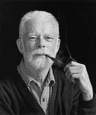
Edward Nelson
contemporaryMathematical Finitism / Philosophy of Mathematics
Edward Nelson (1932-2014) was an American mathematician and philosopher of mathematics at Princeton University, known for his work in mathematical logic, probability theory, and nonstandard analysis. He was a prominent advocate of mathematical finitism and ultrafinitism, questioning the consistency of Peano Arithmetic and challenging foundational assumptions about infinity.
1 argument
Truth & Knowledge
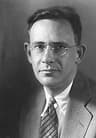
Edward Sapir
modernStructural Linguistics / Linguistic Anthropology
Edward Sapir (1884-1939) was an American anthropologist-linguist widely regarded as one of the most important figures in the early development of linguistics in the United States. He is best known for his work on Native American languages and for the Sapir-Whorf hypothesis, which proposes that the structure of a language shapes its speakers' worldview and cognition.
1 argument
SkepticismTruth & Knowledge

Edward Slingerland
contemporaryComparative Philosophy, Cognitive Science of Religion
Edward Slingerland is a professor of Asian Studies at the University of British Columbia and a leading scholar of early Chinese thought and cognitive science. He is best known for his interdisciplinary work bridging classical Chinese philosophy with embodied cognition, conceptual metaphor theory, and the science of spontaneity. His translations and commentaries on texts like the Analects and works by Xunzi and Mencius have shaped contemporary Anglophone engagement with Confucian ethics.
1 argument
Moral ResponsibilityVirtue Ethics
Edward W. Blyden
modernPan-Africanism, African Nationalist Philosophy
Edward Wilmot Blyden (1832–1912) was a pioneering Pan-African intellectual, educator, and diplomat born in St. Thomas, Danish West Indies, who spent most of his career in Liberia and Sierra Leone. He is regarded as one of the founding figures of Pan-Africanism and African nationalist thought, arguing for a distinct African personality, cultural identity, and civilizational contribution. His comparative study of Christianity and Islam in Africa advanced early systematic thinking about African religion, epistemology, and self-determination.
1 argument
SkepticismTruth & Knowledge
EW
Edward Woodard
contemporaryAnalytic Philosophy
Edward Woodard is a contemporary analytic philosopher working in normative ethics and the theory of moral obligation. His work engages with questions about the temporal indexing of obligations — specifically, whether agents bear obligations at a given time with respect to actions occurring at later times.
1 argument
Moral ResponsibilityJustice & Punishment
EW
Edwin Williams
contemporaryGenerative Linguistics, Philosophy of Language
Edwin Williams is a contemporary American linguist and philosopher of language at Princeton University, known for foundational contributions to generative syntax and the theory of predication. His work has significantly shaped formal approaches to argument structure, theta theory, and the representational economy of grammatical systems. He has also engaged with learnability arguments concerning the underdetermination of grammar by primary linguistic data.
1 argument
SkepticismPhilosophy of Language
E
Effingham
contemporaryAnalytic Philosophy
Nick Effingham is a contemporary British analytic philosopher based at the University of Birmingham, specializing in metaphysics. His work spans ontology, the philosophy of time, persistence, mereology, and the metaphysics of abstract objects including types and tokens.
1 argument
Modality & Possibility
E
Eichen
contemporary
1 argument
SkepticismPhilosophy of Language

Eino Kaila
contemporaryLogical Empiricism
Eino Kaila (1890–1958) was a Finnish philosopher and psychologist who became the leading figure of logical empiricism in Scandinavia, maintaining close ties with the Vienna Circle. He developed a sophisticated philosophy of nature grounded in invariance relations and pursued a rigorously scientific worldview that nonetheless resisted reductive physicalism. His work bridged empiricist epistemology, gestalt psychology, and the philosophy of science.
1 argument
Philosophy of LanguageTruth & Knowledge
E
Ekbohm
contemporaryPhilosophy of Science / Philosophy of Biology
Ekbohm is a contemporary philosopher of science whose work critically examines the epistemological and cognitive foundations of evolutionary theory. Their scholarship questions how the theory of natural selection is understood, represented, and reasoned about within scientific practice, contributing to debates in philosophy of biology and the philosophy of science more broadly.
1 argument
SkepticismTruth & Knowledge
EF
Elena Flores Ruíz
contemporaryFeminist Philosophy
Elena Flores Ruíz is a contemporary philosopher working in feminist philosophy and epistemology. Her work examines the conditions under which philosophical inquiry about women can be conducted responsibly, emphasizing the material and social obstacles that shape women's opportunities and experiences. She advocates for situated, empirically informed approaches to gender-related philosophical questions.
1 argument
Moral ResponsibilityRights & Liberty
EH
Eli Hirsch
contemporaryAnalytic Philosophy
Eli Hirsch is an American analytic philosopher at Brandeis University whose work centers on metaphysics, personal identity, and the ontology of physical objects. He is best known for developing the doctrine of quantifier variance, which holds that rival ontological frameworks may each be equally correct in their own linguistic terms. His writings challenge revisionary metaphysics and argue that commonsense object talk is philosophically defensible.
1 argument
Modality & Possibility
EZ
Elie Zahar
contemporaryPhilosophy of Science, Conventionalism
Elie Zahar was a philosopher of science associated with the London School of Economics, best known for his work defending and extending Imre Lakatos's methodology of scientific research programmes. He made significant contributions to the philosophy of Henri Poincaré, arguing that Poincaré's conventionalism represents a sophisticated epistemological position rather than mere instrumentalism, and examined the philosophical foundations of geometry and physical theory.
1 argument
Modality & PossibilityTruth & Knowledge
EC
Elijah Chudnoff
contemporaryAnalytic Philosophy
Elijah Chudnoff is a contemporary analytic philosopher specializing in epistemology and philosophy of mind, with a focus on the nature and epistemic role of intuitions and perceptual experience. He is best known for defending the view that intuitions are a distinctive form of evidence, grounded in a phenomenological account of their presentational character. His work bridges analytic epistemology and phenomenology, arguing that certain mental states—including those with nonconceptual content—can justify beliefs directly.
1 argument
Perception
EM
Elijah Millgram
contemporaryAnalytic Philosophy
Elijah Millgram is a contemporary analytic philosopher at the University of Utah whose work spans practical reason, epistemology, and ethics. He is known for challenging standard accounts of instrumental rationality and for sustained inquiry into the structure of practical inference and the conditions under which testimony can transmit justification.
1 argument
Truth & Knowledge

Elise Johnson McDougald
modernHarlem Renaissance Thought, Black Feminist Intellectual Tradition
Elise Johnson McDougald (1885–1971) was an African American educator, activist, and intellectual associated with the Harlem Renaissance. She is best known for her 1925 essay 'The Task of Negro Womanhood,' published in Alain Locke's landmark anthology The New Negro, which analyzed the social, economic, and intellectual position of Black women in America. As a school principal and community organizer in New York City, she combined pedagogical practice with critical thought on race, gender, and knowledge production.
1 argument
SkepticismTruth & Knowledge
EN
Elissa Newport
contemporaryCognitive Science, Philosophy of Language, Generative Linguistics
Elissa Newport is a cognitive scientist and linguist at Georgetown University known for her foundational research on language acquisition, critical period effects, and statistical learning. Her work addresses how humans — particularly children — extract grammatical structure from impoverished input, contributing key empirical evidence to debates about nativism and learnability in linguistics and philosophy of language. She has also conducted influential studies on sign language acquisition in deaf populations.
1 argument
SkepticismPhilosophy of Language
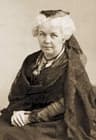
Elizabeth Cady Stanton
modernLiberal Feminism, Enlightenment Liberalism
Elizabeth Cady Stanton (1815–1902) was an American feminist philosopher, suffragist, and social activist who laid the intellectual foundations of the women's rights movement in the United States. She was the principal author of the Declaration of Sentiments (1848) and developed sustained philosophical arguments for women's political equality, legal personhood, and epistemic authority. Her later work extended into religious criticism, challenging scriptural interpretations used to subordinate women.
1 argument
Moral ResponsibilityRights & Liberty
EF
Elizabeth Frazer
contemporaryFeminist Political Philosophy
Elizabeth Frazer is a British political theorist at the University of Oxford whose work critically engages liberal individualism, communitarianism, and feminist political philosophy. She is best known for co-authoring 'The Politics of Community: A Feminist Critique of the Liberal-Communitarian Debate' (1993) with Nicola Lacey, which challenged both atomistic liberal and communitarian frameworks. Her scholarship spans political education, civic republicanism, and the social constitution of the self.
1 argument
Rights & LibertySocial Contract
EF
Elizabeth Fricker
contemporaryAnalytic Philosophy, Epistemology
Elizabeth Fricker is a contemporary analytic philosopher at the University of Oxford, best known for her influential work in the epistemology of testimony. She defends a 'local reductionism' about testimonial justification, arguing that hearers must monitor and assess speakers for trustworthiness rather than accepting testimony by default. Her work has been central to shaping the modern debate between reductionism and anti-reductionism about testimony.
1 argument
Truth & Knowledge

Elizabeth Loftus
contemporaryCognitive Psychology / Empirical Epistemology
Elizabeth Loftus (born 1944) is a cognitive psychologist and memory researcher at the University of California, Irvine, best known for her experimental work demonstrating the malleability of human memory. Her research on the misinformation effect—showing that post-event information can alter or fabricate memories—has been foundational to debates in epistemology, philosophy of mind, and the psychology of testimony. She has also contributed to critical thinking discourse by challenging claims about the domain-specificity of cognitive skills.
1 argument
SkepticismTruth & Knowledge
ES
Elizabeth Spelman
contemporaryFeminist Philosophy
Elizabeth V. Spelman is an American feminist philosopher best known for her critique of essentialism in feminist theory. Her landmark work challenges the tendency to treat 'woman' as a universal, homogeneous category that erases differences of race, class, and culture. She has also written on the philosophy of suffering and the ethics of how attention to others' pain is framed and commodified.
1 argument
Moral ResponsibilityRights & Liberty

Ellsberg
contemporaryAnalytic Philosophy, Decision Theory
Daniel Ellsberg (1931–2023) was an American economist, decision theorist, and political activist best known for leaking the Pentagon Papers in 1971. In academic philosophy, he is recognized for the Ellsberg paradox, a landmark contribution to decision theory demonstrating that human choices under ambiguity systematically violate classical expected utility theory.
1 argument
SkepticismTruth & Knowledge
EL
Eloy LaBrada
contemporaryFeminist Philosophy, Epistemology
Eloy LaBrada is a contemporary philosopher whose work engages with feminist epistemology and the philosophy of gender. He has argued that philosophical inquiry about women must be grounded in awareness of the structural and social obstacles that have historically constrained women's opportunities and recognition. His contributions reflect a broader concern with epistemic justice and the conditions under which philosophical theorizing about marginalized groups can be conducted responsibly.
1 argument
Moral ResponsibilityRights & Liberty
E
Elshtain
contemporaryCommunitarian Political Philosophy, Christian Ethics
Jean Bethke Elshtain (1941–2013) was an American political philosopher and Christian ethicist best known for her work on gender, democracy, and the ethics of war and peace. She held the Laura Spelman Rockefeller Chair in Social and Political Ethics at the University of Chicago Divinity School, where she developed a communitarian feminist critique of liberal individualism. Her scholarship bridged political theory, feminist thought, and theological ethics, earning her recognition as one of the most influential public intellectuals in late twentieth-century American thought.
1 argument
Justice & PunishmentRights & Liberty

Elster
contemporaryAnalytic Philosophy / Rational Choice Theory
Jon Elster is a Norwegian social and political theorist known for his work on rational choice theory, social norms, and the philosophy of social science. He has made significant contributions to analytic Marxism, methodological individualism, and the study of emotions and rationality in decision-making.
1 argument
SkepticismTruth & Knowledge

Emde Boas
contemporaryAnalytic Philosophy of Computation / Theoretical Computer Science
Peter van Emde Boas is a Dutch computer scientist and logician known for his foundational contributions to computational complexity theory and the theory of computation. He is particularly recognized for the Emde Boas tree data structure and his work on machine models, complexity classes, and the philosophical foundations of computation.
1 argument
SkepticismTruth & Knowledge
E
Emerson
contemporaryAnalytic Philosophy
The name 'Emerson' without further qualification most commonly refers to Ralph Waldo Emerson (1803-1882), the American Transcendentalist essayist and philosopher. However, the 'contemporary' era designation and the argument topic (a priori logical knowledge vs. computational cognition) suggest this may refer to a different, less prominent contemporary philosopher working in philosophy of mind or epistemology. Without reliable identifying information, a confident scholarly profile cannot be generated.
1 argument
SkepticismTruth & Knowledge
EL
Emil Lask
modernNeo-Kantianism (Southwest/Baden School)
Emil Lask (1875–1915) was a German Neo-Kantian philosopher of the Southwest (Baden) School, a student of Heinrich Rickert who pushed value-theoretic Neo-Kantianism into the domain of formal logic and ontology. His major works developed a systematic 'logic of philosophy' and a radically revised theory of categories that sought to overcome the subject-object split inherited from Kant. His thought exercised notable influence on the early Heidegger before Lask was killed in World War I.
1 argument
Natural TheologyTruth & Knowledge
EM
Emil Meunier
modern
1 argument
Modality & PossibilityTruth & Knowledge
EB
Emile Borel
modernFrench Mathematical Analysis
Émile Borel was a French mathematician and politician who made foundational contributions to measure theory, probability, and the theory of functions. He is best known for developing Borel sets and Borel measure, which became cornerstones of modern real analysis and probability theory. Beyond mathematics, he served in the French government and wrote influential works on the philosophy of probability and chance.
1 argument
Truth & Knowledge
EB
Emile Boutroux
modernFrench Spiritualism
Émile Boutroux (1845–1921) was a French philosopher best known for arguing that the laws of nature are contingent rather than necessary, challenging the scientific determinism dominant in his era. His 1874 doctoral thesis, 'De la contingence des lois de la nature,' became a landmark in the philosophy of science and exerted significant influence on Henri Bergson, who studied under him. He sought to defend the reality of freedom and spiritual life against reductive positivism while engaging seriously with the natural sciences.
1 argument
Modality & PossibilityTruth & Knowledge

Emma Goldman
modernAnarchism, Feminist Philosophy
Emma Goldman (1869–1940) was a Lithuanian-born anarchist, feminist, and political philosopher who became one of the most influential radical voices in early twentieth-century America. She developed a distinctive anarchist-feminist philosophy that linked women's liberation to the broader critique of state authority, capitalism, and institutional religion. Her lectures, essays, and activism made abstract anarchist theory accessible and politically urgent for working-class audiences.
1 argument
Moral ResponsibilityRights & Liberty
EC
Emmanuel Chukwudi Eze
contemporaryAfrican Philosophy, Postcolonial Philosophy
Emmanuel Chukwudi Eze (1963–2007) was a Nigerian-American philosopher who made foundational contributions to African philosophy, postcolonial thought, and the critical study of race in Enlightenment philosophy. He is best known for excavating and critiquing the racial assumptions embedded in canonical Western thinkers such as Kant and Hume, and for articulating a vision of African modernity that refuses Eurocentric frameworks. His work positioned African philosophy as a rigorous interlocutor with both analytic and continental traditions.
1 argument
SkepticismTruth & Knowledge

Emmy Noether
modernMathematical Physics / Abstract Algebra
Emmy Noether (1882-1935) was a German mathematician whose work in abstract algebra and theoretical physics transformed both fields. She is best known for Noether's theorem, which establishes a fundamental connection between symmetries and conservation laws in physics, and for foundational contributions to ring theory and the development of modern abstract algebra.
1 argument
Modality & PossibilityCausation
E
Empedocles
ancient
1 argument
Divine AttributesCausation
E
Ennis
contemporaryPhilosophy of Education, Analytic Philosophy
Robert H. Ennis is an American philosopher of education best known for his foundational work in critical thinking theory. His 1962 paper 'A Concept of Critical Thinking' helped establish critical thinking as a serious area of philosophical inquiry, and his subsequent debates with John McPeck over the generalizability of thinking skills shaped the field for decades. He is associated with the University of Illinois at Urbana-Champaign.
1 argument
SkepticismTruth & Knowledge

Epicurus
ancientEpicureanism
Epicurus (341–270 BCE) was an ancient Greek philosopher who founded Epicureanism and established his school, 'The Garden,' in Athens. He developed a comprehensive philosophical system integrating atomist physics, empiricist epistemology, and hedonic ethics centered on the pursuit of tranquility (ataraxia) and freedom from pain (aponia). His theology held that gods exist but are composed of atoms and entirely indifferent to human affairs.
1 argument
Natural TheologyTruth & Knowledge
Erasmus
modernChristian Humanism
Desiderius Erasmus of Rotterdam (c. 1466–1536) was a Dutch Renaissance humanist, Catholic priest, and theologian whose scholarship and satire shaped early modern Christian thought. He championed a 'philosophy of Christ' centered on inner piety and moral reform rather than scholastic dogma or external ritual. Occupying a middle ground between Catholic orthodoxy and Protestant reform, he became the defining voice of Christian humanism in the sixteenth century.
1 argument
Forgiveness & MercyProblem of Evil
EA
Eric Anderson
contemporaryNatural Law Ethics or Religious Moral Philosophy
Eric Anderson is a contemporary philosopher or ethicist working within a tradition of natural law or religious moral philosophy. His work engages questions of sexual ethics, arguing that certain sexual acts are morally impermissible on grounds derived from natural law reasoning or theological anthropology. With only one argument catalogued, his broader corpus and institutional affiliation remain underspecified in this context.
1 argument
Moral ResponsibilityBioethics
EC
Eric Carlson
contemporaryAnalytic Ethics
Eric Carlson is a contemporary Swedish moral philosopher associated with Uppsala University, working primarily in normative ethics, value theory, and the logic of moral obligation. He has contributed to debates about consequentialism, the structure of moral requirements, and the temporal dimensions of obligation.
1 argument
Moral ResponsibilityJustice & Punishment
EH
Eric Hutton
contemporaryComparative Philosophy, Confucian Ethics
Eric Hutton is a contemporary philosopher specializing in early Chinese philosophy, particularly the Confucian tradition. He is best known for his comprehensive English translation of the Xunzi and for sustained scholarly analysis of the philosophical debates between Xunzi and Mencius on human nature. His work bridges analytic ethical theory and classical Chinese thought.
1 argument
Moral ResponsibilityVirtue Ethics

Eric Lander
contemporaryPhilosophy of Biology / Biomedical Science
Eric Lander is an American geneticist, molecular biologist, and mathematician best known as a principal leader of the Human Genome Project and founding director of the Broad Institute of MIT and Harvard. His work has shaped the field of genomics, particularly in the development and application of genome-wide association studies (GWAS) to understand complex diseases. He served as Director of the White House Office of Science and Technology Policy under President Biden (2021–2022).
1 argument
BioethicsTruth & Knowledge
EL
Eric Lenneberg
contemporaryBiolinguistics, Cognitive Science, Nativist Philosophy of Language
Eric Lenneberg (1921–1975) was a German-American linguist and cognitive scientist whose work established the biological foundations of language acquisition. He is best known for the Critical Period Hypothesis, arguing that language must be acquired during a biologically constrained developmental window. His nativist framework influenced subsequent debates on language innateness, poverty of the stimulus, and the learnability of grammar.
1 argument
SkepticismPhilosophy of Language
EP
Eric Pacuit
contemporaryAnalytic Philosophy
Eric Pacuit is a contemporary American philosopher and logician specializing in logic, game theory, and social choice theory. He is known for his work on dynamic epistemic logic, the foundations of game theory, and the logical analysis of rational agency and collective decision-making.
1 argument
SkepticismTruth & Knowledge
ER
Eric Raidl
contemporaryFormal Epistemology
Eric Raidl is a contemporary philosopher specializing in formal epistemology, probability theory, and the logic of belief. His work focuses on principles governing rational credence assignment, with particular attention to the principle of maximum entropy (MaxEnt) as a norm of epistemic caution under uncertainty. He has contributed to debates about the foundations of Bayesian epistemology and the relationship between entropic reasoning and classical probabilistic principles.
1 argument
SkepticismTruth & Knowledge

Erich Adickes
modernNeo-Kantianism
Erich Adickes (1866–1928) was a German philosopher and Kant scholar known for his extensive work on Immanuel Kant's philosophy, particularly the interpretation of Kant's theoretical philosophy and his Nachlass. He produced influential studies on Kant's doctrine of double affection and the relationship between things-in-themselves and appearances.
1 argument
PerceptionModality & Possibility
Erich Mascall
contemporaryAnglican Thomism
Eric Lionel Mascall (1905–1987) was an English Anglican priest, theologian, and philosopher of religion who championed a revival of Thomistic natural theology within Anglican thought. He engaged systematically with questions of being, creation, and the relationship between Christian doctrine and natural science. His work bridged classical scholasticism and contemporary analytic and scientific discourse.
1 argument
Natural TheologyCausation

Erik Verlinde
contemporaryTheoretical Physics / Philosophy of Physics
Erik Verlinde is a Dutch theoretical physicist at the University of Amsterdam known for his work on string theory, black hole physics, and emergent gravity. He proposed that gravity is not a fundamental force but an entropic phenomenon arising from underlying microscopic degrees of freedom, a hypothesis with implications for dark matter and the foundations of physics.
1 argument
Philosophy of LanguageTruth & Knowledge

Ermolao Barbaro
modernRenaissance Humanism, Aristotelianism
Ermolao Barbaro (1453–1493) was a Venetian humanist scholar and diplomat who became one of the leading Aristotelian philologists of the Italian Renaissance. He championed a return to original Greek texts of Aristotle over medieval Latin translations, arguing that scholastic interpreters had corrupted Aristotelian philosophy through linguistic imprecision. His prolific correspondence and critical editions helped shift Renaissance intellectual culture toward philological rigor as a foundation for philosophy.
1 argument
Philosophy of LanguageTruth & Knowledge
EA
Ernest Albee
modernAmerican Idealism / History of Ethics
Ernest Albee (1865–1927) was an American philosopher and historian of ethics who taught at Cornell University. He is best known for his systematic study of British moral philosophy and his defense of objective standards in ethics and aesthetics against purely hedonistic or subjectivist accounts. His work argued that moral and aesthetic value are grounded in qualities of objects themselves, not reducible to the pleasure or approval of observers.
1 argument
AestheticsVirtue Ethics
Ernest W. Barnes
modernLiberal Anglican Theology
Ernest William Barnes (1874–1953) was an English mathematician, Anglican bishop, and liberal theologian who sought to reconcile Christian faith with modern science. Bishop of Birmingham from 1924, he championed evolutionary theism and applied scientific reasoning to biblical criticism, earning him both admiration and censure within the Church of England. His major work, The Rise of Christianity (1947), controversially applied historical-critical methods to Christian origins.
1 argument
Natural TheologyCausation
EM
Ernst Mally
modernAustrian Realism / Object Theory
Ernst Mally (1879-1944) was an Austrian philosopher and logician, a student of Alexius Meinong, best known for founding deontic logic and contributing to object theory. His work on nonexistent objects and the distinction between exemplifying and encoding properties influenced later metaphysics, particularly Edward Zalta's abstract object theory.
1 argument
Consciousness & Mind

Ernst Zermelo
contemporaryMathematical Logic, Foundations of Mathematics
Ernst Zermelo (1871–1953) was a German mathematician and logician whose work on the foundations of mathematics was foundational to modern set theory. He is best known for formulating the first rigorous axiomatization of set theory and for proving the well-ordering theorem. His philosophical work touched on questions of mathematical truth, conventionalism, and the nature of geometric and logical axioms.
1 argument
Modality & PossibilityTruth & Knowledge
ES
Erwin Schrödinger
modernPhilosophy of Physics
Erwin Schrödinger was an Austrian physicist and philosopher, best known as one of the founders of quantum mechanics. His wave equation became a cornerstone of quantum theory, and he also engaged deeply with philosophical questions about consciousness, life, and the foundations of physics.
1 argument
Modality & PossibilityCausation
ET
Erwin Tegtmeier
contemporaryAnalytic Ontology
Erwin Tegtmeier is a German analytic philosopher known for his work in formal ontology, particularly in the tradition of Gustav Bergmann's ontological realism. He has written extensively on states of affairs, universals, tropes, and the metaphysics of relations, defending a realist ontology against nominalist and trope-theoretic alternatives. His work engages critically with the adequacy of various ontological frameworks for accounting for predication, resemblance, and relational facts.
1 argument
Modality & PossibilityTruth & Knowledge
EA
Ethan Akin
contemporaryPhilosophy of Biology, Mathematical Game Theory
Ethan Akin is a mathematician at the City College of New York whose work spans topological dynamics and mathematical biology. He is best known in evolutionary theory for his rigorous analysis of replicator dynamics and their relationship to evolutionarily stable strategies, demonstrating that such dynamics need not converge to an ESS. His research bridges pure mathematics and game-theoretic models of biological and social evolution.
1 argument
Modality & PossibilityTruth & Knowledge
EE
Eva Erman
contemporaryAnalytic Political Philosophy
Eva Erman is a Swedish political philosopher and professor at Stockholm University, specializing in democratic theory, political legitimacy, and global governance. Her work examines the normative foundations of democracy and the conditions under which international institutions can achieve legitimate authority. She has contributed significantly to debates on cosmopolitanism, procedural justice, and the democratization of global political structures.
1 argument
Democracy & Governance
EF
Eva Feder Kittay
contemporaryFeminist Philosophy, Care Ethics
Eva Feder Kittay is an American philosopher and professor emerita at Stony Brook University, best known for her feminist critique of liberal political theory through the lens of dependency and care. Her work challenges dominant philosophical frameworks that assume an idealized self-sufficient subject, arguing instead that human dependency and the labor of caring are central moral and political concerns. She is a leading figure in care ethics and philosophy of disability.
1 argument
Moral ResponsibilityRights & Liberty
EK
Eva Kittay
contemporaryFeminist Philosophy, Ethics of Care
Eva Feder Kittay (born 1946) is an American philosopher and Distinguished Professor Emerita at Stony Brook University, whose work has been foundational in feminist ethics, the ethics of care, and philosophy of disability. She is best known for challenging liberal political theory's neglect of human dependency, arguing that care and dependency relations must be central to any adequate theory of social justice. Her scholarship draws extensively on her experience as the mother of a daughter with severe cognitive disabilities, grounding abstract philosophical arguments in lived reality.
1 argument
Moral ResponsibilityPersonal Identity
ET
Evan Tiffany
contemporaryAnalytic Philosophy, Consequentialism
Evan Tiffany is a contemporary moral philosopher associated with the University of Toronto Scarborough, working primarily in normative ethics and metaethics. He is known for his defense of act utilitarianism and his analysis of the relationship between moral wrongness and utility maximization. His work engages critically with objections to consequentialism and attempts to articulate a rigorous formulation of utilitarian moral theory.
1 argument
ConsequentialismTruth & Knowledge

Evelyn Fox Keller
contemporaryPhilosophy of Science, Feminist Philosophy of Science
Evelyn Fox Keller (born 1936) is an American physicist, biologist, and philosopher of science whose work examines the interplay between gender, language, and scientific practice. She is best known for her feminist critique of biology and her influential biography of geneticist Barbara McClintock. Her scholarship interrogates how conceptual metaphors—particularly in genetics—shape and constrain scientific inquiry.
1 argument
BioethicsTruth & Knowledge
FH
F. H. Jacobi
modern
1 argument
Moral ResponsibilityFree Will & Foreknowledge
F.H. Jacobi
modernGerman Idealism / Counter-Enlightenment
Friedrich Heinrich Jacobi was a German philosopher and key figure in the Counter-Enlightenment who critiqued rationalist metaphysics and argued that reason alone leads to nihilism and fatalism. He is best known for initiating the Pantheism Controversy (Pantheismusstreit) with Moses Mendelssohn over Lessing's alleged Spinozism, and for defending faith (Glaube) as the immediate foundation of knowledge of God, freedom, and the external world.
1 argument
Natural TheologyTruth & Knowledge
F.P. Ramsey
contemporaryAnalytic Philosophy
Frank Plumpton Ramsey (1903–1930) was a British philosopher, mathematician, and economist who made extraordinary contributions to mathematical logic, probability theory, and the philosophy of language before his death at age 26. His work laid groundwork for subjective probability and Bayesian decision theory, and his papers on the foundations of mathematics remain influential. Despite his brief career, he is regarded as one of the most gifted analytic philosophers of the twentieth century.
1 argument
Philosophy of Language
FP
Fabienne Peter
contemporaryAnalytic Political Philosophy
Fabienne Peter is a contemporary political philosopher at the University of Warwick whose work centers on political legitimacy, democratic theory, and the epistemic foundations of political authority. She is known for developing procedural and epistemic accounts of democratic legitimacy and for her contributions to debates about public reason and the justification of political institutions.
1 argument
Democracy & Governance
F
Fagerstrom
contemporaryPhilosophy of Science
Fagerstrom is a contemporary philosopher engaged with philosophy of biology, raising questions about the epistemic and cognitive standing of evolutionary theory. Their work challenges how the theory of natural selection is understood and evaluated as a scientific framework.
1 argument
SkepticismTruth & Knowledge
FH
Fagin, Halpern et al.
contemporaryAnalytic Philosophy / Epistemic Logic
Ronald Fagin, Joseph Halpern, and collaborators are contemporary computer scientists and logicians whose joint work formalized reasoning about knowledge, belief, and uncertainty in multi-agent systems. Their foundational text 'Reasoning About Knowledge' established epistemic logic as a rigorous tool for distributed computing, game theory, and AI, including analyses of plausibility measures and belief revision in sequential games.
1 argument
SkepticismTruth & Knowledge
Fe
Fan et al.
contemporaryComputational Linguistics / Natural Language Processing
Fan et al. refers to a contemporary research collaboration in computational linguistics and natural language processing, focused on text generation and discourse coherence. Their work addresses how discourse markers and structural cues improve the fluency and logical flow of machine-generated text.
1 argument
Philosophy of Language
F
Fanselow
contemporaryAnalytic Philosophy
Michael Fanselow is a contemporary philosopher working in the philosophy of mathematics and metaphysics, known for critical engagement with platonist arguments. His work scrutinizes epistemological justifications for abstract mathematical objects, particularly targeting elimination-style arguments.
1 argument
SkepticismTruth & Knowledge
F
Fantl
contemporaryAnalytic Philosophy, Epistemology
Jeremy Fantl is a contemporary analytic epistemologist at the University of Calgary, best known for developing the theory of pragmatic encroachment on knowledge and justification alongside Matthew McGrath. He argues that practical factors—not merely evidential ones—determine what a person knows or is justified in believing, challenging traditional internalist and evidentialist epistemology. His work engages extensively with fallibilism, closure principles, and the relationship between knowledge, action, and rational belief.
1 argument
Skepticism
FP
Father Paneloux
contemporary
1 argument
Virtue EthicsConsequentialism
F
Fazang
medievalHuayan Buddhism
Fazang (643–712 CE) was a Chinese Buddhist monk of Sogdian descent who systematized and effectively founded the Huayan (Flower Garland) school of Chinese Buddhism. Regarded as the third Huayan patriarch, he synthesized Indian Avatamsaka thought with Chinese metaphysics, producing a distinctive philosophy of mutual interpenetration and the totality of interdependent dharmas. His prolific commentarial and essay writing made Huayan one of the most intellectually sophisticated schools of East Asian Buddhism.
1 argument
Modality & Possibility

Fehr
contemporaryBehavioral Economics / Experimental Game Theory
Ernst Fehr is a contemporary Austrian-Swiss behavioral economist whose work bridges economics, psychology, and game theory. He is best known for experimental research on fairness, reciprocity, and altruistic punishment, and for developing influential models of inequity aversion that challenge standard rational-actor assumptions.
1 argument
SkepticismTruth & Knowledge
F
Feigl
contemporaryLogical Empiricism
Herbert Feigl (1902–1988) was an Austrian-American philosopher and founding member of the Vienna Circle who became one of the leading figures of logical empiricism in the United States. He is best known for his work on the philosophy of mind, particularly his defense of the psychophysical identity theory, and for his careful analyses of the concept of meaning within empiricist frameworks. He founded the Minnesota Center for Philosophy of Science, a major institutional home for philosophy of science in the postwar era.
1 argument
Philosophy of LanguageTruth & Knowledge
F
Feldman
contemporaryAnalytic Philosophy
Fred Feldman is a contemporary analytic philosopher and professor emeritus at the University of Massachusetts Amherst, best known for his work in normative ethics, philosophy of death, and welfare theory. He has defended attitudinal hedonism as an account of well-being and made influential contributions to actualism about moral obligation, arguing that what an agent is obligated to do is indexed to specific times and circumstances. His work spans consequentialism, the badness of death, and the metaphysics of value.
1 argument
Moral ResponsibilityJustice & Punishment
FP
Felix Pirani
contemporaryPhilosophy of Physics
Felix Pirani (1928–2015) was a British theoretical physicist and philosopher of physics known for foundational work on general relativity and gravitational radiation. He contributed to the geometric understanding of spacetime and to debates over the operational foundations of relativistic measurement.
1 argument
Modality & PossibilityCausation
Fv
Ferdinand von Lindemann
modernPhilosophy of Mathematics
Carl Louis Ferdinand von Lindemann (1852–1939) was a German mathematician whose 1882 proof that π is a transcendental number settled the ancient problem of squaring the circle. Beyond his landmark result in number theory, Lindemann engaged with foundational questions in the philosophy of geometry, situating him within late 19th-century debates about the epistemological status of mathematical axioms.
1 argument
Modality & PossibilityTruth & Knowledge
F
Finsen
contemporaryAnalytic Philosophy of Science
Susan Finsen is a contemporary philosopher of science whose work focuses on the epistemological and cognitive dimensions of evolutionary theory. She has critically examined how the theory of natural selection is understood, represented, and evaluated as a scientific theory, contributing to debates in philosophy of biology.
1 argument
SkepticismTruth & Knowledge
FC
Fiona Cowie
contemporaryAnalytic Philosophy
Fiona Cowie is a contemporary analytic philosopher at the California Institute of Technology, best known for her sustained critique of linguistic nativism. Her work engages the intersection of philosophy of mind, philosophy of language, and cognitive science, particularly examining the empirical and conceptual foundations of Chomskyan claims about innate linguistic knowledge.
1 argument
SkepticismPhilosophy of Language
F
Fiorini
contemporaryAnalytic Philosophy
Fiorini is a contemporary philosopher working in the philosophy of language, with contributions to the theory of linguistic tokens and inscription-based semantics. Their work engages technical questions about how a single physical inscription can give rise to multiple word-token interpretations depending on context and reading. The full scope of their scholarly output remains within specialized academic literature.
1 argument
Modality & Possibility
F
Fischer
contemporaryAnalytic Philosophy
John Martin Fischer is an American philosopher best known for his work on moral responsibility, free will, and the metaphysics of death. He developed the influential 'semicompatibilist' view, which holds that moral responsibility is compatible with determinism even if free will is not, and has written extensively on the narrative structure of human life.
1 argument
SkepticismTruth & Knowledge
F
Flege
contemporary
1 argument
SkepticismPhilosophy of Language
F"
Florence "Flo" Kennedy
contemporaryBlack Feminism, Radical Politics
Florence 'Flo' Kennedy (1916–2000) was an American lawyer, activist, and radical feminist intellectual whose work bridged Black liberation and second-wave feminism. A graduate of Columbia Law School, she used legal practice, public organizing, and rhetorical provocation to challenge systemic racism and sexism simultaneously. She is recognized as an early practitioner of intersectional politics before the term was formalized.
1 argument
SkepticismTruth & Knowledge
Fa
Fodor and Crowther
contemporaryAnalytic Philosophy
Jerry Fodor (1935-2017) and Thomas Crowther are analytic philosophers known for their work on philosophy of mind, language, and metaphysics. Their collaborative critique targets platonist arguments in the philosophy of mathematics and linguistics, particularly Jerrold Katz's elimination-based defense of platonism.
1 argument
SkepticismTruth & Knowledge
F
Fortnow
contemporaryPhilosophy of Computer Science
Lance Fortnow is a contemporary American computer scientist known for his foundational work in computational complexity theory. He has contributed significantly to the study of interactive proof systems and the philosophical implications of computational limits on knowledge and reasoning.
1 argument
SkepticismTruth & Knowledge
F&
Foster & Sharp
contemporaryPhilosophy of Medicine / Philosophy of Science
Foster and Sharp are contemporary collaborative authors working at the intersection of philosophy of science and medicine. Their work examines the epistemological foundations of empirical research methodologies, particularly how statistical and associational findings bear on the conceptual analysis of medical or psychological conditions.
1 argument
BioethicsTruth & Knowledge
FK
Frances Kamm
contemporaryAnalytic Philosophy
Frances Kamm (born 1948) is an American moral philosopher and Lucius Littauer Professor at Harvard University's Kennedy School and Department of Philosophy. She is one of the leading figures in contemporary normative ethics, known for her painstakingly detailed analyses of the moral permissibility of killing, letting die, and harm.
1 argument
Rights & Liberty
FB
Francesco Berto
contemporaryAnalytic Philosophy
Francesco Berto is a contemporary Italian analytic philosopher specializing in logic, metaphysics, and philosophy of language. He is best known for his work on impossible worlds, neo-Meinongian ontology (noneism), and dialetheism — the view that some contradictions can be true. He has held positions at the University of Aberdeen, the University of Amsterdam, and the University of St Andrews.
1 argument
Modality & PossibilityTruth & Knowledge
FP
Francesco Pucci
modernRenaissance Humanism
Francesco Pucci (1543–1597) was a Florentine humanist theologian whose heterodox religious views brought him into repeated conflict with ecclesiastical authorities across Europe. He developed a universalist theology grounded in the natural goodness of humanity and the accessibility of salvation through natural reason, independent of explicit Christian faith. He was ultimately arrested by the Inquisition in Rome and executed, his fate lending particular weight to his reflections on prophetic martyrdom.
1 argument
Afterlife & DeathInsubordination to God

Francis Bacon
modernEmpiricism
Francis Bacon (1561–1626) was an English philosopher, statesman, and essayist widely regarded as a founding figure of modern empiricism and the philosophy of science. He argued that knowledge must be grounded in systematic observation and inductive reasoning rather than inherited Scholastic authority. His methodological writings laid conceptual groundwork for the scientific revolution and shaped subsequent epistemology.
1 argument
SkepticismTruth & Knowledge
Francis Cornford
contemporaryClassical Scholarship / Platonic Studies
Francis Macdonald Cornford (1874–1943) was a British classical scholar and philosopher at the University of Cambridge, renowned for his authoritative translations of and philosophical commentaries on Plato's dialogues. His work systematically analyzed the epistemological and metaphysical arguments embedded in texts such as the Theaetetus, Sophist, and Timaeus, making them accessible to both classicists and philosophers. He also contributed to understanding the religious and mythological roots of early Greek philosophical thought.
1 argument
Philosophy of LanguageTruth & Knowledge
Francis Herbert Bradley
modernBritish Idealism
Francis Herbert Bradley (1846-1924) was a leading British idealist philosopher and a central figure of the Oxford-based Absolute Idealism movement. His metaphysical work argued that reality is a single, coherent Absolute, and that ordinary appearances involve contradictions resolved only in that unified whole. He exerted major influence on early analytic philosophy through the critical reactions of Russell and Moore.
1 argument
Natural TheologyTruth & Knowledge
FJ
Francis Jeanson
contemporaryExistentialism
Francis Jeanson (1922–2009) was a French existentialist philosopher, political activist, and close collaborator of Jean-Paul Sartre. He is known for his critical engagement with Camus's absurdism, his role in the Sartre–Camus rupture, and his active resistance to French colonialism in Algeria as leader of the clandestine 'Jeanson network.' His philosophical work bridges existentialist ethics with radical political commitment.
1 argument
Virtue EthicsConsequentialism
FJ
Francis Jeffry Pelletier
contemporaryAnalytic Philosophy
Francis Jeffry Pelletier is a Canadian philosopher and logician known for his contributions to philosophy of language, formal semantics, and the philosophy of logic. He has written extensively on mass terms, generics, natural language quantification, and the history of logic, bridging linguistic theory and philosophical analysis.
1 argument
Philosophy of Language
FV
Francisco Varela
contemporaryEnactivism / Neurophenomenology
Francisco Varela (1946-2001) was a Chilean biologist and philosopher best known for co-developing the theory of autopoiesis with Humberto Maturana and for pioneering neurophenomenology, which integrates phenomenological philosophy with cognitive neuroscience. His work bridged biology, philosophy of mind, and Buddhist thought, offering an enactivist account of cognition as embodied and world-involving.
1 argument
Consciousness & Mind

Frank Ankersmit
contemporaryNarrativism, Philosophy of History, Continental Philosophy
Frank Rudolf Ankersmit (born 1945) is a Dutch philosopher best known for his contributions to the philosophy of history and historiography, particularly his development of narrativism as a theory of historical representation. He has also engaged with questions in political philosophy, aesthetics, and metaphysics, arguing that historical and political reality is constituted through representation rather than straightforwardly mirrored by it.
1 argument
Natural TheologyModality & Possibility

Frankena
contemporaryAnalytic Philosophy
William K. Frankena (1908–1994) was an American moral philosopher who spent his career at the University of Michigan and is best known for his influential introductory text 'Ethics' (1963). He worked within analytic metaethics and normative theory, defending non-naturalist views about objective moral properties and developing a careful mixed deontological framework.
1 argument
AestheticsVirtue Ethics

Frantz Fanon
contemporaryPostcolonial Theory, Black Existentialism, Phenomenology
Frantz Fanon (1925–1961) was a Martinican-born psychiatrist, philosopher, and revolutionary theorist whose work fundamentally shaped postcolonial studies and Black existentialism. Working at the intersection of phenomenology, psychoanalysis, and Marxism, he analyzed the psychological and social structures of racial oppression and colonial domination. His two major works, Black Skin, White Masks and The Wretched of the Earth, became foundational texts for liberation movements across Africa, Asia, and the Americas.
1 argument
SkepticismTruth & Knowledge
FC
Franz Crahay
contemporaryContinental Philosophy, Philosophy of Africa
Franz Crahay (1920–2002) was a Belgian philosopher associated with the University of Liège who made foundational contributions to debates about the nature and conditions of African philosophy. He is best known for his 1965 essay arguing that African thought must achieve a 'conceptual take-off' — moving from oral, mythic wisdom toward systematic, critical philosophical discourse — before it can constitute philosophy in the rigorous sense. His work shaped the early methodological debate between ethnophilosophy and critical African philosophy.
1 argument
SkepticismTruth & Knowledge
FD
Franz Dietrich
contemporaryFormal Epistemology, Analytic Philosophy
Franz Dietrich is a contemporary philosopher and economist specializing in formal epistemology, judgment aggregation, and social choice theory. He is known for rigorous mathematical treatments of how individual beliefs and judgments can be aggregated into coherent collective positions. His work bridges philosophy, economics, and decision theory, with particular contributions to Bayesian epistemology and the formal analysis of rationality.
1 argument
SkepticismTruth & Knowledge
FH
Franz Huber
contemporaryAnalytic Philosophy, Formal Epistemology
Franz Huber is a contemporary philosopher at the University of Toronto specializing in formal epistemology and philosophy of science. He is known for his work on Bayesian epistemology, ranking theory, and the formal foundations of rational belief revision. His research examines how agents ought to update degrees of belief and ranks in light of new evidence, with particular attention to the principle of maximum entropy and its justification.
1 argument
SkepticismTruth & Knowledge

Franz Mehring
modernMarxism
Franz Mehring (1846–1919) was a German Marxist historian, literary critic, and political journalist, best known as the author of the definitive early biography of Karl Marx. A leading figure in the Social Democratic Party of Germany, he contributed extensively to Marxist cultural theory and historiography, applying materialist methods to literary and historical analysis.
1 argument
SkepticismTruth & Knowledge
FL
François Lamy
modernCartesianism
François Lamy (1636–1711) was a French Benedictine monk and Cartesian philosopher who engaged critically with Malebranche's occasionalism while developing his own account of self-knowledge and the soul. He participated in the major theological controversies of late seventeenth-century France, including disputes over religious authority, toleration, and the grounds on which institutional churches could exercise coercive power.
1 argument
Justice & PunishmentRights & Liberty
FR
François Recanati
contemporaryAnalytic Philosophy of Language
François Recanati (born 1952) is a French philosopher of language at the Institut Jean Nicod (CNRS/ENS, Paris), widely regarded as a leading figure in the study of context-sensitivity and the semantics–pragmatics interface. He is the principal architect of Truth-Conditional Pragmatics, a position holding that pragmatic processes partly constitute the truth-conditional content of utterances, not merely their implicatures. His work spans direct reference, mental-file theory, and the formal semantics of anaphora and perspectival thought.
1 argument
Philosophy of LanguageModality & Possibility
F
Fraser
contemporaryAnalytic Chinese Philosophy
Chris Fraser is a contemporary analytic philosopher of classical Chinese thought, best known for his rigorous textual and philosophical work on early Confucianism, Mohism, and Chinese epistemology. He has made significant contributions to debates on the moral psychology of Mengzi (Mencius) and Xunzi, applying analytic methods to questions of human nature, ethical cultivation, and mind. His interpretive work on the internal tensions within Confucian thought has shaped contemporary Anglophone scholarship on classical Chinese philosophy.
1 argument
Moral ResponsibilityVirtue Ethics
FD
Fred Dallmayr
contemporaryContinental Philosophy, Hermeneutics, Comparative Political Theory
Fred Dallmayr (1928–2022) was an American political philosopher and Packey J. Dee Professor of Government at the University of Notre Dame, renowned for his engagement with continental philosophy—particularly Heidegger and Gadamer—and its application to political theory. He was a leading voice in comparative political philosophy, dedicated to fostering genuine dialogue between Western and non-Western philosophical traditions. His work consistently challenged the limits of liberal individualism and Eurocentric frameworks in global ethics and political thought.
1 argument
SkepticismTruth & Knowledge
FF
Fred Feldman
contemporaryAnalytic Philosophy
Fred Feldman is an American analytic philosopher and professor emeritus at the University of Massachusetts Amherst, specializing in ethics, metaethics, and the philosophy of death. He is best known for his rigorous defense and refinement of hedonism as a theory of welfare, and for his influential analyses of the badness of death and the nature of moral obligation. His work combines careful conceptual analysis with systematic normative theory.
1 argument
Moral ResponsibilityJustice & Punishment

Fred Hoyle
contemporaryScientific Naturalism / Philosophy of Cosmology
Sir Fred Hoyle (1915–2001) was a British astronomer and cosmologist whose theoretical work shaped modern astrophysics and whose cosmological philosophy challenged prevailing accounts of cosmic origins. He is best known for co-developing the theory of stellar nucleosynthesis and for championing the Steady State model of the universe, which posited continuous creation of matter rather than an originary singularity. His later work extended into controversial arguments for panspermia and the cosmic origins of life.
1 argument
Natural TheologyCausation
Fred Karlsson
contemporaryAnalytic Philosophy of Linguistics
Fred Karlsson is a Finnish linguist, Professor Emeritus of General Linguistics at the University of Helsinki. He is known for his foundational work on Finnish grammar, constraint-based parsing, and contributions to the philosophy of linguistics, including critical engagement with platonist conceptions of language.
1 argument
SkepticismTruth & Knowledge
FF
Frederick F. Schmitt
contemporaryAnalytic Philosophy, Social Epistemology
Frederick F. Schmitt is a contemporary analytic philosopher specializing in epistemology, with particular focus on social epistemology, the nature of knowledge, and testimonial justification. He has contributed significantly to debates about how knowledge and justified belief are acquired and transmitted through social mechanisms. His work bridges reliabilist epistemology and social dimensions of cognition.
1 argument
Truth & Knowledge
FS
Frederick Schmitt
contemporaryAnalytic Philosophy, Social Epistemology
Frederick Schmitt is a contemporary analytic philosopher specializing in epistemology and social epistemology. He has made significant contributions to understanding testimonial justification and the social dimensions of knowledge, examining how epistemic warrant is generated and transmitted through social networks. His work engages central debates between reductionist and anti-reductionist accounts of testimony.
1 argument
Truth & Knowledge
FB
Fredrik Bjorklund
contemporaryAnalytic Philosophy of Chinese Thought
Fredrik Bjorklund is a contemporary philosopher specializing in early Chinese philosophy, with a focus on the Confucian tradition. His work engages the interpretive debates surrounding Mencius and Xunzi, particularly the nature of human moral psychology and the grounds of their disagreement. He contributes to analytic reconstructions of classical Chinese philosophical arguments.
1 argument
Moral ResponsibilityVirtue Ethics
Frege
modernAnalytic Philosophy, Mathematical Logic, Logicism
Gottlob Frege (1848–1925) was a German philosopher, logician, and mathematician widely regarded as the founder of modern mathematical logic and a central figure in the origins of analytic philosophy. His Begriffsschrift (1879) introduced quantificational logic, and his subsequent work developed logicism—the thesis that arithmetic is reducible to pure logic. His distinction between sense (Sinn) and reference (Bedeutung) remains foundational in philosophy of language.
1 argument
Modality & Possibility
F
Freud
modernPsychoanalysis
Sigmund Freud (1856–1939) was an Austrian neurologist and the founder of psychoanalysis, a clinical method for treating psychopathology through dialogue between patient and analyst. His theoretical contributions include the structural model of the mind (id, ego, superego), the interpretation of dreams as wish fulfillments, and the centrality of unconscious processes in shaping human behavior and belief.
1 argument
PerceptionConsciousness & Mind
F
Freyenhagen
contemporaryCritical Theory / Frankfurt School
Fabian Freyenhagen is a contemporary philosopher specializing in critical theory, Kantian ethics, and the practical philosophy of the Frankfurt School. He is best known for his systematic reconstruction of Theodor Adorno's negative ethics, arguing that Adorno's work yields a coherent — if dark — moral philosophy centered on the identification and avoidance of wrongdoing rather than positive prescriptions for the good life. He holds a chair at the University of Essex.
1 argument
Moral ResponsibilityJustice & Punishment
FM
Friederike Moltmann
contemporaryAnalytic Philosophy, Philosophy of Language, Natural Language Ontology
Friederike Moltmann is a philosopher and linguist best known for founding and developing the field of 'natural language ontology,' which investigates what ontological categories and entities are reflected in the semantic structure of natural language. Her work bridges formal semantics, metaphysics, and philosophy of language, arguing that linguistic data provide privileged evidence about the structure of reality as conceived in ordinary thought. She is a senior researcher at CNRS (Institut d'Histoire et de Philosophie des Sciences et des Techniques) in Paris.
1 argument
Modality & Possibility
F
Friedman
contemporaryAnalytic Philosophy
Friedman is a contemporary philosopher who has engaged with questions in metaphysics and philosophy of physics, particularly regarding the nature of time and temporal possibility. Their work critically examines the coherence and physical plausibility of time travel, arguing against its likelihood in the actual world.
1 argument
Modality & PossibilityCausation
Friedrich Adolf Trendelenburg
modernNeo-Aristotelianism
Friedrich Adolf Trendelenburg (1802–1872) was a German philosopher and historian of philosophy who taught at the University of Berlin and was one of the most influential critics of post-Kantian idealism. He sought to revive Aristotelian teleology as an alternative to both Hegelian dialectic and materialist mechanism, arguing that purposive motion (Bewegung) is the fundamental category linking thought and being. His work shaped a generation of German thinkers including Franz Brentano and Hermann Lotze.
1 argument
Natural TheologyTruth & Knowledge
FE
Friedrich Engels
modernMarxism, Dialectical Materialism
Friedrich Engels (1820–1895) was a German philosopher, political theorist, and co-founder of Marxist theory. Working in close collaboration with Karl Marx, he helped develop dialectical materialism and historical materialism as systematic philosophical frameworks. After Marx's death, Engels edited and published the second and third volumes of Das Kapital, cementing the theoretical legacy of the partnership.
1 argument
SkepticismTruth & Knowledge
FJ
Friedrich Justus Riedel
modernGerman Enlightenment Aesthetics
Friedrich Justus Riedel (1742–1785) was a German aesthetician and philosopher of the Enlightenment, best known for his 'Theorie der schönen Künste und Wissenschaften' (1767). A follower of Alexander Baumgarten, he argued for universal principles underlying artistic beauty across cultures and historical periods.
1 argument
AestheticsTruth & Knowledge

Friedrich Schiller
modernGerman Idealism, Weimar Classicism
Friedrich Schiller was a German poet, philosopher, playwright, and historian, regarded as one of the foremost figures of German literary classicism alongside Goethe. His aesthetic and philosophical writings, particularly the 'Letters on the Aesthetic Education of Man' and 'On Naive and Sentimental Poetry,' profoundly influenced German Idealism and literary theory.
1 argument
AestheticsTruth & Knowledge

Friedrich Schleiermacher
modernGerman Idealism, Liberal Protestant Theology, Romantic Philosophy
Friedrich Schleiermacher (1768–1834) was a German Protestant theologian and philosopher widely regarded as the father of modern hermeneutics and liberal theology. He sought to reconcile Enlightenment rationalism with Romantic sensibility, grounding religion in the individual's feeling of absolute dependence rather than doctrine or metaphysics. His systematic theology and hermeneutical theory shaped both Protestant thought and the methodology of the human sciences for centuries.
1 argument
SkepticismTruth & Knowledge
FW
Friedrich Waismann
modernLogical Empiricism / Analytic Philosophy
Friedrich Waismann (1896–1959) was an Austrian-British philosopher associated with the Vienna Circle whose work bridged logical empiricism and ordinary language philosophy. He is best known for his concept of 'open texture' (Porosität der Begriffe), which holds that empirical concepts are inherently incomplete and cannot be exhaustively defined. His close collaboration with Wittgenstein and subsequent career at Oxford made him a significant transitional figure between Viennese logical empiricism and British analytic philosophy.
1 argument
Philosophy of Language
FW
Friedrich Wilhelm Joseph Schelling
modernGerman Idealism
Friedrich Wilhelm Joseph Schelling was a German idealist philosopher who developed a philosophy of nature (Naturphilosophie) and later a philosophy of identity and positive philosophy. He bridged Kantian idealism and Hegelian absolute idealism, emphasizing the unity of nature and spirit, and significantly influenced later thinkers including Heidegger and process theology.
1 argument
Natural TheologyTruth & Knowledge
Fv
Friedrich von Blankenburg
modernGerman Enlightenment Literary Theory
Friedrich von Blankenburg (1744-1796) was a German literary theorist and novelist, best known for his 1774 work 'Versuch über den Roman' (Essay on the Novel), one of the first systematic theoretical treatments of the novel as a literary form. He argued for the novel's legitimacy as a serious artistic genre capable of depicting inner psychological development, paralleling drama in its aims while using different means.
1 argument
AestheticsTruth & Knowledge
FL
Fritz London
modernPhilosophy of Physics
Fritz London (1900–1954) was a German-American physicist and philosopher of science best known for his foundational contributions to quantum chemistry and the theory of superconductivity and superfluidity. He reframed chemical bonding as a quantum mechanical phenomenon and developed macroscopic quantum theories that remain central to condensed matter physics.
1 argument
Modality & PossibilityCausation
FB
Frédéric Bouchard
contemporaryPhilosophy of Biology
Frédéric Bouchard is a Canadian philosopher of biology at the Université de Montréal whose work centers on evolutionary theory, fitness, and the units and levels of selection. He has critically examined the theoretical foundations of natural selection, arguing that standard formulations obscure important questions about what entities evolve and why. His research bridges philosophy of science, metaphysics of biology, and questions about the nature of organisms and ecosystems.
1 argument
SkepticismTruth & Knowledge

Fyodor Dostoyevsky
modernChristian Existentialism
Fyodor Dostoyevsky (1821–1881) was a Russian novelist and philosopher whose fiction grappled intensely with questions of suffering, free will, moral responsibility, and the existence of God. Writing in the tradition of Christian existentialism, he explored the psychological and metaphysical dimensions of human evil through characters who embody competing worldviews. His works remain foundational texts in the philosophy of religion, ethics, and existentialist thought.
1 argument
Divine AttributesAgainst an attribute of God
Fârâbî
medievalIslamic Neoplatonism / Falsafa
Abu Nasr al-Fârâbî (c. 872–950) was a foundational Islamic philosopher known as 'the Second Teacher' after Aristotle. He synthesized Greek philosophy with Islamic thought, developing influential theories in metaphysics, political philosophy, and logic that shaped later thinkers including Avicenna and Maimonides.
1 argument
Divine AttributesCausation
F(
Fârâbî (Al-Fārābī)
medieval
1 argument
Divine AttributesCausation
F(
Fârâbî (al-Fârâbî)
medieval
1 argument
Divine AttributesCausation
Fârâbî (al-Fārābī)
medievalIslamic Neoplatonism / Falsafa
Abū Naṣr al-Fārābī (c. 872–950 CE) was a preeminent Islamic philosopher known as the 'Second Teacher' (after Aristotle). He synthesized Aristotelian and Neoplatonic thought within an Islamic framework and laid foundational groundwork for later figures like Avicenna and Averroes.
1 argument
Divine AttributesCausation
F(
Fārābī (Abū Naṣr al-Fārābī)
medieval
1 argument
Divine AttributesCausation
F(
Fārābī (al-Fārābī)
medieval
1 argument
Divine AttributesCausation
GE
G. E. Lessing
modern
1 argument
Moral ResponsibilityFree Will & Foreknowledge
GW
G. W. F. Hegel
modern
1 argument
Natural TheologyTruth & Knowledge
G.E.M. Anscombe
contemporaryAnalytic Philosophy, Thomism
G.E.M. Anscombe (1919–2001) was a British analytic philosopher and one of the most significant moral philosophers of the twentieth century. A devoted student and literary executor of Ludwig Wittgenstein, she made foundational contributions to philosophy of action, ethics, and metaphysics. Her 1958 paper 'Modern Moral Philosophy' helped revive virtue ethics and coined the term 'consequentialism,' while her monograph 'Intention' remains a landmark in action theory.
1 argument
Free Will & Foreknowledge
GS
G.F. Schueler
contemporaryAnalytic Philosophy
G.F. Schueler is a contemporary analytic philosopher whose work focuses on philosophy of action, practical reason, and moral psychology. He is best known for his analyses of the role desires play in rational agency and the teleological explanation of behavior. His scholarship connects questions in metaphysics, ethics, and the theory of action, arguing that these domains are deeply interdependent.
1 argument
Free Will & Foreknowledge
GM
G.R.G. Mure
contemporaryBritish Idealism / Hegelianism
Geoffrey Reginald Gilchrist Mure (1893–1979) was a British Idealist philosopher and Fellow of Merton College, Oxford, best known for his sympathetic and rigorous scholarship on Hegel. He was one of the few mid-twentieth-century British philosophers to defend Hegelian Idealism against the prevailing tide of analytic philosophy, arguing that the Idealist tradition represented a more adequate account of mind, logic, and reality.
1 argument
Modality & PossibilityTruth & Knowledge
G.W. Leibniz
modernRationalism
Gottfried Wilhelm Leibniz (1646–1716) was a German polymath and rationalist philosopher whose work spanned mathematics, metaphysics, logic, and theology. He independently developed calculus alongside Newton and constructed an elaborate metaphysical system centered on monads, pre-established harmony, and the principle of sufficient reason. His Theodicy remains a landmark attempt to reconcile divine perfection with the existence of evil in what he famously called 'the best of all possible worlds.'
1 argument
Divine AttributesAgainst an attribute of God
GS
Gail Stine
contemporaryAnalytic Epistemology
Gail Stine was an analytic epistemologist best known for her influential 1976 paper 'Skepticism, Relevant Alternatives, and Deductive Closure,' which helped establish the relevant alternatives framework in contemporary epistemology. She argued that knowledge attributions are context-sensitive and that skeptical arguments fail because they invoke alternatives that are not relevant in ordinary epistemic contexts. Her work was foundational in shaping debates about epistemic closure and the structure of skeptical reasoning.
1 argument
Skepticism
G
Galeazzi
contemporaryAnalytic Philosophy
Galeazzi is a contemporary scholar whose work engages with epistemic and game-theoretic questions, particularly concerning plausibility reasoning and belief revision in sequential decision-making contexts. Their contributions sit at the intersection of formal epistemology, decision theory, and the philosophy of rational action.
1 argument
SkepticismTruth & Knowledge
Galen
ancientAncient Greek Philosophy and Medicine
Galen of Pergamon (c. 129–216 CE) was a Greek physician, anatomist, and philosopher who served as the preeminent medical authority of antiquity. Working in the Roman Empire, he synthesized Hippocratic and Platonic traditions into a comprehensive medical and natural philosophy that dominated Western and Islamic medicine for over a millennium. His philosophical writings engaged with questions of teleology, the soul, and the relationship between medicine and philosophy.
1 argument
Afterlife & DeathInsubordination to God
GS
Galen Strawson
contemporaryAnalytic Philosophy
Galen Strawson (born 1952) is a British analytic philosopher known for his work on consciousness, free will, and the nature of the self. He is best known for the 'Basic Argument' against robust free will, which holds that genuine moral responsibility is metaphysically impossible, and for defending a form of panpsychism regarding the nature of experience. He is the son of philosopher P.F. Strawson and holds a position at the University of Texas at Austin.
1 argument
Free Will & Foreknowledge
G
Gandy
contemporary
1 argument
SkepticismTruth & Knowledge
G
Gannett
contemporaryPhilosophy of Medicine
Gannett is a contemporary scholar working in the philosophy of medicine or related empirical disciplines. Their work examines the methodological relationship between epidemiological association studies and the conceptual analysis of disease or clinical conditions. Specific biographical details remain limited given the available record.
1 argument
BioethicsTruth & Knowledge
G
Gaozi
ancientClassical Chinese Philosophy (Warring States)
Gaozi (告子) was a Chinese philosopher of the Warring States period, best known as the principal interlocutor in Mencius's debates on human nature recorded in the Mengzi. He held that human nature (xing) is morally neutral—neither inherently good nor bad—and can be shaped in any direction by external circumstance, famously illustrated through analogies with flowing water and carved willow wood. His views represent a significant alternative to Mencian moral psychology and remain a touchstone in debates about the origins and malleability of virtue.
1 argument
Moral ResponsibilityVirtue Ethics
G
Garbacz
contemporaryAnalytic Philosophy, Formal Ontology
Paweł Garbacz is a contemporary Polish philosopher affiliated with the John Paul II Catholic University of Lublin, working primarily in formal ontology, philosophy of language, and applied logic. His research addresses the ontological structure of linguistic objects, artifacts, and inscription types, with particular attention to the relationship between physical tokens and their semantic interpretations.
1 argument
Modality & Possibility
G
Garber
contemporaryFormal Epistemology
Garber is a contemporary philosopher working in formal epistemology and the philosophy of probability. Their work engages with principles governing rational belief distribution under uncertainty, particularly examining the comparative merits and scope of entropy-based and classical probabilistic principles.
1 argument
SkepticismTruth & Knowledge
GE
Gareth Evans
contemporaryAnalytic Philosophy
Gareth Evans (1946–1980) was a British analytic philosopher who made foundational contributions to the philosophy of language and mind. A student of Michael Dummett at Oxford, where he later held a chair, Evans developed influential accounts of singular thought, reference, and perception before his early death at age 34. His posthumously published 'The Varieties of Reference' (1982) remains one of the most important works in twentieth-century philosophy of language.
1 argument
Truth & Knowledge
GM
Gary Marcus
contemporaryCognitive Science, Nativism, Philosophy of Mind
Gary Marcus is a cognitive scientist, psychologist, and AI researcher at New York University known for his work on language acquisition, cognitive architecture, and the limitations of deep learning. He has consistently argued that human cognition relies on algebraic, rule-based symbolic processing that statistical neural networks alone cannot replicate, and has been an influential public critic of AI hype. His work bridges philosophy of mind, linguistics, and artificial intelligence.
1 argument
SkepticismPhilosophy of Language
GW
Gary Watson
contemporaryAnalytic Philosophy
Gary Watson is a contemporary American analytic philosopher whose work centers on free will, moral agency, and moral responsibility. His 1975 paper 'Free Agency' introduced a landmark distinction between an agent's valuational system and motivational system, fundamentally reshaping compatibilist accounts of free will. He has also made influential contributions to moral responsibility theory, particularly on the relationship between reactive attitudes, character, and culpability.
1 argument
Free Will & Foreknowledge
G
Gasparri
contemporaryAnalytic Philosophy
Luca Gasparri is a contemporary philosopher of language and mind whose work addresses metaphysics of linguistic entities, platonism, and naturalistic approaches to meaning. He has contributed critical analyses of arguments for platonism about words and linguistic types, engaging with debates initiated by Jerrold Katz and others.
1 argument
SkepticismTruth & Knowledge
G
Gavazzi
contemporaryPhilosophy of Language / Formal Learning Theory
Gavazzi is a contemporary philosopher or linguist working in the philosophy of language and formal learning theory. Their work engages with questions of grammatical learnability and the epistemic status of arguments from primary linguistic data (pld), contributing to debates at the intersection of linguistics, cognitive science, and philosophy of mind.
1 argument
SkepticismPhilosophy of Language
G
Gay-Williams
contemporaryApplied Ethics / Natural Law
J. Gay-Williams is a contemporary American philosopher best known for his 1979 essay 'The Wrongfulness of Euthanasia,' which presents a natural law argument against euthanasia. His work is widely anthologized in applied ethics textbooks and frequently serves as a foil in bioethics debates on end-of-life issues.
1 argument
Afterlife & Death
G
Geach
contemporaryAnalytic Philosophy
Peter Thomas Geach (1916–2013) was a British analytic philosopher whose work in logic, philosophy of language, and medieval philosophy proved foundational for several contemporary debates. He is best known for his analyses of reference, predication, and anaphora, as well as his contributions to Catholic philosophy of religion. His treatment of pronouns of laziness and cross-sentential anaphora in 'Reference and Generality' (1962) directly anticipated the problems that Discourse Representation Theory was later developed to solve.
1 argument
Philosophy of LanguageModality & Possibility
G
Geanakoplos
contemporaryMathematical Economics / Game Theory
John Geanakoplos is an American economist and mathematician at Yale University, known for his contributions to general equilibrium theory, game theory, and financial economics. He developed the Leverage Cycle theory explaining how collateral requirements drive asset price bubbles and crashes, and has written on epistemic game theory and the interpretation of sequential rationality.
1 argument
SkepticismTruth & Knowledge
GL
Genevieve Lloyd
contemporaryFeminist Philosophy, History of Philosophy
Genevieve Lloyd is an Australian philosopher and Emeritus Professor at the University of New South Wales, best known for her feminist analysis of reason in the Western philosophical tradition. Her landmark work 'The Man of Reason' (1984) argues that the ideals of rationality embedded in Western philosophy have been systematically coded as masculine, with femininity constructed as their opposite. She has also written extensively on Spinoza, providence, and the history of ideas.
1 argument
SkepticismTruth & Knowledge
GP
Geoff Pullum
contemporaryDescriptive Linguistics / Generative Grammar
Geoffrey K. Pullum is a British-American linguist known for his work in syntactic theory, English grammar, and linguistic prescriptivism. He is co-author of The Cambridge Grammar of the English Language and a longtime contributor to Language Log, where he has written extensively on grammar myths and descriptive linguistics.
1 argument
Philosophy of Language
GP
Geoffrey Pullum
contemporaryAnalytic Philosophy of Linguistics
Geoffrey K. Pullum is a British-American linguist known for his work in theoretical syntax, English grammar, and the philosophy of linguistics. He co-authored The Cambridge Grammar of the English Language and has written extensively on the ontological status of linguistic objects, critiquing both Chomskyan mentalism and Katz's platonist realism.
1 argument
SkepticismTruth & Knowledge
GF
Georg Friedrich Meier
modernGerman Enlightenment / Wolffian Rationalism
Georg Friedrich Meier (1718–1777) was a German Enlightenment philosopher and a leading exponent of the Wolffian school at the University of Halle. He made significant contributions to aesthetics, hermeneutics, and logic, and was influential in developing the philosophical vocabulary of the German Enlightenment before Kant.
1 argument
AestheticsTruth & Knowledge
Georg Hegel
modernGerman Idealism
Georg Wilhelm Friedrich Hegel (1770–1831) was a German philosopher and the central figure of German Idealism, whose systematic philosophy sought to comprehend reality as the self-development of Absolute Spirit through history and logic. His dialectical method—tracing how concepts and historical forms negate and sublate themselves into higher unities—fundamentally shaped Western philosophy, theology, and social theory. His influence extends across Marxism, existentialism, hermeneutics, and analytic philosophy of action.
1 argument
Philosophy of Language

Georg Henrik von Wright
contemporaryAnalytic Philosophy
Georg Henrik von Wright (1916–2003) was a Finnish analytic philosopher and logician, widely regarded as one of the most significant philosophers of the twentieth century. He is best known as the founder of modern deontic logic and for his influential work on modal logic, the logic of norms, and the philosophy of action. A close friend and literary executor of Ludwig Wittgenstein, he also made substantial contributions to the philosophy of causality and explanation.
1 argument
Modality & PossibilityFree Will & Foreknowledge
GL
Georg Lohmann
contemporaryCritical Theory
Georg Lohmann is a contemporary German philosopher specializing in social philosophy, human rights theory, and the critical reception of Marxist thought. He held a professorship at Otto-von-Guericke University Magdeburg and is known for work bridging normative political theory with social-philosophical foundations. His scholarship engages the dialectical relationship between philosophical theory and social practice, drawing on Critical Theory traditions.
1 argument
SkepticismTruth & Knowledge
G
George
contemporaryAnalytic Philosophy
George is a contemporary philosopher whose work engages with debates in the philosophy of mathematics, particularly concerning platonism and its alternatives. Without further disambiguating information, a definitive scholarly profile cannot be established.
1 argument
SkepticismTruth & Knowledge
GA
George Ainslie
contemporaryBehavioral Economics / Philosophy of Mind
George Ainslie is an American psychiatrist and behavioral economist known for his pioneering work on hyperbolic discounting and picoeconomics, the study of intertemporal bargaining within the self. His research bridges psychology, philosophy, and economics to explain why individuals make inconsistent choices over time and how willpower emerges from competing internal interests.
1 argument
SkepticismTruth & Knowledge
GC
George Chryssides
contemporaryPhilosophy of Religion, Religious Studies
George Chryssides is a British scholar of religious studies specializing in new religious movements, religious epistemology, and the philosophy of religion. He has held academic positions at the University of Wolverhampton and Birmingham, authoring extensive work on Jehovah's Witnesses, the Unification Church, and the epistemological foundations of religious belief. His philosophical contributions include critical engagement with probabilistic and evidentialist approaches to religious argument.
1 argument
Natural Theology

George Ellis
contemporaryPhilosophy of Science, Cosmology, Science and Religion
George Francis Reginald Ellis (born 1943) is a South African theoretical physicist, mathematician, and philosopher of science, Emeritus Distinguished Professor at the University of Cape Town. He is best known for co-authoring 'The Large Scale Structure of Space-Time' with Stephen Hawking and for his extensive work on the philosophical implications of cosmology, emergence, and top-down causation. Ellis has written widely on the intersection of science, ethics, and theology, arguing that complexity and consciousness cannot be fully explained by reductionist physical accounts alone.
1 argument
Natural TheologyCausation
GG
George G.M. James
modernAfrocentric Philosophy, Pan-Africanism
George G.M. James (1893–1956) was a Guyanese-American scholar and professor whose 1954 work 'Stolen Legacy' argued that ancient Greek philosophy was derived from Egyptian mystery schools, challenging Eurocentric histories of philosophy. Teaching at the University of Arkansas at Pine Bluff, he became a foundational figure in Afrocentric intellectual history. His thesis that African knowledge systems preceded and informed Western philosophy has been widely debated and remains influential in Pan-African scholarship.
1 argument
SkepticismTruth & Knowledge
GL
George Lakoff
contemporaryCognitive Linguistics, Embodied Cognition
George Lakoff (born 1941) is an American cognitive linguist and philosopher at UC Berkeley, best known for developing conceptual metaphor theory with Mark Johnson. His work argues that abstract thought is fundamentally grounded in embodied experience and structured through metaphorical mappings, challenging classical views of mind and language. He has also applied cognitive framing theory to political discourse.
1 argument
Philosophy of Language
GM
George Molnar
contemporaryAnalytic Philosophy
George Molnar (1934–1999) was an Australian analytic philosopher best known for his work on the metaphysics of powers and dispositions. His posthumously published treatise, completed by Stephen Mumford, became a foundational text in the contemporary revival of powers-based ontology. He also contributed to debates on truthmakers and the ontology of negative facts.
1 argument
Truth & Knowledge
GM
George Myro
contemporaryAnalytic Philosophy
George Myro (1941–1987) was an analytic philosopher at the University of California, Berkeley, known for his work in philosophy of language, metaphysics, and logic. He made contributions to the theory of identity over time and to questions about inscriptions, word types and tokens, and the semantics of natural language. Though his career was cut short by his early death, his lectures and papers influenced a generation of Berkeley students.
1 argument
Modality & Possibility
George R. Price
contemporaryPhilosophy of Biology
George R. Price (1922–1975) was an American population geneticist and evolutionary theorist whose work fundamentally reshaped mathematical biology. He derived the Price equation, a general formulation of natural selection that unifies individual, kin, and group selection into a single framework. Late in life he converted to Christianity and gave away his possessions to the poor, dying by suicide in London in 1975.
1 argument
Modality & PossibilityTruth & Knowledge

George Santayana
contemporaryAmerican Naturalism / Critical Realism
George Santayana (1863–1952) was a Spanish-American philosopher, poet, and cultural critic who spent his formative career at Harvard before retiring to Europe. He developed a distinctive naturalistic philosophy that integrated aesthetics, epistemology, and moral theory, arguing that values are expressions of animal impulse rather than objective features of the world. His prose style and literary sensibility made him one of the most widely read philosophers of the early twentieth century.
1 argument
Philosophy of Language
GW
George W. Brown
modernAnalytic Philosophy, Game Theory
George W. Brown was an American mathematician and game theorist best known for introducing the concept of fictitious play in 1951 while working at the RAND Corporation. His contributions to game theory, particularly around iterative learning processes and convergence behavior, influenced later developments in evolutionary game theory and the study of replicator dynamics.
1 argument
Modality & PossibilityTruth & Knowledge
Go
George of Trebizond
medievalByzantine Aristotelianism
George of Trebizond (1395–1472) was a Byzantine-born humanist, rhetorician, and translator who became one of the most prolific transmitters of Greek philosophical and scientific texts to the Latin West. Working primarily in Italy under papal patronage, he produced Latin translations of Aristotle, Ptolemy, and Plato while vigorously championing Aristotelianism against the Platonism championed by Cardinal Bessarion. His polemical works made him a central, if controversial, figure in the fifteenth-century debate over the relative merits of Plato and Aristotle.
1 argument
Philosophy of LanguageTruth & Knowledge
GL
Georges Lemaître
contemporaryCatholic Natural Theology, Philosophy of Science
Georges Lemaître (1894–1966) was a Belgian Catholic priest, physicist, and astronomer who first proposed what became known as the Big Bang theory, publishing his hypothesis of the 'primeval atom' in 1927. He independently derived the expanding universe relation later associated with Hubble and argued forcefully that scientific cosmology and religious doctrine operate in separate, non-competing domains. His work fundamentally shaped both modern physical cosmology and twentieth-century discussions of the relationship between science and theology.
1 argument
Natural TheologyCausation
Georges Reeb
modernPhilosophy of Mathematics / Non-Standard Analysis
Georges Reeb (1920-1993) was a French mathematician known primarily for his contributions to differential topology and foliation theory, though he also engaged with philosophical questions about the foundations of mathematics. In his later years, he became a prominent advocate of non-standard analysis and raised philosophical questions about the nature of the mathematical continuum and the standard interpretation of natural numbers.
1 argument
Truth & Knowledge
GR
Georges Rey
contemporaryAnalytic Philosophy
Georges Rey is an American philosopher of mind and language, Professor of Philosophy at the University of Maryland, College Park. He is known for his defense of a computational/representational theory of mind and for critical work on nativism, concepts, and the philosophy of linguistics. Rey has also written influentially on atheism and the methodology of cognitive science.
1 argument
SkepticismTruth & Knowledge

Georgi Plekhanov
modernDialectical Materialism
Georgi Valentinovich Plekhanov (1856–1918) was a Russian revolutionary and philosopher widely regarded as the founder of Russian Marxism. He systematized dialectical materialism as a philosophical framework and applied it to history, aesthetics, and social theory. After breaking with Lenin over revolutionary strategy, he remained an influential voice in European socialist thought until his death.
1 argument
Philosophy of Language
GW
Georgia Warnke
contemporaryHermeneutics, Continental Political Philosophy
Georgia Warnke is a contemporary American philosopher at the University of California, Riverside, specializing in hermeneutics, political philosophy, and theories of identity. She is best known for her sustained engagement with Gadamerian hermeneutics and its application to debates in liberal political theory. Her later work extends these concerns to questions of race, sex, and gender as socially interpreted rather than fixed categories.
1 argument
SkepticismTruth & Knowledge
GG
Gerald Gaus
contemporaryAnalytic Political Philosophy
Gerald Gaus (1952–2020) was an American political philosopher and professor at the University of Arizona, renowned for his rigorous work in liberal political theory, public reason, and the foundations of social morality. He developed an influential account of public justification grounded in the diversity of individual evaluative frameworks, arguing that legitimate social rules must be justifiable across a wide range of reasonable moral perspectives. His later work critically examined the limits of ideal theory in political philosophy.
1 argument
Social Contract
GV
Gerard V. Bradley
contemporaryNatural Law Theory
Gerard V. Bradley is a professor of law at the University of Notre Dame Law School, specializing in natural law theory, constitutional law, and Catholic moral philosophy. He is a prominent voice in the natural law tradition as applied to questions of sexual ethics, marriage, and religious liberty. Bradley has co-authored and edited works with leading natural law theorists including John Finnis and Robert P. George.
1 argument
Moral ResponsibilityBioethics
GH
Gerhard Heinzmann
contemporaryPhilosophy of Mathematics, Conventionalism
Gerhard Heinzmann is a contemporary German-French philosopher of mathematics associated with the Archives Henri-Poincaré at the University of Lorraine (Nancy). His work centers on the philosophy and history of mathematics, with particular attention to the conventionalist tradition, the epistemological status of geometry, and the role of intuition in mathematical reasoning. He is a leading scholarly interpreter of Henri Poincaré's philosophy of science and mathematics.
1 argument
Modality & PossibilityTruth & Knowledge
GP
Gerold Prauss
contemporaryKantian Philosophy
Gerold Prauss is a German philosopher and Kant scholar best known for his influential analyses of Kantian epistemology, the thing-in-itself, and the doctrine of appearances. His work critically examines the internal structure of Kant's transcendental idealism, engaging closely with debates over how to reconstruct Kant's distinction between appearances and things-in-themselves. He has contributed significantly to German-language Kant scholarship and to ongoing international debates on Kantian metaphysics.
1 argument
PerceptionModality & Possibility
G
Ghosh
contemporaryAnalytic Philosophy / Logic
Ghosh is a contemporary philosopher and logician working at the intersection of game theory, epistemic logic, and dynamic reasoning. Their work examines how rational agents update beliefs and plausibility orderings during sequential games, contributing to formal models of interactive epistemology.
1 argument
SkepticismTruth & Knowledge
Gd
Giambattista della Porta
modernRenaissance Naturalism
Giambattista della Porta (c. 1535–1615) was a Neapolitan polymath, natural philosopher, and playwright who synthesized Renaissance occult philosophy with early empirical inquiry. Best known for his encyclopedic Magia Naturalis, he explored natural magic, optics, cryptography, physiognomy, and agronomy, positioning natural wonders as explicable through hidden causes rather than supernatural intervention. He founded one of the earliest scientific academies, the Accademia dei Segreti, and exerted wide influence on subsequent natural philosophy and proto-scientific thought.
1 argument
Afterlife & DeathInsubordination to God
GV
Gianni Vattimo
contemporaryHermeneutics, Postmodern Philosophy
Gianni Vattimo (1936–2023) was an Italian philosopher and leading figure in continental and postmodern thought, best known for developing 'pensiero debole' (weak thought), a hermeneutical approach that challenges strong metaphysical foundations. Deeply influenced by Heidegger and Gadamer, he argued that the history of Being involves a progressive weakening of ontological structures, making interpretation—rather than objective truth—central to human experience. He was professor of philosophy at the University of Turin and served as a member of the European Parliament.
1 argument
SkepticismTruth & Knowledge
G
Gibbs
modernAnalytic Philosophy of Mathematics
Benjamin Lee Gibbs is a contemporary philosopher and logician whose work engages with the foundations of mathematics, formal semantics, and the limits of formal systems. He is known for interpreting and extending Gödelian themes regarding the expressive boundaries of sufficiently rich formal languages.
1 argument
Philosophy of LanguageTruth & Knowledge
G
Gilmore
contemporaryAnalytic Philosophy
Gilmore is a contemporary analytic philosopher working in philosophy of language and metaphysics, particularly on questions concerning the ontology of linguistic expressions. Their work engages with the type-token distinction and the relationship between physical inscriptions and abstract word-types. With only limited representation in this database, the full scope of their contributions remains undercharacterized here.
1 argument
Modality & Possibility

Gintis
contemporaryBehavioral Game Theory / Analytic Social Philosophy
Herbert Gintis (1940–2023) was an American behavioral economist and game theorist known for integrating evolutionary biology, economics, and philosophy to explain human cooperation and rationality. His work on epistemic game theory and the foundations of social science engaged closely with philosophers like Robert Aumann and Robert Stalnaker on the logic of rational agents.
1 argument
SkepticismTruth & Knowledge
GB
Giordano Bruno
modernRenaissance Naturalism / Neoplatonism
Giordano Bruno (1548–1600) was an Italian Dominican friar, philosopher, and cosmological theorist whose radical ideas extended Copernican heliocentrism into a vision of an infinite universe populated by countless worlds. Drawing on Neoplatonism, Hermeticism, and early Renaissance naturalism, he challenged both Aristotelian cosmology and orthodox theology. He was tried by the Roman Inquisition for heresy and burned at the stake in Rome in 1600.
1 argument
Afterlife & DeathInsubordination to God
G
Girard
contemporaryMimetic Theory / Philosophical Anthropology
René Girard (1923-2015) was a French-American historian, literary critic, and philosopher of social science whose work spanned anthropology, theology, and literary theory. He is best known for developing mimetic theory, which posits that human desire is fundamentally imitative and that scapegoating mechanisms lie at the root of religion and culture.
1 argument
SkepticismTruth & Knowledge

Gisbertus Voetius
modernReformed Scholasticism
Gisbertus Voetius (1589–1676) was a Dutch Reformed theologian and professor at Utrecht University, regarded as the leading voice of Reformed scholasticism in the seventeenth century. He championed the Nadere Reformatie (Further Reformation), integrating rigorous Calvinist orthodoxy with an emphasis on practical piety. He is also notable for his sustained philosophical opposition to Cartesian rationalism, which he viewed as a threat to Reformed theology.
1 argument
Problem of EvilAgainst a future action of God
Giulio Tononi
contemporaryPhilosophy of Mind / Neuroscience of Consciousness
Giulio Tononi is an Italian-American neuroscientist and psychiatrist best known for developing Integrated Information Theory (IIT), a mathematical framework that attempts to explain consciousness in terms of integrated information (phi). His work bridges neuroscience, philosophy of mind, and computational theory, offering one of the most rigorous contemporary scientific theories of consciousness.
1 argument
Consciousness & Mind
GP
Giuseppe Peano
contemporaryMathematical Logic / Formalism
Giuseppe Peano (1858–1932) was an Italian mathematician and logician whose axiomatic formalization of arithmetic laid foundational groundwork for mathematical logic and the philosophy of mathematics. He developed the Peano axioms, a rigorous set of postulates for the natural numbers, and pioneered symbolic logic notation that influenced Bertrand Russell and Alfred North Whitehead. His work on the foundations of geometry included conventionalist positions on the nature of geometrical truth.
1 argument
Modality & PossibilityTruth & Knowledge
G
Glaser
modernPhilosophy of Education, Critical Thinking Theory
Glaser is a modern philosopher of education who engaged with debates in critical thinking theory, particularly the dispute over whether general thinking skills exist independent of subject-matter domains. Working in the tradition of critical thinking research, Glaser contested the subject-specificity thesis advanced by John McPeck, arguing that domain-general cognitive skills can be meaningfully identified and cultivated.
1 argument
SkepticismTruth & Knowledge
GH
Glenn Harrison
contemporaryAnalytic Philosophy / Experimental Economics
Glenn W. Harrison is a contemporary economist and philosopher known for his work in experimental economics, decision theory, and the foundations of game theory. He has contributed extensively to debates on rationality, risk preferences, and the methodology of economic experiments.
1 argument
SkepticismTruth & Knowledge
G
Glickman
contemporaryAnalytic Philosophy of Language
Glickman is a contemporary scholar working on discourse analysis and linguistic coherence, with research focused on how discourse markers function in text generation and communication. Their work sits at the intersection of computational linguistics and pragmatics.
1 argument
Philosophy of Language
GJ
Goeree, Jacob
contemporaryBehavioral Game Theory
Jacob K. Goeree is a contemporary economist and game theorist known for experimental and behavioral approaches to game theory. His work challenges standard equilibrium concepts and explores bounded rationality in strategic decision-making.
1 argument
SkepticismTruth & Knowledge
G
Gold
contemporaryAnalytic Philosophy
Gold is a contemporary philosopher who has engaged with debates in the philosophy of mathematics, particularly concerning platonism and its alternatives. Their work critically examines arguments for mathematical platonism, including responses to Jerrold Katz's argument by elimination.
1 argument
SkepticismTruth & Knowledge
G
Goldstein
contemporary
1 argument
Moral ResponsibilityBioethics
GR
Gonzalo Rodriguez-Pereyra
contemporaryAnalytic Philosophy
Gonzalo Rodriguez-Pereyra is an Argentine-British analytic philosopher and Professor of Metaphysics at Magdalen College, Oxford. He is best known for his defense of resemblance nominalism as a solution to the problem of universals and for his contributions to truthmaker theory, particularly concerning negative truths and the grounds of contingent facts.
1 argument
Truth & Knowledge
G
Goranko
contemporaryAnalytic Philosophy / Formal Logic
Valentin Goranko is a contemporary logician and philosopher specializing in logics of agency, strategic reasoning, and multi-agent systems. His work bridges formal logic, game theory, and epistemology, with significant contributions to temporal and modal logics used in analyzing rational agency and game-theoretic reasoning.
1 argument
SkepticismTruth & Knowledge
GP
Gordon Plotkin
contemporaryMathematical Logic, Theoretical Computer Science, Formal Semantics
Gordon Plotkin (born 1946) is a British computer scientist and logician at the University of Edinburgh, renowned for foundational contributions to the theory of programming languages and formal semantics. His work bridges mathematical logic and computer science, with lasting influence on how programming language meaning is rigorously defined. He is a Fellow of the Royal Society and recipient of the Royal Society Wolfson Research Merit Award.
1 argument
Philosophy of Language
GO
Graham Oppy
contemporaryAnalytic Philosophy
Graham Oppy is an Australian philosopher at Monash University specializing in philosophy of religion, metaphysics, and the philosophy of mathematics. He is widely regarded as one of the foremost contemporary atheist philosophers, known for rigorous analytical critiques of arguments for theism. His work systematically evaluates ontological, cosmological, and teleological arguments, consistently arguing that none succeed in establishing theism over naturalism.
1 argument
Truth & Knowledge

Graham Priest
contemporaryAnalytic Philosophy, Paraconsistent Logic, Dialetheism
Graham Priest (born 1948) is a British-Australian philosopher and logician, Distinguished Professor at the CUNY Graduate Center and Emeritus Professor at the University of Melbourne. He is the foremost proponent of dialetheism—the view that some contradictions are genuinely true—and a leading developer of paraconsistent logic, which tolerates contradictions without logical explosion.
1 argument
Modality & Possibility
G
Grandy
contemporaryAnalytic Philosophy
Richard E. Grandy is an American analytic philosopher known for contributions to philosophy of language, philosophy of science, and metaphysics. He is particularly recognized for his principle of humanity in radical interpretation and for critical engagement with issues in ontology and reference.
1 argument
Consciousness & Mind
GR
Grant Ramsey
contemporaryPhilosophy of Biology, Analytic Philosophy
Grant Ramsey is a contemporary philosopher of biology based at KU Leuven, where he leads the Logic & Philosophy of Science group. His research focuses on foundational questions in evolutionary theory, including the nature of fitness, natural selection, and what it means for a trait to be an adaptation. He has also contributed to debates on cultural evolution and the philosophy of animal behavior.
1 argument
SkepticismTruth & Knowledge
G
Graves
contemporaryAnalytic Metaphysics
Graves is a contemporary analytic philosopher working in metaphysics, particularly on problems of ontology, properties, and relations. He has engaged critically with neo-Aristotelian metaphysics, including E.J. Lowe's four-category ontology and responses to Bradley's regress.
1 argument
Consciousness & Mind
G
Green-Pedersen
contemporaryHistory of Medieval Logic
Niels Jørgen Green-Pedersen is a Danish historian of medieval logic and philosophy, best known for his comprehensive study of the topical tradition from Boethius through the high scholastics. His scholarship traces how Boethius' logical innovations — particularly on genus, species, and inference — were transmitted, transformed, and systematized in medieval European thought.
1 argument
Philosophy of Language
G
Greenlaw
contemporaryAnalytic Philosophy
Greenlaw is a contemporary philosopher working on issues at the intersection of logic, epistemology, and philosophy of mind. Their work examines tensions between traditional conceptions of a priori logical knowledge and computational or naturalistic accounts of reasoning.
1 argument
SkepticismTruth & Knowledge

Greg Carlson
contemporaryAnalytic Philosophy of Language / Formal Semantics
Greg Carlson is an American linguist and philosopher of language, best known for his foundational work on the semantics of generic and kind-referring expressions. His 1977 dissertation at the University of Massachusetts Amherst established the now-standard treatment of bare plurals as names of kinds, profoundly shaping formal semantics.
1 argument
Philosophy of Language
GR
Greg Restall
contemporaryAnalytic Philosophy, Philosophical Logic
Greg Restall is a contemporary Australian philosopher and logician, Professor of Philosophy at the University of Melbourne, specializing in philosophical logic, proof theory, and the philosophy of language. He is best known for co-developing logical pluralism with JC Beall, arguing that multiple distinct logics can each be correct. His work bridges formal proof theory and analytic metaphysics, with contributions spanning substructural logics, truthmaking, and the logic of negation.
1 argument
Truth & Knowledge
Gregorio Ricci-Curbastro
modernMathematical Physics
Gregorio Ricci-Curbastro was an Italian mathematician best known for developing the absolute differential calculus, now called tensor calculus, in collaboration with his student Tullio Levi-Civita. His mathematical framework provided the essential language for Einstein's general theory of relativity, making him a pivotal figure in the mathematical foundations of modern physics.
1 argument
Modality & PossibilityCausation
G
Gregory
contemporaryAnalytic Philosophy
Gregory is a contemporary analytic philosopher working in metaphysics and philosophy of language, with contributions to the debate over truthmakers for negative truths. Their work engages with optimalism—the view that the totality of being grounds negative facts—and defends it against informativeness-based objections.
1 argument
Truth & Knowledge
GC
Gregory Chaitin
contemporaryAlgorithmic Information Theory / Philosophy of Mathematics
Gregory Chaitin is an Argentine-American mathematician and computer scientist known for his foundational contributions to algorithmic information theory. He is best known for discovering Chaitin's constant (Omega), a real number that encodes the halting probability of a universal Turing machine, and for extending Gödel's incompleteness theorems into the domain of information theory.
1 argument
Philosophy of LanguageTruth & Knowledge
GD
Gregory Dawes
contemporaryAnalytic Philosophy of Religion
Gregory Dawes is a New Zealand philosopher at the University of Otago who works at the intersection of philosophy of religion, philosophy of science, and historical methodology. He is best known for his critical examination of whether theistic explanation can meet the standards of scientific or historical inquiry. His work engages rigorously with Bayesian reasoning, naturalism, and the epistemology of religious belief.
1 argument
Natural Theology
GF
Gregory Fowler
contemporaryAnalytic Philosophy
Gregory Fowler is a contemporary philosopher working in the philosophy of language, with particular focus on the ontology of linguistic entities. His work engages questions about word individuation, type-token distinctions, and how physical inscriptions relate to the linguistic objects they instantiate. He has contributed to debates about how a single material mark can give rise to multiple or ambiguous linguistic interpretations.
1 argument
Modality & Possibility

Gregory of Nyssa
ancientCappadocian Patristic Theology / Christian Neoplatonism
Gregory of Nyssa (c. 335–394) was a Christian bishop, theologian, and one of the three Cappadocian Fathers, alongside his brother Basil of Caesarea and Gregory of Nazianzus. He was instrumental in consolidating Nicene Trinitarian orthodoxy at the First Council of Constantinople (381) and developed a sophisticated synthesis of Christian theology and Neoplatonic philosophy. His mystical theology and speculative metaphysics made him one of the most original thinkers of the patristic era.
1 argument
Trinity
G
Griffith
contemporaryAnalytic Philosophy
Aaron Griffith is a contemporary analytic philosopher specializing in metaphysics, with particular focus on truthmaker theory, grounding, and the ontological status of negative truths. His work addresses foundational questions about how negative propositions are grounded in reality and engages critically with competing accounts including optimalism and totality-fact approaches.
1 argument
Truth & Knowledge
G
Griffiths
contemporaryAnalytic Philosophy, Philosophy of Biology
Paul E. Griffiths is a contemporary philosopher of biology and psychology at the University of Sydney, known for his work on the nature of emotions, natural kinds, and the philosophy of medicine and psychiatry. He challenges folk-psychological categories and argues for biologically grounded accounts of mental states and disease concepts. His interdisciplinary approach draws on evolutionary biology, psychology, and philosophy of science.
1 argument
BioethicsTruth & Knowledge
G
Grossi
contemporaryAnalytic Philosophy / Formal Epistemology
Grossi is a contemporary logician and philosopher working on formal epistemology, game theory, and the logical analysis of rational agency. His research focuses on dynamic epistemic logic, belief revision, and the semantics of plausibility and knowledge in interactive settings.
1 argument
SkepticismTruth & Knowledge
G
Grover
contemporaryAnalytic Philosophy
Grover is a contemporary philosopher whose work engages questions at the intersection of logic, epistemology, and the philosophy of mind. Their arguments examine tensions between traditional a priori conceptions of logical knowledge and computational or naturalistic accounts of reasoning.
1 argument
SkepticismTruth & Knowledge
G
Grundmann
contemporaryAnalytic Philosophy
Thomas Grundmann is a contemporary German analytic philosopher and Professor of Philosophy at the University of Cologne. He specializes in epistemology, with notable contributions to the theory of testimony, a priori knowledge, and the structure of epistemic justification. His work examines how justified belief can be transmitted and generated through social and inferential chains.
1 argument
Truth & Knowledge
Gd
Gráinne de Búrca
contemporaryLegal Philosophy, Global Constitutionalism
Gráinne de Búrca is an Irish legal scholar and Florence Ellinwood Allen Professor of Law at NYU School of Law, specializing in EU law, international law, and global governance. She is best known for developing experimentalist governance theory alongside Charles Sabel, which analyzes how international institutions can achieve democratic legitimacy through iterative, participatory rule-making. Her work bridges legal theory and political philosophy, examining how supranational bodies can be made more accountable and responsive.
1 argument
Democracy & Governance
G
Grädel
contemporaryMathematical Logic / Analytic Philosophy
Erich Grädel is a contemporary German logician and computer scientist known for his work on mathematical logic, game theory, and finite model theory. His research bridges theoretical computer science and philosophical logic, particularly in the semantics of logical games and verification of infinite systems.
1 argument
SkepticismTruth & Knowledge
G
Grünbaum
contemporaryAnalytic Philosophy, Philosophy of Science
Adolf Grünbaum (1923–2018) was an American philosopher of science at the University of Pittsburgh, widely regarded as one of the foremost philosophers of physics and time in the analytic tradition. He made major contributions to the philosophy of space, time, and cosmology, and was a sharp critic of psychoanalysis, creationism, and theistic cosmological arguments. His work subjected foundational scientific and metaphysical claims to rigorous logical and empirical scrutiny.
1 argument
Natural Theology
G
Guerlac
contemporaryHistory of Philosophy, Renaissance Studies
Guerlac is a contemporary scholar working in the history of Renaissance philosophy and science, with research focused on the intellectual context of early modern Aristotelianism. Their work examines figures such as Jacques Lefèvre d'Étaples and the role of mathematics in humanist reinterpretations of Aristotelian natural philosophy.
1 argument
Philosophy of LanguageTruth & Knowledge
GB
Guillaume Beaulac
contemporaryAnalytic Philosophy, Philosophy of Cognitive Science
Guillaume Beaulac is a contemporary Canadian philosopher working at the intersection of epistemology, cognitive science, and critical thinking theory. He has contributed to debates about the nature and generalizability of critical thinking skills, challenging domain-specific accounts advanced by philosophers such as John McPeck. His work examines the cognitive and normative dimensions of reasoning across domains.
1 argument
SkepticismTruth & Knowledge
GB
Guram Bezhanishvili
contemporaryMathematical Logic
Guram Bezhanishvili is a contemporary logician and mathematician specializing in modal logic, topological semantics, and the algebraic and duality-theoretic foundations of intuitionistic and modal systems. A professor of mathematical sciences at New Mexico State University, he has contributed extensively to the study of Heyting algebras, Esakia duality, and the interplay between logic and topology.
1 argument
SkepticismTruth & Knowledge
G
Gustafsson
contemporaryAnalytic Philosophy, Wittgensteinian Philosophy
Martin Gustafsson is a contemporary philosopher working primarily in the philosophy of language, action theory, and ethics, with strong influence from Wittgenstein and ordinary language philosophy. He has contributed to debates on practical reason, the nature of obligation, and the temporal dimensions of normative requirements. His work often interrogates the logical structure of deontic claims and their relationship to agency.
1 argument
Moral ResponsibilityJustice & Punishment
Gustav Bergmann
contemporaryAnalytic Philosophy, Logical Empiricism, Ontological Realism
Gustav Bergmann (1906–1987) was an Austrian-American philosopher and former member of the Vienna Circle who became one of the most distinctive voices in mid-twentieth-century analytic ontology. After emigrating to the United States, he developed a rigorous "ideal language" approach to metaphysics, producing a detailed realist ontology of facts, particulars, universals, and relations. His work bridged logical empiricism and classical ontology, influencing debates on tropes, intentionality, and the structure of the world.
1 argument
Modality & PossibilityTruth & Knowledge
GE
Gustav E. Mueller
contemporaryHegelianism / German Idealism
Gustav E. Mueller (1898–1987) was a German-American philosopher working in the Hegelian and idealist tradition, long associated with the University of Oklahoma. He was a prolific interpreter of Hegel's dialectic, arguing that contradiction is the generative engine of thought and reality rather than a logical failure to be eliminated. His work sought to make German idealism accessible to Anglophone audiences while defending the philosophical rigor of dialectical reasoning.
1 argument
Modality & PossibilityTruth & Knowledge
G
Gutierrez
contemporaryLiberation Theology
Gustavo Gutiérrez is a Peruvian Dominican priest and theologian widely regarded as the founder of liberation theology. His 1971 work A Theology of Liberation reframed Christian theology around the preferential option for the poor and structural analyses of injustice.
1 argument
SkepticismTruth & Knowledge
GP
Gómez Pereira
modernRenaissance Scholasticism
Gómez Pereira (c. 1500–c. 1558) was a Spanish physician and natural philosopher whose 1554 work Antoniana Margarita advanced bold mechanistic and dualist theses nearly a century before Descartes. He argued that animals lack true sensation and are purely mechanical automata, while humans alone possess a rational soul that transcends corporeal processes. His synthesis of late-Scholastic method with proto-mechanist conclusions makes him a significant transitional figure in early modern philosophy of mind.
1 argument
Natural TheologyConsciousness & Mind
G
Gödel
modernMathematical Platonism / Analytic Philosophy
Kurt Gödel was an Austrian-American logician, mathematician, and philosopher whose incompleteness theorems transformed the foundations of mathematics and logic. His work demonstrated inherent limitations in formal axiomatic systems, reshaping philosophy of mathematics, epistemology, and debates about the nature of mind and computation.
1 argument
SkepticismTruth & Knowledge
GM
Gösta Mittag-Leffler
modernPhilosophy of Mathematics
Gösta Mittag-Leffler (1846–1927) was a Swedish mathematician renowned for his foundational contributions to complex analysis and function theory. He founded the journal Acta Mathematica in 1882, which became one of the most prestigious mathematical publications in the world. Though primarily a mathematician, his work intersected with philosophy of mathematics, particularly regarding the status of geometric and analytic systems.
1 argument
Modality & PossibilityTruth & Knowledge
HA
H. A. Prichard
contemporaryBritish Moral Intuitionism / Oxford Realism
Harold Arthur Prichard (1871–1947) was a British philosopher at Oxford whose work in moral philosophy and epistemology proved foundational to twentieth-century analytic ethics. He is best known for challenging the presuppositions of traditional moral theory and for defending a rigorous form of deontological intuitionism. His essay 'Does Moral Philosophy Rest on a Mistake?' (1912) redirected ethical inquiry by arguing that the demand to justify moral obligations through appeals to self-interest or the good was itself a category error.
1 argument
Natural TheologyModality & Possibility
HH
H. Hubien
contemporaryHistory of Logic, Medieval Philosophy
Hubert Hubien was a Belgian historian of logic and medievalist associated with the University of Liège. He specialized in the recovery and critical edition of medieval logical texts, contributing to scholarship on the transmission of Aristotelian and Boethian logic through the Scholastic tradition. His editorial and analytical work helped illuminate continuities between ancient, medieval, and early modern logical thought.
1 argument
Philosophy of Language
HO
H. Odera Oruka
contemporaryAfrican Philosophy, Philosophic Sagacity
H. Odera Oruka (1944–1995) was a Kenyan philosopher and professor at the University of Nairobi, widely regarded as a foundational figure in professional African philosophy. He is best known for his 'Sage Philosophy' project, in which he documented the philosophical reasoning of indigenous African thinkers to demonstrate that rigorous, individual philosophical thought exists within African oral traditions.
1 argument
SkepticismTruth & Knowledge
HR
H.E. Rose
contemporaryAnalytic Philosophy
H.E. Rose is a contemporary philosopher working on the epistemology of logic and the philosophy of mathematics. Their work engages with questions about the status of logical knowledge, particularly the tension between a priori justification and computational or empirical approaches to logical reasoning.
1 argument
SkepticismTruth & Knowledge
HH
H.L.A. Hart
contemporaryAnalytic Jurisprudence
H.L.A. Hart (1907–1992) was a British legal philosopher and the most influential figure in twentieth-century analytic jurisprudence. As Professor of Jurisprudence at Oxford, he revitalized legal positivism through a sophisticated account of law as a system of primary and secondary rules, drawing on ordinary language philosophy. His work reshaped debates on the relationship between law, morality, and coercion.
1 argument
ConsequentialismTruth & Knowledge
HW
HG Wells
modernProgressive Utopianism
Herbert George Wells (1866–1946) was a British author, futurist, and social critic whose work spanned science fiction, history, and political philosophy. Beyond his celebrated novels, Wells developed a serious body of political thought centered on world government, democratic internationalism, and the rational reorganization of human society. His non-fiction writings, particularly 'The Outline of History' and 'The Open Conspiracy,' articulated a vision of global democratic order that influenced early internationalist movements.
1 argument
Democracy & Governance
H
Hacking
contemporaryAnalytic Philosophy, Philosophy of Science
Ian Hacking (1936–2023) was a Canadian philosopher of science and probability, best known for his work bridging historical epistemology with analytic philosophy. He made foundational contributions to the philosophy of probability, scientific realism, and social ontology. His wide-ranging scholarship examined how scientific concepts emerge, stabilize, and shape the objects they describe.
1 argument
SkepticismTruth & Knowledge
H
Haenni
contemporaryFormal Epistemology, Probabilistic Logic
Rolf Haenni is a contemporary Swiss computer scientist and logician working at the Bern University of Applied Sciences, specializing in probabilistic reasoning, formal argumentation, and reasoning under uncertainty. He is known for foundational contributions to the theory of probabilistic argumentation and the epistemological justification of entropy-based inference methods.
1 argument
SkepticismTruth & Knowledge
HS
Hagop Sarkissian
contemporaryAnalytic Philosophy, Comparative Philosophy
Hagop Sarkissian is a contemporary philosopher at the CUNY Graduate Center specializing in moral psychology, ethics, and classical Chinese philosophy. His work bridges analytic philosophy and Confucian thought, examining figures such as Mencius and Xunzi through the lens of contemporary moral psychology and experimental philosophy. He has contributed substantially to debates on the nature of moral cultivation, situationism, and cross-cultural ethics.
1 argument
Moral ResponsibilityVirtue Ethics
H
Haken
contemporaryAnalytic Philosophy
Haken is a contemporary philosopher working on questions at the intersection of logic, epistemology, and the philosophy of computation. Their work examines tensions between traditional a priori conceptions of logical knowledge and computational or empirical approaches to understanding mathematical and logical reasoning.
1 argument
SkepticismTruth & Knowledge
H
Hakuta
contemporaryEmpiricist Psycholinguistics / Philosophy of Language
Kenji Hakuta is a contemporary American psycholinguist and educational researcher best known for his empirical and theoretical work on bilingualism, second language acquisition, and the cognitive bases of language learning. He has been a prominent critic of strong nativist accounts of language acquisition, arguing that learners draw more heavily on general cognitive mechanisms and environmental input than innatist models allow. His interdisciplinary research spans linguistics, developmental psychology, and education policy.
1 argument
SkepticismPhilosophy of Language
HV
Hal Varian
contemporaryNeoclassical Economics, Information Economics
Hal Varian is an American economist and academic known for his foundational work in microeconomics, information economics, and the economics of the internet. He is Professor Emeritus at UC Berkeley and served as Chief Economist at Google from 2007 to 2023. His textbooks on microeconomic analysis are standard references in graduate economics programs worldwide.
1 argument
Democracy & GovernanceSocial Contract
H
Hall
contemporaryAnalytic Philosophy
Timothy C. Hall is a contemporary philosopher working in ethics and moral theory, known for careful conceptual analysis of harm, wrongdoing, and moral responsibility. His work contributes to debates distinguishing harmful conduct from moral wrongdoing in applied and normative ethics.
1 argument
Moral ResponsibilityJustice & Punishment
HL
Hallvard Lillehammer
contemporaryAnalytic Philosophy
Hallvard Lillehammer is a Norwegian-British philosopher at Birkbeck, University of London, specializing in metaethics, moral epistemology, and practical philosophy. He is known for contributions to debates on moral relativism, the Frege-Geach embedding problem, and the relationship between practical reason and moral psychology. His work engages critically with expressivist and non-cognitivist accounts of moral language.
1 argument
Philosophy of Language
H
Halper
contemporaryAnalytic Ethics
Halper is a contemporary philosopher working in ethics and moral theory. Their work examines the moral distinction between deliberate deception and unintentional wrongdoing, arguing that the intentional character of deception gives it a qualitatively graver moral status than harm caused without culpable intent.
1 argument
Moral ResponsibilityJustice & Punishment
H&
Halpern & Vardi
contemporaryAnalytic Philosophy / Formal Epistemology
Joseph Halpern and Moshe Vardi are contemporary computer scientists and logicians whose collaborative work bridges theoretical computer science, epistemic logic, and decision theory. They are known for foundational contributions to reasoning about knowledge in multi-agent systems and the semantics of belief revision in game-theoretic contexts.
1 argument
SkepticismTruth & Knowledge
H
Hamilton
contemporaryAnalytic Philosophy
Hamilton is a contemporary philosopher working in game theory and formal epistemology, with particular focus on the interpretation of plausibility and belief revision in sequential decision contexts. Their work addresses how rational agents update beliefs during actual gameplay versus theoretical analysis.
1 argument
SkepticismTruth & Knowledge

Hamkins
contemporaryAnalytic Philosophy of Mathematics
Joel David Hamkins is an American mathematician and philosopher of mathematics, best known for his work in mathematical logic, set theory, and the philosophy of set theory. He is a leading proponent of the set-theoretic multiverse view, which holds that there is no single privileged universe of sets but rather a plurality of legitimate set-theoretic universes.
1 argument
Philosophy of LanguageTruth & Knowledge

Han Fei
ancientLegalism (Fajia)
Han Fei (c. 280–233 BCE) was the preeminent theorist of Chinese Legalism, synthesizing the administrative thought of his predecessors Shang Yang, Shen Buhai, and Shen Dao into a comprehensive political philosophy. A student of the Confucian Xunzi, he rejected moral cultivation as a basis for governance in favor of law (fa), statecraft (shu), and positional authority (shi), arguing that effective rule depends on institutional structures rather than virtuous rulers.
1 argument
Moral ResponsibilityVirtue Ethics
Hanfei
ancientLegalism (Fǎjiā)
Han Fei (韓非, c. 280–233 BCE) was a prince of the state of Han during the Warring States period and the preeminent synthesizer of Chinese Legalist philosophy. A student of the Confucian scholar Xunzi, he departed from Confucian ethics to develop a systematic theory of statecraft grounded in strict law, bureaucratic method, and sovereign power. His collected writings, the Han Feizi, became foundational to the administrative philosophy that enabled the Qin dynasty's unification of China.
1 argument
Moral ResponsibilityVirtue Ethics

Hannah Arendt
contemporaryPolitical Philosophy, Phenomenology, Existentialism
Hannah Arendt (1906–1975) was a German-American political philosopher whose work examined the nature of power, authority, totalitarianism, and the conditions of political life. A student of Heidegger and Jaspers, she developed an original phenomenological approach to politics rooted in the Greek polis. Her analysis of modernity, evil, and human agency remains foundational in contemporary political thought.
1 argument
Divine AttributesAgainst an attribute of God
HA
Hannes Alfvén
contemporaryPhilosophy of Cosmology / Scientific Naturalism
Hannes Alfvén (1908–1995) was a Swedish plasma physicist and Nobel laureate whose work on magnetohydrodynamics fundamentally shaped modern astrophysics and cosmology. He developed the theory of Alfvén waves and pioneered plasma cosmology as a naturalistic alternative to Big Bang models. His cosmological views carried implicit philosophical commitments to causal continuity and skepticism toward singularity-based origins.
1 argument
Natural TheologyCausation
H
Hansson
contemporaryAnalytic Philosophy
Sven Ove Hansson is a Swedish philosopher best known for his work in decision theory, formal epistemology, and the philosophy of risk. He has made significant contributions to belief revision theory and the ethics of risk, and is a prolific author on the philosophy of science and technology.
1 argument
SkepticismTruth & Knowledge
HL
Hanti Lin
contemporaryAnalytic Philosophy
Hanti Lin is a contemporary philosopher specializing in formal epistemology, decision theory, and the philosophy of science. He is known for his work on belief revision, learning theory, and the foundations of inductive inference, bridging formal methods with traditional epistemological questions.
1 argument
SkepticismTruth & Knowledge
HW
Hao Wang
contemporary
1 argument
SkepticismTruth & Knowledge

Harold Cruse
contemporaryBlack Nationalism, Cultural Pluralism, African American Political Thought
Harold Cruse (1916–2005) was an American cultural critic, historian, and political theorist whose landmark work The Crisis of the Negro Intellectual (1967) argued that African American intellectuals had failed to develop an autonomous cultural and political vision. He was a central voice in debates over Black nationalism, cultural pluralism, and the politics of African American identity, insisting that cultural production was the primary terrain on which Black liberation would be won or lost. He taught at the University of Michigan, where he helped establish one of the earliest African American Studies programs.
1 argument
SkepticismTruth & Knowledge
HH
Harold Hodes
contemporaryAnalytic Philosophy
Harold Hodes is an analytic philosopher at Cornell University whose work spans philosophy of mathematics, philosophical logic, and metaphysics. He is known for his contributions to neo-logicist debates and for scrutinizing the ontological commitments of arithmetic and abstract object theory. His writing is technically rigorous and engages closely with Fregean and post-Fregean traditions.
1 argument
Modality & PossibilityTruth & Knowledge
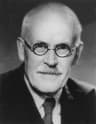
Harold Jeffreys
modernBayesian Epistemology, Philosophy of Science
Harold Jeffreys (1891–1989) was a British mathematician, statistician, and geophysicist whose philosophical work centered on the foundations of scientific inference and inductive reasoning. His landmark treatise *Theory of Probability* (1939) provided a systematic Bayesian framework for scientific methodology, treating probability as a measure of rational belief rather than frequency. He made foundational contributions to the logic of analogical and inductive reasoning that continue to influence philosophy of science.
1 argument
Philosophy of LanguageTruth & Knowledge
H
Harrenstein
contemporaryAnalytic Philosophy / Formal Epistemology
Harrenstein is a contemporary researcher working at the intersection of game theory, logic, and philosophy, focusing on formal models of rational decision-making in sequential games. Their work examines how plausibility updates and belief revision operate during actual play versus theoretical analysis.
1 argument
SkepticismTruth & Knowledge
HM
Harriet Malinowitz
contemporaryFeminist Rhetoric, Queer Theory
Harriet Malinowitz is a contemporary American rhetorician and feminist scholar whose work centers on queer rhetoric, composition pedagogy, and the relationship between sexuality and academic discourse. Her book Textual Orientations: Lesbian and Gay Students and the Making of Discourse Communities (1995) established her as a foundational voice in queer composition theory. Her scholarship bridges rhetoric, feminist theory, and queer studies within the context of writing instruction.
1 argument
Moral ResponsibilityBioethics

Harriet Taylor
modernLiberal Feminism, Utilitarianism
Harriet Taylor Mill (1807–1858) was a British philosopher, liberal feminist, and utilitarian thinker whose intellectual partnership with John Stuart Mill shaped some of the most important liberal arguments for women's equality in the nineteenth century. She argued that social custom and artificial restrictions, not natural incapacity, explained women's subordinate position, and that genuine moral progress required extending full civil and political rights to women. Her essay 'The Enfranchisement of Women' (1851) stands as one of the earliest systematic philosophical defenses of women's suffrage.
1 argument
Moral ResponsibilityRights & Liberty
Harriet Taylor Mill
modernLiberal Feminism, Utilitarianism
Harriet Taylor Mill (1807–1858) was a British philosopher, liberal feminist, and intellectual collaborator of John Stuart Mill, whom she married in 1851. She was a forceful advocate for women's rights and individual liberty, whose philosophical contributions shaped the liberal tradition through both her own essays and her influence on Mill's major works. Her essay 'The Enfranchisement of Women' (1851) stands as an early landmark in the philosophical case for women's political equality.
1 argument
Moral ResponsibilityRights & Liberty
H
Harrison-Trainor
contemporaryAnalytic Philosophy / Mathematical Logic
Matthew Harrison-Trainor is a contemporary mathematical logician whose work spans computability theory, model theory, and the foundations of game theory. He has contributed to the philosophical analysis of sequential games, particularly regarding how players update plausibility judgments during actual play versus in theoretical equilibrium analysis.
1 argument
SkepticismTruth & Knowledge
HB
Harry Bunt
contemporaryPhilosophy of Language, Formal Semantics, Computational Linguistics
Harry Bunt is a Dutch computational linguist and philosopher of language, associated with Tilburg University. He is best known for developing ensemble theory, a mereological framework for the formal semantics of natural language that addresses limitations of classical set theory in handling mass terms and plurals. He has also made foundational contributions to dialogue act theory and the formal annotation of communicative behavior.
1 argument
Modality & Possibility

Harry Frankfurt
contemporaryAnalytic Philosophy
Harry Frankfurt (born 1929) is an American analytic philosopher emeritus at Princeton University, best known for his work on free will, moral responsibility, and the structure of human motivation. He fundamentally reoriented debates about free will by challenging the Principle of Alternate Possibilities and developing an influential account of agency grounded in hierarchical desires.
1 argument
Free Will & Foreknowledge

Harry Lewis
contemporaryAnalytic Philosophy of Computation
Harry Lewis is an American computer scientist and Gordon McKay Professor of Computer Science at Harvard University, known for his work on theoretical computer science and computability. He co-authored the influential textbook 'Elements of the Theory of Computation' with Christos Papadimitriou and has written on the philosophical and societal implications of computing.
1 argument
SkepticismTruth & Knowledge
Harsanyi
contemporaryAnalytic Philosophy / Game Theory
John C. Harsanyi (1920-2000) was a Hungarian-American economist and philosopher who made foundational contributions to game theory, decision theory, and ethics. He shared the 1994 Nobel Prize in Economics for his analysis of games of incomplete information, and developed influential arguments for rule utilitarianism grounded in rational choice under uncertainty.
1 argument
SkepticismTruth & Knowledge
H
Harthong
contemporaryAnalytic Philosophy of Mathematics
Harthong is a contemporary mathematician associated with nonstandard analysis and foundational questions in real analysis. His work touches on the behavior of infinite series and the subtleties of convergence, including classical results concerning conditionally convergent series.
1 argument
Truth & Knowledge
HR
Hartley Rogers
contemporaryMathematical Logic / Computability Theory
Hartley Rogers Jr. (1926–2015) was an American mathematician at MIT known for foundational contributions to recursion theory and computability. His textbook 'Theory of Recursive Functions and Effective Computability' became a standard reference, and he is remembered for Rogers' equivalence theorem on acceptable programming systems.
1 argument
SkepticismTruth & Knowledge

Hartmanis
contemporaryTheoretical Computer Science / Philosophy of Computation
Juris Hartmanis (1928-2022) was a Latvian-American computer scientist and a founding figure of computational complexity theory. With Richard Stearns, he established the theoretical framework for classifying problems by the computational resources required to solve them, work that earned them the 1993 Turing Award.
1 argument
SkepticismTruth & Knowledge
HD
Harvey Deutsch
contemporaryAnalytic Philosophy
Harvey Deutsch is a contemporary analytic philosopher working primarily in philosophy of language and metaphysics. His work engages questions about propositional content, the semantics of sentences, and the nature of what is expressed or denoted by linguistic items. He has contributed to debates surrounding structured propositions and the relationship between syntactic form and semantic content.
1 argument
Philosophy of Language
HS
Harvey Siegel
contemporaryAnalytic Philosophy, Philosophy of Education
Harvey Siegel is a contemporary American philosopher of education at the University of Miami, specializing in critical thinking, rationality, and epistemology as they bear on educational theory and practice. He is best known for his defense of the generalizability of critical thinking skills against subject-specificity views, and for his work refuting epistemic relativism. His contributions have shaped the philosophical foundations of critical thinking education.
1 argument
SkepticismTruth & Knowledge
HC
Haskell Curry
contemporaryMathematical Logic, Formalism
Haskell Brooks Curry (1900–1982) was an American mathematician and logician whose foundational work in combinatory logic and formal systems profoundly shaped mathematical logic and theoretical computer science. He developed combinatory logic independently of Moses Schönfinkel and contributed extensively to the metatheory of formal systems. His name is attached to the technique of currying, the Curry-Howard correspondence, and Curry's paradox.
1 argument
SkepticismTruth & Knowledge
H
Hasker
contemporaryAnalytic Philosophy of Religion
William Hasker is an American philosopher of religion and mind, best known for developing and defending emergent dualism as an alternative to both physicalism and substance dualism. He has made significant contributions to debates on divine providence, open theism, and the philosophical problems of consciousness.
1 argument
Consciousness & Mind
H
Hatfield
contemporaryAnalytic Philosophy of Religion
Hatfield is a contemporary philosopher working in the analytic philosophy of religion, with contributions to the problem of evil and theodicy. Their work engages with the logical and evidential dimensions of theodicy, examining the constraints on divine permission of error and harm. The precise scope of their contribution to the field is reflected in focused arguments about the normative limits of permissible divine allowance.
1 argument
Problem of EvilAgainst a future action of God
H
Hauser
contemporaryAnalytic Philosophy of Mathematics
Hauser is a contemporary philosopher of mathematics known for critical engagement with platonist arguments in the philosophy of mathematics. His work examines the epistemological foundations of mathematical realism and the limitations of elimination-style arguments for abstract objects.
1 argument
SkepticismTruth & Knowledge
He
Hauser et al.
contemporaryAnalytic Philosophy of Mathematics
Hauser et al. refers to collaborative work by contemporary philosophers of mathematics engaging with platonism and its critics. The collaboration is notable for critically examining Jerrold Katz's argument-by-elimination defense of mathematical platonism and identifying weaknesses in its reasoning structure.
1 argument
SkepticismTruth & Knowledge
H
Hawthorne
contemporaryAnalytic Philosophy
John Hawthorne is a contemporary analytic philosopher specializing in epistemology, metaphysics, and philosophy of language. He is best known for his work on knowledge, skepticism, and the epistemology of lottery propositions. His influential book Knowledge and Lotteries (2004) developed a sophisticated defense of intellectualism about practical reasoning and epistemic standards.
1 argument
Skepticism
HW
Hayden White
contemporaryPhilosophy of History, Narrativism, Poststructuralism
Hayden White (1928–2018) was an American historian and philosopher of history best known for his theory of historiography as narrative construction. His landmark work Metahistory (1973) argued that historical writing is shaped by literary tropes and rhetorical strategies, not purely by evidence. He was a central figure in the linguistic turn in historical theory and influenced debates across history, literary theory, and philosophy.
1 argument
Natural TheologyModality & Possibility
HL
Hector Levesque
contemporaryAnalytic Philosophy / Philosophy of Artificial Intelligence
Hector Levesque is a Canadian computer scientist and philosopher of artificial intelligence, known for foundational work in knowledge representation and reasoning. He has argued that genuine intelligence requires common-sense reasoning rather than pattern matching, and developed influential tests for machine understanding. His work bridges logic, cognitive science, and AI.
1 argument
SkepticismTruth & Knowledge
HH
Heidi Hurd
contemporaryAnalytic Philosophy of Law
Heidi Hurd is an American legal philosopher and criminal law theorist, currently at the University of Illinois College of Law. She is best known for her book 'Moral Combat: The Dilemma of Legal Perspectivalism' (1999), which examines conflicts between moral and legal obligations. Her work spans philosophy of law, criminal law theory, and the ethics of authority and autonomy.
1 argument
Democracy & Governance
H
Heifetz
contemporaryAnalytic Philosophy / Epistemic Game Theory
Aviad Heifetz is an Israeli game theorist and mathematical economist known for his contributions to epistemic game theory, interactive belief systems, and the foundations of rationality in strategic settings. His work rigorously examines how players reason about each other's beliefs and how plausibility orderings evolve during play.
1 argument
SkepticismTruth & Knowledge
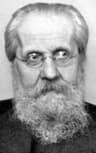
Heinrich Rickert
modernNeo-Kantianism (Southwest/Baden School)
Heinrich Rickert (1863–1936) was a German philosopher and leading figure of the Southwest (Baden) Neo-Kantian school, succeeding Wilhelm Windelband at the University of Heidelberg. He developed a systematic value-theoretic philosophy that grounded the distinction between the natural sciences and the cultural/historical sciences in their differing relationships to values. His methodology profoundly influenced Max Weber's concept of value-relevance in social science.
1 argument
Natural TheologyTruth & Knowledge
HE
Heinz-Dieter Ebbinghaus
contemporaryMathematical Logic
Heinz-Dieter Ebbinghaus is a German mathematical logician best known for his foundational work in model theory, set theory, and the history of logic. He is a longtime professor at the University of Freiburg and co-author of influential textbooks that have shaped graduate education in mathematical logic.
1 argument
SkepticismTruth & Knowledge
HB
Helen Beebee
contemporaryAnalytic Philosophy
Helen Beebee is a British analytic philosopher and Professor of Philosophy known for her work in metaphysics, philosophy of science, and the history of philosophy. She has been a leading defender of Humean views on causation and laws of nature, arguing against necessitarian accounts in favor of regularity-based alternatives. She has also contributed substantially to debates on free will, truthmaker theory, and the metaphysics of modality.
1 argument
Truth & Knowledge
HS
Helen Steward
contemporaryAnalytic Philosophy, Philosophy of Action
Helen Steward is a British analytic philosopher at the University of Leeds whose work centers on action theory, free will, and the metaphysics of agency. She is best known for defending a form of libertarian free will grounded in agent causation, arguing that genuine agency requires the ability to settle what happens through one's own actions. Her 2012 monograph A Metaphysics for Freedom is a landmark contribution to debates over compatibilism and the nature of agentive power.
1 argument
Free Will & Foreknowledge
HV
Helga Varden
contemporaryKantian Ethics, Feminist Philosophy
Helga Varden is a contemporary philosopher at the University of Illinois at Urbana-Champaign specializing in Kantian ethics, political philosophy, and feminist theory. She is best known for developing a rigorous Kantian framework to address questions of sex, love, gender, and justice, arguing that Kant's practical philosophy—properly reconstructed—has significant resources for feminist ends. Her work challenges androcentric distortions in canonical philosophy while remaining committed to systematic, rights-based ethical theory.
1 argument
Moral ResponsibilityRights & Liberty
HD
Helmut Dubiel
contemporaryCritical Theory
Helmut Dubiel (1946–2015) was a German sociologist and political theorist associated with the Frankfurt School tradition of critical theory. He worked at the Institute for Social Research in Frankfurt and later as professor at Justus Liebig University Giessen, contributing to debates on political culture, civil society, and the relationship between democratic theory and social critique. In his later years he wrote a widely read memoir about living with Parkinson's disease, reflecting on illness, identity, and medical modernity.
1 argument
SkepticismTruth & Knowledge
HS
Helmut Schwichtenberg
contemporary
1 argument
SkepticismTruth & Knowledge
HL
Hendrik Lorentz
modernClassical Physics / Philosophy of Science
Hendrik Antoon Lorentz was a Dutch theoretical physicist whose work on electromagnetic theory and the transformation equations bearing his name laid essential groundwork for Einstein's special relativity. He shared the 1902 Nobel Prize in Physics with Pieter Zeeman for their investigation of the influence of magnetism on radiation phenomena.
1 argument
SkepticismTruth & Knowledge
HB
Henk Bos
contemporaryHistory and Philosophy of Mathematics
Henk Bos is a contemporary Dutch historian of mathematics, best known for his work on the history of early modern mathematics, particularly the development of the calculus and the geometry of Descartes. His scholarship has significantly shaped the understanding of 17th-century mathematical practice and its philosophical underpinnings.
1 argument
Truth & Knowledge
HA
Henry Aldrich
modernScholastic Logic
Henry Aldrich (1648–1710) was an English logician, theologian, and Dean of Christ Church, Oxford. He is best known for his Artis Logicae Compendium (1691), a concise Latin logic textbook that became the standard introductory text at Oxford for over a century. Beyond logic, he was a man of broad learning who contributed to architecture and music composition.
1 argument
Modality & PossibilityFree Will & Foreknowledge
HD
Henry Davis
contemporaryAnalytic Philosophy
Henry Davis is a contemporary analytic philosopher working primarily in metaphysics, with interests in ontology, relations, and the structure of facts. His work engages critically with neo-Aristotelian approaches to metaphysics, including E.J. Lowe's four-category ontology and responses to Bradley's regress.
1 argument
Consciousness & Mind
HE
Henry E. Allison
contemporaryKantian Studies, Analytic Philosophy
Henry E. Allison (born 1937) is an American philosopher and one of the most influential Kant scholars of the twentieth and twenty-first centuries. He is best known for his systematic defense of Kant's transcendental idealism under the 'two-aspect' or 'methodological' interpretation, arguing that Kant's distinction between appearances and things-in-themselves is epistemological rather than ontological. His work has shaped the landscape of Anglophone Kant scholarship for decades.
1 argument
PerceptionModality & Possibility
HH
Henry Hamburger
contemporaryAnalytic Philosophy
Henry Hamburger is a contemporary philosopher and computer scientist whose work spans philosophy of mathematics, linguistics, and artificial intelligence. He has contributed to debates on mathematical platonism and formal semantics, including critical engagement with Jerrold Katz's arguments for platonism.
1 argument
SkepticismTruth & Knowledge

Henry Highland Garnet
modernAfrican American Philosophy, Black Liberation Theology, Abolitionism
Henry Highland Garnet (1815–1882) was an African American abolitionist, Presbyterian minister, and orator who escaped slavery in Maryland to become one of the most radical voices in the antebellum freedom movement. He is best known for his 1843 'Address to the Slaves of the United States of America,' which controversially urged enslaved people to resist and rebel, positioning him as a forerunner of Black liberation theology and African American political philosophy. His thought synthesized Christian ethics, natural rights theory, and early Pan-Africanism into a distinctive tradition of Black intellectual resistance.
1 argument
SkepticismTruth & Knowledge

Henry Home, Lord Kames
modernScottish Enlightenment
Henry Home, Lord Kames (1696–1782) was a Scottish Enlightenment philosopher, judge, and literary critic who made significant contributions to aesthetics, legal theory, and moral philosophy. His 'Elements of Criticism' was among the first systematic attempts to develop a philosophical foundation for literary and artistic judgment, influencing both British and American intellectual life.
1 argument
AestheticsTruth & Knowledge
HL
Henry Leonard
modernAnalytic Philosophy, Nominalism
Henry S. Leonard (1905–1967) was an American philosopher who made foundational contributions to formal logic and mereology. He is best known for co-developing the Calculus of Individuals with Nelson Goodman, a landmark formal treatment of part-whole relations. His work engaged deeply with nominalism, the logic of inscriptions, and the ontology of linguistic entities.
1 argument
Modality & Possibility
HL
Henry Lieberman
contemporaryAnalytic Philosophy of AI / Cognitive Science
Henry Lieberman is an American computer scientist and research scientist at the MIT Media Lab, known for his work on artificial intelligence, human-computer interaction, and programming by example. His research has explored commonsense reasoning, end-user programming, and the application of AI to everyday tasks.
1 argument
Philosophy of Language
HM
Henry Mehlberg
contemporaryLogical Empiricism
Henry Mehlberg (1904–1978) was a Polish-American philosopher of science associated with the logical empiricist tradition. He made significant contributions to the philosophy of time, scientific epistemology, and the foundations of physics, and is best known for his rigorous treatment of time's arrow and the reach of scientific knowledge.
1 argument
Philosophy of Language
HO
Henry Odera Oruka
contemporaryAfrican Philosophy, Sage Philosophy
Henry Odera Oruka (1944–1995) was a Kenyan philosopher and professor at the University of Nairobi, widely regarded as one of the founders of professional African philosophy. He is best known for developing the concept of 'Sage Philosophy,' a methodology for documenting the rigorous, critical thought of traditional African sages as a legitimate form of philosophical inquiry. His work challenged both ethnophilosophy's conflation of culture with philosophy and Western dismissals of African intellectual traditions.
1 argument
SkepticismTruth & Knowledge
HR
Henry Richardson
contemporaryAnalytic Philosophy, Democratic Theory
Henry S. Richardson is a contemporary American philosopher at Georgetown University whose work spans practical reasoning, democratic theory, and ethics. He is best known for his account of the specification of norms and his defense of democratic autonomy as a framework for public deliberation about policy ends. His scholarship engages questions of equality, deliberative democracy, and the conditions under which practical reasoning can be both rational and responsive to moral complexity.
1 argument
Moral ResponsibilityRights & Liberty
HR
Henry Rosemont
contemporaryComparative Philosophy, Confucian Studies
Henry Rosemont Jr. (1934–2017) was an American philosopher specializing in classical Chinese philosophy and comparative ethics. He is best known for his collaborations with Roger T. Ames on translations and interpretations of Confucian texts, and for arguing that Confucian role ethics offers a substantive alternative to Western rights-based moral frameworks. His work brought sustained analytical rigor to cross-cultural philosophical dialogue between the Confucian and Western traditions.
1 argument
Moral ResponsibilityVirtue Ethics
H
Heracleitus
ancientPre-Socratic Philosophy
Heraclitus of Ephesus (c. 535–475 BCE) was a pre-Socratic Greek philosopher renowned for his doctrine of universal flux and the unity of opposites. He held that the Logos—a rational principle governing all things—underlies the ceaseless change of the cosmos, and that fire serves as the primary element symbolizing this perpetual transformation. His paradoxical, aphoristic style earned him the epithet 'the Obscure' in antiquity.
1 argument
Philosophy of LanguageTruth & Knowledge
H
Heraclitus
ancientPre-Socratic Philosophy
Heraclitus of Ephesus (c. 535–475 BCE) was a pre-Socratic Greek philosopher known for his doctrine that change is the fundamental essence of the universe, encapsulated in the saying 'everything flows' (panta rhei). He posited the Logos—a rational principle governing all things—and argued that apparent opposites are unified through dynamic tension. His cryptic, aphoristic style earned him the epithet 'the Obscure' among ancient commentators.
1 argument
PerceptionCausation
HF
Herbert Feigl
contemporaryLogical Empiricism
Herbert Feigl (1902–1988) was an Austrian-American philosopher and a central figure of the Vienna Circle who became one of the foremost advocates of logical empiricism in the United States. He is best known for his influential work on the philosophy of mind, particularly his defense of the psychophysical identity theory, and for his sustained analysis of the nature of scientific explanation. He founded the Minnesota Center for Philosophy of Science in 1953, establishing it as a leading institutional home for philosophy of science in North America.
1 argument
Philosophy of LanguageTruth & Knowledge
Herbert Gintis
contemporaryBehavioral Economics and Evolutionary Game Theory
Herbert Gintis (1940-2023) was an American behavioral scientist, economist, and game theorist known for his interdisciplinary work bridging economics, evolutionary biology, and moral philosophy. He made significant contributions to understanding human cooperation, strong reciprocity, and the evolutionary foundations of moral behavior, and critically examined the foundations of classical game theory.
1 argument
SkepticismTruth & Knowledge

Herbert Marcuse
modernCritical Theory / Frankfurt School
Herbert Marcuse (1898–1979) was a German-American philosopher and social theorist associated with the Frankfurt School of Critical Theory. He synthesized Hegelian dialectics, Marxist political economy, and Freudian psychoanalysis to produce a sweeping critique of advanced industrial society and its mechanisms of social control. His work became foundational for the New Left and counterculture movements of the 1960s.
1 argument
SkepticismTruth & Knowledge

Hermann Bondi
contemporaryScientific Naturalism
Hermann Bondi (1919–2005) was an Austrian-British mathematician and cosmologist best known for co-developing the Steady State theory of cosmology with Fred Hoyle and Thomas Gold. He made major contributions to general relativity, gravitational wave theory, and the philosophy of science, and was a prominent scientific humanist and atheist. His cosmological work directly challenged theistic accounts of cosmic origins by positing naturalistic continuous creation of matter.
1 argument
Natural TheologyCausation
HC
Hermann Conring
modernEarly Modern German Humanism / Natural Law
Hermann Conring (1606–1681) was a German polymath who made foundational contributions to legal history, political philosophy, and medicine. He is best known for demonstrating, contra the prevailing assumption, that Roman law had no formal legal authority in the Holy Roman Empire, thereby founding the discipline of German legal history. His broad scholarly range extended to natural philosophy, medicine, and political theory, making him one of the most influential German academics of the seventeenth century.
1 argument
Afterlife & DeathInsubordination to God

Hermann Grassmann
modernGerman Mathematical Philosophy
Hermann Grassmann (1809-1877) was a German polymath best known for developing the foundations of linear and multilinear algebra through his Ausdehnungslehre (Theory of Extension). Though underappreciated in his lifetime, his work on vector spaces and exterior algebra became foundational to modern mathematics and physics, and he also made significant contributions to linguistics and Sanskrit studies.
1 argument
Modality & PossibilityCausation

Hermann Minkowski
modernPhilosophy of Physics / Mathematical Physics
Hermann Minkowski (1864–1909) was a German mathematician and theoretical physicist who revolutionized the mathematical foundations of physics by reformulating Einstein's special relativity in terms of a unified four-dimensional spacetime continuum. Trained in number theory and geometry, he brought rigorous mathematical structure to relativistic physics, introducing what is now called Minkowski space. His geometric interpretation of spacetime proved foundational for the development of general relativity and modern philosophy of physics.
1 argument
SkepticismTruth & Knowledge
HT
Hermes Trismegistus
ancientHermeticism
Hermes Trismegistus ('Thrice-Greatest Hermes') is a legendary syncretic figure combining the Greek god Hermes and the Egyptian god Thoth, venerated as the purported author of the Corpus Hermeticum and related texts. These writings, composed largely in the 2nd–3rd centuries CE, present a mystical cosmology blending Platonism, Stoicism, and Egyptian religious thought. Though not a historical person, the figure was treated as a primordial sage and prophet by late antique, medieval, and Renaissance thinkers.
1 argument
Afterlife & DeathInsubordination to God
H
Hesse
contemporaryAnalytic Philosophy of Science
Mary Hesse (1924–2016) was a British philosopher of science at the University of Cambridge, best known for her rigorous analysis of the role of models and analogical reasoning in scientific explanation and theory construction. Her landmark work argued that analogy is not merely a heuristic device but a constitutive feature of scientific inference. She was the first woman to deliver the Gifford Lectures (1983).
1 argument
Philosophy of LanguageTruth & Knowledge
Hd
Heymeric de Campo
medievalLate Scholasticism, Albertism
Heymeric de Campo (c. 1395–1460) was a Flemish scholastic philosopher and theologian who taught at the University of Cologne and became one of the most prominent representatives of the Albertist tradition in the Rhineland. He synthesized the metaphysics of Albert the Great with Neoplatonic and Lullist elements, and is best known as a teacher and intellectual influence on Nicholas of Cusa.
1 argument
Philosophy of LanguageTruth & Knowledge
H
Hintikka
contemporaryAnalytic Philosophy
Jaakko Hintikka (1929–2015) was a Finnish philosopher and logician widely regarded as one of the founders of epistemic logic and game-theoretic semantics. He made foundational contributions to modal logic, philosophy of language, and the philosophy of mathematics, and was a prolific interpreter of Aristotle, Kant, and Wittgenstein.
1 argument
Modality & PossibilityFree Will & Foreknowledge
H
Hochberg
contemporaryAnalytic Philosophy, Ontology
Herbert Hochberg (1926–2013) was an American analytic philosopher specializing in ontology, logic, and the history of analytic philosophy. He worked extensively on the metaphysics of facts, universals, particulars, and relations, defending a Russellian logical atomism against nominalist and trope-theoretic alternatives. His work offered sustained critiques of trope ontology, arguing it fails to adequately ground relational structure.
1 argument
Modality & PossibilityTruth & Knowledge
H
Hoffman
contemporary
1 argument
Truth & Knowledge
H
Holliday
contemporaryAnalytic Philosophy / Formal Epistemology
Wesley H. Holliday is a contemporary American philosopher and logician working primarily in epistemic logic, modal logic, and formal epistemology. He is known for contributions to the semantics of knowledge, possibility semantics, and the logic of rational agency, including work on dynamic epistemic logic and game-theoretic reasoning.
1 argument
SkepticismTruth & Knowledge
HC
Holt, Charles
contemporaryExperimental Economics / Game Theory
Charles Holt is a contemporary American economist known for his contributions to experimental economics and game theory. His work has examined the empirical validity of solution concepts in extensive-form games, including challenges to backward induction as a predictive tool for actual player behavior.
1 argument
SkepticismTruth & Knowledge
H
Holyoak
contemporaryCognitive Science, Analytic Philosophy of Mind
Keith J. Holyoak is a cognitive psychologist and professor at UCLA whose research bridges cognitive science and philosophy through the study of analogical reasoning, causal cognition, and relational thought. He is best known for his computational and psychological models of how humans construct and evaluate analogies, drawing on classical sources from Aristotle through modern logic. His work with Paul Thagard on structural analogical mapping has significantly influenced both cognitive science and philosophy of mind.
1 argument
Philosophy of LanguageTruth & Knowledge

Homer
ancientEpic Poetry / Pre-Socratic Literary Tradition
Homer is the legendary ancient Greek poet traditionally credited with composing the Iliad and the Odyssey, the foundational works of Western literature. His epics established enduring narrative conventions, explored themes of fate, honor, and the human condition, and profoundly influenced subsequent philosophical and literary thought from Plato to the present day.
1 argument
AestheticsTruth & Knowledge
Ha
Homer and Selman
contemporaryAnalytic Philosophy
Homer and Selman refers to the collaborative work of philosophers examining the epistemology of logic and computation, most notably associated with discussions of a priori knowledge and computational complexity. Their work probes the tension between traditional rationalist accounts of logical knowledge and the computational costs of actually deriving logical truths.
1 argument
SkepticismTruth & Knowledge
H
Hoover
contemporaryAnalytic Philosophy
Hoover is a contemporary philosopher whose work engages with questions in the philosophy of logic and epistemology, particularly concerning the status of logical knowledge. Their contributions examine tensions between traditional a priori conceptions of logic and computational or naturalistic approaches to logical cognition.
1 argument
SkepticismTruth & Knowledge
H
Horace
ancientRoman Epicureanism
Quintus Horatius Flaccus (65–8 BC) was a Roman lyric poet and Epicurean-inflected philosopher whose works blend aesthetic theory with practical ethics. His Odes, Satires, and Epistles articulate a philosophy of moderation, acceptance of mortality, and the contemplative life. Though primarily a poet, his philosophical maxims—particularly on the golden mean and carpe diem—exerted lasting influence on Western moral thought.
1 argument
Philosophy of LanguageTruth & Knowledge
Ha
Horgan and Potrč
contemporaryAnalytic Metaphysics
Terence Horgan and Matjaž Potrč are contemporary analytic metaphysicians best known for their collaborative defense of 'blobjectivism'—the austere ontological thesis that only one concrete particular exists, the cosmos as a whole (the 'blobject'). Their work systematically reconciles this radical monism with the apparent truth of ordinary discourse through an indirect correspondence theory of language.
1 argument
Modality & Possibility
H&
Horty & Belnap
contemporaryAnalytic Philosophy / Philosophical Logic
John F. Horty and Nuel Belnap are contemporary American analytic philosophers known for their collaborative and individual work in philosophical logic, deontic logic, and the semantics of agency. Horty (University of Maryland) is noted for his work on default logic and stit (seeing-to-it-that) theory, while Belnap (University of Pittsburgh) pioneered relevance logic, branching time semantics, and the logic of questions.
1 argument
SkepticismTruth & Knowledge
H
Hossack
contemporaryAnalytic Philosophy
Keith Hossack is a contemporary British analytic philosopher known for his work in metaphysics, the philosophy of mathematics, and epistemology. He has developed systematic accounts of abstract objects, facts, and the metaphysics of knowledge, with particular attention to how abstract entities like numbers and propositions relate to concrete reality. His work engages foundational questions about the nature of type-token distinctions, individuation, and the structure of knowledge.
1 argument
Modality & Possibility
HS
Howard Sturgis
contemporaryAnalytic Philosophy, Philosophy of Mathematics
Howard Sturgis is a contemporary philosopher working in the philosophy of mathematics and computability theory. He is known for his critical analysis of the Church-Turing thesis, arguing that the informal nature of Turing's thesis places it beyond the reach of formal mathematical proof. His work engages questions about the limits of formalization and the epistemological status of foundational claims in computer science.
1 argument
SkepticismTruth & Knowledge
H
Howard-Snyder
contemporaryAnalytic Philosophy of Religion
Daniel Howard-Snyder is a contemporary American philosopher of religion at Western Washington University. He is known for his contributions to debates on divine hiddenness, the nature of faith, and the problem of evil, often engaging critically with both skeptical and theistic positions. His work on propositional faith and the conditions for rational religious belief has been widely influential in analytic philosophy of religion.
1 argument
Trinity
H
Hoy
contemporaryContinental Philosophy, Hermeneutics, Critical Theory
David Couzens Hoy is a contemporary American philosopher known for his work in Continental philosophy, hermeneutics, and critical theory. Drawing on Gadamer, Foucault, and Derrida, he has explored topics in ethics, freedom, and interpretation. His moral philosophy engages questions of responsibility, intentionality, and the ethical weight of deliberate versus inadvertent action.
1 argument
Moral ResponsibilityJustice & Punishment
HF
Hoyt Fuller
contemporaryBlack Arts Movement, African American Cultural Criticism
Hoyt W. Fuller (1923–1981) was an African American literary critic, editor, and cultural theorist who served as a central architect of the Black Arts Movement. As longtime editor of Negro Digest/Black World magazine, he championed the development of a distinctly African American aesthetic grounded in Black cultural autonomy and diasporic identity. His editorial and critical work helped institutionalize Black intellectual production as a legitimate and self-determining scholarly tradition.
1 argument
SkepticismTruth & Knowledge
H
Hubel
contemporaryPhilosophy of Language / Generative Linguistics
Hubel is a contemporary philosopher or linguist associated with arguments in the philosophy of language, particularly concerning the learnability of grammars from primary linguistic data. The work engages with nativist and innatist positions in the tradition of generative linguistics and philosophy of mind.
1 argument
SkepticismPhilosophy of Language
H
Huber
contemporaryAnalytic Philosophy
Franz Huber is a contemporary philosopher specializing in formal epistemology, decision theory, and the philosophy of science. He is known for his work on belief revision, ranking theory, and the logic of theory assessment, contributing to debates on rational belief and confirmation.
1 argument
SkepticismTruth & Knowledge

Hubert Dreyfus
contemporaryPhenomenology
Hubert Dreyfus (1929–2017) was an American philosopher at the University of California, Berkeley, best known for his sustained phenomenological critique of classical artificial intelligence and his influential commentaries on Heidegger and Merleau-Ponty. Drawing on continental European philosophy, he argued that human intelligence and skillful coping are grounded in embodied, holistic engagement with the world rather than explicit rule-following or symbolic representation. His work bridged analytic and continental traditions, with lasting impact on philosophy of mind, cognitive science, and epistemology.
1 argument
Perception
HH
Hud Hudson
contemporaryAnalytic Philosophy, Analytic Theology
Hud Hudson is a contemporary American analytic philosopher at Western Washington University, working at the intersection of metaphysics and philosophy of religion. He is known for applying rigorous analytic tools—including mereology, four-dimensionalism, and possible worlds reasoning—to theological questions about the soul, Scripture, heaven, and hell.
1 argument
Modality & Possibility
HL
Hugh LaFollette
contemporaryAnalytic Philosophy, Applied Ethics
Hugh LaFollette is a contemporary American moral and political philosopher known for his work in applied ethics. He has written extensively on topics including personal relationships, animal ethics, practical ethics, and the regulation of firearms. He is a longtime professor at the University of South Florida St. Petersburg and editor of major applied ethics anthologies.
1 argument
Justice & PunishmentRights & Liberty
HD
Hugo Dingler
modernConventionalism / Methodological Constructivism
Hugo Dingler (1881–1954) was a German philosopher of science and mathematics who developed a thoroughgoing conventionalism about the foundations of geometry and physics. He argued that foundational principles—including metric geometry—are not empirical discoveries but voluntary stipulations made to render science possible. His work, though marginal in the Anglophone world, influenced later German constructivism, particularly the Erlangen School.
1 argument
Modality & PossibilityTruth & Knowledge
HG
Hugo Grotius
modernNatural Law, Early Modern Political Philosophy
Hugo Grotius (1583–1645) was a Dutch jurist, philosopher, and theologian widely regarded as the father of international law. His landmark work De Jure Belli ac Pacis (1625) systematized natural law theory and laid the foundations for modern international legal order. He also made significant contributions to Arminian theology and was a key figure in early modern efforts to reconcile Christian denominations.
1 argument
Democracy & Governance
HM
Humberto Maturana
contemporaryBiology of Cognition / Second-Order Cybernetics
Humberto Maturana (1928-2021) was a Chilean biologist and philosopher best known for developing the theory of autopoiesis with Francisco Varela, which describes living systems as self-producing networks. His work bridges biology, cognition, and epistemology, arguing that cognition is a fundamental feature of all living systems and that observers construct reality through language and interaction.
1 argument
Consciousness & Mind
H
Hume
modernBritish Empiricism
David Hume (1711–1776) was a Scottish Enlightenment philosopher and historian, widely regarded as one of the most important figures in Western philosophy. He developed a rigorous empiricist epistemology grounded in impressions and ideas, and applied systematic skeptical analysis to causation, personal identity, and religious belief. His critiques of miracles, natural theology, and inductive reasoning remain foundational challenges in philosophy of religion and epistemology.
1 argument
Natural Theology
Hutcheson
modernMoral Sense Theory, Scottish Enlightenment, British Empiricism
Francis Hutcheson (1694–1746) was a Scottish-Irish philosopher and a founding figure of the Scottish Enlightenment, best known for developing the moral sense theory — the view that humans possess an innate faculty for perceiving moral and aesthetic qualities. Professor of Moral Philosophy at Glasgow, he profoundly influenced Adam Smith, David Hume, and later utilitarian thought. His work argued that virtue and beauty are objective features grasped by internal senses, not mere products of self-interest or convention.
1 argument
AestheticsVirtue Ethics
H
Hutton
contemporaryComparative Philosophy / Analytic Chinese Philosophy
Eric L. Hutton is a contemporary philosopher specializing in early Chinese ethics and comparative philosophy, best known for his scholarship on Xunzi and Mencius. He has produced influential translations and interpretive studies that illuminate the internal debates of classical Confucianism, particularly around human nature and moral cultivation. His work bridges analytic philosophy and sinology to make classical Chinese texts accessible to Western audiences.
1 argument
Moral ResponsibilityVirtue Ethics
IS
Ian Shapiro
contemporaryAnalytic Political Philosophy
Ian Shapiro is a prominent American political scientist and philosopher at Yale University, known for his work on democratic theory, justice, and the methodology of social science. He has made significant contributions to debates about rational choice theory, the nature of political power, and the foundations of democratic legitimacy.
1 argument
Justice & PunishmentRights & Liberty
IX
Ibram X. Kendi
contemporaryCritical Race Theory / Antiracist Scholarship
Ibram X. Kendi (born 1982) is an American historian, author, and antiracist scholar best known for his foundational works on racism and antiracism in American society. He won the National Book Award for Nonfiction for 'Stamped from the Beginning' (2016) and popularized the concept of antiracism as an active, ongoing practice in 'How to Be an Antiracist' (2019). His work engages with questions of justice, structural power, and — in some contexts — theology and theodicy.
1 argument
Divine AttributesAgainst an attribute of God
I
Icard
contemporaryAnalytic Philosophy
Thomas F. Icard III is a contemporary philosopher and logician whose work spans formal epistemology, logic, and the foundations of rational agency. He is known for research on higher-order reasoning, probabilistic and causal inference, and the interpretation of game-theoretic solution concepts, bridging philosophy, cognitive science, and computer science.
1 argument
SkepticismTruth & Knowledge
IB
Ida B. Wells
modernAfricana Philosophy, Black Feminist Thought, Social Philosophy
Ida B. Wells (1862–1931) was an African American journalist, activist, and social theorist whose investigative documentation of racial violence established her as a foundational figure in Africana philosophy and Black feminist thought. Through rigorous empirical analysis of lynching and systemic racism, she developed epistemological arguments about Black knowledge production, truth-telling under oppression, and the moral obligations of scholarship. Her work anticipates key themes in critical race theory, standpoint epistemology, and the philosophy of social justice.
1 argument
SkepticismTruth & Knowledge
IB
Ida B. Wells-Barnett
modernAfrican American Philosophy, Social Philosophy, Feminist Philosophy
Ida B. Wells-Barnett (1862–1931) was an African American journalist, activist, and social philosopher whose investigative work exposed the systemic nature of racial violence in the post-Reconstruction United States. She developed rigorous empirical and moral arguments against lynching, demonstrating it was a tool of economic and political suppression rather than a response to crime. Her writings also challenged the exclusion of Black women from mainstream feminist discourse, insisting that gender philosophy account for the compounding effects of race and structural inequality.
1 argument
Moral ResponsibilityRights & Liberty
I
Ihara
contemporaryComparative Philosophy, Confucian Ethics
Craig K. Ihara is a contemporary American philosopher specializing in Chinese and comparative ethics, particularly Confucian moral philosophy. He has contributed to scholarly debates on the interpretation of Mencius and the nature of moral cultivation in the Confucian tradition, engaging questions about how classical Chinese thinkers understood human nature and its development.
1 argument
Moral ResponsibilityVirtue Ethics
IS
Ilse Schneider
modernNeo-Kantianism / Philosophy of Physics
Ilse Schneider was a German philosopher of science active in the early twentieth century, best known for her work on the philosophical foundations of space, time, and geometry. She engaged critically with the competing methodological frameworks of Hermann Weyl and Hans Reichenbach in the context of relativity theory, arguing that their approaches were not merely equivalent descriptions of empirical reality. Her work situates her within the broader neo-Kantian and early analytic debates over the conventionalist and empiricist interpretations of physical geometry.
1 argument
SkepticismTruth & Knowledge

Ilya Somin
contemporaryLibertarian Legal Theory
Ilya Somin is an American legal scholar and professor at George Mason University's Antonin Scalia Law School, known for his work on constitutional law, property rights, and political ignorance. He is a prominent voice in libertarian legal theory and has written extensively on federalism, foot voting, and the limits of democratic decision-making.
1 argument
Democracy & GovernanceSocial Contract
I
Im
contemporaryAnalytic Chinese Philosophy
Manyul Im is a contemporary philosopher specializing in early Chinese philosophy, particularly the moral psychology and metaphysics of the Confucian tradition. He is known for close textual and philosophical analysis of Mencius and Xunzi, examining debates over human nature and the grounds of moral cultivation. His work bridges analytic philosophy and classical Chinese thought.
1 argument
Moral ResponsibilityVirtue Ethics

Immanuel Hermann Fichte
modernSpeculative Theism / German Idealism
Immanuel Hermann Fichte (1796–1879) was a German philosopher and the son of Johann Gottlieb Fichte, who developed his own system of speculative theism within the tradition of post-Kantian idealism. He argued that a coherent metaphysics requires positing a personal God as the ground of finite minds, synthesizing idealist epistemology with theistic commitments. His work bridges German Idealism and 19th-century Christian philosophy, and he also produced the authoritative edition of his father's collected writings.
1 argument
Natural TheologyTruth & Knowledge
IM
Ingeborg Maus
contemporaryCritical Theory, Democratic Theory
Ingeborg Maus (born 1937) is a German political theorist and legal philosopher, long associated with Goethe University Frankfurt. She is best known for her critical theory of democratic legitimacy, popular sovereignty, and the dangers of judicial overreach in constitutional democracies. Her work extends Kantian and Frankfurt School traditions into debates over democratic self-legislation and the normative foundations of international law.
1 argument
Democracy & Governance
I
Ingram
contemporaryCritical Theory
David Ingram is a contemporary American philosopher associated with the Frankfurt School tradition and critical theory. He is known for his work on Jürgen Habermas, dialectical reason, and the intersection of normative philosophy with social and political theory. His scholarship emphasizes the ongoing, revisable character of philosophical inquiry as a dialectical process.
1 argument
SkepticismTruth & Knowledge
IM
Iris Marion Young
contemporaryCritical Theory, Feminist Philosophy
Iris Marion Young (1949–2006) was an American political philosopher and feminist theorist whose work centered on justice, difference, and oppression. She challenged liberal political theory's tendency to treat individuals as atomistic and unencumbered, arguing instead that identity and social positioning are constitutively relational. Her influential critiques of distributive paradigms of justice and her theorization of structural oppression reshaped contemporary political philosophy.
1 argument
Rights & LibertySocial Contract
IY
Iris Young
contemporaryFeminist Philosophy, Critical Theory
Iris Marion Young (1949–2006) was an American feminist philosopher and political theorist whose work challenged liberal conceptions of justice, impartiality, and the unencumbered self. A professor at the University of Chicago, she developed influential frameworks for understanding structural oppression, embodied difference, and the limits of impartial moral reasoning. Her scholarship bridged phenomenology, critical theory, and normative political philosophy.
1 argument
Moral ResponsibilityConsciousness & Mind
I
Irmak
contemporaryAnalytic Philosophy
Irmak is a contemporary philosopher who has engaged with debates in the philosophy of mathematics, particularly concerning platonism and its alternatives. Their work critically examines arguments for mathematical platonism, including eliminativist strategies.
1 argument
SkepticismTruth & Knowledge
IM
Irving M. Copi
contemporaryAnalytic Philosophy
Irving M. Copi (1917-2002) was an American philosopher and logician best known for his widely adopted textbook 'Introduction to Logic,' which shaped logic education for decades. His work focused on formal and informal logic, critical thinking, and the analysis of arguments, making rigorous logical methods accessible to generations of students.
1 argument
Consciousness & Mind
IA
Isaac Albalag
medievalMedieval Jewish Philosophy / Averroism
Isaac Albalag was a thirteenth-century Jewish philosopher active in Catalonia or southern France, best known for his Hebrew translation and critical commentary on al-Ghazali's Maqasid al-Falasifa, which he titled Tiqqun ha-De'ot (Emendation of Opinions). A committed Averroist, he held that philosophical and theological truths belong to entirely separate epistemic domains — an early and explicit articulation of the double truth doctrine in Jewish thought. He engaged critically with Avicenna's metaphysics, particularly rejecting the Avicennian proof for God's existence via the necessary/contingent distinction in favor of an Aristotelian-Averroistic framework.
1 argument
Natural TheologyAgainst an attribute of God
IJ
Isaac Jaquelot
modernReformed Protestant Apologetics
Isaac Jaquelot (1647–1708) was a French Huguenot theologian and apologist who fled France following the Revocation of the Edict of Nantes in 1685, eventually settling in Berlin as a court preacher to Frederick I of Prussia. He is best known for his rational defenses of Christian theism against deism and skepticism, and for his polemical exchanges with Pierre Bayle over the problem of evil and the relationship between faith and reason.
1 argument
Justice & PunishmentRights & Liberty
IW
Isaac Watts
modernNonconformist Protestantism / Early Modern Logic
Isaac Watts (1674–1748) was an English Nonconformist minister, hymn writer, and logician whose works bridged Puritan theology and Enlightenment rationalism. He is best known for his hymns, but also produced influential works in logic and philosophy of mind, including a widely used logic textbook. His philosophical writings engaged questions of epistemology, language, and the nature of propositions.
1 argument
Modality & PossibilityFree Will & Foreknowledge
IH
Ishtiyaque Haji
contemporaryAnalytic Philosophy
Ishtiyaque Haji is a contemporary analytic philosopher specializing in free will, moral responsibility, and agency. He has developed influential accounts of the conditions required for moral appraisability, arguing that questions of free will are deeply entangled with both metaphysical and normative-ethical commitments. His work systematically examines how determinism, causation, and moral obligation intersect.
1 argument
Free Will & Foreknowledge
I
Ivanhoe
contemporaryComparative Philosophy, Confucian Ethics
Philip J. Ivanhoe is a leading contemporary scholar of Chinese and comparative philosophy, best known for his work on Confucian ethics and moral self-cultivation. He has made foundational contributions to the English-language interpretation of Mencius, Xunzi, Wang Yangming, and Zhuangzi, and is a central figure in bringing rigorous analytic methodology to classical Chinese thought. His work consistently engages questions of moral psychology, virtue, and the nature of human goodness across traditions.
1 argument
Moral ResponsibilityVirtue Ethics
JB
J. Barkley Rosser
contemporaryMathematical Logic
J. Barkley Rosser (1907–1989) was an American mathematician and logician whose work substantially advanced mathematical logic and the foundations of mathematics. He is best known for the Church-Rosser theorem in lambda calculus and for strengthening Gödel's incompleteness results via Rosser's theorem. His contributions bridge formal logic, number theory, and the semantics of formal languages.
1 argument
Philosophy of Language
JD
J. David Creswell
contemporaryComparative Philosophy, Confucian Studies
J. David Creswell is a contemporary philosopher specializing in early Chinese philosophy, with scholarly focus on Confucian ethics and moral psychology. His work engages the interpretive debates between Mencian and Xunzian accounts of human nature, particularly the metaphysical underpinnings of moral cultivation.
1 argument
Moral ResponsibilityVirtue Ethics
JD
J. David Velleman
contemporaryAnalytic Philosophy
J. David Velleman is an American analytic philosopher best known for his work in action theory, moral psychology, and ethics. He has developed influential accounts of intentional action, practical reason, and the role of self-understanding in agency. His work bridges metaethics, philosophy of action, and philosophy of mind.
1 argument
Free Will & Foreknowledge
JG
J. G. Feder
modern
1 argument
Moral ResponsibilityFree Will & Foreknowledge
JG
J. G. Fichte
modern
1 argument
Moral ResponsibilityFree Will & Foreknowledge
JG
J. Gerard Wolff
contemporaryComputational Cognitive Science
J. Gerard Wolff is a contemporary British computer scientist and cognitive researcher best known for developing the SP Theory of Intelligence, a framework that unifies concepts from artificial intelligence, cognitive science, and information theory through the principle of information compression via the matching and unification of patterns. His work spans machine learning, natural language processing, and the philosophical foundations of computation and cognition.
1 argument
Philosophy of LanguageTruth & Knowledge
JJ
J. J. C. Smart
contemporary
1 argument
Modality & PossibilityTruth & Knowledge
JJ
J. J. Maquet
contemporaryAfrican Philosophy, Anthropology of Culture
Jacques Maquet (1919–2013) was a Belgian anthropologist and philosopher of culture who devoted much of his career to the study of African societies, aesthetics, and the foundations of social order. He held positions at the Catholic University of Louvain and later at UCLA, where his interdisciplinary work bridged anthropology, philosophy, and aesthetics. His fieldwork in Rwanda and broader surveys of sub-Saharan cultures contributed to early theorizations of African identity and moral life on their own terms.
1 argument
Natural TheologyVirtue Ethics
JL
J. L. Mackie
contemporary
1 argument
Philosophy of Language
JM
J. Michael Dunn
contemporaryAnalytic Philosophy, Formal Logic, Relevant Logic
J. Michael Dunn (1941–2021) was an American logician and philosopher at Indiana University, widely recognized as a foundational figure in relevant logic and non-classical logics. He developed the Belnap-Dunn four-valued logic (FDE) and made major contributions to the semantic foundations of substructural and paraconsistent logics. His work bridged formal logic, computer science, and metaphysics.
1 argument
Philosophy of LanguageModality & Possibility
JS
J. S. Ullian
contemporaryAnalytic Philosophy
J. S. Ullian is an American analytic philosopher best known for co-authoring 'The Web of Belief' with W. V. O. Quine. His work focuses on epistemology, the logic of belief revision, and the rational grounds for accepting or rejecting claims. He has also engaged with questions at the intersection of epistemology and philosophy of religion.
1 argument
Justice & PunishmentRights & Liberty
JS
J. Scott Turner
contemporaryPhilosophy of Biology, Extended Evolutionary Synthesis
J. Scott Turner is a contemporary biologist and physiologist at SUNY College of Environmental Science and Forestry whose work challenges reductionist interpretations of neo-Darwinian natural selection. He argues that living systems exhibit genuine purposiveness and cognitive-like adaptive capacities that standard evolutionary theory fails to adequately explain. His research integrates physiology, extended phenotype theory, and philosophy of biology to propose a more expansive account of how organisms adapt and function.
1 argument
SkepticismTruth & Knowledge
JW
J. Willard Gibbs
modernPhilosophy of Physics / Classical Thermodynamics
Josiah Willard Gibbs (1839–1903) was an American mathematical physicist whose foundational work in thermodynamics and statistical mechanics shaped modern physical science. He developed the concept of chemical potential and the mathematical framework of thermodynamic equilibrium, and his formulation of statistical mechanics provided a rigorous basis for connecting microscopic molecular behavior to macroscopic thermodynamic properties.
1 argument
Causation
JW
J. Wilson
contemporaryPhilosophy of Biology
J. Wilson is a contemporary philosopher of biology engaged with questions about the epistemic and cognitive standing of evolutionary theory, particularly natural selection. Their work examines whether Darwinian theory meets standard criteria for scientific explanation and whether it requires philosophical reframing.
1 argument
SkepticismTruth & Knowledge
JF
J.G. Fichte
modernGerman Idealism
Johann Gottlieb Fichte (1762–1814) was a German philosopher and a founding figure of German Idealism, who radicalized Kant's transcendental philosophy by grounding all reality in the self-positing activity of the absolute Ego. His systematic Wissenschaftslehre (Doctrine of Science) attempted to derive the structure of experience from a single first principle, influencing Schelling, Hegel, and the broader Idealist tradition. Later in his career he developed a religious turn, identifying the absolute Ego with a divine moral world-order.
1 argument
Natural TheologyTruth & Knowledge
JB
J.H. Bennett
contemporaryAnalytic Philosophy
J.H. Bennett is a contemporary philosopher working on the epistemology of logic and the philosophy of mathematics. Their research examines tensions between a priori accounts of logical knowledge and computational or naturalistic accounts of reasoning.
1 argument
SkepticismTruth & Knowledge
JT
J.J. Thomson
modernAnalytic Philosophy
Judith Jarvis Thomson (1929-2020) was an American moral philosopher and metaphysician best known for her defense of abortion rights and her influential work on the trolley problem. She made significant contributions to ethics, action theory, and metaphysics, often using vivid thought experiments to illuminate complex moral issues.
1 argument
SkepticismTruth & Knowledge
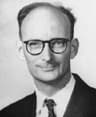
J.L. Austin
contemporaryAnalytic Philosophy, Ordinary Language Philosophy
John Langshaw Austin (1911–1960) was a British philosopher and leading figure of ordinary language philosophy at Oxford. He is best known for developing speech act theory, which analyzes how utterances do things in the world rather than merely describing it. His meticulous attention to ordinary linguistic usage transformed philosophy of language and influenced epistemology, linguistics, and legal theory.
1 argument
Truth & Knowledge
JS
J.L. Schellenberg
contemporaryAnalytic Philosophy of Religion
J.L. Schellenberg is a Canadian philosopher of religion at Mount Saint Vincent University, best known for developing the argument from divine hiddenness (or nonbelief) as a challenge to theism. He has also constructed a systematic philosophy of religion centered on 'ultimism'—the hypothesis that there exists an ultimate reality that is metaphysically, axiologically, and soteriologically ultimate—arguing this provides a more defensible basis for religious life than traditional theism.
1 argument
Religious Experience
JT
J.M. Thoday
contemporaryPhilosophy of Biology
J.M. Thoday (John Marion Thoday, 1916–2008) was a British geneticist and Professor of Genetics at Cambridge University whose work on quantitative genetics and evolutionary theory extended into the philosophy of biology. He critically examined the logical and epistemological foundations of Darwinian theory, questioning whether natural selection constitutes a genuinely explanatory scientific theory or a tautological framework. His contributions bridged empirical genetics and philosophical analysis of evolutionary reasoning.
1 argument
SkepticismTruth & Knowledge
JK
J.N. Keynes
modernBritish Empiricism, Formal Logic
John Neville Keynes (1852–1949) was a British logician and economist, best known for his systematic treatise on formal logic and his methodological contributions to political economy. Father of John Maynard Keynes, he held administrative and academic positions at Cambridge and produced foundational work distinguishing descriptive from normative economics. His logical writings engaged closely with questions of inference, modal reasoning, and the logic of future contingencies.
1 argument
Modality & PossibilityFree Will & Foreknowledge
JB
JC Beall
contemporaryAnalytic Philosophy, Dialetheism, Paraconsistent Logic
Jc Beall is a contemporary American philosopher specializing in logic, truth, and the philosophy of religion. He is best known for developing and defending dialetheism—the view that some contradictions are true—and for applying paraconsistent logic to theological problems, including the doctrine of the Incarnation. He holds a position at the University of Connecticut and has been influential in formal theories of truth and the logic of paradox.
1 argument
Truth & Knowledge
Jack Edmonds
contemporaryPhilosophy of Mathematics and Computation
Jack Edmonds is a Canadian mathematician and computer scientist known for foundational contributions to combinatorial optimization and complexity theory. He formulated the influential thesis that polynomial-time computability should be the standard for 'efficient' algorithms, work that underpins modern discussions of the P vs NP problem and bears on philosophical debates about the nature of mathematical and logical knowledge.
1 argument
SkepticismTruth & Knowledge
JL
Jack Lyons
contemporaryAnalytic Philosophy
Jack Lyons is a contemporary analytic philosopher specializing in epistemology and philosophy of mind, particularly the relationship between perception and epistemic justification. He is best known for his book *Perception and Basic Beliefs* (2009), in which he defends a reliabilist account of perceptual justification grounded in cognitive science. His work addresses how perceptual states with nonconceptual content can rationalize beliefs about the external world.
1 argument
Perception
Jacobi
modernGerman Romanticism / Counter-Enlightenment
Friedrich Heinrich Jacobi (1743–1819) was a German philosopher and novelist who became a central figure in the Pantheism Controversy and a leading critic of rationalist metaphysics. He argued that speculative reason leads inevitably to nihilism or Spinozistic fatalism, and proposed immediate faith (Glaube) and feeling as the only genuine access to reality, God, and freedom. His critiques of Kant, Fichte, and Schelling shaped the contours of post-Kantian idealism.
1 argument
PerceptionModality & Possibility

Jacques Derrida
contemporaryPost-Structuralism, Deconstruction, Continental Philosophy
Jacques Derrida (1930–2004) was an Algerian-born French philosopher widely regarded as the founder of deconstruction, a method of critical analysis that interrogates the hierarchical oppositions and unstated assumptions underlying Western philosophical and literary texts. His work fundamentally challenged logocentrism—the privileging of speech over writing and presence over absence—in the Western metaphysical tradition. Derrida's influence extends across philosophy, literary theory, legal studies, architecture, and theology.
1 argument
SkepticismTruth & Knowledge
JL
Jacques Lefèvre d'Étaples
modernRenaissance Humanism
Jacques Lefèvre d'Étaples (c. 1455–1536) was a French humanist, theologian, and philosopher who played a pivotal role in the Northern Renaissance. He sought to reform scholastic philosophy through a return to primary sources, producing influential editions and commentaries on Aristotle, and later became a key figure in early French Protestantism through his biblical scholarship.
1 argument
Philosophy of LanguageTruth & Knowledge

Jacques Rohault
modernCartesianism
Jacques Rohault (1618–1672) was a French natural philosopher and the foremost early popularizer of Cartesian physics in France. He hosted influential weekly lectures in Paris demonstrating Cartesian principles through experiment, and his Traité de Physique (1671) became the standard textbook of Cartesian natural philosophy for decades. Though primarily a physicist, he engaged with broader questions of reason, authority, and justification characteristic of early modern rationalism.
1 argument
Justice & PunishmentRights & Liberty
JC
Jaime Carbonell
contemporaryArtificial Intelligence / Natural Language Processing
Jaime G. Carbonell was a pioneering computer scientist and AI researcher at Carnegie Mellon University, where he co-founded the Language Technologies Institute. He made foundational contributions to natural language processing, machine translation, and machine learning, with particular influence on how computational systems model coherence, context, and discourse structure.
1 argument
Philosophy of Language
JS
Jakub Szymanik
contemporaryAnalytic Philosophy / Logic and Cognitive Science
Jakub Szymanik is a contemporary logician and cognitive scientist working at the intersection of formal semantics, logic, and cognition. He is best known for his work on the computational complexity of generalized quantifiers and their cognitive processing, bridging mathematical logic with empirical psycholinguistics.
1 argument
SkepticismTruth & Knowledge
JA
James A. Woodbridge
contemporaryAnalytic Philosophy
James A. Woodbridge is a contemporary analytic philosopher specializing in philosophy of language and philosophical logic, particularly the theory of truth. He is best known for defending a form of semantic deflationism, arguing that truth-talk is best understood as a kind of pretense or representational aid rather than as tracking a substantive property. His work engages closely with semantic paradoxes and the explanatory limits of deflationary accounts.
1 argument
Truth & Knowledge
JA
James Andreoni
contemporaryBehavioral Economics
James Andreoni is an American economist and professor at the University of California, San Diego, known for foundational work in behavioral economics and public finance. He is best known for introducing the concept of 'warm glow' giving to explain why individuals contribute to public goods even when free-riding would be individually rational. His research bridges economics, psychology, and philosophy in understanding altruism, charitable giving, and social preferences.
1 argument
Democracy & GovernanceSocial Contract
JB
James Beattie
modernScottish Common Sense Philosophy
James Beattie (1735–1803) was a Scottish philosopher and poet, Professor of Moral Philosophy at Marischal College, Aberdeen, and a prominent critic of Humean skepticism. Associated with the Scottish Common Sense tradition, he argued that natural instinct and common sense provide legitimate grounds for belief in God, the self, and external reality. His 'Essay on the Nature and Immutability of Truth' (1770) was widely celebrated in his day, though later criticized by Kant for its polemical rather than rigorous method.
1 argument
Natural TheologyTruth & Knowledge
JB
James Bohman
contemporaryCritical Theory, Deliberative Democracy
James Bohman is a contemporary American political philosopher at Saint Louis University known for extending deliberative democracy theory to transnational and global contexts. Drawing on Habermasian critical theory, he argues that democratic legitimacy can be achieved across borders through multi-level deliberative institutions. His work addresses how international and supranational organizations can be democratized without reproducing the limitations of nation-state models.
1 argument
Democracy & Governance
JD
James D. Tracy
contemporaryHistorical Theology / Reformation Studies
James D. Tracy is a contemporary historian specializing in early modern European history, with particular expertise in the Reformation era and Erasmian humanism. His scholarly work examines the intersection of religion, politics, and moral theology in sixteenth-century Europe, including questions of moral casuistry and the toleration of evil in political and ecclesiastical contexts.
1 argument
Forgiveness & MercyProblem of Evil
JD
James Delgrande
contemporaryAnalytic Philosophy / Formal Epistemology
James Delgrande is a contemporary Canadian computer scientist and philosopher specializing in knowledge representation, belief revision, and nonmonotonic reasoning. A professor at Simon Fraser University, he has made significant contributions to formal epistemology and the logical foundations of AI, particularly in default reasoning and preference-based belief change.
1 argument
SkepticismTruth & Knowledge
JH
James H. Bennett
contemporaryAnalytic Philosophy
James H. Bennett is a contemporary philosopher working on the epistemology of logic and the philosophy of mathematics. His work addresses tensions between traditional a priori accounts of logical knowledge and computational or naturalistic approaches to reasoning.
1 argument
SkepticismTruth & Knowledge
JH
James Hawthorne
contemporaryAnalytic Philosophy
James Hawthorne is a contemporary analytic philosopher at the University of Oklahoma specializing in inductive logic, Bayesian confirmation theory, and the formal analysis of reasoning. He has contributed significantly to the foundations of inductive inference and the historical development of analogical and probabilistic reasoning. His work bridges formal logic, philosophy of science, and the history of logic.
1 argument
Philosophy of LanguageTruth & Knowledge
JJ
James Joyce
contemporaryAnalytic Philosophy
James Joyce is a contemporary American philosopher specializing in formal epistemology, decision theory, and the philosophy of probability. He is best known for his defense of probabilism and his influential work on accuracy-based arguments for Bayesian norms of credence.
1 argument
Truth & Knowledge
JL
James Ladyman
contemporaryPhilosophy of Science, Structural Realism
James Ladyman is a British philosopher of science at the University of Bristol, best known for co-developing ontic structural realism (OSR) with Don Ross in their landmark work Every Thing Must Go (2007). He argues that structure, rather than individual objects or substances, is the fundamental ontological category revealed by modern physics. Ladyman is a leading advocate for naturalized metaphysics, insisting that speculative metaphysics be replaced by philosophical inquiry continuous with and constrained by the natural sciences.
1 argument
Modality & PossibilityTruth & Knowledge
JL
James Legge
modernSinology / Comparative Philosophy
James Legge (1815–1897) was a Scottish sinologist and missionary who produced the first comprehensive English translations of the Chinese classics, including the Four Books, Five Classics, and Taoist texts. His multi-volume series in Max Müller's Sacred Books of the East established the scholarly foundation for Western engagement with Confucian, Taoist, and classical Chinese philosophy. His translations remain reference points for comparative philosophical work on figures such as Mencius, Xunzi, and Confucius.
1 argument
Moral ResponsibilityVirtue Ethics
JL
James Lennox
contemporaryPhilosophy of Biology, Aristotelian Studies
James G. Lennox is a philosopher of biology at the University of Pittsburgh whose work centers on Aristotle's biological writings and the philosophy of science. He has produced landmark scholarship on Aristotelian teleology, form, and the methodology of biological inquiry, particularly the role of conditional necessity and functional explanation in understanding living things. His research bridges ancient philosophy of science with contemporary debates in philosophy of biology.
1 argument
PerceptionCausation
JL
James Lindemann Nelson
contemporaryFeminist Philosophy, Bioethics
James Lindemann Nelson is a contemporary American philosopher specializing in bioethics, feminist philosophy, and the ethics of healthcare. He has made significant contributions to the intersection of feminist theory with biomedical ethics, particularly regarding embodied experience, gender, and moral epistemology. His work explores the limits of empathy and imagination across lived difference, as well as obligations and decision-making within families facing medical crises.
1 argument
Moral ResponsibilityConsciousness & Mind
JM
James M. Buchanan
contemporaryPublic Choice Theory / Constitutional Economics
James M. Buchanan (1919–2013) was an American economist and Nobel laureate who founded public choice theory, applying economic methodology to political decision-making and institutional analysis. He developed constitutional economics as a framework for evaluating the rules governing collective choice, arguing that rational self-interest shapes political actors just as it shapes market participants. His work fundamentally challenged the assumption that government actors reliably pursue the public good.
1 argument
Social Contract
JM
James M. Joyce
contemporaryAnalytic Philosophy, Bayesian Epistemology
James M. Joyce is a contemporary analytic philosopher at the University of Michigan specializing in decision theory, Bayesian epistemology, and philosophy of probability. He is best known for his accuracy-based argument for probabilism and his foundational work on causal decision theory. His scholarship bridges formal epistemology and rational choice theory, arguing that degrees of belief should conform to probability axioms on grounds of epistemic accuracy rather than Dutch book vulnerability.
1 argument
SkepticismTruth & Knowledge
JM
James M. Washington
contemporaryAfrican American Religious History, Black Theology
James M. Washington (1948–1997) was an American religious historian and theologian at Union Theological Seminary in New York, specializing in African American religious thought and intellectual history. He is best known for editing the landmark anthology of Martin Luther King Jr.'s writings and for his historical scholarship on the Black Baptist tradition. His work argued for the distinctive and generative role of African and African-descended scholars in producing theological and philosophical knowledge.
1 argument
SkepticismTruth & Knowledge
JM
James MacPherson
modernContemporary Literary Philosophy
James MacPherson is a contemporary scholar whose work addresses questions of literary and dramatic continuity across historical periods. He is associated with arguments concerning the underlying unity of tragic and dramatic form from classical antiquity to the early modern stage.
1 argument
AestheticsTruth & Knowledge
JM
James Maxwell
modernPhilosophy of Science, Scientific Naturalism
James Clerk Maxwell (1831–1879) was a Scottish physicist and mathematician whose work on electromagnetism, thermodynamics, and the kinetic theory of gases transformed classical physics. Beyond his empirical contributions, Maxwell engaged seriously with the philosophy of science and mathematics, including questions about the epistemic status of geometric and physical laws. His reflections on the foundations of geometry anticipated later debates between conventionalists and realists in the philosophy of physics.
1 argument
Modality & PossibilityTruth & Knowledge
JM
James Morris Lawson, Jr.
contemporaryBlack Liberation Theology, Nonviolent Philosophy, Africana Ethics
James Morris Lawson, Jr. (1928–) is an American Methodist minister, theologian, and civil rights strategist who served as a principal architect of nonviolent direct-action theory within the American Civil Rights Movement. Trained in Gandhian nonviolence during time in India, he taught nonviolent resistance workshops that shaped a generation of activists including members of the Student Nonviolent Coordinating Committee. His theological and philosophical work integrates Black liberation ethics with an epistemological insistence on the distinctive knowledge-producing role of African and African-descended communities.
1 argument
SkepticismTruth & Knowledge
JO
James Owings
contemporaryAnalytic Philosophy / Mathematical Logic
James Owings is a contemporary mathematical logician known for work in computability theory and recursive function theory. His contributions include technical results concerning primitive recursive functions and their universal enumerations.
1 argument
Modality & PossibilityTruth & Knowledge
JR
James Risser
contemporaryPhilosophical Hermeneutics, Continental Philosophy
James Risser is a contemporary American philosopher specializing in philosophical hermeneutics, phenomenology, and Continental philosophy. He is best known for his sustained engagement with Hans-Georg Gadamer's thought, exploring the nature of understanding, language, and the living transmission of tradition. His work examines how hermeneutical experience mediates between historical inheritance and critical self-understanding.
1 argument
SkepticismTruth & Knowledge
JS
James Sinclair
contemporaryAnalytic Philosophy, Natural Theology
James Sinclair is a contemporary philosopher and physicist known for his work in philosophy of cosmology and natural theology. He has collaborated extensively with William Lane Craig in defending the Kalam Cosmological Argument, contributing detailed scientific and philosophical analysis of cosmological models. His work bridges empirical cosmology and metaphysical argumentation for the universe's beginning.
1 argument
Natural Theology
JV
James Van Cleve
contemporaryAnalytic Philosophy
James Van Cleve is a contemporary American analytic philosopher specializing in epistemology, metaphysics, and the history of modern philosophy. He is best known for his close engagement with Kantian philosophy and his work on perception, color, and the structure of epistemic justification. His book Problems from Kant (1999) is a widely cited treatment of Kant's theoretical philosophy from an analytic perspective.
1 argument
PerceptionModality & Possibility
JW
James W. Heisig
contemporaryComparative Philosophy, Kyoto School Studies
James W. Heisig is an American philosopher and theologian affiliated with the Nanzan Institute for Religion and Culture in Nagoya, Japan, where he has spent much of his career. He is best known for his work interpreting Japanese philosophy, particularly the Kyoto School, for Western audiences, as well as his widely used language-learning books. His scholarly contributions bridge East-West philosophical dialogue, focusing on figures such as Nishida Kitaro, Tanabe Hajime, and Nishitani Keiji.
1 argument
Truth & Knowledge
JW
James Walker
contemporaryAnalytic Philosophy
James Walker is a contemporary philosopher whose work engages with questions of public goods, property rights, and urban resource allocation. His arguments address the normative and economic dimensions of shared civic infrastructure, situating parking and mobility resources within broader frameworks of public goods theory.
1 argument
Democracy & GovernanceSocial Contract
JA
Jan Aart Scholte
contemporaryCritical Theory, Global Governance Studies
Jan Aart Scholte is a contemporary political theorist and international relations scholar known for his foundational work on globalization theory and global governance. He has made significant contributions to understanding civil society's role in democratizing international institutions, and developed influential frameworks around 'supraterritoriality' as a defining feature of globalization. His work bridges normative political philosophy and empirical global governance research.
1 argument
Democracy & Governance
JV
Jan Von Plato
contemporary
1 argument
SkepticismTruth & Knowledge
JW
Jan Willem Wieland
contemporaryAnalytic Philosophy
Jan Willem Wieland is a contemporary Belgian analytic philosopher affiliated with Ghent University, known for his work on infinite regress arguments, epistemic justification, and metaphysics. He has contributed to debates on the structure of epistemic support and the use of analogical reasoning in philosophical argumentation.
1 argument
Modality & PossibilityTruth & Knowledge
Jv
Jan van Huysum
modernDutch Golden Age painting (not a philosophical tradition)
Jan van Huysum (1682–1749) was a Dutch painter celebrated for his highly detailed still-life compositions of flowers and fruit. He was not a philosopher or theologian, and has no documented contributions to philosophical discourse on drama, aesthetics, or comparative literature.
1 argument
AestheticsTruth & Knowledge
JŁ
Jan Łukasiewicz
contemporaryAnalytic Philosophy, Mathematical Logic, Lvov-Warsaw School
Jan Łukasiewicz (1878–1956) was a Polish logician and philosopher, one of the founders of the Lvov-Warsaw School and a pioneer of modern mathematical logic. He is best known for inventing Polish notation (prefix notation) and developing multi-valued logics, including his three-valued logic designed to handle future contingents and the problem of determinism.
1 argument
Modality & PossibilityFree Will & Foreknowledge

Jane Addams
modernAmerican Pragmatism, Social Philosophy
Jane Addams (1860–1935) was an American social philosopher, reformer, and pioneer of pragmatist social ethics, best known as co-founder of Hull House in Chicago. She developed a philosophy of democratic pluralism and sympathetic understanding that linked lived experience to moral theory, helping establish social work as both a practice and an intellectual discipline. She was awarded the Nobel Peace Prize in 1931 for her pacifist activism and contributions to international cooperation.
1 argument
SkepticismTruth & Knowledge
JF
Jane Flax
contemporaryFeminist Postmodernism
Jane Flax is an American feminist philosopher, political theorist, and practicing psychoanalyst known for her interdisciplinary work at the intersection of psychoanalysis, feminist theory, and postmodern philosophy. A professor at Howard University, she has argued that gender, subjectivity, and knowledge are socially and historically constructed, challenging Enlightenment notions of a unified, rational self. Her work critically engages with object relations theory, poststructuralism, and the politics of knowledge production.
1 argument
Moral ResponsibilityPersonal Identity

Jane Jacobs
contemporarySocial Philosophy, Urban Theory, Communitarianism
Jane Jacobs (1916–2006) was an American-Canadian urban theorist and social philosopher whose work fundamentally challenged modernist city planning orthodoxy. Her landmark 1961 work, The Death and Life of Great American Cities, argued that diverse, dense, mixed-use neighborhoods foster the social interdependence necessary for genuine community and liberty. Though not an academic philosopher, her thought contributed substantially to communitarian critiques of atomistic liberalism and top-down social engineering.
1 argument
Rights & LibertySocial Contract
JJ
Janine Jones
contemporaryAnalytic Philosophy, Social Ontology
Janine Jones is a contemporary philosopher working in social philosophy and philosophy of race. Her work engages questions of personal identity, social ontology, and the ways in which social structures and practices constitute individuals. She has contributed to debates on racial identity, the metaphysics of social kinds, and the implications of social constructionism for moral and political philosophy.
1 argument
Moral ResponsibilityPersonal Identity
JP
Japa Pallikkathayil
contemporaryAnalytic Philosophy, Moral and Political Philosophy
Japa Pallikkathayil is a contemporary analytic philosopher at Columbia University whose work centers on moral and political philosophy, with a particular focus on the nature of rights, coercion, and practical reason. She has developed influential accounts of how rights arise from and interact with social and normative practices. Her research addresses foundational questions about moral agency, the grounds of political authority, and interpersonal obligation.
1 argument
Rights & Liberty

Jayant Narlikar
contemporaryScientific Naturalism
Jayant Vishnu Narlikar (born 1938) is an Indian astrophysicist and cosmologist best known for developing the Hoyle-Narlikar theory of gravity and co-authoring the Quasi-Steady State Cosmology (QSSC) as an alternative to the Big Bang model. He has argued that continuous matter creation in the universe can be explained through naturalistic physical mechanisms without invoking divine causation. A prolific science communicator, he founded the Inter-University Centre for Astronomy and Astrophysics (IUCAA) in Pune and has written extensively on cosmology for general audiences.
1 argument
Natural TheologyCausation
JB
Jean Bethke Elshtain
contemporaryPolitical Philosophy, Communitarianism, Christian Ethics
Jean Bethke Elshtain (1941–2013) was an American political philosopher and ethicist known for her work on the intersections of politics, ethics, gender, and religion. A professor at the University of Chicago Divinity School, she engaged critically with feminist theory, just war tradition, and democratic theory, often from a communitarian and Christian perspective.
1 argument
Justice & PunishmentRights & Liberty
JL
Jean Le Clerc
modernArminian Theology / Early Enlightenment
Jean Le Clerc (1657–1736) was a Swiss-born Arminian theologian and biblical scholar who spent most of his career as a professor at the Remonstrant seminary in Amsterdam. A prolific author and journal editor, he was a central figure in early Enlightenment biblical criticism and religious toleration, maintaining influential correspondence with John Locke and other leading intellectuals of his era.
1 argument
Justice & PunishmentRights & Liberty

Jean Racine
modernFrench Classicism / Neoclassical Tragedy
Jean Racine (1639–1699) was a French dramatist widely regarded as one of the greatest tragedians of the French classical period. His plays, drawing heavily on Greek and Roman sources, exemplify neoclassical ideals of unity, restraint, and psychological depth, and he is often paired with Corneille and Molière as a pillar of 17th-century French theater.
1 argument
AestheticsTruth & Knowledge
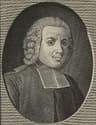
Jean-Baptiste Du Bos
modernFrench Enlightenment Aesthetics
Jean-Baptiste Du Bos (1670–1742) was a French author, diplomat, and aesthetician whose Réflexions critiques sur la poésie et la peinture (1719) pioneered an empirical, sentiment-based approach to art criticism. He argued that aesthetic judgment rests on feeling rather than rational rules, and emphasized the role of climate and historical context in shaping artistic genius.
1 argument
AestheticsTruth & Knowledge
JS
Jean-Michel Salanskis
contemporaryContinental Philosophy of Mathematics
Jean-Michel Salanskis is a contemporary French philosopher specializing in philosophy of mathematics, phenomenology, and the philosophy of logic. He has written extensively on Husserlian phenomenology, the foundations of mathematics, and the relationship between formal systems and continental thought.
1 argument
Truth & Knowledge
JS
Jean-Paul Sartre
contemporaryExistentialism
Jean-Paul Sartre (1905–1980) was a French existentialist philosopher, playwright, and novelist who became the central figure of 20th-century existentialism. His philosophy centered on radical human freedom, the primacy of existence over essence, and the burden of responsibility that accompanies absolute liberty. A public intellectual and political activist, he refused the Nobel Prize in Literature in 1964 and engaged extensively with Marxism in his later work.
1 argument
Virtue EthicsConsequentialism
JA
Jean-Robert Argand
modernPhilosophy of Mathematics
Jean-Robert Argand (1768–1822) was a French-Swiss amateur mathematician best known for his 1806 publication introducing the geometric representation of complex numbers now called the Argand diagram. His work contributed to the foundations of mathematics by giving imaginary numbers a concrete geometric interpretation, placing him within early philosophy of mathematics and debates over the reality of abstract mathematical objects.
1 argument
Modality & PossibilityTruth & Knowledge
JS
Jeff Speak
contemporaryAnalytic Philosophy
Jeff Speaks is a contemporary analytic philosopher whose work spans philosophy of language, metaphysics, and the theory of free will. He is known for arguing that debates over free will cannot be cleanly separated from broader metaphysical and ethical commitments. His research examines the structural entanglements between agency, responsibility, and foundational questions in ontology.
1 argument
Free Will & Foreknowledge
JB
Jeffrey Barrett
contemporaryAnalytic Philosophy, Philosophy of Physics
Jeffrey Barrett is a philosopher of physics at the University of California, Irvine, specializing in the foundations of quantum mechanics and the philosophy of science. He is best known for his systematic analysis of the quantum measurement problem and the many-worlds and many-minds interpretations of quantum theory. His work also spans confirmation theory, Bayesian reasoning, and the epistemology of physical theories.
1 argument
Natural Theology
JK
Jeffrey King
contemporaryAnalytic Philosophy, Consequentialism
Jeffrey King is a contemporary analytic philosopher whose work engages questions in metaethics and normative theory. His contributions include defending consequentialist positions on the nature of moral wrongness, situating him within the utilitarian tradition in contemporary moral philosophy.
1 argument
ConsequentialismTruth & Knowledge
JG
Jelle Gerbrandy
contemporaryAnalytic Philosophy / Dynamic Epistemic Logic
Jelle Gerbrandy is a contemporary Dutch logician and philosopher known for his work in dynamic epistemic logic and the formal semantics of belief revision. His dissertation on bisimulations and belief updates helped establish foundational frameworks for modeling knowledge change in multi-agent systems.
1 argument
SkepticismTruth & Knowledge
J
Jenkin
modernEarly Modern Christian Apologetics
Robert Jenkin (1656–1727) was an English theologian and Christian apologist associated with Cambridge. He is best known for his work 'The Reasonableness and Certainty of the Christian Religion' (1700), in which he engaged evidential and probabilistic reasoning in defense of Christian revelation. His arguments contributed to early modern discussions of epistemic standards for religious belief.
1 argument
Natural Theology
JH
Jennifer Hornsby
contemporaryAnalytic Philosophy
Jennifer Hornsby is a British analytic philosopher best known for her work in the philosophy of action and philosophy of mind. She developed an influential account of action that distinguishes bodily movements from the tryings or willings that cause them, arguing that actions are internal mental events. Her work also spans feminist philosophy of language, philosophy of speech acts, and metaphysics.
1 argument
Truth & Knowledge

Jennifer Lackey
contemporaryAnalytic Philosophy, Social Epistemology
Jennifer Lackey is a contemporary analytic philosopher and professor at Northwestern University specializing in epistemology, with particular emphasis on the epistemology of testimony and social epistemology. She is best known for challenging reductionist accounts of testimonial justification, arguing that testimony can generate new knowledge even under conditions that standard views would rule out. Her work has significantly shaped debates about the sources of epistemic justification and the social dimensions of knowledge.
1 argument
Truth & Knowledge
JM
Jennifer McKitrick
contemporaryAnalytic Philosophy
Jennifer McKitrick is a contemporary analytic philosopher at the University of Nebraska-Lincoln specializing in metaphysics, particularly the theory of dispositions and social ontology. She is best known for her book Dispositional Pluralism (2018), which argues that dispositions are a heterogeneous category unified by their role in counterfactual reasoning rather than by a single underlying essence. Her work bridges core analytic metaphysics and applied questions about gender, identity, and social construction.
1 argument
Moral ResponsibilityPersonal Identity
JS
Jennifer Saul
contemporaryAnalytic Philosophy, Feminist Philosophy
Jennifer Saul is a contemporary analytic philosopher specializing in philosophy of language, feminism, and implicit bias. She is known for her work on slurs, dogwhistles, and the ways language can be used to harm marginalized groups. Her research bridges formal semantics and social-political philosophy.
1 argument
Moral ResponsibilityConsciousness & Mind
JS
Jens Steffek
contemporaryInternational Relations Theory, Democratic Theory
Jens Steffek is a German political scientist and professor at Technische Universität Darmstadt specializing in international relations theory, global governance, and the democratic legitimacy of international organizations. His work examines how participatory and deliberative mechanisms can address legitimacy deficits in transnational institutions, with particular attention to the role of civil society in international governance.
1 argument
Democracy & Governance

Jeremy Butterfield
contemporaryAnalytic Philosophy, Philosophy of Physics
Jeremy Butterfield is a British philosopher of physics at Trinity College, Cambridge, known for foundational work on space, time, and mechanics. His research spans the interpretation of classical and quantum mechanics, reduction and emergence in physics, and the metaphysics of physical theories. He is one of the leading figures in contemporary philosophy of physics.
1 argument
Modality & PossibilityTruth & Knowledge
JG
Jeremy Goodman
contemporaryAnalytic Philosophy
Jeremy Goodman is a contemporary analytic philosopher specializing in philosophy of language, logic, and metaphysics. He is known for technical work on higher-order logic, the semantics of propositional attitude reports, and the metaphysics of propositions. His research examines the relationship between linguistic expressions and the entities they denote, including critical scrutiny of structured proposition theories.
1 argument
Philosophy of Language
JG
Jeremy Gray
contemporaryPhilosophy of Mathematics, Mathematical Formalism
Jeremy Gray (born 1947) is a British historian and philosopher of mathematics, emeritus professor at the Open University and honorary professor at the University of Warwick. He is best known for his historical studies of 19th- and early 20th-century mathematics, particularly the development of non-Euclidean and projective geometry, and for defending a formalist-historicist position on mathematical truth.
1 argument
Modality & PossibilityTruth & Knowledge
JG
Jeroen Groenendijk
contemporaryFormal Semantics / Dynamic Semantics
Jeroen Groenendijk is a Dutch logician and formal semanticist at the University of Amsterdam's Institute for Logic, Language and Computation (ILLC). He is best known for co-developing Dynamic Predicate Logic with Martin Stokhof, which models anaphoric relations and inter-sentential binding as dynamic updates to information states. His work bridges formal logic, linguistics, and the semantics of questions and discourse.
1 argument
Philosophy of LanguageModality & Possibility
JK
Jerrold Katz
contemporaryAnalytic Philosophy
Jerrold Katz (1932-2002) was an American philosopher and linguist known for his work in the philosophy of language, semantics, and metaphysics. He co-developed the Katz-Fodor semantic theory and later advanced a distinctive form of linguistic and mathematical platonism, arguing that abstract objects are the proper subject matter of these disciplines.
1 argument
SkepticismTruth & Knowledge
JH
Jerry Hobbs
contemporaryComputational Linguistics / Analytic Philosophy of Language
Jerry R. Hobbs is an American computational linguist and AI researcher known for his foundational work on discourse coherence, abductive reasoning in natural language understanding, and formal theories of commonsense knowledge. He spent much of his career at SRI International and later at USC's Information Sciences Institute, shaping the field of computational pragmatics.
1 argument
Philosophy of Language
JK
Jesper Kallestrup
contemporaryAnalytic Philosophy
Jesper Kallestrup is a contemporary analytic philosopher based at the University of Edinburgh, specializing in epistemology, philosophy of mind, and metaphysics. He is best known for his work on semantic and epistemic externalism, as well as the epistemology of testimony. His research examines how knowledge and mental content are shaped by factors external to the individual knower.
1 argument
Truth & Knowledge
J
Jesus
ancientSecond Temple Judaism; foundational to Christian theology and ethics
Jesus of Nazareth (c. 4 BCE–30 CE) was a Jewish preacher and teacher in Roman-occupied Judea whose ethical teachings, parables, and claimed resurrection became the theological and ethical foundation of Christianity. His sayings, preserved in the Synoptic Gospels, center on love of neighbor, forgiveness, and the coming Kingdom of God. Historically situated within Second Temple Judaism, he is regarded by Christians as the incarnate Son of God and by scholars as one of the most influential figures in the history of Western moral philosophy.
1 argument
SkepticismTruth & Knowledge
JQ
Jiang Qing
contemporaryNew Confucianism / Ruist Political Philosophy
Jiang Qing (born 1953) is a contemporary Chinese Confucian political philosopher and one of the leading figures of the New Confucian (Ruist) political thought movement. He is best known for developing a Confucian constitutionalist theory and for his work on classical Confucian texts, particularly his engagement with the Gongyang Commentary tradition.
1 argument
Moral ResponsibilityVirtue Ethics
JR
Joan Richards
contemporaryHistory and Philosophy of Mathematics
Joan Richards is a historian of mathematics and science at Brown University, best known for her work on the reception and philosophical interpretation of non-Euclidean geometry in Victorian England. Her research examines how mathematicians, philosophers, and the educated public grappled with the epistemological status of geometry as classical Euclidean assumptions were challenged. She contributes to debates in philosophy of mathematics concerning the nature of mathematical truth, convention, and empirical content.
1 argument
Modality & PossibilityTruth & Knowledge
JT
Joan Tronto
contemporaryFeminist Political Theory, Care Ethics
Joan Tronto is an American political theorist and feminist philosopher best known for developing a political theory of care ethics. Her landmark work *Moral Boundaries* (1993) argued that care should be understood not merely as a personal or domestic virtue but as a central political and moral practice. She has continued to expand care ethics into democratic theory, contending that how a society organizes care reveals its deepest political priorities.
1 argument
Moral ResponsibilityRights & Liberty
JF
Joel Feinberg
contemporaryAnalytic Philosophy
Joel Feinberg (1926–2004) was an American political and social philosopher best known for his work in philosophy of law, moral philosophy, and individual rights. His four-volume work 'The Moral Limits of the Criminal Law' is considered one of the most important contributions to legal philosophy in the 20th century.
1 argument
Moral ResponsibilityJustice & Punishment
JK
Joel Kupperman
contemporaryComparative Philosophy, Virtue Ethics
Joel Kupperman is an American philosopher at the University of Connecticut whose work spans ethics, character theory, and comparative philosophy. He is known for integrating classical Asian philosophical traditions—particularly Confucian ethics—with Western moral philosophy. His scholarship addresses the nature of character, happiness, and the foundations of ethical life across cultural traditions.
1 argument
Moral ResponsibilityVirtue Ethics
JC
Johann Christian Eschenbach
modernEarly Modern German Philosophy / Immaterialism
Johann Christian Eschenbach (1696–1761) was a German philosopher associated with early modern immaterialism who played a key role in introducing Berkeleyan idealism to German audiences. He argued that mental substance, both human and divine, offers the most rationally and practically defensible account of reality. His work bridged British empiricist idealism and German rationalist theology.
1 argument
Natural TheologyTruth & Knowledge

Johann Christoph Gottsched
modernGerman Enlightenment Rationalism
Johann Christoph Gottsched (1700-1766) was a German philosopher, critic, and literary theorist who played a central role in shaping early Enlightenment aesthetics in Germany. He championed neoclassical rationalism in literature, advocating adherence to classical rules derived from Aristotle and French classicism, and sought to reform German drama and language along rationalist lines.
1 argument
AestheticsTruth & Knowledge
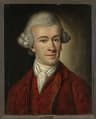
Johann Feder
modernGerman Enlightenment / Popularphilosophie
Johann Georg Heinrich Feder (1740–1821) was a German Enlightenment philosopher and professor at the University of Göttingen, best known as one of the earliest and most prominent critics of Kant's Critique of Pure Reason. He co-authored (with Christoph Garve) the controversial 1782 Göttingen review of the Critique, which accused Kant of a form of Berkeleyan idealism — a misreading Kant publicly repudiated. Feder worked in the tradition of German Popular Philosophy (Popularphilosophie), combining Lockean empiricism with practical, accessible treatments of logic, ethics, and metaphysics.
1 argument
PerceptionModality & Possibility
Johann Georg Heinrich Feder
modernGerman Empiricism
Johann Georg Heinrich Feder (1740–1821) was a German philosopher and professor at the University of Göttingen, best known as one of Kant's earliest and most prominent critics. A defender of Lockean empiricism and common-sense philosophy in the German tradition, he co-authored the influential Garve-Feder review of the Critique of Pure Reason (1782), which accused Kant of idealism akin to Berkeley's. His work shaped the early reception and critique of Kantian transcendental idealism.
1 argument
PerceptionModality & Possibility
Johann Heinrich Feder
modernPopularphilosophie (German Popular Philosophy), Empiricism
Johann Heinrich Feder (1740–1821) was a German philosopher and prominent representative of popular philosophy (Popularphilosophie) who taught at Göttingen. He is best known for his empiricist-leaning opposition to Kant's critical philosophy and for co-authoring the Göttingen review of the Critique of Pure Reason, which prompted Kant's Prolegomena.
1 argument
Natural TheologyTruth & Knowledge
Johann Heinrich Lambert
modernGerman Rationalism
Johann Heinrich Lambert was an 18th-century Swiss polymath who made significant contributions to mathematics, physics, astronomy, and philosophy. He is best known for proving the irrationality of π and for his work on the philosophy of mind and epistemology, including his correspondence with Kant on metaphysical method.
1 argument
Natural TheologyTruth & Knowledge

Johann Jacob Bodmer
modernSwiss-German Literary Criticism / Early Aesthetics
Johann Jacob Bodmer (1698-1783) was a Swiss author, critic, and literary theorist who championed imagination and the sublime in poetry against the rationalist strictures of Gottsched. Through his critical writings and translations, he helped introduce Milton and Shakespeare to German readers, influencing the development of German Romanticism and Sturm und Drang.
1 argument
AestheticsTruth & Knowledge
JJ
Johann Jacob Breitinger
modernEarly Modern Aesthetics / Swiss Enlightenment Literary Criticism
Johann Jacob Breitinger (1701–1776) was a Swiss philologist, literary critic, and theologian based in Zurich. Together with his collaborator Johann Jakob Bodmer, he challenged the rationalist neoclassicism of Gottsched and championed the role of imagination, the marvelous, and emotional force in poetry, helping lay the groundwork for German Romanticism and the Sturm und Drang movement.
1 argument
AestheticsTruth & Knowledge

Johann Joachim Winckelmann
modernNeoclassicism
Johann Joachim Winckelmann (1717–1768) was a German art historian and archaeologist widely regarded as the founder of modern art history and archaeology. His systematic study of Greek and Roman art established the discipline of art history and profoundly influenced the Neoclassical movement, arguing that the highest artistic achievement was found in ancient Greek sculpture.
1 argument
AestheticsTruth & Knowledge
JN
Johann Nicolaus Tetens
modern
1 argument
Moral ResponsibilityFree Will & Foreknowledge
J
Johansson
contemporaryAnalytic Philosophy, Formal Ontology
Ingvar Johansson is a contemporary Swedish philosopher specializing in formal ontology, philosophy of science, and the metaphysics of universals and relations. He is best known for his systematic work in applied ontology, contributing foundational frameworks used in biomedical and information ontology. His work bridges analytic metaphysics with practical ontological engineering.
1 argument
Modality & Possibility
JA
John Archibald Wheeler
contemporaryPhilosophy of Physics, Quantum Cosmology
John Archibald Wheeler (1911–2008) was an American theoretical physicist whose work bridged physics and philosophy of science. He coined the term 'black hole,' developed the Wheeler-DeWitt equation with Bryce DeWitt, and advanced the participatory universe thesis — the idea that observers play a constitutive role in bringing physical reality into being. His 'it from bit' doctrine proposed that information is the fundamental substrate of the universe.
1 argument
Modality & PossibilityCausation
JB
John Balguy
modernBritish Moral Rationalism
John Balguy (1686–1748) was an English clergyman and rationalist moral philosopher who argued that moral distinctions are grounded in reason rather than sentiment or feeling. A disciple of Samuel Clarke, he opposed the moral sense theories of Shaftesbury and Hutcheson, maintaining that virtue consists in conformity to eternal rational truths. He extended similar arguments to aesthetics, holding that beauty and excellence are objective features of things rather than projections of subjective pleasure.
1 argument
AestheticsVirtue Ethics
JB
John Barnden
contemporaryAnalytic Philosophy of Language / Computational Linguistics
John Barnden is a British researcher in artificial intelligence and computational linguistics, best known for his work on metaphor processing and natural language understanding. He has developed formal frameworks for reasoning about metaphorical language, exploring how figurative expressions can be handled systematically in AI systems. His work bridges cognitive science, linguistics, and knowledge representation.
1 argument
Philosophy of Language
JB
John Beatty
contemporaryAnalytic Philosophy of Science
John Beatty is a philosopher of biology at the University of British Columbia whose work centers on the conceptual foundations of evolutionary theory. He has critically examined the logical structure and explanatory status of natural selection, arguing that it functions more as a statistical summary than a causal law. His research spans the history of genetics, contingency in evolution, and the nature of biological explanation.
1 argument
SkepticismTruth & Knowledge
JB
John Bengson
contemporaryAnalytic Philosophy
John Bengson is a contemporary analytic philosopher at the University of Wisconsin–Madison whose work spans epistemology, the philosophy of mind, and metaethics. He is best known for his investigations into the nature of intuitions, understanding, and the evidential role of experience—including non-conceptual perceptual states. His research challenges strong intellectualist and conceptualist constraints on justification and knowledge.
1 argument
Perception
JB
John Boswell
contemporaryMedieval History and Historical Theology
John Boswell (1947–1994) was an American historian at Yale University who specialized in medieval European history and the history of Christianity. He is best known for his controversial scholarship on the historical relationship between the Catholic Church and homosexuality, arguing that early Christianity was far more tolerant of same-sex relations than later church teaching suggested. His work sparked significant debate among historians, theologians, and ethicists.
1 argument
Moral ResponsibilityBioethics
JB
John Burbidge
contemporaryHegelian Idealism
John Burbidge is a Canadian philosopher specializing in Hegel's logic and dialectical method. His work focuses on interpreting Hegelian dialectic as a dynamic process of conceptual development, particularly how contradiction functions as a productive rather than merely destructive force in reasoning. He taught for many years at Trent University and has contributed significantly to Anglophone reception of Hegel's Science of Logic.
1 argument
Modality & PossibilityTruth & Knowledge
JB
John Burgess
contemporaryAnalytic Philosophy
John P. Burgess is a contemporary American philosopher at Princeton University, specializing in philosophy of mathematics, logic, and philosophy of language. He is known for his critical engagement with mathematical nominalism and his technical work on modal logic and the foundations of mathematics. His writings span from formal logic to the metaphysics of abstract objects.
1 argument
Modality & Possibility
JB
John Buridan
medievalScholasticism, Nominalism
John Buridan (c. 1301–c. 1360) was a French scholastic philosopher and logician at the University of Paris, where he served twice as rector. A nominalist in the tradition of Ockham, he made foundational contributions to logic, natural philosophy, and the theory of mind, and is widely regarded as one of the most rigorous and influential thinkers of the fourteenth century.
1 argument
Philosophy of Language
JB
John Byl
contemporaryReformed Theology / Christian Philosophy of Science
John Byl is a Canadian mathematician and astronomer who has written extensively on the relationship between Christian theology and natural science. A professor of mathematics at Trinity Western University, he is known for defending Young Earth Creationism from a Reformed theological perspective and for philosophical critiques of secular cosmological models. His work examines the foundations of physics and cosmology through a Christian worldview, arguing that divine agency is irreducible in any adequate account of the universe.
1 argument
Natural TheologyCausation
JC
John Caputo
contemporaryContinental Philosophy, Radical Hermeneutics, Postmodern Theology
John D. Caputo (b. 1940) is an American philosopher known for developing 'radical hermeneutics,' a synthesis of Heideggerian phenomenology and Derridean deconstruction applied to questions of meaning, truth, and religion. He is a leading figure in continental philosophy of religion, best known for his 'weak theology' or theopoetics, which reframes God not as sovereign power but as an unconditional call or event. His work has significantly shaped postmodern religious thought and the reception of deconstruction in Anglo-American philosophy.
1 argument
SkepticismTruth & Knowledge
JD
John D. Norton
contemporaryAnalytic Philosophy of Science
John D. Norton is a philosopher of science at the University of Pittsburgh, known for foundational work on scientific reasoning, the history of relativity, and the philosophy of thermodynamics. He developed the material theory of induction, which holds that inductive inferences are warranted by local material facts rather than universal formal schemas. He is also a leading critic of information-theoretic resolutions to Maxwell's Demon, particularly Landauer's principle.
1 argument
Causation
JD
John Darley
contemporaryChinese Philosophy, Confucian Ethics
John Darley is a contemporary philosopher working in the area of Chinese philosophy and Confucian ethics. His scholarship engages the classical debate between Mencius and Xunzi over human nature, with particular attention to how interpretive frameworks such as the water-metaphor view shape the force of these competing arguments.
1 argument
Moral ResponsibilityVirtue Ethics

John Dewey
modernPragmatism / Instrumentalism
John Dewey (1859–1952) was an American philosopher, psychologist, and educational reformer widely regarded as the foremost exponent of pragmatism in the twentieth century. He developed instrumentalism, a theory holding that ideas are tools for solving practical problems, and argued that inquiry, democracy, and education are deeply interconnected. His prolific output reshaped American philosophy, pedagogy, and public intellectual life.
1 argument
SkepticismTruth & Knowledge
JD
John Doris
contemporaryAnalytic Philosophy, Moral Psychology
John Doris is a contemporary philosopher known for his work at the intersection of moral psychology, ethics, and empirical science. He is best known for his situationist critique of character-based virtue ethics, arguing that empirical psychology undermines the existence of robust character traits as traditionally conceived.
1 argument
Moral ResponsibilityVirtue Ethics
JD
John Dryzek
contemporaryDeliberative Democracy, Critical Theory
John Dryzek is a contemporary political theorist known for his foundational work in deliberative democracy and ecological rationality. He has made major contributions to democratic theory, environmental politics, and the study of discourse in political systems. His work bridges normative democratic theory with empirical analysis of how deliberation functions across scales, including global governance.
1 argument
Democracy & Governance
JE
John Eccles
contemporaryDualist Philosophy of Mind
Sir John Eccles (1903-1997) was an Australian neurophysiologist and Nobel laureate who made foundational discoveries about synaptic transmission in the central nervous system. Later in his career, he became a prominent defender of mind-body dualism, arguing that consciousness cannot be reduced to brain activity and collaborating with philosopher Karl Popper on the influential work 'The Self and Its Brain'.
1 argument
Consciousness & Mind
JF
John Findlay
contemporaryAnalytic Philosophy, British Idealism, Phenomenology
John Niemeyer Findlay (1903–1987) was a South African-born British philosopher who taught at the Universities of Natal, Otago, King's College London, Yale, and Boston University. He is best known for his 1948 argument that God's existence is logically impossible (later retracted), his influential studies of Hegel and Meinong, and contributions to axiology, phenomenology, and tense logic.
1 argument
Modality & PossibilityFree Will & Foreknowledge
JF
John Foley
contemporaryExistentialism / Absurdism
John Foley is a contemporary philosopher working within the tradition of existentialist and absurdist thought. His work engages with the logical implications of Camusian absurdism, particularly the question of how an absurdist framework bears on the value of life itself. His arguments press absurdism toward coherent normative commitments it might otherwise resist.
1 argument
Virtue EthicsConsequentialism
JG
John G. Kemeny
contemporaryAnalytic Philosophy of Science
John G. Kemeny (1926-1992) was a Hungarian-American mathematician, computer scientist, and philosopher of science best known for co-developing the BASIC programming language and serving as president of Dartmouth College. His philosophical work focused on the logic of induction, probability theory, and the philosophy of science, including influential contributions to confirmation theory.
1 argument
Truth & Knowledge
JG
John Gill
contemporaryAnalytic Philosophy
John Gill is a contemporary philosopher working on the intersection of logic, epistemology, and philosophy of mathematics. His work examines foundational tensions in how logical knowledge is acquired and justified, particularly regarding the status of a priori knowledge in relation to computational and cognitive processes.
1 argument
SkepticismTruth & Knowledge
JH
John H. Gillespie
contemporaryPhilosophy of Biology
John H. Gillespie is a population geneticist and philosopher of biology, best known for his theoretical work on molecular evolution and the genetic basis of natural selection. He has challenged orthodox neo-Darwinian assumptions by arguing that genetic drift and episodic selection play a larger role in molecular evolution than the Modern Synthesis acknowledges. His work occupies the boundary between formal evolutionary theory and the philosophy of science.
1 argument
SkepticismTruth & Knowledge
JH
John Hardwig
contemporaryAnalytic Philosophy
John Hardwig is a contemporary American philosopher whose work spans epistemology and bioethics. In epistemology, he is best known for arguing that epistemic dependence on others is fundamental to rational belief, particularly that laypeople are often rationally justified in deferring to expert testimony they cannot independently verify. He also made significant contributions to bioethics, most notably through his controversial argument that individuals may have a duty to die to avoid burdening their families.
1 argument
Truth & Knowledge
JH
John Hawthorne
contemporaryAnalytic Philosophy
John Hawthorne (born 1964) is an analytic philosopher known for influential work in epistemology and metaphysics. He is particularly recognized for his treatment of the lottery paradox and his defense of epistemic invariantism. He has held positions at Rutgers, Oxford, and the University of Southern California.
1 argument
Natural Theology
JH
John Hick
contemporaryPhilosophy of Religion, Religious Pluralism
John Hick (1922–2012) was a British philosopher of religion who became one of the most influential advocates of religious pluralism in the twentieth century. He argued that the great world religions represent different culturally conditioned responses to the same ultimate transcendent reality, which he called 'the Real.' His work spans epistemology of religious belief, theodicy, and the theology of religions.
1 argument
Religious Experience
JH
John Horty
contemporaryAnalytic Philosophy
John Horty is an American philosopher and Professor at the University of Maryland, College Park, specializing in philosophical logic, deontic logic, and the logic of practical reasoning. He is known for his work on default logic, precedent in legal reasoning, and agency in branching-time frameworks.
1 argument
SkepticismTruth & Knowledge

John Jenkins
contemporaryScholasticism, Thomism
John Jenkins is a contemporary American philosopher and Catholic priest who serves as president of the University of Notre Dame. He specializes in medieval philosophy, particularly the epistemology and ethics of Thomas Aquinas, and has contributed to scholarship on the relationship between faith and reason.
1 argument
SkepticismTruth & Knowledge
JK
John Kagel
contemporaryExperimental Economics
John Kagel is an American experimental economist known for his foundational work in experimental and behavioral economics. His research spans auction theory, game theory, and bounded rationality, with notable contributions to understanding how real agents deviate from theoretical predictions in strategic settings.
1 argument
SkepticismTruth & Knowledge
JK
John Knoblock
contemporarySinology, Confucian Studies
John Knoblock was an American sinologist and scholar of classical Chinese philosophy, best known for his landmark multi-volume English translation and study of the Xunzi. His work brought rigorous philological and philosophical analysis to one of the most systematic thinkers of the Confucian tradition, making Xunzi's arguments about human nature, ritual, and moral cultivation accessible to Western scholars.
1 argument
Moral ResponsibilityVirtue Ethics
JK
John Krebs
contemporaryAnalytic Philosophy, Philosophy of Language
John Krebs is a contemporary philosopher working in the philosophy of language and linguistics. His work engages with questions of language learnability and the logical problem of language acquisition, examining constraints on what grammars can be learned from available linguistic input.
1 argument
SkepticismPhilosophy of Language
JL
John L. Bell
contemporaryAnalytic Philosophy of Mathematics
John L. Bell is a Canadian philosopher and mathematician, Professor Emeritus at the University of Western Ontario, known for his influential work in mathematical logic, category theory, and the foundations of mathematics. He has made significant contributions to intuitionistic logic, smooth infinitesimal analysis, and the philosophy of the continuum.
1 argument
Truth & Knowledge
JL
John Ledyard
contemporaryMechanism Design / Public Choice Theory
John Ledyard is an economist and social scientist at the California Institute of Technology, renowned for foundational contributions to mechanism design, public goods theory, and market design. His work examines how institutional rules and incentive structures shape the provision of public goods and collective decision-making. He is a leading figure in experimental economics and the design of combinatorial auctions.
1 argument
Democracy & GovernanceSocial Contract
JL
John Leslie
contemporaryAnalytic Philosophy, Philosophy of Cosmology
John Leslie (born 1940) is a Canadian philosopher and emeritus professor at the University of Guelph, best known for his work on cosmological fine-tuning, the anthropic principle, and axiarchism. He has written extensively on why the universe exists and why its constants appear life-permitting, arguing that ethical requirements—not mere chance—may explain cosmic structure. His probabilistic approach to teleological reasoning has made him a central figure in philosophy of cosmology.
1 argument
Natural Theology
JL
John Lumsden
contemporaryPhilosophy of Language, Generative Linguistics
John Lumsden is a contemporary philosopher of language and linguist working within the generative tradition. He has contributed to debates on language learnability, focusing on whether natural language grammars can be acquired from primary linguistic data alone. His work engages with poverty-of-the-stimulus arguments and their implications for nativist theories of language acquisition.
1 argument
SkepticismPhilosophy of Language
JM
John Marshall
modernAmerican Constitutional Jurisprudence
John Marshall (1755–1835) served as the fourth Chief Justice of the United States and is widely regarded as the most influential jurist in American constitutional history. His opinions established foundational doctrines of judicial review, federal supremacy, and broad constitutional construction that continue to govern American law. Marshall transformed the Supreme Court into a co-equal branch of government and shaped constitutional interpretation for generations.
1 argument
Rights & LibertyDemocracy & Governance
JM
John Martin Fischer
contemporaryAnalytic Philosophy
John Martin Fischer is a contemporary American philosopher at the University of California, Riverside, specializing in free will, moral responsibility, and philosophy of religion. He is best known for developing semicompatibilism, the view that moral responsibility is compatible with determinism even if free will is not. His work has significantly shaped contemporary debates on Frankfurt cases, reasons-responsiveness, and the relationship between free will and ethics.
1 argument
Free Will & Foreknowledge
JM
John Maynard Keynes
modernAnalytic Philosophy, British Empiricism
John Maynard Keynes (1883–1946) was a British economist and philosopher whose 'A Treatise on Probability' (1921) made foundational contributions to the logical theory of probability and inductive reasoning. He argued that probability relations are objective logical relationships between propositions, not merely subjective degrees of belief. Though best known for revolutionizing macroeconomics, his philosophical work on induction and analogy remains influential in epistemology and philosophy of science.
1 argument
Philosophy of LanguageTruth & Knowledge
JM
John McPeck
contemporaryPhilosophy of Education, Analytic Philosophy
John McPeck is a philosopher of education best known for his subject-specificity thesis regarding critical thinking, developed in his influential 1981 work Critical Thinking and Education. He argued that critical thinking is always thinking about something within a specific domain, and therefore cannot meaningfully exist as a general, transferable cognitive skill. His position sparked sustained debate in philosophy of education about whether critical thinking can or should be taught as a standalone subject.
1 argument
SkepticismTruth & Knowledge
JM
John McTaggart Ellis McTaggart
modernBritish Idealism
John McTaggart Ellis McTaggart (1866-1925) was a British idealist philosopher and Cambridge fellow best known for his metaphysical system arguing for the unreality of time and for a personalist absolute idealism. Influenced by Hegel, he developed an atheistic yet spiritualist metaphysics in which reality consists of a community of immortal, loving selves, denying the existence of God while affirming personal immortality.
1 argument
Natural TheologyTruth & Knowledge
JM
John Mikhail
contemporaryAnalytic Philosophy, Moral Psychology, Legal Theory
John Mikhail is a contemporary legal theorist and philosopher at Georgetown University Law Center known for applying cognitive science to moral and legal judgment. He developed the theory of 'universal moral grammar,' drawing on Chomskyan linguistics to argue that humans possess an innate faculty for moral cognition that underlies cross-cultural moral intuitions. His work bridges analytic philosophy, cognitive science, and jurisprudence, with additional contributions to comparative moral philosophy.
1 argument
Moral ResponsibilityVirtue Ethics
JM
John Milnor
contemporaryMathematical Logic and Topology
John Milnor is an American mathematician renowned for his work in differential topology, K-theory, and dynamical systems. He is best known for discovering exotic smooth structures on the 7-sphere, a breakthrough that opened entirely new areas of geometric topology.
1 argument
Philosophy of LanguageTruth & Knowledge
JM
John Milton
modernEnglish Republicanism / Christian Humanism
John Milton (1608-1674) was an English poet, polemicist, and civil servant best known for the epic poem Paradise Lost. Beyond his literary achievements, he wrote influential prose defending free speech, religious liberty, and republican government during the English Civil War and Interregnum.
1 argument
AestheticsTruth & Knowledge
JN
John Norris
modernChristian Platonism / Cartesian Rationalism
John Norris (1657-1712) was an English philosopher, theologian, and Anglican clergyman, best known as the leading English disciple of Nicolas Malebranche. He developed a Christian Platonist metaphysics that combined Cartesian rationalism with occasionalism, arguing that we see all things in God.
1 argument
Natural TheologyTruth & Knowledge
JO
John O'Malley
contemporaryCatholic Theology, Jesuit Scholarship, Church History
John W. O'Malley (1927–2022) was an American Jesuit priest, historian, and theologian widely regarded as one of the foremost scholars of early modern Catholicism and church reform. He is best known for his landmark study of the Second Vatican Council and his extensive research on the Society of Jesus, the Council of Trent, and the history of Catholic preaching. His scholarship bridged historical inquiry and theological reflection, illuminating how the Church has navigated moral and doctrinal complexity across centuries.
1 argument
Forgiveness & MercyProblem of Evil
JP
John Perry
contemporaryAnalytic Philosophy
John Perry (born 1943) is an American analytic philosopher at Stanford University, renowned for his contributions to philosophy of language, personal identity, and the theory of indexicals. He is best known for his analysis of essential indexicals and self-locating belief, as well as his influential work on Russellian singular propositions and their relationship to possible worlds semantics.
1 argument
Modality & PossibilityTruth & Knowledge

John Polkinghorne
contemporaryScience-Theology Dialogue, Anglican Theology
John Polkinghorne (1930–2021) was a British physicist and Anglican priest who became one of the leading figures in the science-religion dialogue. After a distinguished career as a particle physicist at Cambridge—contributing to the development of quark theory—he resigned his professorship to be ordained as an Anglican clergyman, subsequently writing prolifically on the compatibility and mutual illumination of scientific and theological inquiry. His theological work centered on 'critical realism,' divine action through quantum indeterminacy, and eschatology informed by physics.
1 argument
Natural TheologyCausation
JQ
John Quiggin
contemporaryHeterodox Economics / Decision Theory
John Quiggin is an Australian economist and public policy analyst known for his work on decision theory, risk, and heterodox economics. He is a laureate fellow at the University of Queensland and has contributed influential critiques of neoliberal economic thinking, most notably in his book Zombie Economics.
1 argument
SkepticismTruth & Knowledge
John Robert Ross
contemporaryGenerative Linguistics / Philosophy of Language
John Robert 'Haj' Ross is an American linguist known for his influential work in generative syntax and semantics. His 1967 MIT dissertation introduced key syntactic constraints that shaped transformational grammar, and he has also contributed to philosophy of language debates concerning linguistic ontology.
1 argument
SkepticismTruth & Knowledge
JR
John Roberts
contemporaryAnalytic Philosophy, Philosophy of Science
John Roberts is a contemporary philosopher of science whose work addresses probabilistic reasoning, laws of nature, and the epistemology of physical constants. His contributions engage Bayesian methodology as applied to physical and metaphysical questions, including the evidential weight of background assumptions in probabilistic arguments.
1 argument
Natural Theology
JS
John Scotus Eriugena
medievalChristian Neoplatonism
John Scotus Eriugena (c. 815–877) was an Irish theologian, philosopher, and poet active in the Carolingian court, renowned as the most significant philosopher of the early medieval period in Western Europe. He synthesized Neoplatonic thought with Christian theology, translating the Pseudo-Dionysian corpus into Latin and developing a sophisticated philosophical system centered on the nature of God and creation. His major work, Periphyseon (De Divisione Naturae), presents an ambitious division of all reality into four natures and anticipates later idealist traditions.
1 argument
Divine Attributes
JS
John Shepherdson
contemporaryMathematical Logic
John C. Shepherdson (1926–2015) was a British mathematician and logician at the University of Bristol, best known for foundational contributions to computability theory. He co-developed the Unlimited Register Machine (URM) model and wrote critically on the epistemological status of Church's Thesis, arguing that it admits no formal mathematical proof.
1 argument
SkepticismTruth & Knowledge
JS
John Stewart Bell
contemporaryPhilosophy of Physics
John Stewart Bell (1928–1990) was a Northern Irish physicist and philosopher of physics whose foundational work on quantum mechanics reshaped debates about locality, realism, and hidden variable theories. Best known for Bell's theorem and the associated inequalities, he demonstrated that no local hidden variable theory can reproduce all the predictions of quantum mechanics. His work transformed abstract philosophical questions about the EPR paradox into empirically testable claims.
1 argument
Natural Theology
JT
John Turri
contemporaryAnalytic Philosophy, Experimental Epistemology
John Turri is a contemporary analytic philosopher at the University of Waterloo specializing in epistemology, the theory of knowledge, and epistemic norms. He is known for extensive work on the knowledge norm of assertion, virtue epistemology, and experimental philosophy. His research bridges traditional conceptual analysis with empirical methods to investigate how ordinary people reason about knowledge and justification.
1 argument
SkepticismTruth & Knowledge
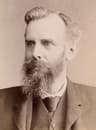
John Venn
modernBritish Empiricism / Symbolic Logic
John Venn (1834–1923) was a British logician, mathematician, and philosopher at Cambridge University best known for formalizing the diagrammatic representation of set relations now called Venn diagrams. He made foundational contributions to probability theory and symbolic logic, developing a frequentist interpretation of probability that grounded it in observed relative frequencies rather than degrees of belief. His work bridged Victorian-era mathematical logic and empiricist philosophy of science.
1 argument
Natural Theology

John Wallis
modernEarly Modern Philosophy, Reformed Scholasticism
John Wallis (1616–1703) was an English mathematician, logician, and theologian whose work bridged early modern mathematics and philosophical theology. He made foundational contributions to infinitesimal calculus and symbolic algebra, and engaged with debates in modal and temporal logic as part of his broader theological interests. As a ordained minister and Savilian Professor of Geometry at Oxford, he occupied an unusual position at the intersection of mathematical rigor and scholastic metaphysics.
1 argument
Modality & PossibilityFree Will & Foreknowledge

John Wheeler
contemporaryTheoretical Physics / Philosophy of Physics
John Archibald Wheeler (1911-2008) was an American theoretical physicist who made foundational contributions to general relativity, quantum gravity, and nuclear physics. He coined the terms 'black hole,' 'wormhole,' and 'quantum foam,' and developed the participatory anthropic principle and the 'it from bit' doctrine relating information to physical reality.
1 argument
Modality & PossibilityCausation
JW
John Winnie
contemporaryAnalytic Philosophy of Science
John A. Winnie is a contemporary philosopher of science best known for his work on the conventionality of simultaneity and the foundations of special relativity. His technical contributions clarified how spacetime structure and measurement conventions can be disentangled, influencing debates on the epistemology of physics.
1 argument
Modality & PossibilityCausation
JW
John Worrall
contemporaryPhilosophy of Science, Structural Realism
John Worrall is a British philosopher of science at the London School of Economics, best known for reviving structural realism as a middle position between scientific realism and anti-realism. A student of Imre Lakatos, he argues that science tracks the structural relations of the world rather than its intrinsic nature, offering a response to both the no-miracles argument and the pessimistic meta-induction. His work spans scientific change, theory succession, and the epistemology of evidence.
1 argument
Modality & PossibilityTruth & Knowledge
JS
Joke Spruyt
contemporaryHistory of Medieval Philosophy
Joke Spruyt is a contemporary Dutch historian of philosophy specializing in medieval logic, semantics, and metaphysics. She has contributed significantly to the study of Boethius's logical writings and their reception in later scholastic thought, with particular attention to theories of predicables, universals, and the structure of genus and species. Her work bridges late ancient and medieval philosophical traditions, tracing conceptual continuities across the Boethian transmission.
1 argument
Philosophy of Language
Jon Elster
contemporaryAnalytic Philosophy, Philosophy of Social Science
Jon Elster (born 1940) is a Norwegian philosopher and social scientist known for his analytical approach to social theory, rational choice, and the philosophy of social science. He has made foundational contributions to our understanding of rationality, self-binding, adaptive preferences, and the role of emotions in social life. His work bridges analytic philosophy, political theory, and the social sciences.
1 argument
Moral ResponsibilityConsciousness & Mind
JS
Jon Stewart
contemporaryContinental Philosophy, German Idealism
Jon Stewart is a contemporary philosopher and historian of philosophy specializing in German Idealism, particularly the works of Hegel and Kierkegaard. He has produced influential scholarship reassessing the relationship between Hegel's dialectical philosophy and later existentialist thought, arguing against entrenched misreadings of both thinkers. His work centers on questions of self-consciousness, recognition, and the dialectical mediation of oppositions between self and other.
1 argument
Modality & PossibilityTruth & Knowledge
JW
Jon Williamson
contemporaryAnalytic Philosophy
Jon Williamson is a contemporary British philosopher specializing in the philosophy of science, formal epistemology, and the foundations of probability and causality. He is best known for developing and defending Objective Bayesianism, a theory of rational degrees of belief constrained by evidence, logic, and equivocation. He has also made significant contributions to theories of causal inference, particularly in the philosophy of medicine and the epistemology of causality.
1 argument
Truth & Knowledge
JO
Jonas Olson
contemporaryAnalytic Philosophy, Moral Error Theory
Jonas Olson is a contemporary Swedish philosopher based at Stockholm University, specializing in metaethics and moral philosophy. He is best known for defending and developing moral error theory in the tradition of J.L. Mackie, arguing that moral discourse involves systematic false presuppositions about the existence of objective moral facts. His work engages seriously with both naturalistic and non-naturalistic forms of moral realism before rejecting them.
1 argument
ConsequentialismTruth & Knowledge
JT
Jonas Tallberg
contemporaryInternational Relations / Global Governance
Jonas Tallberg is a Swedish political scientist and professor at Stockholm University specializing in international relations and global governance. His scholarship examines legitimacy, transnational access, and democratic participation in international organizations. He is a leading voice on how procedural reforms can enhance the accountability and effectiveness of multilateral institutions.
1 argument
Democracy & Governance
JA
Jonathan Anomaly
contemporaryAnalytic Philosophy
Jonathan Anomaly is a contemporary philosopher and political economist whose work spans public goods theory, collective action problems, and bioethics. He is affiliated with Duke University's Philosophy, Politics, and Economics program and has written extensively on genetic enhancement, vaccination policy, and the ethics of liberal eugenics. His interdisciplinary approach bridges analytic philosophy, economics, and applied ethics.
1 argument
Democracy & GovernanceSocial Contract
JB
Jonathan Barnes
contemporaryAnalytic Philosophy / Classical Studies
Jonathan Barnes (born 1942) is a British philosopher and classicist specializing in ancient Greek and Roman philosophy, logic, and epistemology. He is best known for his landmark translations and commentaries on Aristotle's logical and scientific works, and for his influential studies of Presocratic thought and Hellenistic philosophy. He taught at Oxford for many years before holding a chair at the University of Paris-Sorbonne.
1 argument
Philosophy of Language
JD
Jonathan Dancy
contemporaryAnalytic Philosophy
Jonathan Dancy (born 1946) is a British analytic philosopher best known for developing and defending moral particularism, the view that features which count as reasons for action in one case may fail to do so—or even count against—in another. He has also contributed to epistemology, particularly on intuitionism and the theory of perception. He has held positions at the University of Keele, the University of Reading, and the University of Texas at Austin.
1 argument
SkepticismTruth & Knowledge
JE
Jonathan Edwards
modernReformed Theology / Puritan Philosophy
Jonathan Edwards (1703–1758) was an American Puritan theologian, philosopher, and revivalist preacher widely regarded as one of the most intellectually rigorous thinkers in colonial America. He synthesized Calvinist theology with Lockean empiricism and Newtonian science, producing a distinctive Reformed metaphysics. His work on free will, original sin, and religious affections remains influential in both theology and philosophy of religion.
1 argument
Free Will & Foreknowledge
JH
Jonathan Haidt
contemporaryMoral Psychology / Empirical Ethics
Jonathan Haidt (born 1963) is an American social psychologist and professor at NYU's Stern School of Business, known for his empirical research on moral psychology and political polarization. He developed Social Intuitionist theory, arguing that moral judgments arise from rapid intuition rather than deliberate reasoning, and co-developed Moral Foundations Theory, which identifies six innate psychological systems underlying human morality across cultures. His work bridges evolutionary psychology, philosophy, and political science.
1 argument
Moral ResponsibilityVirtue Ethics
JK
Jonathan Kuyper
contemporaryAnalytic Political Philosophy, Cosmopolitan Democratic Theory
Jonathan Kuyper is a contemporary political philosopher working in the area of global governance and democratic theory. His work examines how democratic principles and procedures can be applied to international institutions, addressing questions of legitimacy, accountability, and representation in global political arrangements. He engages with debates in cosmopolitan political theory regarding the reform of international organizations.
1 argument
Democracy & Governance
JK
Jonathan Kvanvig
contemporaryAnalytic Philosophy
Jonathan Kvanvig is a contemporary American analytic philosopher working primarily in epistemology and philosophy of religion. He is best known for his influential work on the value of knowledge, the epistemology of understanding, and Christian eschatology. He has held positions at Texas A&M University, Baylor University, and Washington University in St. Louis.
1 argument
Perception
JW
Jonathan Weisberg
contemporaryAnalytic Philosophy, Formal Epistemology
Jonathan Weisberg is a contemporary analytic philosopher at the University of Toronto specializing in formal epistemology and Bayesian reasoning. He is known for his work on probability, confirmation theory, and the epistemology of self-locating belief. His research addresses foundational questions about how evidence should update rational credences.
1 argument
Natural Theology
JZ
Jonathan Zvesper
contemporaryAnalytic Philosophy / Epistemic Game Theory
Jonathan Zvesper is a contemporary philosopher and game theorist known for his work on epistemic game theory, particularly the analysis of rationality, belief revision, and plausibility orderings in extensive-form games. His research bridges formal epistemology and decision theory, examining how players update beliefs during sequential play.
1 argument
SkepticismTruth & Knowledge
J
Jonsson
contemporaryAnalytic Philosophy
Jonsson is a contemporary philosopher whose work engages with modal logic and the logic of future contingents. Their contributions focus on the formal analysis of temporal and alethic modalities, particularly challenging standard assumptions in the logic of future contingency.
1 argument
Modality & PossibilityFree Will & Foreknowledge
JL
Joop Leo
contemporaryAnalytic Metaphysics
Joop Leo is a contemporary analytic philosopher working primarily in metaphysics, with a focus on the ontology of relations and trope theory. His work examines whether relational tropes can adequately account for the structure of relational facts, arguing by analogy to test the limits of trope-based ontologies.
1 argument
Modality & PossibilityTruth & Knowledge
JH
Jordan Howard Sobel
contemporaryAnalytic Philosophy
Jordan Howard Sobel was a Canadian analytic philosopher at the University of Toronto best known for his rigorous formal analysis of theistic arguments. His magnum opus, Logic and Theism (2004), offers a comprehensive logical examination of arguments for and against God's existence. He also made significant contributions to deontic logic, decision theory, and the formal analysis of conditional obligations.
1 argument
Moral ResponsibilityJustice & Punishment
J&
Jorde & Wooding
contemporaryPhilosophy of Biology / Empirical Genetics
Lynn Jorde and Stephen Wooding are human geneticists whose collaborative work has examined genetic variation across human populations and its implications for understanding race, ancestry, and disease. Their research engages philosophical debates about biological classification by bringing empirical population genetics to bear on contested concepts of human difference. They are particularly known for contributions to the scientific literature on what genetic data can and cannot support regarding traditional racial categories.
1 argument
BioethicsTruth & Knowledge
JC
Joseph Chan
contemporaryConfucian Political Philosophy
Joseph Chan is a contemporary political philosopher at the University of Hong Kong specializing in Confucian political theory and its relationship to liberalism and democracy. He is best known for developing a systematic account of Confucian perfectionism, arguing that classical Confucian ideals of moral cultivation and virtuous governance can be reconciled with modern institutional concerns. His work engages closely with classical texts, particularly the competing anthropologies of Mencius and Xunzi.
1 argument
Moral ResponsibilityVirtue Ethics
JL
Joseph Levine
contemporaryAnalytic Philosophy of Mind
Joseph Levine is a contemporary American philosopher of mind best known for articulating the 'explanatory gap' between physical processes and phenomenal consciousness. His work challenges physicalist accounts by arguing that even complete physical explanations leave the qualitative character of experience unexplained.
1 argument
Consciousness & Mind

Joseph Liouville
modernClassical Mathematics and Mathematical Physics
Joseph Liouville (1809–1882) was a French mathematician whose work spanned analysis, number theory, and mathematical physics. He is best known for Liouville's theorem in Hamiltonian mechanics, which establishes the conservation of phase-space volume, and for founding the influential Journal de Mathématiques Pures et Appliquées. His contributions to mathematical physics provided foundational tools later applied in thermodynamics and statistical mechanics.
1 argument
Causation

Joseph Margolis
contemporaryAmerican Pragmatism
Joseph Margolis (1924–2021) was an American philosopher and longtime professor at Temple University, best known for his work in aesthetics, philosophy of art, and cultural ontology. He developed a distinctive position called 'robust relativism,' arguing that interpretive judgments in art and culture can be many-valued without collapsing into subjectivism. His later work synthesized American pragmatism with continental themes to address questions of selfhood, history, and the human sciences.
1 argument
Modality & PossibilityTruth & Knowledge
JM
Joseph Melia
contemporaryAnalytic Philosophy
Joseph Melia is a contemporary British analytic philosopher based at the University of Leeds, working primarily in metaphysics and philosophy of mathematics. He is best known for developing the 'weaseling' strategy, which argues that scientists can appeal to mathematical entities in their theories without incurring ontological commitment to them. His work spans truthmaking, modality, and the metaphysics of negative truths.
1 argument
Truth & Knowledge

Joseph Priestley
modernRational Dissent / Empiricism
Joseph Priestley (1733–1804) was an English chemist, theologian, and philosopher associated with Rational Dissent and Unitarianism. He made foundational contributions to experimental chemistry, most notably the isolation of oxygen, while also producing substantial work in rhetoric, metaphysics, and natural philosophy. A political radical and defender of religious liberty, he synthesized Enlightenment empiricism with dissenting Protestant theology.
1 argument
Philosophy of LanguageTruth & Knowledge
JS
Joseph Schumpeter
modernPolitical Economy, Austrian Economics
Joseph Schumpeter (1883–1950) was an Austrian-American economist and political scientist whose work bridged economics, sociology, and political philosophy. He is best known for theorizing capitalism's self-transforming nature through 'creative destruction' and for his analysis of democracy as a competitive elite process. His later work engaged directly with questions of political legitimacy, institutional design, and the long-term viability of capitalist democracy.
1 argument
Democracy & Governance
JS
Joseph Shieber
contemporaryAnalytic Philosophy, Social Epistemology
Joseph Shieber is a contemporary analytic philosopher and professor at Lafayette College whose work focuses on social epistemology, the epistemology of testimony, and the nature of knowledge transmission. He is the author of 'Testimony: A Philosophical Introduction' and has contributed significantly to debates about how beliefs and justification propagate through chains of testimony. His work examines the normative conditions under which testimony generates knowledge or justified belief.
1 argument
Truth & Knowledge

Joseph Smith
modernLatter-day Saint Theology
Joseph Smith (1805–1844) was an American religious leader and founder of the Latter-day Saint movement, whose theological innovations included a rejection of creatio ex nihilo in favor of a cosmology in which God organizes eternal, pre-existing matter. His revelatory writings—including the Book of Mormon, Doctrine and Covenants, and the King Follett discourse—established a metaphysical framework that diverged sharply from mainline Christian ontology. Smith's theology has attracted growing scholarly attention for its originality regarding the nature of God, matter, and human deification.
1 argument
Natural TheologyCausation

Joseph Stalin
modernMarxism-Leninism
Joseph Stalin (1878–1953) was the Soviet leader who also functioned as the authoritative interpreter of Marxist-Leninist philosophy during his rule. His theoretical writings, particularly 'Dialectical and Historical Materialism' (1938), codified Soviet Marxism as official state doctrine and shaped decades of communist philosophical education. Though not a trained philosopher, his interventions in debates about linguistics, economics, and Marxist method carried the force of ideological law.
1 argument
SkepticismTruth & Knowledge
JD
Josephine Donovan
contemporaryFeminist Philosophy, Care Ethics
Josephine Donovan is an American feminist philosopher and literary scholar whose work spans feminist theory, the history of feminist thought, and animal ethics. She is best known for extending feminist care ethics to the treatment of non-human animals, arguing that an ethics grounded in empathy and relationships offers a richer foundation for animal advocacy than rights-based frameworks. Her scholarship consistently insists that women's experiential perspectives must be integrated into philosophical inquiry rather than marginalized by it.
1 argument
Moral ResponsibilityRights & Liberty
JP
Josh Parsons
contemporaryAnalytic Philosophy
Josh Parsons is a contemporary analytic philosopher specializing in metaphysics, particularly the theory of properties, persistence, and philosophy of physics. He has contributed to debates on the nature of intrinsic properties, truthmakers, and the metaphysics of space and time. His work often sits at the intersection of analytic metaphysics and the philosophy of science.
1 argument
Philosophy of LanguageModality & Possibility
JR
Joshua Rasmussen
contemporaryAnalytic Philosophy
Joshua Rasmussen is a contemporary analytic philosopher specializing in metaphysics and philosophy of religion, currently affiliated with Azusa Pacific University. He is known for developing rigorous modal and causal arguments for the existence of a necessary being, and for engaging charitably with both theistic and atheistic positions in natural theology. His work bridges technical analytic metaphysics and accessible apologetics.
1 argument
Natural Theology
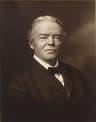
Josiah Royce
contemporaryAbsolute Idealism
Josiah Royce (1855–1916) was an American philosopher and a leading figure in absolute idealism, known for developing a systematic metaphysics of community, loyalty, and the Absolute. He taught at Harvard alongside William James and C.S. Peirce, and his thought bridged Hegelian idealism with distinctively American pragmatic concerns.
1 argument
Natural TheologyTruth & Knowledge
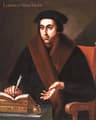
Juan Luis Vives
modernRenaissance Humanism
Juan Luis Vives (1493–1540) was a Spanish humanist philosopher, educator, and social reformer, widely regarded as one of the most important thinkers of the Renaissance. Born in Valencia to a converso family, he spent much of his career in the Low Countries and England, where he was a close associate of Erasmus and Thomas More. His work ranged across epistemology, psychology, pedagogy, and social welfare, anticipating empiricist and inductive methods decades before Bacon.
1 argument
Philosophy of LanguageTruth & Knowledge
JP
Juan Pablo Vessel
contemporaryAnalytic Philosophy, Philosophy of Law
Juan Pablo Vessel is a contemporary philosopher working primarily in normative theory, deontic logic, and the philosophy of law. He has contributed to debates about the structure of obligations, conditional norms, and temporal aspects of normative requirements. His work engages with questions about when and how obligations arise, persist, and conflict.
1 argument
Moral ResponsibilityJustice & Punishment
Judith Thomson
contemporaryAnalytic Philosophy
Judith Jarvis Thomson (1929–2020) was an American analytic philosopher and longtime professor at MIT, renowned for her work in moral philosophy, metaphysics, and the philosophy of action. She is best known for introducing the 'violinist' thought experiment in her landmark 1971 paper 'A Defense of Abortion' and for substantially developing the trolley problem as a tool for probing rights-based constraints on moral reasoning. Her work consistently challenged utilitarian accounts by defending the moral significance of agent-relative rights and side-constraints.
1 argument
ConsequentialismTruth & Knowledge
JK
Judy Kegl
contemporaryGenerative Linguistics, Philosophy of Language, Cognitive Science
Judy Kegl is an American linguist and cognitive scientist best known for her fieldwork documenting the emergence of Nicaraguan Sign Language (NSL) in the 1980s, a rare natural experiment in language genesis. Her work has had significant implications for debates in the philosophy of language and linguistics regarding the innateness of grammar, the poverty of the stimulus, and the learnability of linguistic systems from primary linguistic data.
1 argument
SkepticismPhilosophy of Language
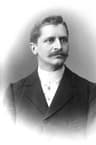
Jules Lachelier
modernFrench Neo-Kantianism / Spiritualist Idealism
Jules Lachelier (1832–1918) was a French philosopher and major figure in nineteenth-century French Neo-Kantianism and spiritualist idealism. His central work, Du fondement de l'induction (1871), argued that nature is grounded in two interdependent principles—efficient causation and final causation—synthesizing Kantian critique with a spiritualist metaphysics. He exerted a formative influence on Henri Bergson and several generations of French academic philosophers through his long career as Inspector General of Public Instruction.
1 argument
Modality & PossibilityTruth & Knowledge
JD
Julia Driver
contemporaryAnalytic Philosophy, Consequentialism
Julia Driver is a contemporary analytic philosopher whose work spans moral philosophy, virtue ethics, and feminist philosophy. She is best known for developing a consequentialist account of virtue, arguing that virtues are character traits that systematically produce good outcomes. Her research also examines the social and structural conditions that shape moral development and philosophical practice.
1 argument
Moral ResponsibilityRights & Liberty

Julia Serano
contemporaryFeminist Philosophy, Trans Theory
Julia Serano (born 1967) is an American writer, activist, and biologist whose work bridges feminist philosophy, gender theory, and trans studies. She is best known for developing a systematic critique of cissexism and the cultural devaluation of femininity, arguing that misogyny and transphobia share common roots in oppositional sexism. Her writing challenges both mainstream feminist and queer theoretical frameworks to better account for trans women's experiences.
1 argument
Moral ResponsibilityRights & Liberty
JD
Julian Dodd
contemporaryAnalytic Philosophy
Julian Dodd is a contemporary British analytic philosopher specializing in metaphysics, the philosophy of music, and the theory of truth. He is best known for his type-theoretic account of musical works and his contributions to debates surrounding truthmakers and negative truths. His monograph *Works of Music: An Essay in Ontology* (2007) offers a sustained defense of the view that musical works are types rather than abstract objects created by composers.
1 argument
Truth & Knowledge
JG
Julian Gutierrez
contemporaryAnalytic Philosophy / Formal Epistemology
Julian Gutierrez is a contemporary researcher working in formal game theory and logic, with contributions to the analysis of sequential games and reasoning under uncertainty. His work examines how rational agents update beliefs and plausibility orderings during actual play, bridging epistemic logic and strategic decision theory.
1 argument
SkepticismTruth & Knowledge
JR
Julian Reiss
contemporaryAnalytic Philosophy of Science
Julian Reiss is a contemporary philosopher of science specializing in the philosophy of economics, causation, and evidence-based medicine. He has contributed extensively to debates about the nature of causal inference, the role of idealization in economic models, and the epistemology of policy-relevant science. His work bridges analytic philosophy of science with practical questions in economics and public health.
1 argument
Democracy & GovernanceSocial Contract
JE
Julie E. Maybee
contemporaryContinental Philosophy, Hegel Studies
Julie E. Maybee is a contemporary American philosopher specializing in Hegel's logic and dialectics. She is the author of Picturing Hegel: An Illustrated Guide to Hegel's Encyclopaedia Logic, which offers a systematic reconstruction of Hegel's logical method. Her work focuses on making Hegel's notoriously difficult dialectical reasoning accessible while defending its philosophical rigor.
1 argument
Modality & PossibilityTruth & Knowledge
Juris Hartmanis
contemporaryAnalytic Philosophy of Computer Science
Juris Hartmanis was a Latvian-American computer scientist who co-founded the field of computational complexity theory. With Richard Stearns, he established the formal framework for classifying problems by the time and space resources required to solve them, work that earned them the 1993 Turing Award. He spent most of his career at Cornell University, where he founded and chaired the Computer Science department.
1 argument
SkepticismTruth & Knowledge
JS
Jussi Suikkanen
contemporaryAnalytic Philosophy, Contractualism
Jussi Suikkanen is a Finnish moral philosopher based at the University of Birmingham, working primarily in normative ethics and metaethics. He is known for his critical engagement with T.M. Scanlon's contractualism, exploring its formal structure, limits, and alternatives. His work examines the foundations of moral reasoning, the nature of moral facts, and the relationship between rationality and obligation.
1 argument
Social Contract
JD
Justin D'Arms
contemporaryAnalytic Philosophy, Metaethics, Sentimentalism
Justin D'Arms is a contemporary American philosopher at Ohio State University specializing in metaethics and the philosophy of emotion. He is best known for defending sentimentalism — the view that moral and evaluative concepts are to be understood in terms of the fittingness of emotional responses. His collaborative work with Daniel Jacobson on the 'resonance' model of emotional evaluation has been influential in debates about the relationship between affect and ethical judgment.
1 argument
Moral ResponsibilityTruth & Knowledge
JB
Józef Bocheński
contemporaryAnalytic Philosophy, Thomism, Mathematical Logic
Józef Maria Bocheński (1902–1995) was a Polish Dominican friar, mathematical logician, and analytic philosopher who applied formal logic to philosophical, theological, and political problems. He made foundational contributions to the history of logic and was a leading figure in the application of symbolic logic to metaphysics and the philosophy of religion. His work bridged Thomistic scholasticism and twentieth-century analytic philosophy.
1 argument
Modality & PossibilityFree Will & Foreknowledge
JM
Józef Maria Bocheński
contemporaryAnalytic Philosophy, Logic
Józef Maria Bocheński (1902–1995) was a Polish Dominican friar, logician, and philosopher who became one of the twentieth century's foremost authorities on formal logic and the logic of religion. He taught at the University of Fribourg for decades and made foundational contributions to the analytic study of religious language and the formal analysis of authority. His historical and systematic work in logic bridged the Scholastic and analytic traditions.
1 argument
Modality & PossibilityFree Will & Foreknowledge
JF
Jörg Flum
contemporaryMathematical Logic
Jörg Flum is a German mathematical logician known for his contributions to finite model theory, parameterized complexity, and the foundations of logic in computer science. He is professor emeritus at the University of Freiburg and co-author of influential textbooks bridging mathematical logic and theoretical computer science.
1 argument
SkepticismTruth & Knowledge
JW
Jörgen Weibull
contemporaryEvolutionary Game Theory
Jörgen Weibull is a Swedish economist and game theorist best known for his foundational contributions to evolutionary game theory. His 1995 MIT Press monograph systematized the field and remains a primary reference for the mathematical study of strategic behavior in large populations. He has held positions at Stockholm School of Economics and the Research Institute of Industrial Economics (IFN).
1 argument
Modality & PossibilityTruth & Knowledge
JE
Jürgen Ehlers
contemporaryPhilosophy of Physics
Jürgen Ehlers was a German theoretical physicist and philosopher of physics known for foundational work in general relativity and the conceptual foundations of spacetime theories. He contributed to the constructive axiomatic approach to relativity, notably the Ehlers-Pirani-Schild (EPS) framework, which derives spacetime geometry from primitive notions of light rays and freely falling particles rather than clocks and rigid rods.
1 argument
Modality & PossibilityCausation
KL
K. L. Reinhold
modern
1 argument
Moral ResponsibilityFree Will & Foreknowledge
KV
Kadri Vihvelin
contemporaryAnalytic Philosophy
Kadri Vihvelin is a contemporary analytic philosopher at the University of Southern California specializing in free will, causation, and the metaphysics of ability. She is best known for defending compatibilism and for her detailed analysis of the conditional nature of free will. Her work argues that free will disputes are inseparable from broader questions in metaphysics and ethics.
1 argument
Free Will & Foreknowledge
Kamp
contemporaryFormal Semantics / Philosophy of Language
Hans Kamp (born 1940) is a German philosopher and logician who developed Discourse Representation Theory (DRT), a foundational framework in formal semantics for representing the meaning of natural language discourse. His work systematically accounts for anaphora, temporal reference, and the dynamic interpretation of sentences across discourse boundaries, becoming a cornerstone of both formal linguistics and computational semantics.
1 argument
Philosophy of LanguageModality & Possibility
Ka
Kampler and Connell
contemporaryNatural Law Ethics / Catholic Moral Theology
Kampler and Connell are contemporary scholars working within the natural law and Catholic moral theology tradition. Their collaborative work engages arguments from traditional sexual ethics, drawing on Thomistic and neo-scholastic frameworks to assess the moral permissibility of sexual acts.
1 argument
Moral ResponsibilityBioethics
K
Kanger
contemporaryAnalytic Philosophy, Modal and Deontic Logic
Stig Kanger (1924–1988) was a Swedish logician and philosopher at Uppsala University, best known for independently developing possible-worlds semantics for modal logic around the same time as Kripke, and for his rigorous formal analysis of normative relations and rights. His work bridged mathematical logic, deontic logic, and the theory of action.
1 argument
Modality & PossibilityFree Will & Foreknowledge
K
Kanovich
contemporaryAnalytic Philosophy / Mathematical Logic
Max Kanovich is a contemporary logician known for work in linear logic, proof theory, and the computational complexity of logical systems. His research explores the boundaries between logical reasoning and computation, particularly concerning decidability and complexity in substructural logics.
1 argument
SkepticismTruth & Knowledge
Ke
Kapovich et al.
contemporaryAnalytic Philosophy
Kapovich et al. refers to a collaborative authorship in contemporary philosophy of logic and mathematics, addressing epistemological questions about logical knowledge and its relationship to computation. Their work engages with debates on the a priori status of logic in light of computational complexity and feasibility constraints.
1 argument
SkepticismTruth & Knowledge
KJ
Karen J. Warren
contemporaryEcofeminism
Karen J. Warren is a contemporary American philosopher and a leading architect of ecofeminist theory. She is best known for articulating the conceptual and structural connections between the domination of women and the domination of nature, arguing that both are rooted in a shared 'logic of domination' embedded in patriarchal frameworks. Her work bridges environmental ethics, feminist philosophy, and social justice, and she taught for many years at Macalester College.
1 argument
Moral ResponsibilityRights & Liberty
KB
Karin Bäckstrand
contemporaryPolitical Philosophy, Environmental Governance, Democratic Theory
Karin Bäckstrand is a Swedish political scientist and professor at Stockholm University whose work centers on the democratic legitimacy and accountability of global environmental governance. She is known for her analyses of multi-stakeholder partnerships, non-state actor participation, and deliberative democracy within international climate institutions. Her research has shaped scholarly debate on how transnational governance can be made more inclusive and democratically credible.
1 argument
Democracy & Governance
KS
Karin Stromswold
contemporaryGenerative Linguistics, Cognitive Science
Karin Stromswold is a contemporary cognitive scientist and psycholinguist at Rutgers University whose research spans language acquisition, nativism, and the cognitive and genetic bases of language. She is known for empirical and theoretical work on how children acquire syntactic knowledge, including contributions to the poverty of the stimulus debate and learnability arguments in generative linguistics.
1 argument
SkepticismPhilosophy of Language
KA
Karl Ameriks
contemporaryKantian and Post-Kantian Philosophy
Karl Ameriks is an American philosopher and leading scholar of Kant and post-Kantian German idealism. He is the McMahon-Hank Professor Emeritus of Philosophy at the University of Notre Dame, known for interpretive work on Kant's theoretical philosophy, the reception of Kant, and the development of German idealism through Reinhold, Fichte, and Hegel.
1 argument
PerceptionModality & Possibility
KB
Karl Barth
contemporaryNeo-orthodoxy / Dialectical Theology / Reformed Theology
Karl Barth (1886–1968) was a Swiss Reformed theologian widely regarded as the most significant Protestant theologian of the twentieth century. His magnum opus, the multivolume Church Dogmatics, represents a sweeping neo-orthodox reconstruction of Christian doctrine grounded in Christocentric revelation. He broke decisively with nineteenth-century liberal theology and became a leading voice against the German Christian movement during the Nazi era.
1 argument
Modality & PossibilityFree Will & Foreknowledge
KJ
Karl Jaspers
contemporaryExistentialism
Karl Jaspers (1883–1969) was a German-Swiss psychiatrist and existentialist philosopher whose work bridges psychology, philosophy, and theology. He developed a distinctive 'existenz' philosophy centered on human freedom, boundary situations, and the encounter with Transcendence. His concept of the 'Axial Age' and his philosophical faith — distinct from confessional religion — became influential across theology, philosophy of religion, and political thought.
1 argument
Divine AttributesAgainst an attribute of God
KL
Karl Llewellyn
contemporaryLegal Realism
Karl Nickerson Llewellyn (1893–1962) was an American jurist and legal theorist, widely regarded as the principal architect of American legal realism. He made foundational contributions to jurisprudence, commercial law, and the sociology of law, most notably co-drafting the Uniform Commercial Code and developing a systematic account of legal reasoning through 'situation sense' and the study of judicial precedent.
1 argument
Philosophy of LanguageTruth & Knowledge
Karl Philipp Moritz
modernGerman Enlightenment / Early Aesthetic Autonomy
Karl Philipp Moritz (1756-1793) was a German author, editor, and aesthetician of the late Enlightenment, best known for his psychological novel Anton Reiser and his influential theory of aesthetic autonomy. His essay 'On the Artistic Imitation of the Beautiful' (1788) argued that art should be self-contained and judged on its own internal coherence rather than utility, directly shaping Goethe, Schiller, and later German Idealist aesthetics.
1 argument
AestheticsTruth & Knowledge
KS
Karl Sigmund
contemporaryEvolutionary Game Theory / Philosophy of Mathematics
Karl Sigmund is an Austrian mathematician known for foundational contributions to evolutionary game theory and the mathematical analysis of cooperation. His work bridges dynamical systems, population biology, and philosophy of rationality, and he has also written extensively on the history of the Vienna Circle.
1 argument
SkepticismTruth & Knowledge
KN
Karl-Georg Niebergall
contemporaryAnalytic Philosophy, Philosophy of Logic
Karl-Georg Niebergall is a contemporary German philosopher working primarily in mathematical logic, philosophy of mathematics, and formal philosophy of language. He has contributed to debates on the foundations of formal theories, interpretability, and the ontology of linguistic and logical objects. His work engages closely with technical questions in logic while drawing out their broader philosophical implications.
1 argument
Modality & Possibility
KS
Kaspar Schoppe
modernCatholic Humanism / Counter-Reformation Polemics
Kaspar Schoppe (1576–1649), also known by his Latinized name Caspar Scioppius, was a German Catholic humanist, philologist, and polemicist. A convert from Lutheranism, he became one of the most combative Catholic controversialists of the early seventeenth century, deploying classical scholarship in the service of Counter-Reformation apologetics. He is also notable as a witness to the trial and execution of Giordano Bruno in Rome in 1600.
1 argument
Afterlife & DeathInsubordination to God
KL
Kasper Lippert-Rasmussen
contemporaryAnalytic Political Philosophy
Kasper Lippert-Rasmussen is a Danish analytic philosopher and professor at Aarhus University, best known for his systematic work on discrimination, equality, and luck egalitarianism. He has made substantial contributions to normative political philosophy, particularly in theorizing the wrongness of discrimination and the structure of egalitarian justice. His work bridges metaethics, political philosophy, and philosophy of action.
1 argument
Free Will & Foreknowledge
KM
Kate Macdonald
contemporaryAnalytic Political Philosophy, Global Justice Theory
Kate Macdonald is a contemporary political theorist and international relations scholar whose work focuses on global governance, democratic accountability, and the politics of transnational regulation. She examines how non-state actors, international organizations, and supply chain governance structures can be made democratically accountable. Her research bridges normative political theory and empirical analysis of global economic institutions.
1 argument
Democracy & Governance
KJ
Katharine Jenkins
contemporaryAnalytic Philosophy, Feminist Metaphysics
Katharine Jenkins is a contemporary analytic philosopher specializing in feminist philosophy, social ontology, and the metaphysics of gender. She is best known for her work reconciling ameliorative approaches to gender with trans-inclusive feminist frameworks, arguing that 'woman' can be understood both as a social position and as a gender identity. Her scholarship engages substantively with questions of social construction, political utility, and the normative dimensions of gender concepts.
1 argument
Moral ResponsibilityPersonal Identity
KD
Katherine Dunlop
contemporaryAnalytic Philosophy, Kantian Philosophy of Mathematics
Katherine Dunlop is a contemporary analytic philosopher specializing in Kant's philosophy of mathematics and the history and philosophy of science. She has written on the epistemological status of geometry, the nature of mathematical cognition in Kant, and the conventionalist tradition in philosophy of mathematics. Her work examines how geometric and metric claims relate to truth, convention, and empirical inquiry.
1 argument
Modality & PossibilityTruth & Knowledge
KW
Kathleen Waits
contemporaryFeminist Legal Theory / Feminist Jurisprudence
Kathleen Waits is a contemporary legal scholar and feminist jurisprudence theorist whose work addresses gender, sexual violence, and the limits of empathic imagination in legal reasoning. Her scholarship engages with standpoint epistemology as applied to law, arguing that experiential positionality shapes epistemic access to harm in ways that matter for adjudication and policy. She has contributed to feminist legal theory's critique of neutral or universal perspectives in legal reasoning about sexual and domestic violence.
1 argument
Moral ResponsibilityConsciousness & Mind
KK
Kathrin Koslicki
contemporaryAnalytic Philosophy, Neo-Aristotelian Metaphysics
Kathrin Koslicki is a contemporary analytic philosopher specializing in metaphysics, particularly the nature of composite objects, mereology, and formal ontology. She is known for her neo-Aristotelian approach to material constitution and the structure of ordinary objects, arguing that wholes are not merely sums of their parts but are structured by formal and material components. Her work draws on Aristotelian hylomorphism to address problems in contemporary philosophy of material objects.
1 argument
Modality & Possibility
KG
Kathryn Gines
contemporaryAfricana Philosophy, Black Feminism
Kathryn Gines (also known as Kathryn Sophia Belle) is a contemporary Africana philosopher whose work sits at the intersection of race, gender, and continental philosophy. She is known for her critical engagement with canonical figures such as Simone de Beauvoir, exposing how mainstream feminist theory has historically marginalized Black women's experiences. Her scholarship contributes to Africana philosophy, Black feminism, and critical race theory.
1 argument
Moral ResponsibilityRights & Liberty
KP
Kathryn Paxton George
contemporaryFeminist Philosophy, Applied Ethics
Kathryn Paxton George is a contemporary feminist philosopher best known for her critique of ethical vegetarianism on feminist and cross-cultural grounds. In her landmark work 'Animal, Vegetable, or Woman?' (2000), she argues that universal prescriptions for plant-based diets fail to account for the physiological and socioeconomic constraints facing women, children, and people in developing regions. Her work sits at the intersection of feminist ethics, animal ethics, and moral epistemology.
1 argument
Moral ResponsibilityRights & Liberty
K
Kato
modernAnalytic Chinese Philosophy
Kato is a modern scholar of Chinese philosophy specializing in early Confucian thought, particularly the philosophical debate between Mencius and Xunzi on human nature. Their work engages closely with interpretive questions about Mencius's metaphors for xing (human nature) and the force of Xunzi's critiques of rival positions.
1 argument
Moral ResponsibilityVirtue Ethics
K
Katz
contemporaryAnalytic Philosophy
Jerrold J. Katz was an American philosopher and linguist best known for his work in the philosophy of language, semantics, and the philosophy of mathematics. He defended a robust form of Platonic realism about abstract objects, particularly linguistic and mathematical entities, and contributed foundational work to generative semantics.
1 argument
SkepticismTruth & Knowledge
KK
Kazimierz Kuratowski
modernFoundations of Mathematics / Mathematical Logic
Kazimierz Kuratowski (1896–1980) was a Polish mathematician whose work in topology and set theory shaped the foundations of modern mathematics. He made fundamental contributions to descriptive set theory, lattice theory, and the axiomatization of topological spaces. Though primarily a mathematician, his foundational work intersects with analytic philosophy of mathematics, particularly concerning the nature of sets, relations, and mathematical structure.
1 argument
Modality & PossibilityTruth & Knowledge
K
Keeney
contemporaryDecision Theory / Analytic Philosophy
Ralph Keeney is a contemporary American decision theorist and operations researcher known for foundational work in multi-attribute utility theory and value-focused thinking. His contributions bridge decision analysis, game theory, and applied ethics, influencing both academic and practical approaches to complex decision-making.
1 argument
SkepticismTruth & Knowledge
KA
Keith Allen
contemporaryAnalytic Philosophy
Keith Allen is a contemporary British philosopher specializing in the philosophy of perception, metaphysics, and the philosophy of colour. He is known for defending a naive realist account of colour and for his work on perceptual experience and the metaphysics of properties.
1 argument
Consciousness & Mind
KC
Keith Campbell
contemporaryAnalytic Philosophy, Trope Theory
Keith Campbell is an Australian analytic philosopher best known for his systematic development of trope theory, the view that the world's basic constituents are abstract particulars (tropes) rather than universals or concrete individuals. His influential 1990 work 'Abstract Particulars' argued that a sparse ontology of tropes alone can ground all of metaphysics. He spent most of his career at the University of Sydney.
1 argument
Modality & PossibilityTruth & Knowledge
KD
Keith DeRose
contemporaryAnalytic Philosophy, Epistemology
Keith DeRose is a contemporary analytic epistemologist and Professor of Philosophy at Yale University. He is best known for developing and defending epistemic contextualism, the view that the truth conditions of knowledge-attributing sentences vary with the context of the speaker. His work on skepticism argues that contextualism dissolves apparent skeptical paradoxes without conceding that we lack ordinary knowledge.
1 argument
Skepticism
KJ
Keith Jenkins
contemporaryPostmodern Philosophy, Historiography
Keith Jenkins (born 1943) is a British philosopher of history and postmodern theorist best known for his influential critiques of historical objectivity and epistemological foundationalism. His work engages broadly with questions of truth, knowledge, and metaphysical claims, drawing on poststructuralist and skeptical traditions. He held a professorship at the University of Chichester and shaped contemporary debates in historiography and critical theory.
1 argument
Natural TheologyModality & Possibility
KS
Keith Simmons
contemporaryAnalytic Philosophy
Keith Simmons is a contemporary analytic philosopher specializing in the philosophy of language, logic, and theories of truth. He is best known for his sustained engagement with the Liar paradox and his development of a singularity theory of truth as an alternative to both classical and deflationary accounts. His work critically examines the limits of truth predicates and the expressive power of natural language.
1 argument
Truth & Knowledge
KW
Keith Whittington
contemporaryConstitutional Originalism
Keith Whittington is a contemporary American constitutional theorist and political scientist at Princeton University. He is best known for distinguishing between constitutional interpretation—the judicial task of applying clear textual meaning—and constitutional construction, the political process by which ambiguous constitutional provisions acquire substantive meaning over time. His scholarship integrates legal theory and American political development to examine how constitutional meaning is produced across all branches of government.
1 argument
Rights & LibertyDemocracy & Governance
K
Kelvin
modernNatural Philosophy / Classical Physics
William Thomson, 1st Baron Kelvin (1824–1907), was a Scottish-Irish mathematical physicist whose foundational work on thermodynamics and energy shaped classical physics. He formulated the Kelvin-Planck statement of the Second Law of Thermodynamics, establishing limits on the conversion of heat into work. His contributions to the philosophy of physics intersect with debates over Maxwell's Demon and the epistemic costs of physical measurement.
1 argument
Causation
KS
Kemp Smith
contemporaryAnalytic Philosophy, History of Philosophy
Norman Kemp Smith (1872–1958) was a Scottish philosopher best known for his landmark translation of Kant's Critique of Pure Reason and his influential study of Hume's philosophy. He held chairs at Princeton and the University of Edinburgh and made major contributions to the reception of German idealism and early modern philosophy in the English-speaking world. His commentary on Hume's Dialogues Concerning Natural Religion remains a foundational scholarly reference.
1 argument
Justice & PunishmentRights & Liberty
KW
Kendall Walton
contemporaryAnalytic Philosophy
Kendall Walton (born 1939) is an American analytic philosopher at the University of Michigan whose work centers on aesthetics and the philosophy of art. He is best known for his make-believe theory of representation, which holds that engaging with fiction and pictorial art involves a form of imaginative game-playing. His 1970 paper 'Categories of Art' and his 1990 book 'Mimesis as Make-Believe' are foundational texts in contemporary aesthetics.
1 argument
AestheticsTruth & Knowledge
KE
Kenneth Einar Himma
contemporaryAnalytic Philosophy
Kenneth Einar Himma is a contemporary American philosopher working primarily in philosophy of law, philosophy of religion, and information ethics. He has written extensively on legal positivism, natural law theory, and epistemological questions surrounding religious belief and salvation. His work bridges analytic philosophy of religion with jurisprudence, examining the rational and moral foundations of legal and theological systems.
1 argument
Religious Experience
KM
Kenneth MacCrimmon
contemporaryDecision Theory
Kenneth R. MacCrimmon is a contemporary decision theorist known for experimental and theoretical work on rational choice, risk preferences, and game theory. His research has examined how real agents deviate from normative decision-theoretic prescriptions and has contributed to critiques of classical solution concepts in extensive-form games.
1 argument
SkepticismTruth & Knowledge
KW
Kenneth Westphal
contemporaryAnalytic Kantianism
Kenneth R. Westphal is a contemporary philosopher specializing in Kant, Hegel, and epistemology, known for his rigorous reconstructions of transcendental arguments and his defense of a realist reading of Kant's critical philosophy. His work bridges historical scholarship and contemporary epistemology, with significant contributions to understanding moral constructivism and the philosophy of natural science.
1 argument
PerceptionModality & Possibility
KW
Kenneth Wexler
contemporaryAnalytic Philosophy / Cognitive Science
Kenneth Wexler is a contemporary American cognitive scientist and linguist, best known for his work in developmental psycholinguistics and the formal theory of language acquisition. His research has focused on learnability theory, syntactic development in children, and the biological foundations of grammar.
1 argument
SkepticismTruth & Knowledge
K
Kenyon
contemporaryAnalytic Philosophy, Social Epistemology
Tim Kenyon is a contemporary analytic philosopher specializing in epistemology and philosophy of language, particularly the social dimensions of knowledge transmission. His work examines how testimony functions as a source of justified belief, including the conditions under which justification is preserved or generated across chains of testimony. He has contributed to debates about the reliability and normativity of testimonial knowledge.
1 argument
Truth & Knowledge
KM
Ketan Mulmuley
contemporaryTheoretical Computer Science / Philosophy of Computation
Ketan Mulmuley is an Indian-American theoretical computer scientist at the University of Chicago, best known for developing Geometric Complexity Theory (GCT), an ambitious program that applies algebraic geometry and representation theory to attack the P vs NP problem. His work bridges computational complexity, algebraic geometry, and representation theory, and has raised philosophical questions about the nature of mathematical and logical knowledge.
1 argument
SkepticismTruth & Knowledge
KK
Kevin Kelly
contemporaryAnalytic Philosophy / Formal Epistemology
Kevin Kelly is an American philosopher specializing in formal epistemology, logic, and the philosophy of science. He is known for his work on formal learning theory, Ockham's razor, and the logic of scientific discovery, developing computational approaches to epistemic justification.
1 argument
SkepticismTruth & Knowledge
KL
Kevin Leyton-Brown
contemporaryAnalytic Philosophy / Computational Game Theory
Kevin Leyton-Brown is a Canadian computer scientist and Professor at the University of British Columbia, known for his work at the intersection of artificial intelligence, game theory, and multi-agent systems. His research spans algorithmic game theory, computational auctions, and the application of machine learning to combinatorial problems.
1 argument
SkepticismTruth & Knowledge
KE
Khaled El-Rouayheb
contemporaryHistory of Islamic Philosophy and Logic
Khaled El-Rouayheb is a contemporary intellectual historian specializing in the history of Arabic-Islamic philosophy and logic, particularly from the post-classical period (13th-19th centuries). He is the James Richard Jewett Professor of Arabic and of Islamic Intellectual History at Harvard University, known for challenging the narrative of decline in post-Avicennan Islamic thought.
1 argument
Philosophy of LanguageModality & Possibility
KC
Kim-chong Chong
contemporaryComparative Philosophy, Confucian Ethics
Kim-chong Chong is a contemporary philosopher specializing in classical Chinese ethics, with a focus on early Confucianism. He is known for his comparative and analytic engagement with thinkers such as Mencius and Xunzi, examining the philosophical foundations of moral psychology in the Confucian tradition. His work addresses interpretive disputes about human nature, moral cultivation, and the grounds of ethical motivation.
1 argument
Moral ResponsibilityVirtue Ethics
KC
Kimberlé Crenshaw
contemporaryCritical Race Theory, Feminist Legal Theory
Kimberlé Crenshaw (born 1959) is an American legal scholar, critical race theorist, and professor at UCLA School of Law and Columbia Law School. She is best known for coining the concept of intersectionality, which analyzes how overlapping social identities—race, gender, class—compound systemic discrimination. Her work has been foundational in feminist legal theory, critical race theory, and contemporary civil rights advocacy.
1 argument
Moral ResponsibilityRights & Liberty
K(
Kindî (al-Kindî)
medieval
1 argument
Divine AttributesCausation
K
King
contemporaryAnalytic Philosophy
King is a contemporary philosopher working in the philosophy of psychiatry and medicine. Their work engages with the relationship between empirical research methods and conceptual analysis, arguing that findings from association studies can inform the philosophical understanding of mental and medical conditions. Their contributions address methodological questions at the intersection of science and philosophical analysis.
1 argument
BioethicsTruth & Knowledge
KW
King Wen
ancientEarly Chinese Philosophy / Zhou Dynasty Thought
King Wen of Zhou (周文王, c. 1112–1050 BCE) was the founder of the Zhou dynasty and a canonical sage-king in Chinese philosophical tradition. He is traditionally credited with expanding the I Ching's trigrams into 64 hexagrams and composing their judgment texts (guaci), making him a foundational figure in Chinese cosmological and ethical thought. Later Confucian thinkers, including Confucius himself, held King Wen as an exemplar of virtuous rulership and moral cultivation.
1 argument
Moral ResponsibilityVirtue Ethics

King Xuan
ancientWarring States Confucianism
King Xuan of Qi (r. c. 319–301 BCE) was a Warring States ruler whose extended dialogues with Mencius are preserved in the Mengzi, making him a significant interlocutor in early Confucian philosophy. His probing questions on benevolent governance and moral psychology helped Mencius articulate core positions on human nature and political legitimacy. He also patronized the Jixia Academy, the foremost intellectual center of the period, fostering debates that shaped classical Chinese thought.
1 argument
Moral ResponsibilityVirtue Ethics
KN
Kitaro Nishida
modernKyoto School, Japanese Philosophy, Zen-influenced Idealism
Kitaro Nishida (1870–1945) was the founder of the Kyoto School and the first major original philosopher in the Western academic tradition to emerge from Japan. Drawing on both Zen Buddhism and Western philosophy, he developed a distinctive metaphysics centered on 'pure experience' and 'absolute nothingness.' His work sought to articulate a logic of place (basho) capable of mediating Eastern and Western thought at the deepest ontological level.
1 argument
Truth & Knowledge
K
Kitcher
contemporaryAnalytic Philosophy, Philosophy of Science
Philip Kitcher (born 1947) is a leading analytic philosopher of science known for his work on scientific explanation, the philosophy of biology, and the relationship between science and society. He has made foundational contributions to understanding scientific progress, the nature of mathematical knowledge, and the ethics of inquiry. His work bridges philosophy of science with broader questions about democracy, values, and the social dimensions of knowledge.
1 argument
BioethicsTruth & Knowledge
KK
Klaas Kraay
contemporaryAnalytic Philosophy of Religion
Klaas Kraay is a Canadian philosopher of religion at Toronto Metropolitan University (formerly Ryerson University), specializing in theism, divine creation, and the intersection of cosmology and theology. He is best known for developing and defending the theistic multiverse hypothesis — the view that an omnibenevolent God would create a multiverse rather than a single universe. His work engages analytic philosophy of religion with contemporary physics and cosmology.
1 argument
Natural TheologyCausation
KL
Klaas Landsman
contemporaryPhilosophy of Physics
Klaas Landsman is a Dutch mathematical physicist and philosopher of physics at Radboud University Nijmegen. He is known for rigorous mathematical work on the foundations of quantum mechanics, particularly the classical limit, the measurement problem, and the Born rule. His scholarship bridges operator algebras, C*-algebraic quantum theory, and the philosophy of probability.
1 argument
Natural Theology
KD
Klaus Dingwerth
contemporaryPolitical Theory, Global Governance Studies
Klaus Dingwerth is a contemporary political theorist and international relations scholar specializing in global governance and democratic legitimacy. His work examines how transnational regulatory bodies and international organizations can acquire or lack democratic authorization, contributing to normative theory about governance beyond the state. He has been associated with institutions including the University of St. Gallen and the German Institute for Global and Area Studies.
1 argument
Democracy & Governance
KH
Klaus Hentschel
contemporaryHistory and Philosophy of Science
Klaus Hentschel is a German historian and philosopher of science at the University of Stuttgart, specializing in the history of modern physics and the philosophical reception of relativity theory. His scholarship examines how scientific theories are interpreted, misinterpreted, and transformed by contemporaries, with particular focus on Einstein's special and general relativity. He has also made major contributions to the history of spectroscopy and visual culture in scientific practice.
1 argument
SkepticismTruth & Knowledge
K
Klein
contemporaryAnalytic Philosophy
Klein is a contemporary philosopher working in the intersection of game theory, epistemology, and formal philosophy. Their work examines plausibility updates in sequential games, contributing to ongoing debates about rational belief revision during strategic interaction.
1 argument
SkepticismTruth & Knowledge
K
Kleinschmidt
contemporaryAnalytic Philosophy
Susanna Kleinschmidt is a contemporary analytic philosopher working primarily in metaphysics and the philosophy of language. Her work addresses puzzles in mereology, material constitution, and the ontology of linguistic entities such as types and tokens. She has contributed to debates about how abstract and concrete objects relate, particularly in the context of inscriptions, readings, and linguistic identity.
1 argument
Modality & Possibility
K
Knowles
contemporaryAnalytic Philosophy
Knowles is a contemporary philosopher working in moral theory, with scholarly focus on the ethical significance of intentional wrongdoing and deception. Their work contributes to debates on moral responsibility by distinguishing the character of deliberate deception from harms caused without intent.
1 argument
Moral ResponsibilityJustice & Punishment
KG
Konstantin Genin
contemporaryFormal Epistemology
Konstantin Genin is a contemporary philosopher specializing in formal epistemology and the philosophy of inductive inference, with appointments at the Munich Center for Mathematical Philosophy and the University of Toronto. His work focuses on the foundations of statistical and probabilistic reasoning, including Bayesian epistemology, learning theory, and principles of rational belief revision. He has contributed to debates on the justification and scope of entropy-based reasoning in scientific and epistemological contexts.
1 argument
SkepticismTruth & Knowledge
K
Kooi
contemporaryAnalytic Philosophy / Logic
Kooi is a contemporary logician and philosopher known for work in dynamic epistemic logic and game theory. His contributions focus on belief revision, plausibility models, and the logical foundations of multi-agent reasoning.
1 argument
SkepticismTruth & Knowledge
K
Kornblith
contemporaryAnalytic Philosophy, Naturalized Epistemology
Hilary Kornblith is an American philosopher best known for his work in epistemology, particularly his defense of naturalized epistemology and his view that knowledge is a natural kind studied by cognitive ethology. He argues that epistemology should be continuous with empirical science rather than a purely a priori discipline.
1 argument
Truth & Knowledge
K
Kotzen
contemporaryAnalytic Philosophy
Matthew Kotzen is a contemporary analytic philosopher working primarily in epistemology and philosophy of science. He is known for his work on probabilistic reasoning, the fine-tuning argument for theism, and the role of background evidence in Bayesian inference. His contributions focus on how prior probabilities are constructed and constrained in arguments concerning cosmic constants and design.
1 argument
Natural Theology
KM
Kourken Michaelian
contemporaryAnalytic Philosophy, Social Epistemology
Kourken Michaelian is a contemporary analytic philosopher specializing in the epistemology of memory and testimony. He is best known for developing a simulationist account of episodic memory and for extending social epistemological frameworks to the transmission of testimonial knowledge across chains of informants. His work bridges philosophy of mind, epistemology, and cognitive science.
1 argument
Truth & Knowledge
K
Kraft
modernAnalytic Philosophy
R. Wayne Kraft (or a contemporary scholar named Kraft) working in formal epistemology and game theory, with contributions to the analysis of plausibility reasoning and belief revision in sequential games. Their work examines how agents update beliefs during extensive-form game play, bridging decision theory and epistemic logic.
1 argument
SkepticismTruth & Knowledge
K
Kreps
contemporaryAnalytic Philosophy / Game Theory
David M. Kreps is an American game theorist and economist, longtime professor at Stanford Graduate School of Business, known for foundational contributions to dynamic game theory, decision theory under uncertainty, and the microeconomic foundations of finance. His work on sequential equilibrium and reputation effects in repeated games reshaped how economists model strategic interaction over time.
1 argument
SkepticismTruth & Knowledge
KD
Kristie Dotson
contemporaryFeminist Epistemology
Kristie Dotson is a contemporary American philosopher specializing in feminist epistemology, social epistemology, and philosophy of race. She is best known for developing the concepts of epistemic oppression, testimonial smothering, and tracking practices of silencing that constrain marginalized knowers. Her work interrogates the structural and interpersonal conditions that systematically limit whose knowledge is recognized and whose testimony is heard.
1 argument
Moral ResponsibilityRights & Liberty
KL
Kristin Luker
contemporaryFeminist Sociology / Social Theory
Kristin Luker is an American sociologist and professor at UC Berkeley known for her empirical and theoretical work on gender, sexuality, reproductive politics, and social policy. Her landmark study of the abortion debate examined the worldviews and moral frameworks of pro-life and pro-choice activists, revealing abortion politics as a conflict over the social meaning of womanhood. She has also written influentially on teenage pregnancy and sex education policy in the United States.
1 argument
Moral ResponsibilityConsciousness & Mind
KM
Krzysztof Mierzewski
contemporaryAnalytic Philosophy (Formal Epistemology)
Krzysztof Mierzewski is a contemporary philosopher and logician working at the intersection of formal epistemology, game theory, and dynamic logic. His research focuses on belief revision, plausibility models, and the logical foundations of rational agency in sequential decision-making contexts.
1 argument
SkepticismTruth & Knowledge
K
Kuznets
contemporaryUnknown
Identity uncertain. The name 'Kuznets' is most widely associated with Simon Kuznets (1901-1985), the Belarusian-American economist and Nobel laureate known for work on national income and economic growth, who is not primarily a philosopher. Without further disambiguation, no reliable philosophical profile can be generated for a figure by this name associated with arguments in philosophy of logic.
1 argument
SkepticismTruth & Knowledge
KW
Kwasi Wiredu
contemporaryAfrican Philosophy, Analytic Philosophy
Kwasi Wiredu (1931–2022) was a Ghanaian philosopher widely regarded as one of the founding figures of contemporary African philosophy. Trained in the analytic tradition, he developed a rigorous program of 'conceptual decolonization,' arguing that African thinkers must critically interrogate concepts and categories inherited from colonial-era Western philosophy to determine their cross-cultural validity. His comparative work bridged Akan thought and Western analytic philosophy, establishing methodological standards for intercultural philosophical dialogue.
1 argument
SkepticismTruth & Knowledge
K
Künne
contemporaryAnalytic Philosophy
Wolfgang Künne is a German analytic philosopher based at the University of Hamburg, specializing in the philosophy of language, logic, and the theory of truth. He is best known for his systematic comparative study of truth theories and his defense of a 'modest' realist conception of truth. His work also engages extensively with the history of analytic philosophy, particularly Frege and Bolzano.
1 argument
Truth & Knowledge
LJ
L. Jonathan Cohen
contemporaryAnalytic Philosophy
L. Jonathan Cohen (1923–2006) was a British analytic philosopher at Oxford University known for his work in logic, philosophy of science, and the theory of inductive reasoning. He made significant contributions to the analysis of probability, legal reasoning, and the philosophy of mind, challenging dominant Bayesian accounts of rational belief.
1 argument
SkepticismTruth & Knowledge
LS
L. Slot
contemporaryAnalytic Philosophy
L. Slot is a contemporary philosopher who has contributed to discussions on the epistemology of logic, particularly concerning the status of logical knowledge. Their work engages with questions about whether logical knowledge can be genuinely a priori given its computational characteristics.
1 argument
SkepticismTruth & Knowledge
LA
L.W. Aiken
contemporaryAnalytic Philosophy, Metaethics
L.W. Aiken is a contemporary philosopher working in metaethics, particularly on the semantics of moral language. His work engages with expressivist and prescriptivist accounts of evaluative terms, with attention to how moral predicates function in embedded and unasserted contexts. He contributes to debates surrounding the Frege-Geach problem and the logical behavior of moral discourse.
1 argument
Philosophy of Language
L
Lachlan
contemporaryAnalytic Philosophy / Mathematical Logic
Lachlan is a contemporary figure associated with technical results in computability theory, specifically concerning the non-primitive-recursive nature of universal functions for primitive recursive functions. The name most likely refers to Alistair H. Lachlan, a Scottish-Canadian mathematical logician known for contributions to recursion theory and model theory.
1 argument
Modality & PossibilityTruth & Knowledge
L
Ladner
contemporaryAnalytic Philosophy
Ladner is a contemporary philosopher whose work engages with questions at the intersection of logic, epistemology, and philosophy of mind. Their contributions address tensions between traditional a priori conceptions of logical knowledge and computational or naturalistic accounts of cognition.
1 argument
SkepticismTruth & Knowledge
L
Lago
contemporaryNatural Law Ethics
Lago is a contemporary philosopher or theologian whose work engages with questions of sexual ethics from within a traditional moral framework. Their argumentation reflects positions common to natural law theory or religious ethics regarding the moral status of homosexual acts.
1 argument
Moral ResponsibilityBioethics
LF
Lance Fortnow
contemporaryAnalytic Philosophy of Computer Science
Lance Fortnow is an American theoretical computer scientist known for his contributions to computational complexity theory, particularly in interactive proof systems and the study of the P versus NP problem. He has served as Dean of the College of Computing at the Illinois Institute of Technology and authored influential works bridging computer science and philosophy of mathematics.
1 argument
SkepticismTruth & Knowledge
L
Landman
contemporaryAnalytic Philosophy of Language
Landman is a contemporary scholar whose work touches on discourse analysis and the pragmatics of text generation, particularly regarding coherence markers in linguistic output. Their contributions focus on the appropriate use of discourse markers to enhance textual coherence.
1 argument
Philosophy of Language
L
Lange
contemporaryAnalytic Philosophy of Science
Marc Lange is a contemporary American philosopher of science at the University of North Carolina at Chapel Hill, specializing in laws of nature, scientific explanation, and the philosophy of biology. He is known for his work on counterfactuals, non-causal explanation, and the metaphysical foundations of scientific theories, including scrutiny of the epistemic and cognitive standing of evolutionary theory.
1 argument
SkepticismTruth & Knowledge
LM
Larry May
contemporaryAnalytic Philosophy
Larry May is an American philosopher at Vanderbilt University whose work spans social ethics, collective responsibility, and international humanitarian law. He is best known for his sustained philosophical analysis of shared and collective moral responsibility, as well as his contributions to the philosophy of war crimes and crimes against humanity. His work on masculinity and morality has also addressed questions of gender, violence, and complicity.
1 argument
Moral ResponsibilityConsciousness & Mind
LS
Larry Samuelson
contemporaryAnalytic Philosophy / Game Theory
Larry Samuelson is an American economist and game theorist, currently the A. Douglas Melamed Professor of Economics at Yale University. He is known for foundational contributions to evolutionary game theory, learning in games, and the epistemic foundations of solution concepts, including critiques of backward induction.
1 argument
SkepticismTruth & Knowledge
LS
Larry Stockmeyer
contemporaryComputational Complexity Theory / Analytic Philosophy of Mathematics
Larry Stockmeyer (1948-2004) was an American computer scientist known for foundational contributions to computational complexity theory. He is best known for introducing the polynomial hierarchy and for proving lower bounds on the complexity of decision problems, including the influential result on the complexity of the first-order theory of real addition.
1 argument
SkepticismTruth & Knowledge
L
Larson
contemporaryAnalytic Philosophy
Jerrold Katz and his critics, including contemporary philosophers such as Greg Restall and others, have debated platonism in philosophy of mathematics and linguistics. The name 'Larson' in this context likely refers to a contemporary philosopher engaging with Katz's argument by elimination for platonism, though without more context the specific identity is uncertain.
1 argument
SkepticismTruth & Knowledge
L
Lau
contemporaryClassical Chinese Philosophy, Confucian Studies
D.C. Lau (Lau Din Cheuk, 1921–2010) was a Hong Kong-born scholar of Chinese philosophy who taught at the School of Oriental and African Studies, University of London, and later at the Chinese University of Hong Kong. He is best known for his authoritative English translations of classical Confucian and Daoist texts, which became standard references for Western scholarship on Chinese thought, and for his interpretive work on Mencius' theory of human nature.
1 argument
Moral ResponsibilityVirtue Ethics
LW
Laura Waddell Ekstrom
contemporaryAnalytic Philosophy
Laura Waddell Ekstrom is a contemporary American analytic philosopher and professor at the College of William & Mary, specializing in free will, moral responsibility, and philosophy of religion. She is best known for her coherentist account of agency and her book-length defense of libertarian free will. Her work argues that free will debates are irreducibly entangled with both metaphysical questions about causation and ethical questions about desert and blame.
1 argument
Free Will & Foreknowledge
LS
Lauren Swayne Barthold
contemporaryContinental Philosophy, Hermeneutics
Lauren Swayne Barthold is a contemporary American philosopher specializing in hermeneutics, feminist philosophy, and continental thought. She is known for her scholarship on Hans-Georg Gadamer's dialectical hermeneutics and its applications to questions of tradition, dialogue, and situated understanding. Her work examines how interpretive experience involves critical engagement rather than passive reception of inherited meaning.
1 argument
SkepticismTruth & Knowledge
L
Laurence
contemporaryAnalytic Philosophy
Laurence is a contemporary philosopher whose work addresses foundational questions in the philosophy of mathematics, particularly concerning platonism and nominalism. He is known for critical engagement with arguments by elimination that attempt to establish the existence of abstract mathematical objects.
1 argument
SkepticismTruth & Knowledge
LK
Lauri Karttunen
contemporaryFormal Semantics, Computational Linguistics
Lauri Karttunen is a Finnish-American formal semanticist and computational linguist known for foundational contributions to presupposition theory, discourse semantics, and finite-state computational methods. He has worked extensively at Xerox PARC and Stanford, bridging formal linguistic theory and computational implementation. His work on context change semantics and the projection problem for presuppositions has been highly influential in both theoretical and computational linguistics.
1 argument
Philosophy of LanguageModality & Possibility
L
Lautemann
contemporaryAnalytic Philosophy
Lautemann is a contemporary researcher working at the intersection of logic, computation, and epistemology. Their work examines the relationship between a priori logical knowledge and the computational complexity of logical reasoning, contributing to debates in the philosophy of logic and mathematics.
1 argument
SkepticismTruth & Knowledge
LB
Lawrence Blum
contemporaryAnalytic Philosophy, Virtue Ethics
Lawrence Blum is a contemporary American moral philosopher known for his work on moral perception, friendship, altruism, and the ethics of race. He has made significant contributions to virtue ethics and moral psychology, and is particularly noted for his sustained engagement with questions of racism, multiculturalism, and moral education.
1 argument
Moral ResponsibilityConsciousness & Mind
LK
Lawrence Kohlberg
contemporaryCognitive-Developmental Moral Psychology
Lawrence Kohlberg (1927–1987) was an American psychologist and moral philosopher whose stage theory of moral development became one of the most influential frameworks in 20th-century ethics and developmental psychology. A professor at Harvard University, he extended Piaget's cognitive-developmental approach to moral reasoning, arguing that moral development proceeds through universal, invariant stages driven by cognitive maturation and social experience. His work sparked significant debate about gender bias in moral psychology, most notably through Carol Gilligan's critique that his framework privileged justice-based reasoning over care-based reasoning associated with women's moral experience.
1 argument
Moral ResponsibilityRights & Liberty
LS
Lawrence Sklar
contemporaryAnalytic Philosophy of Science
Lawrence Sklar is an American philosopher of science known for his work on the philosophy of physics, particularly the foundations of space, time, and statistical mechanics. His writings have shaped contemporary debates on the conceptual underpinnings of relativity and thermodynamics.
1 argument
Modality & PossibilityCausation
LS
Lawrence Solum
contemporaryAnalytic Philosophy of Law, Constitutional Originalism
Lawrence Solum is a prominent American legal philosopher and constitutional theorist, currently a professor at Georgetown University Law Center. He is best known for developing 'Semantic Originalism,' a sophisticated theory of constitutional interpretation grounded in the original public meaning of constitutional text. His work bridges analytic philosophy of language and constitutional law, contributing foundational concepts to the 'New Originalism' movement.
1 argument
Rights & LibertyDemocracy & Governance
L
Layman
contemporaryAnalytic Philosophy of Religion
C. Stephen Layman is an American analytic philosopher of religion at Seattle Pacific University, known for his work on moral arguments for theism, philosophical logic, and Trinitarian theology. He has contributed to debates on the problem of evil, the rationality of religious belief, and the social model of the Trinity.
1 argument
Trinity
LH
Leah Henderson
contemporaryAnalytic Philosophy
Leah Henderson is a contemporary philosopher of science specializing in formal epistemology, Bayesian confirmation theory, and the philosophy of probability. She is an associate professor at the University of Groningen, where her work addresses inductive inference, scientific realism, and foundational issues in probability theory.
1 argument
Truth & Knowledge
L
Ledyard
contemporaryAnalytic Philosophy / Game Theory
John O. Ledyard is an American economist and game theorist, best known for his contributions to mechanism design, public goods provision, and experimental economics. As a professor at Caltech, he has explored foundational issues in decision theory and the logical structure of strategic reasoning, including critiques of standard solution concepts in extensive-form games.
1 argument
SkepticismTruth & Knowledge
L
Lee
contemporaryAnalytic Philosophy, History of Philosophy
Lee is a contemporary philosopher working in the history of logic and ancient rhetoric, with scholarly focus on Aristotle's theory of argumentation. Their work examines how Aristotle's concept of paradeigma (example) relates to modern formal accounts of analogical reasoning, situating ancient rhetorical theory within broader debates in the philosophy of logic.
1 argument
Philosophy of LanguageTruth & Knowledge
L
Leftow
contemporaryAnalytic Philosophy of Religion
Brian Leftow is an American analytic philosopher of religion who held the Nolloth Professorship of the Philosophy of the Christian Religion at the University of Oxford from 2002 to 2018. He is known for his work on divine simplicity, God and time, and his anti-social trinitarian theology, which argues that the three Persons of the Trinity are not three distinct centers of consciousness.
1 argument
Trinity
Ld
Lefèvre d'Étaples
medievalChristian Humanism
Jacques Lefèvre d'Étaples (c. 1455–1536) was a French humanist scholar, philosopher, and theologian who played a pivotal role in the French Renaissance. He produced influential commentaries and editions of Aristotle's works, integrating Neoplatonic and mathematical perspectives, and later produced the first complete French translation of the Bible, becoming a key precursor to French evangelical reform.
1 argument
Philosophy of LanguageTruth & Knowledge
L
Lehmann
contemporaryAnalytic Philosophy, Philosophy of Probability
Lehmann is a contemporary philosopher working in the philosophy of probability and epistemology. Their work engages with formal approaches to rational belief revision, particularly the comparative merits of entropy-based and classical indifference-based principles for reasoning under uncertainty.
1 argument
SkepticismTruth & Knowledge
LJ
Leif Johansen
contemporaryWelfare Economics
Leif Johansen (1930–1982) was a Norwegian economist and economic theorist at the University of Oslo, best known for his foundational contributions to public economics and multi-sectoral growth modeling. He made significant analytical contributions to public goods theory, including work on preference revelation and the conditions under which goods exhibit non-excludability and non-rivalry. His theoretical rigor bridged mathematical economics and normative questions about resource allocation and collective provision.
1 argument
Democracy & GovernanceSocial Contract
LJ
Leigh Jenco
contemporaryComparative Political Theory
Leigh Jenco is a contemporary political theorist at the London School of Economics specializing in comparative political thought, with particular expertise in classical Chinese philosophy. Her work interrogates methodological assumptions underlying cross-cultural comparison and engages closely with Confucian thinkers including Xunzi and Mencius. She is known for recovering the internal logic of non-Western traditions on their own terms rather than through Western conceptual frameworks.
1 argument
Moral ResponsibilityVirtue Ethics
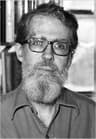
Leigh Van Valen
contemporaryPhilosophy of Biology / Evolutionary Biology
Leigh Van Valen (1935–2010) was an American evolutionary biologist at the University of Chicago known for sweeping, unconventional contributions to evolutionary theory and paleontology. He proposed the Red Queen hypothesis and Van Valen's Law of Extinction, and engaged seriously with the philosophy of biology, including scrutiny of the logical and cognitive foundations of natural selection.
1 argument
SkepticismTruth & Knowledge
L
Leivant
contemporary
1 argument
SkepticismTruth & Knowledge
L
Lennon
contemporary
1 argument
Problem of EvilAgainst a future action of God
LW
Lenore Weitzman
contemporaryFeminist Sociology
Lenore Weitzman is an American sociologist best known for her influential and controversial research on the economic consequences of divorce for women and children. Her work has shaped policy debates around divorce law reform, gender inequality, and the feminization of poverty.
1 argument
Justice & PunishmentRights & Liberty
LE
Leo Elders
contemporaryThomism / Neo-Scholasticism
Leo Elders (b. 1926) is a Dutch theologian and philosopher of the Society of the Divine Word, specializing in the thought of Thomas Aquinas. He has written extensively on Thomistic metaphysics, epistemology, and natural philosophy, serving for many years at the Pontifical University of St. Thomas Aquinas (Angelicum) in Rome. His work focuses on recovering and defending the systematic philosophy of Aquinas against modern critiques.
1 argument
SkepticismTruth & Knowledge
LS
Leo Szilard
modernPhilosophy of Physics / Philosophy of Information
Leo Szilard (1898–1964) was a Hungarian-American physicist whose work bridged physics, thermodynamics, and the philosophy of information. He is best known for conceiving the nuclear chain reaction and co-patenting the nuclear reactor, but his 1929 analysis of Maxwell's Demon made a foundational contribution to the thermodynamics of information by demonstrating that measurement itself has an entropic cost. His career spanned theoretical physics, nuclear weapons development, and later, bioethics and arms control advocacy.
1 argument
Causation
LH
Leon Horsten
contemporaryAnalytic Philosophy
Leon Horsten is a contemporary Belgian philosopher at the University of Bristol, specializing in philosophy of mathematics, philosophy of logic, and the theory of truth. He is best known for his rigorous investigations into deflationary theories of truth and their expressive limitations, as well as contributions to mathematical structuralism and the epistemology of formal systems.
1 argument
Truth & Knowledge
L
Leonard
contemporaryAnalytic Epistemology
Leonard is a contemporary epistemologist working in the philosophy of testimony. Their work examines how testimonial justification is transmitted and generated across chains of speakers, contributing to debates between transmission and generation views of testimonial warrant.
1 argument
Truth & Knowledge
LB
Leonard Bloomfield
modernStructural Linguistics / American Structuralism
Leonard Bloomfield (1887-1949) was an American linguist who was a leading figure in structural linguistics and a founder of the Linguistic Society of America. His behaviorist, anti-mentalist approach to language shaped mid-20th-century American linguistics and informed philosophical debates about meaning, reference, and the ontology of linguistic objects.
1 argument
SkepticismTruth & Knowledge
LJ
Leonard J. Savage
contemporaryBayesian Decision Theory / Subjective Probability
Leonard J. Savage (1917-1971) was an American mathematician and statistician whose work laid the foundations of Bayesian decision theory and subjective probability. His 1954 book 'The Foundations of Statistics' established the axiomatic basis for expected utility theory under uncertainty, profoundly influencing economics, philosophy of science, and rational choice theory.
1 argument
SkepticismTruth & Knowledge

Leonard Jimmie Savage
modernBayesian Decision Theory
Leonard Jimmie Savage (1917-1971) was an American mathematician and statistician who made foundational contributions to Bayesian statistics and decision theory. His seminal 1954 work 'The Foundations of Statistics' axiomatized subjective expected utility theory, providing a rigorous framework for rational decision-making under uncertainty.
1 argument
SkepticismTruth & Knowledge
LL
Leonard Lawlor
contemporaryContinental Philosophy
Leonard Lawlor is a contemporary American philosopher and Edwin Erle Sparks Professor of Philosophy at Penn State University, specializing in twentieth-century French and German Continental philosophy. He has produced influential studies on Henri Bergson, Maurice Merleau-Ponty, Jacques Derrida, and Gilles Deleuze, with sustained attention to questions of temporality, difference, and life. His work interrogates the boundaries between phenomenology, deconstruction, and post-structuralism.
1 argument
SkepticismTruth & Knowledge
Leonard Savage
modernAnalytic Philosophy / Decision Theory
Leonard Jimmie Savage (1917-1971) was an American mathematician and statistician best known for founding the subjective expected utility theory and Bayesian decision theory. His 1954 work 'The Foundations of Statistics' established an axiomatic basis for personal probability and rational choice under uncertainty, profoundly influencing economics, philosophy, and statistics.
1 argument
SkepticismTruth & Knowledge

Leopold Kronecker
modernMathematical Constructivism / Finitism
Leopold Kronecker (1823-1891) was a German mathematician who worked on number theory, algebra, and the foundations of mathematics. He is known for his constructivist philosophy of mathematics, famously asserting that 'God made the integers; all else is the work of man,' and for his opposition to Cantor's set theory and non-constructive methods.
1 argument
Truth & Knowledge
LL
Leopold Löwenheim
modernMathematical Logic
Leopold Löwenheim was a German mathematician and logician best known for his foundational contributions to mathematical logic in the early 20th century. His 1915 paper 'Über Möglichkeiten im Relativkalkül' established what would become the Löwenheim-Skolem theorem, a cornerstone result in model theory demonstrating that first-order theories with infinite models have models of every infinite cardinality.
1 argument
SkepticismTruth & Knowledge
LS
Leopold Stubenberg
contemporaryAnalytic Philosophy of Mind, Neutral Monism
Leopold Stubenberg is a contemporary philosopher of mind at the University of Notre Dame, specializing in consciousness, qualia, and neutral monism. He is known for his detailed engagement with William James's radical empiricism and its implications for the mind-body problem. His work bridges analytic philosophy of mind with the broader tradition of neutral monist metaphysics.
1 argument
Philosophy of LanguageTruth & Knowledge
L
Leroi
contemporaryPhilosophy of Biology, Naturalism
Armand Marie Leroi is a contemporary evolutionary developmental biologist and science writer based at Imperial College London. He is known for his work on the genetics of morphology, human variation, and the philosophical implications of evolutionary biology, as well as his intellectual biography of Aristotle as a natural scientist.
1 argument
BioethicsTruth & Knowledge
LG
Leslie Green
contemporaryLegal Positivism, Analytic Jurisprudence
Leslie Green is a contemporary philosopher of law and legal positivist, currently Professor of the Philosophy of Law at Oxford University (Balliol College). He is best known for his work on legal authority, the nature of law, and the foundations of legal obligation. His scholarship bridges analytic jurisprudence and political philosophy, with particular attention to the relationship between law, morality, and legitimate authority.
1 argument
Democracy & Governance
LS
Leslie Stevenson
contemporaryAnalytic Philosophy
Leslie Stevenson is a British analytic philosopher best known for his influential survey text 'Seven Theories of Human Nature' (1974), later expanded to 'Thirteen Theories of Human Nature.' His work spans philosophy of mind, epistemology, and the comparative study of philosophical and religious accounts of what it means to be human. He spent much of his academic career at the University of St Andrews.
1 argument
Truth & Knowledge
L
Levesque
contemporaryAnalytic Philosophy / Cognitive Science
Hector Levesque is a Canadian computer scientist and philosopher known for foundational work in knowledge representation and reasoning in artificial intelligence. His research bridges formal logic, cognitive science, and AI, particularly around the computational tractability of reasoning and the limits of logical knowledge.
1 argument
SkepticismTruth & Knowledge
L
Lewis
contemporaryAnalytic Philosophy
David Lewis (1941-2001) was an American analytic philosopher known for his systematic contributions to metaphysics, philosophy of language, and modal logic. He is best known for modal realism, the view that all possible worlds are as real as the actual world, and for influential work on counterfactuals, convention, and natural properties.
1 argument
Philosophy of LanguageTruth & Knowledge

Leyton-Brown
contemporaryAnalytic Philosophy / Computational Game Theory
Kevin Leyton-Brown is a contemporary computer scientist and game theorist whose work bridges artificial intelligence, computational economics, and multi-agent systems. He is known for contributions to algorithmic game theory, mechanism design, and the analysis of sequential and Bayesian games.
1 argument
SkepticismTruth & Knowledge
LQ
Liang Qichao
modernModern Chinese Philosophy
Liang Qichao (1873–1929) was a Chinese intellectual, journalist, and reformist who played a central role in modernizing Chinese thought during the late Qing dynasty and early Republic era. A student of Kang Youwei, he championed constitutional reform, participated in the failed Hundred Days' Reform of 1898, and subsequently synthesized Western liberal and democratic ideas with the Confucian tradition. His prolific scholarship bridged classical Chinese philosophy and modernity, producing foundational works in intellectual history, political theory, and the historiography of Chinese thought.
1 argument
Moral ResponsibilityVirtue Ethics
L
Liao
contemporaryAnalytic Philosophy, Formal Epistemology
Liao is a contemporary philosopher working in formal epistemology and philosophy of probability. Their work engages with the foundations of probabilistic reasoning, particularly the relationship between epistemic principles governing the assignment of prior probabilities under uncertainty.
1 argument
SkepticismTruth & Knowledge
L
Lichtenstein
contemporary
1 argument
SkepticismTruth & Knowledge
LO
Lidia Obojska
contemporaryAnalytic Philosophy, Philosophy of Language, Formal Logic
Lidia Obojska is a contemporary Polish logician and philosopher of language working in formal semantics and the logic of interpretation. Her research addresses issues at the intersection of logic, linguistics, and the philosophy of text, including questions about token identity, inscription, and the conditions under which a single written form yields multiple distinct linguistic objects. She contributes to the Polish tradition of analytic and formal philosophy.
1 argument
Modality & Possibility
LF
Lillian Faderman
contemporary
1 argument
Moral ResponsibilityBioethics
LA
Linda Alcoff
contemporaryFeminist Philosophy, Critical Philosophy of Race
Linda Martín Alcoff is a prominent contemporary philosopher known for her work in epistemology, feminist philosophy, and the philosophy of race and identity. She has developed influential accounts of social identity, positionality, and the epistemic significance of social location. Her work challenges both essentialism and anti-realism about identity categories.
1 argument
Moral ResponsibilityPersonal Identity
LB
Linda Bell
contemporaryFeminist Philosophy, Existentialism
Linda A. Bell is a contemporary feminist philosopher known for her work on existentialism, ethics, and feminist theory. She has contributed significantly to the intersection of Sartrean existentialism and feminist thought, arguing that existentialist frameworks must be critically revised to account for the gendered conditions that shape women's freedom and opportunity.
1 argument
Moral ResponsibilityRights & Liberty
LE
Linda Elder
contemporaryCritical Thinking Theory, Educational Philosophy
Linda Elder is a contemporary educational psychologist and critical thinking theorist best known for her collaboration with Richard Paul in developing the Paul-Elder Critical Thinking Framework. She serves as President of the Foundation for Critical Thinking and has authored numerous works advancing a systematic, standards-based approach to intellectual development. Her scholarship engages debates about the nature and generalizability of critical thinking skills, opposing domain-exclusivist positions that deny the existence of transferable reasoning competencies.
1 argument
SkepticismTruth & Knowledge
LM
Linda Martín Alcoff
contemporaryFeminist Epistemology / Social Epistemology
Linda Martín Alcoff is a contemporary philosopher at the CUNY Graduate Center whose work spans feminist epistemology, philosophy of race, social epistemology, and hermeneutics. She is known for developing frameworks that analyze how social identity—particularly race and gender—shapes knowledge production and epistemic authority. Her engagement with Gadamerian hermeneutics critically examines how tradition and power intersect in the construction of truth.
1 argument
SkepticismTruth & Knowledge
LR
Linda Radzik
contemporaryAnalytic Philosophy
Linda Radzik is a contemporary American moral philosopher at Texas A&M University whose work focuses on atonement, forgiveness, moral repair, and the ethics of blame. She is best known for her systematic account of how wrongdoers can make amends and restore moral relationships. Her research also addresses feminist concerns about how gender and social obstacles shape moral and philosophical inquiry.
1 argument
Moral ResponsibilityRights & Liberty
LW
Linda Wetzel
contemporaryAnalytic Philosophy
Linda Wetzel is a contemporary American analytic philosopher specializing in metaphysics and philosophy of language. She is best known for her work on types and tokens, particularly her book 'Types and Tokens: On Abstract Objects,' which defends a realist account of types as abstract particulars.
1 argument
Consciousness & Mind
L
Link
contemporaryUnknown
Insufficient information to generate a verified scholarly profile. The name 'Link' does not correspond to a known philosopher or theologian in the standard literature, and the sample argument concerns text generation conventions rather than a recognized philosophical contribution.
1 argument
Philosophy of Language
LG
Lisa Gannett
contemporaryPhilosophy of Biology
Lisa Gannett is a contemporary philosopher of biology whose work focuses on the conceptual and methodological foundations of genetics, genomics, and the life sciences. She has written extensively on the nature of genetic concepts, the philosophy of race in biological research, and the epistemological assumptions underlying genetic association studies. Her scholarship bridges philosophy of science and bioethics, critically examining how biological categories are constructed and applied.
1 argument
BioethicsTruth & Knowledge
LR
Lisa Raphals
contemporaryComparative Philosophy, History of Chinese Philosophy
Lisa Raphals is a contemporary scholar of comparative philosophy specializing in early Chinese and ancient Greek thought. She is known for her work on divination, fate, and gender in classical traditions, as well as close textual analysis of early Confucian and Daoist texts. Her comparative methodology has contributed to cross-cultural approaches to epistemology, ethics, and cosmology.
1 argument
Moral ResponsibilityVirtue Ethics

Lorenzo Valla
medievalRenaissance Humanism
Lorenzo Valla (1407–1457) was an Italian Renaissance humanist, rhetorician, and philologist whose critical methods transformed both philosophy and historiography. He is best known for exposing the Donation of Constantine as a medieval forgery through rigorous linguistic analysis, and for challenging Scholastic logic and ethics with humanist alternatives. His work laid foundational principles for Renaissance philology and biblical textual criticism.
1 argument
Philosophy of LanguageTruth & Knowledge
LJ
Lori Jo Marso
contemporaryFeminist Political Theory
Lori Jo Marso is a contemporary feminist political theorist and professor at Union College, known for her work on feminist philosophy, political subjectivity, and the intersection of gender and democratic theory. She engages with canonical and marginalized thinkers—including Simone de Beauvoir, Hannah Arendt, and Mary Wollstonecraft—to examine how women's lived experiences shape and challenge political thought. Her work foregrounds the structural obstacles facing women as both subjects of philosophy and as political agents.
1 argument
Moral ResponsibilityRights & Liberty
LW
Lori Watson
contemporaryAnalytic Philosophy, Feminist Philosophy
Lori Watson is a contemporary analytic philosopher working primarily in feminist political philosophy and ethics. She is known for her rigorous engagement with questions of sex work, pornography, equality, and the conditions under which women exercise genuine autonomy. Her work challenges liberal frameworks that abstract away from material and social obstacles facing women.
1 argument
Moral ResponsibilityRights & Liberty
L
Lorini
contemporaryAnalytic Philosophy / Formal Epistemology
Lorini is a contemporary philosopher working in formal epistemology and game theory, known for contributions to the logic of belief revision and dynamic epistemic logic. His work focuses on how rational agents update beliefs and plausibility orderings during sequential interactions and strategic reasoning.
1 argument
SkepticismTruth & Knowledge
LA
Louis Althusser
contemporaryStructural Marxism
Louis Althusser (1918–1990) was a French Marxist philosopher whose structuralist reinterpretation of Marx became highly influential in Western academic left thought during the 1960s–70s. He argued for a sharp 'epistemological break' in Marx's work separating early humanist writings from mature scientific theory, and developed the concepts of ideological state apparatuses and overdetermination. His work shaped debates in political theory, cultural studies, and the philosophy of science.
1 argument
SkepticismTruth & Knowledge
LC
Louis Crompton
contemporary
1 argument
Moral ResponsibilityBioethics
LR
Louis Rougier
contemporaryLogical Empiricism, Conventionalism
Louis Rougier (1889–1982) was a French philosopher of science associated with logical empiricism and conventionalism. Influenced by Henri Poincaré and connected to the Vienna Circle, he argued that the axioms of geometry and logic are conventional stipulations rather than empirical truths or a priori necessities. He also wrote extensively against Thomist metaphysics and Catholic scholasticism, and later turned to classical liberal political philosophy.
1 argument
Modality & PossibilityTruth & Knowledge
LG
Lov Grover
contemporaryPhilosophy of Computation / Quantum Information Theory
Lov Grover is an Indian-American computer scientist best known for developing Grover's algorithm, a quantum search algorithm that provides a quadratic speedup over classical search. His work has had foundational implications for quantum computing and raises philosophical questions about the nature of logical and mathematical knowledge in light of computational complexity.
1 argument
SkepticismTruth & Knowledge
LB
Luc Bovens
contemporaryAnalytic Philosophy
Luc Bovens is a Belgian philosopher specializing in epistemology, decision theory, ethics, and political philosophy. He has made significant contributions to Bayesian epistemology, particularly in the analysis of coherence and reliability of information sources, and has written extensively on applied ethics including family policy and migration.
1 argument
Philosophy of LanguageTruth & Knowledge
LT
Luca Tranchini
contemporaryAnalytic Philosophy, Proof-Theoretic Semantics
Luca Tranchini is a contemporary Italian logician and philosopher specializing in proof-theoretic semantics, vagueness, and the foundations of logic. His work engages with the semantics of logical constants, the paradoxes of vagueness, and formal approaches to indeterminacy. He has contributed to debates on epistemicism and the logical treatment of borderline cases.
1 argument
Philosophy of Language
LI
Luce Irigaray
contemporaryContinental Philosophy, Feminist Philosophy
Luce Irigaray (born 1930) is a Belgian-born French feminist philosopher, psychoanalyst, and linguist whose work critiques the phallocentrism of Western philosophical and psychoanalytic traditions. She argues that canonical philosophy has systematically excluded or misrepresented feminine subjectivity, and develops an affirmative ethics and ontology grounded in sexual difference. Her interdisciplinary approach draws on Lacanian psychoanalysis, phenomenology, and Continental philosophy.
1 argument
Moral ResponsibilityRights & Liberty
LF
Luciano Floridi
contemporaryPhilosophy of Information
Luciano Floridi is an Italian philosopher widely regarded as a founder of the philosophy of information and digital ethics. He has developed influential frameworks for understanding the ethical, epistemological, and metaphysical implications of information and communication technologies, and has advised governments and organizations including the EU and Google on digital policy.
1 argument
Philosophy of LanguageTruth & Knowledge
LA
Lucy Allais
contemporaryAnalytic Kantianism
Lucy Allais is a contemporary philosopher specializing in Kant's theoretical philosophy, particularly transcendental idealism, as well as moral philosophy including forgiveness and racial justice. She holds positions at the University of the Witwatersrand and Johns Hopkins University, and is known for defending a moderate metaphysical interpretation of Kant's idealism.
1 argument
PerceptionModality & Possibility
L
Ludlow
contemporaryAnalytic Philosophy
Peter Ludlow is a contemporary American philosopher known for his work in philosophy of language, philosophy of mind, and metaphysics. He has contributed significantly to debates on linguistic meaning, the semantics of tense, and the intersection of philosophy with emerging technologies and virtual worlds.
1 argument
SkepticismTruth & Knowledge

Ludwig Feuerbach
modernAnthropological Materialism
Ludwig Feuerbach (1804–1872) was a German philosopher whose materialist critique of religion profoundly shaped 19th-century thought. In his landmark work The Essence of Christianity (1841), he argued that theology is properly understood as anthropology — that God is a projection of idealized human qualities onto an imagined transcendent being. His reduction of the divine to the human had decisive influence on Marx, Engels, and later secular humanist traditions.
1 argument
Natural TheologyTruth & Knowledge
LP
Luigi Pareyson
contemporaryHermeneutics, Existential Ontology
Luigi Pareyson (1918–1991) was an Italian philosopher and professor at the University of Turin, known for developing a distinctive philosophical hermeneutics centered on the concepts of interpretation, formativity, and ontological freedom. He bridged existentialism and hermeneutics, arguing that truth is inexhaustible and always accessed through personal, historically situated interpretation. His work profoundly influenced Italian philosophy, notably through his student Gianni Vattimo.
1 argument
SkepticismTruth & Knowledge
LC
Luis Cabrera
contemporaryCosmopolitanism, Political Philosophy
Luis Cabrera is a contemporary political philosopher and theorist known for his work on global justice, cosmopolitanism, and the institutional dimensions of global democracy. He has argued for the viability and necessity of robust supranational democratic institutions as a response to global injustice. His scholarship engages normative questions about how international organizations can be made democratically accountable and legitimate.
1 argument
Democracy & Governance
Lv
Luis von Ahn
contemporaryComputer Science / Human Computation
Luis von Ahn is a Guatemalan-American computer scientist and entrepreneur known for pioneering human computation and crowdsourcing. He co-founded CAPTCHA, reCAPTCHA, and Duolingo, applying computational techniques to language learning and digitization at scale.
1 argument
Philosophy of Language
LE
Luitzen Egbertus Jan Brouwer
modernMathematical Intuitionism, Constructivism
Luitzen Egbertus Jan Brouwer (1881–1966) was a Dutch mathematician and philosopher who founded mathematical intuitionism, the view that mathematics is a mental construction rather than a discovery of mind-independent truths. He made foundational contributions to topology while simultaneously arguing that classical logic—particularly the law of excluded middle—is illegitimate when applied to infinite mathematical domains. His philosophical work challenged the basis of formal mathematics and sparked the foundationalist debates of the early twentieth century.
1 argument
Modality & PossibilityTruth & Knowledge
LB
Luke Barnes
contemporaryAnalytic Philosophy of Religion, Philosophy of Physics
Luke Barnes is an Australian astrophysicist and philosopher of physics at Western Sydney University, known for his rigorous defense of the fine-tuning argument for cosmic design. He engages critically with probabilistic objections to fine-tuning, including challenges based on observer selection effects and multiverse hypotheses. His work bridges empirical cosmology and philosophy of religion.
1 argument
Natural Theology
LB
Léon Brillouin
modernPhilosophy of Physics / Information Theory
Léon Brillouin (1889–1969) was a French physicist who made foundational contributions to quantum mechanics, solid-state physics, and information theory. He is best known for Brillouin zones and Brillouin scattering, and for his landmark analysis connecting physical entropy with information, most fully developed in his 1956 work *Science and Information Theory*. His resolution of Maxwell's Demon paradox—showing that any measurement act is thermodynamically costly—remains a touchstone in philosophy of physics.
1 argument
Causation
L
Löwenheim
modernMathematical Logic
Leopold Löwenheim (1878-1957) was a German mathematician and logician best known for his foundational contributions to mathematical logic and model theory. His 1915 paper 'Über Möglichkeiten im Relativkalkül' established what became the Löwenheim-Skolem theorem, a cornerstone result concerning the cardinality of models of first-order theories.
1 argument
SkepticismTruth & Knowledge
ME
M. Eddon
contemporaryAnalytic Philosophy, Metaphysics of Science
M. Eddon (Maya Eddon) is a contemporary analytic philosopher specializing in metaphysics and the philosophy of physics. Her work focuses on the nature of quantitative properties, including debates over the metaphysical status of magnitudes, vector properties, and their grounding. She has contributed to foundational questions about how physical quantities should be understood in terms of intrinsicness, fundamentality, and structural relations.
1 argument
Philosophy of LanguageModality & Possibility
MJ
M. J. Cresswell
contemporaryAnalytic Philosophy, Modal Logic
M. J. (Max) Cresswell is a New Zealand analytic philosopher specializing in modal logic and formal semantics. He is best known for co-authoring foundational textbooks on modal logic with G. E. Hughes and for his work on structured meanings and possible worlds semantics. His research has significantly shaped how philosophers and logicians understand the compositional semantics of modal languages.
1 argument
Modality & Possibility
M
MacBride
contemporaryAnalytic Philosophy
Fraser MacBride is a contemporary British analytic philosopher specializing in metaphysics, philosophy of logic, and philosophy of mathematics. He is known for his rigorous work on the metaphysics of relations, truthmakers, and ontological categories, and has contributed significantly to debates about the foundations of analytic metaphysics.
1 argument
Truth & Knowledge
Macedo
contemporaryLiberal Political Philosophy, Civic Republicanism
Stephen Macedo is a contemporary American political philosopher and professor of politics at Princeton University. He is known for defending a robust, civic-minded liberalism that requires cultivating shared virtues and common institutions rather than retreating into atomistic individualism. His work bridges liberal political theory and civic republicanism, arguing that liberal societies depend on active citizens with genuine community commitments.
1 argument
Rights & LibertySocial Contract
MB
Magdalena Bexell
contemporaryGlobal Governance Theory, Democratic Theory
Magdalena Bexell is a Swedish political scientist at Lund University whose research focuses on global governance, accountability, and the democratic legitimacy of international organizations. She examines how global institutions can be made more democratically responsive and accountable to diverse stakeholders. Her work bridges normative political theory and empirical analysis of multilateral governance.
1 argument
Democracy & Governance
MG
Mahatma Gandhi
modernIndian Political Philosophy, Gandhism, Nonviolent Ethics
Mohandas Karamchand Gandhi (1869–1948) was an Indian political philosopher and leader whose doctrine of nonviolent civil resistance (Satyagraha) became one of the most influential political philosophies of the twentieth century. Drawing on Hindu ethics, Jainism's principle of ahimsa, and Tolstoyan Christianity, he developed a systematic moral framework linking personal self-discipline to collective political transformation. He led India's independence movement against British colonial rule and shaped the theory and practice of nonviolent protest worldwide.
1 argument
SkepticismTruth & Knowledge
M
Maier
contemporaryAnalytic Philosophy, Formal Semantics
Maier is a contemporary philosopher and formal semanticist working in the tradition of Discourse Representation Theory (DRT). Their work focuses on the semantics of natural language, particularly on how accessibility relations between Discourse Representation Structures (DRSs) arise from the underlying semantics rather than through stipulation. Their research contributes to debates in philosophy of language, formal pragmatics, and dynamic semantics.
1 argument
Philosophy of LanguageModality & Possibility

Malcolm X
contemporaryBlack Nationalism, Pan-Africanism, Africana Philosophy
Malcolm X (1925–1965) was an African American Muslim minister, Black nationalist leader, and human rights activist whose thought challenged integrationist civil rights orthodoxy in favor of Black self-determination, self-defense, and Pan-African solidarity. Shaped by his time in the Nation of Islam and later by orthodox Sunni Islam following his pilgrimage to Mecca, he articulated a radical critique of structural white supremacy and advocated for the independent political and economic organization of Black communities. His ideas profoundly influenced Black Power movements and subsequent Africana philosophy.
1 argument
SkepticismTruth & Knowledge
Malebranche
modernRationalism, Occasionalism, Cartesianism
Nicolas Malebranche (1638–1715) was a French Oratorian priest and rationalist philosopher who sought to reconcile Cartesian philosophy with Augustinian theology. He is best known for his doctrine of occasionalism, which holds that God is the sole true cause of all events, and his theory of 'vision in God,' according to which human minds perceive ideas directly in the divine intellect.
1 argument
Truth & Knowledge
MO
Mancur Olson
contemporaryPublic Choice Theory / Political Economy
Mancur Olson (1932–1998) was an American economist and social scientist best known for his work on collective action, public goods, and the logic of group behavior. His landmark book *The Logic of Collective Action* (1965) challenged prevailing assumptions about group rationality, demonstrating that self-interested individuals will not voluntarily provide collective goods without selective incentives or coercion. His later work examined how distributional coalitions and institutional sclerosis contribute to national economic decline.
1 argument
Democracy & GovernanceSocial Contract
MK
Manfred Kraus
contemporaryAnalytic History of Philosophy / Ancient Rhetoric Studies
Manfred Kraus is a contemporary scholar of ancient rhetoric and argumentation theory, known for his work on Aristotelian logic and rhetorical examples. His research focuses on the structure and function of analogical and exemplary reasoning in classical antiquity, with particular attention to the relationship between rhetorical and formal logical analysis. He has contributed to the interpretation of Aristotle's treatment of the paradeigma as a mode of inference bridging rhetorical and dialectical domains.
1 argument
Philosophy of LanguageTruth & Knowledge
Me
Manger et al.
contemporaryComputational Linguistics
Manger et al. refers to a contemporary research collaboration in computational linguistics and natural language processing, focused on discourse coherence and text generation. Their work examines how discourse markers function in machine-generated text to improve readability and logical flow.
1 argument
Philosophy of Language
MV
Manuel Vargas
contemporaryAnalytic Philosophy
Manuel Vargas is a contemporary American philosopher specializing in free will, moral responsibility, and agency. He is best known for developing 'revisionism,' the position that our ordinary concept of free will should be revised in light of philosophical and empirical pressures rather than simply accepted or abandoned. His work integrates metaphysics, ethics, and empirical psychology to construct a forward-looking account of moral responsibility.
1 argument
Free Will & Foreknowledge

Mao Zedong
contemporaryMarxism-Leninism, Maoism
Mao Zedong (1893–1976) was a Chinese Marxist theorist, revolutionary leader, and founding chairman of the People's Republic of China. He developed Maoism, a distinctive adaptation of Marxism-Leninism to agrarian and anti-colonial conditions, and authored significant philosophical essays engaging dialectical materialism. His theoretical writings, particularly on contradiction and practice, contributed to 20th-century debates within the Marxist philosophical tradition.
1 argument
SkepticismTruth & Knowledge
MG
Marcello Guarini
contemporaryAnalytic Philosophy, Informal Logic
Marcello Guarini is a contemporary analytic philosopher at the University of Windsor specializing in informal logic, argumentation theory, and the philosophy of language. His work examines the formal and cognitive dimensions of analogical reasoning, including its Aristotelian roots in the paradeigma. He has contributed to debates on how analogical arguments can be reconstructed within formal logical frameworks.
1 argument
Philosophy of LanguageTruth & Knowledge
MB
Marcia Baron
contemporaryKantian Ethics, Analytic Philosophy
Marcia Baron is a contemporary American philosopher specializing in Kantian ethics and moral philosophy. She is best known for her rigorous defense and systematic reconstruction of Kantian moral theory, particularly her analysis of acting from duty, moral worth, and the role of maxims. Her work also engages feminist ethics, examining how gender shapes moral experience and judgment.
1 argument
Moral ResponsibilityConsciousness & Mind
MS
Marciano Siniscalchi
contemporaryAnalytic Philosophy / Epistemic Game Theory
Marciano Siniscalchi is an Italian-American economist and game theorist, currently Professor of Economics at Northwestern University. His research focuses on decision theory, epistemic game theory, and the foundations of dynamic games, particularly questions about rationality, belief revision, and backward induction.
1 argument
SkepticismTruth & Knowledge
MG
Marcus Garvey
modernPan-Africanism / Black Nationalism
Marcus Garvey (1887–1940) was a Jamaican political philosopher, orator, and publisher who founded the Universal Negro Improvement Association (UNIA) and became the preeminent theorist of Black nationalism and Pan-Africanism in the early twentieth century. He argued that people of African descent must build independent political, economic, and cultural institutions, ultimately uniting in a sovereign African nation. His philosophy of racial self-determination and diasporic solidarity shaped subsequent civil rights movements, Black Power ideology, and Rastafarianism.
1 argument
SkepticismTruth & Knowledge
MH
Marcus Hutter
contemporaryAlgorithmic Information Theory / Artificial General Intelligence
Marcus Hutter is a computer scientist and AI researcher known for his work on universal artificial intelligence and algorithmic information theory. He developed the AIXI model, a mathematical formalism for a theoretically optimal general intelligence agent, unifying ideas from reinforcement learning, Solomonoff induction, and Kolmogorov complexity.
1 argument
Philosophy of LanguageTruth & Knowledge
MG
Margaret Gilbert
contemporaryAnalytic Philosophy
Margaret Gilbert is a contemporary analytic philosopher known for pioneering work on social ontology, joint commitment, and the philosophy of collective action. She has developed influential accounts of how groups form plural subjects through mutual commitments, reshaping debates in social philosophy, political obligation, and group agency.
1 argument
SkepticismTruth & Knowledge
MJ
Margaret Jane Radin
contemporaryLegal Philosophy, Liberal Feminism, Pragmatism
Margaret Jane Radin is a contemporary legal philosopher and property theorist best known for her work linking property to personal identity and her critique of commodification. She has held professorships at Stanford Law School and the University of Michigan, where she developed influential theories on when market exchange is inappropriate or harmful. Her scholarship integrates feminist jurisprudence, pragmatist philosophy, and property law.
1 argument
Justice & PunishmentRights & Liberty
MP
Margaret Pabst Battin
contemporaryAnalytic Philosophy / Bioethics
Margaret Pabst Battin is an American philosopher and bioethicist, distinguished professor at the University of Utah, widely recognized for her pioneering work on end-of-life ethics, physician-assisted suicide, and the philosophy of suicide. Her scholarship has shaped contemporary debates on autonomy, rational suicide, and aid-in-dying policy across medical and legal contexts.
1 argument
Afterlife & Death
Margolis
contemporaryAmerican Pragmatism
Joseph Margolis (1924-2021) was an American philosopher known for his prolific contributions to pragmatism, philosophy of art, and cultural realism. He developed a distinctive form of 'robust relativism' and argued against fixed essences in human culture, defending a historicist, flux-oriented metaphysics.
1 argument
SkepticismTruth & Knowledge
ML
Maria Lugones
contemporaryDecolonial Feminism, Latin American Philosophy
María Lugones (1944–2020) was an Argentine-American philosopher and activist known for her foundational contributions to decolonial feminism, Latina philosophy, and philosophy of race. She developed the concept of the 'coloniality of gender,' extending Aníbal Quijano's coloniality of power to expose how colonial structures imposed a hierarchical gender binary on colonized peoples. Her work centers coalition-building across difference as a political and ethical practice.
1 argument
Moral ResponsibilityConsciousness & Mind
MD
Marian David
contemporaryAnalytic Philosophy
Marian David is a contemporary analytic philosopher best known for his defense and development of the correspondence theory of truth. His influential 1994 monograph *Correspondence and Disquotation* offers a rigorous account of how truth relates to the world while engaging seriously with deflationary rivals. He has contributed substantially to debates on truthmakers, negative truths, and the metaphysics of propositional content.
1 argument
Truth & Knowledge
MC
Marie Claire Villeval
contemporaryBehavioral Economics, Experimental Economics
Marie Claire Villeval is a French experimental and behavioral economist, Director of Research at CNRS and affiliated with the GATE-Lab (Groupe d'Analyse et de Théorie Économique) at the University of Lyon. She is known for laboratory and field experiments examining incentives, competition, cooperation, cheating behavior, and social preferences. Her work bridges economics and psychology to analyze how individuals respond to institutional rules and competitive environments.
1 argument
Democracy & GovernanceSocial Contract
MC
Marie Coppola
contemporaryCognitive Science, Philosophy of Language
Marie Coppola is a contemporary cognitive scientist and linguist at the University of Connecticut whose research focuses on language acquisition, homesign systems, and the origins of language structure. Her work investigates what grammatical knowledge children bring to language learning versus what can be induced from linguistic input, contributing empirical evidence to debates about linguistic nativism and learnability. She is particularly known for studying deaf children who develop homesign in the absence of conventional sign language input.
1 argument
SkepticismPhilosophy of Language
MF
Marilyn Frye
contemporaryFeminist Philosophy, Analytic Philosophy
Marilyn Frye (born 1941) is an American feminist philosopher and professor emerita at Michigan State University. She is known for her sharp analytic approach to feminist theory, particularly her work on oppression, sexism, and lesbian feminism. Her 1983 collection *The Politics of Reality* remains a foundational text in feminist philosophy.
1 argument
Moral ResponsibilityConsciousness & Mind
MR
Mario Rizzo
contemporaryAustrian Economics, Law and Economics
Mario Rizzo is an American economist and professor at New York University, associated with the Austrian and law-and-economics traditions. He is known for his work on the foundations of market economics, time and ignorance in economic theory, and critiques of behavioral paternalism. His scholarship bridges economics and legal philosophy, particularly on questions of rationality, public goods, and the limits of regulatory intervention.
1 argument
Democracy & GovernanceSocial Contract
MA
Mark Alfano
contemporaryAnalytic Philosophy
Mark Alfano is a contemporary analytic philosopher specializing in moral psychology, virtue theory, and social epistemology. He is best known for his empirically-informed skepticism about stable character traits, arguing that situational factors undermine traditional virtue ethics. He has held academic positions at institutions including Delft University of Technology and Australian Catholic University.
1 argument
SkepticismTruth & Knowledge
MB
Mark Battersby
contemporaryInformal Logic, Critical Thinking Theory
Mark Battersby is a contemporary Canadian philosopher specializing in informal logic, critical thinking, and argumentation theory. He has contributed to debates about the generalizability of critical thinking skills, challenging subject-specificity accounts that deny the existence of domain-general reasoning competencies. His work engages with foundational questions in critical thinking pedagogy and the epistemology of everyday reasoning.
1 argument
SkepticismTruth & Knowledge
MB
Mark Bickhard
contemporaryProcess Philosophy / Interactivism
Mark H. Bickhard is an American philosopher and cognitive scientist known for developing interactivism, a process-based metaphysical and epistemological framework. His work spans philosophy of mind, representation, emergence, and the foundations of cognition, arguing that representation and normativity arise from anticipatory interactive systems rather than correspondence.
1 argument
SkepticismTruth & Knowledge
MB
Mark Brown
contemporaryAnalytic Philosophy
Mark Brown is a contemporary analytic philosopher working primarily on modal logic, agency, and the philosophy of action. His work engages with formal approaches to ability, obligation, and the semantics of action sentences.
1 argument
Moral ResponsibilityModality & Possibility
MC
Mark Crimmins
contemporaryAnalytic Philosophy
Mark Crimmins is a contemporary analytic philosopher working primarily in philosophy of language and mind. He is best known for his work on the semantics of belief reports and propositional attitude ascriptions, arguing that such reports invoke unarticulated contextual constituents. His book Talk About Beliefs (1992) developed an influential account of how ordinary belief sentences can be both true and informative despite apparent substitution failures.
1 argument
Modality & PossibilityTruth & Knowledge
MH
Mark Hinchliff
contemporaryAnalytic Philosophy, Metaphysics
Mark Hinchliff is a contemporary analytic philosopher specializing in metaphysics, particularly the ontology of time and modal logic. He is best known for his defense of presentism — the view that only present entities exist — and for work on the relationship between propositions, truth, and possible worlds. His contributions address how standard assumptions in modal semantics must be revised when ontological presence is taken seriously.
1 argument
Modality & PossibilityTruth & Knowledge
MJ
Mark Johnson
contemporaryCognitive Philosophy, Pragmatism, Embodied Cognition
Mark Johnson (born 1949) is an American philosopher at the University of Oregon best known for his collaborative work with George Lakoff on conceptual metaphor theory and his foundational contributions to embodied cognition. His research argues that meaning, reason, and imagination are grounded in bodily experience and sensorimotor schemas rather than abstract symbol manipulation. He is a central figure in the cognitive science of language and pragmatist philosophy of mind.
1 argument
Philosophy of Language
MO
Mark Owen Webb
contemporaryAnalytic Philosophy, Reformed Epistemology
Mark Owen Webb is a contemporary American philosopher specializing in epistemology and philosophy of religion, with particular focus on the epistemology of testimony and religious belief. He has contributed to debates about how beliefs can be justified through chains of testimony and the conditions under which religious faith constitutes genuine knowledge. His work engages both analytic epistemology and the rationality of religious commitment.
1 argument
Truth & Knowledge
MR
Mark Ravizza
contemporaryAnalytic Philosophy, Compatibilism
Mark Ravizza is an American analytic philosopher best known for his collaboration with John Martin Fischer on moral responsibility and free will. Together they developed a sophisticated compatibilist account grounded in 'reasons-responsiveness,' arguing that an agent is morally responsible when their action flows from a mechanism that is appropriately sensitive to reasons. His work has been influential in connecting metaphysical questions about agency with normative questions about accountability.
1 argument
Free Will & Foreknowledge
MR
Mark Richard
contemporaryAnalytic Philosophy
Mark Richard is a contemporary analytic philosopher at Harvard University specializing in philosophy of language and the theory of propositions. He is known for his influential work on propositional attitude ascriptions, context-dependence, and the metaphysics of propositions across possible worlds. His research has contributed significantly to debates about relativism, truth, and the semantics of attitude reports.
1 argument
Modality & PossibilityTruth & Knowledge
MS
Mark Schroeder
contemporaryAnalytic Philosophy, Metaethics
Mark Schroeder is a contemporary American analytic philosopher and professor at the University of Southern California, specializing in metaethics, normative theory, and the philosophy of reasons. He is best known for his influential defense of Humeanism about reasons and his systematic engagement with expressivism and noncognitivist metaethical programs. His work examines the foundations of normativity, including the nature of wrongness, reasons for action, and the semantics of evaluative discourse.
1 argument
ConsequentialismTruth & Knowledge
MT
Mark Timmons
contemporaryAnalytic Philosophy, Metaethics
Mark Timmons is a contemporary American philosopher at the University of Arizona, specializing in metaethics, moral epistemology, and normative theory. He is best known for defending a non-realist cognitivist position in metaethics, arguing that moral judgments can be truth-apt without requiring a robust metaphysical foundation in moral facts. His work bridges metaethical theory and normative ethics, with significant contributions to debates about moral realism, contextualism, and the nature of moral obligation.
1 argument
ConsequentialismTruth & Knowledge
MV
Mark Vorobej
contemporaryAnalytic Philosophy
Mark Vorobej is a contemporary analytic philosopher based at McMaster University, known for his work in the philosophy of argument and practical ethics. His research examines the structure of moral obligations, particularly their temporal dimensions and the conditions under which agents incur or are released from normative requirements. He is the author of 'A Theory of Argument' (Cambridge University Press, 2006).
1 argument
Moral ResponsibilityJustice & Punishment
MK
Markku Keinänen
contemporaryAnalytic Philosophy, Trope Theory
Markku Keinänen is a Finnish analytic metaphysician specializing in trope theory and the ontology of properties and relations. His work critically examines whether relational tropes can adequately ground facts about similarity, instantiation, and structural complexity. He has contributed detailed formal analyses of trope-based ontologies and their limitations.
1 argument
Modality & PossibilityTruth & Knowledge
M
Maroney
contemporaryPhilosophy of Physics
Owen Maroney is a philosopher of physics at the University of Oxford whose work focuses on the foundations of statistical mechanics, thermodynamics of computation, and quantum foundations. He is known for rigorous analysis of Maxwell's demon and the physical basis of Landauer's principle, arguing that the thermodynamic cost of computation arises from erasure rather than measurement.
1 argument
Causation
M
Marshall
contemporary
1 argument
Philosophy of LanguageModality & Possibility

Marti Hearst
contemporaryComputational Linguistics
Marti Hearst is an American computational linguist and information scientist, Professor at the UC Berkeley School of Information. She is known for pioneering work in natural language processing, search user interfaces, and computational discourse analysis.
1 argument
Philosophy of Language
MB
Martin Bernal
contemporaryPostcolonial Studies, Revisionist Historiography
Martin Bernal (1937–2013) was a British scholar and professor at Cornell University best known for his multi-volume work 'Black Athena,' which argued that ancient Greek civilization had deep Afroasiatic roots systematically suppressed by Eurocentric historiography. His revisionist challenge to the 'Aryan model' of classical origins generated extensive scholarly controversy and reshaped debates about race, knowledge production, and the politics of ancient history.
1 argument
SkepticismTruth & Knowledge
MB
Martin Bojowald
contemporaryPhilosophy of Cosmology / Theoretical Physics
Martin Bojowald is a theoretical physicist and cosmologist at Penn State University, best known for founding Loop Quantum Cosmology (LQC). His work extends Loop Quantum Gravity into cosmological settings, replacing the classical Big Bang singularity with a quantum 'Big Bounce' in which the universe contracts and re-expands. His research carries significant implications for philosophy of cosmology, particularly debates about creation, time, and the causal structure of the universe's origin.
1 argument
Natural TheologyCausation
MG
Martin Grabmann
contemporaryScholasticism / Neo-Scholasticism
Martin Grabmann (1875–1949) was a German Catholic priest and historian of medieval philosophy, regarded as one of the foremost scholars of Scholasticism in the twentieth century. He made extensive contributions to the recovery and critical study of medieval philosophical and theological manuscripts, particularly those of Thomas Aquinas and his contemporaries. His work established the modern discipline of medieval intellectual history.
1 argument
Divine Attributes
MH
Martin Haspelmath
contemporaryLinguistic Typology / Philosophy of Linguistics
Martin Haspelmath is a German linguist known for his work in linguistic typology, language universals, and grammaticalization theory. He has made significant contributions to the philosophy of linguistics, particularly regarding the ontological status of linguistic entities and critiques of Platonist approaches to language.
1 argument
SkepticismTruth & Knowledge
MH
Martin Hollis
contemporaryAnalytic Philosophy (Philosophy of Social Science)
Martin Hollis (1938-1998) was a British philosopher at the University of East Anglia known for his work in philosophy of social science, rational choice theory, and game theory. He is particularly recognized for his critical examinations of rationality assumptions in economics and his contributions to debates about trust, collective action, and the foundations of social explanation.
1 argument
SkepticismTruth & Knowledge
MJ
Martin Jay
contemporaryCritical Theory, Intellectual History
Martin Jay (born 1944) is an American intellectual historian and cultural critic, best known for his work on the Frankfurt School and Western Marxism. He has spent much of his career at UC Berkeley, producing influential studies on critical theory, vision, and the history of ideas in modern European thought.
1 argument
SkepticismTruth & Knowledge
ML
Martin Luther King
contemporarySocial Gospel, Boston Personalism, Liberation Theology
Martin Luther King Jr. (1929–1968) was an American Baptist minister, theologian, and civil rights leader whose thought synthesized the Social Gospel tradition, Boston Personalism, and Gandhian nonviolence into a comprehensive philosophy of justice. Drawing on Reinhold Niebuhr, Walter Rauschenbusch, and the Sermon on the Mount, he articulated a political theology centered on the dignity of persons, the moral arc of history, and the redemptive power of unearned suffering. His arguments extended beyond domestic civil rights to address global poverty, militarism, and the structural conditions required for genuine democratic participation.
1 argument
Democracy & Governance
ML
Martin Luther King, Jr.
contemporarySocial Gospel, Personalist Theology, African-American Philosophy
Martin Luther King, Jr. (1929–1968) was an American Baptist minister, political philosopher, and civil rights leader whose thought synthesized Boston Personalism, the Social Gospel tradition, and Gandhian nonviolence into a coherent philosophy of moral resistance. His theological ethics grounded demands for racial justice in the intrinsic worth of persons and the imperative of the beloved community. He is the preeminent American practitioner-philosopher of nonviolent direct action.
1 argument
SkepticismTruth & Knowledge
MN
Martin Nowak
contemporaryMathematical Biology / Evolutionary Game Theory
Martin Nowak is a mathematical biologist and evolutionary theorist at Harvard University whose work bridges evolutionary dynamics, game theory, and the origins of cooperation. He has made foundational contributions to understanding how cooperation evolves among selfish agents, challenging the Darwinian assumption that natural selection favors pure defection. His mathematical models have reshaped debates in evolutionary biology, philosophy of biology, and even theology.
1 argument
Modality & PossibilityTruth & Knowledge
MO
Martin Osborne
contemporaryAnalytic Philosophy / Game Theory
Martin Osborne is a contemporary game theorist and economist known for his influential textbooks and research on the foundations of game theory. His work spans non-cooperative game theory, bargaining theory, and political economy, with particular attention to the interpretation of solution concepts and equilibrium refinements.
1 argument
SkepticismTruth & Knowledge
MR
Martin Rechsteiner
contemporaryPhilosophy of Science / Philosophy of Medicine
Martin Rechsteiner is a contemporary philosopher or scholar whose work engages with the methodology and epistemic status of empirical research, particularly the role of association studies in defining or clarifying the nature of conditions under investigation. His work touches on philosophy of science and philosophy of medicine, examining how statistical and empirical findings bear on conceptual analysis.
1 argument
BioethicsTruth & Knowledge
MS
Martin Smith
contemporaryAnalytic Epistemology
Martin Smith is a contemporary analytic epistemologist at the University of Edinburgh, known for his work on the norms of belief, justification, and the epistemology of risk. He is best known for developing the theory of normic support, which offers a distinctive approach to epistemic justification that navigates between probabilistic and certainty-based accounts.
1 argument
Skepticism
MS
Martin Stokhof
contemporaryFormal Semantics, Philosophy of Language, Analytic Philosophy
Martin Stokhof is a Dutch philosopher of language and formal semanticist at the University of Amsterdam, known primarily for his contributions to dynamic semantics and the formal analysis of natural language meaning. He co-developed Dynamic Predicate Logic (DPL) with Jeroen Groenendijk, a landmark framework for modeling anaphora and discourse coherence. His work bridges logic, linguistics, and philosophy of language, with ongoing interest in the foundations and limits of formal methods in semantics.
1 argument
Philosophy of LanguageModality & Possibility
MA
Mary Astell
modernEarly Modern Philosophy, Anglican Rationalism
Mary Astell (1666–1731) was an English philosopher and early feminist thinker whose work applied Cartesian rationalism to argue for women's intellectual equality and education. Her landmark 'A Serious Proposal to the Ladies' (1694) called for the founding of women's academic institutions, and 'Some Reflections Upon Marriage' (1700) offered a rigorous critique of women's subordination in domestic life. She is widely regarded as the first systematic feminist philosopher in the English tradition.
1 argument
Moral ResponsibilityRights & Liberty
MH
Mary Hesse
contemporaryAnalytic Philosophy of Science
Mary Hesse (1924–2016) was a British philosopher of science at the University of Cambridge, best known for her systematic account of analogical and model-based reasoning in science. Her work challenged purely formalist views of scientific explanation by arguing that models and analogies are not merely heuristic but epistemically constitutive of scientific theories. She also contributed to the philosophy of language and the sociology of scientific knowledge.
1 argument
Philosophy of LanguageTruth & Knowledge
ML
Mary Leng
contemporaryAnalytic Philosophy, Philosophy of Mathematics
Mary Leng is a contemporary philosopher of mathematics at the University of York, known for her defense of mathematical fictionalism. She argues that mathematical statements, while useful and even indispensable to science, need not be taken as literally true descriptions of abstract objects.
1 argument
Modality & Possibility
MM
Mary McIntosh
contemporary
1 argument
Moral ResponsibilityBioethics
MW
Mary Wollstonecraft
modernEnlightenment Liberalism, Early Feminist Philosophy
Mary Wollstonecraft (1759–1797) was an English Enlightenment philosopher and early feminist theorist whose work challenged prevailing assumptions about women's intellectual and moral capacities. Her landmark treatise A Vindication of the Rights of Woman (1792) argued that women's apparent inferiority stemmed from systemic denial of education rather than natural deficiency. She is widely regarded as a foundational figure in Western feminist philosophy.
1 argument
Moral ResponsibilityRights & Liberty
MS
Marya Schechtman
contemporaryAnalytic Philosophy
Marya Schechtman is a contemporary analytic philosopher at the University of Illinois at Chicago whose work centers on personal identity and the self. She is best known for developing the Narrative Self-Constitution View, which holds that persons constitute their identities by organizing their experiences into a coherent autobiographical narrative. Her work bridges metaphysical questions about personal identity with practical concerns in ethics and medicine.
1 argument
Personal Identity
MR
Mats Rooth
contemporaryFormal Semantics / Philosophy of Language
Mats Rooth is a formal semanticist and philosopher of language at Cornell University, best known for developing alternative semantics, a framework that analyzes focus by associating expressions with sets of semantic alternatives. His work has been foundational in linking prosodic focus to discourse structure and information packaging. He has also contributed to the formal treatment of anaphora and its interaction with discourse representation.
1 argument
Philosophy of LanguageModality & Possibility
MH
Matt Haber
contemporaryAnalytic Philosophy of Science
Matt Haber is a contemporary philosopher of biology at the University of Utah whose work examines the conceptual and epistemic foundations of evolutionary theory. He investigates the logical structure and cognitive status of scientific theories, with particular focus on the theory of natural selection and its relationship to broader issues in philosophy of science. His research contributes to debates about how we understand, represent, and reason with core biological theories.
1 argument
SkepticismTruth & Knowledge
MK
Matthew Kotzen
contemporaryAnalytic Philosophy
Matthew Kotzen is a contemporary analytic philosopher at the University of North Carolina at Chapel Hill, specializing in epistemology and philosophy of probability. He is known for his work on Bayesian confirmation theory, selection effects, and the epistemology of fine-tuning arguments. His research examines how evidence bears on hypotheses, particularly in contexts involving probabilistic reasoning and cosmological arguments.
1 argument
Natural Theology
ML
Matthew Lieberman
contemporaryComparative Philosophy, Chinese Philosophy
Matthew Lieberman is a contemporary scholar working in Chinese philosophy, with particular focus on early Confucian thought. His work engages the debates between Mencius and Xunzi on human nature, examining how interpretive frameworks—such as the water-metaphor view of Mengzian moral psychology—affect the force of competing arguments.
1 argument
Moral ResponsibilityVirtue Ethics
MW
Matthew Weiner
contemporaryAnalytic Epistemology
Matthew Weiner is a contemporary analytic philosopher working primarily in epistemology, with a focus on the social dimensions of knowledge and justification. He has contributed to debates surrounding testimonial knowledge, the norms governing assertion, and how justification transmits through chains of communicative exchange. His work engages with central questions about when and how hearers acquire epistemic warrant from speakers.
1 argument
Truth & Knowledge
ME
Matti Eklund
contemporaryAnalytic Philosophy
Matti Eklund is a Swedish analytic philosopher and professor at Uppsala University, known for his work in metaontology, metaethics, and philosophy of language. He has contributed influential accounts of ontological pluralism and the semantics of normative discourse, arguing that fundamental questions about what exists and what matters are deeply intertwined with questions about conceptual frameworks. His research spans the nature of normative properties, fictionalism, and the metaphysics of abstract objects.
1 argument
ConsequentialismTruth & Knowledge
M
Maubert
contemporaryAnalytic Philosophy / Formal Epistemology
Maubert is a contemporary scholar working in formal epistemology and game theory, with a focus on the dynamics of belief revision in sequential decision-making contexts. Their work examines how plausibility updates function differently during actual gameplay versus theoretical analysis, contributing to debates in epistemic game theory.
1 argument
SkepticismTruth & Knowledge
MD
Maureen Donnelly
contemporaryAnalytic Metaphysics, Formal Ontology
Maureen Donnelly is a contemporary analytic philosopher specializing in formal ontology, mereology, and spatial reasoning. She is affiliated with the National Center for Ontological Research (NCOR) at the University at Buffalo, where her work bridges foundational metaphysics and applied ontology. Her research examines parthood relations, location, and the formal structure of ontological frameworks, with attention to problems surrounding relational properties and trope theory.
1 argument
Modality & PossibilityTruth & Knowledge
MC
Max Cresswell
contemporaryAnalytic Philosophy, Modal Logic
Max Cresswell is a New Zealand logician and philosopher specializing in modal logic and formal semantics. He is best known for his long collaboration with G.E. Hughes, producing the definitive introductory textbooks on modal logic. His work has been central to clarifying the semantics of possible worlds and the formal treatment of tense and modal operators.
1 argument
Modality & PossibilityFree Will & Foreknowledge
MH
Max Horkheimer
modernCritical Theory, Frankfurt School
Max Horkheimer (1895–1973) was a German philosopher and sociologist who co-founded Critical Theory as director of the Frankfurt School's Institute for Social Research. He distinguished 'critical theory' from 'traditional theory,' arguing that philosophy must be oriented toward emancipatory social transformation rather than merely describing the status quo. His later work, co-authored with Theodor W. Adorno, analyzed how Enlightenment rationality had become a tool of domination.
1 argument
SkepticismTruth & Knowledge
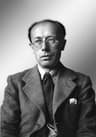
Max Newman
contemporaryAnalytic Philosophy of Science
Maxwell Herman Alexander Newman (1897–1984) was a British mathematician known for foundational work in combinatorial topology and as a key architect of wartime computing at Bletchley Park. He led the Newmanry, the team that operated the Colossus machines to break Lorenz-encrypted German communications. Newman also engaged with the philosophy of science and foundations of mathematics, particularly questions about the logical and geometric methods of Weyl and Reichenbach.
1 argument
SkepticismTruth & Knowledge
MS
Max Scheler
modernPhenomenology
Max Scheler (1874–1928) was a German philosopher and a leading figure in phenomenology, best known for developing a material value ethics as a counter to Kantian formalism. He applied phenomenological methods to the study of emotions, sympathy, and moral experience, arguing that values are objective and emotionally apprehended. His later work shifted toward philosophical anthropology, exploring the unique status of human beings in the cosmos.
1 argument
SkepticismTruth & Knowledge
MV
Max Velmans
contemporaryPhilosophy of Mind
Max Velmans is a British psychologist and philosopher of mind, Emeritus Professor of Psychology at Goldsmiths, University of London. He is best known for developing Reflexive Monism, a non-reductive theory of consciousness that seeks to integrate first-person and third-person perspectives on mental phenomena.
1 argument
Consciousness & Mind
MW
Max Weinreich
contemporaryAnalytic Philosophy
Max Weinreich is a contemporary scholar who has contributed to debates in the philosophy of mathematics, particularly concerning platonism. His work engages critically with arguments for mathematical realism.
1 argument
SkepticismTruth & Knowledge
M
Maybee
contemporaryHegelian Philosophy, Continental Philosophy
Julie E. Maybee is a contemporary philosopher specializing in Hegel's logic and dialectical method. She is known for her systematic reconstructions of Hegel's argument structures, particularly her work making Hegel's Encyclopaedia Logic accessible through diagrammatic analysis. Her scholarship engages the coherence of Hegelian contradiction, arguing that dialectical opposition—such as the self/not-self—admits of resolution through sublation rather than simple negation.
1 argument
Modality & PossibilityTruth & Knowledge
M
Mayberry
contemporaryAnalytic Philosophy of Language
Mayberry is a contemporary philosopher working in the philosophy of language and linguistics, with contributions to debates surrounding language learnability and the logical problem of language acquisition. Their work engages with formal arguments about what can and cannot be inferred from primary linguistic data, situating them within the broader nativist-empiricist debate in philosophy of mind and linguistics.
1 argument
SkepticismPhilosophy of Language
M
McClellan
contemporaryPhilosophy of Medicine / Philosophy of Science
McClellan is a contemporary philosopher or theorist working in philosophy of medicine or philosophy of science, engaging with questions about how empirical research methods—particularly association studies—bear on the conceptual analysis of medical or psychiatric conditions. Their work addresses the relationship between epidemiological evidence and the ontological or definitional understanding of disease categories.
1 argument
BioethicsTruth & Knowledge
M
McDowell
contemporaryAnalytic Philosophy, Neo-Aristotelianism
John McDowell (born 1942) is a South African-born British philosopher who has held positions at Oxford and the University of Pittsburgh. He is best known for Mind and World (1994), in which he argues that experience must have conceptual content to serve as a rational basis for thought, navigating between coherentism and what Wilfrid Sellars called the Myth of the Given. His work spans philosophy of mind, language, and neo-Aristotelian ethics.
1 argument
Philosophy of LanguageTruth & Knowledge
M
McGrath
contemporaryAnalytic Philosophy
Mathew McGrath is a contemporary analytic philosopher specializing in epistemology, with particular focus on knowledge, justification, and responses to skeptical challenges. He has contributed to debates surrounding epistemic closure, contextualism, and the conditions under which beliefs about the external world count as warranted. His work engages critically with the structure of anti-skeptical arguments and the limits of epistemic justification.
1 argument
Skepticism
MR
McKelvey, Richard
contemporaryAnalytic Philosophy / Formal Political Theory
Richard D. McKelvey was an American political scientist and game theorist known for foundational contributions to social choice theory and experimental game theory. His work on voting, quantal response equilibrium, and the epistemic foundations of backward induction shaped formal political theory and behavioral game theory.
1 argument
SkepticismTruth & Knowledge
M
McRae
contemporaryComparative Philosophy, Confucian Ethics
McRae is a contemporary philosopher specializing in Chinese philosophy and comparative ethics, with particular focus on Confucian moral psychology. Their work examines classical debates between Mencius and Xunzi on human nature, moral cultivation, and the metaphysical underpinnings of ethical development.
1 argument
Moral ResponsibilityVirtue Ethics
M
McTaggart
modernBritish Idealism
John McTaggart Ellis McTaggart (1866–1925) was a British idealist philosopher at Cambridge, best known for his argument that time is unreal and his systematic metaphysics developed in 'The Nature of Existence.' A follower of Hegel, he defended personal idealism—the view that ultimate reality consists of a community of souls united by love—and made lasting contributions to the philosophy of time, metaphysics, and ethics.
1 argument
Philosophy of Language
MK
Melissa Koenig
contemporaryAnalytic Philosophy, Social Epistemology
Melissa Koenig is a contemporary philosopher and cognitive developmental scientist whose work sits at the intersection of epistemology and developmental psychology. She is best known for her research on how children acquire and evaluate testimony, including the mechanisms by which trust in informants develops and is calibrated. Her work has significantly advanced social epistemology by grounding questions about testimonial justification in empirical findings about human cognition.
1 argument
Truth & Knowledge
M
Melissus
ancient
1 argument
Justice & PunishmentRights & Liberty
MY
Menahem Yaari
contemporaryDecision Theory / Analytic Philosophy
Menahem Yaari is an Israeli economist and decision theorist known for foundational contributions to expected utility theory, risk aversion, and game theory. He developed the dual theory of choice under risk, an influential alternative to expected utility theory, and has written on the philosophical foundations of rational choice, including critiques of backward induction.
1 argument
SkepticismTruth & Knowledge
M
Mencius
ancientConfucianism
Mencius (Mengzi, c. 372–289 BCE) was a Confucian philosopher in the Warring States period of China, widely regarded as the second most important figure in classical Confucianism after Confucius himself. He is best known for his doctrine that human nature is inherently good and his political philosophy emphasizing benevolent governance and the moral responsibilities of rulers.
1 argument
Moral ResponsibilityVirtue Ethics
M
Meredith
contemporaryMathematical Logic / Tense Logic
Carew Arthur Meredith (1904–1976) was an Irish logician best known for his contributions to propositional calculus and tense logic. Working alongside A.N. Prior, he helped formalize the logical treatment of time and future contingents, producing notably compact axiom systems for classical and modal logics.
1 argument
Modality & PossibilityFree Will & Foreknowledge
M
Merzenich
contemporaryCognitive Neuroscience / Naturalistic Philosophy of Mind
Michael Merzenich is an American neuroscientist and professor emeritus at the University of California, San Francisco, widely regarded as a founding figure in the science of neuroplasticity. His research demonstrated that the adult brain retains the capacity for substantial structural reorganization in response to experience and learning. His work has significantly influenced debates in cognitive science and philosophy of mind concerning the biological basis of language acquisition and cognitive development.
1 argument
SkepticismPhilosophy of Language
MF
Meyer Fortes
contemporaryStructural-Functionalist Anthropology
Meyer Fortes (1906–1983) was a South African-born British social anthropologist best known for his foundational work in African kinship, lineage theory, and political organization. A leading figure in British structural-functionalism, he conducted landmark fieldwork among the Tallensi of northern Ghana and the Ashanti of Ghana. His theoretical contributions shaped mid-twentieth century anthropology's understanding of descent, ancestor worship, and the relationship between kinship and social structure.
1 argument
SkepticismTruth & Knowledge
MA
Michael Ayers
contemporaryAnalytic Philosophy, History of Early Modern Philosophy
Michael Ayers is a British analytic philosopher and emeritus professor at the University of Oxford, best known for his landmark two-volume study of John Locke. His work bridges the history of early modern philosophy and systematic epistemology, with sustained attention to perception, substance, and the nature of knowledge. He has also engaged questions in philosophy of religion, including the logical constraints on divine permission of error.
1 argument
Problem of EvilAgainst a future action of God
MB
Michael Bacharach
contemporaryAnalytic Philosophy / Game Theory
Michael Bacharach (1936–2002) was a British economist and philosopher who made significant contributions to game theory, decision theory, and the philosophy of economics. He is best known for developing the theory of team reasoning, which challenges standard rational choice theory by arguing that agents sometimes reason as members of a group rather than as individuals, and for his critical analyses of solution concepts in game theory.
1 argument
SkepticismTruth & Knowledge
MB
Michael Bergmann
contemporaryAnalytic Philosophy, Reformed Epistemology
Michael Bergmann is a contemporary analytic philosopher at Purdue University whose work spans epistemology and philosophy of religion. He is best known for his defense of skeptical theism as a response to evidential arguments from evil, and for his externalist account of epistemic justification developed in 'Justification without Awareness' (2006). His epistemological work argues that justified belief does not require the believer's awareness of what makes it justified, and that nonconceptual experiential states can bear genuine evidential weight.
1 argument
Perception
MB
Michael Bratman
contemporaryAnalytic Philosophy
Michael Bratman is an American analytic philosopher at Stanford University, best known for developing the planning theory of intention and agency. His influential 1987 work 'Intention, Plans, and Practical Reason' argues that intentions are not merely strong desires but are plan-states that structure practical reasoning over time. His work bridges philosophy of action, metaphysics, and ethics, with significant contributions to debates on free will, autonomy, and shared agency.
1 argument
Free Will & Foreknowledge
MB
Michael Brownstein
contemporaryAnalytic Philosophy
Michael Brownstein is a contemporary analytic philosopher at John Jay College of Criminal Justice (CUNY) whose work focuses on implicit bias, agency, and the philosophy of mind. He examines how unconscious attitudes and biases shape cognition, responsibility, and social behavior. His research bridges philosophy of action, social epistemology, and ethics.
1 argument
Moral ResponsibilityConsciousness & Mind
MB
Michael Burke
contemporaryAnalytic Philosophy
Michael Burke is a contemporary analytic philosopher whose work focuses on material constitution, sortal essentialism, and the metaphysics of persistence. He is best known for defending the 'dominant sortal' view, which holds that when two objects coincide, the one falling under the dominant sortal is the only object present. His contributions bear on debates about identity, coincidence, and the ontology of artifacts and organisms.
1 argument
Modality & Possibility
MD
Michael Detlefsen
contemporaryPhilosophy of Mathematics, Formalism
Michael Detlefsen (1948–2019) was an American philosopher of mathematics at the University of Notre Dame, best known for his defense and reconstruction of Hilbert's Program. His work examined the philosophical foundations of proof, formalism, and the epistemic significance of Gödel's incompleteness theorems.
1 argument
Modality & PossibilityTruth & Knowledge
Michael Devitt
contemporaryAnalytic Philosophy
Michael Devitt is an Australian-American philosopher known for his work in philosophy of language, metaphysics, and philosophy of linguistics. He is a leading defender of scientific realism and naturalism, arguing against semantic and linguistic conceptions that treat meanings or linguistic rules as abstract entities.
1 argument
SkepticismTruth & Knowledge
ME
Michael Esfeld
contemporaryAnalytic Philosophy, Philosophy of Physics
Michael Esfeld is a Swiss philosopher of physics and metaphysics, professor at the University of Lausanne, known for his work on the ontological foundations of physics. He has been a central figure in debates over structural realism, Humeanism about laws of nature, and the metaphysics of quantum mechanics. His research bridges analytic metaphysics and philosophy of science, with particular attention to Bohmian mechanics and the nature of physical properties.
1 argument
Modality & PossibilityTruth & Knowledge
MF
Michael Fara
contemporaryAnalytic Philosophy
Michael Fara was an analytic philosopher who worked primarily on philosophy of language, metaphysics, and the theory of conditionals. Associated with Princeton University, he made contributions to debates surrounding vagueness, ability, and the metaphysics of freedom. He died in 2011 at a relatively young age, leaving a body of work that influenced ongoing debates in analytic metaphysics and philosophy of action.
1 argument
Free Will & Foreknowledge
MF
Michael Fischer
contemporaryAnalytic Philosophy
John Martin Fischer is an American philosopher best known for his work on free will, moral responsibility, and the metaphysics of death. He developed the influential 'semicompatibilist' position, arguing that moral responsibility is compatible with determinism even if free will is not.
1 argument
SkepticismTruth & Knowledge
MF
Michael Forster
contemporaryGerman Idealism, Analytic History of Philosophy
Michael Forster is a contemporary philosopher specializing in the history of philosophy, German Idealism, and philosophical hermeneutics. He has produced major scholarly works on Hegel, Herder, and Fichte, with particular attention to questions of self-consciousness, language, and interpretation. He has held positions at the University of Chicago and the University of Bonn.
1 argument
Modality & PossibilityTruth & Knowledge
MF
Michael Friedman
contemporaryPhilosophy of Science, Neo-Kantianism
Michael Friedman (born 1947) is an American philosopher of science best known for his neo-Kantian account of the constitutive role of principles in physical theory. Working at Stanford University, he has developed an influential framework of 'relativized a priori' principles—claims that are neither empirical hypotheses nor eternal logical truths, but serve as necessary preconditions for a given scientific framework. His work bridges the history of logical empiricism, Kantian epistemology, and the philosophy of modern physics.
1 argument
Modality & PossibilityTruth & Knowledge
MG
Michael Goodhart
contemporaryAnalytic Political Philosophy
Michael Goodhart is a contemporary political theorist at the University of Pittsburgh whose work focuses on democracy, human rights, and global justice. He argues that democracy is best understood as a human right rather than a set of institutional arrangements, and has contributed significantly to debates about transnational democratic theory and the normative foundations of international institutions.
1 argument
Democracy & Governance
MH
Michael Heidelberger
contemporaryPhilosophy of Science
Michael Heidelberger is a German philosopher of science at the University of Tübingen, known for his historical and systematic work on the philosophy of the natural and human sciences. He is best known for his authoritative study of Gustav Theodor Fechner and the philosophical foundations of psychophysics. His work spans the history of scientific empiricism, the nature of measurement, and the epistemology of causal explanation.
1 argument
Philosophy of LanguageTruth & Knowledge
MJ
Michael J. Murray
contemporaryAnalytic Philosophy of Religion
Michael J. Murray is a contemporary analytic philosopher of religion, known for his work on theodicy, divine hiddenness, and the problem of natural evil. He has written extensively on the relationship between suffering, animal pain, and theistic belief, arguing that evolutionary and theological accounts of pain can be reconciled. He served as a faculty member at Franklin & Marshall College and as a program officer at the John Templeton Foundation.
1 argument
Divine AttributesAgainst an attribute of God
MJ
Michael J. Zimmerman
contemporaryAnalytic Philosophy
Michael J. Zimmerman is a contemporary analytic philosopher best known for his work in moral philosophy, particularly on intrinsic value, moral responsibility, and the ethics of ignorance. He is a professor at the University of North Carolina at Greensboro and has made significant contributions to debates about what we ought to do under conditions of uncertainty. His scholarship bridges metaethics and normative theory, with sustained attention to epistemic dimensions of moral obligation.
1 argument
Moral Responsibility
ML
Michael LaFargue
contemporaryComparative Philosophy, Chinese Religious Studies
Michael LaFargue is a contemporary scholar of Chinese religion and philosophy, best known for his text-critical and hermeneutical work on the Tao Te Ching. He has also contributed to debates in early Confucian philosophy, particularly on how interpretive frameworks shape readings of Mencius and Xunzi. His approach emphasizes rigorous attention to original textual context and the dangers of anachronistic philosophical projection.
1 argument
Moral ResponsibilityVirtue Ethics
ML
Michael Levine
contemporaryAnalytic Philosophy of Religion
Michael P. Levine is a contemporary Australian philosopher specializing in philosophy of religion, metaphysics, and ethics. He is best known for his systematic treatment of pantheism as a philosophically viable alternative to classical theism, and for critical work on the logical and probabilistic structure of arguments concerning God's existence. He has held academic positions at the University of Western Australia.
1 argument
Natural Theology
MM
Michael Maratsos
contemporaryCognitive Science, Developmental Psycholinguistics
Michael Maratsos is a contemporary cognitive scientist and developmental psychologist at the University of Minnesota, known for his foundational work on language acquisition and the learnability of grammar. His research examines how children acquire syntactic structures from impoverished input, contributing to debates on nativism and the poverty of the stimulus. He is a central figure in the empirical study of how grammatical knowledge develops from primary linguistic data.
1 argument
SkepticismPhilosophy of Language
MM
Michael McKenna
contemporaryAnalytic Philosophy
Michael McKenna is a contemporary American analytic philosopher specializing in free will, moral responsibility, and action theory. He is best known for defending compatibilism and for developing a conversational theory of moral responsibility, which frames moral accountability as a form of structured dialogue between agents. He is a professor of philosophy at the University of Arizona.
1 argument
Free Will & Foreknowledge
MM
Michael Moehler
contemporaryAnalytic Political Philosophy, Contractarianism
Michael Moehler is a contemporary political philosopher specializing in contractarianism, rational choice theory, and the foundations of morality. He is best known for developing a multilevel social contract theory that attempts to ground minimal moral norms in conditions of deep value pluralism. His work interrogates the limits of classical Hobbesian and Rawlsian frameworks by attending to the strategic and rational constraints real agents face.
1 argument
Social Contract
MN
Michael Nylan
contemporarySinology / Classical Chinese Studies
Michael Nylan is a historian and sinologist at the University of California, Berkeley, specializing in early Chinese history and classical thought, particularly the Han dynasty and pre-Han philosophical texts. She is best known for her work on the formation and reception of the Confucian canon, including critical reassessments of how classical texts like those of Xunzi and Mencius have been interpreted across Chinese history. Her scholarship challenges received readings of early Confucian figures and attends closely to textual transmission and interpretive tradition.
1 argument
Moral ResponsibilityVirtue Ethics
MP
Michael Potter
contemporaryAnalytic Philosophy
Michael Potter is a contemporary British analytic philosopher and logician at the University of Cambridge, known primarily for his work in the philosophy of mathematics, logic, and the foundations of arithmetic. His scholarship bridges formal logic and philosophical analysis, with significant contributions to understanding set theory, Frege, and Wittgenstein. He has also engaged with metaethics and the philosophy of language.
1 argument
Philosophy of Language
MR
Michael Rea
contemporaryAnalytic Philosophy of Religion
Michael Rea is a contemporary analytic philosopher at the University of Notre Dame, specializing in philosophy of religion and metaphysics. He is a leading figure in analytic theology, contributing significantly to debates on the Trinity, divine hiddenness, and material constitution. His work bridges rigorous analytic methodology with classical theological questions.
1 argument
Trinity
MR
Michael Rota
contemporaryAnalytic Philosophy of Religion
Michael Rota is a contemporary analytic philosopher of religion at the University of St. Thomas (Minnesota), specializing in natural theology and probabilistic arguments for theism. He is known for applying Bayesian reasoning to classical arguments for God's existence, including fine-tuning arguments and Pascal's Wager. His work engages questions of moral uncertainty, epistemic rationality, and the evidential force of cosmological and teleological evidence.
1 argument
Natural Theology
MS
Michael S. Moore
contemporaryAnalytic Philosophy of Law
Michael S. Moore is an American legal philosopher and criminal law theorist known for his rigorous defense of moral realism in jurisprudence. He has made foundational contributions to theories of retributive justice, criminal responsibility, and causation in law. His work argues that legal concepts like culpability and desert track genuine moral facts rather than mere social conventions.
1 argument
Moral Responsibility

Michael Sandel
contemporaryCommunitarianism, Civic Republicanism
Michael Sandel (born 1953) is an American political philosopher at Harvard University best known for his communitarian critique of Rawlsian liberalism. In 'Liberalism and the Limits of Justice' (1982), he argued that liberal theory rests on an implausibly 'unencumbered' conception of the self, severed from its constitutive moral and communal ties. He has since extended this critique into debates on bioethics, market morality, and civic republicanism.
1 argument
Rights & LibertySocial Contract
MS
Michael Scriven
contemporaryAnalytic Philosophy, Philosophy of Science
Michael Scriven (1928–2025) was an influential philosopher and evaluation theorist best known for his foundational contributions to the philosophy of science, logic, and educational evaluation. He developed key concepts in evaluation methodology and made significant contributions to critical thinking theory and informal logic.
1 argument
SkepticismTruth & Knowledge
MS
Michael Shuman
contemporaryCommunitarianism, Political Economy
Michael Shuman is a contemporary American economist, attorney, and community development advocate known for his critique of hyper-individualistic economic and political frameworks. He argues that atomistic conceptions of the self—treating individuals as fundamentally separate from community ties—erode the social fabric necessary for liberal democratic institutions to function. His work bridges political philosophy, economics, and localism, contending that resilient communities require relational rather than atomistic models of persons.
1 argument
Rights & LibertySocial Contract
MS
Michael Sipser
contemporaryTheoretical Computer Science / Philosophy of Computation
Michael Sipser is an American theoretical computer scientist and mathematician at MIT, best known for his foundational contributions to computational complexity theory and his influential textbook on the theory of computation. His work spans circuit complexity, probabilistic computation, and the P versus NP problem, and he has shaped how generations of students understand the mathematical limits of computation.
1 argument
SkepticismTruth & Knowledge
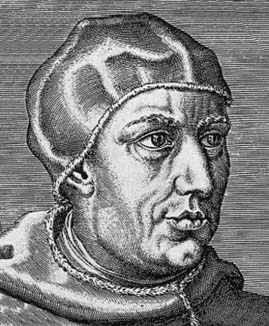
Michael Stifel
modernRenaissance Mathematics and Lutheran Theology
Michael Stifel (c. 1487–1567) was a German mathematician and Protestant theologian, an early Augustinian monk who became a close associate of Martin Luther. He is best known for his 1544 work Arithmetica Integra, which advanced algebraic notation, treated negative numbers as legitimate, and pioneered the use of logarithms before Napier.
1 argument
Philosophy of LanguageTruth & Knowledge
MS
Michael Stocker
contemporaryAnalytic Philosophy, Moral Psychology
Michael Stocker is an American moral philosopher best known for his critique of mainstream ethical theories in 'The Schizophrenia of Modern Ethical Theories' (1976), which argued that Kantian and utilitarian frameworks pathologically divorce moral reasons from genuine human motivation. His work centers on moral psychology, the role of emotions in ethical life, and the importance of particular relationships and values that resist impartial systematization.
1 argument
Moral ResponsibilityConsciousness & Mind
MT
Michael Titelbaum
contemporaryAnalytic Philosophy, Formal Epistemology
Michael G. Titelbaum is an American philosopher specializing in epistemology, formal epistemology, and the philosophy of probability. He is a professor at the University of Wisconsin–Madison, known for his work on rational belief revision, self-locating beliefs, and the foundations of Bayesian reasoning.
1 argument
Truth & Knowledge
MW
Michael Weisberg
contemporaryPhilosophy of Science
Michael Weisberg is an American philosopher of science at the University of Pennsylvania, known for his work on models and idealization in science, population thinking, and the philosophy of biology. He has made significant contributions to understanding how scientists use simplified models to explain complex phenomena.
1 argument
Truth & Knowledge
MW
Michael Welbourne
contemporaryAnalytic Philosophy, Epistemology
Michael Welbourne is a British analytic philosopher known primarily for his work in the epistemology of testimony. He developed an influential account of how knowledge can be transmitted through chains of testimony, arguing that testimony is a genuine source of knowledge rather than merely justified belief. His book The Community of Knowledge (1993) is a central contribution to the philosophy of testimony.
1 argument
Truth & Knowledge

Michael Wooldridge
contemporaryComputational Game Theory / AI and Multi-Agent Systems
Michael Wooldridge is a British computer scientist and AI researcher, currently Professor of Computer Science at the University of Oxford. He is one of the leading figures in multi-agent systems and computational game theory, bridging formal methods in AI with philosophical questions about rationality, agency, and strategic reasoning.
1 argument
SkepticismTruth & Knowledge
MZ
Michael Zimmerman
contemporaryAnalytic Philosophy
Michael J. Zimmerman is a contemporary American analytic philosopher known primarily for his work in normative ethics, deontic logic, and the theory of moral obligation. He has made significant contributions to debates about intrinsic value, moral responsibility, and the role of ignorance and uncertainty in determining what agents are obligated to do. His work challenges standard accounts of obligation by scrutinizing the temporal and epistemic conditions under which duties arise.
1 argument
Moral ResponsibilityJustice & Punishment
MZ
Michael Zürn
contemporaryInternational Relations Theory, Global Governance
Michael Zürn is a German political scientist and international relations scholar based at the WZB Berlin Social Science Center and Freie Universität Berlin. He is a leading theorist of global governance, international institutions, and the politicization of international organizations. His work examines how international authority is constructed, legitimated, and contested in the post-Westphalian order.
1 argument
Democracy & Governance
MC
Michel Croce
contemporaryAnalytic Epistemology
Michel Croce is a contemporary Italian philosopher working in analytic epistemology, with a focus on social epistemology, testimony, and epistemic injustice. He has contributed to debates about how knowledge and justification transmit through social networks, particularly examining the conditions under which testimonial chains preserve or generate epistemic warrant. His work engages with both traditional epistemology and its social dimensions.
1 argument
Truth & Knowledge
MJ
Michel Janssen
contemporaryHistory and Philosophy of Science
Michel Janssen is a contemporary Dutch-American historian and philosopher of physics at the University of Minnesota, known for his detailed work on the development of general relativity and the history of quantum mechanics. His scholarship combines technical reconstruction of Einstein's reasoning with broader philosophical analysis of scientific methodology and theory change.
1 argument
SkepticismTruth & Knowledge
MK
Michel Kervaire
contemporaryMathematical Logic and Topology
Michel Kervaire (1927–2007) was a French mathematician known for foundational contributions to differential topology and algebraic topology. He discovered the first example of a manifold that admits no differentiable structure and introduced the Kervaire invariant, a central object in the study of exotic spheres and framed cobordism.
1 argument
Philosophy of LanguageTruth & Knowledge
MP
Michele Paolini Paoletti
contemporaryAnalytic Metaphysics
Michele Paolini Paoletti is a contemporary Italian analytic philosopher specializing in metaphysics, particularly ontology, properties, and the philosophy of mind. He is known for his work on powers, dispositions, and the structure of reality, engaging critically with neo-Aristotelian and four-category ontologies.
1 argument
Consciousness & Mind
MK
Mikhail Kanovich
contemporaryAnalytic Philosophy / Mathematical Logic
Mikhail Kanovich is a contemporary logician and computer scientist known for work on linear logic, proof theory, and the computational complexity of logical systems. His research bridges mathematical logic and theoretical computer science, particularly regarding decidability and complexity of substructural logics.
1 argument
SkepticismTruth & Knowledge
MK
Miki Kiyoshi
modernKyoto School
Miki Kiyoshi (1897–1945) was a Japanese philosopher associated with the Kyoto School who sought to synthesize Western existentialism and Marxism with Japanese philosophical thought. A student of Nishida Kitarō, he studied in Germany under Heinrich Rickert and Martin Heidegger before returning to Japan as a prolific public intellectual. He died in Toyotama Prison in September 1945, weeks after Japan's surrender, having been arrested for sheltering a communist friend.
1 argument
Truth & Knowledge
MG
Mikkel Gerken
contemporaryAnalytic Epistemology
Mikkel Gerken is a Danish analytic philosopher specializing in epistemology, with a focus on epistemic norms, the theory of knowledge, and testimony. He is best known for his book On Folk Epistemology (Oxford University Press, 2017), which investigates the epistemic concepts deployed in ordinary cognition and practice. His work examines how norms governing assertion, belief, and action relate to knowledge and justification.
1 argument
Truth & Knowledge
MS
Milind Sohoni
contemporary
1 argument
SkepticismTruth & Knowledge
M
Milne
contemporaryAnalytic Philosophy
Milne is a contemporary analytic philosopher working in logic, philosophy of language, and metaphysics, with contributions to debates in truthmaker theory. His work engages with the metaphysical grounding of negative truths and the adequacy of optimalist approaches within that literature.
1 argument
Truth & Knowledge
MF
Milton Fisk
contemporaryAnalytic Philosophy, Marxist Social Philosophy
Milton Fisk is an American analytic philosopher associated with Indiana University, known for his contributions to metaphysics, social philosophy, and political theory. His early work focused on natural necessity and ontology, while his later work turned to Marxist-influenced ethics and the theory of the state. He is notable for bridging analytic metaphysics with substantive social and political concerns.
1 argument
Modality & PossibilityTruth & Knowledge
MF
Miranda Fricker
contemporaryAnalytic Philosophy, Social Epistemology
Miranda Fricker (b. 1966) is a British philosopher best known for her foundational work in social epistemology, particularly her analysis of epistemic injustice. Her 2007 book *Epistemic Injustice: Power and the Ethics of Knowing* introduced the concepts of testimonial injustice and hermeneutical injustice, which have become central to contemporary discussions of knowledge, power, and identity. She is Professor of Philosophy at the CUNY Graduate Center.
1 argument
Truth & Knowledge
Misner
contemporaryPhilosophy of Physics / Science and Religion
Charles W. Misner (born 1932) is an American physicist and cosmologist best known as co-author of the landmark textbook *Gravitation* (1973) with Kip Thorne and John Wheeler. He has contributed to the intersection of cosmology and theology, exploring whether modern physical cosmology bears on questions of divine action and creation. His work on the Mixmaster universe and cosmological singularities informs his engagement with philosophical questions about the origin and structure of the cosmos.
1 argument
Natural TheologyCausation
MG
Mohandas Gandhi
contemporaryIndian Political Philosophy / Gandhian Ethics
Mohandas Karamchand Gandhi (1869–1948) was an Indian lawyer, anti-colonial nationalist, and political ethicist whose philosophy of nonviolent resistance (satyagraha) became one of the most influential moral frameworks of the twentieth century. Drawing on Hindu, Jain, and Christian sources, he developed a coherent theory of civil disobedience grounded in truth-force and the moral transformation of opponents rather than their coercion. His thought shaped liberation movements worldwide, from the American civil rights movement to anti-apartheid activism.
1 argument
SkepticismTruth & Knowledge
M
Molis
contemporaryPhilosophy of Language / Formal Linguistics
Molis is a contemporary philosopher or linguist working on issues of language learnability and the formal conditions under which grammars can be acquired from primary linguistic data. Their work engages with debates in philosophy of language and linguistic theory concerning the logical problem of language acquisition.
1 argument
SkepticismPhilosophy of Language
M
Moltmann
contemporaryReformed Theology, Eschatological Theology, Political Theology
Jürgen Moltmann (born 1926) is a German Reformed theologian widely regarded as one of the most influential Protestant theologians of the twentieth century. His early work reoriented systematic theology around eschatology, arguing that the future promise of God's kingdom is the proper horizon for all Christian doctrine. He later developed a social doctrine of the Trinity and a political theology grounded in the suffering of the crucified Christ.
1 argument
Modality & Possibility
M
Monier
contemporaryAnalytic Philosophy
Monier is a contemporary philosopher whose work addresses foundational issues in the philosophy of logic and epistemology, particularly concerning the epistemic status of logical knowledge. Their contributions examine tensions between traditional a priori conceptions of logic and computational or naturalistic accounts of logical reasoning.
1 argument
SkepticismTruth & Knowledge
MW
Monique Wittig
contemporaryMaterialist Feminism
Monique Wittig (1935–2003) was a French materialist feminist theorist and novelist whose work challenged the naturalization of sex and gender categories. She argued that 'woman' is not a biological fact but a political class produced by heterosexual social relations, and famously claimed that lesbians are not women in the political sense. Her theoretical essays, collected in The Straight Mind (1992), were foundational to both materialist feminism and early queer theory.
1 argument
Moral ResponsibilityPersonal Identity
M
Montague
contemporaryAnalytic Philosophy, Formal Semantics
Richard Montague (1930–1971) was an American logician and philosopher whose work in formal semantics and the application of model-theoretic methods to natural language revolutionized linguistics and philosophy of language. He developed what became known as Montague Grammar, demonstrating that natural language could be treated with the same rigorous formal tools as logical systems. His contributions to tense logic and intensional logic remain foundational in both analytic philosophy and formal linguistics.
1 argument
Modality & PossibilityFree Will & Foreknowledge
M
Moore
contemporaryContemporary Linguistics / Discourse Analysis
Moore is a contemporary figure associated with work on discourse coherence and text generation. Their contributions focus on the appropriate use of discourse markers to enhance clarity and logical flow in written communication. Due to the commonality of the name, definitive biographical identification is limited without additional context.
1 argument
Philosophy of Language
M
Morgenstern
contemporaryGame Theory / Mathematical Economics
Oskar Morgenstern (1902-1977) was an Austrian-American economist and mathematician best known for co-founding game theory with John von Neumann. His work laid foundations for decision theory, expected utility, and the mathematical analysis of strategic behavior in economics and philosophy.
1 argument
SkepticismTruth & Knowledge
M
Morton
contemporaryAnalytic Philosophy
Adam Morton is a contemporary British philosopher known for contributions to epistemology, philosophy of mind, and moral philosophy. He has held academic positions at the University of Bristol and the University of British Columbia, and his ethical work engages with consequentialist frameworks and the nature of wrongdoing.
1 argument
ConsequentialismTruth & Knowledge

Moshe Vardi
contemporaryMathematical Logic, Theoretical Computer Science
Moshe Y. Vardi is an Israeli-American computer scientist and logician, University Professor at Rice University, known for his foundational work on the complexity of logical reasoning, database theory, and model checking. He has made major contributions to understanding the computational boundaries of logic and its applications in verification and artificial intelligence.
1 argument
SkepticismTruth & Knowledge
M
Mozi
ancientMohism
Mozi (Mo Di, c. 470–391 BCE) was the founder of Mohism, one of the major philosophical schools of ancient China and a principal rival to Confucianism during the Warring States period. He advocated universal love (jian'ai), consequentialist ethics, and meritocracy in opposition to Confucian ritual, partiality, and hereditary privilege. His school developed early contributions to logic, argumentation theory, and natural philosophy.
1 argument
Moral ResponsibilityVirtue Ethics
MM
Muhsin Mahdi
contemporary
1 argument
Divine AttributesCausation
M
Mundy
contemporaryAnalytic Philosophy
Mundy is a contemporary philosopher working in analytic metaphysics, with a focus on ontology and the problems of relations, properties, and unity. Their work critically engages with E. J. Lowe's four-category ontology and related attempts to resolve Bradley's regress.
1 argument
Consciousness & Mind
M
Murphy
contemporaryAnalytic Philosophy of Religion, Natural Law Theory
Mark C. Murphy is a contemporary American philosopher specializing in natural law theory, philosophy of religion, and the metaphysics of divine nature. He is a professor at Georgetown University and has written extensively on theistic ethics, divine agency, and the relationship between God's nature and moral norms. His work challenges classical perfect being theology by arguing that divine goodness may require God to be genuinely affected by creaturely suffering.
1 argument
Divine AttributesAgainst an attribute of God

Murray Gell-Mann
contemporaryPhilosophy of Science
Murray Gell-Mann (1929-2019) was an American theoretical physicist who received the 1969 Nobel Prize in Physics for his work on the theory of elementary particles. He introduced the concept of quarks as the fundamental constituents of hadrons and co-developed the Eightfold Way classification scheme. Beyond physics, he contributed to complexity theory and the philosophy of science, co-founding the Santa Fe Institute.
1 argument
Philosophy of LanguageTruth & Knowledge
M
Muʿtazilites
medieval
1 argument
Divine AttributesCausation
ND
N. David Mermin
contemporaryPhilosophy of Physics, Pragmatism, QBism
N. David Mermin (born 1935) is an American theoretical physicist at Cornell University, widely regarded for his contributions to condensed matter physics and his influential philosophical writings on the foundations of quantum mechanics. He is a prominent advocate of QBism (Quantum Bayesianism), a participatory interpretation of quantum theory, and has written extensively on the epistemic and philosophical implications of quantum physics for broader questions about reality and knowledge.
1 argument
Natural Theology
NV
Nadya Vasilyeva
contemporaryFeminist Philosophy
Nadya Vasilyeva is a contemporary philosopher working in feminist epistemology and philosophy of gender. Her work examines the social and structural conditions that shape women's intellectual opportunities and challenges received philosophical assumptions about gender and knowledge. She argues that philosophical theorizing about women must be grounded in the material realities of women's lives rather than abstracted from them.
1 argument
Moral ResponsibilityRights & Liberty
NC
Nancy Chodorow
contemporaryFeminist Theory, Psychoanalytic Sociology
Nancy Chodorow (born 1944) is an American sociologist and psychoanalyst whose work bridges feminist theory and psychoanalytic thought. She is best known for 'The Reproduction of Mothering' (1978), which argues that women's primary role in childcare perpetuates gendered psychological structures across generations through object relations dynamics. Her scholarship has been central to feminist debates about gender identity, social reproduction, and structural inequality.
1 argument
Justice & PunishmentRights & Liberty
NF
Nancy Folbre
contemporaryFeminist Economics, Political Economy
Nancy Folbre is an American feminist economist and professor emerita at the University of Massachusetts Amherst, known for integrating gender analysis into mainstream economic theory. Her work challenges traditional economic models by foregrounding unpaid care work, social reproduction, and the gendered distribution of economic resources. She is a leading voice in the political economy of care and family economics.
1 argument
Justice & PunishmentRights & Liberty
NS
Nancy Stepan
contemporaryHistory and Philosophy of Science
Nancy Leys Stepan is a historian of science known for her work on the intersection of race, gender, and scientific thought, particularly regarding how analogical and metaphorical reasoning shaped scientific practice. Her scholarship examines how concepts like race and gender were constructed through analogy in nineteenth and twentieth century science. She is a professor emerita at Columbia University and a leading figure in the history and philosophy of science.
1 argument
Philosophy of LanguageTruth & Knowledge
NS
Natalie Stoljar
contemporaryAnalytic Philosophy, Feminist Philosophy
Natalie Stoljar is a contemporary analytic philosopher at McGill University known for her contributions to feminist philosophy, social ontology, and philosophy of language. Her work examines social construction, relational autonomy, and the metaphysics of social kinds. She is a leading voice in debates about how social structures shape identity, agency, and self-understanding.
1 argument
Moral ResponsibilityPersonal Identity
NG
Nathalie Gold
contemporaryAnalytic Philosophy / Decision Theory
Natalie Gold is a contemporary philosopher and behavioral scientist whose work bridges philosophy, economics, and psychology. She is known for her research on team reasoning, collective intentionality, and the foundations of rational choice theory, particularly challenging standard game-theoretic assumptions about individual rationality.
1 argument
SkepticismTruth & Knowledge
NI
Nathan Irvin Huggins
contemporaryAfrican American Intellectual History
Nathan Irvin Huggins (1927–1989) was an American historian and cultural critic who made foundational contributions to African American intellectual and cultural history. Best known for his landmark study of the Harlem Renaissance, he argued that African American cultural production was central—not peripheral—to American intellectual life. He served as founding director of Harvard's W.E.B. Du Bois Institute for African and African American Research.
1 argument
SkepticismTruth & Knowledge
NS
Nathan Salmon
contemporaryAnalytic Philosophy
Nathan Salmon is an American analytic philosopher and professor at the University of California, Santa Barbara, widely regarded as one of the foremost figures in contemporary philosophy of language and metaphysics. He is best known for developing and defending Millianism—the view that the semantic content of a proper name is simply its referent—most fully articulated in his landmark work 'Frege's Puzzle' (1986). His investigations into singular propositions, possible worlds semantics, and propositional attitude reports have been central to debates in analytic philosophy for four decades.
1 argument
Modality & PossibilityTruth & Knowledge
NS
Nathan Salmón
contemporaryAnalytic Philosophy
Nathan Salmon is an American analytic philosopher and professor at the University of California, Santa Barbara, specializing in philosophy of language, metaphysics, and logic. He is best known for his defense of Millianism—the view that the semantic content of a proper name is simply its referent—and for his influential treatment of Frege's Puzzle concerning the informativeness of true identity statements. His work bridges formal semantics and metaphysics, particularly around singular propositions and modal logic.
1 argument
Philosophy of Language
NW
Nathaniel Wilcox
contemporaryAnalytic Philosophy / Decision Theory
Nathaniel Wilcox is a contemporary American economist and philosopher known for his work in experimental economics, decision theory, and the foundations of game theory. His research critically examines the epistemic assumptions underlying solution concepts like backward induction and explores stochastic models of choice under risk.
1 argument
SkepticismTruth & Knowledge
NM
Ned Markosian
contemporaryAnalytic Philosophy
Ned Markosian is a contemporary analytic philosopher best known for his work in metaphysics, particularly the philosophy of time and persistence. He is a prominent defender of presentism—the view that only present-tense entities exist—and has made significant contributions to debates about temporal ontology, mereology, and the nature of propositions. He has held a position at Williams College for much of his career.
1 argument
Modality & PossibilityTruth & Knowledge
N
Nefdt
contemporaryAnalytic Philosophy of Language
Ryan M. Nefdt is a contemporary philosopher of language and linguistics, known for his work on the philosophical foundations of generative linguistics, structuralism, and the ontology of language. He has contributed to debates on platonism, nominalism, and the scientific status of linguistic theory.
1 argument
SkepticismTruth & Knowledge

Neil Immerman
contemporaryComputational Complexity Theory, Descriptive Complexity, Mathematical Logic
Neil Immerman is an American computer scientist and computational complexity theorist, known for his foundational work in descriptive complexity theory, which establishes deep connections between logic and computational complexity. He is a professor at the University of Massachusetts Amherst and has made significant contributions to understanding the logical characterization of complexity classes.
1 argument
SkepticismTruth & Knowledge
NL
Neil Levy
contemporaryAnalytic Philosophy, Neuroethics
Neil Levy is a contemporary analytic philosopher specializing in philosophy of mind, moral responsibility, and neuroethics. He is known for arguing that moral responsibility is deeply entangled with luck, consciousness, and the conditions under which agents form beliefs. His work bridges empirical neuroscience and normative philosophy, challenging traditional compatibilist and libertarian accounts of free will.
1 argument
Free Will & Foreknowledge

Nel Noddings
contemporaryFeminist Ethics, Philosophy of Education
Nel Noddings (1929–2022) was an American philosopher of education and feminist ethicist best known for developing the ethics of care as a systematic moral framework. She argued that caring relationships, rather than abstract principles, form the foundation of ethical life. Her work profoundly shaped feminist philosophy, educational theory, and moral psychology.
1 argument
Moral ResponsibilityRights & Liberty
Nell Noddings
contemporaryFeminist Ethics, Ethics of Care, Philosophy of Education
Nell Noddings (1929–2017) was an American philosopher of education and feminist ethicist best known for developing an ethics of care grounded in the nurturing relationships of caregiving. Her landmark work Caring (1984) articulated a relational moral framework that prioritized attentiveness, responsiveness, and responsibility over abstract principle-based ethics. She spent much of her career at Stanford University, where she also made influential contributions to philosophy of education.
1 argument
Moral ResponsibilityVirtue Ethics
ND
Nic Damnjanovic
contemporaryAnalytic Philosophy
Nic Damnjanovic is a contemporary analytic philosopher working primarily in philosophy of language and metaphysics, with a focus on theories of truth. He has contributed to debates surrounding deflationism about truth, examining whether deflationary accounts can adequately explain the explanatory role truth plays in our theories.
1 argument
Truth & Knowledge
NM
Niccolò Machiavelli
modernRenaissance Humanism
Niccolò Machiavelli (1469–1527) was a Florentine diplomat, historian, and political philosopher whose works fundamentally shaped modern political thought. Best known for The Prince, he analyzed political power with pragmatic realism, separating politics from conventional morality. His writings on republics, statecraft, and human nature established him as a foundational figure of Renaissance humanism and early modern political science.
1 argument
Afterlife & DeathInsubordination to God
NA
Nicholas Asher
contemporaryAnalytic Philosophy
Nicholas Asher is a contemporary analytic philosopher and logician known primarily for his work in formal semantics, discourse representation theory, and philosophy of language. He has made contributions to the study of discourse coherence and the semantics of natural language, and has engaged with topics in philosophical theology including arguments related to the social doctrine of the Trinity.
1 argument
Trinity
Nicholas Malebranche
modernCartesianism, Occasionalism
Nicholas Malebranche was a French Oratorian priest and rationalist philosopher, best known for his doctrine of occasionalism and his synthesis of Cartesian philosophy with Augustinian theology. He argued that God is the sole true cause of all events and that humans perceive all things 'in God' through divine illumination.
1 argument
Natural TheologyTruth & Knowledge
NS
Nicholas Southwood
contemporaryAnalytic Philosophy, Contractualism
Nicholas Southwood is a contemporary moral and political philosopher at the Australian National University, working primarily on contractualism, normativity, and the foundations of practical reason. He is known for his critical analysis of Scanlonian contractualism and its formal models, particularly examining how choice-theoretic frameworks interact with fairness and agreement. His work probes structural problems in standard contractualist accounts, including issues arising from sequential or segmented decision procedures.
1 argument
Social Contract
NS
Nicholas Stang
contemporaryAnalytic Kantianism
Nicholas Stang is a contemporary philosopher specializing in Kant, early modern philosophy, and metaphysics. He is known for his detailed reconstructions of Kantian arguments concerning modality, existence, and transcendental idealism, and serves as a professor at the University of Toronto.
1 argument
PerceptionModality & Possibility

Nicholas of Cusa
medievalChristian Neoplatonism
Nicholas of Cusa (1401–1464) was a German cardinal, philosopher, and theologian whose work bridged late medieval Scholasticism and Renaissance humanism. Best known for his doctrine of 'docta ignorantia' (learned ignorance), he argued that finite minds can never fully comprehend the infinite God, making the recognition of one's own intellectual limits the beginning of wisdom. He also made significant contributions to mathematics, cosmology, and ecclesiastical reform.
1 argument
Philosophy of LanguageTruth & Knowledge
N
Nicholson
contemporaryAnalytic Ethics
Nicholson is a contemporary philosopher working in moral philosophy, with contributions to the ethics of deception and wrongdoing. Their work examines the distinction between intentional and unintentional wrongs, arguing that deception carries a distinctive moral gravity beyond mere harm. The body of work engages questions of moral responsibility, culpability, and the significance of intent in ethical evaluation.
1 argument
Moral ResponsibilityJustice & Punishment
NB
Nick Bostrom
contemporaryAnalytic Philosophy
Nick Bostrom (born 1973) is a Swedish philosopher at the University of Oxford and founding director of the Future of Humanity Institute. He is best known for his work on existential risk, the simulation argument, anthropic reasoning, and the long-term implications of artificial superintelligence.
1 argument
Natural Theology
NC
Nick Chater
contemporaryCognitive Science / Analytic Philosophy of Mind
Nick Chater is a British behavioral scientist and cognitive psychologist, currently Professor of Behavioural Science at Warwick Business School. He is known for his work on the foundations of cognition, rationality, and language, arguing that the mind is fundamentally shallow and constructs meaning in the moment rather than drawing on deep mental representations.
1 argument
Philosophy of LanguageTruth & Knowledge
NZ
Nick Zangwill
contemporaryAnalytic Philosophy
Nick Zangwill is a contemporary British philosopher specializing in aesthetics, metaphysics, and the philosophy of mind. He is best known for his defense of aesthetic realism and the moderate formalist theory of art, arguing that aesthetic properties depend on non-aesthetic properties in lawlike ways.
1 argument
Consciousness & Mind
NK
Nico Krisch
contemporaryInternational Legal Theory
Nico Krisch is a contemporary international law and global governance scholar best known for developing postnational legal pluralism as an alternative to global constitutionalism. His work critically examines the legitimacy of international institutions and argues that loose, heterarchical legal structures better reflect the realities of global order than unified constitutional frameworks. He is a professor at the Graduate Institute of International and Development Studies in Geneva.
1 argument
Democracy & Governance
NL
Nicola Lacey
contemporaryAnalytic Jurisprudence
Nicola Lacey is a British legal philosopher and criminal law theorist, currently Professor of Law and Social Theory at the London School of Economics. She is known for her work on criminal responsibility, the social constitution of identity, and the political economy of punishment. Her scholarship challenges atomistic liberal accounts of the self, arguing that identity and responsibility are constituted through social relations rather than individual will.
1 argument
Rights & LibertySocial Contract
NC
Nicolaus Copernicus
modern
1 argument
Moral ResponsibilityFree Will & Foreknowledge
NJ
Niels Jørgen Green-Pedersen
contemporaryHistory of Medieval Logic
Niels Jørgen Green-Pedersen is a Danish historian of medieval logic and philosophy, best known for his comprehensive study of the topical tradition in medieval thought. His scholarship focuses on the transmission and development of Aristotelian and Boethian logical theory through the medieval period, with particular attention to theories of inference, topics, and the properties of terms.
1 argument
Philosophy of Language
NL
Niels Linnemann
contemporaryAnalytic Philosophy, Argumentation Theory
Niels Linnemann is a contemporary philosopher working at the intersection of argumentation theory and philosophical logic. His scholarship examines classical rhetorical and logical structures, particularly the Aristotelian tradition of analogical and paradigm-based reasoning. He has contributed to the formal analysis of how ancient argumentative forms anticipate modern deductive frameworks.
1 argument
Philosophy of LanguageTruth & Knowledge
NS
Niels Skovgaard-Olsen
contemporaryAnalytic Philosophy, Formal Epistemology
Niels Skovgaard-Olsen is a contemporary Danish philosopher specializing in formal epistemology, the logic of conditionals, and the philosophy of language. He is known for empirical and formal work on indicative conditionals, the Ramsey test, and probabilistic approaches to reasoning. His research bridges analytic philosophy of language with experimental methods and Bayesian epistemology.
1 argument
SkepticismTruth & Knowledge
Nietzsche
modernExistentialism, Perspectivism, Life Philosophy (Lebensphilosophie)
Friedrich Nietzsche (1844–1900) was a German philosopher whose work fundamentally challenged the foundations of Western morality, religion, and metaphysics. He developed influential concepts including the will to power, the Übermensch, eternal recurrence, and perspectivism, arguing that traditional moral and religious frameworks suppress human flourishing. His genealogical critique of morality and his declaration that 'God is dead' made him one of the most provocative and consequential thinkers of the modern era.
1 argument
Natural TheologyTruth & Knowledge
NJ
Nikk Jones
contemporaryAnalytic Philosophy
Nikk Jones is a contemporary philosopher working in the philosophy of language or textual theory. Their work engages with questions of token individuation and the semantics of inscriptions, examining how a single physical mark can give rise to multiple distinct word-tokens through variant readings.
1 argument
Modality & Possibility

Nikolai Bukharin
contemporaryMarxism, Historical Materialism
Nikolai Bukharin (1888–1938) was a leading Soviet Marxist theorist, economist, and Bolshevik revolutionary who served as one of the foremost ideological voices of the early Soviet state. His works on imperialism, historical materialism, and political economy established him as a systematic Marxist thinker and key interpreter of Lenin. He was arrested during Stalin's Great Purge, subjected to a show trial, and executed in 1938.
1 argument
Philosophy of Language

Nikolai Lobachevskii
modernPhilosophy of Mathematics / Mathematical Empiricism
Nikolai Ivanovich Lobachevsky (1792–1856) was a Russian mathematician and rector of Kazan University who independently developed hyperbolic geometry, the first consistent non-Euclidean geometric system. His work directly challenged the Kantian doctrine that Euclidean geometry is a necessary, a priori truth, implying instead that geometry is an empirical or conventional matter rather than a fixed feature of pure reason. Though largely unrecognized in his lifetime, his contributions laid foundational groundwork for later developments in the philosophy of mathematics and the general theory of relativity.
1 argument
Modality & PossibilityTruth & Knowledge
N
Nikolov
contemporaryPhilosophy of Language / Formal Linguistics
Nikolov is a contemporary philosopher or linguist working in the philosophy of language and linguistic theory. Their work engages with formal arguments concerning the learnability of natural language grammars from primary linguistic data, contributing to debates at the intersection of philosophy of language, cognitive science, and linguistic theory.
1 argument
SkepticismPhilosophy of Language
NM
Nimrod Megiddo
contemporaryAnalytic / Mathematical Game Theory
Nimrod Megiddo is an Israeli-American mathematician and computer scientist whose work spans game theory, combinatorial optimization, and linear programming. He is known for foundational contributions to the theory of sequential games, including extensions of equilibrium refinements and the interpretation of plausibility in extensive-form games, as well as influential algorithms in linear-time optimization.
1 argument
SkepticismTruth & Knowledge
NG
Nina Gierasimczuk
contemporaryAnalytic Philosophy / Formal Epistemology
Nina Gierasimczuk is a contemporary logician and philosopher working at the intersection of formal epistemology, logic, and cognitive science. She is known for her work on dynamic epistemic logic, formal learning theory, and the logic of belief revision, particularly in sequential and game-theoretic contexts.
1 argument
SkepticismTruth & Knowledge
N
Ninan
contemporary
1 argument
SkepticismTruth & Knowledge
NC
Nino Cocchiarella
contemporaryFormal Logic, Analytic Philosophy, Formal Ontology
Nino Cocchiarella is a contemporary American logician and philosopher best known for his contributions to formal ontology, tense logic, and second-order predicate logic. He developed a systematic framework of conceptual realism as a foundation for logic and language, and made significant technical contributions to the formal treatment of temporal and modal contexts. He spent much of his career at Indiana University.
1 argument
Modality & PossibilityFree Will & Foreknowledge

Nishida Kitaro
modernKyoto School, Japanese Philosophy
Nishida Kitarō (1870–1945) was a Japanese philosopher and founder of the Kyoto School, the first major tradition of Japanese academic philosophy to engage systematically with Western thought. His early work developed the concept of 'pure experience' under the influence of William James and Zen Buddhism, while his mature philosophy centered on the logic of 'basho' (place or locus) and the notion of absolute nothingness as a ground for reality. He spent most of his career at Kyoto Imperial University and remains the most influential Japanese philosopher of the twentieth century.
1 argument
Truth & Knowledge
Nishida Kitarō
modernKyoto School
Nishida Kitarō (1870–1945) was the founder of the Kyoto School and the first major original philosopher in Japan's modern era. Drawing on Zen Buddhism, William James, and German Idealism, he developed a distinctive philosophical system centered on 'pure experience' and the concept of absolute nothingness as the ground of being. His work initiated a sustained Japanese engagement with Western philosophy on its own terms while fundamentally reorienting it.
1 argument
Truth & Knowledge
NH
Norbert Hornstein
contemporaryGenerative Linguistics / Minimalist Program
Norbert Hornstein is a contemporary linguist and philosopher of language at the University of Maryland, College Park, known primarily for his work within the Minimalist Program in generative syntax. He has made significant contributions to the theory of syntactic movement, control, and to philosophical arguments concerning language learnability and the poverty of the stimulus. His work bridges formal syntax and philosophy of mind, particularly in debates about the innateness of linguistic knowledge.
1 argument
SkepticismPhilosophy of Language

Norbert Wiener
modernAnalytic Philosophy, Cybernetics, Philosophy of Mind
Norbert Wiener (1894–1964) was an American mathematician and philosopher who founded cybernetics, the interdisciplinary study of control and communication in animals and machines. His landmark 1948 work established feedback loops, information, and entropy as unifying concepts across biology, engineering, and social systems. He also wrote influentially on the ethical and social consequences of automation and computing.
1 argument
Modality & PossibilityTruth & Knowledge
N
Norcross
contemporaryAnalytic Philosophy
Alastair Norcross is a contemporary moral philosopher best known for his work in normative ethics, particularly his defense of scalar consequentialism. He argues that moral evaluation is a matter of degree rather than binary right/wrong categorization, and has contributed influential work on the ethics of our treatment of animals.
1 argument
Moral ResponsibilityJustice & Punishment

Norman Kemp Smith
contemporaryBritish Idealism / Kantian Scholarship
Norman Kemp Smith (1872–1958) was a Scottish philosopher best known for his authoritative scholarship on Kant and Hume, holding chairs at Princeton and the University of Edinburgh. His translation of Kant's Critique of Pure Reason became the standard English rendering for much of the twentieth century. He also made original contributions to philosophy of religion, arguing for a pragmatically grounded theistic idealism.
1 argument
Natural TheologyTruth & Knowledge
N
Novikov
contemporaryPhilosophy of Physics, Analytic Philosophy of Science
Igor Dmitriyevich Novikov is a Russian astrophysicist and cosmologist known for foundational contributions to relativistic astrophysics and the physics of black holes. He is best known for the Novikov self-consistency principle, which addresses the logical constraints on closed timelike curves and time travel scenarios. His work spans theoretical cosmology, the thermodynamics of black holes, and the physical plausibility of time travel.
1 argument
Modality & PossibilityCausation
NS
Noël Saenz
contemporaryAnalytic Philosophy
Noël Saenz is a contemporary analytic philosopher working primarily in metaphysics, with a focus on truthmakers, negative truths, and ontological grounding. His work examines how negative propositions—statements about what is not the case—can be made true without positing problematic negative entities. He has contributed to debates over optimalism and the metaphysics of truth.
1 argument
Truth & Knowledge
N
Nylan
contemporarySinology / History of Chinese Philosophy
Michael Nylan is a sinologist and historian at the University of California, Berkeley, specializing in early Chinese intellectual history and the classical textual tradition. Her work critically reassesses the reception of canonical Confucian thinkers, including revisionist readings of Mencius and Xunzi that challenge longstanding interpretive conventions. She is widely regarded as one of the leading Western scholars of Han dynasty thought and the formation of the Confucian canon.
1 argument
Moral ResponsibilityVirtue Ethics
ON
O. Nkombe
contemporaryAfrican Philosophy, Decolonial Epistemology
O. Nkombe is a contemporary African philosopher whose work engages with epistemology and the production of knowledge from African and African-descended perspectives. Contributing to the broader project of decolonial philosophy, Nkombe examines how African scholars have generated distinct intellectual traditions and frameworks that resist Eurocentric hegemony in philosophical discourse.
1 argument
SkepticismTruth & Knowledge
OL
Ocellus Lucanus
ancientPythagoreanism
Ocellus Lucanus is a figure to whom an ancient Pythagorean treatise, 'On the Nature of the Universe' (Peri tou pantos), is attributed. The work is widely regarded by scholars as pseudepigraphical, likely composed in the 2nd or 1st century BCE under the name of a legendary Pythagorean from Lucania in southern Italy. The text argues for the eternity of the cosmos and the perpetual generation of living beings, situating it within late Pythagorean and early Platonist cosmological speculation.
1 argument
Afterlife & DeathInsubordination to God

Oded Goldreich
contemporaryPhilosophy of Computation
Oded Goldreich is an Israeli computer scientist and complexity theorist at the Weizmann Institute of Science, known for foundational contributions to cryptography, computational complexity, and the philosophical implications of computation. His work on zero-knowledge proofs and his conceptual approach to complexity theory have influenced debates about the nature of mathematical knowledge and proof.
1 argument
SkepticismTruth & Knowledge

Olaudah Equiano
modernAfrican Atlantic Philosophy, Abolitionism, Enlightenment Critique
Olaudah Equiano (c. 1745–1797) was an Igbo-born writer, abolitionist, and formerly enslaved person whose autobiography, 'The Interesting Narrative of the Life of Olaudah Equiano' (1789), became a foundational text of African Atlantic literature and abolitionist thought. His first-person philosophical testimony challenged Enlightenment-era racial hierarchies and contributed to early African diasporic epistemology, arguing for the moral personhood and intellectual dignity of African peoples. He is regarded as a precursor to the Black Atlantic intellectual tradition and African philosophy of liberation.
1 argument
SkepticismTruth & Knowledge
OH
Ole Hjortland
contemporaryAnalytic Philosophy of Logic
Ole Hjortland is a contemporary Norwegian philosopher of logic based at the University of Bergen, specializing in non-classical logics, proof theory, and the philosophy of logic. He has made significant contributions to logical pluralism, connexive logic, and the historical foundations of formal logic. His work bridges medieval and contemporary logical traditions, examining how historical logical doctrines anticipate or inform modern formal systems.
1 argument
Philosophy of Language
OZ
Olga Zhaxybayeva
contemporaryPhilosophy of Biology / Computational Evolutionary Biology
Olga Zhaxybayeva is a computational biologist and evolutionary genomicist known for her research on horizontal gene transfer and phylogenomics in microbial evolution. Her work examines how genes move between organisms and the methodological challenges of reconstructing evolutionary histories from genomic data. She is a professor at Dartmouth College and has contributed to debates about the tree of life and the nature of prokaryotic evolution.
1 argument
BioethicsTruth & Knowledge

Oliver Lodge
modernScientific Idealism / Natural Theology
Sir Oliver Lodge (1851–1940) was a British physicist and scientific writer who made significant contributions to electromagnetic theory and early radio transmission, while also engaging extensively with philosophical questions about the ether, space, and the relationship between science and religion. He was a prominent defender of the luminiferous ether well into the twentieth century, arguing against relativistic interpretations of electromagnetism. Later in life he became deeply involved in psychical research and efforts to reconcile scientific materialism with spiritual belief.
1 argument
SkepticismTruth & Knowledge

Oliver Wendell Holmes Jr.
contemporaryLegal Pragmatism / Legal Realism
Oliver Wendell Holmes Jr. (1841-1935) was an American jurist and legal philosopher who served as Associate Justice of the U.S. Supreme Court for nearly 30 years. He is widely regarded as one of the most influential American legal thinkers, known for his pragmatic approach to law and his foundational contributions to legal realism.
1 argument
Moral ResponsibilityJustice & Punishment
OR
Olivier Roy
contemporaryFormal Epistemology / Epistemic Game Theory
Olivier Roy is a contemporary philosopher and logician specializing in epistemic game theory, formal epistemology, and decision theory. Based at the University of Bayreuth, his work focuses on the dynamics of beliefs and reasoning in strategic interaction, particularly how rational agents update their beliefs during gameplay.
1 argument
SkepticismTruth & Knowledge

Olivier Sibony
contemporaryDecision Science / Applied Behavioral Economics
Olivier Sibony is a contemporary scholar and author specializing in decision-making, cognitive biases, and judgment quality in organizational and strategic contexts. A former senior partner at McKinsey & Company and professor at HEC Paris, he is best known for his work on 'noise'—unwanted variability in human judgment—co-authored with Daniel Kahneman and Cass Sunstein. His research bridges behavioral economics, applied epistemology, and management science.
1 argument
SkepticismTruth & Knowledge
O
Oppenheimer
contemporaryAnalytic Philosophy
Paul Oppenheimer is a contemporary analytic philosopher known for his formal logical analysis of ontological arguments for the existence of God, particularly his collaborative work with Edward Zalta on reconstructing and evaluating classical ontological proofs.
1 argument
Natural Theology
Origen
ancientPatristic Theology, Christian Neoplatonism
Origen of Alexandria (c. 184–254 CE) was one of the most prolific and influential theologians of early Christianity, combining Platonic philosophy with Christian doctrine to produce a systematic speculative theology. He served as head of the Catechetical School of Alexandria and later founded a school in Caesarea, leaving a vast corpus that shaped subsequent Christian thought despite later condemnations of some positions. His work on biblical hermeneutics, cosmology, and the soul profoundly influenced both Eastern and Western theological traditions.
1 argument
Natural TheologyCausation
O
Orilia
contemporaryAnalytic Philosophy
Francesco Orilia is an Italian contemporary analytic philosopher specializing in metaphysics, philosophy of language, and the theory of properties and relations. He is known for his work on Bradley's regress, ontological categories, and predication theory, as well as his defense of a fact-based ontology.
1 argument
Consciousness & Mind
OS
Oron Shagrir
contemporaryAnalytic Philosophy of Mind
Oron Shagrir is a contemporary Israeli philosopher of mind and cognitive science at the Hebrew University of Jerusalem. He specializes in the philosophy of computation, mental representation, and the theoretical foundations of cognitive science, with particular attention to what computational explanation actually achieves. His work bridges analytic philosophy of mind and formal theories of computation.
1 argument
SkepticismTruth & Knowledge
O
Osborne
contemporaryAnalytic Philosophy / Game Theory
Martin J. Osborne is a contemporary economist and game theorist, best known for his foundational textbooks and research on strategic decision-making. His work spans non-cooperative game theory, bargaining models, and the interpretation of equilibrium concepts in sequential games.
1 argument
SkepticismTruth & Knowledge
Oskar Morgenstern
modernGame Theory / Mathematical Economics
Oskar Morgenstern was a German-born Austrian-American economist and mathematician best known for co-authoring 'Theory of Games and Economic Behavior' (1944) with John von Neumann, which founded the field of game theory. His work on strategic interaction, economic forecasting, and the logical foundations of rational decision-making profoundly shaped modern economics, political science, and philosophy of action.
1 argument
SkepticismTruth & Knowledge
OB
Otto Bird
contemporaryNeo-Scholasticism / History of Logic
Otto Bird (1914–2005) was an American philosopher and historian of logic associated with the University of Notre Dame and the Institute for Philosophical Research under Mortimer Adler. He specialized in medieval logic, the Boethian tradition, and the history of the predicables, contributing significantly to the recovery and analysis of Scholastic logical theory for contemporary audiences.
1 argument
Philosophy of Language
OB
Otávio Bueno
contemporaryAnalytic Philosophy, Philosophy of Science
Otávio Bueno is a Brazilian-American philosopher at the University of Miami known for his work in philosophy of science, philosophy of mathematics, and modal epistemology. He has developed and defended structural empiricism and the partial structures framework (with Newton da Costa), and has contributed to debates over scientific representation, mathematical ontology, and modal metaphysics. His work spans anti-realist philosophies of science and inclusive accounts of mathematical and modal objects.
1 argument
Modality & Possibility

Ovid
ancientClassical Roman Poetry
Publius Ovidius Naso (43 BCE – 17/18 CE) was a Roman poet whose works became foundational texts of Western literature and mythology. His Metamorphoses synthesized centuries of Greek and Roman mythological tradition into a continuous narrative epic of fifteen books, while his elegiac works transformed Latin love poetry. Exiled by Augustus to Tomis in 8 CE, he continued writing until his death, leaving a body of work that profoundly shaped medieval and Renaissance thought.
1 argument
Philosophy of LanguageTruth & Knowledge
PJ
P. J. E. Kail
contemporaryAnalytic Philosophy, Early Modern Studies
P. J. E. Kail is a contemporary analytic philosopher at the University of Oxford, where he is a Fellow of St Peter's College. He specializes in early modern philosophy, particularly Hume, with significant work on naturalism, projectivism, and the metaphysics of mind and morals. His scholarship examines whether Humean sentimentalism commits to a projective or realist account of value.
1 argument
AestheticsVirtue Ethics
PK
P. Kyle Stanford
contemporaryAnalytic Philosophy of Science
P. Kyle Stanford is an American philosopher of science at the University of California, Irvine, known for his work on scientific realism and the problem of unconceived alternatives. His 'New Induction' challenges scientific realism by arguing that historical scientists repeatedly failed to conceive of theoretical alternatives that later proved superior.
1 argument
SkepticismTruth & Knowledge
PC
Pablo Cobreros
contemporaryAnalytic Philosophy
Pablo Cobreros is a contemporary Spanish philosopher specializing in logic and philosophy of language, with a focus on the problem of vagueness and the sorites paradox. He is best known for co-developing the strict-tolerant (ST) logical framework, which provides a non-transitive approach to handling vague predicates and semantic paradoxes. He is a professor at the Universidad de Navarra.
1 argument
Philosophy of Language
PP
Pablo Picasso
modernPhilosophy of Art / Aesthetics (practitioner, not theorist)
Pablo Picasso (1881–1973) was a Spanish painter, sculptor, and printmaker widely regarded as one of the most influential visual artists of the 20th century. Though not a philosopher, his work is extensively discussed in aesthetics for its radical formal innovations, particularly his co-founding of Cubism, which challenged conventions of representation, space, and visual expression. His oeuvre raises enduring questions in philosophy of art concerning the nature of beauty, expression, and artistic form.
1 argument
AestheticsTruth & Knowledge
Paley
modernNatural Theology
William Paley (1743–1805) was an English Anglican clergyman and natural theologian best known for his argument from design in 'Natural Theology' (1802). His watchmaker analogy became the canonical statement of teleological argument for God's existence, influencing both theists and, through Darwin's response, the development of evolutionary biology. He also wrote influential works on moral philosophy and Christian evidences.
1 argument
Natural Theology
PT
Palfrey, Thomas
contemporaryAnalytic Philosophy / Game Theory
Thomas Palfrey is an American economist and political scientist known for his contributions to game theory, experimental economics, and political economy. He is the Flintridge Foundation Professor of Economics and Political Science at the California Institute of Technology, and has made influential contributions to the theory of quantal response equilibrium and the analysis of strategic behavior in extensive-form games.
1 argument
SkepticismTruth & Knowledge
Papadimitriou
contemporaryPhilosophy of Computer Science, Analytic Philosophy
Christos Papadimitriou is a theoretical computer scientist whose work on computational complexity theory has significant implications for epistemology and the philosophy of mathematics. He is best known for foundational contributions to NP-completeness, algorithmic game theory, and the study of computational intractability. His philosophical interventions concern whether the limits of computation constrain what can be known or proven, challenging purely a priori accounts of logical and mathematical knowledge.
1 argument
SkepticismTruth & Knowledge
Parikh & Ramanujam
contemporaryAnalytic Philosophy / Mathematical Logic
Rohit Parikh and R. Ramanujam are contemporary logicians known for their collaborative work in logic, game theory, and epistemic reasoning. Parikh is a pioneer in social software and dynamic epistemic logic, while Ramanujam has contributed significantly to logics of games and distributed systems. Together they have explored formal frameworks for reasoning about knowledge and belief in interactive settings.
1 argument
SkepticismTruth & Knowledge
P
Paris
contemporaryUnknown
Insufficient information to generate a scholarly profile. 'Paris' does not correspond to a recognized philosopher or theologian in the contemporary era based on the single argument provided, which appears to be a linguistics or NLP topic rather than a philosophical position.
1 argument
Philosophy of Language

Parmenides
ancientPre-Socratic Philosophy (Eleatic School)
Parmenides of Elea was a Pre-Socratic Greek philosopher who founded the Eleatic school of philosophy. His poem 'On Nature' argued that reality is one, unchanging, and eternal, and that change and plurality are illusions of the senses. He profoundly influenced Plato and the subsequent course of Western metaphysics by prioritizing reason over sensory experience.
1 argument
Natural TheologyTruth & Knowledge
Po
Parmenides of Elea
ancientPresocratic Philosophy, Eleatic School
Parmenides of Elea (fl. c. 475 BCE) was a pre-Socratic Greek philosopher and founder of the Eleatic school of thought. He argued in his didactic poem 'On Nature' that reality is a single, unchanging, eternal whole, and that plurality and change are illusory appearances. His radical monism and insistence that 'what is, is' profoundly shaped subsequent Greek philosophy, particularly through Plato and Aristotle's engagements with his arguments.
1 argument
Modality & PossibilityTruth & Knowledge
PP
Pascal Pia
contemporaryFrench Existentialism / Absurdism
Pascal Pia (1903–1979) was a French journalist, editor, and literary critic best known for his role in the French Resistance press and his formative mentorship of Albert Camus. Though not a systematic philosopher, his intellectual engagements with absurdism—particularly through his long collaboration with Camus at Combat and Alger républicain—placed him at the center of mid-century French existentialist and absurdist discourse. He also made significant contributions as a bibliographer and literary scholar, particularly on Guillaume Apollinaire.
1 argument
Virtue EthicsConsequentialism

Patricia Churchland
contemporaryAnalytic Philosophy, Neurophilosophy, Eliminative Materialism
Patricia Churchland (born 1943) is a Canadian-American philosopher and Professor Emerita at the University of California, San Diego, widely regarded as a founder of neurophilosophy. She argues that traditional philosophy of mind must be grounded in and constrained by the empirical findings of neuroscience, and that folk psychological concepts like 'belief' and 'desire' may ultimately be replaced by more precise neurobiological descriptions.
1 argument
SkepticismTruth & Knowledge
PG
Patricia Greenspan
contemporaryAnalytic Philosophy
Patricia Greenspan is an American analytic philosopher known for her work on moral psychology, practical reason, and the role of emotions in ethics. She has made significant contributions to debates on moral dilemmas, emotional justification, and the logic of defeasible obligations. Her work bridges metaethics and the psychology of moral agency.
1 argument
Moral ResponsibilityJustice & Punishment

Patricia Hill Collins
contemporaryBlack Feminist Philosophy, Critical Social Theory
Patricia Hill Collins (born 1948) is an American sociologist and social theorist whose work centers on intersectionality, Black feminist thought, and the matrix of domination. She is Distinguished University Professor Emerita at the University of Maryland and a past president of the American Sociological Association. Her scholarship examines how race, gender, class, and other axes of power intersect to shape knowledge production and social inequality.
1 argument
Moral ResponsibilityRights & Liberty
PK
Patricia Kitcher
contemporary
1 argument
Moral ResponsibilityFree Will & Foreknowledge
Patricia S. Churchland
contemporaryAnalytic Philosophy, Neurophilosophy, Eliminative Materialism
Patricia Smith Churchland is a Canadian-American philosopher noted for her contributions to neurophilosophy and philosophy of mind. She is a central figure in eliminative materialism, arguing that folk psychological concepts will ultimately be replaced by neuroscientific explanations. Her work bridges analytic philosophy and cognitive neuroscience, challenging traditional approaches to consciousness and mental states.
1 argument
Consciousness & Mind
PS
Patricia Sheridan
contemporaryAnalytic Philosophy, Early Modern Studies
Patricia Sheridan is a contemporary analytic philosopher specializing in early modern philosophy, with a particular focus on John Locke's epistemology, ethics, and moral psychology. Her work examines Locke's account of moral knowledge, the objectivity of value, and the relationship between reason, pleasure, and moral judgment. She has contributed to debates about whether Lockean ethics supports a form of moral realism or sentimentalism.
1 argument
AestheticsVirtue Ethics
PL
Patrick Lincoln
contemporaryComputational Logic
Patrick Lincoln is an American computer scientist and logician serving as director of the Computer Science Laboratory at SRI International. His work spans computational logic, linear logic, and formal methods, contributing to discussions about the computational boundaries of logical reasoning.
1 argument
SkepticismTruth & Knowledge
PP
Patrick Pantel
contemporaryComputational Linguistics
Patrick Pantel is a contemporary computer scientist and computational linguist known for his research in natural language processing, semantics, and large-scale text mining. He has contributed to work on distributional semantics, knowledge extraction, and discourse analysis, and has held research positions at major technology companies including Microsoft and Facebook.
1 argument
Philosophy of Language
PR
Patrick Rysiew
contemporaryAnalytic Epistemology
Patrick Rysiew is a contemporary analytic epistemologist at the University of Victoria whose work centers on the nature of knowledge attributions, epistemic contextualism, and the epistemology of testimony. He has contributed significantly to debates about how knowledge claims function in ordinary language and the conditions under which testimonial justification transmits through chains of informants. His research bridges philosophy of language and epistemology, examining how context shapes the standards invoked when we ascribe or deny knowledge.
1 argument
Truth & Knowledge
PT
Patrick Todd
contemporaryAnalytic Philosophy
Patrick Todd is a contemporary analytic philosopher whose work centers on free will, moral responsibility, and the metaphysics of time and modality. He is known for defending the view that future contingent statements are uniformly false, developed in his monograph on the open future. His research consistently argues that debates about free will cannot be cleanly separated from broader metaphysical and ethical commitments.
1 argument
Free Will & Foreknowledge
Paul Adrien Maurice Dirac
contemporaryPhilosophy of Physics
Paul Adrien Maurice Dirac (1902-1984) was a British theoretical physicist who made foundational contributions to quantum mechanics and quantum electrodynamics. He formulated the Dirac equation describing relativistic electron behavior, predicted the existence of antimatter, and shared the 1933 Nobel Prize in Physics with Erwin Schrödinger. His philosophical reflections on measurement, relativity, and the role of mathematical beauty in physics influenced the philosophy of science.
1 argument
Modality & PossibilityCausation
PB
Paul Bartha
contemporaryAnalytic Philosophy
Paul Bartha is a contemporary philosopher at the University of British Columbia whose research centers on analogical reasoning, formal epistemology, and philosophy of science. He is best known for developing a rigorous structural framework for evaluating analogical arguments, tracing their logical foundations from Aristotle through modern formal treatments. His work bridges historical philosophy of logic with contemporary probabilistic and deductive approaches.
1 argument
Philosophy of LanguageTruth & Knowledge
PB
Paul Benson
contemporaryAnalytic Philosophy, Feminist Philosophy
Paul Benson is a contemporary analytic philosopher known for his work in feminist philosophy and autonomy theory. He has contributed to debates about self-trust, oppression, and the conditions of genuine autonomous agency. His work explores how social relations and power structures shape individuals' capacity for self-determination.
1 argument
Moral ResponsibilityConsciousness & Mind
PB
Paul Berman
contemporaryLiberal Political Philosophy
Paul Berman (born 1949) is an American political writer and intellectual best known for his analyses of liberalism, totalitarianism, and the ideological roots of modern terrorism. He has engaged deeply with Albert Camus and the existentialist-absurdist tradition, arguing that Camusian humanism offers the most coherent liberal response to political violence. His work bridges political philosophy and intellectual history.
1 argument
Virtue EthicsConsequentialism
Paul Bernays
modernMathematical Logic / Philosophy of Mathematics
Paul Bernays was a Swiss mathematician and logician who made foundational contributions to mathematical logic, proof theory, and the philosophy of mathematics. A close collaborator of David Hilbert, he was instrumental in developing Hilbert's program and formalized an influential axiomatization of set theory now known as von Neumann–Bernays–Gödel set theory.
1 argument
SkepticismTruth & Knowledge

Paul Boghossian
contemporaryAnalytic Philosophy
Paul Boghossian is a contemporary American analytic philosopher at New York University, widely known for his work in epistemology, philosophy of mind, and metaepistemology. He has made influential contributions to debates about the nature of a priori knowledge, content externalism, and epistemic relativism. His book 'Fear of Knowledge' (2006) offers a sustained critique of relativism and constructivism about truth and knowledge.
1 argument
PerceptionTruth & Knowledge
PC
Paul Churchland
contemporaryAnalytic Philosophy, Eliminative Materialism, Neurophilosophy
Paul Churchland (born 1942) is a Canadian philosopher known for his radical eliminative materialism, arguing that folk psychological concepts like beliefs and desires will ultimately be replaced by neuroscientific accounts. He is a leading figure in the philosophy of mind and neurophilosophy, with significant contributions to debates on the nature of mental states and scientific reductionism.
1 argument
SkepticismTruth & Knowledge
PD
Paul Draper
contemporaryAnalytic Philosophy, Philosophy of Religion
Paul Draper is a contemporary American philosopher at Purdue University specializing in philosophy of religion and epistemology. He is best known for developing probabilistic arguments against theism, particularly his evidential argument from pain and pleasure grounded in the 'Hypothesis of Indifference.' His work applies Bayesian methodology rigorously to debates between theism and naturalism.
1 argument
Natural Theology
PF
Paul Faulkner
contemporaryAnalytic Philosophy, Social Epistemology
Paul Faulkner is a contemporary analytic philosopher specializing in social epistemology, with a focus on the epistemology of testimony and the role of trust in knowledge transmission. His work examines how interpersonal trust grounds testimonial justification and knowledge, challenging purely reductionist accounts of testimony. He is the author of 'Knowledge on Trust' (2011), a systematic treatment of how trust mediates our epistemic reliance on others.
1 argument
Truth & Knowledge

Paul Feyerabend
contemporaryPhilosophy of Science, Epistemological Anarchism
Paul Feyerabend (1924–1994) was an Austrian-American philosopher of science known for his radical critique of scientific methodology. In his landmark work Against Method (1975), he argued that no single scientific method governs scientific progress and that science advances through methodological pluralism and rule-breaking. His 'epistemological anarchism' challenged both logical positivism and Popperian falsificationism, making him one of the most provocative figures in 20th-century philosophy of science.
1 argument
Causation
PG
Paul Grice
contemporaryAnalytic Philosophy
Paul Grice (1913–1988) was a British philosopher of language who taught at Oxford and later the University of California, Berkeley. He is best known for developing the theory of conversational implicature and the Cooperative Principle, foundational contributions to pragmatics and the philosophy of language. His work bridged ordinary language philosophy and formal semantics, shaping how linguists and philosophers analyze meaning beyond literal content.
1 argument
Philosophy of LanguageModality & Possibility
PG
Paul Guyer
contemporaryAnalytic Philosophy / Kant Scholarship
Paul Guyer is an American philosopher widely regarded as one of the foremost contemporary scholars of Immanuel Kant. His extensive work on Kant's theoretical and practical philosophy, aesthetics, and the history of modern philosophy has shaped Anglophone Kant scholarship for decades.
1 argument
Natural TheologyTruth & Knowledge
PH
Paul Harrenstein
contemporaryComputational Game Theory / Formal Epistemology
Paul Harrenstein is a computer scientist and game theorist whose research spans multi-agent systems, computational social choice, and the logical foundations of game theory. Based at the University of Oxford's Department of Computer Science, he has made significant contributions to understanding strategic reasoning, Boolean games, and epistemic aspects of sequential decision-making.
1 argument
SkepticismTruth & Knowledge
PH
Paul Harris
contemporaryAnalytic Philosophy, Social Epistemology, Developmental Psychology
Paul L. Harris is a developmental psychologist and philosopher at Harvard University whose work examines how children acquire knowledge through testimony and trust. He has been highly influential in bridging developmental psychology and social epistemology, particularly on the question of how knowledge propagates through chains of testimony. His research challenges purely individualist accounts of justification by demonstrating the epistemic significance of deference to others.
1 argument
Truth & Knowledge
PL
Paul L. Harris
contemporaryDevelopmental Psychology / Social Epistemology
Paul L. Harris is a developmental psychologist at Harvard University's Graduate School of Education, known for his research on how children acquire knowledge through testimony, imagination, and trust in informants. His work bridges developmental psychology and epistemology, exploring how humans—from early childhood—rely on chains of testimony to build vast stores of knowledge they could never verify firsthand. His influential 2012 book 'Trusting What You're Told' argues that testimony is the primary epistemic engine of human cognition.
1 argument
Truth & Knowledge
Paul Lorenzen
contemporaryConstructivism (Erlangen School)
Paul Lorenzen (1915–1994) was a German mathematician and philosopher best known for founding operative logic and constructive mathematics, and for co-developing dialogical logic with Kuno Lorenz. He led the Erlangen school of constructivism, which sought to ground all of mathematics and scientific language in explicitly performable operations rather than abstract platonic entities. His work bridges the philosophy of mathematics, logic, and the foundations of physics.
1 argument
Modality & PossibilityTruth & Knowledge
PM
Paul Moser
contemporaryAnalytic Philosophy of Religion
Paul K. Moser is an American philosopher of religion and epistemologist at Loyola University Chicago, known for his work on religious epistemology, the hiddenness of God, and the evidential role of personal transformation. He has argued that knowledge of God is fundamentally volitional and moral rather than purely intellectual, challenging traditional natural theology.
1 argument
SkepticismTruth & Knowledge
PO
Paul Ormerod
contemporaryComplexity Economics
Paul Ormerod is a British economist known for his critiques of orthodox economic theory and his work on complexity economics. He has written influential books challenging the predictive power of mainstream economics and exploring how network effects and bounded rationality shape economic and social outcomes.
1 argument
SkepticismTruth & Knowledge
PP
Paul Postal
contemporaryAnalytic Philosophy of Linguistics
Paul Martin Postal is an American linguist known for his contributions to transformational grammar and later for developing Metagraph Grammar with David E. Johnson. He has been a prominent critic of Chomskyan generative linguistics and has written extensively on the philosophical foundations of linguistic theory, including the ontological status of linguistic objects.
1 argument
SkepticismTruth & Knowledge
PR
Paul Russell
contemporaryAnalytic Philosophy
Paul Russell is a contemporary analytic philosopher specializing in free will, moral responsibility, and the philosophy of David Hume. He has developed a Humean naturalist account of moral responsibility grounded in reactive attitudes and sentiment, and has argued that free will debates are irreducibly tied to both metaphysical and ethical commitments. He holds appointments at the University of British Columbia and the University of Gothenburg.
1 argument
Free Will & Foreknowledge
PS
Paul Samuelson
contemporaryNeoclassical Economics / Welfare Economics
Paul Samuelson (1915–2009) was an American economist and the first American to win the Nobel Memorial Prize in Economic Sciences (1970). He formalized the modern theory of public goods, defining them as non-excludable and non-rival in consumption, and made foundational contributions to mathematical economics, welfare theory, and Keynesian synthesis.
1 argument
Democracy & GovernanceSocial Contract
PT
Paul Thom
contemporaryAnalytic Philosophy, History of Logic
Paul Thom is a contemporary Australian philosopher specializing in the history of logic, with particular focus on Aristotelian syllogistic and its medieval reception. He has made significant contributions to understanding how ancient and medieval logicians treated predication, modal logic, and categorical theory. His work bridges analytic philosophy of logic with historical scholarship on figures such as Aristotle, Boethius, and later Scholastic thinkers.
1 argument
Philosophy of Language
PV
Paul Vincent Spade
contemporaryHistory of Medieval Philosophy
Paul Vincent Spade is a contemporary philosopher and historian of medieval philosophy, best known for his scholarship on medieval logic, philosophy of language, and the theory of obligationes. A professor emeritus at Indiana University, he produced influential translations and studies of William of Ockham, John Buridan, and other scholastic thinkers, making medieval logical texts widely accessible to modern scholars.
1 argument
Philosophy of Language
PW
Paul Weiss
contemporarySystematic Metaphysics / Speculative Philosophy
Paul Weiss (1901–2002) was an American systematic philosopher who spent most of his career at Yale University, where he developed a comprehensive metaphysical system engaging questions of being, modes of existence, and the nature of reality. He co-founded the Review of Metaphysics (1947) and the Metaphysical Society of America, and remained one of the last major practitioners of grand systematic metaphysics in the Anglo-American tradition. His later work extended to philosophy of sport, art, and religion.
1 argument
Skepticism
PW
Paul Weithman
contemporaryAnalytic Political Philosophy, Political Liberalism
Paul Weithman is a contemporary political philosopher at the University of Notre Dame, known for his work on political liberalism, public reason, and the role of religion in democratic life. He has made significant contributions to Rawlsian political theory, particularly in analyzing the justificatory structure of political liberalism and its relationship to religion and citizenship. His work bridges analytic political philosophy and normative democratic theory.
1 argument
Social Contract
PB
Paula Băltuță
contemporaryAnalytic Epistemology
Paula Băltuță is a contemporary philosopher whose work engages with epistemology and the theory of knowledge, particularly the distinction between demonstrative and probabilistic reasoning. Her scholarship explores the limits of human knowledge and the epistemic status of conclusions that fall short of apodictic certainty. She draws on both classical and contemporary traditions to examine the nature of plausible inference.
1 argument
SkepticismTruth & Knowledge

Paulo Freire
contemporaryCritical Pedagogy, Liberation Philosophy
Paulo Freire (1921–1997) was a Brazilian philosopher and educator whose work in critical pedagogy fundamentally challenged traditional models of education. He developed the concept of 'conscientização' (critical consciousness) and argued that education is never neutral but always either domesticating or liberating. His influence extends across philosophy of education, liberation theology, and critical theory.
1 argument
SkepticismTruth & Knowledge
P
Pearce
contemporaryAnalytic Philosophy
Kenneth Pearce is a contemporary analytic philosopher specializing in early modern philosophy, philosophy of religion, and metaphysics. He is known for his work on Berkeley's idealism and for contributions to philosophical theology and epistemic logic.
1 argument
SkepticismTruth & Knowledge
PD
Peggy DesAutels
contemporaryFeminist Philosophy
Peggy DesAutels is a contemporary American philosopher specializing in feminist ethics, moral psychology, and the epistemology of moral perception. She has contributed to debates on moral agency, moral responsibility, and the limits of imaginative empathy across social difference. Her work challenges assumptions about moral understanding that ignore structural inequalities in lived experience.
1 argument
Moral ResponsibilityConsciousness & Mind
P
Peleg
contemporaryMathematical Game Theory
Bezalel Peleg was an Israeli mathematician and game theorist at the Hebrew University of Jerusalem, known for foundational contributions to cooperative game theory, social choice theory, and the analysis of rationality in extensive-form games. His work on consistent voting, coalition structures, and belief revision in sequential games influenced both mathematical economics and epistemic game theory.
1 argument
SkepticismTruth & Knowledge
P
Pence
contemporaryAnalytic Philosophy of Science
Charles H. Pence is a contemporary philosopher of science specializing in the philosophy of biology, with particular focus on the conceptual foundations of evolutionary theory. He has examined the logical and cognitive structure of natural selection, fitness, and chance in biological explanation. He holds a position at UCLouvain (Université catholique de Louvain) in Belgium.
1 argument
SkepticismTruth & Knowledge
PM
Penelope Maddy
contemporaryAnalytic Philosophy, Philosophy of Mathematics
Penelope Maddy (b. 1950) is an American philosopher of mathematics at UC Irvine, best known for her work on mathematical realism and naturalism. She initially defended a set-theoretic platonism grounding mathematical objects in physical reality, then developed a thoroughgoing mathematical naturalism holding that mathematics should be evaluated by its own internal standards rather than by external philosophical constraints.
1 argument
Modality & Possibility
Penfield
modernNeurophilosophy / Mind-Brain Dualism
Wilder Graves Penfield was a pioneering American-Canadian neurosurgeon whose intraoperative electrical stimulation of conscious patients' brains produced groundbreaking insights into the neural basis of memory, perception, and consciousness. His work led him to dualist conclusions about the mind-brain relationship, arguing that consciousness could not be fully explained by neural mechanisms alone.
1 argument
Consciousness & Mind
Penrose
contemporaryMathematical Physics / Philosophy of Mind
Roger Penrose (born 1931) is a British mathematical physicist and philosopher of mind whose work spans general relativity, cosmology, and the foundations of quantum mechanics. He is best known for the Penrose-Hawking singularity theorems and for his controversial thesis—developed in 'The Emperor's New Mind' and 'Shadows of the Mind'—that human consciousness involves non-computable quantum processes in neural microtubules. His philosophical work challenges both strong AI and standard Copenhagen interpretations of quantum measurement.
1 argument
Causation
P
Perea
contemporaryAnalytic Philosophy / Epistemic Game Theory
Perea is a contemporary game theorist and epistemic logician known for work on interactive epistemology and rationality in dynamic games. His research focuses on how players reason about each other's beliefs and plausibility orderings during sequential play, contributing to the foundations of epistemic game theory.
1 argument
SkepticismTruth & Knowledge
P
Perry
contemporaryAnalytic Philosophy, Formal Epistemology
Perry is a contemporary philosopher working in the epistemology of probability and formal reasoning. Their work engages with principles governing rational credence and the assignment of probabilities under uncertainty, particularly the justification and scope of entropy-based principles.
1 argument
SkepticismTruth & Knowledge
PA
Peter Aczel
contemporaryMathematical Logic / Philosophy of Mathematics
Peter Aczel (1941–2023) was a British mathematical logician and philosopher of mathematics at the University of Manchester. He made foundational contributions to constructive set theory and non-well-founded set theory, bridging formal logic and the philosophy of mathematics.
1 argument
Modality & Possibility
PF
Peter Facione
contemporaryAnalytic Philosophy, Philosophy of Education
Peter Facione is a contemporary American philosopher and educator best known for his foundational work on critical thinking assessment and theory. He led the American Philosophical Association's Delphi Research Project, which produced the landmark 1990 consensus definition of critical thinking widely adopted in education. His work bridges philosophy of mind, epistemology, and applied pedagogy.
1 argument
SkepticismTruth & Knowledge
PG
Peter G. Stillman
contemporaryHegelian Political Philosophy
Peter G. Stillman is a contemporary political philosopher known primarily for his scholarship on Hegel's political philosophy, particularly the Philosophy of Right. He has taught at Vassar College and written on themes of freedom, civil society, and social ethics in the Hegelian tradition. His work also engages utopian political theory and the moral dimensions of social relations.
1 argument
Moral ResponsibilityJustice & Punishment
PG
Peter Godfrey-Smith
contemporaryPhilosophy of Biology, Naturalistic Philosophy of Mind
Peter Godfrey-Smith is an Australian philosopher of science and biology, currently Professor at the University of Sydney. He is known for his work on the philosophy of mind, evolution, and the nature of cognition, with particular interest in how Darwinian theory bears on questions about mind and representation. His empirical and field-based approach to animal cognition, especially cephalopods, has informed his philosophical work on the evolution of mind.
1 argument
SkepticismTruth & Knowledge
PG
Peter Graham
contemporaryAnalytic Epistemology
Peter Graham is a contemporary analytic epistemologist known for his work on testimony, epistemic justification, and social epistemology. He has developed influential accounts of how testimonial knowledge is transmitted through chains of speakers and the normative conditions under which testimony generates justified belief. His research engages broadly with questions about the social dimensions of knowledge acquisition.
1 argument
Truth & Knowledge
PG
Peter Gärdenfors
contemporaryCognitive Science / Analytic Philosophy
Peter Gärdenfors is a Swedish cognitive scientist and philosopher best known for developing conceptual spaces theory, a geometric framework for representing knowledge and meaning. His work bridges cognitive science, linguistics, and philosophy of mind, offering an alternative to both symbolic and connectionist models of cognition.
1 argument
Philosophy of Language
PJ
Peter J. Graham
contemporaryAnalytic Philosophy, Social Epistemology
Peter J. Graham is a contemporary analytic philosopher at the University of California, Riverside, specializing in epistemology and the philosophy of language. He is best known for his work on the epistemology of testimony, defending anti-reductionist and reliabilist accounts of how testimonial beliefs can be justified. His research integrates proper function theory with social epistemology to explain the normative standing of beliefs acquired through chains of testimony.
1 argument
Truth & Knowledge
PM
Peter Markie
contemporaryAnalytic Philosophy, Epistemology
Peter Markie is a contemporary American analytic philosopher and professor at the University of Missouri, best known for his work in epistemology. He has made significant contributions to debates on rationalism, the a priori, and perceptual justification, particularly regarding the evidential role of nonconceptual experience. His work challenges internalist and externalist accounts of epistemic justification.
1 argument
Perception
PM
Peter Millican
contemporaryAnalytic Philosophy
Peter Millican is a British analytic philosopher and Professor of Philosophy at Hertford College, Oxford, specializing in early modern philosophy, Hume scholarship, and philosophy of religion. He is recognized for rigorous critical analysis of design arguments and probabilistic reasoning in natural theology, as well as influential editorial work on Hume's texts. He has also contributed to the philosophy of artificial intelligence and developed computational tools applied to academic contexts.
1 argument
Natural Theology
PP
Peter Pagin
contemporaryAnalytic Philosophy
Peter Pagin is a Swedish philosopher of language at Stockholm University, known for his work on compositionality, assertion, and the theory of meaning. He has made significant contributions to debates about the norms governing assertion, arguing against a uniquely knowledge-based account in favor of alternatives such as a certainty norm. His research spans the semantics-pragmatics interface, communication theory, and the nature of linguistic content.
1 argument
Philosophy of LanguageTruth & Knowledge

Peter Ramus
modernRenaissance Humanism
Peter Ramus (Pierre de la Ramée, 1515–1572) was a French humanist, logician, and educational reformer whose sweeping critique of Aristotelian logic made him one of the most controversial intellectuals of the sixteenth century. He developed 'Ramism,' a method of organizing all knowledge through binary dichotomies and visual diagrams, which became enormously influential in Protestant universities across northern Europe and colonial New England. A convert to Protestantism, he was killed in the St. Bartholomew's Day Massacre.
1 argument
Philosophy of LanguageTruth & Knowledge
PS
Peter Schulte
contemporaryAnalytic Philosophy
Peter Schulte is a contemporary analytic philosopher working primarily in metaphysics and the theory of truth. His work engages debates surrounding grounding, truthmakers, and the conditions under which negative propositions can be true. He has contributed to discussions on optimalism and the metaphysical basis of negative truths.
1 argument
Truth & Knowledge

Peter Shor
contemporaryMathematical Computer Science
Peter Shor is an American mathematician and computer scientist at MIT, best known for developing Shor's algorithm, which demonstrates that quantum computers can factor large integers in polynomial time. His work has profound implications for computational complexity theory, cryptography, and philosophical questions about the nature of computation and mathematical knowledge.
1 argument
SkepticismTruth & Knowledge
Peter Strawson
contemporaryAnalytic Philosophy, Ordinary Language Philosophy
Sir Peter Frederick Strawson (1919–2006) was a British analytic philosopher and Waynflete Professor of Metaphysical Philosophy at Oxford. He is best known for his contributions to the philosophy of language, metaphysics, and epistemology, particularly his revival of descriptive metaphysics and his influential critique of Russell's theory of definite descriptions.
1 argument
Truth & Knowledge
Po
Peter of Mantua
medievalMedieval Scholasticism (Terminist Logic)
Peter of Mantua (d. 1399/1400) was a late medieval Italian logician and natural philosopher associated with the University of Bologna and Padua. He is best known for his work on logic, particularly his Logica, which engaged with problems of consequence, obligations, and epistemic puzzles in the tradition of terminist logic.
1 argument
Truth & Knowledge
Peter van Emde Boas
contemporaryAnalytic Philosophy of Computation
Peter van Emde Boas is a Dutch computer scientist and logician known for his contributions to theoretical computer science, complexity theory, and the philosophy of computation. His work bridges mathematical logic and computational complexity, most notably through the van Emde Boas tree data structure and investigations into the relationship between logic and computation.
1 argument
SkepticismTruth & Knowledge
P
Peterson
contemporaryAnalytic Philosophy
Peterson is a contemporary philosopher working in formal epistemology and game theory, with particular focus on the epistemic foundations of rational agreement and backward induction. Their work engages critically with foundational results by Aumann and Stalnaker on common knowledge of rationality in extensive-form games.
1 argument
SkepticismTruth & Knowledge
P
Pettigrew
contemporaryFormal Epistemology, Analytic Philosophy
Richard Pettigrew is a contemporary British philosopher specializing in formal epistemology and the philosophy of probability. He is best known for developing accuracy-first epistemology, which grounds Bayesian norms such as probabilism and conditionalization in the requirement that credences minimize expected inaccuracy. His work bridges formal epistemology, decision theory, and the foundations of statistics.
1 argument
SkepticismTruth & Knowledge
PJ
Philip J. Ivanhoe
contemporaryComparative Philosophy, Confucian Ethics
Philip J. Ivanhoe is a contemporary scholar of East Asian philosophy and religion, specializing in Confucian and Daoist ethics. He has made significant contributions to the comparative study of moral philosophy, virtue ethics, and self-cultivation traditions, particularly through close textual analysis of classical Chinese thinkers such as Mencius, Xunzi, and Zhuangzi.
1 argument
Moral ResponsibilityVirtue Ethics

Philip Kitcher
contemporaryAnalytic Philosophy, Naturalism, Philosophy of Science
Philip Kitcher (born 1947) is a British-American philosopher of science and one of the leading figures in contemporary naturalistic philosophy. He has made major contributions to the philosophy of biology, philosophy of mathematics, and the social dimensions of scientific knowledge. His work bridges technical philosophy of science with broader questions about science's role in democratic society.
1 argument
Modality & PossibilityTruth & Knowledge
PS
Philip Stratton-Lake
contemporaryAnalytic Philosophy, Moral Intuitionism
Philip Stratton-Lake is a British analytic philosopher specializing in metaethics and the history of moral philosophy. He is best known for his work reviving and defending moral intuitionism, particularly through critical engagement with W.D. Ross, and for his contributions to fitting attitude theories of value. He holds a position at the University of Reading.
1 argument
Moral ResponsibilityTruth & Knowledge
PF
Philipp Frank
contemporaryLogical Empiricism
Philipp Frank (1884–1966) was an Austrian-American physicist and philosopher of science, closely associated with the Vienna Circle and logical empiricism. He succeeded Albert Einstein as professor of theoretical physics at the German University in Prague and later emigrated to the United States, where he taught at Harvard. His work focused on the epistemological foundations of physical science and the demarcation between scientific and metaphysical claims.
1 argument
Philosophy of LanguageTruth & Knowledge

Philippa Foot
contemporaryVirtue Ethics, Analytic Philosophy
Philippa Foot (1920–2010) was a British moral philosopher at Oxford University best known for reviving virtue ethics within analytic philosophy and for introducing the trolley problem as a philosophical thought experiment. Her later work developed a naturalistic account of ethics grounded in the biology and characteristic functioning of living things, arguing that moral goodness is a species of natural goodness.
1 argument
ConsequentialismTruth & Knowledge
PH
Philippe Huneman
contemporaryPhilosophy of Biology, Analytic Philosophy of Science
Philippe Huneman is a contemporary French philosopher of biology at the Institut d'Histoire et de Philosophie des Sciences et des Techniques (IHPST) in Paris. He works primarily on the philosophy of evolutionary theory, biological explanation, and the conceptual foundations of the life sciences. His research examines how formal and mathematical structures—particularly topology and network theory—illuminate biological explanation.
1 argument
SkepticismTruth & Knowledge
PM
Philippe Mongin
contemporaryAnalytic Philosophy of Economics / Decision Theory
Philippe Mongin (1950-2020) was a French economist and philosopher known for his work on decision theory, rational choice, and the philosophy of economics. He made significant contributions to the epistemic foundations of game theory and the logic of belief revision, bridging formal economics with analytic philosophy.
1 argument
SkepticismTruth & Knowledge
PB
Phillip Bricker
contemporaryAnalytic Metaphysics
Phillip Bricker is a contemporary analytic metaphysician at the University of Massachusetts Amherst, known primarily for his work on modality, possible worlds, and truthmaker theory. He defends a distinctive version of modal realism that permits 'island universes'—spatiotemporally isolated regions within a single possible world—departing from David Lewis's more restrictive account. His work on truthmakers engages closely with questions about the ontological grounds for negative and general truths.
1 argument
Truth & Knowledge
P
Phillips
contemporaryWittgensteinian Philosophy of Religion
D.Z. Phillips (1934-2006) was a Welsh philosopher of religion known for his Wittgensteinian approach to religious language and belief. He argued that religious discourse should be understood on its own terms rather than assessed by external philosophical or scientific criteria, developing a non-realist interpretation of religious practice.
1 argument
SkepticismTruth & Knowledge
PW
Phillis Wheatley
modernAfrican American Intellectual Tradition, Enlightenment
Phillis Wheatley (c. 1753–1784) was an enslaved African American poet and intellectual who became the first African American and first enslaved person to publish a book of poetry in America. Her work engaged Enlightenment themes of reason, liberty, and human dignity, implicitly challenging the moral contradictions of slavery and laying groundwork for African American intellectual and philosophical tradition.
1 argument
SkepticismTruth & Knowledge
P
Philo
modernHumean Skepticism
Philo is the fictional skeptical interlocutor in David Hume's posthumously published Dialogues Concerning Natural Religion (1779), widely interpreted as the mouthpiece for Hume's own philosophical views. Through Philo, Hume mounts sustained skeptical challenges against natural theology, the design argument, and the scope of human reason. His arguments remain foundational texts in the philosophy of religion and epistemology.
1 argument
SkepticismTruth & Knowledge
P
Pickup
contemporaryAnalytic Philosophy of Religion
Martin Pickup is a British philosopher and Tutorial Fellow in Philosophy at Oriel College, University of Oxford. He specializes in metaphysics and philosophy of religion, with notable work on the doctrine of the Trinity, divine simplicity, and the metaphysics of time.
1 argument
Trinity
P
Piechocinska
contemporaryPhilosophy of Physics, Information Thermodynamics
Piechocinska is a contemporary researcher working at the intersection of physics and philosophy of information, known for contributions to the thermodynamics of measurement and information erasure. Her work engages the physical constraints on measurement processes, particularly as they relate to Maxwell's Demon and Szilard's engine thought experiments. She has contributed to the literature establishing that measurement operations are subject to fundamental thermodynamic costs.
1 argument
Causation
Pierre Bayle
modernEarly Enlightenment Skepticism
Pierre Bayle (1647–1706) was a French philosopher and lexicographer who became one of the most formative figures of the early Enlightenment through his relentless application of critical skepticism to philosophy and theology. His Dictionnaire historique et critique (1697) systematically exposed contradictions in received philosophical and religious opinion, circulating widely across Europe. He is especially significant for his early, rigorous arguments in favor of religious toleration and for his thesis that morality can be grounded independently of religious belief.
1 argument
Justice & PunishmentRights & Liberty

Pierre Corneille
modernFrench Classicism
Pierre Corneille (1606-1684) was a French tragedian widely regarded as one of the three great seventeenth-century French dramatists, alongside Moliere and Racine. While primarily a playwright rather than a philosopher, his theoretical writings on dramatic art, particularly his Discours and Examens, engaged deeply with Aristotelian poetics and defended classical unities in drama.
1 argument
AestheticsTruth & Knowledge
Pierre Duhem
modernPhilosophy of Science, Instrumentalism, Conventionalism
Pierre Duhem (1861–1916) was a French physicist, historian, and philosopher of science who made foundational contributions to thermodynamics and the philosophy of physics. He championed an instrumentalist view of scientific theories, arguing they are classificatory tools rather than literal descriptions of reality. His historical research rehabilitated medieval natural philosophy as a genuine precursor to modern science.
1 argument
Modality & PossibilityTruth & Knowledge

Pierre Nicole
modernJansenism
Pierre Nicole (1625–1695) was a French Jansenist theologian and moralist associated with the Port-Royal community. He collaborated with Antoine Arnauld on the influential Port-Royal Logic and produced a major multi-volume work on moral theology, the Essais de morale. A skilled controversialist, he engaged in debates with Protestants, Calvinists, and later with the Quietists, defending a rigorously Augustinian moral and ecclesiological vision.
1 argument
Justice & PunishmentRights & Liberty
PP
Pierre Pellegrin
contemporaryHistory of Ancient Philosophy, Aristotelian Studies
Pierre Pellegrin is a French historian of ancient philosophy and researcher at the CNRS, specializing in Aristotle's natural philosophy and biology. He is best known for his systematic analysis of Aristotle's zoological works and his translations of key Aristotelian texts into French. His scholarship illuminates the logical and metaphysical structure underlying Aristotle's classification of living things.
1 argument
PerceptionCausation
PB
Pierrick Bourrat
contemporaryAnalytic Philosophy of Biology
Pierrick Bourrat is a contemporary philosopher of biology at Macquarie University, specializing in the foundations of evolutionary theory and philosophy of science. His work critically examines the conceptual underpinnings of natural selection, fitness, heritability, and the levels-of-selection debate. He is known for applying formal and conceptual analysis to clarify what evolutionary theory actually explains and how.
1 argument
SkepticismTruth & Knowledge
PP
Pietro Pomponazzi
modernRenaissance Aristotelianism
Pietro Pomponazzi (1462–1525) was an Italian Renaissance philosopher and leading figure of Paduan Aristotelianism, best known for his controversial treatise arguing that the immortality of the soul cannot be demonstrated through natural reason alone. Teaching at Padua and Bologna, he defended a strict Aristotelian naturalism that subordinated theological claims to philosophical investigation. His work on the soul, fate, and miracles made him one of the most provocative thinkers of the Italian Renaissance.
1 argument
Natural TheologyConsciousness & Mind
P
Pietruszczak
contemporaryAnalytic Philosophy, Formal Ontology
Andrzej Pietruszczak is a Polish logician and formal ontologist at Nicolaus Copernicus University in Toruń, known for rigorous axiomatic work in mereology and the foundations of formal ontology. He has systematized and extended classical mereological theories, examining their logical relationships and models. His treatise *Metamereology* is a comprehensive formal study of part-whole theories.
1 argument
Modality & Possibility

Pigliucci
contemporaryNaturalism, Philosophy of Science
Massimo Pigliucci (born 1964) is an Italian-American philosopher and biologist, currently Professor of Philosophy at the City College of New York. He works at the intersection of philosophy of science, evolutionary biology, and ethics, and is known for his contributions to the extended evolutionary synthesis and for reviving interest in practical Stoicism.
1 argument
BioethicsTruth & Knowledge
PT
Placide Tempels
modernAfrican Philosophy, Missionary Philosophy
Placide Tempels (1906–1977) was a Belgian Franciscan missionary and philosopher who worked in the Belgian Congo and became one of the first Western scholars to systematically articulate an African philosophical worldview. His 1945 work Bantu Philosophy argued that Bantu-speaking peoples possessed a coherent ontological system centered on the concept of vital force, sparking both influential cross-cultural dialogue and significant controversy over its colonial framing.
1 argument
SkepticismTruth & Knowledge
P
Plate
contemporaryUnknown
No verifiable scholarly record exists for a philosopher or theologian named 'Plate' in the contemporary era. The associated argument concerns discourse markers in text generation, which is a topic in computational linguistics or natural language processing rather than traditional philosophy. This entry likely reflects a data error, misattribution, or a non-notable figure.
1 argument
Philosophy of Language
Pt
Pliny the Elder
ancientRoman Stoicism / Natural Philosophy
Gaius Plinius Secundus (Pliny the Elder) was a Roman author, naturalist, and naval commander of the first century AD, best known for his encyclopedic Naturalis Historia—a 37-volume survey of natural knowledge that served as a foundational reference work throughout the medieval period. Though not a systematic philosopher, he synthesized Stoic and empiricist tendencies in his approach to nature and human affairs. He died in 79 AD while investigating the eruption of Mount Vesuvius.
1 argument
Afterlife & DeathInsubordination to God
P
Poincaré
modernConventionalism
Henri Poincaré (1854–1912) was a French mathematician, theoretical physicist, and philosopher of science whose work bridged mathematics and epistemology. He is the founding figure of conventionalism in philosophy of science, arguing that scientific principles—particularly geometric axioms—are neither empirical discoveries nor a priori truths but free conventions adopted for their convenience. His philosophical writings, including Science and Hypothesis (1902), had lasting influence on logical empiricism and the philosophy of physics.
1 argument
Modality & PossibilityTruth & Knowledge
PU
Pope Urban VIII
modernCatholic Theology, Counter-Reformation
Pope Urban VIII (1568–1644), born Maffeo Barberini, served as pope from 1623 to 1644 and was a significant figure in Counter-Reformation Catholicism. He is best known philosophically and historically for his role in the trial of Galileo Galilei in 1633, which became a landmark case in the conflict between religious authority and emerging scientific methodology. His theological interests included the nature of prophecy and martyrdom within the Catholic tradition.
1 argument
Afterlife & DeathInsubordination to God
PR
Port Royal Logic
modernCartesian Rationalism, Jansenist Scholasticism
The Port-Royal Logic (La Logique ou l'Art de penser, 1662) is a landmark treatise in early modern logic co-authored by Antoine Arnauld and Pierre Nicole at the Jansenist Abbey of Port-Royal. It synthesized Cartesian epistemology with Aristotelian logic, introducing influential analyses of ideas, judgments, and reasoning. The work is notable for its early treatment of probability and for distinguishing between the mental, spoken, and written dimensions of language.
1 argument
Modality & PossibilityFree Will & Foreknowledge
P
Pratt
modernAmerican Pragmatism
Scott Pratt is a contemporary American philosopher specializing in American philosophy, pragmatism, and logic. He has contributed to game-theoretic approaches to reasoning and the philosophical interpretation of plausibility in sequential decision-making contexts.
1 argument
SkepticismTruth & Knowledge
Priest
contemporaryAnalytic Philosophy, Dialetheism, Paraconsistent Logic
Graham Priest (born 1948) is a British-Australian philosopher and logician best known for defending dialetheism — the view that some contradictions are true — and for his development of paraconsistent logic. He has held positions at the University of Melbourne and the CUNY Graduate Center, and his work bridges analytic philosophy, Buddhist logic, and the philosophy of logic.
1 argument
Modality & PossibilityTruth & Knowledge
P
Prinz
contemporaryAnalytic Philosophy (Empiricism)
Jesse Prinz is an American philosopher specializing in philosophy of mind, moral psychology, and aesthetics. He is a Distinguished Professor of Philosophy at the CUNY Graduate Center, known for defending empiricist and sentimentalist positions against nativist and rationalist views.
1 argument
SkepticismTruth & Knowledge
Prior
contemporaryAnalytic Philosophy, Modal and Tense Logic
Arthur Norman Prior (1914–1969) was a New Zealand logician and philosopher who founded tense logic, a formal system for reasoning about time using modal-style operators for past and future. His work transformed the philosophy of time and had lasting influence on temporal logic, modal logic, and the metaphysics of future contingents.
1 argument
Modality & PossibilityFree Will & Foreknowledge
P
Protagoras
ancientSophism
Protagoras of Abdera (c. 490–420 BC) was the most celebrated of the ancient Greek Sophists and a pioneering figure in epistemology and relativism. He is best known for the doctrine 'Man is the measure of all things,' asserting that truth and knowledge are relative to the individual perceiver. His professional teaching of rhetoric, his agnosticism about the gods, and his influence on Plato's epistemological dialogues secured his place as a central and controversial thinker in fifth-century Athenian intellectual life.
1 argument
Philosophy of LanguageTruth & Knowledge
Pruss
contemporaryAnalytic Philosophy of Religion
Alexander R. Pruss is a contemporary philosopher at Baylor University specializing in metaphysics, philosophy of religion, and ethics. He is best known for his rigorous defense and reformulation of the Leibnizian cosmological argument and his extensive work on the Principle of Sufficient Reason. His scholarship bridges analytic philosophy and Catholic philosophical theology, bringing formal precision to classical theistic arguments.
1 argument
Natural Theology
Pseudo-Dionysius the Areopagite
ancientChristian Neoplatonism
Pseudo-Dionysius the Areopagite is the pseudonym of an unknown Christian theologian writing around 500 CE who falsely identified himself as the Dionysius converted by Paul in Athens (Acts 17:34). Drawing heavily on the Neoplatonism of Proclus, the author synthesized Greek philosophical categories with Christian theology to produce foundational texts on divine names, celestial hierarchy, and mystical union. The Dionysian corpus became one of the most influential bodies of theological writing in both Eastern and Western Christianity throughout the medieval period.
1 argument
Philosophy of LanguageTruth & Knowledge
P
Pseudo-Scotus
medievalScholasticism
Pseudo-Scotus is the conventional designation for an anonymous medieval scholastic author whose works were historically misattributed to John Duns Scotus. The author engaged with questions of logic, semantics, and universals within the late scholastic tradition, contributing commentaries that circulated under Scotus's authority for centuries.
1 argument
Philosophy of Language
P
Pullum
contemporaryAnalytic Philosophy of Linguistics
Geoffrey K. Pullum is a British-American linguist known for his work in theoretical syntax, English grammar, and the philosophy of linguistics. He is co-author of The Cambridge Grammar of the English Language and has written extensively critiquing Chomskyan generative grammar and nativist approaches to language.
1 argument
SkepticismTruth & Knowledge
PS
Push Singh
contemporaryArtificial Intelligence / Cognitive Science
Push Singh was an Indian-American computer scientist and AI researcher at MIT known for his work on commonsense reasoning and artificial general intelligence. He collaborated closely with Marvin Minsky and led the Open Mind Common Sense project, which aimed to build large-scale commonsense knowledge bases through crowdsourced contributions.
1 argument
Philosophy of Language
Putnam
contemporaryAnalytic Philosophy
Hilary Putnam was one of the most influential American philosophers of the late 20th century, making major contributions to philosophy of mind, philosophy of language, philosophy of mathematics, and philosophy of science. He is renowned for his twin earth thought experiment, his critique of metaphysical realism, and his evolving views on mathematical philosophy including his indispensability argument.
1 argument
SkepticismTruth & Knowledge
P(
Pyrrho (Pyrrhonian skeptics)
ancientPyrrhonian Skepticism
Pyrrho of Elis (c. 360–270 BCE) was an ancient Greek philosopher and the founder of Pyrrhonism, the earliest systematic school of philosophical skepticism. He advocated epoché—suspension of judgment on all non-evident matters—as the path to ataraxia (tranquility), arguing that since appearances conflict and no criterion exists to adjudicate between them, neither assent nor denial is warranted.
1 argument
Skepticism

Pythagoreans
ancientPre-Socratic Philosophy
The Pythagoreans were followers of Pythagoras of Samos (c. 570-495 BCE), forming a philosophical and religious community that flourished in southern Italy. They held that number is the fundamental principle of reality and combined mathematical inquiry with doctrines about the soul, including transmigration and ethical purification.
1 argument
Afterlife & Death
P
Pāṇini
ancientSanskrit Grammatical Tradition (Vyākaraṇa)
Pāṇini was an ancient Sanskrit grammarian from the Indian subcontinent, widely regarded as the founder of linguistics as a formal discipline. His masterwork, the Aṣṭādhyāyī, is a systematic treatise on Sanskrit grammar comprising nearly 4,000 rules, and is considered one of the most sophisticated descriptive grammars ever produced in the pre-modern world.
1 argument
Philosophy of Language
Q
Quartz
contemporaryPhilosophy of Language / Cognitive Science
Quartz is a contemporary philosopher or linguist associated with arguments in the philosophy of language and cognitive science, particularly concerning the learnability of grammar from primary linguistic data. Their work engages with debates around nativist and empiricist accounts of language acquisition. The precise scope of their contributions remains limited in the available record.
1 argument
SkepticismPhilosophy of Language
QS
Quentin Smith
contemporaryAnalytic Philosophy, Naturalism
Quentin Smith (1952–2020) was an American analytic philosopher at Western Michigan University, known primarily for his contributions to philosophy of religion, philosophy of time, and naturalistic cosmology. He argued that quantum cosmology undermines theistic accounts of cosmic origins and engaged in high-profile debates with William Lane Craig over the Kalam cosmological argument. His work challenged the inference from the Big Bang to a divine creator, contending that physical laws alone suffice to explain the universe's beginning.
1 argument
Natural TheologyCausation
Q
Quine
contemporaryAnalytic Philosophy
Willard Van Orman Quine (1908–2000) was an American philosopher and logician, widely regarded as one of the most influential analytic philosophers of the twentieth century. He is best known for his critique of the analytic-synthetic distinction, his thesis of the indeterminacy of translation, and his defense of naturalized epistemology. His work fundamentally reshaped debates in ontology, philosophy of language, and the philosophy of science.
1 argument
Philosophy of LanguageTruth & Knowledge
RA
R. A. Fisher
contemporaryAnalytic Philosophy of Science, Evolutionary Biology, Statistics
Sir Ronald Aylmer Fisher (1890–1962) was a British statistician and geneticist whose work laid the foundations of modern statistical inference and population genetics. He unified Mendelian genetics with Darwinian natural selection, pioneering the mathematical framework for evolutionary theory known as the Modern Synthesis.
1 argument
Modality & PossibilityTruth & Knowledge
R. C. Lewontin
contemporaryPhilosophy of Biology, Evolutionary Theory
Richard C. Lewontin (1929–2021) was an American evolutionary biologist and geneticist at Harvard University, renowned for his contributions to population genetics and his sharp critiques of genetic determinism and adaptationism. He co-developed the concept of the 'spandrel' critique with Stephen Jay Gould and was a leading voice in debates over the gene-centric view of evolution.
1 argument
Modality & PossibilityTruth & Knowledge
RG
R. G. Collingwood
modern
1 argument
Natural TheologyModality & Possibility
RJ
R. Jay Wallace
contemporaryAnalytic Philosophy
R. Jay Wallace is a contemporary analytic philosopher and professor at the University of California, Berkeley, specializing in moral philosophy, practical reason, and the theory of moral responsibility. He is best known for developing a neo-Strawsonian account of moral responsibility grounded in reactive attitudes and the conditions for their appropriateness. His work bridges metaethics, normative theory, and philosophy of action.
1 argument
Free Will & Foreknowledge
RL
R. L. Goodstein
contemporaryAnalytic Philosophy of Mathematics / Constructivism
Reuben Louis Goodstein was a British mathematician and philosopher of mathematics best known for Goodstein's theorem, a result in mathematical logic demonstrating a natural number-theoretic statement unprovable in Peano arithmetic. He contributed significantly to constructive mathematics, recursive arithmetic, and the philosophy of formal systems, advocating a finitist approach influenced by Wittgenstein.
1 argument
Philosophy of LanguageTruth & Knowledge
RM
R. M. Martin
contemporaryAnalytic Philosophy, Formal Semantics, Nominalism
Richard Milton Martin (1916–1985) was an American analytic philosopher who worked at the intersection of formal logic, philosophy of language, and semiotics. He developed a systematic nominalist framework grounded in inscription theory, treating linguistic entities as physical tokens rather than abstract types. His work extended Quine's nominalism into a rigorous formal semantics applied to logic, events, and meaning.
1 argument
Modality & Possibility
RM
R. Mark Isaac
contemporaryExperimental Economics
R. Mark Isaac is a contemporary experimental economist whose research examines public goods provision, voluntary contributions, and market design. He is best known for his foundational laboratory experiments testing voluntary contribution mechanisms and free-rider behavior in public goods settings. His empirical work has significantly shaped understanding of how individuals contribute to collective resources under various institutional arrangements.
1 argument
Democracy & GovernanceSocial Contract
RC
R.G. Collingwood
modernBritish Idealism
Robin George Collingwood (1889–1943) was a British philosopher and historian at Oxford whose work bridged philosophy, history, and archaeology. He is best known for his philosophy of history, particularly the thesis that historical understanding requires the re-enactment of past thought, and for his anti-realist metaphysics grounded in the analysis of absolute presuppositions. His posthumously published works cement his status as a central figure in twentieth-century British Idealism.
1 argument
Natural TheologyModality & Possibility
RM
Rachel McKinnon
contemporaryAnalytic Philosophy, Feminist Epistemology
Rachel McKinnon (now Veronica Ivy) is a contemporary analytic philosopher whose work spans epistemology, feminist philosophy, and the philosophy of sport. She is known for contributions to the study of epistemic injustice, particularly how social identity shapes credibility and knowledge attribution. Her work challenges philosophical thought experiments and theories that fail to account for the lived experiences of marginalized groups, especially women and transgender individuals.
1 argument
Moral ResponsibilityRights & Liberty
RD
Radin Dardashti
contemporaryAnalytic Philosophy of Science
Radin Dardashti is a contemporary philosopher of science whose work examines analogical reasoning and its role in scientific methodology. He has contributed to debates on the epistemic status of analogical inference, drawing on both historical sources—including Aristotelian logic—and contemporary philosophy of physics. His research bridges formal analyses of argument structure with questions about how scientists justify theoretical claims through cross-domain comparison.
1 argument
Philosophy of LanguageTruth & Knowledge
RM
Raffaele Marchetti
contemporaryCosmopolitan Political Theory
Raffaele Marchetti is an Italian political theorist and international relations scholar, primarily associated with LUISS University in Rome. His work focuses on global democracy, cosmopolitanism, and the reform of international institutions, arguing for inclusive democratic procedures at the transnational level. He has contributed to debates on civil society, global governance, and the legitimacy of international organizations.
1 argument
Democracy & Governance
R
Raiffa
contemporaryDecision Theory / Analytic Philosophy
Howard Raiffa (1924-2016) was an American mathematician and decision theorist who helped pioneer the fields of statistical decision theory, game theory, and negotiation analysis. He co-founded the International Institute for Applied Systems Analysis and authored influential works bridging rigorous mathematics with practical decision-making.
1 argument
SkepticismTruth & Knowledge
RH
Ralph Hartley
modernInformation Theory / Philosophy of Information
Ralph Vinton Lyon Hartley was an American electronics researcher whose foundational work on information transmission preceded and influenced Claude Shannon's information theory. He formulated Hartley's law quantifying the maximum information rate of a communication channel and developed early frameworks for measuring information mathematically.
1 argument
Philosophy of LanguageTruth & Knowledge
RW
Ralph Waldo Emerson
modernTranscendentalism
Ralph Waldo Emerson (1803–1882) was an American essayist, lecturer, and poet who founded the Transcendentalist movement and became the central figure of American Romanticism. His philosophy centered on the primacy of individual intuition, the divinity immanent in nature, and the unity of the human soul with the Over-Soul. His lectures and essays profoundly shaped American intellectual culture and influenced thinkers from Nietzsche to William James.
1 argument
Natural TheologyTruth & Knowledge
RW
Ralph Walker
contemporaryAnalytic Philosophy (Kantian studies)
Ralph Walker is a contemporary British philosopher known for his work on Kant and on coherence theories of truth. He has taught at Magdalen College, Oxford, and is recognized for rigorous engagement with Kantian metaphysics and epistemology.
1 argument
PerceptionModality & Possibility
RL
Ramon Lull
medievalScholasticism
Ramon Llull (c. 1232–1316) was a Majorcan philosopher, theologian, and missionary who developed the Ars Magna, an influential combinatorial logical system aimed at demonstrating Christian truths to Muslims and Jews through rational argument. A prolific author in Latin, Arabic, and Catalan, he stands as a pioneering figure in both formal logic and vernacular philosophical literature. His synthesis of Christian, Islamic, and Neoplatonic thought made him one of the most original thinkers of the medieval period.
1 argument
Philosophy of LanguageTruth & Knowledge
R
Ramsay
contemporaryComputational Linguistics
Ramsay is a contemporary researcher whose work, as represented in this database, addresses linguistic and computational aspects of text generation, particularly the role of discourse markers in producing coherent written output. The limited available context suggests a focus on applied linguistics or natural language processing rather than traditional philosophical inquiry.
1 argument
Philosophy of Language
R
Ramsey
contemporaryPhilosophy of Biology, Analytic Philosophy of Science
Grant Ramsey is a contemporary philosopher of biology at KU Leuven whose work centers on the conceptual and philosophical foundations of evolutionary theory. He has made significant contributions to debates over the nature of natural selection, fitness, and the structure of evolutionary explanation. His research bridges philosophy of science and biology, interrogating how core evolutionary concepts function as scientific and epistemic tools.
1 argument
SkepticismTruth & Knowledge
RC
Randolph Clarke
contemporaryAnalytic Philosophy
Randolph Clarke is a contemporary analytic philosopher at Florida State University whose work centers on action theory, free will, and moral responsibility. He is best known for developing and critically examining agent-causal accounts of libertarian free will, arguing that genuine freedom may require a distinctive kind of causation by the agent as a substance. His research explores the deep interconnections between metaphysical questions about causation and agency and normative questions about responsibility and ethics.
1 argument
Free Will & Foreknowledge
RB
Randy Barnett
contemporaryLibertarian Legal Theory / Constitutional Originalism
Randy Barnett (born 1952) is a prominent American legal philosopher and constitutional theorist at Georgetown University Law Center, known for his libertarian approach to constitutional interpretation and natural rights theory. He is a leading proponent of original public meaning originalism, arguing that constitutional interpretation should be grounded in the objective public meaning of the text at ratification rather than the subjective intentions of the framers. His work spans contract theory, natural rights, and structural constitutional analysis.
1 argument
Rights & LibertyDemocracy & Governance

Raoul Bott
contemporaryMathematical Logic and Topology
Raoul Bott (1923-2005) was a Hungarian-American mathematician renowned for his foundational contributions to geometry, topology, and mathematical physics. He is best known for the Bott periodicity theorem, the Atiyah-Bott fixed-point theorem, and Morse-Bott theory, which have had profound influence across modern mathematics.
1 argument
Philosophy of LanguageTruth & Knowledge
R
Rapaport
contemporaryAnalytic Philosophy / Philosophy of Mind
William J. Rapaport is an American philosopher and cognitive scientist, Professor Emeritus at the University at Buffalo, known for his work in philosophy of mind, philosophy of language, and artificial intelligence. His research bridges computational approaches to cognition with traditional philosophical questions about meaning, understanding, and consciousness.
1 argument
Philosophy of Language
RD
Raphael Demos
modernAmerican Idealism / Platonism
Raphael Demos (1892–1968) was a Greek-American philosopher who spent his career at Harvard University, where he became a leading interpreter of Plato and contributed to debates in metaphysics and the theory of truth. He is best known for his systematic study of Platonic philosophy and for an early influential analysis of negative propositions, which engaged both idealist and analytic currents of thought. His work bridged classical themes of being and negation with emerging analytic concerns about ontology and the logic of truth.
1 argument
Truth & Knowledge
R
Raphals
contemporaryComparative Philosophy
Lisa Raphals is a contemporary scholar of comparative philosophy specializing in ancient Chinese and Greek thought. She has made significant contributions to the study of early Chinese philosophy, particularly regarding epistemology, divination, and gender in classical texts. Her work bridges Sinological and Western philosophical methodologies.
1 argument
Moral ResponsibilityVirtue Ethics
RR
Rasmus Rendsvig
contemporaryAnalytic Philosophy / Formal Epistemology
Rasmus K. Rendsvig is a Danish philosopher and logician specializing in dynamic epistemic logic, formal epistemology, and the logic of social and game-theoretic interactions. His work bridges philosophical logic, computer science, and decision theory, with particular focus on how rational agents update beliefs in multi-agent and sequential settings.
1 argument
SkepticismTruth & Knowledge
R
Rauscher
contemporaryKantian Ethics, Moral Realism
Frederick Rauscher is a contemporary American philosopher specializing in Kantian ethics and metaethics. He defends a form of moral realism grounded in the Kantian tradition, arguing that moral and aesthetic excellence are objective features of the world rather than subjective projections. His work engages questions of normativity, value theory, and the foundations of practical reason.
1 argument
AestheticsVirtue Ethics
R
Ravven
contemporaryNaturalistic Ethics, Spinozist Philosophy
Ilan Ravven is a contemporary philosopher whose work spans moral philosophy, the history of philosophy, and naturalistic ethics. Drawing on Spinozist and neuroscientific perspectives, she examines moral responsibility, agency, and the psychology of wrongdoing. Her research challenges traditional frameworks by grounding ethical analysis in human nature and social context.
1 argument
Moral ResponsibilityJustice & Punishment
Rawls
contemporaryLiberal Political Philosophy
John Rawls (1921–2002) was an American political philosopher widely regarded as the most influential political theorist of the twentieth century. His landmark work A Theory of Justice (1971) revived liberal political philosophy by grounding principles of justice in a hypothetical social contract behind a 'veil of ignorance.' His later work Political Liberalism refined how justice can be sustained in pluralistic democratic societies.
1 argument
SkepticismTruth & Knowledge

Ray Jackendoff
contemporaryCognitive Science / Generative Linguistics
Ray Jackendoff is an American linguist and cognitive scientist known for his work on the architecture of the language faculty, conceptual semantics, and the relationship between linguistic structure and mental representation. He has made significant contributions to the philosophy of language and mind, particularly in arguing against both purely formal and purely platonist accounts of linguistic meaning.
1 argument
SkepticismTruth & Knowledge
RS
Ray Solomonoff
contemporaryAlgorithmic Information Theory
Ray Solomonoff (1926-2009) was an American mathematician who invented algorithmic probability and the theory of universal inductive inference. His work laid the mathematical foundations for machine learning and artificial general intelligence, formalizing Occam's Razor through algorithmic information theory.
1 argument
Philosophy of LanguageTruth & Knowledge
RG
Raymond Greenlaw
contemporaryAnalytic Philosophy of Computer Science
Raymond Greenlaw is an American computer scientist specializing in computational complexity theory, parallel computation, and theoretical computer science. He has authored influential textbooks on the limits of parallel computation and P-completeness, and has held academic leadership positions at institutions including the United States Naval Academy.
1 argument
SkepticismTruth & Knowledge
RN
Raymond Nickerson
contemporaryCognitive Psychology / Analytic Philosophy of Mind
Raymond Nickerson is a contemporary cognitive psychologist and researcher at Tufts University and BBN Technologies, known for his extensive work on human reasoning, critical thinking, and cognitive biases. His scholarship spans probabilistic reasoning, confirmation bias, and the nature of general thinking skills, making significant contributions to both cognitive science and philosophy of education. He is among the most cited researchers on the psychology of reasoning and epistemic rationality.
1 argument
SkepticismTruth & Knowledge
RP
Raymond Plant
contemporaryAnalytic Political Philosophy
Raymond Plant, Baron Plant of Highfield (born 1945), is a British political philosopher known for his work on social democracy, rights, and the welfare state. He has written extensively on Hegel, the moral foundations of markets, and the relationship between religion and politics. He served as Professor of Political Philosophy at the University of Southampton and King's College London, and sits in the House of Lords as a Labour life peer.
1 argument
Moral ResponsibilityJustice & Punishment
RA
Reed A. Guy
contemporaryAnalytic Philosophy of Religion
Reed A. Guy is a contemporary philosopher working at the intersection of philosophy of religion and philosophy of science. His work engages questions of emergence, causation, and divine action, particularly whether theistic accounts of creation require ongoing interventionist causation to explain the appearance of genuinely novel properties or entities in nature.
1 argument
Natural TheologyCausation
R
Reimer
contemporaryAnalytic Philosophy
Marga Reimer is a contemporary analytic philosopher specializing in philosophy of language, with particular focus on reference, singular terms, and the semantics of proper names. Her work engages debates in possible worlds semantics concerning the nature and ontological status of propositions. She has contributed to discussions on how propositions relate to the worlds in which they are evaluated for truth.
1 argument
Modality & PossibilityTruth & Knowledge
RM
Reinhard Muskens
contemporaryFormal Semantics, Type-Theoretic Logic
Reinhard Muskens is a Dutch logician and formal semanticist working at the intersection of type-theoretic logic and natural language semantics. He is known for developing Partial Type Logic as a framework for natural language interpretation and for his foundational work relating Discourse Representation Theory to Montague-style compositional semantics. His research demonstrates that core DRT accessibility constraints are semantic consequences rather than primitive stipulations.
1 argument
Philosophy of LanguageModality & Possibility

Reinhard Selten
contemporaryGame Theory / Behavioral Economics
Reinhard Selten was a German economist and mathematician who shared the 1994 Nobel Memorial Prize in Economic Sciences with John Nash and John Harsanyi for their pioneering analysis of equilibria in non-cooperative game theory. He is best known for introducing the concept of subgame perfect equilibrium, a refinement of Nash equilibrium for extensive-form games, and for his later work in bounded rationality and experimental economics.
1 argument
SkepticismTruth & Knowledge
RG
Reinhardt Grossmann
contemporaryAustro-American Realism, Analytic Ontology
Reinhardt Grossmann (1931–2010) was a German-American analytic philosopher and professor at Indiana University, primarily known for his systematic work in ontology and the philosophy of mind. Working in the tradition of Austro-American realism shaped by Franz Brentano, Alexius Meinong, and Gustav Bergmann, he developed a rigorous categorial ontology addressing abstract entities, mental acts, and the structure of the world. His later work engaged extensively with the metaphysics of existence, negation, and the ontological status of facts.
1 argument
Truth & Knowledge
R
Rescher
contemporaryPragmatic Idealism, Analytic Philosophy
Nicholas Rescher (born 1928) is an American philosopher at the University of Pittsburgh, one of the most prolific philosophers of the twentieth and twenty-first centuries. He has made significant contributions to logic, epistemology, pragmatism, and the philosophy of science, developing a systematic philosophical framework he calls 'pragmatic idealism.'
1 argument
Modality & Possibility
RA
Richard Aquila
contemporaryAnalytic Kantian Scholarship
Richard E. Aquila is an American philosopher specializing in Kant and early modern philosophy, best known for his detailed interpretive work on the Critique of Pure Reason. He has contributed significantly to debates on Kantian representation, intentionality, and transcendental idealism.
1 argument
PerceptionModality & Possibility
RA
Richard Arthur
contemporaryHistory of Philosophy / Philosophy of Mathematics
Richard T. W. Arthur is a contemporary Canadian philosopher and historian of philosophy, best known for his scholarship on Leibniz's metaphysics, philosophy of mathematics, and the concept of the infinite. He is Professor Emeritus at McMaster University and has produced influential translations and analyses of Leibniz's writings on the labyrinth of the continuum.
1 argument
Truth & Knowledge
RB
Richard Bellman
modern
1 argument
SkepticismTruth & Knowledge
RC
Richard Chenevix Trench
modernAnglican Theology, Victorian Philology
Richard Chenevix Trench (1807–1886) was an Anglican Archbishop of Dublin, philologist, and theologian whose works bridged Victorian linguistic scholarship and Christian apologetics. He is best known for his influential studies of the English language, particularly 'On the Study of Words' (1851) and 'English Past and Present' (1855), which treated language as a repository of moral and theological meaning. His theological writings on miracles and the parables of the New Testament engaged with evidentialist and probabilistic arguments in natural theology.
1 argument
Natural Theology
RC
Richard Cornes
contemporaryPublic Economics, Welfare Economics
Richard Cornes is a contemporary economist specializing in public goods theory and welfare economics. He is best known as the co-author, with Todd Sandler, of the definitive text on externalities and public goods, and has contributed formal models for analyzing the voluntary provision of public goods. His work bridges microeconomic theory and applied welfare analysis.
1 argument
Democracy & GovernanceSocial Contract

Richard DeMillo
contemporaryPhilosophy of Computer Science
Richard A. DeMillo is an American computer scientist and academic whose work spans software engineering, program verification, and the philosophy of computing. He is best known for co-authoring the influential 1979 paper 'Social Processes and Proofs of Theorems and Programs' with Alan Perlis and Richard Lipton, which challenged the feasibility of formal program verification by arguing that mathematical proof and program correctness operate under fundamentally different epistemic constraints.
1 argument
SkepticismTruth & Knowledge
RD
Richard Dien Winfield
contemporaryHegelian Idealism
Richard Dien Winfield is an American philosopher and Professor Emeritus at the University of Georgia, known for his systematic development of Hegelian philosophy. He has produced extensive work reconstructing Hegel's logic, ethics, and philosophy of right as self-grounding, presuppositionless systems. His scholarship spans political philosophy, ethics, and the philosophy of mind, consistently engaging with the dialectical resolution of foundational oppositions.
1 argument
Modality & PossibilityTruth & Knowledge
RF
Richard Falk
contemporaryInternational Legal Theory, Cosmopolitanism
Richard Falk (born 1930) is an American scholar of international law and global affairs, Professor Emeritus of International Law at Princeton University. He is known for his work on world order, human rights, and the reform of international institutions, arguing consistently for a cosmopolitan democratic framework to replace state-centric power politics.
1 argument
Democracy & Governance
RF
Richard Feldman
contemporaryAnalytic Epistemology
Richard Feldman is a contemporary analytic epistemologist at the University of Rochester, best known for co-developing evidentialism with Earl Conee — the view that epistemic justification is determined solely by one's evidence. His work spans the nature of evidence, the epistemology of religious belief, and the rationality of disagreement among epistemic peers.
1 argument
Perception
RF
Richard Fumerton
contemporaryAnalytic Philosophy, Foundationalist Epistemology
Richard Fumerton is a contemporary American epistemologist and Professor of Philosophy at the University of Iowa, best known for defending a robust foundationalist and internalist epistemology. He argues that non-inferential justification requires a direct acquaintance relation between a believer and both the fact that makes a belief true and the relation of correspondence between them. His work systematically engages skepticism, the nature of epistemic justification, and the metaphysics of mind.
1 argument
Perception
RG
Richard Gale
contemporaryAnalytic Philosophy
Richard Gale (1932–2015) was an American analytic philosopher at the University of Pittsburgh, known for rigorous critical examination of theistic arguments and the philosophy of religion. He authored influential critiques of the ontological, cosmological, and teleological arguments, as well as a major study of William James. His later work, co-authored with Alexander Pruss, defended a revised cosmological argument based on the Principle of Sufficient Reason.
1 argument
Natural Theology
RG
Richard Gaskin
contemporaryAnalytic Philosophy
Richard Gaskin is a contemporary British philosopher specializing in metaphysics, philosophy of language, and the history of analytic philosophy. He is known for his work on the unity of the proposition, Bradley's regress, and his defense of a realist semantics rooted in the linguistic turn.
1 argument
Consciousness & Mind
RG
Richard Gregory
contemporaryPhilosophy of Mind, Cognitive Science
Richard Gregory (1923–2010) was a British neuropsychologist and philosopher of perception, Emeritus Professor at the University of Bristol. He is best known for his empirical and philosophical investigations into visual perception, optical illusions, and the relationship between perception and hypothesis-formation in the brain. His work bridged experimental psychology, cognitive science, and philosophy of mind, arguing that perception is an active, predictive process rather than passive reception.
1 argument
SkepticismTruth & Knowledge
RJ
Richard Jeffrey Joyce
contemporaryAnalytic Philosophy, Metaethics
Richard Jeffrey Joyce is a contemporary analytic philosopher known primarily for his work in metaethics, particularly his defense of moral fictionalism and moral error theory. He has also contributed to philosophy of mind and decision theory, engaging with questions about the nature and justification of moral beliefs.
1 argument
SkepticismTruth & Knowledge
RJ
Richard Joyce
contemporaryAnalytic Philosophy, Metaethics
Richard Joyce is a contemporary analytic philosopher specializing in metaethics, best known for defending moral error theory and moral fictionalism. In 'The Myth of Morality' (2001) he argues that moral discourse presupposes the existence of robust moral facts that do not exist, rendering moral claims systematically false. He has also developed influential evolutionary debunking arguments against moral realism, exploring how the evolutionary origins of moral cognition undermine its epistemic credentials.
1 argument
ConsequentialismTruth & Knowledge

Richard Karp
contemporaryComputational Complexity Theory / Philosophy of Computation
Richard Karp is an American computer scientist and computational theorist whose foundational work on NP-completeness has had profound implications for the philosophy of logic and the limits of computation. His 1972 proof that 21 combinatorial problems are NP-complete reshaped understanding of computational tractability and raised deep questions about the nature of mathematical and logical knowledge.
1 argument
SkepticismTruth & Knowledge
RK
Richard Kaye
contemporaryMathematical Logic
Richard Kaye is a British mathematician and logician at the University of Birmingham, specializing in mathematical logic, models of arithmetic, and computability theory. He is best known for his authoritative textbook on models of Peano arithmetic and for contributions to the study of nonstandard models and the boundaries of primitive recursive computability.
1 argument
Modality & PossibilityTruth & Knowledge
RL
Richard Ladner
contemporaryAnalytic Philosophy of Computer Science
Richard E. Ladner is an American computer scientist and Professor Emeritus at the University of Washington, known for his work in theoretical computer science, computational complexity, and accessibility technology. His research spans algorithms, data structures, and assistive technology for people with disabilities, and he has contributed to philosophical discussions on the nature of computation and logical knowledge.
1 argument
SkepticismTruth & Knowledge
Richard Lewontin
contemporaryPhilosophy of Biology, Scientific Materialism
Richard Lewontin (1929–2021) was an American evolutionary biologist and geneticist at Harvard University, widely regarded as one of the most influential figures in 20th-century evolutionary theory. He made foundational contributions to population genetics and was a prominent critic of genetic determinism, reductionism in biology, and the misuse of statistical methods in behavioral genetics.
1 argument
BioethicsTruth & Knowledge
RL
Richard Lipton
contemporaryComputational Complexity Theory / Philosophy of Mathematics
Richard J. Lipton is an American computer scientist and mathematician known for foundational contributions to computational complexity theory. His work on the limits of efficient computation has philosophical implications for the nature of mathematical and logical knowledge, particularly regarding the relationship between a priori reasoning and computational feasibility.
1 argument
SkepticismTruth & Knowledge
RM
Richard Moran
contemporaryAnalytic Philosophy
Richard Moran is a contemporary analytic philosopher at Harvard University whose work centers on self-knowledge, first-person authority, and the philosophy of mind. His landmark book 'Authority and Estrangement: An Essay on Self-Knowledge' (2001) argues that first-person knowledge is constitutively tied to rational agency rather than being a form of inner observation. He has also written extensively on testimony, the ethics of assertion, aesthetics, and the nature of imagination.
1 argument
Truth & Knowledge
RM
Richard Musgrave
contemporaryPublic Economics, Liberal Political Economy
Richard Musgrave (1910–2007) was a German-American economist and public finance theorist widely regarded as the founder of modern public finance. His foundational work systematized the theory of public goods, externalities, and the normative functions of government in mixed economies. He made enduring contributions to fiscal theory, tax policy, and the economic justification for state intervention.
1 argument
Democracy & GovernanceSocial Contract
RP
Richard Paul
contemporaryPhilosophy of Education, Critical Thinking Theory
Richard Paul (1937–2017) was an American philosopher and educator who made foundational contributions to the theory and pedagogy of critical thinking. A professor at Sonoma State University, he co-founded the Foundation for Critical Thinking and developed the influential Paul-Elder framework, arguing that critical thinking is a set of generalizable intellectual skills applicable across disciplines. He was a leading critic of subject-specificity accounts of reasoning, contending that robust critical thinking requires domain-transferable standards of clarity, accuracy, and logical rigor.
1 argument
SkepticismTruth & Knowledge
RP
Richard Pettigrew
contemporaryAnalytic Philosophy, Formal Epistemology
Richard Pettigrew is a contemporary analytic philosopher at the University of Bristol specializing in formal epistemology and the foundations of Bayesian reasoning. He is best known for developing accuracy-first epistemology, which grounds epistemic norms in the goal of having accurate credences as measured by scoring rules. His work bridges decision theory, probability theory, and the philosophy of rationality.
1 argument
SkepticismTruth & Knowledge
RP
Richard Price
modernBritish Moral Rationalism
Richard Price (1723–1791) was a Welsh moral philosopher, Nonconformist minister, and political theorist whose rationalist ethics argued that moral distinctions are objective truths apprehended by reason rather than sentiment. He made foundational contributions to both normative ethics and probability theory, notably editing and publishing Thomas Bayes's posthumous paper on inverse probability. His political writings in support of the American and French Revolutions provoked Edmund Burke's celebrated counter-argument in Reflections on the Revolution in France.
1 argument
Natural Theology
RR
Richard Reckhow
contemporaryAnalytic Philosophy / Mathematical Logic
Richard Reckhow is a contemporary logician and theoretical computer scientist best known for foundational contributions to proof complexity. With Stephen Cook, he formalized the notion of a propositional proof system and initiated the systematic study of lower bounds on proof length, a field now central to computational complexity theory.
1 argument
SkepticismTruth & Knowledge
RR
Richard Rothstein
contemporaryProcess Theology / Philosophy of Religion
Richard Rothstein is a contemporary philosopher of religion who has contributed to discussions in process theology and the philosophy of divine attributes. His work engages with questions of divine passibility, arguing that a genuinely responsive God must be capable of experiencing suffering alongside creation. His arguments draw on the tradition of open and relational theology.
1 argument
Divine AttributesAgainst an attribute of God
RS
Richard Statman
contemporaryMathematical Logic / Computational Logic
Richard Statman is an American logician and computer scientist at Carnegie Mellon University, known for foundational work on the computational complexity of type theory and lambda calculus. His results on the complexity of normalization and decidability problems in typed lambda calculi have been influential in both proof theory and theoretical computer science.
1 argument
SkepticismTruth & Knowledge

Richard Stearns
contemporaryComputational Logic
Richard E. Stearns is an American computer scientist and theoretical logician whose foundational work on computational complexity theory has significant implications for the philosophy of logic and computation. He shared the 1993 Turing Award with Juris Hartmanis for establishing computational complexity as a field of study.
1 argument
SkepticismTruth & Knowledge
RT
Richard Thaler
contemporaryBehavioral Economics
Richard H. Thaler (born 1945) is an American economist and Nobel laureate known as a founder of behavioral economics. He demonstrated that human economic behavior systematically deviates from classical rational-agent models, integrating psychological insights into economic theory. His work on nudge theory, mental accounting, and the endowment effect has reshaped public policy and institutional design worldwide.
1 argument
Democracy & GovernanceSocial Contract
RW
Richard Wolin
contemporaryCritical Theory / Intellectual History
Richard Wolin is an American intellectual historian and political theorist, Distinguished Professor at the Graduate Center of the City University of New York. He is best known for his critical examinations of twentieth-century German thought, particularly the political entanglements of figures such as Martin Heidegger, Carl Schmitt, and the Frankfurt School. His work interrogates the relationship between philosophy, ideology, and political commitment.
1 argument
SkepticismTruth & Knowledge
RT
Richmond Thomason
contemporaryAnalytic Philosophy, Formal Semantics
Richmond Thomason is an American logician and philosopher of language at the University of Michigan, known for his foundational work in intensional logic, tense logic, and formal semantics. He has made significant contributions to the logical analysis of natural language, particularly in the areas of modality, conditionals, and the semantics of temporal and deontic expressions. His work bridges formal logic and linguistic theory, influencing both philosophy and computational linguistics.
1 argument
Moral ResponsibilityJustice & Punishment
Re
Risch et al.
contemporaryGenetic Epidemiology / Empirical Psychiatry
Risch et al. refers to collaborative research publications led by Neil Risch, a prominent statistical geneticist and genetic epidemiologist. Risch and his co-authors have made foundational contributions to the methodology of genetic association studies, particularly regarding the analysis of complex traits and psychiatric conditions. Their work has shaped debates about the epistemic value and interpretive scope of genome-wide association studies (GWAS).
1 argument
BioethicsTruth & Knowledge
RK
Rob Koons
contemporaryAnalytic Philosophy, Aristotelian-Thomistic Metaphysics
Rob Koons is an American analytic philosopher at the University of Texas at Austin, known for his work in metaphysics, philosophy of religion, and epistemology. He has made significant contributions to cosmological arguments for theism and to the integration of classical metaphysics with contemporary analytic philosophy.
1 argument
Trinity
Rv
Rob van der Sandt
contemporaryFormal Semantics / Philosophy of Language
Rob van der Sandt is a Dutch philosopher and formal semanticist known for his influential work on presupposition within Discourse Representation Theory (DRT). He developed the binding theory of presupposition, which analyzes presupposition resolution as a species of anaphora resolution within the DRT framework. His 1992 paper 'Presupposition Projection as Anaphora Resolution' is a landmark contribution to formal pragmatics and the semantics of natural language.
1 argument
Philosophy of LanguageModality & Possibility
RA
Robert Audi
contemporaryAnalytic Philosophy
Robert Audi (born 1941) is an American philosopher at the University of Notre Dame, recognized for his foundationalist epistemology, moral intuitionism, and philosophy of religion. He has made substantial contributions to the theory of rational action, the nature of belief and justification, and the relationship between religious commitment and liberal democratic citizenship. His work bridges analytic epistemology and normative ethics through a unified theory of practical reason.
1 argument
Truth & Knowledge
Robert Aumann
contemporaryGame Theory / Epistemic Logic
Robert Aumann is an Israeli-American mathematician and game theorist who shared the 2005 Nobel Memorial Prize in Economic Sciences for his work on conflict and cooperation through game-theory analysis. He is best known for developing the theory of repeated games and for his agreement theorem, which formalizes when rational agents with common knowledge cannot 'agree to disagree.' His work bridges mathematics, economics, and epistemic logic, with significant influence on philosophical discussions of rationality and common knowledge.
1 argument
SkepticismTruth & Knowledge
RA
Robert Axelrod
contemporaryAnalytic Political Philosophy, Evolutionary Game Theory
Robert Axelrod (born 1943) is an American political scientist and professor at the University of Michigan, best known for his landmark work on the evolution of cooperation using game theory and computer tournaments. His research demonstrated that cooperative strategies can emerge and persist among self-interested agents without central authority, influencing fields from political science and evolutionary biology to economics and philosophy.
1 argument
Modality & PossibilityTruth & Knowledge

Robert Bellah
contemporarySociological Theory, Communitarianism, Civil Religion
Robert Bellah (1927–2013) was an American sociologist and professor at the University of California, Berkeley, best known for coining the concept of 'civil religion' and for his influential critique of American individualism. His work bridged sociology, philosophy, and religious studies, examining how cultural narratives about the self shape democratic community life.
1 argument
Rights & LibertySocial Contract

Robert Bork
contemporaryLegal Originalism
Robert Heron Bork (1927–2012) was an American legal scholar, federal circuit judge, and constitutional theorist who became the foremost advocate of originalism as a method of constitutional interpretation. He argued that judges must be bound by the original understanding of constitutional text rather than evolving social values or abstract principles. His 1987 Supreme Court nomination was rejected by the Senate in a historically contentious confirmation battle that reshaped American judicial politics.
1 argument
Rights & LibertyDemocracy & Governance

Robert Brandom
contemporaryAnalytic Philosophy (Pittsburgh School, Inferentialism, Analytic Pragmatism)
Robert Brandom is an American analytic philosopher at the University of Pittsburgh known for his inferentialist theory of meaning and his systematic reading of Hegel. Building on Wilfrid Sellars and Richard Rorty, he argues that conceptual content is constituted by the normative practices of giving and asking for reasons.
1 argument
Natural TheologyTruth & Knowledge
RC
Robert C. Solomon
contemporaryExistentialism, Continental Philosophy
Robert C. Solomon (1942–2007) was an American philosopher at the University of Texas at Austin, best known for his cognitive theory of emotions and his contributions to existentialism and business ethics. He argued that emotions are not mere feelings but intentional judgments that constitute our engagement with the world. His work bridged Continental and analytic traditions, drawing heavily on Hegel, Nietzsche, and Sartre.
1 argument
Modality & PossibilityTruth & Knowledge
RC
Robert Chaudenson
contemporaryPhilosophy of Language, Creole Linguistics
Robert Chaudenson is a French linguist best known for his foundational work on creole languages and language contact, particularly French-based creoles of the Indian Ocean and Caribbean. His theoretical frameworks on creolization have contributed to broader debates in the philosophy of language regarding learnability and the conditions under which grammatical systems emerge. His empirical approach to language development has been applied to arguments concerning what can and cannot be acquired from primary linguistic data alone.
1 argument
SkepticismPhilosophy of Language
RC
Robert Cummings Neville
contemporaryProcess Theology, Comparative Philosophy, American Pragmatism
Robert Cummings Neville (b. 1939) is an American philosopher and theologian at Boston University, where he has served as Dean of Marsh Chapel. He is known for his systematic philosophical theology, his development of a metaphysics of creative ontology, and his extensive comparative work bridging Western and East Asian (particularly Confucian) philosophical traditions.
1 argument
Moral ResponsibilityVirtue Ethics
RD
Robert Dahl
contemporaryLiberal Democratic Theory, Political Pluralism
Robert Dahl (1915–2014) was an American political scientist and democratic theorist at Yale University, widely regarded as one of the most influential political thinkers of the 20th century. He is best known for developing the concept of 'polyarchy' to describe real-world democratic systems and for his pluralist theory of power distribution in democratic societies. His empirical and normative work reshaped how scholars understand democracy, representation, and political equality.
1 argument
Democracy & Governance
RD
Robert Deltete
contemporaryAnalytic Philosophy, Philosophy of Science
Robert Deltete is a contemporary philosopher at Seattle University specializing in the history and philosophy of science, particularly nineteenth-century energetics and thermodynamics. He has also contributed to philosophy of religion, engaging questions about divine action, conservation, and the metaphysics of material existence. His work bridges the history of physics and analytic philosophy of religion.
1 argument
Natural TheologyCausation
RD
Robert Dicke
contemporaryPhilosophy of Physics / Anthropic Reasoning
Robert H. Dicke (1916–1997) was an American physicist at Princeton University whose work in cosmology and gravitational physics included foundational contributions to the study of anthropic reasoning in science. He is credited with an early formulation of the anthropic argument in response to Dirac's large numbers hypothesis, arguing that observed cosmological coincidences are explained by the conditions necessary for observers to exist. His broader research spans radar physics, atomic clocks, and scalar-tensor gravity.
1 argument
Natural Theology
Robert E. Goodin
contemporaryAnalytic Political Philosophy
Robert E. Goodin is a prominent contemporary political philosopher and social theorist known for his work in normative political theory, public policy, and ethics. He has made significant contributions to democratic theory, welfare state analysis, and global justice. His work spans utilitarian ethics, institutional design, and the philosophical foundations of democratic governance.
1 argument
Democracy & Governance
RE
Robert Ennis
contemporaryPhilosophy of Education, Analytic Philosophy
Robert H. Ennis is an American philosopher of education best known for his foundational work in critical thinking theory. He developed influential definitions and taxonomies of critical thinking that shaped both educational research and pedagogy. His work established critical thinking as a legitimate field of philosophical and educational inquiry.
1 argument
SkepticismTruth & Knowledge
RF
Robert Feys
contemporaryAnalytic Philosophy, Mathematical Logic
Robert Feys (1889–1961) was a Belgian logician and philosopher at the Catholic University of Leuven, best known for his systematic contributions to modal and combinatory logic. He helped formalize and survey modal logic systems at a time when the field was still being rigorously codified, and his posthumously published work became a standard reference for the discipline.
1 argument
Modality & PossibilityFree Will & Foreknowledge
RF
Robert Francescotti
contemporaryAnalytic Philosophy
Robert Francescotti is a contemporary analytic philosopher working primarily in philosophy of mind and metaphysics. He has contributed to debates on the nature of mental properties, consciousness, and the metaphysics of causation. His work examines foundational questions about property individuation and the relationship between physical and mental description.
1 argument
Philosophy of LanguageModality & Possibility
RJ
Robert J. Hartman
contemporaryAnalytic Philosophy
Robert J. Hartman is a contemporary analytic philosopher working primarily in moral philosophy, with a focus on moral luck, desert, and moral responsibility. He is known for defending the view that luck frequently and legitimately affects praiseworthiness and blameworthiness, challenging strong desert-based intuitions in ethics. His work engages questions about what agents can be fairly held responsible for given the pervasive influence of factors beyond their control.
1 argument
Moral Responsibility
RK
Robert Kane
contemporaryAnalytic Philosophy, Libertarian Free Will
Robert Kane is a contemporary American philosopher specializing in the philosophy of free will and moral responsibility. He is best known for developing a libertarian account of free will that grounds genuine indeterminism in the neural processes underlying deliberation and choice. His work attempts to reconcile scientific naturalism with robust agent causation.
1 argument
Free Will & Foreknowledge
RK
Robert Keohane
contemporaryNeoliberal Institutionalism / International Relations Theory
Robert O. Keohane (born 1941) is a prominent American political scientist and international relations theorist, best known for developing neoliberal institutionalism and his foundational work on international cooperation and interdependence. His scholarship examines how international institutions shape state behavior and enable cooperation under conditions of anarchy. He is Professor Emeritus at Princeton University's School of Public and International Affairs.
1 argument
Democracy & Governance
RK
Robert Kilwardby
medievalScholasticism, Augustinian-Dominican
Robert Kilwardby (c. 1215–1279) was an English Dominican friar, logician, and Archbishop of Canterbury whose scholastic work synthesized Augustinian theology with Aristotelian natural philosophy and logic. He composed the encyclopedic De ortu scientiarum, a systematic classification of the sciences, and wrote extensive commentaries on Aristotle's Organon and Priscian's grammar. As Archbishop, he issued the Oxford Condemnation of 1277, censuring thirty philosophical propositions in opposition to emergent Thomistic positions.
1 argument
Philosophy of Language
RK
Robert King
contemporaryAnalytic Philosophy of Education
Robert King is a contemporary philosopher of education whose work engages with epistemology and critical thinking theory. He has contributed to debates about the nature of general cognitive skills and their role in education, particularly in response to subject-specificity arguments in the philosophy of education.
1 argument
SkepticismTruth & Knowledge
RK
Robert Kirk
contemporaryAnalytic Philosophy (Philosophy of Mind)
Robert Kirk is a British analytic philosopher at the University of Nottingham, best known for introducing the philosophical zombie thought experiment in 1974 and for his sustained work on consciousness, physicalism, and the explanatory gap. Notably, he later reversed his position and argued against the conceivability of zombies, defending a physicalist account of consciousness.
1 argument
Consciousness & Mind
RK
Robert Koons
contemporaryAnalytic Thomism
Robert C. Koons is a contemporary analytic philosopher at the University of Texas at Austin known for his rigorous formal defenses of classical metaphysics and natural theology. He has worked extensively on causation, mereology, and non-monotonic logic, and is a leading figure in the revival of Aristotelian and Thomistic metaphysics within analytic philosophy. His cosmological argument employs first-order logic and situation theory to ground a scientifically respectable case for a first cause.
1 argument
Natural Theology
RM
Robert M. Solovay
contemporary
1 argument
SkepticismTruth & Knowledge
RM
Robert May
contemporaryMathematical Biology
Robert M. May (Baron May of Oxford, 1938–2020) was a theoretical biologist and mathematical ecologist who applied methods from physics and mathematics to biological systems, transforming the study of population dynamics, ecological stability, and evolutionary theory. Originally trained as a physicist, he made foundational contributions to chaos theory in ecology and evolutionary game theory, demonstrating that complex biological behavior can emerge from simple mathematical models.
1 argument
Modality & PossibilityTruth & Knowledge
RM
Robert Milnikel
contemporaryAnalytic Philosophy / Philosophy of Logic
Robert Milnikel is an American philosopher and logician at Kenyon College, working at the intersection of mathematical logic and philosophy of logic. His research examines foundational questions about the epistemological status of logical knowledge, particularly tensions between aprioricity and computational complexity.
1 argument
SkepticismTruth & Knowledge

Robert P. George
contemporaryNew Natural Law Theory
Robert P. George (b. 1955) is McCormick Professor of Jurisprudence at Princeton University and a leading contemporary exponent of natural law theory in ethics, politics, and constitutional jurisprudence. He draws on the new natural law tradition associated with Germain Grisez and John Finnis to address contested questions in bioethics, sexual ethics, and the foundations of liberal democracy. A prominent Catholic intellectual, he has been widely influential in American conservative legal and political thought.
1 argument
Moral ResponsibilityBioethics
RP
Robert Pasnau
contemporaryAnalytic Philosophy, History of Philosophy
Robert Pasnau is a contemporary American philosopher at the University of Colorado Boulder, specializing in the history of philosophy from the medieval period through early modernity and in epistemology. He is best known for bridging scholastic and early modern thought, challenging the narrative of a sharp break between medieval and modern philosophy. His work on epistemic ideals examines how the pursuit of certainty shaped—and ultimately distorted—philosophical inquiry.
1 argument
SkepticismTruth & Knowledge
RP
Robert Paul Wolff
contemporaryAnalytic Philosophy, Political Philosophy
Robert Paul Wolff (b. 1933) is an American political philosopher best known for his anarchist critique of political authority. His 1970 work 'In Defense of Anarchism' argues that genuine moral autonomy is irreconcilable with the obligation to obey the state, making legitimate political authority philosophically impossible. He has also written extensively on Kant and critical assessments of liberal political theory.
1 argument
Democracy & Governance
RP
Robert Paxson Jr.
contemporaryAnalytic Philosophy, Philosophy of Probability
Robert Paxson Jr. is a contemporary philosopher working in the philosophy of probability and epistemology. His work engages with formal frameworks for reasoning under uncertainty, particularly the relationship between entropy-based approaches and classical principles of epistemic indifference. He argues for the principle of maximum entropy as a more general and epistemically cautious successor to the Principle of Indifference.
1 argument
SkepticismTruth & Knowledge

Robert Soare
contemporaryMathematical Logic / Computability Theory
Robert I. Soare is an American mathematician and logician at the University of Chicago, renowned for his foundational contributions to computability theory (formerly recursion theory). He is best known for his definitive textbook on recursively enumerable sets and degrees, and for leading the movement to rename the field from 'recursion theory' to 'computability theory' to better reflect its conceptual foundations.
1 argument
Modality & PossibilityTruth & Knowledge

Robert Solovay
contemporaryMathematical Logic
Robert M. Solovay is an American mathematician and logician who made foundational contributions to set theory and mathematical logic. He is best known for the Solovay model, which demonstrated the consistency of all sets of reals being Lebesgue measurable, and for his work on large cardinals, forcing, and the connections between logic and computation.
1 argument
SkepticismTruth & Knowledge
RS
Robert Strikwerda
contemporaryAnalytic Philosophy, Feminist Philosophy
Robert Strikwerda is a contemporary American philosopher known for work in ethics, feminist philosophy, and social philosophy. He has contributed to debates on moral responsibility, gender, and the ethics of sexuality. He is associated with collaborative work on masculinity, rape, and collective responsibility.
1 argument
Moral ResponsibilityConsciousness & Mind
RV
Robert Van Gulick
contemporaryPhilosophy of Mind, Analytic Philosophy
Robert Van Gulick is an American philosopher of mind at Syracuse University, known for his work on consciousness, mental representation, and the explanatory gap. He has made significant contributions to debates about reductive and non-reductive physicalism, particularly regarding whether phenomenal consciousness can be explained in functional or physical terms.
1 argument
Consciousness & Mind
RW
Robert Weinberg
contemporaryBiomedical Science, Philosophy of Medicine
Robert Weinberg is a prominent American cancer biologist and molecular biologist at MIT's Whitehead Institute for Biomedical Research. He co-discovered the first human oncogene (RAS) and the retinoblastoma tumor suppressor gene (Rb), establishing foundational principles of cancer's molecular basis. His research has deeply influenced the methodology and interpretation of genetic and association studies in cancer biology.
1 argument
BioethicsTruth & Knowledge
RW
Robert Worden
contemporaryAnalytic Philosophy
Robert Worden is a contemporary British philosopher and cognitive scientist who has contributed to debates in the philosophy of mathematics, particularly regarding the status of mathematical platonism. He has critically examined arguments for platonism, including those advanced by Jerrold Katz.
1 argument
SkepticismTruth & Knowledge
RM
Roberta Millstein
contemporaryAnalytic Philosophy of Science
Roberta Millstein is a philosopher of biology at the University of California, Davis, whose work centers on the philosophy of evolutionary biology and ecology. She is best known for defending the view that natural selection is a causal process rather than a mere statistical summary of lower-level events, and for her probabilistic reinterpretation of selection and drift. Her research also extends to the philosophy of ecology, including the metaphysics of populations and Aldo Leopold's land ethic.
1 argument
SkepticismTruth & Knowledge
R
Robertson
contemporaryAnalytic Philosophy of Religion
Robertson is a contemporary philosopher who has contributed to debates on decision theory and philosophy of religion, particularly regarding refinements to Pascal's Wager. His work focuses on the structural limitations of classical decision matrices when applied to theological reasoning.
1 argument
Natural Theology
RA
Robin Attfield
contemporaryAnalytic Philosophy, Environmental Ethics
Robin Attfield is a contemporary British philosopher specializing in environmental ethics and philosophy of religion. He is a leading figure in the development of biocentric ethics and has written extensively on the moral considerability of living organisms. His work spans environmental philosophy, theism, and applied ethics.
1 argument
Natural Theology
RG
Robin George Collingwood
modernBritish Idealism
R.G. Collingwood (1889-1943) was a British philosopher and historian best known for his work in philosophy of history, aesthetics, and metaphysics. He argued that all philosophical thought is historically situated and developed an influential theory of art as expression, while also defending a form of absolute idealism in metaphysics.
1 argument
Natural TheologyTruth & Knowledge
RJ
Robin James
contemporaryFeminist Philosophy, Critical Theory
Robin James is a contemporary philosopher and music theorist whose work intersects feminist philosophy, critical race theory, and the philosophy of music. She is known for her sustained critique of neoliberal resilience discourse, arguing that it functions as a mechanism for managing and recuperating marginalized subjects rather than liberating them. Her scholarship challenges mainstream analytic and continental philosophy to reckon with how gender and race structure philosophical inquiry itself.
1 argument
Moral ResponsibilityRights & Liberty
RS
Robin S. Dillon
contemporaryAnalytic Philosophy, Feminist Ethics
Robin S. Dillon is a contemporary American philosopher specializing in ethics, feminist philosophy, and the philosophy of self-respect. She is best known for her sustained philosophical analysis of respect — particularly self-respect, its grounds, and its relationship to dignity and moral standing. Her work bridges analytic moral philosophy and feminist ethics, examining how social conditions shape individuals' capacity for self-regard.
1 argument
Moral ResponsibilityConsciousness & Mind
RH
Rodney Holder
contemporaryAnalytic Philosophy of Religion, Science and Religion Dialogue
Rodney Holder is a British physicist and theologian associated with the Faraday Institute for Science and Religion at Cambridge. He holds doctorates in both astrophysics and theology, and his work focuses on the intersection of cosmology, Bayesian epistemology, and natural theology, particularly fine-tuning arguments for the existence of God. He has critically examined probabilistic and anthropic arguments, applying rigorous evidential standards drawn from scientific methodology to theological reasoning.
1 argument
Natural Theology
R
Rodriguez-Pereyra
contemporaryAnalytic Philosophy
Gonzalo Rodriguez-Pereyra is a contemporary Argentine-British metaphysician and Professor of Metaphysics at the University of Oxford. He is best known for his systematic defense of resemblance nominalism as a solution to the problem of universals, and for significant contributions to truthmaker theory, including analysis of negative truths and the grounds of modal claims.
1 argument
Truth & Knowledge
RC
Roger Crisp
contemporaryAnalytic Philosophy
Roger Crisp is a British moral philosopher and Professor of Moral Philosophy at St Anne's College, Oxford. He has made significant contributions to normative ethics, metaethics, and the history of moral philosophy, with particular focus on well-being, reasons, and virtue ethics. His work engages both contemporary analytic ethics and the classical tradition, including major scholarship on Aristotle and Henry Sidgwick.
1 argument
Moral ResponsibilityTruth & Knowledge

Roger Scruton
contemporaryAnalytic Philosophy, Conservative Political Philosophy
Roger Scruton (1944–2020) was a British philosopher, writer, and public intellectual best known for his defense of conservatism and his work in aesthetics, political philosophy, and the philosophy of culture. He authored over fifty books spanning topics from Kant and Hegel to music, architecture, sexual ethics, and the nature of beauty. A prolific controversialist, he argued for the importance of tradition, institution, and the sacred in sustaining human communities.
1 argument
Moral ResponsibilityTruth & Knowledge
RT
Roger T. Ames
contemporaryComparative Philosophy, Confucian Philosophy, Process Philosophy
Roger T. Ames is a contemporary American philosopher specializing in comparative philosophy, particularly the intersection of classical Chinese and Western thought. He is best known for his collaborative translations and interpretations of foundational Confucian and Daoist texts, and for developing a processual, non-substantialist reading of Chinese philosophy informed by John Dewey's pragmatism and Alfred North Whitehead's process philosophy.
1 argument
Moral ResponsibilityVirtue Ethics
RW
Roger White
contemporaryAnalytic Philosophy
Roger White is a contemporary analytic philosopher at the Massachusetts Institute of Technology, specializing in epistemology, philosophy of science, and philosophy of religion. He is best known for his influential critiques of fine-tuning arguments for theism and his work on Bayesian reasoning, observation selection, and epistemic rationality. His contributions have significantly shaped debates over the evidential weight of cosmological constants and the logic of anthropic reasoning.
1 argument
Natural Theology
R
Rogers
contemporaryAnalytic Philosophy
Rogers is a contemporary philosopher whose work engages with questions at the intersection of logic, epistemology, and the philosophy of computation. Their scholarship examines tensions between traditional conceptions of a priori logical knowledge and the computational constraints faced by finite reasoners.
1 argument
SkepticismTruth & Knowledge
RA
Rogers Albritton
contemporaryAnalytic Philosophy
Rogers Albritton (1923–2002) was an American analytic philosopher known for his influential teaching at Harvard and UCLA and for a small but incisive body of published work on Descartes, Wittgenstein, and the philosophy of action. His 1985 APA Presidential Address 'Freedom of Will and Freedom of Action' became a landmark critique of modal analyses of ability and a defense of the freedom of the will.
1 argument
Moral ResponsibilityModality & Possibility
Rohit Parikh
contemporaryAnalytic Philosophy / Mathematical Logic
Rohit Parikh is an Indian-American mathematician and philosopher specializing in mathematical logic, game theory, and social software. A professor at the City University of New York, he is known for bridging formal logic with questions about knowledge, social reasoning, and the philosophy of computation.
1 argument
SkepticismTruth & Knowledge

Roland Barthes
contemporaryStructuralism / Post-structuralism
Roland Barthes (1915–1980) was a French literary theorist, semiotician, and cultural critic whose work transformed the study of signs, texts, and popular culture. He is best known for theorizing the instability of meaning in language and his influential declaration that the author's intentions are irrelevant to textual interpretation. His career bridged structuralism and post-structuralism, leaving a lasting mark on literary theory, cultural studies, and philosophy of language.
1 argument
Virtue EthicsConsequentialism
RE
Rolf Eberle
contemporaryAnalytic Philosophy, Formal Ontology
Rolf Eberle is an analytic philosopher known for his contributions to formal ontology, mereology, and the philosophy of language. He developed rigorous nominalistic frameworks for analyzing the structure of wholes and parts, most fully expressed in his 1970 monograph. His work engages the logical foundations of how abstract and concrete entities—including linguistic tokens—are individuated and counted.
1 argument
Modality & Possibility
RE
Rolf Elberfeld
contemporaryIntercultural Philosophy, Comparative Philosophy
Rolf Elberfeld is a contemporary German philosopher specializing in intercultural philosophy, Japanese philosophy, and the phenomenological traditions of East Asia. He is particularly known for his scholarly work on Nishida Kitarō and the Kyoto School, contributing to the reception and critical interpretation of modern Japanese thought in European philosophy. His work bridges continental phenomenology and East Asian philosophical traditions through careful textual and historical analysis.
1 argument
Truth & Knowledge

Rolf Landauer
contemporaryPhilosophy of Physics / Information Theory
Rolf Landauer (1927–1999) was an IBM Research physicist whose work established foundational connections between information theory and thermodynamics. He is best known for Landauer's principle, which holds that logically irreversible operations—such as erasing a bit of information—must dissipate a minimum quantity of energy as heat. His insight that 'information is physical' profoundly influenced both the physics of computation and debates about Maxwell's Demon.
1 argument
Causation
RW
Rolf Wiggershaus
contemporaryCritical Theory / Frankfurt School
Rolf Wiggershaus is a German philosopher and intellectual historian best known as the preeminent chronicler of the Frankfurt School and Critical Theory. His monumental study of the Institute for Social Research traces the development of Critical Theory from its origins through Adorno, Horkheimer, and Habermas, offering both historical narrative and philosophical analysis. He has contributed significantly to understanding the dialectical relationship between philosophical theory and social-historical practice.
1 argument
SkepticismTruth & Knowledge
RK
Roman Kuznets
contemporaryMathematical Logic / Proof Theory
Roman Kuznets is a contemporary logician and computer scientist specializing in justification logic, proof theory, and the computational complexity of modal and epistemic logics. He has made significant contributions to understanding the complexity-theoretic properties of justification logic systems, particularly in relation to the realization of modal logics.
1 argument
SkepticismTruth & Knowledge

Ronald Coase
contemporaryInstitutional Economics, Law and Economics
Ronald Coase (1910–2013) was a British economist whose work on transaction costs and property rights became foundational to law and economics. His 1937 essay 'The Nature of the Firm' explained why firms exist, and his 1960 paper 'The Problem of Social Cost' introduced the Coase Theorem, arguing that in the absence of transaction costs, private bargaining can resolve externalities efficiently regardless of initial property rights. He was awarded the Nobel Memorial Prize in Economic Sciences in 1991.
1 argument
Democracy & GovernanceSocial Contract
RR
Ronald Rivest
contemporary
1 argument
SkepticismTruth & Knowledge
RT
Rosemarie Tong
contemporaryFeminist Philosophy
Rosemarie Tong is a contemporary American feminist philosopher best known for her systematic surveys of feminist ethical and political theory. Her work has been foundational in establishing feminist ethics as a rigorous academic discipline, particularly through her analysis of care ethics, feminist bioethics, and the diversity of feminist theoretical frameworks.
1 argument
Moral ResponsibilityRights & Liberty
R
Rosen
contemporaryContinental Philosophy / History of Philosophy
Stanley Rosen (1929–2014) was an American philosopher known for his engagement with the history of philosophy, particularly Plato, Hegel, and Nietzsche. He was a longtime professor at Penn State and Boston University, and his work sought to bridge continental and analytic traditions by examining the foundations of reason, selfhood, and dialectical contradiction. His philosophical project often centered on recovering the unity of opposites within Western metaphysics.
1 argument
Modality & PossibilityTruth & Knowledge
R
Rosenberg
contemporaryAnalytic Philosophy, Philosophy of Science, Scientific Naturalism
Alex Rosenberg (born 1946) is an American philosopher of science at Duke University, known for his staunch scientific naturalism and eliminative materialism. He has made foundational contributions to philosophy of biology, arguing that Darwinian natural selection reshapes our understanding of intentionality, cognition, and the status of scientific theories themselves. His work challenges folk psychology and defends a thoroughgoing physicalism grounded in the explanatory primacy of physics.
1 argument
SkepticismTruth & Knowledge
Re
Rosenberg et al.
contemporaryPhilosophy of Science / Philosophy of Psychiatry
Rosenberg et al. is a collective author citation representing a multi-author research group, likely in philosophy of psychiatry, philosophy of biology, or empirical philosophy of mind. The cited work engages with methodological questions about how empirical association studies bear on the conceptual analysis of psychological or psychiatric conditions. The specific contributors and their individual identities are not determinable from this citation alone.
1 argument
BioethicsTruth & Knowledge
R
Ross
contemporaryAnalytic Philosophy
Jacob Ross is a contemporary analytic philosopher at the University of Southern California specializing in normative ethics, metaethics, and decision theory. He is known for his rigorous work on the structure of moral obligations, including how obligations are temporally indexed and interact with practical reasoning. His work engages closely with Kantian ethics, consequentialism, and the formal dimensions of deontic logic.
1 argument
Moral ResponsibilityJustice & Punishment
RW
Roy W. Sellars
contemporaryCritical Realism, Evolutionary Naturalism
Roy Wood Sellars (1880–1973) was an American philosopher at the University of Michigan and a founding figure of Critical Realism, the view that perception provides indirect but genuine knowledge of an external world. He developed an evolutionary and materialist naturalism that treated mind as an emergent property of organized matter, anticipating later physicalist positions. He is also notable as the father of Wilfrid Sellars, whose work in analytic philosophy extended several of his concerns.
1 argument
Philosophy of LanguageTruth & Knowledge
R
Rubinstein
contemporaryGame Theory / Economic Theory
Ariel Rubinstein is an Israeli economist and game theorist known for foundational work in bargaining theory, bounded rationality, and the epistemic foundations of game theory. His research critically examines the assumptions and interpretations underlying strategic reasoning, including plausibility orderings in extensive-form games.
1 argument
SkepticismTruth & Knowledge
Rudolf Clausius
modernMathematical Physics / Natural Philosophy
Rudolf Clausius was a 19th-century German physicist and mathematician, considered one of the central founders of thermodynamics. He formulated the second law of thermodynamics and introduced the concept of entropy, fundamentally shaping modern physics and influencing philosophical discussions about time, irreversibility, and the fate of the universe.
1 argument
Philosophy of LanguageTruth & Knowledge
RH
Rudolf Hermann Lotze
modernGerman Idealism / Personal Idealism
Rudolf Hermann Lotze (1817–1881) was a German philosopher and physician who taught at Göttingen and Berlin, seeking to reconcile mechanistic natural science with idealist metaphysics. He argued that while nature operates mechanically, ultimate reality is grounded in a personal, value-laden spiritual foundation. His work bridging science and idealism made him one of the most influential German philosophers of the mid-to-late nineteenth century.
1 argument
Natural TheologyTruth & Knowledge
RA
Rudolph Agricola
medievalRenaissance Humanism
Rudolph Agricola (1444–1485) was a Dutch Renaissance humanist widely regarded as a founding figure of Northern European humanism. His major work, De inventione dialectica, reformulated classical dialectic as a tool for persuasive discourse rather than scholastic disputation, bridging rhetoric and logic in ways that shaped generations of humanist educators. Agricola studied in Italy under leading Renaissance scholars and brought the new learning back to the German-speaking world, influencing figures such as Erasmus and Melanchthon.
1 argument
Philosophy of LanguageTruth & Knowledge
RF
Ruiping Fan
contemporaryConfucian Philosophy, Comparative Bioethics
Ruiping Fan is a contemporary Chinese philosopher specializing in Confucian ethics and bioethics, based at City University of Hong Kong. He is known for his reconstructionist approach to Confucian moral philosophy, arguing that classical Confucian resources can be critically appropriated to address modern ethical challenges. His work bridges comparative philosophy and applied ethics, engaging both Western analytic frameworks and classical Chinese thought.
1 argument
Moral ResponsibilityVirtue Ethics
RC
Rupert Cross
contemporaryAnalytic Jurisprudence
Rupert Cross (1912–1980) was a British legal scholar and philosopher at Oxford University, best known for his influential works on evidence law and statutory interpretation. His analytical approach to legal reasoning drew on classical rhetorical and logical traditions, including Aristotelian argumentation. Though primarily a jurist, his treatment of analogical inference in legal contexts engaged directly with philosophical accounts of reasoning from example.
1 argument
Philosophy of LanguageTruth & Knowledge
RC
Rutger Claassen
contemporaryAnalytic Political Philosophy, Capabilities Approach
Rutger Claassen is a contemporary Dutch political philosopher at Utrecht University whose work focuses on the intersection of market theory, capabilities, and economic justice. He is known for developing a capabilities-based critique of market institutions and analyzing how structural conditions—such as poverty and absent social provisions—can undermine genuine freedom in economic transactions. His scholarship bridges liberal political theory and socialist critiques of market capitalism.
1 argument
Moral ResponsibilityJustice & Punishment
RH
Ruth Hubbard
contemporaryFeminist Philosophy of Science
Ruth Hubbard (1924–2016) was an American biologist and feminist philosopher of science, and one of the first women to hold a tenured biology professorship at Harvard University. She became a leading critic of biological determinism, arguing that scientific knowledge—particularly claims about sex, gender, and race—is shaped by social and political contexts. Her work bridged empirical biology and social theory, challenging the pretense of value-neutrality in science.
1 argument
Moral ResponsibilityPersonal Identity
RS
Ruth Sample
contemporaryFeminist Philosophy, Analytic Ethics
Ruth Sample is a contemporary American philosopher specializing in feminist ethics and political philosophy, with a particular focus on exploitation and its moral dimensions. She is known for her book-length treatment of exploitation theory, arguing that exploitative transactions wrong their victims even when ostensibly consensual. Her work integrates feminist insights with analytic methodology to examine how structural inequalities shape the conditions under which choices are made.
1 argument
Moral ResponsibilityRights & Liberty
R
Ruzzo
contemporaryAnalytic Philosophy
Ruzzo is a contemporary philosopher associated with discussions at the intersection of epistemology, logic, and computational theory. Their work engages with tensions between a priori conceptions of logical knowledge and computational or empirical accounts of reasoning.
1 argument
SkepticismTruth & Knowledge
RM
Ryan Muldoon
contemporaryPolitical Philosophy, Contractualism
Ryan Muldoon is a contemporary political philosopher whose work centers on social contract theory under conditions of moral and epistemic diversity. He argues that traditional contractualist frameworks fail to adequately account for the plurality of perspectives in modern societies, and develops models that treat diversity as a productive feature of political agreement rather than an obstacle. His approach draws on complexity theory and evolutionary game theory to reframe how diverse agents can reach legitimate social agreements.
1 argument
Social Contract
RN
Ryan Nefdt
contemporaryAnalytic Philosophy
Ryan Nefdt is a South African philosopher at the University of Cape Town, specializing in the philosophy of linguistics, philosophy of language, and the ontology of linguistic objects. He is known for his critical engagement with platonist and realist accounts of linguistic theory, including detailed analyses of the metaphysical foundations of generative grammar.
1 argument
SkepticismTruth & Knowledge
RP
Rózsa Péter
contemporaryMathematical Logic / Recursion Theory
Rózsa Péter was a Hungarian mathematician and logician, widely regarded as the founding mother of recursive function theory. She made foundational contributions to the study of primitive recursive functions, demonstrating their limitations and developing the theory systematically. Her 1951 book 'Rekursive Funktionen' was the first monograph dedicated entirely to recursion theory.
1 argument
Modality & PossibilityTruth & Knowledge
ST
Sadie Tanner Mosell Alexander
modernAfrican American Intellectual Tradition
Sadie Tanner Mossell Alexander (1898–1989) was a pioneering African American scholar, economist, and civil rights attorney. She was the first African American to earn a PhD in economics in the United States (University of Pennsylvania, 1921) and the first Black woman admitted to the Pennsylvania Bar. Her scholarship and advocacy centered on economic inequality, racial justice, and the intellectual contributions of African and African-descended peoples.
1 argument
SkepticismTruth & Knowledge
S
Sadolet
modernRenaissance Humanism
Giacomo Sadoleto (often anglicized as Sadolet or Sadoleto) is a name associated with humanist and literary-critical commentary, most notably invoked in debates about the continuity of dramatic art across eras. In philosophical discussions, the name appears in arguments concerning the essential unity of tragic and dramatic craft from antiquity through the early modern period.
1 argument
AestheticsTruth & Knowledge
S
Saenz
contemporaryAnalytic Metaphysics
Noël B. Saenz is a contemporary analytic metaphysician whose work focuses on truthmaking, grounding, and the ontology of negative truths. He has contributed to debates surrounding optimalism—the view that true propositions are made true by the totality of what exists—and has defended it against objections concerning its explanatory adequacy. His research engages questions about what, if anything, in the world is responsible for the truth of negative claims such as 'there are no unicorns.'
1 argument
Truth & Knowledge
SM
Salikoko Mufwene
contemporaryFunctionalist Linguistics / Philosophy of Language
Salikoko Mufwene is a Congolese-American linguist at the University of Chicago whose work spans creole studies, language evolution, and the ecology of language change. He is known for challenging nativist assumptions in linguistics, arguing that language emerges from usage, social interaction, and population dynamics rather than innate grammatical structures. His ecological and feature-pool models have significantly influenced debates on language acquisition, creolization, and endangerment.
1 argument
SkepticismPhilosophy of Language
S
Sally
contemporaryAnalytic Philosophy / Decision Theory
Sally is a contemporary figure associated with game-theoretic and decision-theoretic analysis, particularly concerning the foundations of rationality in extensive-form games. No widely recognized philosopher of this mononym is established in the mainstream literature, so biographical detail is limited.
1 argument
SkepticismTruth & Knowledge
SM
Salomon Maimon
modernPost-Kantian Idealism
Salomon Maimon (1753–1800) was a Lithuanian-born Jewish philosopher whose skeptical engagement with Kant's Critique of Pure Reason profoundly shaped the development of German Idealism. His Essay on Transcendental Philosophy (1790) challenged Kant's distinction between sensibility and understanding, influencing Fichte, Hegel, and later post-Kantian thought.
1 argument
AestheticsTruth & Knowledge
S
Salton
contemporaryPhilosophy of Language
Salton is a contemporary figure associated with discussions on discourse markers and text coherence in language generation. Their work appears to intersect computational linguistics and philosophy of language, though they are not widely established in mainstream philosophical literature.
1 argument
Philosophy of Language
S
Samet
contemporaryAnalytic Philosophy / Epistemic Game Theory
Dov Samet is an Israeli game theorist and mathematical economist known for his contributions to epistemic game theory, particularly the analysis of common knowledge, belief hierarchies, and solution concepts in extensive-form games. His work bridges decision theory, logic, and economics, with influential papers on agreeing to disagree, hypothetical knowledge, and the foundations of backward induction.
1 argument
SkepticismTruth & Knowledge
SO
Samir Okasha
contemporaryAnalytic Philosophy, Philosophy of Science
Samir Okasha is a British philosopher of science at the University of Bristol, known for his work on the philosophy of biology, epistemology, and the foundations of probability. He has made significant contributions to debates on natural selection, levels of selection, and Bayesian epistemology.
1 argument
Truth & Knowledge
S
Sampson
contemporaryConsequentialism
Sampson is a contemporary philosopher working in normative ethics and moral theory, defending a utilitarian account of moral wrongness. Their work contributes to debates in consequentialism, particularly regarding the metaphysics of moral properties and the identity conditions for wrongness. They argue for a reductive identification of wrongness with the failure to maximize utility.
1 argument
ConsequentialismTruth & Knowledge

Samson Abramsky
contemporaryMathematical Logic / Game Semantics
Samson Abramsky is a British computer scientist and mathematician known for his pioneering work in the semantics of programming languages, domain theory, and the application of category theory and game semantics to computer science and logic. He has made significant contributions to connecting mathematical structures with computational and logical foundations.
1 argument
SkepticismTruth & Knowledge

Samuel Buss
contemporaryMathematical Logic / Proof Theory
Samuel Buss is an American mathematician and logician specializing in mathematical logic, proof complexity, and computational complexity theory. A professor at the University of California, San Diego, he is best known for his foundational work on bounded arithmetic and its connections to computational complexity, exploring the deep relationships between logical provability and computational feasibility.
1 argument
SkepticismTruth & Knowledge
SF
Samuel Freeman
contemporaryLiberal Political Philosophy, Contractualism
Samuel Freeman is a prominent contemporary political philosopher at the University of Pennsylvania, best known as a leading interpreter and defender of John Rawls's theory of justice as fairness. His work focuses on liberal political philosophy, contractualism, and the philosophical foundations of democratic institutions. He has produced definitive scholarly treatments of Rawlsian contractualism, distinguishing it from Hobbesian and Scanlonian variants.
1 argument
Social Contract
SR
Samuel Rathmanner
contemporaryAnalytic Philosophy / Philosophy of Artificial Intelligence
Samuel Rathmanner is a contemporary researcher in artificial intelligence and the foundations of inductive reasoning. He is best known for his collaborative work with Marcus Hutter on a philosophical and mathematical treatise defending Solomonoff induction as a formal theory of universal inference.
1 argument
Philosophy of LanguageTruth & Knowledge
S
Sandholm
contemporaryAnalytic Philosophy, Evolutionary Game Theory
William H. Sandholm is a contemporary economist and game theorist at the University of Wisconsin–Madison, specializing in evolutionary game theory and population games. His work rigorously examines the dynamic stability properties of evolutionary processes, including when and why replicator dynamics fail to converge to equilibrium. He is best known for his comprehensive treatment of population games and their relationship to Nash and evolutionarily stable equilibria.
1 argument
Modality & PossibilityTruth & Knowledge
SH
Sandra Harding
contemporaryFeminist Epistemology, Philosophy of Science
Sandra Harding (born 1935) is an American philosopher of science and feminist epistemologist at UCLA whose work has fundamentally challenged the supposed value-neutrality of scientific inquiry. She is best known for developing feminist standpoint epistemology and the concept of 'strong objectivity,' arguing that marginalized social positions can produce less distorted knowledge. Her critiques of androcentrism and Eurocentrism in science have been widely influential in feminist philosophy, science studies, and postcolonial theory.
1 argument
Moral ResponsibilityRights & Liberty
SL
Sandra Lee Bartky
contemporaryFeminist Philosophy, Continental Phenomenology
Sandra Lee Bartky (1935–2016) was an American feminist philosopher who applied phenomenology and Foucauldian analysis to the lived experience of women under patriarchy. Best known for her collection 'Femininity and Domination' (1990), she examined how disciplinary bodily practices reproduce feminine subordination through internalized self-surveillance. She taught at the University of Illinois at Chicago for the bulk of her career.
1 argument
Moral ResponsibilityConsciousness & Mind
SG
Sanford Goldberg
contemporaryAnalytic Philosophy, Social Epistemology
Sanford Goldberg is a contemporary analytic philosopher at Northwestern University whose work centers on social epistemology, the epistemology of testimony, and epistemic dependence. He has developed influential accounts of how knowledge and justification are transmitted through social chains of testimony and has advanced anti-individualist approaches to epistemic responsibility. His research also engages questions of assertion, extended cognition, and the normative dimensions of epistemic reliance on others.
1 argument
Truth & Knowledge
S
Santana
contemporaryAnalytic Philosophy
Carlos Santana is a contemporary philosopher of science known for his work on the philosophy of mathematics, metaphysics, and philosophy of biology. He has contributed to debates on platonism, naturalism, and scientific realism, often engaging critically with established arguments in these fields.
1 argument
SkepticismTruth & Knowledge
Santayana
contemporaryNaturalism, Critical Realism
George Santayana (1863–1952) was a Spanish-American philosopher, poet, and cultural critic who taught at Harvard before retiring to Europe. He developed a naturalistic metaphysics grounded in materialism while maintaining a rich aestheticism, arguing that values and ideals are humanly constructed yet genuinely significant. His work spans epistemology, aesthetics, ontology, and the philosophy of religion.
1 argument
Philosophy of Language
SN
Sara Negri
contemporary
1 argument
SkepticismTruth & Knowledge
SR
Sara Ruddick
contemporaryFeminist Philosophy, Care Ethics
Sara Ruddick (1935–2011) was an American feminist philosopher best known for developing the concept of 'maternal thinking' — a form of practical reasoning she argued emerges from the sustained work of caring for children. Her influential book *Maternal Thinking: Toward a Politics of Peace* (1989) connected care ethics, feminist theory, and anti-war activism. She argued that women's lived experiences, particularly caregiving labor, constitute a legitimate and neglected source of philosophical knowledge.
1 argument
Moral ResponsibilityRights & Liberty
SH
Sarah Hoagland
contemporaryFeminist Philosophy, Lesbian Ethics
Sarah Lucia Hoagland is an American feminist philosopher best known for her foundational work in lesbian ethics. Her 1988 book Lesbian Ethics: Toward New Value challenges dominant moral frameworks as complicit in oppressive social structures and proposes an alternative ethics grounded in lesbian community and self-determination. She taught for many years at Northeastern Illinois University and is a central figure in lesbian feminist philosophy.
1 argument
Moral ResponsibilityConsciousness & Mind
SL
Sarah Lucia Hoagland
contemporaryFeminist Philosophy, Lesbian Ethics
Sarah Lucia Hoagland is an American feminist philosopher known for her foundational work in lesbian ethics and feminist theory. She challenges mainstream moral frameworks for their androcentric and heteronormative assumptions, arguing that they fail to account for women's lived experiences under oppression. Her work centers on developing ethical frameworks that emerge from lesbian and feminist communities rather than dominant social norms.
1 argument
Moral ResponsibilityRights & Liberty
SA
Saray Ayala
contemporaryFeminist Philosophy, Philosophy of Language, Social Ontology
Saray Ayala is a contemporary philosopher working at the intersection of feminist philosophy, philosophy of language, and cognitive science. She examines how social categories such as gender and race are constructed and how implicit biases and structural obstacles shape philosophical theorizing and epistemic practice. Her work challenges assumptions embedded in mainstream analytic philosophy by foregrounding the material and social conditions that constrain women's participation in intellectual life.
1 argument
Moral ResponsibilityRights & Liberty
S
Scha
contemporaryComputational Linguistics
Scha is a contemporary researcher whose work touches on discourse, linguistics, and text generation. Their contributions emphasize the role of discourse markers in producing coherent and natural language output.
1 argument
Philosophy of Language
S
Scheller
contemporaryAnalytic Philosophy
Scheller is a contemporary scholar whose work engages with game theory and the philosophical foundations of rational choice, particularly the interpretation of plausibility updates in sequential games. Their contributions focus on distinguishing between in-play reasoning and retrospective analysis of strategic decisions.
1 argument
SkepticismTruth & Knowledge
S
Schlag
contemporaryEvolutionary Game Theory / Philosophy of Biology
Schlag is a contemporary philosopher or game theorist working in the intersection of evolutionary biology and formal decision theory. Their work engages the mathematical foundations of evolutionary game theory, particularly the dynamics of strategy selection in populations. They challenge assumptions about long-run equilibrium in models derived from replicator dynamics.
1 argument
Modality & PossibilityTruth & Knowledge

Schlick
contemporaryLogical Positivism
Moritz Schlick (1882–1936) was a German philosopher and the founder of the Vienna Circle, the group that launched logical positivism as a movement. He developed an influential verificationist theory of meaning, holding that a statement is meaningful only if it is in principle empirically verifiable. His work bridged neo-Kantian epistemology and the emerging analytic tradition, and he was a central interlocutor of Wittgenstein, Einstein, and Carnap.
1 argument
Philosophy of LanguageTruth & Knowledge
S
Schnieder
contemporaryAnalytic Philosophy, Metaphysics
Benjamin Schnieder is a contemporary German philosopher working primarily in metaphysics and the philosophy of language. He is known for his contributions to debates on grounding, truthmakers, and the metaphysics of absence and negative truth. His work engages closely with optimalism and the conditions under which negative facts or truths can be explained without positing special negative entities.
1 argument
Truth & Knowledge
S
Scholz
contemporaryAnalytic Philosophy
Scholz is a contemporary philosopher who has engaged critically with debates in the philosophy of mathematics, particularly concerning platonism and nominalism. Their work contributes to analytic discussions about the ontological status of mathematical objects and the adequacy of arguments for mathematical realism.
1 argument
SkepticismTruth & Knowledge
Sa
Scholz and Pullum
contemporaryAnalytic Philosophy of Linguistics
Barbara C. Scholz and Geoffrey K. Pullum are contemporary philosophers of linguistics known for their critical examinations of foundational issues in generative grammar and the ontology of language. Their collaborative work challenges received views on linguistic nativism, platonism about language, and the argumentative structure of Chomskyan linguistics.
1 argument
SkepticismTruth & Knowledge
Schopenhauer
modernGerman Idealism, Voluntarism, Pessimism
Arthur Schopenhauer (1788–1860) was a German philosopher best known for his pessimistic metaphysics, developed in his magnum opus The World as Will and Representation (1818). He argued that underlying all appearance is a blind, striving force he called the Will, and that human suffering follows necessarily from its endless, unfulfilled striving. He was among the first major Western philosophers to engage seriously with Indian Vedantic and Buddhist thought, integrating it into a systematic post-Kantian framework.
1 argument
Natural TheologyTruth & Knowledge
S
Schorr
contemporaryAnalytic Philosophy
Schorr is a contemporary philosopher working on issues at the intersection of logic, epistemology, and the philosophy of mind. Their work engages with questions about the nature of logical knowledge and its relationship to computational and cognitive processes.
1 argument
SkepticismTruth & Knowledge
Sa
Schroer and Schroer
contemporaryAnalytic Philosophy
Schroer and Schroer are contemporary analytic philosophers who have co-authored work on personal identity, focusing on the role of memory continuity in grounding or constituting personal identity over time. Their collaborative work engages critically with psychological continuity theories descended from Locke and developed by Parfit, examining the logical and epistemic status of memory-based identity criteria.
1 argument
Personal Identity
S
Schütze
contemporaryAnalytic Philosophy
Schütze is a contemporary philosopher who has contributed to debates in the philosophy of mathematics, particularly concerning platonism and its alternatives. Their work engages critically with arguments for mathematical platonism, including responses to Jerrold Katz's argument by elimination.
1 argument
SkepticismTruth & Knowledge
S
Scott
modernAnalytic Philosophy / Game Theory
Brian Scott is a contemporary game theorist and logician known for work on the foundations of extensive-form games and belief revision. His contributions focus on the interpretation of plausibility orderings and how players update beliefs during sequential play.
1 argument
SkepticismTruth & Knowledge

Scott Aaronson
contemporaryPhilosophy of Computation
Scott Aaronson is an American theoretical computer scientist and Schlumberger Centennial Chair of Computer Science at the University of Texas at Austin, known for his work on computational complexity theory and quantum computing. He has made significant contributions to the philosophy of computation, exploring the implications of complexity theory for epistemology, the nature of mathematical knowledge, and the foundations of quantum mechanics.
1 argument
SkepticismTruth & Knowledge
SC
Scott Carson
contemporaryAristotelian-Thomistic Philosophy
Scott Carson is a contemporary American philosopher associated with Ohio University, working at the intersection of philosophy of science, philosophy of religion, and classical Aristotelian-Thomistic thought. He has critically examined the epistemic and cognitive foundations of evolutionary theory, arguing that the theory of natural selection raises underappreciated philosophical problems regarding its status as scientific knowledge. His work engages broadly with questions of rationality, metaphysics, and the relationship between faith and reason.
1 argument
SkepticismTruth & Knowledge
SD
Scott Dixon
contemporaryAnalytic Metaphysics
Scott Dixon is a contemporary analytic philosopher working primarily in metaphysics, with focused contributions to the theory of grounding, fundamentality, and ontological structure. He has engaged critically with trope theory and relational properties, examining whether positing relational tropes adequately resolves problems about resemblance and property instantiation. His work contributes to ongoing debates about the nature of dependence and the architecture of reality.
1 argument
Modality & PossibilityTruth & Knowledge
SS
Scott Sehon
contemporaryAnalytic Philosophy
Scott Sehon is a contemporary analytic philosopher at Bowdoin College whose work focuses on philosophy of action, free will, and teleological explanation. He has argued that disputes about free will cannot be cleanly separated from broader commitments in metaphysics and ethics. His book-length treatment of teleological explanation defends a realist account of purposive explanation in the philosophy of mind and action.
1 argument
Free Will & Foreknowledge
SS
Scott Shalkowski
contemporaryAnalytic Philosophy
Scott A. Shalkowski is a contemporary analytic philosopher specializing in metaphysics, modality, and philosophy of religion. He is known for his work on the ontological argument, modal epistemology, and defenses of essentialism, and has taught at the University of Leeds.
1 argument
SkepticismTruth & Knowledge
S
Segerlind
contemporaryAnalytic Philosophy
Charles Sayward Segerlind is a contemporary philosopher working in the philosophy of logic and mathematics. His work addresses tensions between traditional conceptions of logical knowledge as a priori and computational or empirical accounts of logical cognition.
1 argument
SkepticismTruth & Knowledge

Seidenberg
modernAnalytic Philosophy of Mathematics
Abraham Neuman Seidenberg was an American mathematician and logician whose later work touched on foundations of probability, decision theory, and game-theoretic reasoning. He is better known for contributions to algebraic geometry and the history of mathematics, but he also engaged questions about plausibility reasoning and sequential decision-making.
1 argument
SkepticismTruth & Knowledge
S
Sejnowski
contemporaryConnectionism / Computational Neuroscience
Terrence J. Sejnowski is a computational neuroscientist and pioneer of connectionism at the Salk Institute for Biological Studies. He has made foundational contributions to artificial neural networks, learning algorithms, and the neuroscience of cognition, and has engaged in debates over whether empiricist connectionist models can account for language acquisition without innate grammatical structure.
1 argument
SkepticismPhilosophy of Language
S
Seligman
contemporaryLogic / Epistemic Game Theory
Jeremy Seligman is a contemporary logician and philosopher at the University of Auckland, known for his work on modal logic, information flow, and epistemic game theory. His research addresses foundational questions about how agents reason about knowledge, belief, and strategic interaction in formal game-theoretic settings.
1 argument
SkepticismTruth & Knowledge
Selten
contemporaryGame Theory / Behavioral Economics
Reinhard Selten was a German economist and mathematician who shared the 1994 Nobel Memorial Prize in Economic Sciences with John Nash and John Harsanyi for their pioneering analysis of equilibria in non-cooperative game theory. He is best known for introducing the concept of subgame perfect equilibrium, which refined Nash equilibrium for sequential games, and for his extensive experimental work in behavioral economics.
1 argument
SkepticismTruth & Knowledge
SA
Semra Asefa
contemporaryFeminist Philosophy
Semra Asefa is a contemporary philosopher whose work engages questions of empathy, gendered experience, and the limits of imaginative perspective-taking. Her arguments explore epistemic and phenomenological gaps between those who have and have not experienced sexual violence, contributing to feminist philosophy of mind and ethics.
1 argument
Moral ResponsibilityConsciousness & Mind
Sen
contemporaryAnalytic Philosophy, Welfare Economics, Development Ethics
Amartya Sen (born 1933) is an Indian economist and philosopher whose work spans welfare economics, social choice theory, and development ethics. He is best known for the capability approach, which reframes human well-being in terms of substantive freedoms rather than income or utility. His analyses of famine, gender inequality, and global justice have made him one of the most influential public intellectuals of the twentieth and twenty-first centuries.
1 argument
Justice & PunishmentRights & Liberty
SA
Sergei Artemov
contemporaryMathematical Logic / Proof Theory
Sergei Artemov is a Russian-American logician and computer scientist at the CUNY Graduate Center, known for creating Justification Logic (the Logic of Proofs), which provides an explicit proof-term semantics for modal logic. His work resolved a long-standing problem posed by Gödel concerning the intended provability semantics of intuitionistic logic and has influenced the foundations of knowledge, verification, and epistemic reasoning.
1 argument
SkepticismTruth & Knowledge

Sextus Empiricus
ancientPyrrhonian Skepticism
Sextus Empiricus was a Greek physician and philosopher (c. 160–210 CE) who systematized Pyrrhonian skepticism, the ancient tradition of suspending judgment on all non-evident matters. His surviving works — chiefly the Outlines of Pyrrhonism and Against the Mathematicians — are the primary source through which ancient Greek skeptical arguments were transmitted to early modern Europe. He argued that for every claim, an equally compelling counter-claim can be advanced, warranting epoché (suspension of judgment) rather than assertion.
1 argument
Skepticism
SB
Shai Ben-David
contemporary
1 argument
SkepticismTruth & Knowledge
SH
Shai Halevi
contemporary
1 argument
SkepticismTruth & Knowledge
S
Shalev
contemporaryFeminist Political Economy
Shalev is a contemporary scholar whose work addresses structural gender inequality in political and economic institutions. Their research examines the persistent underrepresentation of women in elite positions across sectors, contributing to sociological and political economy literature on gender stratification.
1 argument
Justice & PunishmentRights & Liberty
SD
Shannon Dea
contemporaryAnalytic Philosophy, Feminist Philosophy
Shannon Dea is a Canadian philosopher specializing in the history of early modern philosophy, feminist philosophy, and philosophy of education. She is known for her scholarship on Spinoza and for her work examining gender equity and the conditions of women's participation in academic philosophy. She has held positions at the University of Waterloo and has been an advocate for equity in philosophical institutions.
1 argument
Moral ResponsibilityRights & Liberty
SS
Shari Stone-Mediatore
contemporaryFeminist Philosophy
Shari Stone-Mediatore is a contemporary feminist philosopher whose work centers on epistemology, narrative theory, and the politics of experience. She examines how marginalized knowledges—particularly women's experiential narratives—function as forms of resistance and as philosophical evidence. Her scholarship challenges androcentric assumptions embedded in mainstream epistemology and political philosophy.
1 argument
Moral ResponsibilityRights & Liberty
SB
Sharon Bailin
contemporaryPhilosophy of Education, Critical Thinking Theory
Sharon Bailin is a contemporary Canadian philosopher of education at Simon Fraser University, specializing in critical thinking, creativity, and argumentation theory. She is best known for her work challenging individualist and process-based conceptions of creativity and critical thinking, arguing instead for achievement-based and standards-governed accounts. Her scholarship has significantly influenced philosophy of education and critical thinking pedagogy.
1 argument
SkepticismTruth & Knowledge
SR
Sharon Ryan
contemporaryAnalytic Epistemology
Sharon Ryan is a contemporary analytic philosopher specializing in epistemology, with particular focus on the nature of knowledge, wisdom, and epistemic rationality. She has contributed to debates on the value of knowledge and the epistemology of inquiry, and is known for her work on the concept of wisdom as a philosophical category distinct from mere knowledge.
1 argument
SkepticismTruth & Knowledge
SS
Sharon Street
contemporaryAnalytic Philosophy, Metaethics, Humean Constructivism
Sharon Street is an American philosopher at New York University whose work centers on metaethics, particularly the relationship between evolutionary biology and moral realism. She is best known for her 'Darwinian Dilemma' argument, which contends that natural selection's shaping of our evaluative attitudes poses a fatal challenge to mind-independent moral realism. She defends a Humean constructivist position on the nature of practical reasons and moral value.
1 argument
ConsequentialismTruth & Knowledge
S
Sharvy
contemporaryAnalytic Philosophy
Richard Sharvy (1938–1983) was an American analytic philosopher best known for his contributions to the logic of definite descriptions and the metaphysics of mass terms. Working primarily at the University of Oregon, he developed more general formal treatments of reference and predication, with particular attention to how singular terms, plural terms, and mass nouns behave in natural language.
1 argument
Modality & Possibility
SN
Shaun Nichols
contemporaryExperimental Philosophy
Shaun Nichols is a contemporary analytic philosopher known for his work in moral psychology, experimental philosophy, and philosophy of mind. He has investigated the psychological mechanisms underlying moral judgment, folk intuitions about free will, and the cognitive architecture of normative thinking. His research bridges empirical psychology and philosophical theory, with contributions to both Western analytic ethics and cross-cultural moral psychology.
1 argument
Moral ResponsibilityVirtue Ethics
SD
Sheila Dauer
contemporaryFeminist Philosophy
Sheila Dauer is a contemporary scholar and activist working at the intersection of feminist philosophy and human rights. Her work emphasizes that philosophical inquiry about women must be grounded in the material and social conditions that constrain women's opportunities and agency. She has contributed to debates in feminist epistemology and applied ethics regarding the methodological responsibilities of philosophers engaging with gender.
1 argument
Moral ResponsibilityRights & Liberty
ST
Shelley Tremain
contemporaryFeminist Philosophy, Disability Studies, Continental Philosophy
Shelley Tremain is a contemporary feminist philosopher and disability theorist best known for applying Foucauldian frameworks to the study of disability. She edited the influential collection *Foucault and the Government of Disability* and has developed a political ontology of disability that challenges naturalist assumptions in the field. She is also a prominent advocate for disabled philosophers within academic philosophy.
1 argument
Moral ResponsibilityRights & Liberty
Se
Shiao et al.
contemporaryEmpirical Social Science
Shiao et al. is a collective authorship citation referring to a team of researchers, likely in sociology, psychology, or related empirical fields, whose work engages with methodological questions about association studies and their role in understanding social or psychological conditions. As a multi-author citation, no single individual is identified by this name. The primary author surname 'Shiao' suggests possible reference to sociologist Jiannbin Lee Shiao or another researcher of that name.
1 argument
BioethicsTruth & Knowledge
S
Shinohara
contemporaryAnalytic Philosophy of Mathematics
Shinohara is a contemporary philosopher working in the philosophy of mathematics, known for critical engagement with platonist arguments. Their work examines the logical structure of indispensability and elimination arguments for mathematical platonism.
1 argument
SkepticismTruth & Knowledge
S
Shiver
contemporaryAnalytic Philosophy of Language
Shiver is a contemporary philosopher whose work engages with the philosophy of language, particularly questions surrounding the ontology of linguistic types and tokens. Their scholarship addresses how a single physical inscription can yield multiple word-token interpretations depending on the reading applied, raising questions about the individuation of linguistic entities.
1 argument
Modality & Possibility
S
Shizume
contemporaryPhilosophy of Physics
Shizume is a contemporary researcher in the philosophy of physics and quantum mechanics, known for contributions to the thermodynamics of quantum measurement. Their work examines the physical constraints imposed by measurement processes, particularly how dissipative interactions with measuring apparatus bear on classical paradoxes in statistical mechanics.
1 argument
Causation

Shoham
contemporaryArtificial Intelligence / Computational Game Theory
Yoav Shoham is an Israeli-American computer scientist and game theorist at Stanford University, known for foundational contributions to multi-agent systems, knowledge representation, and the intersection of artificial intelligence and game theory. His work on reasoning about change, agent-oriented programming, and strategic interaction has been highly influential in both AI and formal epistemology.
1 argument
SkepticismTruth & Knowledge
S
Shor
contemporaryAnalytic Philosophy
Shor is a contemporary philosopher working at the intersection of logic, epistemology, and philosophy of mind. Their work engages with questions about the nature of logical knowledge and its relationship to computational and cognitive processes. The specific identity and institutional affiliation are not well-documented in standard philosophical reference sources.
1 argument
SkepticismTruth & Knowledge

Shulamith Firestone
contemporaryRadical Feminism
Shulamith Firestone (1945–2012) was a Canadian-American radical feminist theorist and activist whose 1970 work *The Dialectic of Sex* applied Marxist dialectical analysis to gender oppression. She argued that biological reproduction was the root cause of women's subjugation and advocated for reproductive technology as a path to liberation. A founding member of several key second-wave feminist organizations, she remains a foundational and provocative voice in feminist political theory.
1 argument
Justice & PunishmentRights & Liberty
S
Shun
contemporaryAnalytic Philosophy, Confucian Studies, Comparative Philosophy
Kwong-loi Shun is a contemporary philosopher specializing in Chinese and comparative philosophy, best known for his rigorous analytical treatment of early Confucian moral psychology. His scholarship bridges Anglo-American analytic philosophy and classical Chinese thought, with particular focus on Mencius and Xunzi. He has made influential contributions to debates about the nature of moral motivation, human nature, and the interpretation of classical Confucian texts.
1 argument
Moral ResponsibilityVirtue Ethics
S
Sieg
contemporary
1 argument
SkepticismTruth & Knowledge
S
Siewert
contemporaryPhilosophy of Mind / Phenomenology
Charles Siewert is a contemporary American philosopher of mind known for his influential defense of the explanatory significance of phenomenal consciousness. His work bridges analytic philosophy of mind and phenomenology, arguing that first-person experience is indispensable for understanding intentionality and cognition.
1 argument
Consciousness & Mind
SS
Sigrún Svavarsdóttir
contemporaryAnalytic Philosophy, Metaethics
Sigrún Svavarsdóttir is a contemporary analytic philosopher specializing in metaethics and moral psychology. She is best known for her work on moral motivation, the relationship between moral judgment and action, and debates between moral internalism and externalism. Her research examines whether moral beliefs necessarily motivate action and the grounds for reductive naturalist accounts of moral properties.
1 argument
ConsequentialismTruth & Knowledge

Silenus
ancientAncient Greek Mythology / Dionysian Pessimism
Silenus is a figure from ancient Greek mythology, the satyr companion and tutor of Dionysus, to whom the 'Wisdom of Silenus' is attributed. This pessimistic dictum holds that the best fate for mortals is never to have been born, and the second best is to die as soon as possible. The saying became philosophically significant through Nietzsche's engagement with it in 'The Birth of Tragedy,' where it frames the Greek need for Apollonian illusion as a counterweight to Dionysian despair.
1 argument
Virtue EthicsConsequentialism
S
Sillari
contemporaryAnalytic Philosophy / Formal Epistemology
Olli Sillari is a contemporary philosopher working in formal epistemology and game theory, with particular focus on the foundations of common knowledge, backward induction, and epistemic models of rational agency. His work examines how differing formal frameworks yield divergent conclusions about rationality in extensive-form games.
1 argument
SkepticismTruth & Knowledge
S(
Simon (of Faversham)
medievalScholasticism
Simon of Faversham (c. 1260–1306) was an English scholastic philosopher and logician who taught at Oxford and Paris. He is best known for his commentaries on Aristotle's logical works, particularly the Organon, and became Chancellor of Oxford University. His work engaged deeply with Porphyry's Isagoge and the problem of universals, situating him within the broadly realist tradition of 13th-century scholasticism.
1 argument
Philosophy of Language
SF
Simon Foucher
modernAcademic Skepticism
Simon Foucher (1644–1696) was a French philosopher and honorary canon of Dijon who revived Academic skepticism as a critical tool against the dominant Cartesian philosophy of his era. He is best known for his sustained critique of Malebranche's occasionalism and for challenging the Cartesian distinction between primary and secondary qualities. His work positioned him as a significant, if underappreciated, voice in seventeenth-century epistemological debates.
1 argument
Justice & PunishmentRights & Liberty
SF
Simon Friederich
contemporaryAnalytic Philosophy of Science
Simon Friederich is a contemporary philosopher of science at the University of Groningen whose work focuses on the philosophy of physics, cosmological fine-tuning, and the foundations of quantum mechanics. He is best known for his philosophical analysis of multiverse theories and the epistemic status of fine-tuning arguments, examining how background assumptions and priors shape inferences about physical constants. His monograph on multiverse theories offers a systematic treatment of the conceptual and probabilistic challenges facing anthropic reasoning.
1 argument
Natural Theology
SH
Simon Huttegger
contemporaryFormal Philosophy / Evolutionary Game Theory
Simon Huttegger is a contemporary philosopher of science and formal epistemologist at the University of California, Irvine, specializing in evolutionary game theory, signaling, and the foundations of decision theory. He is known for rigorous mathematical analysis of how communication and norms evolve in populations, often challenging received wisdom about the stability of evolutionary equilibria. His collaborative work with Brian Skyrms has been particularly influential in the philosophy of biology and formal social epistemology.
1 argument
Modality & PossibilityTruth & Knowledge
SK
Simon Kittle
contemporaryAnalytic Philosophy
Simon Kittle is a contemporary analytic philosopher working primarily on free will, moral responsibility, and their intersections with metaphysics and normative ethics. His research examines how disputes about freedom and agency are entangled with broader metaphysical commitments and ethical frameworks. He has contributed to debates about the conditions under which agents can be held morally responsible.
1 argument
Free Will & Foreknowledge
S
Simons
contemporaryAnalytic Philosophy
Peter Simons is a British analytic philosopher specializing in metaphysics, mereology, and ontology. He is best known for his systematic treatment of part-whole relations and has made substantial contributions to truthmaker theory, formal ontology, and the philosophy of mathematics. His work bridges the Austro-German tradition of ontology with contemporary analytic philosophy.
1 argument
Truth & Knowledge
SY
Sin Yee Chan
contemporaryComparative Philosophy, Confucian Ethics
Sin Yee Chan is a contemporary philosopher specializing in Chinese and comparative philosophy, with particular expertise in classical Confucian ethics. She has contributed significantly to scholarship on the moral psychology of early Confucian thinkers, especially the Mencius-Xunzi debate on human nature.
1 argument
Moral ResponsibilityVirtue Ethics
S
Siniscalchi
contemporaryAnalytic Philosophy / Epistemic Game Theory
Marciano Siniscalchi is an Italian-American economist and game theorist at Northwestern University, known for foundational work in epistemic game theory, decision theory under ambiguity, and the analysis of sequential and dynamic games. His research clarifies how rational players update beliefs during play and has shaped modern treatments of backward induction, forward induction, and extensive-form reasoning.
1 argument
SkepticismTruth & Knowledge
S
Sipser
contemporaryTheoretical Computer Science / Philosophy of Computation
Michael Sipser is an American theoretical computer scientist at MIT known for foundational contributions to computational complexity theory. His work on interactive proofs, randomized computation, and circuit complexity has shaped the field, and his textbook 'Introduction to the Theory of Computation' is widely used in computer science education.
1 argument
SkepticismTruth & Knowledge
S
Sistla
contemporaryAnalytic Philosophy
Sistla is a contemporary philosopher whose work engages with questions at the intersection of logic, epistemology, and computation. Their contributions examine tensions between traditional a priori conceptions of logical knowledge and computational or empirical approaches to understanding logical reasoning.
1 argument
SkepticismTruth & Knowledge
Skyrms
contemporaryAnalytic Philosophy
Brian Skyrms is an American philosopher of science known for his work on probability theory, decision theory, game theory, and the evolution of social norms. He has made significant contributions to Bayesian epistemology and the foundations of probability, particularly defending orthodox probability axioms against proposed counterexamples.
1 argument
Truth & Knowledge
S
Smeenk
contemporaryAnalytic Philosophy of Physics
Chris Smeenk is a contemporary philosopher of physics at the University of Western Ontario, specializing in the foundations of spacetime theories, cosmology, and the history of modern physics. His work engages closely with general relativity and its implications for questions about time, causality, and the structure of the universe. He is known for careful analysis of how physical theory constrains metaphysical possibilities, including the physical plausibility of time travel.
1 argument
Modality & PossibilityCausation
S
Smets
contemporaryAnalytic Philosophy / Formal Epistemology
Smets is a contemporary philosopher and logician working primarily in dynamic epistemic logic, game theory, and the foundations of rational agency. Best known for collaborative work with Alexandru Baltag on belief revision, plausibility models, and the logic of information change in multi-agent settings.
1 argument
SkepticismTruth & Knowledge
S
Smiley
contemporaryAnalytic Philosophy, Philosophical Logic
Timothy Smiley (1930–2021) was a British philosopher and logician at Cambridge University, known principally for his contributions to philosophical logic, Aristotelian syllogistic, and the logic of multiple conclusions. His work on tense logic examined the limits of classical assumptions about the relationship between past, present, and future truth-conditions, with particular attention to the problem of future contingents.
1 argument
Modality & PossibilityFree Will & Foreknowledge
S
Soare
contemporaryMathematical Logic / Computability Theory
Soare refers to Robert I. Soare, an American mathematical logician known for his foundational contributions to computability theory and recursion theory. He is the Paul Snowden Russell Distinguished Service Professor Emeritus at the University of Chicago and authored influential texts reshaping terminology and methodology in the field.
1 argument
Modality & PossibilityTruth & Knowledge
S
Sobel
contemporaryAnalytic Philosophy
J. Howard Sobel (1929–2010) was a Canadian analytic philosopher at the University of Toronto, known for rigorous formal work in deontic logic, decision theory, and philosophy of religion. He made significant contributions to the logic of obligation and practical reasoning, and late in his career produced a comprehensive formal critique of arguments for theism.
1 argument
Moral ResponsibilityJustice & Punishment
S
Sober
contemporaryAnalytic Philosophy of Science
Elliott Sober (born 1948) is a leading philosopher of biology at the University of Wisconsin-Madison, renowned for rigorous analysis of evolutionary theory, parsimony, and scientific inference. His work examines the logical and epistemological foundations of natural selection, phylogenetics, and the nature of evidence in biology. He has also contributed substantially to debates on the units of selection and the relationship between evolutionary biology and intelligent design.
1 argument
SkepticismTruth & Knowledge
S(
Socrates (via Plato)
ancientAncient Greek Philosophy
Socrates (c. 470–399 BCE) was an Athenian philosopher whose thought survives almost entirely through the dialogues of his student Plato. He is credited with developing the Socratic method of elenctic inquiry and redirecting Greek philosophy toward ethics and epistemology. His insistence that the unexamined life is not worth living and his trial and execution by Athens made him the paradigmatic martyr of philosophical integrity.
1 argument
SkepticismTruth & Knowledge

Sojourner Truth
modernAbolitionist Philosophy, Proto-Feminist Thought
Sojourner Truth (c. 1797–1883) was an American abolitionist, women's rights activist, and itinerant preacher whose lived experience of slavery grounded her philosophical and moral arguments. Her 1851 'Ain't I a Woman?' speech at the Women's Rights Convention in Akron, Ohio stands as a foundational text in the intersection of race, gender, and embodied epistemology. She challenged abstract theorizing about womanhood by insisting that philosophical claims about women must reckon with the concrete conditions of women's lives.
1 argument
Moral ResponsibilityRights & Liberty
SH
Soo Hong Chew
contemporaryDecision Theory / Behavioral Economics
Soo Hong Chew is a contemporary economist and decision theorist known for his work on non-expected utility theory and the foundations of rational choice. He has made significant contributions to understanding preferences under risk and uncertainty, particularly through the development of weighted utility theory as an alternative to expected utility.
1 argument
SkepticismTruth & Knowledge
ST
Sor-hoon Tan
contemporaryComparative Philosophy, Confucian Philosophy, Pragmatism
Sor-hoon Tan is a contemporary philosopher specializing in Confucian philosophy, comparative philosophy, and the intersection of classical Chinese thought with American pragmatism. She is known for her reconstructive work on Confucian democracy, drawing on Dewey to reinterpret the political dimensions of the Confucian tradition. Her scholarship engages closely with early Confucian thinkers—Confucius, Mencius, and Xunzi—as well as broader questions of moral cultivation and community.
1 argument
Moral ResponsibilityVirtue Ethics
Spinoza
modernRationalism
Baruch de Spinoza (1632–1677) was a Dutch philosopher of the Early Modern period whose rigorous geometric method and radical metaphysics made him one of the most controversial and influential thinkers of the Western tradition. His masterwork, the Ethics, argues for a strict substance monism in which God and Nature are identical, dissolving the Cartesian mind-body dualism and grounding a thoroughgoing determinism. He also pioneered historical-critical analysis of Scripture in the Tractatus Theologico-Politicus, laying foundations for both biblical criticism and liberal political theory.
1 argument
Modality & Possibility
S
Spohn
contemporaryAnalytic Philosophy / Formal Epistemology
Wolfgang Spohn is a contemporary German philosopher known for his work in formal epistemology, philosophy of science, and decision theory. He is best known for developing ranking theory (also called Spohn's ranking functions), a formal framework for representing degrees of belief and belief revision that serves as an alternative to probabilistic approaches.
1 argument
SkepticismTruth & Knowledge
S
Sprouse
contemporaryAnalytic Philosophy
Chad Sprouse is a contemporary philosopher working in the philosophy of mathematics and metaphysics, known for critical engagement with platonist arguments. His work examines the epistemological foundations of mathematical realism and challenges prominent arguments for abstract objects.
1 argument
SkepticismTruth & Knowledge
SO
Spyridon Orestis Palermos
contemporaryAnalytic Epistemology, Extended Mind Theory
Spyridon Orestis Palermos is a contemporary analytic philosopher specializing in epistemology, philosophy of mind, and social epistemology. He is known for extending the active externalism of Clark and Chalmers into epistemological contexts, arguing that cognitive processes extended into the environment can constitute genuine knowledge. His work bridges individual and collective epistemology, with significant contributions to testimonial justification and group knowledge.
1 argument
Truth & Knowledge
SA
St. Augustine
ancientPatristic Theology / Christian Neoplatonism
Augustine of Hippo (354–430) was a North African bishop, philosopher, and theologian whose synthesis of Neoplatonism and Christian doctrine shaped the entire trajectory of Western theology and medieval philosophy. His explorations of memory, time, will, and divine illumination established foundational categories that persisted through Scholasticism and into modernity. As the preeminent Doctor of Grace, he defined orthodox positions on original sin, predestination, and the nature of God that remain authoritative in Catholic and Protestant traditions alike.
1 argument
Divine Attributes
SB
St. Benedict
ancientChristian Monasticism
St. Benedict of Nursia (c. 480–547) was an Italian Christian monk and theologian widely regarded as the founder of Western monasticism. His Rule of Saint Benedict became the normative guide for communal religious life throughout the medieval West, shaping not only monastic practice but also theology, education, and the preservation of classical learning. Though not primarily a speculative philosopher, his writings reflect an Augustinian theological anthropology concerned with human nature, divine order, and the structure of being.
1 argument
Divine Attributes
SP
St. Paul
ancientEarly Christian Theology
Paul of Tarsus (c. 5–67 CE) was a first-century Jewish-Christian theologian and apostle whose epistles constitute approximately half of the New Testament canon. A former Pharisee who underwent a conversion experience on the road to Damascus, he became the primary architect of early Christian theology, articulating doctrines on justification by faith, grace, and the relationship between the Mosaic law and the new covenant. His missionary journeys across the Roman Empire established Christian communities from Antioch to Rome and shaped the trajectory of Western religious thought.
1 argument
Justice & PunishmentRights & Liberty
S
Stainton
contemporaryAnalytic Philosophy
Robert J. Stainton is a Canadian philosopher of language and mind known for his work on non-sentential speech, semantic content, and the philosophy of linguistics. He has contributed significantly to debates over the boundary between semantics and pragmatics, and has critically engaged with Jerrold Katz's arguments for linguistic platonism.
1 argument
SkepticismTruth & Knowledge
SJ
Stanley Jaki
contemporaryCatholic Philosophy of Science, Thomism
Stanley L. Jaki (1924–2009) was a Hungarian-American Benedictine priest, physicist, and philosopher of science who argued that modern science arose uniquely within a Christian theological framework. A professor at Seton Hall University for decades, he produced a vast body of work examining the metaphysical presuppositions underlying scientific inquiry. He received the Templeton Prize in 1987 for his contributions to the dialogue between science and religion.
1 argument
Natural TheologyCausation
SM
Stanley Milgram
contemporary
1 argument
Moral ResponsibilityVirtue Ethics
SR
Stanley Rosen
contemporaryNeo-Platonism / American Straussian
Stanley Rosen (1929–2014) was an American philosopher who bridged the analytic and continental traditions through a sustained engagement with Platonism. A student of Leo Strauss, he developed an independent philosophical voice that defended the intelligibility of being against nihilism and the reductive tendencies of both logical positivism and poststructuralism. He taught for many years at Pennsylvania State University and Boston University, producing influential commentaries on Plato alongside original systematic works.
1 argument
Modality & PossibilityTruth & Knowledge
S
Statman
contemporaryAnalytic Philosophy / Virtue Ethics
Daniel Statman is an Israeli moral philosopher known for his work on virtue ethics, moral luck, and the ethics of war. He is Professor of Philosophy at the University of Haifa and has contributed significantly to debates on self-defense, targeted killing, and Jewish ethics.
1 argument
SkepticismTruth & Knowledge
S
Stearns
contemporaryAnalytic Philosophy
Stearns is a contemporary philosopher working on the epistemology of logic, particularly the tension between apriorism about logical knowledge and computational or naturalistic accounts of reasoning. Their work engages with foundational questions about how logical truths are known and justified.
1 argument
SkepticismTruth & Knowledge
SA
Steffen Andersen
contemporaryAnalytic Philosophy
Steffen Andersen is a contemporary philosopher and decision theorist known for work on game theory, rationality, and the foundations of strategic reasoning. His critical analyses of solution concepts in extensive-form games have contributed to debates about the coherence of backward induction and common knowledge of rationality.
1 argument
SkepticismTruth & Knowledge
SH
Stephan Hartmann
contemporaryAnalytic Philosophy / Formal Epistemology
Stephan Hartmann is a German philosopher of science known for his work on Bayesian epistemology, formal philosophy, and the philosophy of physics. He is Chair of Philosophy of Science at the Munich Center for Mathematical Philosophy (MCMP) at LMU Munich, which he co-founded, and has contributed extensively to the use of formal methods in philosophy.
1 argument
Philosophy of LanguageTruth & Knowledge
SB
Stephen Bellantoni
contemporaryPhilosophy of Logic / Computational Complexity
Stephen Bellantoni is a contemporary philosopher and logician known for work at the intersection of computational complexity theory and the philosophy of logic. He is recognized for the Bellantoni-Cook characterization of polynomial-time computable functions via safe recursion, and has engaged with epistemological questions about the status of logical knowledge in light of computational constraints.
1 argument
SkepticismTruth & Knowledge
Stephen Cook
contemporaryComputational Complexity Theory / Philosophy of Mathematics
Stephen Cook is a Canadian-American computer scientist and mathematician best known for formulating the concept of NP-completeness and proving the Cook-Levin theorem. His work on computational complexity has had profound implications for the philosophy of logic and mathematics, particularly regarding the nature of mathematical knowledge and the limits of feasible computation.
1 argument
SkepticismTruth & Knowledge
SD
Stephen Darwall
contemporaryAnalytic Philosophy
Stephen Darwall (born 1946) is an American moral philosopher at Yale University, widely recognized for his foundational work in metaethics and normative theory. He is best known for developing the 'second-person standpoint'—the view that moral obligations are grounded in relations of mutual accountability between persons. His work bridges Kantian ethics, the theory of reasons, and the philosophy of respect.
1 argument
AestheticsVirtue Ethics
SK
Stephen Kearns
contemporaryAnalytic Philosophy
Stephen Kearns is a contemporary analytic philosopher whose work focuses on free will, moral responsibility, and the intersection of metaphysics and ethics. He has argued that debates over free will cannot be isolated from broader metaphysical commitments and normative frameworks, challenging approaches that treat free will as a purely empirical or conceptual question. His research contributes to ongoing debates about the conditions under which agents can be held morally responsible.
1 argument
Free Will & Foreknowledge
SN
Stephen Norris
contemporaryPhilosophy of Education, Analytic Philosophy
Stephen Norris is a philosopher of education known for his contributions to the theory of critical thinking and scientific literacy. He engaged substantively with John McPeck's influential subject-specificity thesis, defending the existence of general thinking skills applicable across domains. His work has shaped curriculum theory and epistemological debates within philosophy of education.
1 argument
SkepticismTruth & Knowledge
SR
Stephen Read
contemporaryAnalytic Philosophy / Medieval Logic
Stephen Read is a British philosopher and logician at the University of St Andrews, specializing in the history of medieval logic and the philosophy of logic. He is known for his foundational work on relevance logic and for recovering and interpreting the logical theories of medieval thinkers such as John Buridan and William of Ockham. His scholarship bridges formal logic and its medieval antecedents, illuminating continuities between scholastic and contemporary logical theory.
1 argument
Philosophy of Language
ST
Stephen T. Davis
contemporaryAnalytic Philosophy of Religion
Stephen T. Davis is an American analytic philosopher of religion and emeritus professor at Claremont McKenna College. He has made sustained contributions to debates over the existence of God, the resurrection of Jesus, and Christology, approaching these questions with rigorous logical analysis within the Christian tradition. His work bridges apologetics and academic philosophy, engaging both the cosmological and ontological arguments for theism.
1 argument
Natural Theology
SW
Stephen Wright
contemporaryAnalytic Philosophy, Social Epistemology
Stephen Wright is a contemporary analytic philosopher specializing in social epistemology, particularly the epistemology of testimony. His work examines how knowledge and justification are transmitted through chains of testimony, contributing to debates about whether testimony is a generative or merely transmissive source of epistemic warrant.
1 argument
Truth & Knowledge
S
Stern
contemporaryAnalytic Philosophy, Kantian Ethics
Robert Stern is a contemporary British philosopher at the University of Sheffield known for his work on German Idealism, Kantian ethics, and metaethics. He has contributed significantly to debates on moral obligation, the nature of normativity, and the ethics of deception. His work bridges analytic and continental traditions, drawing on Kant and Hegel to address contemporary moral questions.
1 argument
Moral ResponsibilityJustice & Punishment
SF
Steven French
contemporaryAnalytic Philosophy, Philosophy of Science, Structural Realism
Steven French is a British philosopher of science at the University of Leeds, specializing in the metaphysics and philosophy of physics. He is best known for developing ontic structural realism, the view that structure—rather than objects—is the fundamental furniture of the world. His work draws heavily on quantum mechanics and group theory to argue that relations are ontologically prior to relata.
1 argument
Modality & PossibilityTruth & Knowledge
SR
Steven Rudich
contemporary
1 argument
SkepticismTruth & Knowledge

Steven Weinberg
contemporaryScientific Naturalism
Steven Weinberg (1933–2021) was an American theoretical physicist and Nobel laureate whose work on the electroweak unification earned him the 1979 Nobel Prize in Physics. Beyond physics, he was a prominent philosophical voice for scientific naturalism, reductionism, and the sufficiency of physical law to explain the cosmos without appeal to divine agency. His popular and philosophical writings argued that science progressively undermines teleological and theistic interpretations of nature.
1 argument
Natural TheologyCausation
S
Stiles
contemporaryPhilosophy of Language / Linguistics
Stiles is a contemporary philosopher or linguist engaged with debates in the philosophy of language and language acquisition. Their work addresses the learnability of grammars from primary linguistic data (pld), contributing to discussions surrounding nativism, the poverty of the stimulus, and the logical problem of language acquisition.
1 argument
SkepticismPhilosophy of Language
S
Stillman
contemporaryAnalytic Ethics
Stillman is a contemporary philosopher working in the area of moral philosophy and ethics of communication. Their work addresses the nature of deception and its moral weight, arguing that intentional deception carries a distinctive moral character that distinguishes it from harms caused without intent. Specific scholarly details remain limited given the narrow attribution in available sources.
1 argument
Moral ResponsibilityJustice & Punishment
S
Stilz
contemporaryAnalytic Political Philosophy
Anna Stilz is a contemporary political philosopher at Princeton University whose work focuses on political authority, territorial rights, and nationalism. She draws on liberal and Kantian traditions to examine the moral foundations of state legitimacy, property rights, and the obligations citizens owe to political institutions. Her scholarship engages extensively with Lockean and social contract theory in defending accounts of democratic self-governance.
1 argument
Democracy & Governance
S
Stirling
contemporaryAnalytic Philosophy / Decision Theory
Kevin T. Kelly and others have discussed backward induction paradoxes, but the specific contemporary philosopher associated with the self-undermining critique of backward induction is often linked to work by philosophers like Philip Pettit and others. Without more context, this Stirling likely refers to a contemporary game theorist or philosopher working on decision theory and extensive-form games.
1 argument
SkepticismTruth & Knowledge
S
Stone
contemporaryAnalytic Philosophy
Stone is a contemporary philosopher working in moral philosophy and ethics. Their work engages with questions of moral responsibility, the ethics of deception, and the distinctions between intentional and unintentional wrongdoing. The argument associated with them concerns the heightened moral gravity of deception relative to non-culpable harms.
1 argument
Moral ResponsibilityJustice & Punishment
S
Stotz
contemporaryPhilosophy of Biology, Naturalistic Philosophy of Science
Karola Stotz is a contemporary philosopher of biology and cognitive science known for her work on genetics, epigenetics, and the philosophy of development. She has collaborated extensively with Paul Griffiths on questions concerning the nature of genes, inheritance, and the extended evolutionary synthesis. Her research bridges empirical biology and conceptual analysis, particularly on how biological categories are constructed and revised.
1 argument
BioethicsTruth & Knowledge
Strawson
contemporaryAnalytic Philosophy, Ordinary Language Philosophy
P.F. Strawson (Peter Frederick Strawson, 1919–2006) was a British analytic philosopher and one of the most influential figures in twentieth-century philosophy of language, metaphysics, and epistemology. He is best known for reviving descriptive metaphysics, his critique of Russell's theory of definite descriptions, and his landmark essay on reactive attitudes and moral responsibility.
1 argument
Truth & Knowledge
S
Sugden
contemporaryAnalytic Philosophy / Philosophy of Economics
Robert Sugden is a British economist and philosopher known for his work on the foundations of game theory, rational choice, and team reasoning. He has contributed significantly to debates on common knowledge, backward induction, and the philosophical underpinnings of strategic interaction, often engaging with the work of Robert Aumann and Robert Stalnaker.
1 argument
SkepticismTruth & Knowledge
SK
Sungmoon Kim
contemporaryContemporary Confucian Political Philosophy
Sungmoon Kim is a contemporary political philosopher specializing in Confucian political theory and comparative political thought. He is known for developing accounts of Confucian democracy that engage seriously with classical Confucian thinkers—including Mencius and Xunzi—and with contemporary liberal democratic theory. His work bridges East Asian philosophical traditions and Western political philosophy to address questions of legitimacy, civic virtue, and democratic governance.
1 argument
Moral ResponsibilityVirtue Ethics
SB
Susan Brower-Toland
contemporaryMedieval Philosophy, Analytic History of Philosophy
Susan Brower-Toland is a contemporary philosopher specializing in medieval philosophy, with a particular focus on epistemology and cognitive theory in the late medieval period. Her research centers on figures such as John Buridan and the nature of mental representation, intentionality, and the degrees of epistemic warrant in scholastic thought. She is a professor at Saint Louis University and has contributed significantly to the interpretation of medieval theories of mind and knowledge.
1 argument
SkepticismTruth & Knowledge
SC
Susan Curtiss
contemporaryGenerative Linguistics / Philosophy of Language
Susan Curtiss is an American linguist and psycholinguist at UCLA best known for her landmark study of Genie, a severely language-deprived child, which provided critical evidence for the critical period hypothesis in language acquisition. Her research has shaped debates about the modularity of grammar, the innate basis of syntactic knowledge, and the learnability of natural language from primary linguistic data.
1 argument
SkepticismPhilosophy of Language
SE
Susan Easton
contemporaryFeminist Philosophy
Susan Easton is a contemporary philosopher working in feminist epistemology and the philosophy of gender. Her work addresses methodological concerns about how mainstream philosophy has historically overlooked or misrepresented women's lived experiences. She argues that adequate philosophical theorizing about women requires substantive engagement with the structural conditions that shape women's opportunities.
1 argument
Moral ResponsibilityRights & Liberty
SF
Susan Finsen
contemporaryAnalytic Philosophy of Science
Susan Finsen is a contemporary philosopher of science associated with California State University, San Bernardino, whose work engages with the epistemology and cognitive foundations of evolutionary biology. She has examined the theoretical structure of natural selection, questioning how it functions as a scientific explanation and what epistemic status it properly holds. Her contributions sit at the intersection of philosophy of biology and philosophy of science.
1 argument
SkepticismTruth & Knowledge
SG
Susan Goldin-Meadow
contemporaryCognitive Science, Developmental Psychology
Susan Goldin-Meadow is a cognitive scientist and developmental psychologist at the University of Chicago whose research centers on the relationship between gesture, language, and thought. She is best known for her studies of homesign — the spontaneous gestural systems created by deaf children not exposed to a conventional sign language — which have provided key evidence about the innateness of linguistic structure. Her work bridges developmental psychology, linguistics, and cognitive science.
1 argument
SkepticismPhilosophy of Language
SG
Susan Griffin
contemporaryFeminist Philosophy, Ecofeminism
Susan Griffin (born 1943) is an American feminist philosopher, poet, and essayist whose work examines the interconnections between patriarchy, ecology, and violence. Her landmark work *Woman and Nature: The Roaring Inside Her* (1978) established her as a foundational voice in ecofeminist thought. She has written extensively on sexual violence, war, and the cultural structures that shape human consciousness.
1 argument
Moral ResponsibilityConsciousness & Mind
SH
Susan Haack
contemporaryAnalytic Philosophy, Pragmatism
Susan Haack (born 1945) is a British-American philosopher and Distinguished Professor at the University of Miami, known for her contributions to epistemology, philosophy of science, and philosophy of logic. She developed 'foundherentism,' a hybrid theory of epistemic justification that synthesizes elements of foundationalism and coherentism. A self-described 'passionate moderate,' she has defended scientific inquiry against both uncritical scientism and postmodern skepticism.
1 argument
Perception
SM
Susan Mendus
contemporaryAnalytic Political Philosophy
Susan Mendus is a British political philosopher at the University of York, specializing in political theory, liberalism, and feminist philosophy. She is best known for her sustained analysis of toleration as a political and moral concept, examining both its philosophical foundations and its practical limits. Her work also engages critically with liberal theory from a feminist perspective, arguing that mainstream liberalism has systematically neglected the structural conditions shaping women's lives.
1 argument
Moral ResponsibilityRights & Liberty
SM
Susan Mills
contemporaryPhilosophy of Biology, Analytic Philosophy
Susan Mills is a contemporary philosopher of biology known for her work on the conceptual and epistemic foundations of evolutionary theory. Her scholarship examines the logical and cognitive structure of Darwinian natural selection, contributing to debates about whether evolutionary theory meets the standards of scientific explanation. She is perhaps best known for co-authoring foundational work on the propensity interpretation of fitness.
1 argument
SkepticismTruth & Knowledge
SS
Susan Sterrett
contemporaryAnalytic Philosophy of Science
Susan Sterrett is a contemporary philosopher of science known for her work on analogical reasoning, physical models, and the philosophy of measurement. She has written extensively on the epistemological foundations of scale modeling and dimensional analysis, and on connections between early twentieth-century physics and philosophy, including Wittgenstein's early thought. Her scholarship bridges history and philosophy of science with formal analysis of inference and representation.
1 argument
Philosophy of LanguageTruth & Knowledge
SW
Susan Wendell
contemporaryFeminist Philosophy, Philosophy of Disability
Susan Wendell is a contemporary feminist philosopher known for her foundational work in feminist epistemology and the philosophy of disability. She is best known for her book *The Rejected Body* (1996), which integrates feminist theory with disability studies to challenge normative assumptions about bodies, health, and ability. Her work emphasizes lived experience as epistemically significant, particularly the experiences of chronically ill and disabled women.
1 argument
Moral ResponsibilityRights & Liberty
SW
Susan Wolf
contemporaryAnalytic Philosophy
Susan Wolf is a contemporary American philosopher known for her work on moral responsibility, free will, and the philosophy of meaning in life. She is a professor at the University of North Carolina at Chapel Hill and has made significant contributions to debates about what it means to be a responsible agent and what makes a life meaningful.
1 argument
Free Will & Foreknowledge
SS
Susanna Siegel
contemporaryAnalytic Philosophy
Susanna Siegel is a contemporary analytic philosopher at Harvard University specializing in philosophy of mind and epistemology. She is best known for defending a 'rich content' view of perceptual experience, arguing that perception represents high-level properties such as natural kinds, causation, and agent types. Her work examines both the intentional structure of perceptual experience and its epistemic standing.
1 argument
Perception
SO
Susumu Ohno
contemporaryEvolutionary Biology / Philosophy of Biology
Susumu Ohno (1928–2000) was a Japanese-American geneticist and evolutionary biologist whose theoretical work fundamentally reshaped the study of genome evolution. He is best known for his 1970 monograph proposing that gene duplication is the primary driver of evolutionary novelty and innovation. He also introduced the widely influential concept of 'junk DNA' to describe non-coding genomic sequences.
1 argument
BioethicsTruth & Knowledge
S
Swenson
contemporaryAnalytic Philosophy, Deontic Logic
Swenson is a contemporary analytic philosopher working in the area of deontic logic and the temporal structure of moral obligations. Their work examines how obligations are indexed to times and agents, contributing to debates about when and under what conditions normative requirements are generated or extinguished.
1 argument
Moral ResponsibilityJustice & Punishment
S
Swinburne
contemporaryAnalytic Philosophy of Religion
Richard Swinburne (1934–) is a British philosopher of religion and Emeritus Nolloth Professor of the Philosophy of the Christian Religion at the University of Oxford. He is best known for his systematic probabilistic defense of Christian theism, arguing that the existence of God is more probable than not given the totality of evidence. His trilogy—The Coherence of Theism, The Existence of God, and Faith and Reason—constitutes one of the most rigorous analytic treatments of religious belief in the twentieth century.
1 argument
Natural TheologyCausation
SB
Sydney Brenner
contemporaryPhilosophy of Biology / Scientific Naturalism
Sydney Brenner (1927–2019) was a South African-British molecular biologist and Nobel laureate whose foundational work shaped modern genetics and genomics. He made seminal contributions to the understanding of the genetic code, messenger RNA, and programmed cell death, and was a pioneering advocate for model organism research using C. elegans.
1 argument
BioethicsTruth & Knowledge
SB
Sylvain Bromberger
contemporaryAnalytic Philosophy
Sylvain Bromberger (1924-2018) was a Belgian-American philosopher of science and language who taught at MIT for over four decades. He is best known for his work on the logic of explanation, the nature of scientific questions, and what he called 'p-predicaments'—situations in which one knows one does not know something. His collaborations with Noam Chomsky also contributed to foundational issues in the philosophy of linguistics.
1 argument
SkepticismTruth & Knowledge
SW
Sérgio Werlang
contemporaryAnalytic Philosophy / Epistemic Game Theory
Sérgio Ribeiro da Costa Werlang is a Brazilian economist and game theorist known for his work on decision theory, epistemic game theory, and Bayesian rationality. He has contributed to the foundations of game theory, particularly regarding common knowledge of rationality and backward induction, and has also served in senior roles at the Central Bank of Brazil.
1 argument
SkepticismTruth & Knowledge
TM
T. M. Scanlon
contemporary
1 argument
Moral ResponsibilityTruth & Knowledge
TR
T. Ryan Gregory
contemporaryPhilosophy of Biology / Evolutionary Genomics
T. Ryan Gregory is a Canadian evolutionary biologist and professor at the University of Guelph known for his research on genome size evolution and the C-value enigma. He has been a leading critic of overclaims about functional non-coding DNA, particularly in response to the ENCODE project's assertions about pervasive genomic function. His work engages substantively with philosophy of biology, especially around the interpretation of genomic data and the concept of biological function.
1 argument
BioethicsTruth & Knowledge
TT
T. Thomas Fortune
modernAfrican American Political Philosophy
T. Thomas Fortune (1856–1928) was an African American journalist, civil rights activist, and political thinker widely regarded as the preeminent Black press figure of the late nineteenth and early twentieth centuries. He founded the New York Age and organized the National Afro-American League, articulating an early systematic framework for Black political self-determination. His writings engaged questions of race, labor, land, and the intellectual agency of African and African-descended peoples.
1 argument
SkepticismTruth & Knowledge
T.H. Green
modernBritish Idealism
Thomas Hill Green (1836–1882) was a British Idealist philosopher and political theorist at Oxford who challenged the prevailing empiricism of his day. Drawing on Kant and Hegel, he argued that consciousness and relations presuppose a universal spiritual principle, and he applied his idealist ethics to advocate for progressive social reform.
1 argument
Natural TheologyTruth & Knowledge
T
Tamminga
contemporaryAnalytic Philosophy / Formal Epistemology
Allard Tamminga is a contemporary Dutch logician and philosopher specializing in formal epistemology, deontic logic, and the logic of agency. His work bridges philosophical logic with game theory, focusing on belief revision, collective agency, and normative reasoning in multi-agent systems.
1 argument
SkepticismTruth & Knowledge
TS
Tamsin Spargo
contemporary
1 argument
Moral ResponsibilityBioethics
TH
Tanabe Hajime
modernKyoto School
Tanabe Hajime (1885–1962) was a leading figure of the Kyoto School and one of Japan's most systematic modern philosophers. He developed the 'Logic of Species' (shu no ronri) as a triadic mediation between individual, species, and genus, and later underwent a profound philosophical self-criticism in 'Philosophy as Metanoetics' (1946), confessing his complicity with wartime nationalism. His work bridges Western German Idealism and Japanese Buddhist thought while engaging critically with his mentor Nishida Kitarō.
1 argument
Truth & Knowledge
TK
Tarja Knuuttila
contemporaryAnalytic Philosophy of Science
Tarja Knuuttila is a Finnish philosopher of science known for her work on scientific modeling, representation, and the epistemology of scientific practice. She has developed an influential account of models as epistemic artifacts — concrete objects that generate knowledge through construction and manipulation rather than purely through representation. Her research spans philosophy of science, history of logic, and the philosophical analysis of analogical and inferential reasoning.
1 argument
Philosophy of LanguageTruth & Knowledge
T
Tarrou
contemporary
1 argument
Virtue EthicsConsequentialism
Tarski
contemporaryMathematical Logic / Analytic Philosophy
Alfred Tarski (1901–1983) was a Polish-American logician and mathematician widely regarded as one of the greatest logicians of the twentieth century. He made foundational contributions to mathematical logic, model theory, set theory, and formal semantics, most notably through his semantic theory of truth. His work established rigorous frameworks for analyzing the relationship between formal languages and the structures they describe.
1 argument
Modality & PossibilityFree Will & Foreknowledge
TC
Taylor Cyr
contemporaryAnalytic Philosophy
Taylor Cyr is a contemporary analytic philosopher specializing in free will, moral responsibility, and their intersections with metaphysics and ethics. Their work examines how foundational disputes about the nature of freedom cannot be cleanly separated from broader commitments in ontology and normative theory. Cyr contributes to ongoing debates about compatibilism, incompatibilism, and the conditions under which agents can be held morally accountable.
1 argument
Free Will & Foreknowledge
T
Taşdemır
contemporaryAnalytic Philosophy / Formal Epistemology
Taşdemır is a contemporary game theorist and logician whose work focuses on dynamic epistemic logic, belief revision, and the foundations of extensive-form games. Their research examines how rational agents update plausibility orderings during sequential play, bridging formal epistemology and decision theory.
1 argument
SkepticismTruth & Knowledge
TF
Tecumseh Fitch
contemporaryCognitive Science / Philosophy of Biology
W. Tecumseh Fitch is an American evolutionary biologist and cognitive scientist at the University of Vienna, known for his research on the evolution of language, cognition, and communication across species. His comparative work on vocal production and syntactic processing in animals has been influential in debates about the biological foundations of language.
1 argument
SkepticismTruth & Knowledge
TP
Terence Parsons
contemporaryAnalytic Philosophy
Terence Parsons (1939-2022) was an American philosopher known for his work in philosophy of language, logic, and metaphysics. He is particularly noted for his defense of Meinongian semantics, his work on nonexistent objects, and his contributions to the logic of events and natural language.
1 argument
Philosophy of Language
TP
Terence Penelhum
contemporaryAnalytic Philosophy of Religion
Terence Penelhum (1929–2017) was a British-Canadian philosopher of religion who taught for decades at the University of Calgary, where he helped establish the Department of Religious Studies. His work focused on Hume, personal identity, religious epistemology, and the rationality of religious faith, bridging analytic philosophy and the philosophy of religion.
1 argument
Natural Theology
TH
Terry Horgan
contemporaryAnalytic Philosophy
Terry Horgan is a contemporary American analytic philosopher known for his contributions to philosophy of mind, metaphysics, and metaethics. He has developed influential accounts of supervenience, intentionality, and moral realism, and co-authored significant work on connectionism and cognitive science. His metaethical work with Mark Timmons explores nondescriptivist cognitivism and the nature of moral properties.
1 argument
ConsequentialismTruth & Knowledge
TM
Terry Macdonald
contemporaryAnalytic Political Philosophy
Terry Macdonald is a contemporary political philosopher specializing in global justice and democratic theory. She is best known for developing a stakeholder model of global democratic governance, arguing that legitimate authority in international institutions requires accountability to those affected by their decisions. Her work bridges normative political theory and the practical challenges of governing international organizations.
1 argument
Democracy & Governance
The Eleatics
ancientPre-Socratic Philosophy
The Eleatics were a pre-Socratic philosophical school centered in Elea, a Greek colony in southern Italy, flourishing in the 5th century BCE. Led by Parmenides and continued by Zeno and Melissus, the school argued that reality is one, eternal, and unchanging, and that change, motion, and plurality are illusions of the senses. Their rigorous use of logical argumentation to challenge common-sense appearances profoundly influenced Plato and subsequent metaphysics.
1 argument
Modality & Possibility
TS
The Stoics
ancientStoicism
The Stoics were a school of ancient Greek and Roman philosophy founded by Zeno of Citium in Athens around 300 BCE, named for the Stoa Poikile (Painted Porch) where they gathered. They developed a unified philosophical system spanning logic, physics, and ethics, with the central ethical doctrine that virtue is the only intrinsic good and that one must live in accordance with reason and nature (kata phusin). The tradition produced major figures across six centuries, including Chrysippus, Seneca, Epictetus, and Marcus Aurelius.
1 argument
Moral ResponsibilityBioethics
Tu
The utilitarians
modernConsequentialism / Utilitarian Ethics
The utilitarians are a tradition of moral philosophers, founded by Jeremy Bentham and developed by John Stuart Mill, Henry Sidgwick, and their successors, who hold that the right action is that which maximizes aggregate well-being or utility. The tradition spans classical, preference, and rule-based variants and has been enormously influential in normative ethics, political philosophy, and public policy. Utilitarians have also engaged extensively in metaethical debates about the meaning and logic of moral language.
1 argument
Philosophy of Language
Theodor Adorno
modernCritical Theory, Frankfurt School, Western Marxism
Theodor W. Adorno (1903–1969) was a German philosopher, sociologist, and musicologist and a leading figure of the Frankfurt School of critical theory. He is best known for developing negative dialectics as a methodological critique of identity thinking and for his collaborative work with Max Horkheimer diagnosing the self-undermining tendencies of Enlightenment rationality. His work spans aesthetics, moral philosophy, and the critique of mass culture, consistently arguing that genuine thought must resist premature reconciliation and systematic closure.
1 argument
SkepticismTruth & Knowledge
Theodor W. Adorno
contemporaryCritical Theory, Frankfurt School
Theodor W. Adorno (1903–1969) was a German philosopher, sociologist, and musicologist central to the Frankfurt School of Critical Theory. He developed a negative dialectics that rejected systematic idealism while pursuing immanent critique of Enlightenment rationality, capitalism, and mass culture. His work spans aesthetics, moral philosophy, and social theory, arguing that authentic thought must resist identity-thinking and premature conceptual closure.
1 argument
SkepticismTruth & Knowledge
TB
Theodore Bach
contemporaryAnalytic Philosophy, Social Ontology
Theodore Bach is a contemporary analytic philosopher working primarily in social ontology and the metaphysics of persons. He is best known for defending the view that human persons are significantly constituted by social and relational factors rather than being purely natural or biological kinds. His work engages debates in feminist philosophy, social metaphysics, and the theory of social construction.
1 argument
Moral ResponsibilityPersonal Identity
TB
Theodore Baker
contemporaryAnalytic Philosophy / Computational Complexity Theory
Theodore Baker is an American computer scientist best known for his contributions to computational complexity theory. He is most famous for the Baker-Gill-Solovay theorem, which demonstrated that the P vs NP question cannot be resolved by relativizing proof techniques.
1 argument
SkepticismTruth & Knowledge
TG
Theodore Groves
contemporaryAnalytic Philosophy of Economics, Mechanism Design Theory
Theodore Groves is an American economist and game theorist best known for his foundational contributions to mechanism design and public goods theory. He developed the Groves mechanism, a dominant-strategy incentive-compatible scheme for efficient provision of public goods, which extended earlier work by William Vickrey. His research has been central to understanding how incentive structures can elicit truthful preference revelation in collective decision-making.
1 argument
Democracy & GovernanceSocial Contract
Theodore Kaluza
modernPhilosophy of Physics
Theodor Kaluza (1885–1954) was a German mathematician and physicist best known for proposing a five-dimensional extension of general relativity to achieve a unified field theory of gravitation and electromagnetism. His 1921 paper presented to Einstein introduced what became the foundation of Kaluza-Klein theory. Though primarily a physicist, his work intersected philosophy of physics debates concerning the geometric interpretation of physical fields and the status of higher-dimensional space.
1 argument
SkepticismTruth & Knowledge
TB
Thom Brooks
contemporaryAnalytic Philosophy, Political Philosophy
Thom Brooks is a contemporary British-American philosopher and legal scholar, currently serving as Dean and Professor of Law and Government at Durham University Law School. His work spans political philosophy, ethics, and jurisprudence, with particular focus on punishment theory, global justice, and citizenship. He is known for developing a unified theory of punishment and for scholarly work on Hegel's political philosophy.
1 argument
Moral ResponsibilityJustice & Punishment
TB
Thomas Bever
contemporaryAnalytic Philosophy of Language, Cognitive Science
Thomas Bever is a contemporary cognitive scientist and linguist best known for his foundational work in psycholinguistics, particularly the neuroscience of language processing. While primarily a scientist rather than a philosopher, his work intersects with philosophy of language and mind, and he has engaged with debates in the philosophy of linguistics.
1 argument
SkepticismTruth & Knowledge
TB
Thomas Bradwardine
medievalScholasticism, Augustinianism
Thomas Bradwardine (c. 1300–1349) was an English mathematician, theologian, and Archbishop of Canterbury, known as 'Doctor Profundus.' A central figure of the Oxford Calculators (Merton School), he applied mathematical reasoning to physical and theological problems with unprecedented rigor. His theological masterwork defended Augustinian predestination against neo-Pelagian currents in fourteenth-century scholasticism.
1 argument
Philosophy of LanguageTruth & Knowledge
TC
Thomas Christiano
contemporaryAnalytic Political Philosophy
Thomas Christiano is a contemporary American political philosopher and professor at the University of Arizona, known primarily for his contributions to democratic theory and political authority. His work centers on the moral foundations of democracy, arguing that public equality grounds democratic authority and that citizens have a duty to comply with democratic outcomes. He has also written on political equality, deliberation, and the limits of democratic decision-making.
1 argument
Democracy & Governance
TC
Thomas Cormen
contemporary
1 argument
SkepticismTruth & Knowledge
TE
Thomas E. Hill
contemporaryKantian Ethics / Analytic Philosophy
Thomas E. Hill Jr. is a contemporary American moral philosopher best known for his systematic development of Kantian ethics, with particular attention to dignity, autonomy, and practical reason. His work explores the foundations of moral obligation and the nature of respect for persons. He has also engaged questions at the intersection of ethics and theology, including divine attributes and the problem of suffering.
1 argument
Divine AttributesAgainst an attribute of God

Thomas Gold
contemporaryPhilosophy of Science / Scientific Naturalism
Thomas Gold (1920–2004) was an Austrian-born American astrophysicist and cosmologist at Cornell University, known for bold, often contrarian scientific hypotheses. He co-developed the Steady State theory of the universe with Fred Hoyle and Hermann Bondi, which posits continuous matter creation rather than a singular origin event, and later proposed the abiogenic theory of petroleum formation and the deep hot biosphere hypothesis.
1 argument
Natural TheologyCausation
TH
Thomas Hawkins
contemporaryAnalytic Philosophy of Physics
Thomas Hawkins is a contemporary philosopher of physics working on the foundations of measurement in relativistic spacetime theories. His work engages the operationalist tradition stemming from Einstein and challenges the assumption that spacetime mensuration must be grounded in physical processes such as clock readings and rigid body transport. His contributions situate him within analytic philosophy of science debates over the conceptual foundations of general relativity.
1 argument
Modality & PossibilityCausation

Thomas Henry Huxley
modernScientific Naturalism
Thomas Henry Huxley was a 19th-century English biologist and scientific philosopher, known as 'Darwin's Bulldog' for his fierce advocacy of evolutionary theory. He coined the term 'agnosticism' and made pioneering contributions to the philosophy of mind, particularly regarding the relationship between consciousness and physical processes.
1 argument
Consciousness & Mind
TH
Thomas Hill
contemporaryKantian Ethics, Analytic Philosophy
Thomas E. Hill Jr. is a contemporary American moral philosopher best known for his work in Kantian ethics, moral psychology, and the ethics of self-respect. He has written extensively on autonomy, dignity, servility, and the limits of moral imagination, including questions about whether agents across social positions can genuinely understand the moral experiences of others. His work bridges deontological theory with applied concerns around gender, race, and oppression.
1 argument
Moral ResponsibilityConsciousness & Mind
Thomas Hill Green
modernBritish Idealism
Thomas Hill Green was a British idealist philosopher and political theorist who served as Whyte's Professor of Moral Philosophy at Oxford. He was a leading figure in the revival of Hegelian and Kantian idealism in Britain, arguing against the prevailing empiricist tradition and advocating for a metaphysics grounded in a universal consciousness or eternal mind.
1 argument
Natural TheologyTruth & Knowledge
TJ
Thomas Jefferson
modernEnlightenment Liberalism / American Republicanism
Thomas Jefferson (1743–1826) was an American Founding Father, principal author of the Declaration of Independence, and third President of the United States. Drawing heavily on Locke, the Scottish Enlightenment, and classical republicanism, he developed a natural rights framework grounding legitimate government in individual consent and liberty. His thought persistently navigated the tension between atomistic individualism and the civic virtue required to sustain a self-governing republic.
1 argument
Rights & LibertySocial Contract
TM
Thomas M. Crisp
contemporaryAnalytic Philosophy
Thomas M. Crisp is a contemporary analytic philosopher at Biola University known for his work in metaphysics and analytic theology. He has contributed significantly to debates about the ontology of time, modal metaphysics, and the metaphysics of propositions. His work often engages the intersection of rigorous analytic method with questions in Christian philosophy.
1 argument
Modality & PossibilityTruth & Knowledge
TN
Thomas Nagel
contemporaryAnalytic Philosophy
Thomas Nagel (born 1937) is an American philosopher and University Professor Emeritus at New York University, renowned for contributions to philosophy of mind, ethics, and political philosophy. His 1974 essay 'What Is It Like to Be a Bat?' established the hard problem of subjective consciousness as a central challenge to physicalism. His work consistently interrogates the tension between objective scientific accounts and the irreducible first-person perspective.
1 argument
Moral Responsibility

Thomas Pogge
contemporaryAnalytic Philosophy
Thomas Pogge (born 1953) is a German-American political philosopher and Professor of Philosophy and International Affairs at Yale University, best known for his work on global justice and world poverty. A student of John Rawls, he argues that affluent nations bear a negative duty not to uphold global institutional arrangements that harm the poor, a position developed extensively in his landmark work World Poverty and Human Rights (2002).
1 argument
Democracy & Governance
TP
Thomas Pradeu
contemporaryAnalytic Philosophy of Biology
Thomas Pradeu is a French philosopher of biology affiliated with CNRS and the University of Bordeaux, specializing in the philosophy of immunology and biological individuality. He is best known for developing the continuity theory of immunity, which reframes biological selfhood in terms of immunological tolerance rather than self/non-self discrimination. His work bridges analytic philosophy of science and cutting-edge biological research, with particular focus on the conceptual foundations of evolutionary theory and immunology.
1 argument
SkepticismTruth & Knowledge
TR
Thomas Roeper
contemporaryGenerative Linguistics / Philosophy of Language
Thomas Roeper is a linguist and philosopher of language at the University of Massachusetts Amherst, known for his foundational contributions to the theory of language acquisition and grammatical learnability. His work engages the poverty of the stimulus argument, examining what grammatical knowledge children cannot derive from primary linguistic data alone, providing empirical and theoretical support for nativist accounts of language. He has influenced both generative linguistics and philosophy of mind through research on recursive grammar and the logical problem of language acquisition.
1 argument
SkepticismPhilosophy of Language
TR
Thomas Ryckman
contemporaryPhilosophy of Science, Neo-Kantianism
Thomas Ryckman is a contemporary philosopher of science at Stanford University specializing in the philosophical foundations of modern physics, particularly general relativity and early twentieth-century mathematical physics. He is best known for his detailed historical and philosophical analysis of the competing interpretations of general relativity advanced by Hermann Weyl, Hans Reichenbach, and their contemporaries. His work reconstructs the neo-Kantian and phenomenological currents that shaped the philosophical reception of Einstein's theory.
1 argument
SkepticismTruth & Knowledge

Thomas Schelling
contemporaryGame Theory / Rational Choice Theory
Thomas Schelling (1921–2016) was an American economist and game theorist whose work fundamentally shaped the analysis of conflict, cooperation, and strategic interaction. His book The Strategy of Conflict (1960) introduced concepts such as focal points and commitment that became central to game theory and political philosophy. He was awarded the Nobel Memorial Prize in Economic Sciences in 2005 for his analysis of conflict and cooperation through game-theoretic methods.
1 argument
SkepticismTruth & Knowledge
TS
Thomas Stratmann
contemporaryAnalytic Philosophy / Game Theory
Thomas Stratmann is a contemporary economist and game theorist whose work examines strategic reasoning and decision-making in extensive-form games. His research has engaged with foundational questions in game theory, including the limitations of backward induction as a solution concept.
1 argument
SkepticismTruth & Knowledge
TU
Thomas Uebel
contemporaryAnalytic Philosophy of Science, History of Logical Empiricism
Thomas Uebel is a contemporary philosopher of science at the University of Manchester specializing in the history and philosophy of logical empiricism, particularly the internal debates of the Vienna Circle. He has produced landmark scholarship on Otto Neurath and the epistemological controversies surrounding the protocol sentence debate. His work critically reassesses the legacy of logical positivism, distinguishing its more defensible empiricist commitments from the doctrines that led to its decline.
1 argument
Philosophy of LanguageTruth & Knowledge
TV
Thomas V. Morris
contemporaryAnalytic Philosophy of Religion
Thomas V. Morris is an American analytic philosopher of religion who taught at the University of Notre Dame before founding the Morris Institute for Human Values. He is best known for his rigorous philosophical defenses of orthodox Christian doctrines, including the coherence of the Incarnation and the classical attributes of God. His work helped legitimize philosophical theology as a serious discipline within mainstream analytic philosophy.
1 argument
Divine AttributesCausation
T
Thomason
contemporaryAnalytic Philosophy
Richmond H. Thomason is an American logician and philosopher known for his contributions to formal semantics, intensional logic, and computational linguistics. He has worked extensively on the intersection of philosophical logic, artificial intelligence, and the semantics of natural language, including pioneering work on conditional logic and pragmatics.
1 argument
Modality & PossibilityTruth & Knowledge
T
Thompson
contemporaryAnalytic Philosophy
Thompson is a contemporary philosopher working in game theory and formal epistemology, focusing on the interpretation of plausibility updates in dynamic game-theoretic contexts. Their work examines how belief revision operates differently during sequential play versus static analysis.
1 argument
SkepticismTruth & Knowledge
T
Thucydides
ancientClassical Greek Historiography and Political Realism
Thucydides (c. 460–400 BCE) was an Athenian historian and general who authored the History of the Peloponnesian War, documenting the conflict between Athens and Sparta from 431 to 411 BCE. He is regarded as the father of scientific historiography for his rigorous insistence on eyewitness accounts, critical evaluation of sources, and rejection of mythological or providential causation. His analysis of power, human nature, and political decision-making laid the foundations of political realism.
1 argument
SkepticismTruth & Knowledge
T
Thurstone
modernPsychometrics / Mathematical Psychology
Louis Leon Thurstone was an American pioneer in psychometrics and psychophysics, best known for developing the theory of multiple-factor analysis and the law of comparative judgment. His methodological innovations shaped how social scientists measure attitudes, intelligence, and preferences, and his scaling techniques remain foundational in decision theory and mathematical psychology.
1 argument
SkepticismTruth & Knowledge
TK
Tim Kenyon
contemporaryAnalytic Philosophy
Tim Kenyon is a contemporary analytic philosopher specializing in epistemology, social epistemology, and argumentation theory. He is known for work on testimony, the nature of belief, and the epistemology of critical thinking. His contributions include defending the viability of general thinking skills against subject-specificity critiques in the philosophy of education.
1 argument
SkepticismTruth & Knowledge

Tim Maudlin
contemporaryAnalytic Philosophy, Philosophy of Physics
Tim Maudlin (b. 1958) is an American philosopher of physics and metaphysician known for rigorous work on the foundations of quantum mechanics, spacetime, and the nature of laws of nature. He is a professor at New York University and a leading voice in analytic metaphysics with strong commitments to scientific realism.
1 argument
Modality & PossibilityCausation
T
Timmerman
contemporaryAnalytic Philosophy
Timmerman is a contemporary philosopher working in normative ethics and the philosophy of action, with particular focus on the temporal dimensions of moral obligation. Their work examines how and when obligations come into force relative to the actions they require, contributing to debates in deontic logic and practical reasoning.
1 argument
Moral ResponsibilityJustice & Punishment
TM
Timothy McGrew
contemporaryAnalytic Philosophy, Classical Foundationalism
Timothy McGrew is a contemporary analytic philosopher at Western Michigan University specializing in epistemology and the philosophy of religion. He is known for his defense of classical foundationalism and direct realism in epistemology, as well as for Bayesian analyses of historical evidence bearing on religious claims. His work bridges formal epistemology, philosophy of perception, and natural theology.
1 argument
Perception
TS
Timothy Sprigge
contemporaryAbsolute Idealism, Panpsychism
Timothy Sprigge (1932–2007) was a British idealist philosopher who defended panpsychism and absolute idealism in an era dominated by analytic materialism. He is best known for his systematic defense of a Jamesian absolute idealism in which all reality is fundamentally experiential, and for his work on the ethics of animal welfare.
1 argument
Natural TheologyTruth & Knowledge
TS
Todd Sandler
contemporaryPublic Choice Theory, Welfare Economics, Rational Choice Theory
Todd Sandler is a contemporary American economist and political scientist best known for his foundational work on collective action, public goods theory, and the economics of terrorism. He has made substantial contributions to understanding how rational actors cooperate or fail to cooperate in providing non-excludable, non-rival goods. His research bridges economics, political science, and public policy.
1 argument
Democracy & GovernanceSocial Contract
TC
Tommaso Campanella
modernRenaissance Philosophy
Tommaso Campanella (1568–1639) was an Italian Dominican friar, philosopher, and utopian theorist whose work bridged Renaissance naturalism and early modern thought. Imprisoned by the Inquisition for nearly 27 years on charges of heresy and conspiracy, he wrote prolifically in captivity, producing works on natural philosophy, metaphysics, and political theory. He is best remembered for 'La Città del Sole' (City of the Sun), a visionary utopian treatise, and for his defense of Galileo against ecclesiastical censure.
1 argument
Afterlife & DeathInsubordination to God
TT
Tommy Tan
contemporaryEpistemic Game Theory
Tommy Tan is a game theorist and economist whose work engages the epistemic foundations of game theory, particularly the formal modeling of knowledge, belief, and rationality among agents. He is known for contributions to the logical and probabilistic underpinnings of solution concepts in games, with scholarly engagement with figures such as Robert Aumann and Robert Stalnaker on questions of common knowledge and belief revision.
1 argument
SkepticismTruth & Knowledge
TH
Tomohiro Hoshi
contemporaryAnalytic Philosophy / Dynamic Epistemic Logic
Tomohiro Hoshi is a contemporary logician and philosopher specializing in dynamic epistemic logic and the formal analysis of game-theoretic reasoning. His work focuses on belief revision, plausibility models, and the interpretation of rational agency in sequential games, contributing to the intersection of logic, epistemology, and game theory.
1 argument
SkepticismTruth & Knowledge
TB
Tongdong Bai
contemporaryContemporary Confucianism
Tongdong Bai is a contemporary Chinese philosopher specializing in Confucian political philosophy and comparative political theory. He is a professor at Fudan University and is best known for articulating a Confucian case for meritocracy as an alternative to liberal democracy. His work bridges classical Chinese philosophy—particularly the Confucian tradition—and contemporary Western political thought.
1 argument
Moral ResponsibilityVirtue Ethics
TM
Tony Martin
contemporaryPan-Africanism, African Diaspora Studies
Tony Martin (1942–2013) was a Trinidadian-American historian and professor emeritus at Wellesley College, best known for his foundational scholarship on Marcus Garvey and the Pan-African movement. His work championed the recovery and legitimation of African and African diasporic intellectual traditions, arguing that Black scholars have independently produced rigorous, transformative knowledge outside European academic frameworks. He remains a significant and contested figure in African diaspora studies.
1 argument
SkepticismTruth & Knowledge
Td
Toraldo di Francia
contemporaryPhilosophy of Physics / Italian Philosophy of Science
Giuliano Toraldo di Francia (1916–2011) was an Italian physicist and philosopher of science whose work bridged theoretical optics and the foundations of physics. He is best known for philosophical investigations into the nature of physical objects, identity, and individuality at the quantum level, challenging classical assumptions about what it means for a physical entity to exist. His writings on the ontology of physics influenced debates in both analytic and continental philosophy of science.
1 argument
Modality & PossibilityTruth & Knowledge
TT
Torbjörn Tännsjö
contemporaryAnalytic Philosophy, Utilitarian Ethics
Torbjörn Tännsjö (born 1946) is a Swedish philosopher and Professor Emeritus of Practical Philosophy at Stockholm University. He is known for his work in normative ethics, political philosophy, and bioethics, defending a rigorous hedonistic utilitarianism across a wide range of applied domains. His scholarship spans population ethics, global democracy, and the philosophy of medicine.
1 argument
Democracy & Governance
TJ
Tosaka Jun
modernJapanese Marxist Materialism
Tosaka Jun (1900–1945) was a Japanese Marxist philosopher who trained under Nishida Kitarō but turned sharply against the idealist tendencies of the Kyoto School, developing a rigorous materialist critique of its foundational concepts. He was a founding member of the Materialism Study Group (Yuibutsuron Kenkyūkai) and argued that Kyoto School philosophy served ideological functions compatible with Japanese imperialism. Arrested for his leftist activities, he died in Nagano Prison in August 1945, days before Japan's surrender.
1 argument
Truth & Knowledge
TT
Travis Timmerman
contemporaryAnalytic Philosophy
Travis Timmerman is a contemporary philosopher specializing in ethics and moral theory, with a focus on moral obligations, personal identity, and the ethics of future persons. He is known for work on the structure of diachronic moral obligations and puzzles arising from the non-identity problem. He has held positions at Seton Hall University.
1 argument
Moral ResponsibilityJustice & Punishment
TM
Trenton Merricks
contemporaryAnalytic Philosophy, Metaphysics
Trenton Merricks is a contemporary analytic metaphysician and Professor of Philosophy at the University of Virginia. He is best known for his eliminativist arguments about ordinary inanimate objects in 'Objects and Persons' (2001) and his influential work on truthmakers and the ontology of truth in 'Truth and Ontology' (2007). His research spans personal identity, composition, causation, and the metaphysics of truth.
1 argument
Truth & Knowledge
TG
Trudy Govier
contemporaryInformal Logic, Argumentation Theory
Trudy Govier is a Canadian philosopher best known for her foundational contributions to informal logic and argumentation theory. Her widely adopted textbook *A Practical Study of Argument* has shaped critical thinking pedagogy across North America. She has also written extensively on social philosophy, including trust, forgiveness, and political reconciliation.
1 argument
Philosophy of LanguageTruth & Knowledge
T
Tuggy
contemporaryAnalytic Philosophy of Religion
Dale Tuggy is a contemporary analytic philosopher of religion specializing in the philosophy of the Trinity, divine identity, and the history of trinitarian and unitarian thought. He is among the leading defenders of Christian unitarianism in academic philosophy and has done extensive work on the logical and conceptual problems surrounding trinitarian doctrine. He hosts the long-running 'Trinities' podcast, which covers philosophical theology and the philosophy of God.
1 argument
Trinity
T
Turgut
contemporaryPhilosophy of Physics / Analytic Philosophy of Science
Turgut is a contemporary philosopher or physicist working at the intersection of thermodynamics, information theory, and the philosophy of physics. Their work engages with foundational questions about measurement, dissipation, and the limits of physical processes, particularly in contexts related to Maxwell's Demon and Landauer's principle.
1 argument
Causation
T
Turing
modern
1 argument
SkepticismTruth & Knowledge
T
Turner
contemporaryAnalytic Philosophy
Turner is a contemporary philosopher whose work engages with ethics and philosophy of law, particularly concerning the conceptual distinctions between harm and moral wrongdoing. Their contributions focus on clarifying how conduct can be harmful without necessarily being wrong, and vice versa, with implications for legal theory and moral philosophy.
1 argument
Moral ResponsibilityJustice & Punishment
T
Turrini
contemporaryFormal Epistemology, Dynamic Logic
Turrini is a contemporary philosopher and logician working at the intersection of formal epistemology, game theory, and dynamic logic. Their research addresses how rational agents update beliefs during strategic interaction, with particular focus on the semantics of plausibility in sequential games. Their work contributes to the formal foundations of epistemic game theory and backward induction.
1 argument
SkepticismTruth & Knowledge
TB
Tyler Burge
contemporaryAnalytic Philosophy
Tyler Burge (born 1946) is an American analytic philosopher at UCLA, best known for his anti-individualist (externalist) account of mental content. His landmark arthritis thought experiment demonstrated that the contents of propositional attitudes are partially constituted by social and physical environment, not solely by intrinsic mental states. He has made major contributions to epistemology, philosophy of perception, and the theory of self-knowledge.
1 argument
Truth & Knowledge
T
Tétreau
contemporaryNeo-Scholasticism
Tétreau is a contemporary philosopher working in scholastic or neo-scholastic metaphysics, engaging with questions of predication, essence, and the structure of being. Their work examines the logical and ontological conditions under which properties can be meaningfully predicated of substances. The precise institutional affiliation and broader corpus remain unclear from available records.
1 argument
Divine Attributes
UP
U.T. Place
contemporaryAnalytic Philosophy, Philosophy of Mind
Ullin Thomas Place (1924–2000) was a British philosopher and psychologist best known for his seminal 1956 paper 'Is Consciousness a Brain Process?', which laid foundational groundwork for the mind-brain identity theory. Working at the intersection of analytic philosophy and empirical psychology, he argued that mental states are identical to brain states as a contingent empirical fact rather than a logical necessity. Later in his career he engaged critically with behaviorism, philosophy of language, and the epistemology of meaning.
1 argument
Philosophy of LanguageTruth & Knowledge
U
Ullian
contemporaryAnalytic Philosophy
Joseph S. Ullian was an American analytic philosopher best known for his collaboration with W.V.O. Quine on epistemology and the nature of belief. He worked primarily in logic, philosophy of science, and the theory of reasoning, with sustained interest in the structure of analogical and inductive inference.
1 argument
Philosophy of LanguageTruth & Knowledge
Up
Unspecified philosophers and normative game theorists
contemporaryAnalytic Philosophy / Normative Game Theory
A collective attribution representing various contemporary philosophers and normative game theorists who have critiqued classical rationality assumptions in extensive-form games. This body of work examines whether standard solution concepts like backward induction are coherent under their own assumptions about rational play.
1 argument
SkepticismTruth & Knowledge
U
Urquhart
contemporaryAnalytic Philosophy, Philosophical Logic
Alasdair Urquhart is a Canadian logician and philosopher based at the University of Toronto, known for his foundational work on relevance logic and the computational complexity of propositional logics. His research bridges philosophical logic and theoretical computer science, with influential results on the difficulty of decision problems for non-classical logics.
1 argument
SkepticismTruth & Knowledge
UM
Uwe Meixner
contemporaryAnalytic Philosophy, Analytic Metaphysics
Uwe Meixner is a German analytic philosopher and professor at the University of Regensburg, specializing in metaphysics, ontology, and the philosophy of mind. He is known for rigorous work on event ontology, the ontology of consciousness, and the metaphysics of intentionality. His approach bridges analytic metaphysics with phenomenological concerns, particularly regarding the nature of mind and being.
1 argument
Modality & Possibility
U
Uzquiano
contemporaryAnalytic Philosophy
Gabriel Uzquiano is a contemporary analytic philosopher whose work focuses on metaphysics, philosophy of logic, and philosophy of mathematics. He has made significant contributions to the foundations of set theory, plural logic, and the ontology of abstract objects. His research engages central questions about the nature of mathematical and linguistic entities, quantification, and the limits of formal theories.
1 argument
Modality & Possibility
VL
V. Lowe
contemporaryProcess Philosophy
Victor Lowe (1907–1988) was an American philosopher best known as the foremost scholarly interpreter of Alfred North Whitehead's process philosophy. A professor at Johns Hopkins University, he devoted much of his career to clarifying Whitehead's metaphysical and logical doctrines, including the ontology of linguistic and symbolic entities.
1 argument
Modality & Possibility
VN
Van Norden
contemporaryComparative Philosophy, Confucianism
Bryan W. Van Norden is a leading American philosopher specializing in Chinese and comparative philosophy, particularly the Confucian tradition. He is known for his translations and interpretations of Mengzi (Mencius) and for rigorous engagement with the classical Chinese debates on human nature. His work bridges Anglo-analytic methodology with classical Chinese texts, and he has been a prominent advocate for including non-Western philosophy in the philosophical canon.
1 argument
Moral ResponsibilityVirtue Ethics
Vd
Van de Putte
contemporaryFormal Epistemology / Logic
Frederik Van De Putte is a contemporary Belgian logician and philosopher specializing in formal epistemology, deontic logic, and non-monotonic reasoning. He has contributed to the study of belief revision, normative reasoning, and the logical foundations of game theory, particularly concerning how rational agents update their beliefs during strategic interaction.
1 argument
SkepticismTruth & Knowledge
V
Vanderschraaf
contemporaryAnalytic Philosophy, Game Theory
Peter Vanderschraaf is a contemporary analytic philosopher specializing in game theory, social contract theory, and formal epistemology. He is known for applying formal tools—particularly coordination games and Bayesian rationality—to problems in political philosophy and the foundations of convention. His work bridges Hobbesian contractarianism with modern decision theory.
1 argument
SkepticismTruth & Knowledge
VV
Vapnik, V.
contemporaryStatistical Learning Theory
Vladimir Vapnik (born 1936) is a Soviet-born mathematician and computer scientist whose foundational work established the theoretical basis for machine learning. He is best known for co-developing Support Vector Machines (SVMs) and formulating Vapnik-Chervonenkis (VC) theory, which provides rigorous bounds on the generalization ability of learning algorithms. His contributions to statistical learning theory have shaped modern AI and computational epistemology.
1 argument
Philosophy of Language
Vardi
contemporaryComputational Logic
Moshe Y. Vardi is an Israeli-American computer scientist and logician whose work bridges mathematical logic, computational complexity, and the philosophy of computing. He is best known for his contributions to model checking, database theory, and multi-agent systems, and for his influential writings on the relationship between logic and computation.
1 argument
SkepticismTruth & Knowledge
V
Varzi
contemporaryAnalytic Philosophy, Formal Ontology
Achille C. Varzi is a contemporary Italian-American philosopher and Professor of Philosophy at Columbia University, recognized for foundational contributions to formal ontology, mereology, and the philosophy of language. His work examines the metaphysics of parts and wholes, spatial boundaries, vagueness, and the ontology of holes and events. He is a leading figure in the analytic tradition of formal metaphysics.
1 argument
Modality & Possibility
VR
Veikko Rantala
contemporaryAnalytic Philosophy of Science
Veikko Rantala is a Finnish philosopher of science and logic associated with the University of Tampere. He is known for his work on idealization, approximate explanation, and the logical foundations of scientific theories, contributing to the Finnish tradition of analytic philosophy of science.
1 argument
SkepticismTruth & Knowledge
V
Venema
contemporaryMathematical Logic / Modal Logic
Yde Venema is a Dutch logician and professor at the Institute for Logic, Language and Computation (ILLC) at the University of Amsterdam. He is known for his contributions to modal logic, algebraic logic, and the game-theoretic semantics of fixpoint logics.
1 argument
SkepticismTruth & Knowledge
VD
Victoria Davion
contemporaryFeminist Philosophy, Ecofeminism
Victoria Davion is a contemporary feminist philosopher whose work bridges feminist ethics and environmental philosophy. She has critically examined the intersections of gender, oppression, and ecological thought, arguing that feminist theory must attend to the concrete material obstacles facing women. Her contributions center on developing a rigorous feminist environmental ethics attentive to social structures and lived experience.
1 argument
Moral ResponsibilityRights & Liberty
V
Vieu
contemporaryFormal Ontology, Analytic Philosophy
Laure Vieu is a contemporary French philosopher and logician working at the intersection of formal ontology, mereotopology, and the philosophy of language. She is known for contributions to the ontology of spatial regions and, more recently, the formal analysis of linguistic objects such as inscriptions and word-tokens. Her work applies rigorous formal methods to questions about the individuation and identity of abstract and concrete linguistic entities.
1 argument
Modality & Possibility

Virgil
ancientRoman Stoicism and Epicureanism
Publius Vergilius Maro (70–19 BC) was Rome's preeminent epic poet whose works synthesized Stoic and Epicurean thought with Roman civic ideology. His Aeneid provided the foundational mythological and philosophical framework for Roman imperial identity, while his Eclogues and Georgics engaged with Epicurean themes of pastoral retreat and the moral dimensions of labor. Though primarily a poet, Virgil exerted lasting influence on Western philosophical and theological traditions, most notably as Dante's symbolic guide through the underworld.
1 argument
Philosophy of LanguageTruth & Knowledge
V
Vitányi
contemporaryAlgorithmic Information Theory
Paul Vitányi is a Dutch computer scientist and mathematician known for his foundational work on Kolmogorov complexity and algorithmic information theory. His research bridges computational complexity, learning theory, and the philosophical foundations of induction and logical reasoning.
1 argument
SkepticismTruth & Knowledge
Vladimir Fock
modernPhilosophy of Physics
Vladimir Aleksandrovich Fock (1898–1974) was a Soviet theoretical physicist and philosopher of science who made foundational contributions to quantum mechanics and the theory of relativity. He developed the Fock space formalism in quantum field theory and the Hartree-Fock method, while also engaging seriously with the conceptual and philosophical foundations of general relativity, particularly challenging Einstein on the status of general covariance and the nature of physical measurement.
1 argument
Modality & PossibilityCausation
VL
Vladimir Lenin
modernMarxism-Leninism, Dialectical Materialism
Vladimir Lenin (1870–1924) was a Russian Marxist revolutionary, political theorist, and founder of the Soviet state. His philosophical contributions centered on dialectical materialism and the development of Marxist theory, particularly his elaboration of imperialism as the highest stage of capitalism and the vanguard party as the instrument of revolution.
1 argument
SkepticismTruth & Knowledge
VH
Volker Halbach
contemporaryAnalytic Philosophy, Philosophical Logic
Volker Halbach is a contemporary analytic philosopher at the University of Oxford specializing in philosophical logic, formal theories of truth, and the philosophy of language. He is best known for his systematic treatment of axiomatic truth theories and his sustained arguments against deflationary accounts of truth. His work examines how truth predicates function in formal systems and what explanatory work the concept of truth can and cannot do.
1 argument
Truth & Knowledge
V
Voltaire
modernFrench Enlightenment, Deism
Voltaire (François-Marie Arouet, 1694–1778) was a French Enlightenment philosopher, satirist, and polemicist whose prolific output made him one of the most influential critics of religious intolerance and political tyranny in the early modern period. He championed civil liberties, freedom of expression, and the separation of church and state, opposing the institutional power of the Catholic Church while maintaining a deist theology. His caustic wit and philosophical rigor shaped Enlightenment skepticism toward revealed religion and ecclesiastical authority.
1 argument
Justice & PunishmentRights & Liberty
WT
W. Tecumseh Fitch
contemporaryCognitive Science / Philosophy of Biology
W. Tecumseh Fitch is an American evolutionary biologist and cognitive scientist at the University of Vienna, known for his interdisciplinary work on the evolution of language and music. While primarily a scientist, he has engaged with philosophical questions about the nature of language, cognition, and mathematical knowledge, contributing to debates in philosophy of mathematics and philosophy of biology.
1 argument
SkepticismTruth & Knowledge
WV
W. V. Quine
contemporary
1 argument
Skepticism
WJ
W.E. Johnson
modernAnalytic Philosophy
William Ernest Johnson (1858–1931) was a British logician and philosopher at Cambridge University, best known for his three-volume treatise Logic (1921–1924). He made foundational contributions to formal logic, probability theory, and the philosophy of induction, and introduced influential distinctions in the theory of universals that shaped early analytic philosophy.
1 argument
Modality & PossibilityFree Will & Foreknowledge

W.E.B. Du Bois
modernAfrican American Philosophy, American Pragmatism, Pan-Africanism
W.E.B. Du Bois (1868–1963) was an American philosopher, sociologist, and civil rights activist who became one of the most important intellectual figures of the twentieth century. He pioneered African American philosophy and sociology, developing foundational concepts such as double consciousness and the color line to analyze the structural and psychological conditions of Black life under racial capitalism. His work spans philosophy, history, literature, and political theory, establishing a tradition of engaged scholarship that insists on the epistemic and political agency of the African diaspora.
1 argument
SkepticismTruth & Knowledge

W.K. Clifford
modernEvidentialism / British Empiricism
William Kingdon Clifford (1845-1879) was an English mathematician and philosopher best known for his work in geometry and his influential essay 'The Ethics of Belief.' He argued that it is morally wrong to believe anything on insufficient evidence, a position that became a cornerstone of evidentialism in epistemology.
1 argument
Natural Theology
WS
W.T. Stace
contemporaryEmpiricism, Philosophy of Mysticism
Walter Terence Stace (1886–1967) was a British empiricist philosopher who spent much of his career at Princeton University. He is best known for his work on mysticism, arguing that mystical experience across traditions shares a common phenomenological core, and for his compatibilist approach to free will and determinism.
1 argument
Modality & PossibilityTruth & Knowledge
WH
Walda Heyat
modernAfrican Philosophy, Decolonial Epistemology
Walda Heyat is a contemporary scholar working at the intersection of African philosophy and epistemology, with a focus on knowledge production by African and African-descended thinkers. Their work engages with questions of epistemic agency, the politics of knowledge about Africa, and the role of African scholars in mediating and generating authoritative knowledge on African subjects.
1 argument
SkepticismTruth & Knowledge
WW
Walt Whitman
modernAmerican Transcendentalism
Walt Whitman (1819–1892) was an American poet, essayist, and humanist whose work bridged Romantic literature and philosophical inquiry into selfhood, democracy, and embodied experience. His landmark collection Leaves of Grass articulated a vision of the self as expansive, contradictory, and continuous with nature and society. Though not a systematic philosopher, Whitman engaged deeply with questions of identity, mortality, and the epistemology of direct experience over inherited authority.
1 argument
SkepticismTruth & Knowledge
WB
Walter Burley
medievalScholasticism
Walter Burley (c. 1275–c. 1344) was an English scholastic philosopher and logician who studied and taught at Oxford and Paris. A realist in the debate over universals, he opposed Ockham's nominalism and defended a robust metaphysical realism about properties and forms. He was prolific across logic, natural philosophy, and commentaries on Aristotle.
1 argument
Philosophy of Language
WM
Walter Mischel
contemporarySituationist Psychology / Philosophy of Mind
Walter Mischel (1930–2018) was an Austrian-American psychologist whose situationist critique of trait-based personality theory reshaped debates about human nature, behavior, and moral development. Best known for the Stanford marshmallow experiments on delayed gratification, his work challenged the assumption that stable internal dispositions reliably predict behavior across contexts. His cognitive-affective systems theory bridges psychological and philosophical discussions of character, virtue, and the malleability of human conduct.
1 argument
Moral ResponsibilityVirtue Ethics

Wang Yang Ming
medievalNeo-Confucianism (School of Mind / Xinxue)
Wang Yangming (Wang Shouren, 1472–1529) was a Chinese philosopher, statesman, and military commander of the Ming dynasty who became the foremost representative of the School of Mind (Xinxue) within Neo-Confucianism. Reacting against the externalist 'investigation of things' championed by Zhu Xi, he argued that moral principle is not found in external objects but resides fully within the mind itself. His doctrines of the unity of knowledge and action and innate moral knowledge (liangzhi) proved enormously influential across East Asia.
1 argument
Moral ResponsibilityVirtue Ethics
Wang Yangming
medievalNeo-Confucianism (School of Mind / Xinxue)
Wang Yangming (1472–1529) was a Chinese Neo-Confucian philosopher, statesman, and military commander of the Ming dynasty. He is the founder of the Xinxue (School of Mind) tradition, best known for his doctrine of the unity of knowledge and action and his claim that the mind is identical with principle (li). His thought represents a major departure from the Cheng-Zhu school's emphasis on the investigation of external things.
1 argument
Moral ResponsibilityVirtue Ethics
WG
Warren Goldfarb
contemporaryAnalytic Philosophy
Warren Goldfarb is an American philosopher at Harvard University specializing in logic, philosophy of mathematics, and the history of analytic philosophy. He is known for his work on Frege, Wittgenstein, and the foundations of logic, as well as his contributions to understanding the development of modern logic and its philosophical implications.
1 argument
Modality & PossibilityTruth & Knowledge
W
Waterlow
contemporaryAnalytic Philosophy, Ancient Philosophy
Sarah Waterlow (later Broadie) is a contemporary philosopher specializing in ancient Greek philosophy, particularly Aristotle's metaphysics, epistemology, and philosophy of nature. Her work rigorously examines classical frameworks for understanding change, possibility, and cognition, often in critical dialogue with modern empiricist and analytic positions. She is Professor Emerita of Moral Philosophy at the University of St Andrews.
1 argument
Philosophy of LanguageTruth & Knowledge
W
Watkins
contemporaryAnalytic Philosophy of Religion
Watkins is a contemporary philosopher working in philosophy of religion, contributing to debates surrounding divine attributes and the nature of God's experiential states. Their work engages questions of divine passibility, examining whether a perfect or maximally great being must have the capacity to experience suffering or pain.
1 argument
Divine AttributesAgainst an attribute of God
WR
Wayne Riggs
contemporaryAnalytic Epistemology, Virtue Epistemology
Wayne Riggs is a contemporary analytic epistemologist at the University of Oklahoma whose work centers on epistemic luck, the nature of knowledge, and virtue epistemology. He has contributed significantly to debates about what distinguishes knowledge from mere true belief and to the epistemology of understanding as a distinct cognitive achievement. His research engages foundational questions about evidence, justification, and the conditions under which beliefs can be epistemically credited to an agent.
1 argument
Perception
W
Webb
contemporaryAnalytic Philosophy, Social Epistemology
Webb is a contemporary analytic philosopher working in social epistemology, particularly the epistemology of testimony. Their work examines how knowledge and justification can be transmitted through chains of testimonial exchange, contributing to debates about the conditions under which testimony-based belief is epistemically warranted.
1 argument
Truth & Knowledge
W
Wedgwood
contemporaryAnalytic Philosophy, Metaethics
Ralph Wedgwood is a contemporary British analytic philosopher specializing in metaethics, epistemology, and the theory of practical reason. He has made significant contributions to debates about the nature of normative and evaluative facts, rationality, and the logic of 'ought'. His work examines how reasons and obligations relate to agents across time and circumstances.
1 argument
Moral ResponsibilityJustice & Punishment
W
Weitzman
contemporary
1 argument
Justice & PunishmentRights & Liberty
W
Weskott
contemporaryAnalytic Philosophy
Weskott is a contemporary philosopher working in the philosophy of mathematics and metaphysics, engaging critically with arguments for mathematical Platonism. Their work includes analysis of eliminative arguments for abstract objects, particularly targeting Jerrold Katz's case for Platonism about linguistic and mathematical entities.
1 argument
SkepticismTruth & Knowledge
Weyl
modernPhilosophy of Mathematics and Physics
Hermann Weyl (1885–1955) was a German mathematician and theoretical physicist whose work fundamentally shaped modern mathematics and the philosophy of physics. He made pivotal contributions to differential geometry, topology, and the mathematical structure of general relativity and quantum mechanics. His philosophical writings engaged neo-Kantian themes and phenomenology, particularly regarding the nature of space, time, and the foundations of mathematics.
1 argument
Modality & PossibilityCausation
W
White
contemporaryAnalytic Philosophy, Utilitarianism
White is a contemporary philosopher working in normative ethics and metaethics, associated with utilitarian moral theory. Their work engages with questions of moral ontology, particularly the identity conditions for moral properties such as wrongness. They defend a naturalist utilitarian position holding that moral wrongness is reducible to failure to maximize utility.
1 argument
ConsequentialismTruth & Knowledge
W
Wiesel
contemporaryPost-Holocaust Theology, Jewish Philosophy
Elie Wiesel (1928–2016) was a Romanian-born Jewish writer, Nobel laureate, and Holocaust survivor whose philosophical and theological writings grapple with theodicy, memory, and moral witness after Auschwitz. His work challenged traditional Jewish and Western philosophical frameworks for understanding suffering and divine silence. He became one of the most significant voices in post-Holocaust thought and ethics.
1 argument
SkepticismPhilosophy of Language
W
Wiley
contemporaryPhilosophy of Language, Philosophy of Linguistics
Wiley is a contemporary philosopher working in the philosophy of linguistics and cognitive science. Their work engages with formal arguments concerning language learnability, particularly the inferential structure of poverty-of-the-stimulus reasoning and what constraints follow from the limits of primary linguistic data. Specific biographical details are not widely documented in major reference sources.
1 argument
SkepticismPhilosophy of Language
WS
Wilfred Sellars
contemporaryAnalytic Philosophy
Wilfrid Sellars (1912–1989) was an American analytic philosopher widely regarded as one of the most important figures in 20th-century philosophy of mind and epistemology. He is best known for his critique of foundationalist epistemology through the 'Myth of the Given' and for his systematic integration of philosophy of language, mind, and science. His work on the distinction between the 'manifest image' and the 'scientific image' of the world remains foundational in contemporary metaphysics.
1 argument
PerceptionModality & Possibility
WH
Wilfrid Hodges
contemporaryMathematical Logic / Analytic Philosophy
Wilfrid Hodges (born 1941) is a British mathematical logician and historian of logic, emeritus professor at Queen Mary, University of London. He is best known for his foundational contributions to model theory and for recovering and analyzing the logical traditions of medieval Arabic logicians such as Ibn Sīnā.
1 argument
Modality & Possibility
WW
Wilhelm Windelband
modernNeo-Kantianism (Southwest/Baden School)
Wilhelm Windelband (1848–1915) was a German philosopher and leading figure of the Southwest (Baden) School of Neo-Kantianism. He made foundational contributions to the philosophy of history, the theory of values, and the methodology of the sciences. His work sought to defend the autonomy of cultural and historical inquiry against the dominance of natural-scientific models.
1 argument
Natural TheologyTruth & Knowledge
W
Wilke
contemporaryAnalytic Philosophy
Wilke is a contemporary philosopher working in the area of game theory and formal epistemology, with particular focus on how plausibility and belief revision function in sequential games. Their work examines the subtle differences between in-play and retrospective interpretations of plausibility updates, contributing to debates at the intersection of decision theory and philosophical logic.
1 argument
SkepticismTruth & Knowledge
W
Wilks
contemporaryHistory of Philosophy, Medieval Logic
Ian Wilks is a contemporary philosopher specializing in the history of medieval logic and philosophy of language. He has written extensively on Boethius's logical works, tracing their influence on later developments in philosophical logic and semantics.
1 argument
Philosophy of Language
Willard Van Orman Quine
contemporaryAnalytic Philosophy
Willard Van Orman Quine (1908–2000) was an American logician and analytic philosopher at Harvard University, widely regarded as one of the most influential philosophers of the twentieth century. His landmark essay 'Two Dogmas of Empiricism' (1951) challenged foundational assumptions of logical empiricism by rejecting the analytic-synthetic distinction and reductionism. Through works such as Word and Object (1960), he advanced influential doctrines including the indeterminacy of translation, ontological relativity, and naturalized epistemology.
1 argument
Justice & PunishmentRights & Liberty
WB
Willem B. Drees
contemporaryReligious Naturalism
Willem B. Drees is a Dutch philosopher of religion and theologian known for his rigorous engagement with naturalism and the science-religion dialogue. He argues that religious meaning and practice can be understood and preserved within a thoroughly naturalistic framework, without requiring supernatural causal intervention. His work draws on cosmology, evolutionary biology, and philosophy of mind to reframe theological concepts in scientifically informed terms.
1 argument
Natural TheologyCausation
Willem Levelt
contemporaryCognitive Science, Psycholinguistics
Willem J.M. Levelt (1938–2023) was a Dutch cognitive scientist and psycholinguist best known for his landmark research on the mechanisms of speech production. As longtime director of the Max Planck Institute for Psycholinguistics in Nijmegen, he shaped the empirical and theoretical foundations of language processing research. His engagement with philosophy of language included critiques of platonist accounts of linguistic ontology, particularly Jerrold Katz's arguments for abstract linguistic objects.
1 argument
SkepticismTruth & Knowledge

Willem de Sitter
modernMathematical Physics / Relativistic Cosmology
Willem de Sitter was a Dutch mathematician, physicist, and astronomer who made foundational contributions to cosmology and general relativity. He is best known for the de Sitter space solution to Einstein's field equations, which described an expanding universe without matter and influenced the development of modern cosmological models.
1 argument
Modality & PossibilityCausation
WA
William Adams
modernAnglican Natural Theology
William Adams (1706–1789) was an English Anglican clergyman and theologian, best known as Master of Pembroke College, Oxford. He engaged critically with Humean skepticism, particularly on miracles, and contributed to the evidentialist tradition in natural theology. His work addressed the logical and probabilistic basis of religious belief.
1 argument
Natural Theology
WB
William Bonnor
contemporaryScientific Naturalism / Philosophy of Cosmology
William Bonnor (1920–2015) was a British mathematical physicist and cosmologist best known for his work on exact solutions to Einstein's field equations and gravitational waves. He contributed significantly to the mathematical foundations of general relativity and wrote accessibly on cosmology and its philosophical implications, including arguments that modern cosmology leaves no explanatory gap requiring divine creative intervention.
1 argument
Natural TheologyCausation
William Edward Burghardt Du Bois
modernPragmatism, Pan-Africanism, Philosophy of Race
W.E.B. Du Bois (1868–1963) was an American philosopher, sociologist, and historian whose work established the foundations of critical race theory and African American intellectual tradition. His concept of 'double consciousness' articulated the fractured identity of Black Americans navigating a white-dominated society, and his sociological studies pioneered empirical approaches to race. A lifelong activist, he co-founded the NAACP and became the preeminent theorist of Pan-Africanism in the twentieth century.
1 argument
SkepticismTruth & Knowledge
William Frankena
contemporaryAnalytic Philosophy
William K. Frankena (1908–1994) was an American analytic philosopher and ethicist, long associated with the University of Michigan. He is best known for his widely taught introductory text Ethics (1963) and for his influential 1939 critique of G.E. Moore's naturalistic fallacy argument, which helped shape the trajectory of 20th-century metaethics. His work systematized the central debates between teleological and deontological ethical theories.
1 argument
AestheticsVirtue Ethics
WG
William Galston
contemporaryLiberal Political Theory
William Galston is an American political theorist and public policy scholar known for his work on liberal political theory, civic education, and pluralism. He served as Deputy Assistant for Domestic Policy under President Clinton and is a senior fellow at the Brookings Institution. His scholarship bridges academic political philosophy and practical governance, emphasizing the communal and civic preconditions of liberal democracy.
1 argument
Rights & LibertySocial Contract
WJ
William J. Rapaport
contemporaryAnalytic Philosophy
William J. Rapaport is an American philosopher and cognitive scientist, Professor Emeritus of Computer Science and Engineering at the University at Buffalo. His work spans philosophy of mind, philosophy of computer science, computational linguistics, and cognitive science, with particular focus on syntactic semantics and the philosophy of artificial intelligence.
1 argument
Consciousness & Mind
WK
William King
modernAnglican Rationalism
William King (1650–1729) was an Irish Anglican bishop and philosopher, serving as Archbishop of Dublin. He is best known for his theodicy work 'De Origine Mali' (1702), which defended divine goodness against the problem of evil and influenced later thinkers including Leibniz. His philosophical writings engaged questions of necessity, free will, and the limits of human reason.
1 argument
SkepticismTruth & Knowledge
WL
William Labov
contemporarySociolinguistics / Empirical Philosophy of Language
William Labov (born 1927) is an American linguist widely regarded as the founder of variationist sociolinguistics, pioneering empirical methods for studying language variation and change in living speech communities. Though primarily a linguist rather than a philosopher, Labov has engaged directly with philosophy of language debates, notably arguing against Jerrold Katz's Platonist account of linguistic objects as abstract entities. His work challenges idealized, mentalist, and abstract-object theories of language in favor of socially embedded, empirical approaches.
1 argument
SkepticismTruth & Knowledge
WM
William McCrea
contemporaryPhilosophy of Cosmology
Sir William Hunter McCrea (1904–1999) was an Irish-born British mathematician and theoretical astrophysicist whose work spanned cosmology, stellar physics, and the philosophy of science. He contributed to debates surrounding steady-state cosmology and the philosophical implications of continuous matter creation, arguing that such nonconservative processes carry no inherent requirement for divine causal agency. His career included chairs at Queen's University Belfast, Royal Holloway College, and the University of Sussex, where he was founding Professor of Astronomy.
1 argument
Natural TheologyCausation
WR
William Robert Scott
modernBritish Moral Realism / Scottish Common Sense Philosophy
William Robert Scott (1868–1940) was a Scottish philosopher and historian of moral and economic thought, best known as the Adam Smith Professor of Political Economy at the University of Glasgow. He made significant contributions to the history of British moral philosophy, including editing and introducing Ralph Cudworth's work on objective moral truth. His philosophical interests centered on the objectivity of value in ethics and aesthetics, situating him within the tradition of British moral realism.
1 argument
AestheticsVirtue Ethics

William Rowe
contemporaryAnalytic Philosophy of Religion
William L. Rowe (1931–2015) was an American analytic philosopher of religion who taught for decades at Purdue University. He is best known for his rigorous formulation of the evidential argument from evil and his landmark analysis of the cosmological argument, combining charitable engagement with theism alongside a principled commitment to atheism.
1 argument
Natural Theology
WS
William Scheuerman
contemporaryCritical Theory, Cosmopolitan Democratic Theory
William Scheuerman is a contemporary American political theorist known for his work on democratic theory, global governance, and critical theory. He has written extensively on the normative foundations of civil disobedience, the temporal dimensions of modern capitalism, and the democratic legitimacy of international institutions. His scholarship draws on the Frankfurt School tradition while engaging analytic and cosmopolitan democratic theory.
1 argument
Democracy & Governance
William Shakespeare
modernRenaissance Humanism
William Shakespeare (1564–1616) was an English playwright, poet, and actor widely regarded as the greatest writer in the English language. His 37 plays and 154 sonnets explore enduring themes of power, morality, identity, love, and the human condition with unmatched psychological depth. Though not a systematic philosopher, his dramatic work engages perennial philosophical questions about justice, free will, appearance versus reality, and the nature of tragedy.
1 argument
AestheticsTruth & Knowledge
WU
William Unruh
contemporaryAnalytic Philosophy
William Unruh is a contemporary analytic philosopher and logician whose work engages with the history and theory of reasoning, particularly the logical structure of analogical and inductive argument forms. He has contributed to scholarship on Aristotelian logic, examining how classical Greek rhetorical and logical concepts anticipate modern formal analyses. His research bridges ancient philosophy of logic and contemporary analytic treatments of inference.
1 argument
Philosophy of LanguageTruth & Knowledge

William Whewell
modernVictorian Philosophy of Science
William Whewell (1794–1866) was a British polymath, philosopher of science, and moral philosopher who served as Master of Trinity College, Cambridge. He made foundational contributions to the history and philosophy of science, developed a systematic moral philosophy grounded in duties and obligations, and coined numerous scientific terms that remain in use today. His philosophical work bridged Kantian idealism and British empiricism, and he engaged in influential debates with John Stuart Mill over the nature of inductive reasoning.
1 argument
Moral ResponsibilityJustice & Punishment
Wo
William of Moerbeke
medievalScholasticism
William of Moerbeke (c. 1215–1286) was a Flemish Dominican friar and the most prolific translator of Greek philosophical and scientific texts into Latin during the medieval period. A close collaborator of Thomas Aquinas, his translations of Aristotle, Archimedes, Hero of Alexandria, and Proclus made previously inaccessible Greek thought available to scholastic thinkers and shaped the trajectory of medieval philosophy.
1 argument
Philosophy of LanguageTruth & Knowledge
Winckelmann
modernNeoclassicism / Aesthetic Philosophy
Johann Joachim Winckelmann was a German art historian and archaeologist widely regarded as the founder of modern art history and classical archaeology. His writings on Greek art and aesthetics, particularly 'Geschichte der Kunst des Alterthums' (1764), profoundly influenced Neoclassical thought and established the systematic study of art as a historical discipline.
1 argument
AestheticsTruth & Knowledge
W
Winfield
contemporaryHegelian Idealism, Systematic Philosophy
Richard Dien Winfield is a contemporary American philosopher and professor at the University of Georgia, known for his systematic development and defense of Hegel's speculative logic and practical philosophy. He has produced an extensive body of work reconstructing Hegel's entire philosophical system — from logic and nature to ethics, politics, and aesthetics — while arguing that Hegel's dialectical method provides the most rigorous foundation for self-grounding philosophy. His work engages perennial debates about self-determination, freedom, and the structure of reason.
1 argument
Modality & PossibilityTruth & Knowledge
W
Winston
contemporaryAnalytic Philosophy
Winston is a contemporary philosopher working in the philosophy of language, with contributions to debates concerning linguistic ontology and the individuation of linguistic tokens. Their work engages questions about how physical inscriptions relate to abstract linguistic types and how interpretive context affects token identity.
1 argument
Modality & Possibility
W
Witzel
contemporaryAnalytic Philosophy
Michael Witzel is a contemporary scholar whose work intersects philosophy, game theory, and formal epistemology. He has contributed to discussions on belief revision, plausibility reasoning, and the interpretation of sequential decision-making in dynamic contexts.
1 argument
SkepticismTruth & Knowledge
WZ
Wojciech Zurek
contemporaryPhilosophy of Physics / Foundations of Quantum Mechanics
Wojciech Hubert Zurek is a Polish-American theoretical physicist at Los Alamos National Laboratory whose work bridges physics and philosophy of science. He is best known for developing the theory of quantum decoherence and the concept of einselection (environment-induced superselection), which explain how classical reality emerges from quantum mechanics. His quantum Darwinism framework addresses why observers agree on the same objective facts about the world.
1 argument
Causation
WB
Wolfgang Bonß
contemporaryCritical Theory
Wolfgang Bonß is a German sociologist and social theorist associated with the tradition of Critical Theory. Working primarily in the Frankfurt School lineage, he has focused on the relationship between sociological theory and empirical research, risk and uncertainty in late modernity, and the epistemological foundations of social science. His work emphasizes the necessity of reflexive, dialectical engagement between theoretical construction and empirical investigation.
1 argument
SkepticismTruth & Knowledge
WH
Wolfgang Heydrich
contemporaryAnalytic Philosophy of Language, Text Linguistics
Wolfgang Heydrich is a contemporary German philosopher of language and text linguist, known for contributions to formal text semantics and discourse theory. His work engages questions of inscription, interpretation, and the ontology of linguistic expressions. He has contributed to debates in analytic philosophy of language concerning the type-token distinction and the identity conditions of written signs.
1 argument
Modality & Possibility
WK
Wolfgang Künne
contemporaryAnalytic Philosophy
Wolfgang Künne is a German analytic philosopher at the University of Hamburg, best known for his comprehensive study of truth theories. His work synthesizes the history of analytic philosophy with systematic inquiry into truth, reference, and abstract objects, drawing heavily on Frege and Bolzano.
1 argument
Truth & Knowledge
WL
Wolfgang Lenzen
contemporaryAnalytic Philosophy / Formal Logic
Wolfgang Lenzen is a German analytic philosopher and logician, professor emeritus at the University of Osnabrück. He is best known for his extensive reconstruction and formalization of Leibniz's logic, as well as significant contributions to epistemic and doxastic logic, exploring the formal structures of knowledge and belief.
1 argument
SkepticismTruth & Knowledge
Wolfgang Pauli
modernTheoretical Physics / Philosophy of Physics
Wolfgang Pauli (1900–1958) was an Austrian-Swiss theoretical physicist and one of the founders of quantum mechanics. Best known for the Pauli exclusion principle, he made foundational contributions to quantum field theory, spin theory, and the theoretical basis of modern physics.
1 argument
Modality & PossibilityCausation
WS
Wolfgang Spohn
contemporaryFormal Epistemology
Wolfgang Spohn (born 1950) is a German philosopher and professor emeritus at the University of Konstanz, best known for developing ranking theory—a formal framework for representing graded beliefs and their revision as an alternative to probabilistic epistemology. His work spans formal epistemology, philosophy of science, the semantics of conditionals, and the formal analysis of causation.
1 argument
SkepticismTruth & Knowledge
W
Wong
contemporaryAnalytic Philosophy, Comparative Philosophy
David B. Wong is a contemporary American philosopher at Duke University who works at the intersection of analytic moral philosophy and classical Chinese philosophy. He is best known for developing a sophisticated form of moral relativism he calls 'natural moral pluralism,' arguing that multiple moral frameworks can be equally valid responses to the human condition. His comparative work on Confucian thinkers—particularly Mencius and Xunzi—has been influential in bridging Western analytic ethics and Chinese moral psychology.
1 argument
Moral ResponsibilityVirtue Ethics
W
Wood
contemporaryAnalytic Philosophy, Philosophy of Medicine
Wood is a contemporary philosopher working in the philosophy of medicine or psychiatry, engaged with questions about how empirical research methods—particularly association studies—bear on the conceptual analysis and classification of medical or psychological conditions. Their work bridges methodological debates in science with philosophical questions about nosology and disease concepts.
1 argument
BioethicsTruth & Knowledge
W
Woodard
contemporaryAnalytic Philosophy
Woodard is a contemporary philosopher working in normative ethics and the theory of practical reason. Their work engages questions about the temporal structure of moral obligations, particularly the conditions under which agents are bound by duties relative to specific times and future states of affairs.
1 argument
Moral ResponsibilityJustice & Punishment
W
Wooldridge
contemporaryAnalytic Philosophy / Multi-Agent Systems
Michael Wooldridge is a British computer scientist specializing in multi-agent systems, game theory, and artificial intelligence. He is Head of the Department of Computer Science at the University of Oxford and a leading figure in formal approaches to rational agency and logics for multi-agent reasoning.
1 argument
SkepticismTruth & Knowledge
W
Wright
contemporaryAnalytic Philosophy
Crispin Wright (born 1942) is a Scottish analytic philosopher best known for his work in the philosophy of language, epistemology, and philosophy of mathematics. He is a leading figure in neo-Fregean logicism and has made significant contributions to debates on anti-realism, vagueness, and the epistemology of testimony. His work on entitlement theory addresses how beliefs can be rationally held without full evidential grounding.
1 argument
Truth & Knowledge
WS
Wynn Stirling
contemporaryDecision Theory, Game Theory
Wynn Stirling is a contemporary researcher working in decision theory and game theory, with contributions to the foundations of rational choice in strategic interaction. His work examines the logical consistency of solution concepts in extensive-form games, particularly challenging the coherence of backward induction as a prescriptive norm for rational agents.
1 argument
SkepticismTruth & Knowledge
W
Wüthrich
contemporaryAnalytic Philosophy of Physics
Christian Wüthrich is a contemporary philosopher of physics whose work focuses on the foundations of spacetime, quantum gravity, and the metaphysics of time. He has contributed to debates about the emergence of spacetime in quantum gravity frameworks and the physical plausibility of time travel. He is based at the University of Geneva.
1 argument
Modality & PossibilityCausation
Xe
Xie et al.
contemporaryEmpirical Philosophy / Philosophy of Science
"Xie et al." denotes a collective authorship citation rather than a named individual philosopher or theologian. The associated argument concerns the epistemic value of association studies in analyzing conditions, suggesting empirical or philosophy-of-science contributions. Without a full citation, no specific scholarly identity can be established.
1 argument
BioethicsTruth & Knowledge
X
Xunzi
ancientClassical Confucianism
Xunzi (c. 310–235 BCE) was a major Confucian philosopher of the Warring States period whose systematic writings represent the most analytically rigorous strand of classical Chinese thought. He is best known for his doctrine that human nature is inherently flawed (xing e), directly contesting Mencius's view of innate moral goodness, and for his insistence that virtue must be cultivated through ritual propriety, education, and sustained moral effort. His collected work, the Xunzi, spans ethics, epistemology, philosophy of language, and political philosophy.
1 argument
Moral ResponsibilityVirtue Ethics

Yael Tamir
contemporaryLiberal Political Philosophy
Yael Tamir is an Israeli political philosopher best known for her 1993 book 'Liberal Nationalism,' which argues that liberal values and national identity are compatible rather than opposed. She contends that the communal bonds of nationhood provide the social context necessary for individual autonomy and rights to be meaningful. Beyond academia, she has served in Israeli politics including as Minister of Education.
1 argument
Rights & LibertySocial Contract

Yakir Aharonov
contemporaryPhilosophy of Physics
Yakir Aharonov is an Israeli-American theoretical physicist renowned for his foundational contributions to quantum mechanics and the philosophy of physics. He is best known for the Aharonov-Bohm effect, which demonstrated that electromagnetic potentials have physically observable consequences even in regions where fields vanish, profoundly influencing the interpretation of gauge theories.
1 argument
Modality & PossibilityCausation
YH
Yan Hui
ancientConfucianism
Yan Hui (颜回), also known as Yan Yuan, was the favorite disciple of Confucius, revered in the Confucian tradition as the ideal of moral cultivation and scholarly dedication. Though he left no independent writings, his conduct and exchanges with Confucius are extensively recorded in the Analects, making him a touchstone for debates about the nature of virtue, poverty, and self-cultivation. Later Confucian thinkers, including both Mencius and Xunzi, invoked his example when articulating competing theories of moral psychology.
1 argument
Moral ResponsibilityVirtue Ethics
YY
Yan Ying
ancientPre-Qin Confucianism
Yan Ying (晏婴, c. 578–500 BCE), known honorifically as Yanzi, was a statesman-philosopher of the State of Qi who served as chief minister under three successive rulers during the Spring and Autumn period. Celebrated for his practical wisdom, frugality, and skill in diplomatic remonstrance, his sayings and deeds were compiled in the Yanzi Chunqiu, one of the earliest collections of a thinker's arguments and anecdotes in the Chinese tradition. He is regarded as an exemplar of Confucian virtues applied in governance, though his thought predates and informs later debates in the Confucian school.
1 argument
Moral ResponsibilityVirtue Ethics
YZ
Yang Zhu
ancientEarly Chinese Philosophy, Proto-Daoism
Yang Zhu (楊朱) was a Chinese philosopher of the Warring States period (c. 4th century BCE) best known for his doctrine of wei wo (為我, 'for oneself'), which held that individuals ought to preserve their own lives and physical integrity above all social obligations. His position was influential enough that Mencius singled it out as one of the two dominant heterodox threats of his era, claiming Yang Zhu would not pluck a single hair even to benefit the world. No writings attributed to him survive intact, but his ideas are reconstructed from polemical accounts in Mencius, Zhuangzi, and the later Liezi.
1 argument
Moral ResponsibilityVirtue Ethics
Y
Yeni-Komshian
contemporaryPhilosophy of Language / Generative Linguistics
Yeni-Komshian is a contemporary researcher working in the intersection of linguistics and philosophy of language, particularly concerning language acquisition and learnability. Their work engages with the logical problem of language acquisition, examining whether grammatical knowledge can be derived from the primary linguistic data available to learners. Their arguments touch on foundational questions about innateness, learnability bounds, and the structure of linguistic input.
1 argument
SkepticismPhilosophy of Language
Y
Yessenin-Volpin
contemporary
1 argument
SkepticismTruth & Knowledge

Yiannis Moschovakis
contemporaryMathematical Logic, Analytic Philosophy of Language
Yiannis N. Moschovakis (born 1938) is a Greek-American mathematician and logician, Professor Emeritus at UCLA, known for foundational contributions to descriptive set theory and the theory of computation. He has also developed an influential logical theory of meaning in which the sense of an expression is identified with an algorithm, bridging mathematical logic and the philosophy of language.
1 argument
SkepticismTruth & Knowledge
YC
Yijia Chen
contemporary
1 argument
SkepticismTruth & Knowledge
YC
Yishai Cohen
contemporaryAnalytic Philosophy
Yishai Cohen is a contemporary analytic philosopher specializing in normative ethics and metaethics, with particular focus on the temporal dimensions of moral obligation. His work examines how obligations are indexed to times and agents, contributing to debates about prospective duties and the structure of practical reason.
1 argument
Moral ResponsibilityJustice & Punishment
Y
Yizi
ancientMohism
Yizi (夷之) was an ancient Chinese Mohist scholar and interlocutor of Mencius, appearing in the Mengzi text as a representative of the Mohist school. He is known primarily through his recorded debate with Mencius over funeral rites and the Mohist doctrine of universal, undifferentiated love (jian'ai) versus the Confucian model of graded affection. His views serve as a foil that illuminates the boundaries between Mohist universalism and early Confucian moral psychology.
1 argument
Moral ResponsibilityVirtue Ethics
YI
Yoaav Isaacs
contemporaryAnalytic Philosophy
Yoaav Isaacs is a contemporary analytic philosopher working primarily in epistemology and philosophy of religion. He is known for technical work on Bayesian reasoning, fine-tuning arguments, and the evidential significance of cosmological constants. His research examines how prior probabilities and background evidence bear on inference in philosophical theology and formal epistemology.
1 argument
Natural Theology
Yoav Shoham
contemporaryFormal Epistemology, Artificial Intelligence, Game Theory
Yoav Shoham is a professor of computer science at Stanford University whose work spans artificial intelligence, multi-agent systems, and game theory. He is known for foundational contributions to knowledge representation, temporal reasoning, and the logical and game-theoretic underpinnings of rational agency. His research bridges formal philosophy of mind with computational models of belief, action, and strategic interaction.
1 argument
SkepticismTruth & Knowledge
YH
Yong Huang
contemporaryConfucian Philosophy / Comparative Philosophy
Yong Huang is a contemporary philosopher specializing in Chinese and comparative philosophy, with particular focus on Confucian ethics and Neo-Confucianism. He has contributed significantly to cross-cultural dialogue between classical Chinese moral philosophy and Western ethical theory, with sustained attention to figures such as Mencius, Xunzi, and the Cheng brothers. His work often interrogates foundational questions about human nature, moral motivation, and the grounds of ethical action.
1 argument
Moral ResponsibilityVirtue Ethics
YM
Yoram Moses
contemporaryFormal Epistemology / Epistemic Logic
Yoram Moses is an Israeli computer scientist and professor at the Technion – Israel Institute of Technology, known for foundational work on reasoning about knowledge in distributed systems. He co-authored the seminal book 'Reasoning About Knowledge' (1995), which formalized epistemic logic for multi-agent and computational settings, bridging formal epistemology and theoretical computer science.
1 argument
SkepticismTruth & Knowledge
YW
Yorick Wilks
contemporaryComputational Linguistics, Philosophy of Language, Artificial Intelligence
Yorick Wilks is a British artificial intelligence researcher and computational linguist known for foundational contributions to natural language processing (NLP). He developed Preference Semantics, an influential theory of meaning and language understanding, and has worked extensively on machine translation, information extraction, and the computational modeling of discourse. He has held positions at Stanford, Edinburgh, and the University of Sheffield.
1 argument
Philosophy of Language
YM
Yuri Manin
contemporary
1 argument
SkepticismTruth & Knowledge
Yuri Moschovakis
contemporaryMathematical Logic, Foundations of Mathematics
Yiannis (Yuri) Moschovakis is a Greek-American mathematical logician and Professor Emeritus at UCLA, primarily known for foundational contributions to descriptive set theory and the theory of algorithms. His work bridges classical mathematical logic, recursion theory, and the philosophy of mathematics, with particular attention to the semantic and computational foundations of logical knowledge. In later work he developed an algorithmic theory of meaning intended to give logical semantics a computational basis.
1 argument
SkepticismTruth & Knowledge
Y
Yurtsever
contemporaryPhilosophy of Physics, Analytic Philosophy
Ulvi Yurtsever is a contemporary theoretical physicist whose work engages with the physical and philosophical plausibility of time travel, particularly closed timelike curves in general relativity. He has collaborated with prominent physicists including Kip Thorne on the question of whether the laws of physics permit or forbid backward time travel. His contributions sit at the intersection of physics and the philosophy of time.
1 argument
Modality & PossibilityCausation
ZE
Zachary Ernst
contemporaryAnalytic Philosophy of Science
Zachary Ernst is a contemporary American philosopher working primarily in philosophy of science and philosophy of biology. He has focused on the epistemological and cognitive dimensions of evolutionary theory, questioning standard assumptions about how natural selection functions as a scientific explanation. His work engages analytic philosophy of science with game-theoretic and cognitive frameworks.
1 argument
SkepticismTruth & Knowledge
Zellig Harris
modernStructural Linguistics, Philosophy of Language
Zellig Sabbettai Harris (1909–1992) was an American structural linguist and professor at the University of Pennsylvania, widely regarded as a founder of modern distributional linguistics. He developed methods for analyzing linguistic structure through patterns of morpheme and word distribution, and his work on transformational analysis directly influenced his student Noam Chomsky. His later engagement with the philosophy of language placed him in debates about the ontological status of linguistic objects.
1 argument
SkepticismTruth & Knowledge

Zeno of Citium
ancientStoicism
Zeno of Citium (c. 334–262 BC) was a Phoenician-Greek philosopher from Citium, Cyprus, who founded the Stoic school of philosophy in Athens around 300 BC. Teaching in the Stoa Poikile (Painted Porch), he developed a comprehensive philosophical system encompassing logic, physics, and ethics centered on virtue as the sole good and living in accordance with nature. His writings survive only in fragments, known primarily through later sources such as Diogenes Laërtius.
1 argument
Moral ResponsibilityBioethics

Zeno of Elea
ancientPre-Socratic / Eleatic School
Zeno of Elea was a pre-Socratic Greek philosopher and a principal member of the Eleatic school founded by Parmenides. He is best known for his paradoxes of motion and plurality, which defended Parmenides' monism by demonstrating that common-sense notions of multiplicity and change lead to absurd contradictions.
1 argument
Divine AttributesCausation
ZY
Zera Yacob
modernAfrican Rationalism
Zera Yacob (c. 1599–1692) was an Ethiopian philosopher whose rationalist treatise, the Hatata (c. 1667), stands as one of the earliest works of systematic African philosophical writing in the modern period. Drawing on reason and natural theology rather than ecclesiastical authority, he argued for universal human equality and the primacy of individual rational inquiry. His thought anticipates central Enlightenment themes while remaining rooted in an Ethiopian Christian context, making him a significant figure in the history of world philosophy.
1 argument
SkepticismTruth & Knowledge
Z
Zhang
contemporaryPhilosophy of Physics
Zhang is a contemporary philosopher or physicist engaged with the philosophy of physics, particularly questions concerning quantum measurement and thermodynamics. Their work examines the relationship between measurement processes, energy dissipation, and physical information, contributing to debates in the foundations of quantum mechanics.
1 argument
Causation
ZX
Zhu Xi
medievalNeo-Confucianism
Zhu Xi (1130–1200) was the foremost Neo-Confucian philosopher of the Song dynasty, whose systematic synthesis of Confucian metaphysics, ethics, and cosmology became the dominant orthodoxy in East Asian thought for centuries. He developed the concept of li (principle) and qi (vital force) as the twin foundations of reality, and his commentaries on the Four Books became the basis of the imperial examination system from 1313 onward.
1 argument
Moral ResponsibilityVirtue Ethics
Z
Zhuangzi
ancientClassical Daoism
Zhuangzi (c. 369–286 BCE) was a foundational Daoist philosopher of the Warring States period whose text, the Zhuangzi, ranks among the most philosophically rich and literarily sophisticated works in classical Chinese thought. He developed a radical skepticism about conventional distinctions—between self and other, life and death, waking and dreaming—and argued for a perspectivalist understanding of knowledge that challenged Confucian moral certainties. His influence spans Daoism, Chan Buddhism, and contemporary comparative philosophy.
1 argument
Moral ResponsibilityVirtue Ethics
ZG
Zoltán Gendler Szabó
contemporaryAnalytic Philosophy
Zoltán Gendler Szabó is a Hungarian-American philosopher specializing in philosophy of language, metaphysics, and philosophical logic. He is Professor of Philosophy at Yale University, known for his work on compositionality, the semantics of definite descriptions, and the relationship between language and ontology.
1 argument
SkepticismTruth & Knowledge
Z
Zoroaster
ancient
1 argument
Justice & PunishmentRights & Liberty
Z
Zvesper
contemporaryEpistemic Logic, Formal Philosophy
Jared Zvesper is a contemporary philosopher and logician working in epistemic game theory and interactive epistemology. His research examines the formal foundations of reasoning about rationality in strategic contexts, with particular attention to how differences in model choice—especially between knowledge and belief operators—generate divergent conclusions in game-theoretic settings. He is known for careful comparative analysis of foundational frameworks in the Aumann-Stalnaker debate over backward induction and common knowledge of rationality.
1 argument
SkepticismTruth & Knowledge
a
al-Farabi
medieval
1 argument
Divine AttributesCausation
al-Fârâbî
medievalIslamic Neoplatonism / Falsafa
Al-Fârâbî (c. 872–950 CE) was a preeminent Islamic philosopher known as the 'Second Teacher' after Aristotle. He synthesized Greek philosophy with Islamic thought, developing systematic treatments of logic, metaphysics, political philosophy, and the relationship between religion and philosophy.
1 argument
Divine AttributesCausation
a(
al-Fârâbî (Abû Nasr al-Fârâbî)
medieval
1 argument
Divine AttributesCausation
a(
al-Fârâbî (Alpharabius)
medieval
1 argument
Divine AttributesCausation
a
al-Fārābī
medieval
1 argument
Divine AttributesCausation
a(
al-Fārābī (Abū Naṣr al-Fārābī)
medieval
1 argument
Divine AttributesCausation
a
al-Ghazali
medieval
1 argument
Natural TheologyAgainst an attribute of God

al-Kindî
medievalIslamic Philosophy (Falsafa), Neoplatonism-influenced Aristotelianism
Abū Yūsuf Ya'qūb ibn Isḥāq al-Kindī was a foundational Arab polymath and the first self-identified philosopher of the Islamic tradition, often called the 'Philosopher of the Arabs.' He spearheaded the translation and synthesis of Greek philosophy—particularly Aristotelian and Neoplatonic thought—into Arabic intellectual culture, laying the groundwork for later falsafa. His work bridged metaphysics, cosmology, mathematics, and the natural sciences in service of demonstrating the unity and creative causality of God.
1 argument
Divine AttributesCausation
a
al-Kindī
medieval
1 argument
Divine AttributesCausation
bh
bell hooks
contemporaryBlack Feminist Philosophy, Critical Theory
bell hooks (1952–2021) was an American scholar, cultural critic, and feminist theorist whose work centered on the intersections of race, gender, and class. Writing under a lowercase pen name to emphasize ideas over identity, she challenged both mainstream feminism for its racial blind spots and broader culture for its systemic oppressions. Her prolific output—spanning academic theory, memoir, and public intellectual writing—made her one of the most widely read feminist thinkers of the twentieth and twenty-first centuries.
1 argument
Moral ResponsibilityRights & Liberty
dS
de Salvo Braz
contemporaryComputational Linguistics
de Salvo Braz is a contemporary researcher working in computational linguistics and natural language processing. Their work addresses the role of discourse markers in text generation, focusing on coherence and the pragmatic structure of generated language.
1 argument
Philosophy of Language
van Benthem
contemporaryFormal Logic, Dynamic Epistemic Logic
Johan van Benthem (born 1949) is a Dutch logician and philosopher at the University of Amsterdam and Stanford University, widely regarded as a founder of dynamic epistemic logic. His work unifies logic, game theory, and information theory, examining how knowledge and belief evolve through action and communication. He has fundamentally shaped the study of modal logic, arrow logic, and the logical foundations of rational agency.
1 argument
SkepticismTruth & Knowledge
van Benthem & Pacuit
contemporaryDynamic Epistemic Logic, Formal Epistemology
Johan van Benthem and Eric Pacuit are logicians who have collaborated extensively on dynamic epistemic logic and its applications to game theory. Van Benthem (b. 1949) is a central figure in modal and dynamic logic at the University of Amsterdam and Stanford University; Pacuit is a philosopher-logician at the University of Maryland specializing in formal epistemology, epistemic game theory, and social choice. Their joint work advances formal models of how rational agents update beliefs and reason strategically under uncertainty.
1 argument
SkepticismTruth & Knowledge
van Emde Boas
contemporaryMathematical Logic / Computational Complexity
Peter van Emde Boas is a Dutch computer scientist and logician at the University of Amsterdam, known for foundational work in computational complexity theory and data structures. His interdisciplinary research bridges theoretical computer science and philosophical logic, particularly examining the computational dimensions of logical reasoning.
1 argument
SkepticismTruth & Knowledge
vO
van Otterloo
contemporaryEpistemic Game Theory
Van Otterloo is a contemporary researcher working at the intersection of epistemic logic and game theory. Their work addresses how rational agents update their beliefs about plausibility during the course of sequential strategic interactions.
1 argument
SkepticismTruth & Knowledge
vR
van Rooy
contemporaryFormal Semantics and Game-Theoretic Pragmatics
Robert van Rooy (also published as Robert van Rooij) is a contemporary Dutch logician and philosopher of language at the Institute for Logic, Language and Computation (ILLC), University of Amsterdam. His work bridges formal semantics, pragmatics, and game theory, with particular focus on signaling games, vagueness, and the role of rationality in linguistic interpretation.
1 argument
SkepticismTruth & Knowledge
van der Hoek & Wooldridge
contemporaryFormal Epistemology / Multi-Agent Systems / Epistemic Game Theory
Wiebe van der Hoek and Michael Wooldridge are logicians and computer scientists whose collaborative work fuses epistemic logic, game theory, and multi-agent systems. They have made foundational contributions to the formal study of knowledge, belief, and strategic reasoning among computational agents. Their joint research is particularly influential in the formal analysis of rational agency and epistemic game theory.
1 argument
SkepticismTruth & Knowledge
von Neumann
contemporaryMathematical Logic, Game Theory
John von Neumann (1903–1957) was a Hungarian-American mathematician and polymath whose work spanned set theory, quantum mechanics, economics, and computing. He co-founded modern game theory with Oskar Morgenstern, establishing the mathematical foundations for strategic interaction that underpin much of contemporary economics and philosophy of rational choice. His contributions to logic, computation, and decision theory made him one of the most consequential scientific thinkers of the twentieth century.
1 argument
SkepticismTruth & Knowledge
ÁS
Ásta Sveinsdóttir
contemporaryAnalytic Philosophy, Social Ontology
Ásta Sveinsdóttir is an Icelandic-American philosopher at San Francisco State University whose work centers on the metaphysics of social categories. She developed the 'conferralist' account of social construction, arguing that social properties are conferred on individuals through the attitudes and practices of others in context-dependent ways. Her 2018 book *Categories We Live By* applies this framework to gender, race, sex, and other socially constituted kinds.
1 argument
Moral ResponsibilityPersonal Identity
Å
Ågotnes
contemporaryDynamic Epistemic Logic
Thomas Ågotnes is a Norwegian logician working at the intersection of dynamic epistemic logic, multi-agent systems, and game theory. His research examines how agents update beliefs and knowledge in interactive settings, with particular attention to sequential games and group epistemic phenomena. He has contributed to formal frameworks for reasoning about plausibility revision under the dynamics of actual play.
1 argument
SkepticismTruth & Knowledge
ÉC
Élie Cartan
modernPhilosophy of Physics, Differential Geometry
Élie Joseph Cartan (1869–1951) was a French mathematician who made foundational contributions to the theory of Lie groups, differential geometry, and the geometric formulation of general relativity. His method of moving frames and calculus of exterior differential forms provided the modern mathematical language for curved spacetime. Through the Einstein–Cartan theory, he demonstrated that spacetime geometry could be understood in terms of curvature and torsion rather than privileging clocks and rigid bodies as primitive measurands.
1 argument
Modality & PossibilityCausation
ÉM
Émile Meyerson
modernPhilosophy of Science, Rationalist Epistemology
Émile Meyerson (1859–1933) was a Franco-Polish philosopher of science whose central thesis held that scientific reasoning is driven by an innate tendency of the human mind to seek identity—reducing change to conservation and diversity to sameness. Against Machian positivism, he argued that science aims at genuine causal explanation and ontological understanding, not mere descriptive economy. His analyses of physics, chemistry, and relativity theory made him an influential, if unconventional, figure in early twentieth-century epistemology.
1 argument
SkepticismTruth & Knowledge