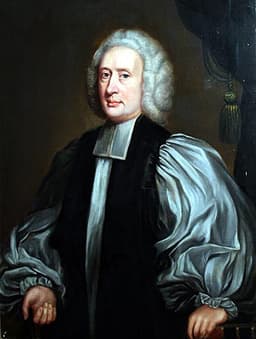
Butler
modernAnglican Philosophy, Natural Theology, British Moralism1692 – 1752
Joseph Butler (1692–1752) was an English Anglican bishop and philosopher whose work bridged moral psychology and the philosophy of religion. His major work, 'The Analogy of Religion' (1736), employed probabilistic and analogical reasoning to argue for the rationality of Christian belief, while his 'Fifteen Sermons' developed an influential account of conscience as the supreme moral faculty. He remains a central figure in early modern British philosophy and natural theology.
Notable Achievements
1
Authored 'The Analogy of Religion' (1736), defending Christianity through probabilistic and analogical argument
2
Established conscience as the supreme regulative principle in human moral psychology
3
Refuted psychological egoism by distinguishing self-love from particular passions and benevolence
4
Advanced probabilistic reasoning as a legitimate basis for religious and practical belief
5
Influenced Kant, Newman, and subsequent analytic moral philosophers