Skip to content
Carmelics
TopicsThinkersChangesContributorsLoading account…

    Carmelics

    A reasoning platform. Break down any belief into clear reasons, explore both sides, and weigh the evidence honestly.

    Navigate

    • Topics
    • Search
    • Recent Changes
    • Contribute
    • How It Works
    • Glossary
    • Thinkers
    • Contributors
    • About
    • Statistics
    • Terms
    • Privacy

    Database

    Statements
    —
    Perspectives
    —
    Topics
    —

    Press ? for keyboard shortcuts

    LoyalLoyalJusticeJustice
    Made withinDC&Austin
    Statements
    321,452
    Perspectives
    108,905
    Topics
    42
    Thomas Reid — Carmelics
    Thinkers/Thomas Reid
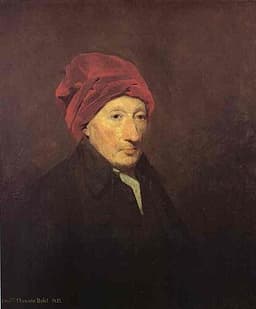
    Thomas Reid

    Thomas Reid

    modernScottish Common Sense Realism

    1710 – 1796

    Thomas Reid (1710–1796) was a Scottish philosopher and founder of the Scottish School of Common Sense, who developed a robust critique of the skeptical implications of the ideas theory of perception advanced by Descartes, Locke, and Hume. He argued that ordinary human faculties are reliable and that common sense beliefs are foundational to rational inquiry.

    WWikipediaSEPStanford EncyclopediaIEPInternet Encyclopedia

    Notable Achievements

    1

    Founded the Scottish School of Common Sense philosophy

    2

    Developed a systematic critique of Humean skepticism and the 'Way of Ideas'

    3

    Authored 'An Inquiry into the Human Mind on the Principles of Common Sense' (1764)

    4

    Articulated a direct realist theory of perception against representationalism

    5

    Influenced American academic philosophy and the Princeton theological tradition

    Positions & Arguments

    (6)

    Philosophy of Language

    claim

    Any theory that explains 'good' as an optative in unasserted contexts would render obviously valid arguments invalid by treating them as equivocal

    claim

    Aristotle's paradeigma foreshadows deductive analyses of analogical reasoning

    Natural Theology

    claim

    God must exist.

    claim

    We can rationally believe both ourselves and God to be mental in nature from a practical point of view.

    Truth & Knowledge

    claim

    Aristotle's paradeigma foreshadows deductive analyses of analogical reasoning

    claim

    We can rationally believe both ourselves and God to be mental in nature from a practical point of view.

    claim

    Testimonial justification can be generated through a chain of testimony even when the transmitting testifier lacks justified belief

    Perception

    claim

    Experiences with any kind of content (including nonconceptual) can stand in evidential relations to beliefs.

    At a Glance

    Ideas

    6

    Topics

    4

    Era

    modern

    Tradition

    Scottish Common Sense Realism

    Topic Influence

    Truth & Knowledge3
    Natural Theology2
    Philosophy of Language2
    Perception1

    Related Thinkers

    Immanuel Kant4 sharedBertrand Russell4 sharedDavid Hume4 sharedAristotle4 sharedPlato4 sharedRené Descartes4 sharedJohn Locke4 shared

    Dive Deeper

    Explore Truth & Knowledge→See Natural Theology→
    Wilfrid Sellars4 shared