Skip to content
Carmelics
TopicsThinkersChangesContributorsLoading account…

    Carmelics

    A reasoning platform. Break down any belief into clear reasons, explore both sides, and weigh the evidence honestly.

    Navigate

    • Topics
    • Search
    • Recent Changes
    • Contribute
    • How It Works
    • Glossary
    • Thinkers
    • Contributors
    • About
    • Statistics
    • Terms
    • Privacy

    Database

    Statements
    —
    Perspectives
    —
    Topics
    —

    Press ? for keyboard shortcuts

    LoyalLoyalJusticeJustice
    Made withinDC&Austin
    Statements
    321,452
    Perspectives
    108,905
    Topics
    42
    Angelo Poliziano — Carmelics
    Thinkers/Angelo Poliziano
    Angelo Poliziano

    Angelo Poliziano

    modernRenaissance Humanism

    1454 – 1494

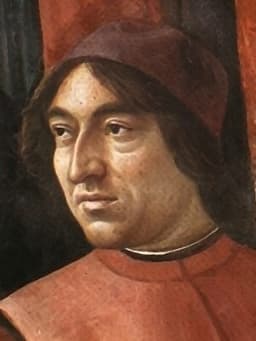
    Angelo Poliziano (1454–1494), born Angelo Ambrogini in Montepulciano, was an Italian Renaissance humanist, poet, and classical philologist closely associated with the Medici court in Florence. He served as tutor to Lorenzo de' Medici's children and held the chair of Latin and Greek at the University of Florence, where he pioneered a rigorous historical-philological approach to classical texts. His work bridged literary humanism and philosophical scholarship, engaging with Aristotelian and Platonic traditions through the lens of Renaissance textual criticism.

    WWikipedia

    Notable Achievements

    1

    Pioneered historical philology as a discipline, insisting on manuscript comparison and historical context in interpreting classical texts

    2

    Composed the Stanze per la Giostra (1475–78), widely regarded as one of the finest vernacular poems of the Italian Renaissance

    3

    Wrote Orfeo (1480), one of the earliest secular dramas performed in Italian

    4

    Published Miscellanea (1489), a landmark collection of classical emendations and scholarly observations

    5

    Delivered influential Praelectiones at Florence, including Lamia (1492), which examined the relationship between philology and philosophy

    Positions & Arguments(1)

    Philosophy of Language

    claim

    Lefèvre used mathematics to clarify and exemplify Aristotelian physical concepts rather than to make natural philosophy mathematical.

    Truth & Knowledge

    claim

    Lefèvre used mathematics to clarify and exemplify Aristotelian physical concepts rather than to make natural philosophy mathematical.

    At a Glance

    Ideas

    1

    Topics

    2

    Era

    modern

    Tradition

    Renaissance Humanism

    Topic Influence

    Truth & Knowledge1
    Philosophy of Language1

    Related Thinkers

    Immanuel Kant2 sharedDavid Lewis2 sharedBertrand Russell2 sharedBrian Skyrms2 sharedDavid Hume2 sharedStathis Psillos2 sharedAristotle2 sharedBas van Fraassen2 shared

    Dive Deeper

    Explore Truth & Knowledge→See Philosophy of Language→