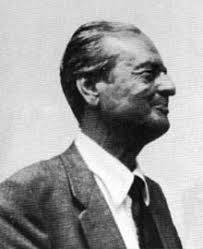
Bruno de Finetti
contemporarySubjective Probability / Bayesian Epistemology1906 – 1985
Bruno de Finetti (1906–1985) was an Italian mathematician and probabilist who founded the subjectivist interpretation of probability, arguing that probability is a measure of personal degrees of belief rather than an objective feature of the world. His representation theorem for exchangeable sequences and his insistence on finite (rather than countable) additivity as the correct axiom for probability remain foundational contributions to Bayesian epistemology and the philosophy of probability.
Notable Achievements
1
Established the subjectivist (personalist) interpretation of probability as a rigorous alternative to frequentism and logical probability
2
Proved the de Finetti Representation Theorem, showing exchangeable sequences are mixtures of i.i.d. processes
3
Argued for finite additivity over countable additivity, influencing debates on the foundations of probability
4
Developed the Dutch Book argument as a coherence constraint on rational degrees of belief
5
Authored the landmark two-volume work Theory of Probability (1970/1974)