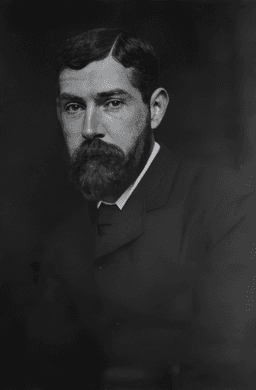
Francis Herbert Bradley
modernBritish Idealism1846 – 1924
Francis Herbert Bradley (1846-1924) was a leading British idealist philosopher and a central figure of the Oxford-based Absolute Idealism movement. His metaphysical work argued that reality is a single, coherent Absolute, and that ordinary appearances involve contradictions resolved only in that unified whole. He exerted major influence on early analytic philosophy through the critical reactions of Russell and Moore.
Notable Achievements
1
Authored Appearance and Reality (1893), the definitive statement of British Absolute Idealism
2
Developed the regress argument against the reality of relations
3
Wrote Ethical Studies (1876), a major critique of utilitarianism and defense of self-realization ethics
4
Produced The Principles of Logic (1883), advancing idealist logic against psychologism
5
Shaped the trajectory of analytic philosophy by providing the target Russell and Moore rebelled against