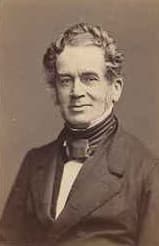
Friedrich Adolf Trendelenburg
modernNeo-Aristotelianism1802 – 1872
Friedrich Adolf Trendelenburg (1802–1872) was a German philosopher and historian of philosophy who taught at the University of Berlin and was one of the most influential critics of post-Kantian idealism. He sought to revive Aristotelian teleology as an alternative to both Hegelian dialectic and materialist mechanism, arguing that purposive motion (Bewegung) is the fundamental category linking thought and being. His work shaped a generation of German thinkers including Franz Brentano and Hermann Lotze.
Notable Achievements
1
Critiqued Hegel's dialectic as logically circular in Logische Untersuchungen (1840)
2
Formulated the 'Trendelenburg gap' objection to Kant's claim that space and time are purely subjective forms
3
Developed a teleological organicism grounding metaphysics in purposive motion rather than pure thought
4
Produced influential historical scholarship on Aristotle's De Anima and the history of the category doctrine
5
Shaped the Neo-Aristotelian and Brentanian traditions through students at Berlin