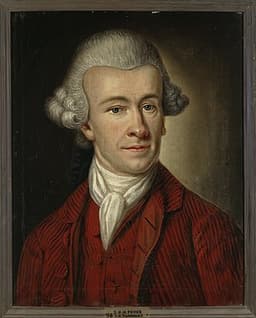
Johann Feder
modernGerman Enlightenment / Popularphilosophie1740 – 1821
Johann Georg Heinrich Feder (1740–1821) was a German Enlightenment philosopher and professor at the University of Göttingen, best known as one of the earliest and most prominent critics of Kant's Critique of Pure Reason. He co-authored (with Christoph Garve) the controversial 1782 Göttingen review of the Critique, which accused Kant of a form of Berkeleyan idealism — a misreading Kant publicly repudiated. Feder worked in the tradition of German Popular Philosophy (Popularphilosophie), combining Lockean empiricism with practical, accessible treatments of logic, ethics, and metaphysics.
Notable Achievements
1
Co-authored the 1782 Göttingen review of Kant's Critique of Pure Reason, sparking one of the defining debates in modern philosophy
2
Defended a Lockean empiricist alternative to Kantian transcendental idealism
3
Produced widely-used logic and metaphysics textbooks that shaped German university education
4
Argued that Kant's idealism collapses into Berkeleyan subjective idealism — a charge Kant responded to with the B-edition Preface
5
Represented the Popularphilosophie school's resistance to systematic rationalist metaphysics