Skip to content
Carmelics
TopicsThinkersChangesContributorsLoading account…

    Carmelics

    A reasoning platform. Break down any belief into clear reasons, explore both sides, and weigh the evidence honestly.

    Navigate

    • Topics
    • Search
    • Recent Changes
    • Contribute
    • How It Works
    • Glossary
    • Thinkers
    • Contributors
    • About
    • Statistics
    • Terms
    • Privacy

    Database

    Statements
    —
    Perspectives
    —
    Topics
    —

    Press ? for keyboard shortcuts

    LoyalLoyalJusticeJustice
    Made withinDC&Austin
    Statements
    321,452
    Perspectives
    108,905
    Topics
    42
    John Harsanyi — Carmelics
    Thinkers/John Harsanyi
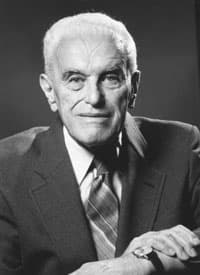
    John Harsanyi

    John Harsanyi

    contemporaryAnalytic Philosophy

    1920 – 2000

    John Harsanyi (1920-2000) was a Hungarian-American economist and philosopher who made foundational contributions to game theory, decision theory, and utilitarian ethics. He is best known for developing the theory of games with incomplete information (Bayesian games) and for his equilibrium selection theory, work that earned him the Nobel Memorial Prize in Economic Sciences in 1994.

    WWikipedia

    Notable Achievements

    1

    Developed the theory of Bayesian games (games with incomplete information)

    2

    Awarded the Nobel Memorial Prize in Economic Sciences in 1994 (shared with Nash and Selten)

    3

    Formulated the aggregation theorem supporting rule utilitarianism

    4

    Co-developed (with Selten) a general theory of equilibrium selection in games

    5

    Advanced the 'veil of ignorance' approach to impartial moral reasoning

    Positions & Arguments

    (2)

    Social Contract

    claim

    Segmented choice in contractualist models of agreement can produce outcomes that are not rationalizable to the contracting parties

    Skepticism

    claim

    Backward induction is self-undermining as a solution concept in certain extensive-form games

    Truth & Knowledge

    claim

    Backward induction is self-undermining as a solution concept in certain extensive-form games

    At a Glance

    Ideas

    2

    Topics

    3

    Era

    contemporary

    Tradition

    Analytic Philosophy

    Topic Influence

    Social Contract1
    Truth & Knowledge1
    Skepticism1

    Related Thinkers

    David Hume3 sharedMartin Heidegger3 sharedAdam Smith3 sharedCass Sunstein3 sharedDavid Miller3 sharedJohn Nash3 sharedFrancesco Guala3 sharedH. Peyton Young3 shared

    Dive Deeper

    Explore Social Contract→See Truth & Knowledge→