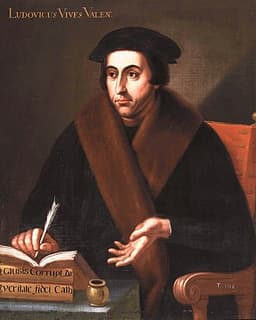
Juan Luis Vives
modernRenaissance Humanism1493 – 1540
Juan Luis Vives (1493–1540) was a Spanish humanist philosopher, educator, and social reformer, widely regarded as one of the most important thinkers of the Renaissance. Born in Valencia to a converso family, he spent much of his career in the Low Countries and England, where he was a close associate of Erasmus and Thomas More. His work ranged across epistemology, psychology, pedagogy, and social welfare, anticipating empiricist and inductive methods decades before Bacon.
Notable Achievements
1
Authored De Anima et Vita (1538), an early systematic work on empirical psychology and the study of human emotions
2
Wrote De Subventione Pauperum (1526), a pioneering treatise on organized public poor relief and social welfare
3
Produced De Institutione Feminae Christianae (1523), an influential early argument for women's education
4
Critiqued Scholastic Aristotelianism in favor of observation-based inquiry, prefiguring Baconian empiricism
5
Served as tutor to Mary Tudor and maintained close intellectual correspondence with Erasmus and Thomas More