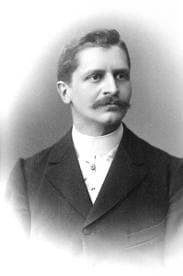
Jules Lachelier
modernFrench Neo-Kantianism / Spiritualist Idealism1832 – 1918
Jules Lachelier (1832–1918) was a French philosopher and major figure in nineteenth-century French Neo-Kantianism and spiritualist idealism. His central work, Du fondement de l'induction (1871), argued that nature is grounded in two interdependent principles—efficient causation and final causation—synthesizing Kantian critique with a spiritualist metaphysics. He exerted a formative influence on Henri Bergson and several generations of French academic philosophers through his long career as Inspector General of Public Instruction.
Notable Achievements
1
Authored Du fondement de l'induction (1871), a landmark defense of inductive reasoning grounded in teleological causation
2
Synthesized Kantian epistemology with French spiritualist metaphysics, bridging Ravaisson and Bergson
3
Argued that physical laws presuppose a principle of finality irreducible to mechanical efficient causation
4
Developed a conventionalist-adjacent view of geometry, holding that metric systems are neither empirically true nor false but regulative frameworks
5
Shaped an entire generation of French philosophers through his role as Inspector General of Public Instruction