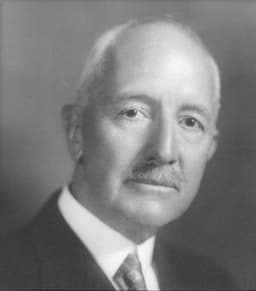
Stratton
modernExperimental Psychology1865 – 1957
George Malcolm Stratton was an American psychologist who pioneered experimental research on visual perception, most notably his inverting-lens experiments in the 1890s which demonstrated the remarkable adaptability of the perceptual system and shaped debates about the relationship between vision and proprioception.
Notable Achievements
1
Conducted the first systematic inverting-lens experiments (1896-1897), wearing lenses that flipped the visual field upside down
2
Demonstrated that perceptual adaptation to inverted vision is primarily proprioceptive rather than purely visual
3
Established foundational evidence for the plasticity of spatial perception
4
Published influential works on emotion, attention, and the psychology of conflict
5
Served as professor of psychology at the University of California, Berkeley for over four decades