Skip to content
Carmelics
TopicsThinkersChangesContributorsLoading account…

    Carmelics

    A reasoning platform. Break down any belief into clear reasons, explore both sides, and weigh the evidence honestly.

    Navigate

    • Topics
    • Search
    • Recent Changes
    • Contribute
    • How It Works
    • Glossary
    • Thinkers
    • Contributors
    • About
    • Statistics
    • Terms
    • Privacy

    Database

    Statements
    —
    Perspectives
    —
    Topics
    —

    Press ? for keyboard shortcuts

    LoyalLoyalJusticeJustice
    Made withinDC&Austin
    Statements
    321,452
    Perspectives
    108,905
    Topics
    42
    A. C. Ewing — Carmelics
    Thinkers/A. C. Ewing
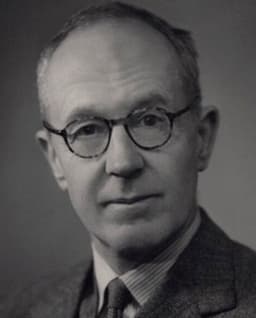
    A. C. Ewing

    A. C. Ewing

    modernBritish Intuitionism / Analytic Philosophy

    1899 – 1973

    Alfred Cyril Ewing (1899–1973) was a British philosopher at Cambridge University who worked primarily in ethics and metaphysics. He defended a non-naturalist intuitionism in ethics, arguing that moral properties are irreducible and known through a distinctive form of rational insight. He is particularly noted for his fitting-attitude analysis of value, holding that goodness and wrongness are best understood in terms of appropriate emotional and conative responses.

    WWikipedia

    Notable Achievements

    1

    Developed a fitting-attitude (or 'fittingness') analysis of moral concepts, linking wrongness to fitting resentment

    2

    Defended non-naturalist moral realism against both naturalism and emotivism

    3

    Authored influential works including The Definition of Good (1947) and Ethics (1953)

    4

    Contributed to the debate on the nature of the a priori and synthetic a priori judgments

    5

    Engaged critically with logical positivism, defending the intelligibility of metaphysics

    Positions & Arguments(1)

    Moral Responsibility

    claim

    Wrongness can be explicated in terms of fitting resentment, and resentment can in turn be understood partly in terms of wrongness, supporting a no-priority view for this pair.

    Truth & Knowledge

    claim

    Wrongness can be explicated in terms of fitting resentment, and resentment can in turn be understood partly in terms of wrongness, supporting a no-priority view for this pair.

    At a Glance

    Ideas

    1

    Topics

    2

    Era

    modern

    Tradition

    British Intuitionism / Analytic Philosophy

    Topic Influence

    Truth & Knowledge1
    Moral Responsibility1

    Related Thinkers

    Immanuel Kant2 sharedDavid Lewis2 sharedAristotle2 sharedDavid Hume2 sharedBrian Skyrms2 sharedBas van Fraassen2 sharedPatrick Maher2 sharedPlato2 shared

    Dive Deeper

    Explore Truth & Knowledge→See Moral Responsibility→