Skip to content
Carmelics
TopicsThinkersChangesContributorsLoading account…

    Carmelics

    A reasoning platform. Break down any belief into clear reasons, explore both sides, and weigh the evidence honestly.

    Navigate

    • Topics
    • Search
    • Recent Changes
    • Contribute
    • How It Works
    • Glossary
    • Thinkers
    • Contributors
    • About
    • Statistics
    • Terms
    • Privacy

    Database

    Statements
    —
    Perspectives
    —
    Topics
    —

    Press ? for keyboard shortcuts

    LoyalLoyalJusticeJustice
    Made withinDC&Austin
    Statements
    321,452
    Perspectives
    108,905
    Topics
    42
    Allen Newell — Carmelics
    Thinkers/Allen Newell
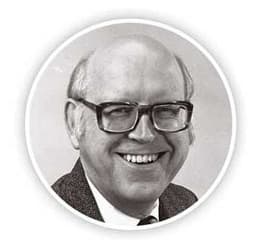
    Allen Newell

    Allen Newell

    contemporaryCognitive Science / Computational Philosophy of Mind

    1927 – 1992

    Allen Newell (1927–1992) was an American cognitive scientist and computer scientist at Carnegie Mellon University and RAND Corporation, widely regarded as a founding figure of artificial intelligence and cognitive science. Alongside Herbert A. Simon, he pioneered the information processing approach to human cognition, arguing that the mind is best understood as a symbol-manipulating system. His theoretical and empirical work bridged computer science, psychology, and philosophy of mind.

    WWikipedia

    Notable Achievements

    1

    Co-developed the Logic Theorist (1956), the first artificial intelligence program, with Herbert Simon and Cliff Shaw

    2

    Co-created the General Problem Solver, a foundational model of human problem-solving as heuristic search

    3

    Developed the SOAR cognitive architecture as a unified theory of cognition

    4

    Formulated the Physical Symbol System Hypothesis, claiming symbolic manipulation is necessary and sufficient for general intelligence

    5

    Received the ACM Turing Award (1975) jointly with Herbert Simon for contributions to AI and cognitive science

    Positions & Arguments(1)

    Skepticism

    claim

    Turing's thesis is not susceptible to mathematical proof

    Truth & Knowledge

    claim

    Turing's thesis is not susceptible to mathematical proof

    At a Glance

    Ideas

    1

    Topics

    2

    Era

    contemporary

    Tradition

    Cognitive Science / Computational Philosophy of Mind

    Topic Influence

    Truth & Knowledge1
    Skepticism1

    Related Thinkers

    David Lewis2 sharedImmanuel Kant2 sharedBoyd2 sharedBrian Skyrms2 sharedStathis Psillos2 sharedBertrand Russell2 sharedDavid Hume2 sharedAristotle2 shared

    Dive Deeper

    Explore Truth & Knowledge→See Skepticism→