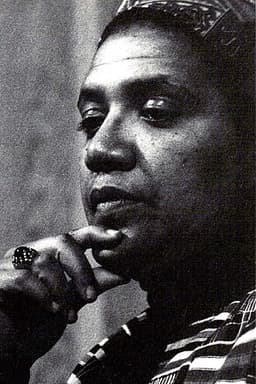
Audre Lorde
contemporaryBlack Feminist Philosophy, Intersectionality Theory1934 – 1992
Audre Lorde (1934–1992) was an American poet, essayist, and activist whose work forged a distinctive feminist philosophy grounded in the lived experience of Black, lesbian, and working-class women. Her essays theorized difference, intersectionality, and the erotic as philosophical and political resources, challenging mainstream feminism to reckon with race, sexuality, and class as inseparable axes of oppression. She is among the foundational figures of Black feminist thought and intersectional theory.
Notable Achievements
1
Articulated the principle that 'the master's tools will never dismantle the master's house,' critiquing assimilationist and exclusionary feminist politics
2
Theorized the erotic as a source of knowledge, power, and political resistance for women in 'Uses of the Erotic' (1978)
3
Developed early intersectional critiques of white mainstream feminism's erasure of race, class, and sexuality
4
Co-founded Kitchen Table: Women of Color Press, expanding publishing access for women of color
5
Pioneered 'biomythography' as a literary-philosophical genre blending autobiography, myth, and theory in 'Zami' (1982)