Skip to content
Carmelics
TopicsThinkersChangesContributorsLoading account…

    Carmelics

    A reasoning platform. Break down any belief into clear reasons, explore both sides, and weigh the evidence honestly.

    Navigate

    • Topics
    • Search
    • Recent Changes
    • Contribute
    • How It Works
    • Glossary
    • Thinkers
    • Contributors
    • About
    • Statistics
    • Terms
    • Privacy

    Database

    Statements
    —
    Perspectives
    —
    Topics
    —

    Press ? for keyboard shortcuts

    LoyalLoyalJusticeJustice
    Made withinDC&Austin
    Statements
    321,452
    Perspectives
    108,905
    Topics
    42
    Ernst Cassirer — Carmelics
    Thinkers/Ernst Cassirer
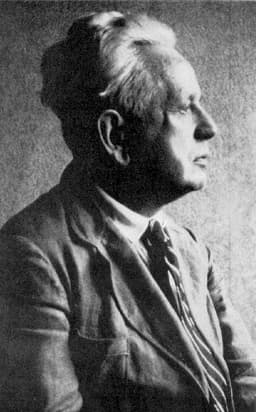
    Ernst Cassirer

    Ernst Cassirer

    modernNeo-Kantianism

    1874 – 1945

    Ernst Cassirer (1874-1945) was a German philosopher best known for his philosophy of symbolic forms, which analyzed how myth, language, art, science, and religion function as distinct modes of symbolic meaning-making. A leading figure of the Marburg School of neo-Kantianism, he extended Kant's critique of reason into a broader critique of culture and famously debated Martin Heidegger at Davos in 1929.

    WWikipediaSEPStanford Encyclopedia

    Notable Achievements

    1

    Developed the Philosophy of Symbolic Forms (3 volumes, 1923-1929)

    2

    Debated Martin Heidegger at Davos in 1929 on the legacy of Kant

    3

    Authored 'An Essay on Man' (1944) synthesizing his philosophical anthropology

    4

    Advanced neo-Kantian interpretation of scientific and cultural knowledge

    5

    Wrote 'The Myth of the State' (1946) analyzing political myth and totalitarianism

    Positions & Arguments

    (3)

    Skepticism

    claim

    Reichenbach was not able to recognize the Weyl method as other than an equivalent account of empirical determination of the metric

    Truth & Knowledge

    claim

    Reichenbach was not able to recognize the Weyl method as other than an equivalent account of empirical determination of the metric

    claim

    Metric geometry is neither true nor false.

    claim

    We can rationally believe both ourselves and God to be mental in nature from a practical point of view.

    Modality & Possibility

    claim

    Metric geometry is neither true nor false.

    Natural Theology

    claim

    We can rationally believe both ourselves and God to be mental in nature from a practical point of view.

    At a Glance

    Ideas

    3

    Topics

    4

    Era

    modern

    Tradition

    Neo-Kantianism

    Topic Influence

    Truth & Knowledge3
    Modality & Possibility1
    Natural Theology1
    Skepticism1

    Related Thinkers

    Immanuel Kant4 sharedAristotle4 sharedDavid Hume4 sharedBertrand Russell4 sharedPlato4 sharedRené Descartes4 sharedRudolf Carnap4 shared

    Dive Deeper

    Explore Truth & Knowledge→See Modality & Possibility→
    David Hilbert4 shared