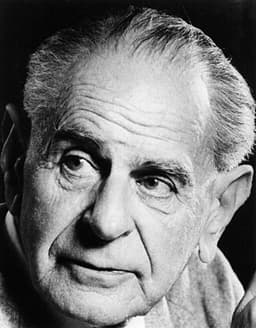
Karl Popper
contemporaryAnalytic Philosophy, Critical Rationalism1902 – 1994
Karl Popper (1902–1994) was an Austrian-British philosopher of science and one of the most influential thinkers of the twentieth century. He is best known for his criterion of falsifiability as the demarcation between science and non-science, and for his broader epistemological framework of critical rationalism. His political philosophy, articulated in response to totalitarianism, defended liberal democracy and critiqued historicist social theories.
Notable Achievements
1
Developed falsificationism as the criterion of scientific demarcation in The Logic of Scientific Discovery (1934)
2
Founded critical rationalism, arguing that knowledge grows through conjecture and refutation rather than induction
3
Critiqued Marxism, Freudianism, and Adlerian psychology as unfalsifiable pseudosciences
4
Defended liberal democracy and the open society against historicism and utopianism in The Open Society and Its Enemies (1945)
5
Proposed the Three Worlds ontology distinguishing physical, mental, and objective knowledge states