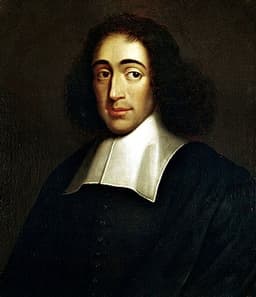
Spinoza
modernRationalism1632 – 1677
Baruch de Spinoza (1632–1677) was a Dutch philosopher of the Early Modern period whose rigorous geometric method and radical metaphysics made him one of the most controversial and influential thinkers of the Western tradition. His masterwork, the Ethics, argues for a strict substance monism in which God and Nature are identical, dissolving the Cartesian mind-body dualism and grounding a thoroughgoing determinism. He also pioneered historical-critical analysis of Scripture in the Tractatus Theologico-Politicus, laying foundations for both biblical criticism and liberal political theory.
Notable Achievements
1
Developed substance monism (Deus sive Natura), identifying God with the single infinite substance underlying all reality
2
Authored the Ethics (1677), presenting a complete metaphysical, epistemological, and ethical system in geometric demonstration
3
Pioneered historical-critical interpretation of the Bible in the Tractatus Theologico-Politicus (1670)
4
Articulated one of the earliest systematic defenses of freedom of thought and democratic governance
5
Offered a compatibilist account of human freedom grounded in rational self-understanding rather than free will