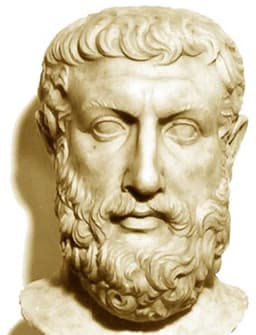
The Eleatics
ancientPre-Socratic Philosophy-515 – -430
The Eleatics were a pre-Socratic philosophical school centered in Elea, a Greek colony in southern Italy, flourishing in the 5th century BCE. Led by Parmenides and continued by Zeno and Melissus, the school argued that reality is one, eternal, and unchanging, and that change, motion, and plurality are illusions of the senses. Their rigorous use of logical argumentation to challenge common-sense appearances profoundly influenced Plato and subsequent metaphysics.
Notable Achievements
1
Parmenides' foundational argument that 'what is, is' and 'what is not, cannot be'—establishing monism in Western metaphysics
2
Zeno's paradoxes of motion and plurality, challenging the coherence of change and multiplicity
3
Melissus' extension of Eleatic monism, arguing the One is infinite in extent
4
Pioneer use of reductio ad absurdum as a philosophical method
5
Decisive influence on Plato's theory of Forms and the distinction between appearance and reality