Skip to content
Carmelics
TopicsThinkersChangesContributorsLoading account…

    Carmelics

    A reasoning platform. Break down any belief into clear reasons, explore both sides, and weigh the evidence honestly.

    Navigate

    • Topics
    • Search
    • Recent Changes
    • Contribute
    • How It Works
    • Glossary
    • Thinkers
    • Contributors
    • About
    • Statistics
    • Terms
    • Privacy

    Database

    Statements
    —
    Perspectives
    —
    Topics
    —

    Press ? for keyboard shortcuts

    LoyalLoyalJusticeJustice
    Made withinDC&Austin
    W. D. Ross — Carmelics
    Statements
    321,452
    Perspectives
    108,905
    Topics
    42
    Thinkers/W. D. Ross
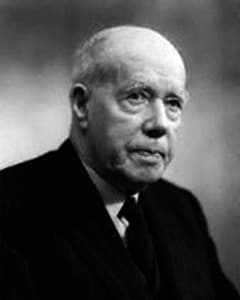
    W. D. Ross

    W. D. Ross

    modernAnalytic Philosophy, Deontological Ethics

    1877 – 1971

    Sir William David Ross (1877–1971) was a Scottish philosopher and Kantian ethicist best known for his theory of prima facie duties, which he developed as a pluralistic alternative to both utilitarianism and strict Kantian deontology. His work in moral philosophy, particularly in 'The Right and the Good' (1930), emphasized that multiple moral obligations can conflict and that practical wisdom is required to adjudicate between them. He also produced influential translations and commentaries on Aristotle.

    WWikipediaSEPStanford EncyclopediaIEPInternet Encyclopedia

    Notable Achievements

    1

    Developed the theory of prima facie duties as a pluralistic moral framework

    2

    Authored 'The Right and the Good' (1930), a landmark text in 20th-century ethics

    3

    Critiqued utilitarian and single-principle deontological theories with a nuanced pluralism

    4

    Produced influential scholarly translations of Aristotle's Nicomachean Ethics and other works

    5

    Served as Provost of Oriel College, Oxford, and made major contributions to Oxford moral philosophy

    Positions & Arguments(2)

    Skepticism

    claim

    Intuition is the only valid basis for holding and asserting self-evident propositions.

    Truth & Knowledge

    claim

    Intuition is the only valid basis for holding and asserting self-evident propositions.

    claim

    Wrongness can be explicated in terms of fitting resentment, and resentment can in turn be understood partly in terms of wrongness, supporting a no-priority view for this pair.

    Moral Responsibility

    claim

    Wrongness can be explicated in terms of fitting resentment, and resentment can in turn be understood partly in terms of wrongness, supporting a no-priority view for this pair.

    At a Glance

    Ideas

    2

    Topics

    3

    Era

    modern

    Tradition

    Analytic Philosophy, Deontological Ethics

    Topic Influence

    Truth & Knowledge2
    Skepticism1
    Moral Responsibility1

    Related Thinkers

    Immanuel Kant3 sharedDavid Lewis3 sharedAristotle3 sharedBrian Skyrms3 sharedDavid Hume3 sharedBas van Fraassen3 sharedPatrick Maher3 sharedPlato3 shared

    Dive Deeper

    Explore Truth & Knowledge→See Skepticism→