Skip to content
Carmelics
TopicsThinkersChangesContributorsLoading account…

    Carmelics

    A reasoning platform. Break down any belief into clear reasons, explore both sides, and weigh the evidence honestly.

    Navigate

    • Topics
    • Search
    • Recent Changes
    • Contribute
    • How It Works
    • Glossary
    • Thinkers
    • Contributors
    • About
    • Statistics
    • Terms
    • Privacy

    Database

    Statements
    —
    Perspectives
    —
    Topics
    —

    Press ? for keyboard shortcuts

    LoyalLoyalJusticeJustice
    Made withinDC&Austin
    Statements
    321,452
    Perspectives
    108,905
    Topics
    42
    Georg Henrik von Wright — Carmelics
    Thinkers/Georg Henrik von Wright
    Georg Henrik von Wright

    Georg Henrik von Wright

    contemporaryAnalytic Philosophy

    1916 – 2003

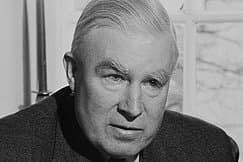
    Georg Henrik von Wright (1916–2003) was a Finnish analytic philosopher and logician, widely regarded as one of the most significant philosophers of the twentieth century. He is best known as the founder of modern deontic logic and for his influential work on modal logic, the logic of norms, and the philosophy of action. A close friend and literary executor of Ludwig Wittgenstein, he also made substantial contributions to the philosophy of causality and explanation.

    WWikipedia

    Notable Achievements

    1

    Founded modern deontic logic with his 1951 paper 'Deontic Logic'

    2

    Developed an influential theory of action and practical inference in 'Norm and Action' (1963) and 'Explanation and Understanding' (1971)

    3

    Succeeded Wittgenstein in the Chair of Philosophy at Cambridge (1948–1951) and served as Wittgenstein's literary executor

    4

    Made foundational contributions to modal and temporal logic, including analysis of future contingencies and the logic of change

    5

    Elected President of the International Union of History and Philosophy of Science and held the Academy of Finland's highest research position

    Positions & Arguments(1)

    Modality & Possibility

    claim

    The second 'broad assumption' (¬p ∧ ¬Fp) → P¬Fp is not true when p refers to a future contingency

    Free Will & Foreknowledge

    claim

    The second 'broad assumption' (¬p ∧ ¬Fp) → P¬Fp is not true when p refers to a future contingency

    At a Glance

    Ideas

    1

    Topics

    2

    Era

    contemporary

    Tradition

    Analytic Philosophy

    Topic Influence

    Free Will & Foreknowledge1
    Modality & Possibility1

    Related Thinkers

    David Lewis2 sharedImmanuel Kant2 sharedKenny2 sharedDavid Hume2 sharedPlato2 sharedAristotle2 sharedIsaac Newton2 sharedPeter van Inwagen2 shared

    Dive Deeper

    Explore Free Will & Foreknowledge→See Modality & Possibility→