Skip to content
Carmelics
TopicsThinkersChangesContributorsLoading account…

    Carmelics

    A reasoning platform. Break down any belief into clear reasons, explore both sides, and weigh the evidence honestly.

    Navigate

    • Topics
    • Search
    • Recent Changes
    • Contribute
    • How It Works
    • Glossary
    • Thinkers
    • Contributors
    • About
    • Statistics
    • Terms
    • Privacy

    Database

    Statements
    —
    Perspectives
    —
    Topics
    —

    Press ? for keyboard shortcuts

    LoyalLoyalJusticeJustice
    Made withinDC&Austin
    Statements
    321,452
    Perspectives
    108,905
    Topics
    42
    Plotinus — Carmelics
    Thinkers/Plotinus
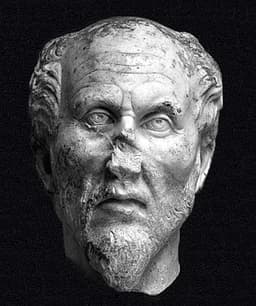
    Plotinus

    Plotinus

    ancientNeoplatonism

    205 – 270

    Plotinus (c. 204–270 CE) was a Hellenistic philosopher and the principal founder of Neoplatonism, whose teachings synthesized and extended Platonic thought into a comprehensive metaphysical system. Working and teaching in Rome, he articulated a hierarchical ontology of The One, Intellect (Nous), and World Soul, positing that all reality emanates from a transcendent, ineffable first principle. His collected works, the Enneads, edited posthumously by his student Porphyry, became foundational texts for late antique philosophy and profoundly shaped Christian, Islamic, and Jewish mystical traditions.

    WWikipediaSEPStanford EncyclopediaIEPInternet Encyclopedia

    Notable Achievements

    1

    Founded Neoplatonism, the dominant philosophical school of late antiquity

    2

    Developed the doctrine of emanation: all being flows from The One through Nous to World Soul to matter

    3

    Authored the Enneads, the primary systematic Neoplatonic philosophical text

    4

    Articulated a rigorous apophatic theology in which the ultimate principle transcends all predication

    5

    Profoundly influenced Augustine, Pseudo-Dionysius, and the entire tradition of Western mystical theology

    Positions & Arguments(2)

    Divine Attributes

    claim

    God must exemplify pain.

    claim

    The First directly or indirectly causes all main types of constituents of the world

    Against an attribute of God

    claim

    God must exemplify pain.

    Causation

    claim

    The First directly or indirectly causes all main types of constituents of the world

    At a Glance

    Ideas

    2

    Topics

    3

    Era

    ancient

    Tradition

    Neoplatonism

    Topic Influence

    Divine Attributes2
    Against an attribute of God1
    Causation1

    Related Thinkers

    Thomas Aquinas3 sharedImmanuel Kant3 sharedAl-Ghazali3 sharedAristotle2 sharedIsaac Newton2 sharedAugustine2 sharedAugustine of Hippo2 sharedAvicenna2 shared

    Dive Deeper

    Explore Divine Attributes→See Against an attribute of God→