Skip to content
Carmelics
TopicsThinkersChangesContributorsLoading account…

    Carmelics

    A reasoning platform. Break down any belief into clear reasons, explore both sides, and weigh the evidence honestly.

    Navigate

    • Topics
    • Search
    • Recent Changes
    • Contribute
    • How It Works
    • Glossary
    • Thinkers
    • Contributors
    • About
    • Statistics
    • Terms
    • Privacy

    Database

    Statements
    —
    Perspectives
    —
    Topics
    —

    Press ? for keyboard shortcuts

    LoyalLoyalJusticeJustice
    Made withinDC&Austin
    Statements
    321,452
    Perspectives
    108,905
    Topics
    42
    Jackson — Carmelics
    Thinkers/Jackson
    Jackson

    Jackson

    contemporaryAnalytic Philosophy

    b. 1943

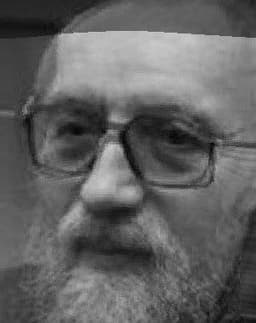
    Frank Jackson is an Australian philosopher known for his influential contributions to philosophy of mind, ethics, and metaphysics. He is best known for the knowledge argument (Mary's Room) against physicalism and his work with Robert Pargetter on ethical decision-making under uncertainty.

    WWikipediaSEPStanford Encyclopedia

    Notable Achievements

    1

    Formulated the knowledge argument (Mary's Room) against physicalism

    2

    Developed with Pargetter a probabilistic approach to ethical decision-making under uncertainty

    3

    Defended moral functionalism and conceptual analysis in ethics

    4

    Authored 'From Metaphysics to Ethics: A Defence of Conceptual Analysis'

    5

    Distinguished Professor at Australian National University

    Positions & Arguments

    (14)

    Moral Responsibility

    premise

    Jackson and Pargetter's view simultaneously generates an obligation to stay home at t1

    claim

    Jackson and Pargetter's view does not assess an act's deontic status in the procedural manner that Goldman's (G*1) or Sobel's (S) assesses deontic status

    claim

    At t1, Jones is obligated (from the t1–t3 act-set) to go to the office, then go to the faculty meeting, and then vote for the language requirement

    claim

    Doug is not obligated at 2 pm to eat a healthy meal at 6 pm

    premise

    An agent is obligated to perform whichever immediately performable act produces the best outcome

    premise

    What would happen if Jones were to stay home is better than what would happen if Jones were to go to the office

    premise

    Jackson and Pargetter's view generates an obligation to perform the t1–t3 act-set that includes voting for the language requirement

    premise

    Jackson and Pargetter's view, like view (G), determines deontic status by comparing outcomes of option sets rather than through a procedural assessment

    premise

    Staying home at t1 and going to the office at t1 (as required by the t1–t3 act-set) cannot both be performed

    claim

    At t1, Jones is obligated (from the set of immediately performable acts) to stay home

    premise

    An agent is obligated to perform the act-set whose occurrence produces the best outcome compared to alternative act-sets from the same option set

    premise

    From the set of immediately performable acts available to Jones at t1, staying home has the highest value

    claim

    Jackson and Pargetter's contextualist actualism implies the possibility of obligations that cannot be jointly fulfilled

    premise

    From the set of all t1–t3 act-sets available to Jones at t1, the option with the highest value includes Jones's voting for the language requirement at t3

    Justice & Punishment

    premise

    Jackson and Pargetter's view simultaneously generates an obligation to stay home at t1

    claim

    Doug is not obligated at 2 pm to eat a healthy meal at 6 pm

    premise

    Jackson and Pargetter's view generates an obligation to perform the t1–t3 act-set that includes voting for the language requirement

    premise

    Staying home at t1 and going to the office at t1 (as required by the t1–t3 act-set) cannot both be performed

    Consequentialism

    claim

    Jackson and Pargetter's view does not assess an act's deontic status in the procedural manner that Goldman's (G*1) or Sobel's (S) assesses deontic status

    claim

    At t1, Jones is obligated (from the t1–t3 act-set) to go to the office, then go to the faculty meeting, and then vote for the language requirement

    premise

    An agent is obligated to perform whichever immediately performable act produces the best outcome

    premise

    What would happen if Jones were to stay home is better than what would happen if Jones were to go to the office

    At a Glance

    Ideas

    14

    Topics

    3

    Era

    contemporary

    Tradition

    Analytic Philosophy

    Topic Influence

    Moral Responsibility14
    Consequentialism8
    Justice & Punishment6

    Related Thinkers

    Pargetter3 sharedGoldman3 sharedBrian Skyrms2 sharedPatrick Maher2 sharedPortmore2 sharedDavid Hume2 sharedImmanuel Kant2 sharedJohn Stuart Mill2 shared

    Dive Deeper

    Explore Moral Responsibility→See Consequentialism→
    claim

    At t1, Jones is obligated (from the set of immediately performable acts) to stay home

    claim

    Jackson and Pargetter's contextualist actualism implies the possibility of obligations that cannot be jointly fulfilled

    premise

    Jackson and Pargetter's view, like view (G), determines deontic status by comparing outcomes of option sets rather than through a procedural assessment

    premise

    An agent is obligated to perform the act-set whose occurrence produces the best outcome compared to alternative act-sets from the same option set

    premise

    From the set of immediately performable acts available to Jones at t1, staying home has the highest value

    premise

    From the set of all t1–t3 act-sets available to Jones at t1, the option with the highest value includes Jones's voting for the language requirement at t3