Skip to content
Carmelics
TopicsThinkersChangesContributorsLoading account…

    Carmelics

    A reasoning platform. Break down any belief into clear reasons, explore both sides, and weigh the evidence honestly.

    Navigate

    • Topics
    • Search
    • Recent Changes
    • Contribute
    • How It Works
    • Glossary
    • Thinkers
    • Contributors
    • About
    • Statistics
    • Terms
    • Privacy

    Database

    Statements
    —
    Perspectives
    —
    Topics
    —

    Press ? for keyboard shortcuts

    LoyalLoyalJusticeJustice
    Made withinDC&Austin
    Statements
    321,452
    Perspectives
    108,905
    Topics
    42
    L.E.J. Brouwer — Carmelics
    Thinkers/L.E.J. Brouwer
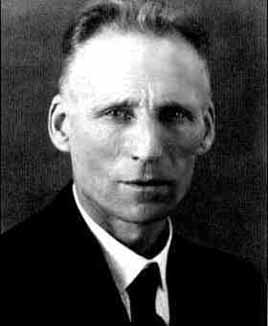
    L.E.J. Brouwer

    L.E.J. Brouwer

    modernMathematical Intuitionism

    1881 – 1966

    Luitzen Egbertus Jan Brouwer (1881–1966) was a Dutch mathematician and philosopher who founded mathematical intuitionism, the view that mathematics is a mental construction rather than a discovery of mind-independent truths. He made foundational contributions to topology while simultaneously arguing that classical logic—particularly the law of excluded middle—is not universally valid in infinite mathematical domains. His work reshaped debates about the foundations of mathematics and anticipated later constructivist and anti-realist positions in the philosophy of logic.

    WWikipediaSEPStanford Encyclopedia

    Notable Achievements

    1

    Founded mathematical intuitionism, establishing that mathematical objects are mental constructions dependent on intuition rather than abstract Platonic entities

    2

    Proved the Brouwer Fixed-Point Theorem, a landmark result in algebraic topology

    3

    Rejected the law of excluded middle and other classical logical principles as illegitimate when applied to infinite totalities

    4

    Developed intuitionistic logic as an alternative formal system reflecting constructive mathematical reasoning

    5

    Introduced the concept of the 'creating subject' to ground mathematical truth in the activity of an idealized mathematician

    Positions & Arguments(4)

    Skepticism

    claim

    Reichenbach was not able to recognize the Weyl method as other than an equivalent account of empirical determination of the metric

    Truth & Knowledge

    claim

    Reichenbach was not able to recognize the Weyl method as other than an equivalent account of empirical determination of the metric

    claim

    The semantics of a formal system rich enough to contain elementary mathematics cannot be fully defined in terms of mathematical functions within that same system.

    Divine Attributes

    claim

    The question 'Can God know all the places of the expansion of π?' is strictly senseless.

    Philosophy of Language

    claim

    The question 'Can God know all the places of the expansion of π?' is strictly senseless.

    claim

    The semantics of a formal system rich enough to contain elementary mathematics cannot be fully defined in terms of mathematical functions within that same system.

    Modality & Possibility

    claim

    Mensuration in relativity need not depend on clocks and rigid bodies.

    Causation

    claim

    Mensuration in relativity need not depend on clocks and rigid bodies.

    At a Glance

    Ideas

    4

    Topics

    6

    Era

    modern

    Tradition

    Mathematical Intuitionism

    Topic Influence

    Truth & Knowledge2
    Philosophy of Language2
    Causation1
    Modality & Possibility1
    Skepticism1
    Divine Attributes1

    Related Thinkers

    Immanuel Kant6 sharedAristotle6 sharedPlato6 sharedThomas Aquinas6 sharedGottlob Frege6 sharedIsaac Newton6 sharedDavid Lewis5 shared

    Dive Deeper

    Explore Truth & Knowledge→See Philosophy of Language→
    Brian Skyrms5 shared