Skip to content
Carmelics
TopicsThinkersChangesContributorsLoading account…

    Carmelics

    A reasoning platform. Break down any belief into clear reasons, explore both sides, and weigh the evidence honestly.

    Navigate

    • Topics
    • Search
    • Recent Changes
    • Contribute
    • How It Works
    • Glossary
    • Thinkers
    • Contributors
    • About
    • Statistics
    • Terms
    • Privacy

    Database

    Statements
    —
    Perspectives
    —
    Topics
    —

    Press ? for keyboard shortcuts

    LoyalLoyalJusticeJustice
    Made withinDC&Austin
    Statements
    321,452
    Perspectives
    108,905
    Topics
    42
    Dai Zhen — Carmelics
    Thinkers/Dai Zhen
    Dai Zhen

    Dai Zhen

    modernQing Confucianism / Kaozheng (Evidential Scholarship)

    1724 – 1777

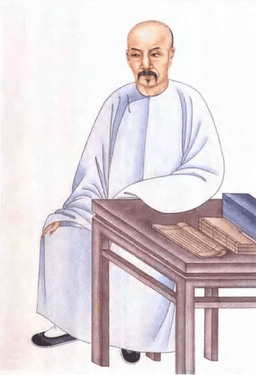
    Dai Zhen (戴震, 1724–1777) was a Qing dynasty Chinese philosopher, philologist, and mathematician, widely regarded as the most rigorous critic of Song-Ming Neo-Confucianism. Working within the kaozheng (evidential scholarship) tradition, he argued that Neo-Confucian li (principle) had been weaponized to suppress natural human desires and emotions, which he held to be morally legitimate expressions of human nature. His Mengzi ziyi shuzheng subjected the Mencian text to systematic philological analysis to recover what he saw as authentic Confucian ethics against later metaphysical distortions.

    WWikipediaSEPStanford Encyclopedia

    Notable Achievements

    1

    Wrote Mengzi ziyi shuzheng, a landmark philological and philosophical commentary rehabilitating Mencian ethics

    2

    Mounted systematic critique of Song-Ming Neo-Confucianism's subordination of human desire (yu) to abstract principle (li)

    3

    Argued that li is discovered through careful investigation of human experience and text, not intuited by the mind

    4

    Advanced naturalistic moral psychology in which desire and feeling are essential to ethical life, not obstacles to it

    5

    Led the kaozheng movement's application of evidential methods to classical philosophical interpretation

    Positions & Arguments(1)

    Moral Responsibility

    claim

    Xunzi's criticism of Mencius has force when Mencius is interpreted via the water-metaphor view

    Virtue Ethics

    claim

    Xunzi's criticism of Mencius has force when Mencius is interpreted via the water-metaphor view

    At a Glance

    Ideas

    1

    Topics

    2

    Era

    modern

    Tradition

    Qing Confucianism / Kaozheng (Evidential Scholarship)

    Topic Influence

    Virtue Ethics1
    Moral Responsibility1

    Related Thinkers

    Leibniz2 sharedSulzer2 sharedWolff2 sharedAristotle2 sharedCarol Gilligan2 sharedPeter Singer2 sharedThomas Hobbes2 sharedBrad Hooker2 shared

    Dive Deeper

    Explore Virtue Ethics→See Moral Responsibility→