Skip to content
Carmelics
TopicsThinkersChangesContributorsLoading account…

    Carmelics

    A reasoning platform. Break down any belief into clear reasons, explore both sides, and weigh the evidence honestly.

    Navigate

    • Topics
    • Search
    • Recent Changes
    • Contribute
    • How It Works
    • Glossary
    • Thinkers
    • Contributors
    • About
    • Statistics
    • Terms
    • Privacy

    Database

    Statements
    —
    Perspectives
    —
    Topics
    —

    Press ? for keyboard shortcuts

    LoyalLoyalJusticeJustice
    Made withinDC&Austin
    Statements
    321,452
    Perspectives
    108,905
    Topics
    42
    Hans Reichenbach — Carmelics
    Thinkers/Hans Reichenbach
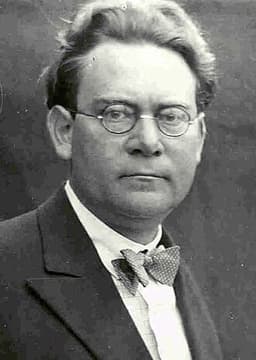
    Hans Reichenbach

    Hans Reichenbach

    modernLogical Empiricism

    1891 – 1953

    Hans Reichenbach was a German-American philosopher of science and a leading figure in the Berlin Circle of logical empiricism. He made foundational contributions to the philosophy of space and time, probability theory, and the logical analysis of scientific knowledge, particularly regarding Einstein's theory of relativity.

    WWikipediaSEPStanford Encyclopedia

    Notable Achievements

    1

    Founded the Berlin Circle (Society for Empirical Philosophy) in 1928

    2

    Developed a frequentist interpretation of probability and the concept of 'weight' for single events

    3

    Authored 'The Philosophy of Space and Time' (1928), a seminal work on the conventionality of simultaneity and geometry

    4

    Formulated the 'common cause principle' explaining statistical correlations

    5

    Advanced the pragmatic vindication of induction as a justification for inductive inference

    Positions & Arguments(5)

    Skepticism

    claim

    Reichenbach was not able to recognize the Weyl method as other than an equivalent account of empirical determination of the metric

    Truth & Knowledge

    claim

    Reichenbach was not able to recognize the Weyl method as other than an equivalent account of empirical determination of the metric

    claim

    We must distinguish between the radical empiricist's meaning of 'meaning' (epistemic reduction) and a more common-sensical meaning of 'meaning' (factual reference).

    claim

    Metric geometry is neither true nor false.

    Modality & Possibility

    claim

    The second 'broad assumption' (¬p ∧ ¬Fp) → P¬Fp is not true when p refers to a future contingency

    claim

    Metric geometry is neither true nor false.

    claim

    Mensuration in relativity need not depend on clocks and rigid bodies.

    Free Will & Foreknowledge

    claim

    The second 'broad assumption' (¬p ∧ ¬Fp) → P¬Fp is not true when p refers to a future contingency

    Philosophy of Language

    claim

    We must distinguish between the radical empiricist's meaning of 'meaning' (epistemic reduction) and a more common-sensical meaning of 'meaning' (factual reference).

    Causation

    claim

    Mensuration in relativity need not depend on clocks and rigid bodies.

    At a Glance

    Ideas

    5

    Topics

    6

    Era

    modern

    Tradition

    Logical Empiricism

    Topic Influence

    Truth & Knowledge3
    Modality & Possibility3
    Causation1
    Free Will & Foreknowledge1
    Philosophy of Language1
    Skepticism1

    Related Thinkers

    David Lewis6 sharedImmanuel Kant6 sharedAristotle6 sharedPlato6 sharedIsaac Newton6 sharedThomas Aquinas6 sharedSaul Kripke6 shared

    Dive Deeper

    Explore Truth & Knowledge→See Modality & Possibility→
    David Hume5 shared